Canada, a Hub for Illicit International Cannabis Distribution
"There's been this massive over-production of cannabis in Canada and licensed companies in Canada have actually had to destroy more cannabis than what they've been able to sell.""That means that we have less control over the legal market and, of course, the larger the legal market is, the more options there are for diversion from the legal supply chains and for things like unreported production or other types of illegal activities.""We don't have an effective track-and-trace system that would be able to track all cannabis from cultivation through processing ... all the way to final retail sale."Benoit Gomis, expert on illicit drug trade, lecturer, University of Toronto, Munk School of Global Affairs and Public Policy"This is not an issue of legal cannabis illegally finding its way to other countries.""Perhaps those who are illegally producing cannabis no longer have the market that they used to have because there is legal cannabis being provided, and perhaps they are seeking other places to sell their product.""You need to bust up these [unlicensed, illegal marijuana growers] operations. You need to seize all the product, you need to prosecute everybody involved and you probably need to make a bit of show of it to demonstrate that this is unacceptable."Paul McCarthy, president, The Cannabis Council of Canada"The exponential increase in importations is being fuelled by organized crime gangs who have access to cannabis grown overseas in locations where it is legal, and recruit couriers to transport it to the U.K. where it can generate greater profit for them than growing the drugs themselves.""Criminals never stop exploring new ways to make money."Charles Yates, deputy director, National Crime Agency, Britain
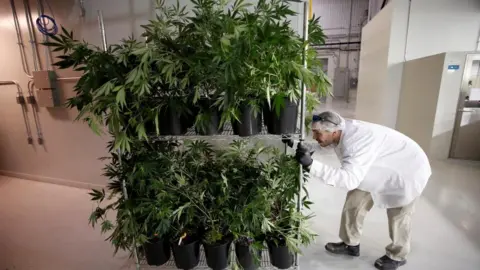 |
| Canopy Growth's Smiths Falls, Ontario, multi-million dollar headquarters has been sold as it struggles with financial losses Reuters |
Since
the Liberal government of Canada passed legislation in 2018 to legalize
the sale and consumption of cannabis, a law making Canada the first
among industrialized nations to allow recreational cannabis use, Canada
has garnered the distinction of being known internationally as a premier
source nation for the drug, illegal in much of the world. Which raises
alerts for Canadian travellers crossing borders, whatever their mode of
traffic, air, sea or land.
The
result of which is Canadian police and customs officials are under
pressure to apprehend illegal shipments of cannabis before it leaves the
country. And that dedicated scrutiny and awareness is certainly not
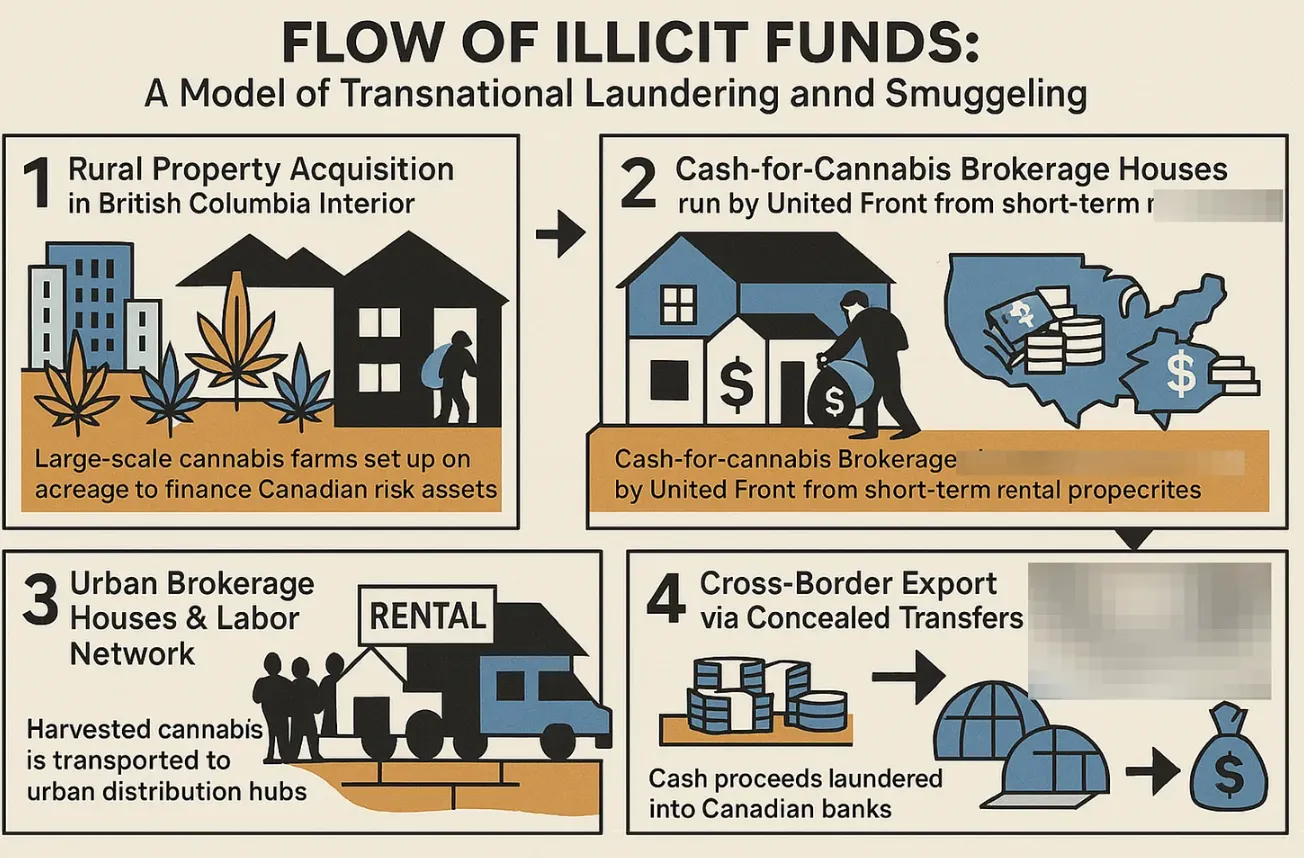
always successful. A 550 kilogram shipment of cannabis was found at the
Charles-de-Gaulle airport in January, leading to police in both France
and Canada launching an investigation into a criminal organization
believed to have trafficked some three tonnes of cannabis into France
since October 2024, for Europe-wide distribution.
Regulations
imposed on licensed companies in Canada -- both producers and retailers
who report inventories of packaged cannabis products four times greater
than the 20 million units of recreational and medicinal marijuana sold
monthly and contracted to destroy what they cannot sell in a free-market
approach to cannabis legislation, have been eased latterly including
rules in place for the destruction of unsold surpluses. Licence holders
were originally obliged to produce video records of the destruction,
reporting total weight.
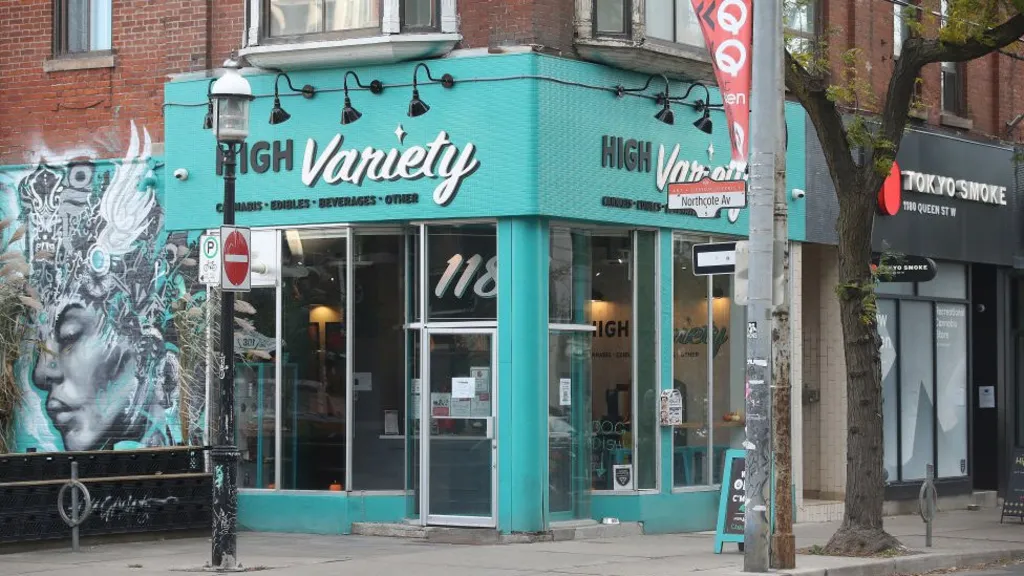 |
| In Toronto, concerns have been raised about an oversaturated retail market Getty Images |
Revised
regulations hold that companies now are required to report on the
number of cannabis plants destroyed, not the total weight, and a regular
employee can deal with the destruction in place of the original two,
one of whom would hold a federal security clearance. "Licence
holders are not required to destroy unsold products. They are, however,
required to keep appropriate records of destruction events and retain
these documents for at least two years after the date of destruction", explained a Health Canada spokesperson.
In
2024, airport authorities in the United Kingdom seized 26,900 kilograms
of cannabis entering the country. And according to Britain's National
Crime Agency, nearly one in every seven suspected drug mules carried
Canadian passports. Drastic spikes in seizures of cannabis products have
been recorded for the Canada Border Services Agency in recent years;
some 23,500 kilograms in 2023-24. CBSA agents in the fall of 2024
discovered a marine container loaded with 347 kilograms of cannabis
bound for he Caribbean.
Officials
have been actively promoting educational programs advising travellers
that while marijuana is legal in Canada, it is a crime to transport it
across an international border in any quantity. A reality that has
failed to stem smuggling. Canada's emergence (along with the United States and Thailand),
as a cannabis procurement source country is now very well known among
law enforcement, customs and police, explained Laurent Laniel, an expert
analyst with the European Union Drugs Agency. "[Canadian producers] have invested money in this and they need to recoup their investment, and so they export it".
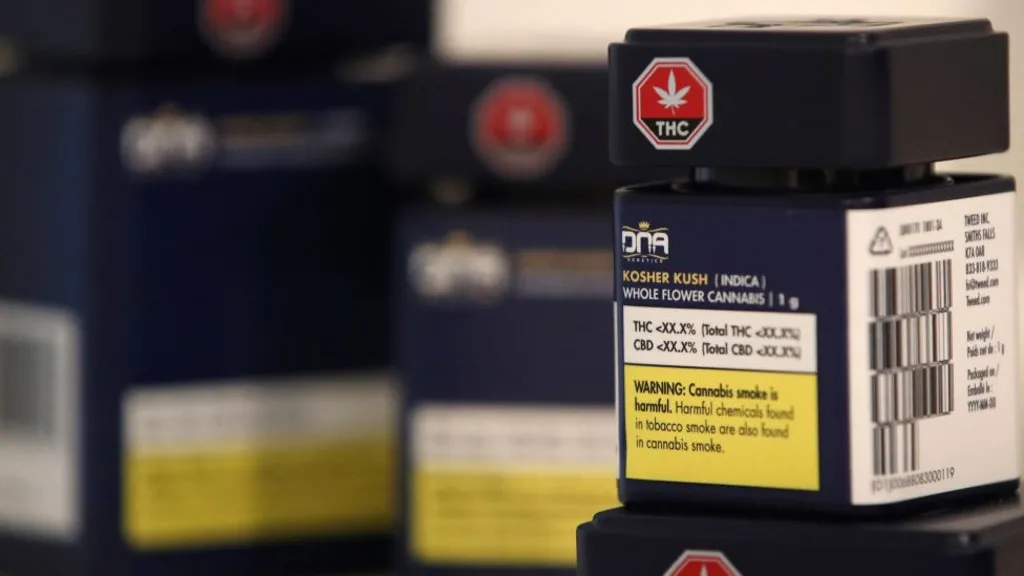 |
| Marijuana in Canada is sold in government-issued packaging, and advertising of cannabis products is not allowed Getty Images |
"The illicit markets [after marijuana legalization] were not tackled.""They were essentially left to grow with impunity, with the idea that legalization itself would solve all the problems without ever having a policy to tackle the still very robust illegal market."Elijah Glantz, research fellow, London Royal United Services Institute"If you're talking about the number of seizures and volume, I would say cannabis is the most, yes, definitely [common drug Royal Canadian Mounted Police officers encounter at Toronto's Pearson International Airport].""What I would think is that something turned other countries on to our cannabis, and I don't know what it is yet.""Perhaps it's easier to grow in Canada now because of enforcement actions, because people are allowed to grow for personal use, because they're not scrutinized as much as they were before."RCMP Insp. John McMath, head, airport unit drug enforcement
 |
| Cam Battley, executive vice president of Aurora, shows off Aurora Vie's Pointe-Claire, Que., facility. Canadian producers have expertise in greenhouse technology, extraction methods, strains and genetics. (CBC) |
Labels: Cannabis Producers, Legalization in Canada, Organized Crime, Recreational and Medicinal Cannabis, Smuggling
posted by Pieface @ Monday, May 19, 2025


<< Home