Moscow's War: Terrorizing, Hunting, Killing Civilians -- Human Safari
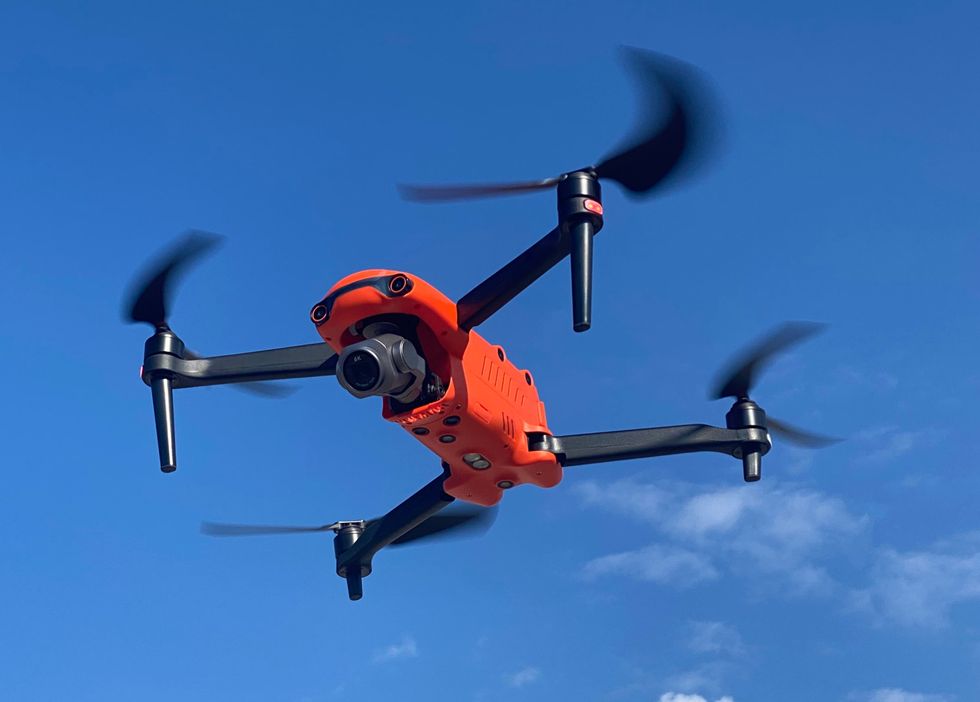
"Located in southern Ukraine on the banks of the Dniepr River across from the Russian army, Kherson has become a hunting ground for what locals call a “human safari”.""The Russian forces are using drones to target civilians – whether they are on foot, driving, or even on bicycles. The drones they use are known as FPVs, for “first-person view”, meaning the operators see what the drone sees in real time.""For residents of Kherson, these drones have become a daily threat.""At least 577 civilians were killed by short-range drones in Ukraine in 2025, and more than 3,000 were injured, according to the UN Human Rights Monitoring Mission in Ukraine (HRMMU). Nearly 95% of civilian casualties were recorded in territory held by the Ukrainian government.""In an October 2025 report focusing on the Dnipropetrovsk, Kherson and Mykolaiv regions, the UN Commission of Inquiry of Ukraine found that 'Russian armed forces’ short-range drone attacks ... amount to a crime against humanity ... and war crimes'."France 24"It starts in the evening. Sometimes, from 8 or 9pm, they start terrorising us. Sirens go off, drones start hitting.""But in our practice, based on statistics, the peak is around 2, 3 or 4 am. That is when most strikes occur, when people are peacefully sleeping."Maryna Averina, spokesperson, State Emergency Service of Ukraine, Odessa region
 |
| FPV drone with a spool of fibre-optic cable. Image credit: Armyinform.com.ua |
The
buzz of drones alert Ukrainians of incoming drones equipped with
cameras, rigged out with explosives and steered by joysticks in the
hands of a Russian military operative a mere dozen kilometres' distance.
They know from experience that they will be tracked, chased and
attacked by these drones. Familiarity with the phenomenon and the
drones' random, unexpected presence, they are familiarly named as
Russia's 'human safari' scheme of population demoralization. Translated;
a terror campaign begun in Kherson which evolved with new technology,
then spread to border areas within Ukraine.
This hunting down of civilians for the quite obvious purpose of a reign of terror, part of the Kremlin's
'special
military operation', in Vladimir Putin's obsession with destroying
Ukraine as a sovereign state, while annexing southern Ukraine bit by bit
as it did in 2022 when it captured Crimea in 2014. The United Nations
has recognized the deadly tactic as a war crime, one that has crossed
the border from one army battling another, to an army deliberately
targeting civilians, in opposition to international prohibitions on
targeting civilian populations.
"It's
a really horrible problem the Russians are imposing on Ukrainian
civilians in these towns where they're using the human safari tactic",
observed Robert Tollast, military sciences researcher at the Royal
United Services Institute, London. Russians just across the Dnieper
River began two years ago deploying cheap commercial first-person view (FPV) quadcopters
to stalk and strike civilians as they went about the course of their
days; biking, standing at bus stops, walking their dogs.
 |
| The spool of fibre-optic cable is usually quite large. Image credit: Armyinform.com.ua |
Begun
in Kherson, by April of 2025 the attacks killed 42 civilians each
month, injuring close to 300, according to an independent UN human
rights commission report. The campaign, determined investigators, was
ordered by Moscow for the purpose of systematically terrorizing the
population, amounting to "murder as a crime against humanity".
At first Ukraine took to jamming -- flooding the drone frequencies
with empty radio noise, which worked for a while. Until Russia equipped
the drones with fibre-optic filament.
These
hair-thin tethers unspool in flight for 19 kilometres; with small
payloads even further, as they carry video to the operator who commands
the drone in return. Equipped with these filaments that bypass radio
signals, the drones could no longer be jammed. It was found that if
someone knowledgeable, like a soldier, could grasp a filament it could
be snapped through a combination of loops and pinches. Someone in the
right place at the right time who could muster the speed required to
pull off that simple solution could save another person's life, as the
drone, the integrity of the fibre-optic threat broken, could no longer
relay video and messages back to the operator.
"The Russian drones are said to “zero in on vulnerable, everyday locations: crowded markets, petrol stations, cafes, post offices, and humanitarian aid centers.” Some days, the drones target ambulances, police officers, nurses, doctors, and garbage collectors. ""However, most days, the drones “hunt and wound or kill commuters on their way to work, or target pensioners eking out survival in the winter cold.” The drones also scatter butterfly anti-personnel mines “along streets, courtyards, playgrounds and public squares.” These small, camouflaged mines are hard to see, easily blending in with leaves and brush, and have led to a rise in foot amputations.""The attacks have become so prevalent that civilians are unable to leave their houses during the day unless there is heavy rain or overcast conditions that prevent the drones from flying or decrease their accuracy. When they do venture out, many residents carry radio frequency drone detectors [devices designed to detect the radio frequencies used to control drones] and only travel after dark. "Articles of War
 |
| Articles of War |
Labels: International Prohibitions in Conflict, Russian Invasion of Ukraine, Terrorizing/Killing Civilians, Vladimir Putin, War Crimes
posted by Pieface @ Tuesday, May 26, 2026


<< Home