Palestinian Victimhood on Full Display
"The popular view of the Nakba presented by the Canadian Human Rights Museum falls short of the facts regarding events in Palestine following the U.N. partition vote of 1947.""[Palestinian displacement was partly the result of] weak leadership and military unpreparedness [of the Arab nations who were at war with the newly founded nation of Israel].""[Arabized Jewish refugees who fled conflict in the 1940s were welcomed in Israel and assimilated, while Arab refugees were treated by Arab countries where they lived in refugee camps as] symbols of the heartlessness and murderous intent of the Jews.""Jewish presence [in Iraq as example] was virtually extinguished in just a few years. Those who fled to Israel were eventually absorbed, given Israeli citizenship, and began to play important parts in Israeli life.""There was neither desire nor expectation that they would return to Iraq, unlike the desires and expectations of the Palestine Arab refugees in 1948."David Bercuson and Logan Jaspers, Aristotle Foundation for Public Policy
 |
| Aristotle Foundation report |
Authors
David Bercuson and Logan Jaspers produced a study for the Aristotle
Foundation for Public Policy, beginning with a detailed history of the
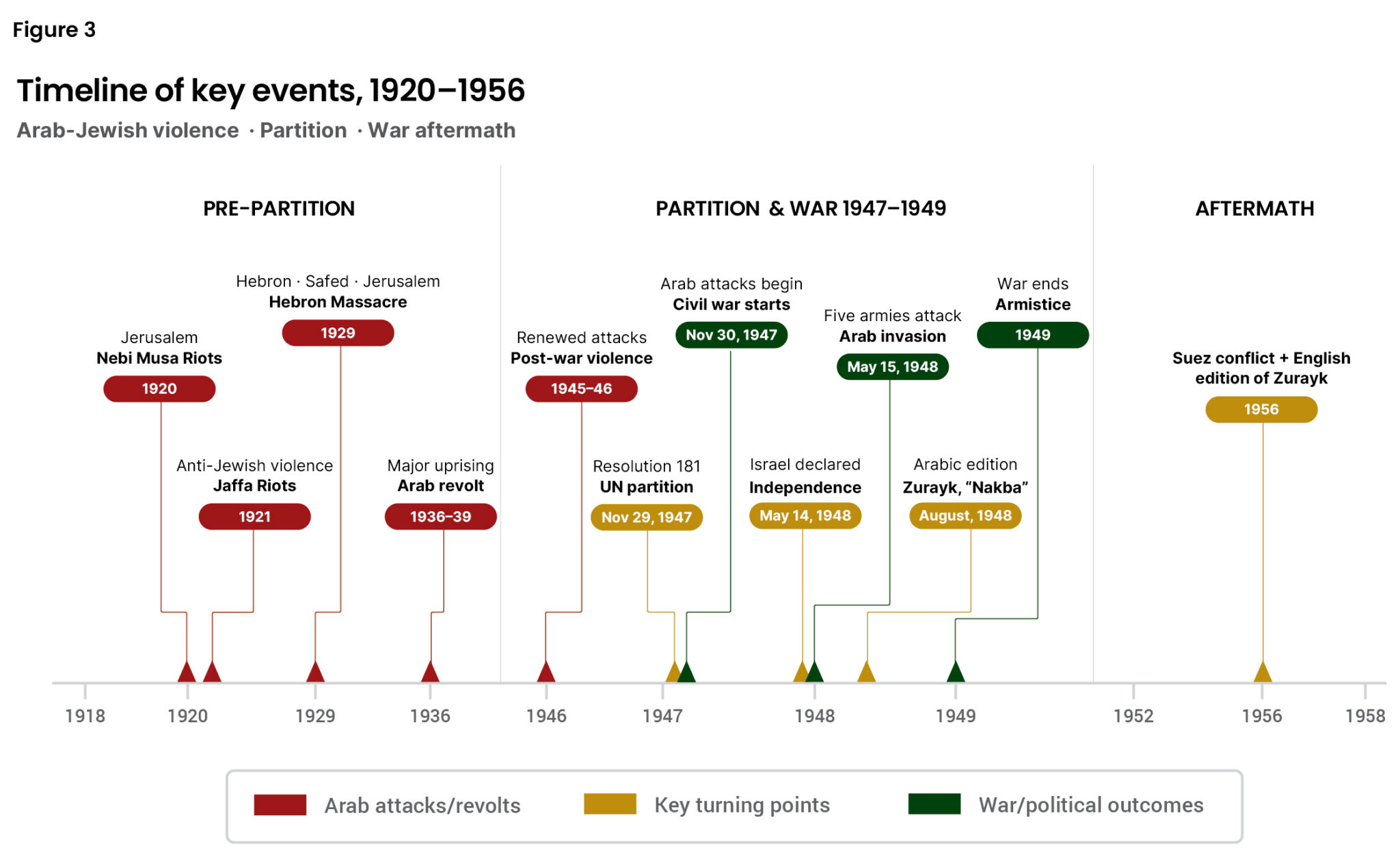
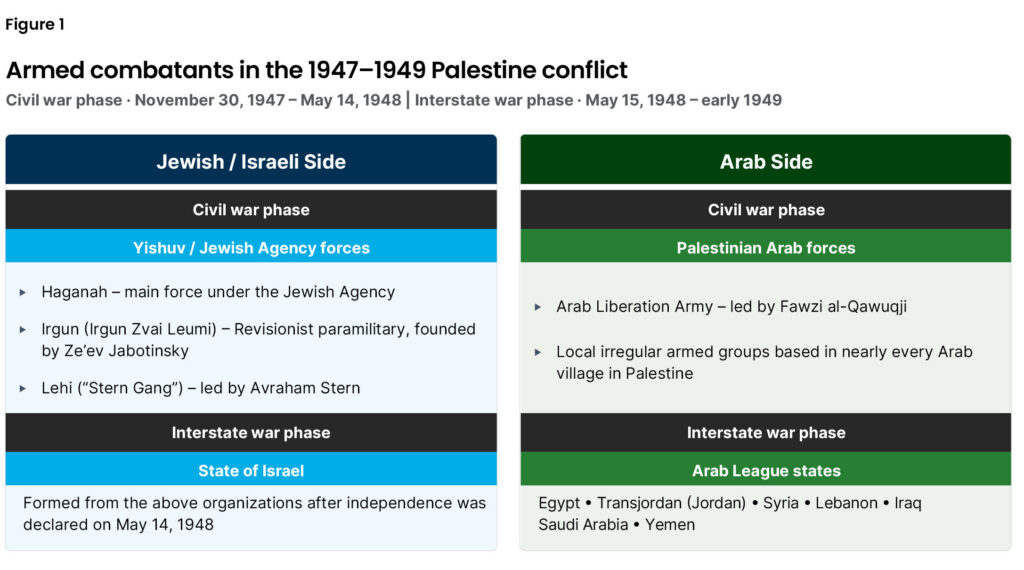
causes and effects of the Israeli-Arab war of 1948 when the nascent
Jewish state was attacked by the combined militaries of its Middle East
neighbours, with the intention of destroying the state before it was
entrenched, on the basis that land once consecrated to Islam could not
host or revert to any other religious communities. Islam, on the other
hand, expunged the ancient ancestral indigeneity of Jews in lands once
their own long before Islam came into being.
With
the re-creation of the State of Israel in 1948, hundreds of thousands
of both Jews and Arabs were forced from their homes; in the case of
Jews, living in Arab and Muslim countries in North Africa and the Middle
East there was forcible exile, and expropriation of properties from
lands Jews had lived in for millennia. The Arabs who called themselves
Palestinians came mostly from Transjordan and Egypt in the last century
seeking economic opportunities in the area that hosted Jewish, Christian
and Muslim populations whose total numbers were relatively sparse. When
the UN in 1947 wrestled with the concept of Partition apportioning a
major share of the territory to Jordan, then dividing the 1/3 that was
left for Jews and for Arabs, the Jewish Committee accepted, the Arabs
did not.
The
Aristotle Foundation report focuses on the detailed history,
commissioned after the Human Rights museum based in Winnipeg had faced a
storm of controversy over its decision to host and display an exhibit
focused on the displacement of Arab Palestinians with the declaration of
Israeli nationhood. That declaration inspired an instant response from
Israel's neighbours, a military invasion meant to destroy the
possibility that Jews could return to their heritage. Palestinians were
promised by the leaders of the invading Arab armies they could return,
once Israel's presence was demolished.
 |
| Aristotle Foundation report |
The
Nakba exhibit, according to its critics, focuses on the plight of
Palestinian refugees, totally ignoring and failing to include a similar
experience of 800,000 Jews forcibly evacuated from their homes in
Muslim and Arab countries, displaced during the conflict. Arab refugees,
the authors of the report, point out, were treated by the Arab
countries they fled to as "symbols of the heartlessness and murderous intent of the Jews", creating a lasting disparity between how the communities of Arabs and the Jews each view their experience.
Years
after the initial conflict which failed to dislodge Jews from their
homeland, leading the Arab armies to nurse their wounded expectations by
declaring their defeat a 'nakba' (catastrophe), 700,000
Palestinians fled their homes seeking refuge in various Arab nations.
The reasons were various; some historians claim many fled in response to
the violence Arab civilians faced. Jewish paramilitary forces were
alleged to have killed some 100 villagers in the Palestinian village of
Deir Hassin. There were Palestinian leaders who claimed the outflow of
Arabs was an orchestrated project they had planned, as was a later
return when Israel was destroyed.
The
Nakba exhibit is a temporary one at the museum, to run for several
months with the use of photos video testimonies, artworks and family
heirlooms describing the plight of Palestinian refugees from the 1940s
and carrying forward to the present. The fact that around 800,000 Jews
were displaced from their homes in Arab and Muslim nations in the Middle
East and North Africa is never mentioned. Nor is the fact that
Palestinian terrorists led by Gaza's Hamas leadership committed a
sprawling atrocity against Israeli citizens in southern Israel on 7
October 2023, which led to the conflict between Israel and Hamas in
Gaza.
A
coalition of civil society groups has called on Minister of Canadian
Identity and Culture Marc Miller to retract his statement on viewing the
exhibit that it was replete with "errors" that "must be rectified", arguing that any government interference in the museum's exhibits (paid for by the federal government) would
be unacceptable. Chief executive Isha Khan of the Canadian Museum of
Human Rights argues that the exhibit was designed explicitly to feature
Palestinian experiences, however controversial their personal accounts
are.
 |
| People gathered outside the Canadian Museum for Human Rights on June 26 to protest the Nakba exhibit. (Rudi Pawlychyn/CBC) |
"What then can we conclude from this brief history?""First, that the Arab refugees left for several complicated reasons, including weak leadership and military unpreparedness, but the root cause of their flight was the war itself.""The Nakba exhibit at the Canadian Human Rights Museum] falls short of the facts."David Bercuson and Logan Jaspers, Aristotle Foundation for Public Policy
Labels: Canadian Human Rights Museum, Failed Arab/Muslim Israel Conflicts, Israel's Existence, Jewish Refugees from Arab Lands, Palestinian Nakba, Palestinian Refugees. Re-Writing History
posted by Pieface @ Sunday, August 16, 2026


<< Home