The Fragility of Human Rights in Iran
"[Iranian authorities are attempting to suppress public discontent over the] humiliating blow [inflicted by Israel, which showed the Islamic Republic was] unable to control its airspace and protect civilians.""Now, to maintain control and prevent its opponents inside the country from organizing and mobilizing forces, Iran's leaders are turning to [inspiring] fear.""If unchecked, the violence that targets Iranians today will target others outside Iran's borders."Roya Boroumand, executive director, NGO Abdorrahman Boroumand Center"A widespread wave of repression and mass arrests has unfolded across the country.""Kurdish cities have borne a disproportionate share of these crackdowns.""[Detainees have included a] significant number of women and teenage girls."Norway-based Hengaw rights group"After the ceasefire with Israel, the Islamic Republic needs more repression to cover up military failures, prevent protests, and ensure its continued survival.""Hundreds, perhaps thousands, of prisoners might be at risk of executions [in the coming weeks]."Mahmood Amiry Moghaddam, director, Norway-based Iran Human Rights Organization
 |
Hundreds
of people in Iran have been arrested by Iranian authorities, and dozens
executed following the 12-day war with Israel. Activists are accusing
the Islamic Republic of terrorizing its population in an effort to
compensate for the aura of failure that the conflict revealed. While
Iranian campaigners against the repressive regime have been detained on
the street or in their homes, prisoners have been transferred to unknown
locations, executions have been expedited, and minority groups have
been targeted.
The
regime in its fury is incapable of venting its rage against Israel or
the United States for the humiliating international position it finds
itself in now, but nothing at all prevents it from wreaking its
vengeance against those within the country whom the regime is convinced
were traitors, willing to aid foreign interlopers detested by the
regime, to invade their airspace, giving them intelligence relating to
the whereabouts of key regime figures, military hierarchy, and nuclear
scientists critical to the work of enriching uranium to weapons-grade,
all of whom were successfully targeted for assassination.
So
far, six men have been publicly hanged, charged with spying for Israel
and dozens more hanged on other charges. Over 1,000 Iranians were
arrested following the conflict, charged with involvement in the war
through aiding Iran's enemies, according to Iran Human Rights, based in
Norway. Freedom of speech activists were arrested, interrogated and
released. Criticism aimed at the revolutionary leaders were launched
inside the country over failure to prevent the aerial attacks by Israel
and the United States.
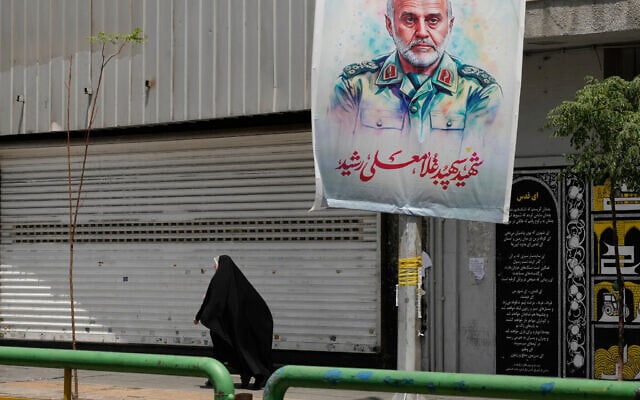 |
| An Iranian woman walks past a banner showing head of the Revolutionary Guard’s Khatam al-Anbiya Central Headquarters Gen. Gholam Ali Rashid, who was killed in Israeli strike, at Enqelab-e-Eslami (Islamic Revolution) street in downtown Tehran, June 24, 2025. (AP Photo/Vahid Salemi) |
Iranian
leaders are apoplectic with fury over the targeting top officials,
military officers and nuclear scientists, with intelligence that could
only be gained by Israel's successful intelligence penetration of Iran. A
realization that has prompted a major hunt for spies. According to
Iran's judiciary chief, Gholamhossein Mohseni Ejei, the trial and
punishment of anyone arrested on suspicion of collaborating with Israel "should be carried out and announced very quickly". So quickly, evidently, that the formality of trials is an unnecessary time-waste.
Three
unidentified Europeans, two of whom have been accused of spying for
Israel, have also been arrested. And according to the Hengaw rights
group which focuses on Kurdish-populated areas of western and
north-western Iran, 300 people of Kurdish ethnicity were also arrested
in the crackdown. "A widespread wave of repression and mass arrests has unfolded across the country."
Iran's
remaining Jewish community is comprised of an estimated 10,000 people,
recognized as an official minority by the Islamic Republic. From within
that community so far, 35 members were summoned for questioning,
according to the U.S.-based Human Rights Activists New Agency.
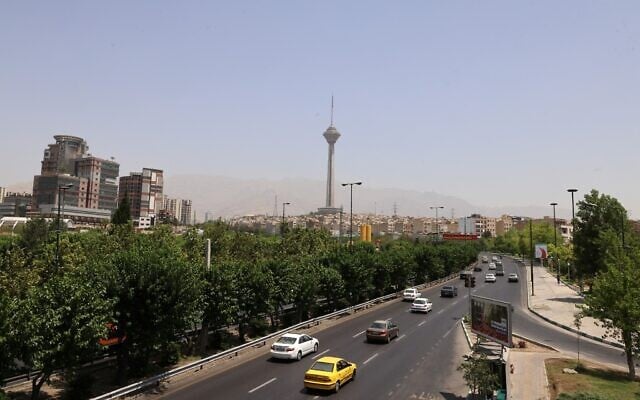 |
| Vehicles drive along a main road with Tehran’s Milad Tower in the background on June 24, 2025. (Atta Kenare/AFP) |
Labels: Iranian Regime Internal Crackdown, Islamic Republic of Iran, Israeli Aerial Attack, Nuclear Sites, Search for 'Traitors', US. Bunker-Busters
posted by Pieface @ Wednesday, July 02, 2025


<< Home