Napoleon's Disastrous Winter Invasion of Russia
"This is one of the most infamous military campaigns in the last centuries. He [Napoleon] believed that he was going to be able to conquer the whole world, more or less. It was probably the beginning of the end.""They [French soldiers] started to die of cold, hunger, and also infectious diseases [All told, hundreds of thousands perished].""Europe has such a rich history that we have archaeological sites pretty much everywhere. So you dig a hole in the ground and then you find something.""If you have DNA of the pathogen in the blood because you have an infection, that DNA can get into the tooth. So then it's kind of a time machine in which you can really see the blood of the individual back then.""Once we have a huge list of all the different things that have been detected, we try to find which are the species that match a human pathogen. It's like doing a puzzle."Nicolás Rascovan, head, microbial paleogenomics unit, Pasteur Institute, Paris"This paper shows clearly how complex these types of analyses are and the extreme level of skill required to work with these types of data.""Understanding how certain types of pathogens developed can give us a better chance of anticipating what a pathogen's next step might be.""We have these paintings in the museums of soldiers in shiny armors, of Napoleon on his horse, fit young men marching into battle.""But in the end, when we look at the human remains, we see an entirely different picture."Leslie Quade, paleopathologist, Austrian Archaeological Institute
 |
| Napoleon's retreat from Moscow Adolph Northen |
One account of the period wrote of the soldiers reduced to "begging for a piece of bread, for linen or sheepskin, and, above all, for shoes".
This was an unanticipated turn of events. An army of hundreds of
thousands must be well provisioned taking into account its total needs;
not only weaponry but adequate nutrition, medical supplies, and uniforms
equal to the basic task of shielding the human body from nature's
elements. Winter in Russia is no laughing matter. Moscow is known to be
one of the coldest, snowiest of world capitals.
The
French invasion soon became a failed aspiration as the troops were
ordered withdrawn from this place of misery lacking food where Arctic
conditions and the transmission of pathogens in circulation began taking
its toll on the soldiers. The starving, freezing army was assailed by
unanticipated killers in the form of bacterial infections. And this was
only October. Dr. J.R.L. de Kirchhoff who had accompanied the campaign,
listed typhus, diarrhea, dysentery, fevers, pneumonia and jaundice among
the diseases the men were afflicted with.
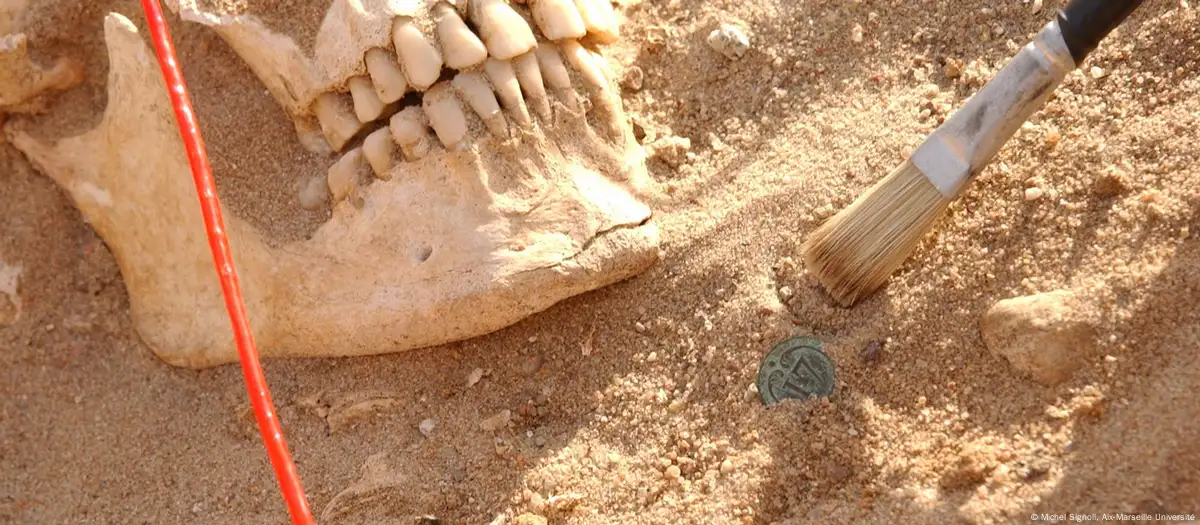 |
| An analysis performed on remains from Napoleon's army identified two bacteria previously unknown among his forces |
A
group of researchers in 2006 setting out to fully comprehend the
illnesses faced by this army reported the discovery of segments of body
lice in the soil of the mass grave in Vilnius; lice which carried trench
fever bacteria. They discovered typhus bacteria present in the teeth of
three corpses, and trench fever in another seven teeth. This was at a
time when DNA fragments were studied through technologies which have
since undergone critical refinement.
Recently,
a group of French researchers determined to embark on a study that
would reveal which infectious diseases were responsible for felling the
troops. With 13 teeth available to them from the unfortunate men buried
in a mass grave in Vilnius, Lithuania, they started with the remnants
of tissue and blood still viable within each tooth containing tiny
fragments of microbial DNA. This time, with the use of state-of-the-art
technology, the researchers found evidence of two types of bacteria
previously not known to have circulated among the troops.
Their findings were published in Current Biology. Of the two bacteria discovered, one is relapsing fever
carried by lice that causes high fevers, joint pain, severe headaches,
nausea, vomiting and extreme fatigue. The second was identified as paratyphoid fever which
is transmitted through contaminated water or food, with symptoms that
include high fevers, headache, weakness and abdominal pain. Symptoms
which in and of themselves can hardly be considered lethal; in ordinary
circumstances the viruses are treated and the infections cleared away.
 |
Two-to-three thousand soldiers from Napoleon's army were
found in a mass grave in the northern suburbs of Vilnius, Lithuania in
2001. Michel Signoli / UMR 6578 Aix-Marseille Université, CNRS, EFS
|
But
these were not ordinary circumstances. The uniformed men were in a
state of starvation and lethargic from functional deprivation; freezing,
hungry and ill. The debilitating conditions they faced with no relief,
caused their infections to be the final blow to their emaciated,
freezing bodies. Soldiers began to die, collapsing along the route they
were taking to leave the frozen landscape behind.
Dr.
Rascovan, lead author of the current, recently-published paper,
explained that the two pathogens whose presence his research team had
identified would not have been the cause of the deaths of the soldiers,
on their own. The men were starving, dehydrated and freezing, he pointed
out. "In those conditions, any infectious disease can kill people."
The
same conclusion appears to have been reached by Dr. de Kirckhoff's
previous writings of the era, along with the present day's science:
Wounds of battle did not cause the deaths of most of these soldiers.
Starvation and frigid temperatures had set the stage for deaths to occur
from otherwise-treatable diseases.
"The attrition of the army is extraordinary, and underscores how much prior to the 20th century what we think of as wars are primarily medical events.""[The infections] are diseases that exploit human suffering."Kyle Harper, historian, University of Oklahoma
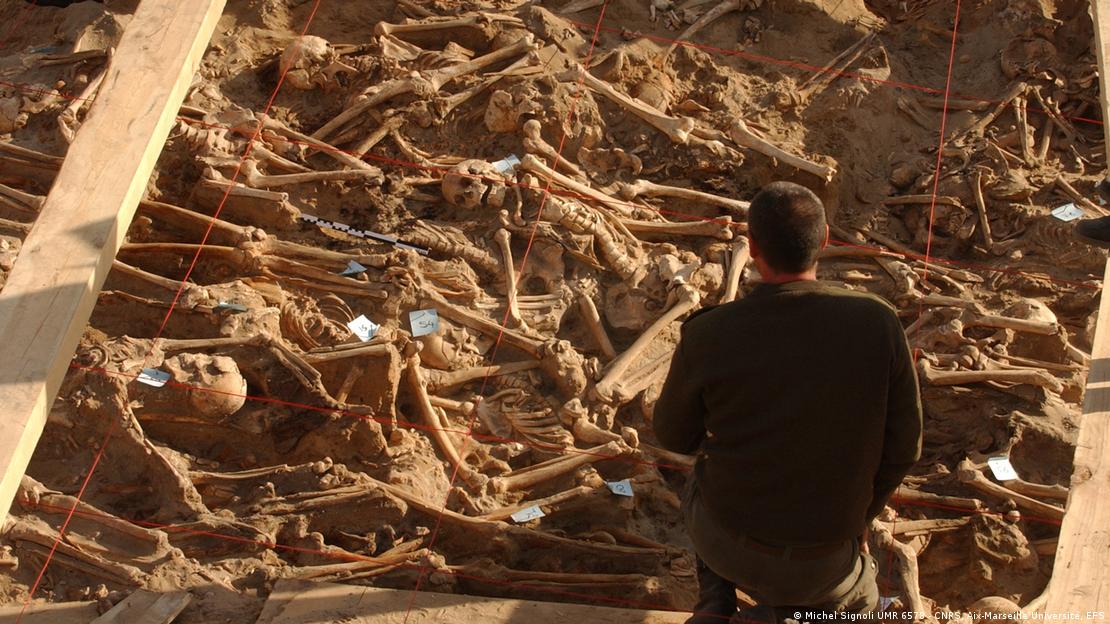 |
| The mass grave at Vilnius was the burial site for hundreds of troops from Napoleon's army |
Labels: Disease, French Troops, Frigid Temperatures, Moscow Invasion, Napoleon Bonaparte, Russian Winter, Starvation
posted by Pieface @ Monday, November 10, 2025


<< Home