Mensch Warmers
"We want to ensure that belligerent fans aren't taking away from the other fans or players who can't help but hear these type of negative remarks.""We have come up with ways to deal with this and we have ejected individuals who have engaged in this type of offensive language.""In a few cases, we have had to ban these fans for a full season."Stuart Ballantyne, president, chief operating officer, Rogers Place, Edmonton"It happens a lot, everywhere. I feel hostility from the crowds sometimes.""Also, as I've become more recognizable around the league, I find myself having to talk more about Israel and trying to explain to people that, even though I love my country and always will, I play basketball.""I am not involved in how the Israeli government deals with the many problems they face.""But my heart is with Israel, of course.""I wish that, when I'm playing basketball, I wouldn't hear any antisemitism. I don't feel I'm deserving of that.""I wish something could be done. It's very unfair."Deni Avdija, National Basketball Association all-star
 |
| Jewish and Israeli athletes have come out in droves supporting Israel against Hamas terrorists. Clockwise from top left: A post by the Washington Wizards' Deni Avdija; an Instagram story from retired NBA player Omri Casspi; a post by Baltimore Orioles' Dean Kremer; Houston Astros' Alex Bregman drew a Magen David on his cap; Kremer wearing a Magen David necklace during a game; Israeli UFC fighter Natan Levy in an Instagram video; and retired NBA All Star Amar'e Stoudemire. The Canadian Jewish News |
Even
before the global eruption of antisemitism that arose in the wake of
the Palestinian terrorism attacks of 7 October 2023 in southern Israel,
Jewish sport figures -- from superstars to junior leagues -- have been
the victims of virulent antisemitism. In the instance of young players
being taunted by their non-Jewish antagonists, that kind of racism
likely erupts from domestic exposure with parents conveying to their
youth their contempt for Jews and Judaism, a cultural pathology across
all global borders. Those young Jew-haters will mature to become
fully-fledged antisemites. And the young Jewish players who were the
butt of their discriminatory jeers will come to fully understand the
universal flaw in humanity's perceptions of others like themselves, but
not quite.
The
more current spike in antisemitism posing as anti-Zionism and contempt
and hatred for Israel -- when the Jewish state reacted to the murder of
over a thousand Israeli Jews in southern Israel, and the hostage taking
of hundreds of children, youth, women, men and entire families -- by
entering Gaza with the intention of confronting and punishing Hamas and
its companion terrorist groups -- then veering off to northern Israel
with the Lebanese terrorist group Hezbollah widening the conflict in
support of Hamas through orders directly from the Islamic Republic of
Iran -- all came as a lightning bolt out of the blue.
That
Israel, and Jews everywhere in the diaspora would receive a tsunami of
biased, racist condemnation for doing what any other state in the
international community would be expected to do -- react to protect
itself and its population -- seemed illogical and insane. Thanks in
large part to the empathetic appeal of Palestinians portraying
themselves as helpless victims of Jewish/Israeli 'occupation' of a land
consecrated in antiquity to Judaism as ancestral Judean geography which
Arabs pronouncing themselves as 'Palestinians' claim as their own.
In
the world of sports competition where Jews have spectacularly
demonstrated their athleticism and professionalism, to be constantly
confronted with verbal pejoratives hinged on their Jewishness, when
sports has always been touted as a people-unifying peaceful, competitive
activity, this kind of exposure to unremitting hatred of emotional
dysfunction is completely demoralizing, confounding and illogical.
Although these deep emotions of antipathy relying on unreasonably
contentious accusations against Jewish 'plots' to take over world
institutions is as old and as morally decrepit as a symbol of human
malfunction as any medieval acts of raw, hostile brutality.
The
Codes of Conduct messages used at sport venues fail to contain
references specific to expressions of antisemitism. The executives of
the sport world claim to be working on the situation to impress sport
fans that their vomiting expressions of Jew-hate are unwelcome at sport
arenas. Among them are those who agree that the time has finally arrived
for more emphatically stringent warnings against expressions of
Jew-hate at these venues, including action toward those who persist,
that would amount to lifetime bans on attendance at their arenas.
Is football more antisemitic than other sports? Most antisemitic incidents in football won’t appear on Match of the Day. They happen during amateur sporting activities, which makes them even harder to spot and highlight. A German study found an accumulation of cases in football: more than two-thirds (68%) of Jewish amateur football players have experienced an antisemitic incident at least once, compared with 14% in other sporting activities. An Italian study showed that Jews faced discrimination when looking to join a football club.Antisemitism at certain football clubs has received more attention from researchers than other football clubs. Case studies include Celtic FC in Glasgow, the German team RB Leipzig and certain clubs in Poland. It is not clear whether these researchers’ attention is down to greater or lesser problems with antisemitism at the clubs they have chosen to study. Of particular interest to researchers are those fans of some well-known teams whose fans declare them 'Jewish' clubs and adopt Jewish symbols as a response to antisemitic attacks on their club. The most famous examples are London’s Tottenham and Amsterdam’s Ajax. Such clubs and their rivals have also been sites for campaigns and educational activities designed to combat antisemitism, such as the UK’s The Y Word project and The Fancoach Project at Feyenoord in the Netherlands. Antisemitism in football isn’t confined to the stands. Recent studies have shown that online conflicts about football sometimes end up becoming online conflicts about Jews, involving antisemitic language. A Dutch study from 2022 showed how, during the Covid-19 pandemic, football-related antisemitism became more prolific online. A 2023 study of antisemitism on social media found that posts and tweets about the Qatar World Cup often involved antisemitic tropes aimed at Israel (despite the Israeli national team failing to qualify for the competition). Violence and riots by football fans have occurred for many years in football games in many countries. Antisemitism has also become common at games, with ‘ultra’ football fan groups using antisemitic language and fascist symbols against their rivals. A pioneering Italian project has used ‘Open Source Intelligence’ methodology to assess the threat of antisemitic fan cultures. As antisemitism and football evolve, there will continue to be a need for research methods to evolve accordingly. Dr. Keith Kahn-Harris, Senior Research Fellow, Project Director, European Jewish Research Archive
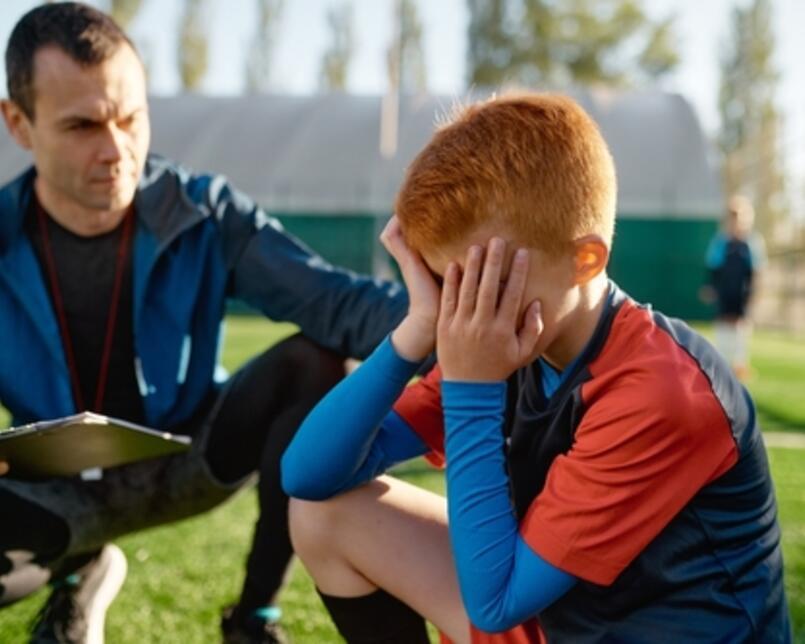 |
| Most antisemitic incidents in football happen during amateur sporting activities JPR Institute for Jewish Policy Research |
Labels: Antisemitism, Jewish Athletes, Looking for Solutions to the World's Oldest Slanders, Sport Arenas, Star Performers
posted by Pieface @ Friday, June 12, 2026


<< Home