Russia's Threat in Eastern Europe
 |
| U.S. President Joe Biden agreed to send anti-personnel landmines to Ukraine CBCNews |
"Russia has never been a party to this convention and uses anti-personnel mines extremely cynically.""Thanks to steps regarding the use of certain types of weapons, particularly anti-personnel mines, we will be able to achieve at least parity in forces and means necessary to defend against Russian aggression."Ukrainian President Volodymyr Zelenskyy"The situation has not improved on the question of Russia's aggression against Ukraine, Russia's hybrid attacks and Russia's general aggression against European and other countries.""In addition, there have been certain concerns within Latvian society following the new administration coming into office in the United States."Latvia's minister of defence, Andris Sprūds"[Since signing the Ottawa Treaty, threats from Moscow and its ally Belarus have] significantly increased.""[It is] paramount [to give their troops ] flexibility and freedom of choice [to defend NATO's eastern flank].""[Despite plans to leave the treaty, Poland and the Baltic states are still committed to international humanitarian laws] including the protection of civilians during armed conflict.""Our nations will continue to uphold these principles while addressing our security needs."Defence ministers of Estonia, Latvia, Lithuania and Poland
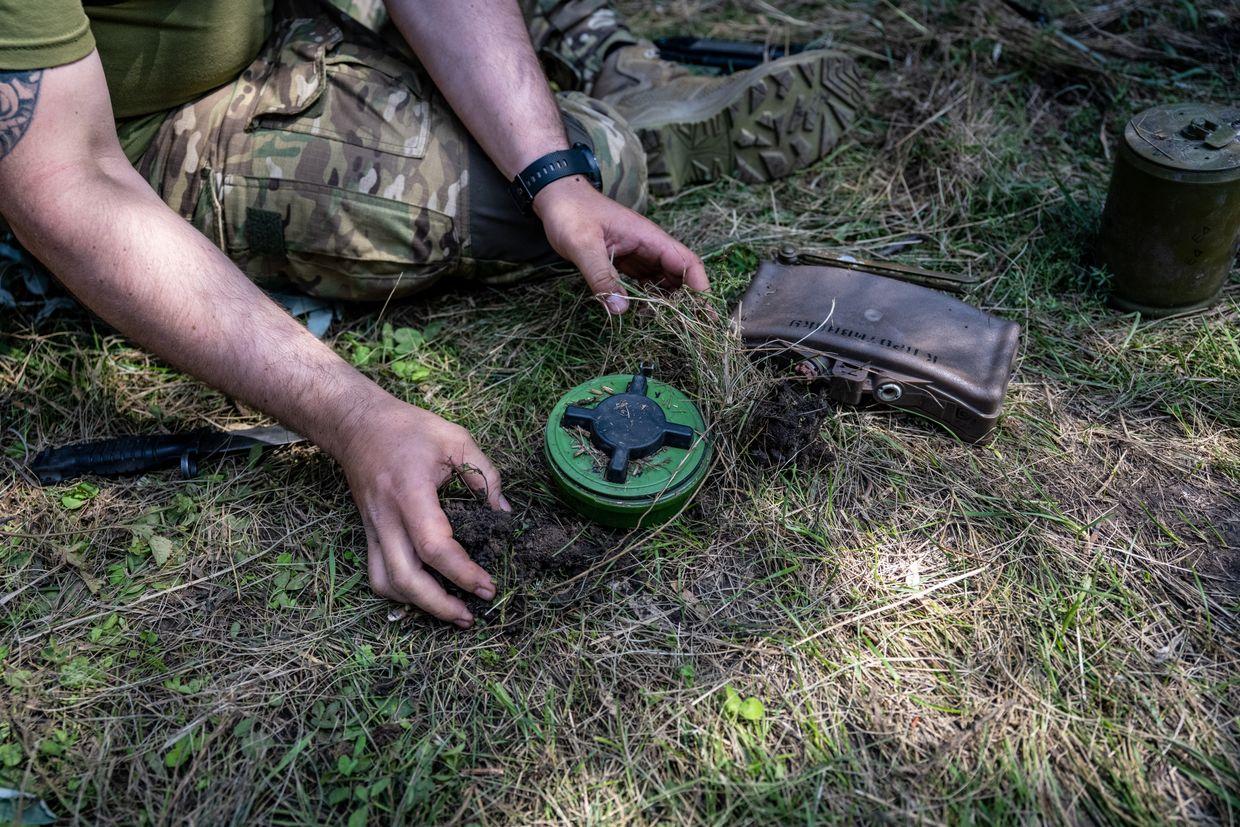 |
| A Ukrainian de-mining sapper demonstrates how Russian forces place an anti-personnel mine on a fragmentation grenade in an Unspecified location, Ukraine, on July 31, 2023. (Scott Peterson / Getty Images) |
"We are furious with these countries.""They know full well that this will do nothing to help them against Russia.""[A retreat from the global accord is] just political games [by officials trying to present themselves as defenders of national security]."Tamar Gabelnick, director, International Campaign to Ban Landmines
As
it happens, senior military officials in three of the five countries
whose parliaments voted to withdraw from the treaty have in the past
expressed their professional opinion that experience has led them to
believe there is actually paltry military utility in the revival of
antipersonnel mines. These are weapons that offer limited defense, in
their opinion, against modern armies, while posing a deadly threat to
civilian populations, from children to farmers, who accidentally set
them off.
The
Union of Soviet Socialist Republics had utilized landmines to divide
the Soviet bloc from the West during the Cold War, to deter their
citizens from illegally crossing the Iron Curtain to access a different
mode of life elsewhere. Campaigners against antipersonnel mines lobbied
world leaders to enact a global treaty that would ban that deadly weapon
indiscriminately mutilating or killing civilian populations. The result
was the Ottawa Convention, otherwise known as the Mine Ban Treaty.
That
initiative was spearheaded by the-then Canadian Minister of Foreign
Affairs Lloyd Axworthy, whose pivotal role in creating, promoting and
leading the implementation of the treaty was felt to represent a
humanitarian breakthrough worthy of being awarded the Nobel Peace Prize
in 1997 in recognition of its work clearing antipersonnel weapons as the
driving force behind the ban of landmines.
Although
expressing dismay at the decision to withdraw from the treaty by Poland
and the Baltics the veteran diplomat lays blame partly on the United
States , feeling that the "trigger was pulled" when
then-President Biden agreed last year to provide landmines to Ukraine
-- a situation that accelerated when the current president slashed
foreign aid and historic military aid. Neither Russia or the United
States are signatories to the treaty.
These
weapons are prohibited by most countries of the world and have been for
over a quarter of a century. But as a consequence of the 2022 invasion
of Ukraine by Moscow, those five countries that border Russia plan to
proceed with the use of antipersonnel mines in the hope that they will
be able to tighten their defenses against any future attacks resulting
from Russian President Vladimir Putin's territorial expansion mania.
They have no wish to once again become captured satellite states of a
Greater Russia whose president yearns to emulate the past.
A
formality in leaving the treaty that came into force in 1999, is a
six-month process, ruling out an immediate surge in the use of the
landmines for the present. Veronika Honkasalo, a member of the Finnish
Parliament opposed to leaving the treaty, which a majority of her fellow
legislators support, stated that the war in Ukraine "changed everything". Russia's invasion of Ukraine led to the reality that "people got really scared because we have a 1,300-kilometer border with Russia and a long history of war with our neighbour".
Norway
is the outlier among European countries sharing a land border with
Russia, remaining steady in its commitment to the Mine Ban Treaty.
According to the United Nations, the treaty saw the destruction of over
55 million antipersonnel mines, weapons widely used during the Cold War
era, in conflicts in Afghanistan, Angola, Cambodia, Myanmar and other
countries, more latterly Yemen. They are scattered widely near and far,
killing innocent people, long past the end of fighting.
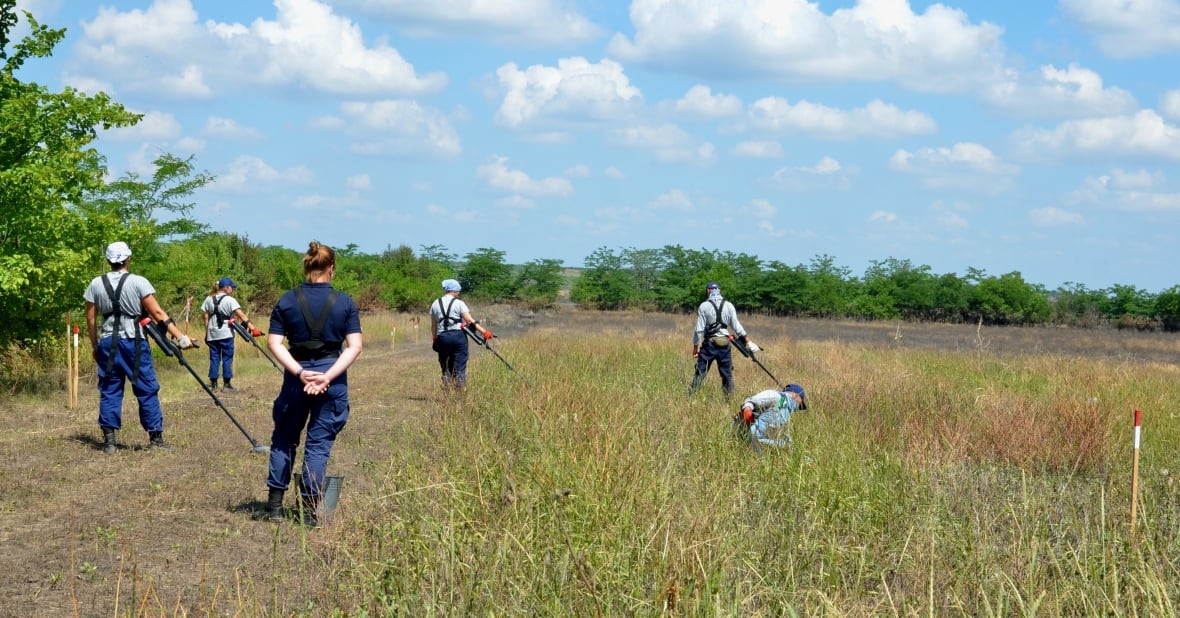 |
| A demining team clears a field near Yevhenika, Ukraine, on June 16, 2023. (Murray Brewster/CBCNews ) |
According
to the International Committee of the Red Cross, eighty percent of
casualties from antipersonnel mines are civilian, many of them children.
The estimate is that the number of people killed or maimed annually has
fallen to 3,500 from over 20,000 over the last two decades; "It is a horrible weapon", shudders Ms. Honkasalo.
The
five NATO members' defence ministers explained the need of their
countries to leave the mine ban accord relates to the fact that "military threats to NATO member states bordering Russia and Belarus have significantly increased".
Having joined the treaty in 2006, Ukraine initially recognized no
reason to revive antipersonnel mine use, but since its failed 2023
offensive and Russia's decision to lead assaults by foot soldiers, the
decision was made to make use of them.
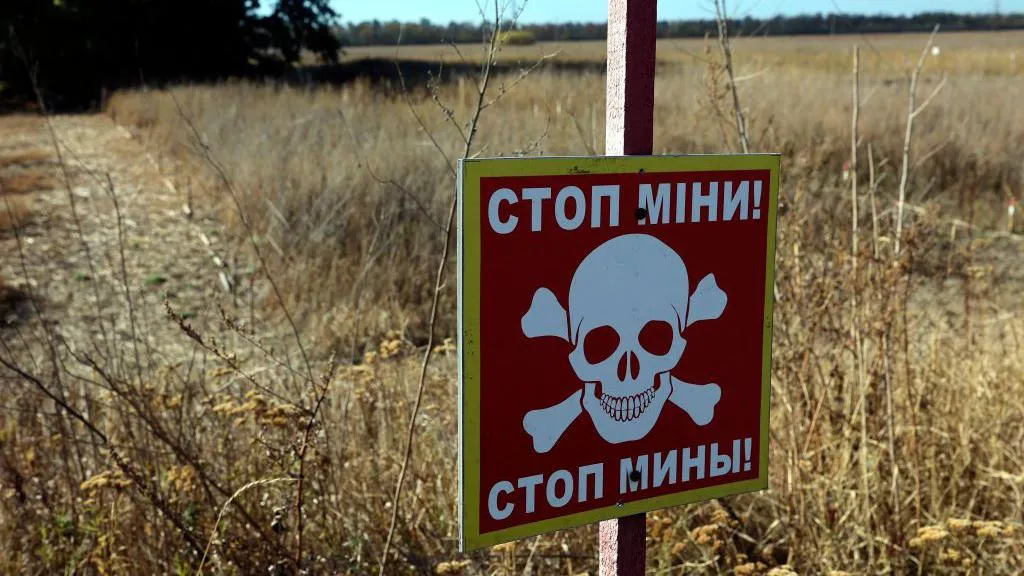 |
| Ukraine is now thought to be the most mined nation on earth, according to the UN Getty Images |
Labels: Banned Antipersonnel Mines, Nations Bordering Imperial Russia, NATO Nations, Ottawa Convention, Russian Invasion of Ukraine
posted by Pieface @ Monday, July 21, 2025


<< Home