Pakistan's Medieval Era Islamist Dysfunction
"The arrest of Engineer Muhammad Ali Mirza [Muslim cleric, scholar and resident of Jehlum city] is not about public order.""It is about silencing independent voices who dare to question sectarian clergy and challenge the monopoly of state-approved lapdogs. Meanwhile, violent mobs like TLP [Tehreek-e-Labbaik Pakistan], who block highways, attack police and hold the state hostage are coddled, unbanned and quietly paid off.""This selective justice is why Pakistan is stuck in perpetual chaos."Lahore-based attorney J. Sajjal Shaheedi"The doubts and uncertainties that arise in such cases are ignored by the courts.""[This is likely] due to the fear of religious backlash and potential mob violence against the judge if the accused is acquitted."We are preparing our appeals against the decision and will g ..“We are preparing our appeals against the decision and will ..Manzoor Rahmani, lawyer for four men sentenced to death for blasphemy"There is a growing realization that blasphemy laws are used to exploit vulnerable people and religious minorities,""Blasphemy claims are used for land grabs, targeting business rivals and criminal extortion.""Historically, attempts to reform blasphemy laws have been quickly shut down by violent protests from radical Islamic groups. The real test is still ahead, as social change in Pakistan moves slowly."Thomas Mueller, persecution analyst, Open Doors
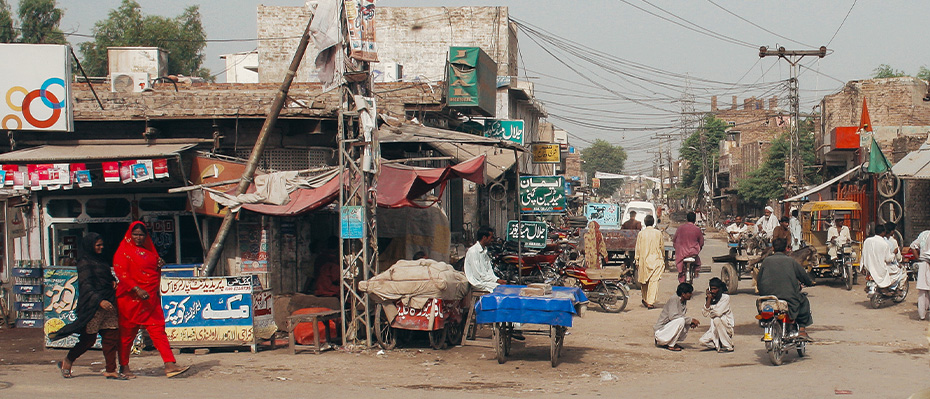 |
| Pakistan is eighth on the Open Doors World Watch List, making it a place of extreme persecution for many of its 4.5 million Christians Open Doors |
In
Pakistan, blaspheming Islam is considered a major crime, punishable by
prison sentences, and even a death sentence. In this country an
accusation of blasphemy has the power to incite mobs with murderous
intent. In the recent past, politicians and lawyers who have challenged
the laws on blasphemy in the country have been murdered; they themselves
paying the ultimate penalty by virtue of public outrage through
questioning blasphemy laws and in so doing, interpreted by raging mobs
as being themselves blasphemous.
Pakistan
amended its blasphemy laws in 2023 to make punishment more severe for
blasphemy violations. Since that time, arrests have risen phenomenally,
from several dozen annually to hundreds, and in particular when charges
of blaspheming Islam on the Internet are involved. Many of those
standing accused on these charges claim to have been entrapped by online
extortionists. Experts on human rights point out that a rising tide of
blasphemy is a certain method for Islamist groups to incite public
support and attract funding through the pretext of defence of religious
sanctity.
Interviews
with families, legal experts, rights advocates and officials, along
with government reports reviewed, suggest a pattern of abuse where
strict blasphemy laws target individuals. A government-operated human
rights body documenting a sharp rise in arrest for online blasphemy
identified 11 in 2020, 9 in 2021 and 64 in 2022. The revised
punishments, however led to arrests rising dramatically to 213 in 2023
and to 767 in the first seven months of 2024.
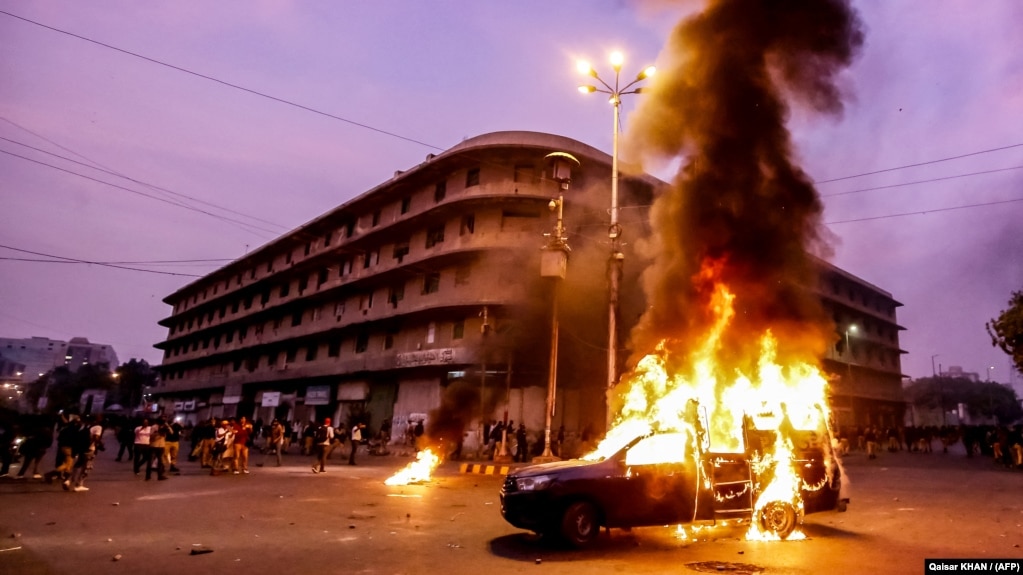 |
| Smoke plumes from a police vehicle set on fire by supporters of Pakistan's blasphemy laws in the southern sea port city of Karachi in October 2024. |
Arrested
on charges of blasphemy, the convicted often spend months in prison
before an actual trial eventuates. Most blasphemy cases in courtrooms
are pursued by private groups led by lawyers and backed by networks of
volunteers who monitor social media, searching for potential violators
of the blasphemy laws. Their aggressive efforts to identify and convict
cases reflect a rising "politicization
of blasphemy laws. they have made it their cause to punish any possible
act of insult to what they hold in reverence", explined Peter Jacob, executive director of the Center for Social Justice Pakistan.
The Legal commission on Blasphemy Pakistan has pursued dozens of online blasphemy cases while denying charges can be contrived. "Never before have we seen such foul dishonouring of Islam, the Holy Quran, Prophet Muhammad and other revered figures", claimed Rao Abdur Raheem, a lawyer with the group.
Five
men were sentenced to death in Rawalpindi in Punjab Province, over
accusations of committing blasphemy online. Ten people accused of
blasphemy were put to death through incidents of mob vigilante violence.
Lat year a police report titled "Blasphemy Business Group" exposed a
criminal network that threatened people with fabricated blasphemy
charges to secure payoffs. They operated often with official complicity
from the Federal Investigation Agency.
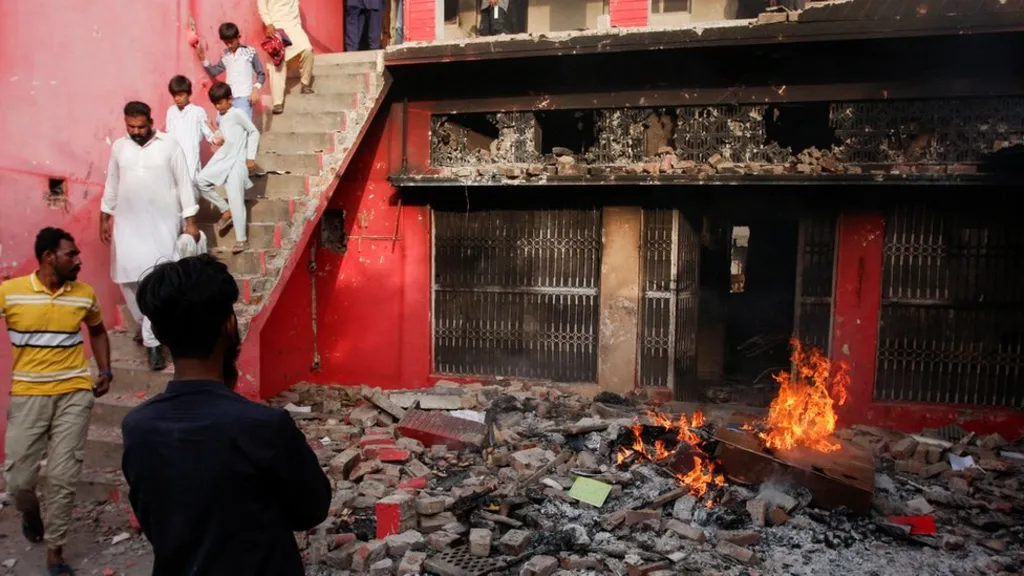 |
| In August dozens of homes and churches were torched in eastern Pakistan after two Christians were accused of damaging the Quran Reuters |
Labels: Blasphemy Laws, Death Sentences, Internet Traps, Mob Rule, Pakistan, Persecution of Christians, Prison Sentences
posted by Pieface @ Tuesday, September 02, 2025


<< Home