Monday, December 29, 2025

The Afghanistan/Pakistan Love Affair

Pakistan trade
Ariana News

"Strong combat broke out in numerous areas of the 2,600-kilometer Durand Line in early October 2025, especially in the vicinity of Kunar, Spin Boldak–Chaman and the Kurram tribal region. While Kabul denounced Pakistan’s retaliatory airstrikes in Kandahar and Paktika as flagrant violations of sovereignty, Pakistan accused the Taliban government of providing sanctuary to Tehrik-e-Taliban Pakistan (TTP) militants responsible for deadly raids inside Khyber Pakhtunkhwa and Balochistan. Numerous people were killed in the fighting, which also blocked important commerce routes and interfered with humanitarian supplies."
"After the two regimes declared an emergency ceasefire on October 19, Qatar and Turkey mediated the conflict in Doha. Both governments promised to stop the attacks, restore communication channels, and set up verification processes. Although the truce provided temporary respite, it revealed underlying structural divisions, especially in relation to Pakistan regime’s demand that Taliban regime stop TTP activities and the Taliban’s insistence that Pakistan respect Afghan territorial integrity."
Australian Institute of International Affairs 
 
The U.S.-led invasion of Afghanistan in 2001 under UN approval in the wake of 9/11, saw a multitude of countries joining Operation Enduring Freedom, mostly NATO members. At that time Pakistan aligned itself on the surface with the U.S.declaring itself part of a coalition fighting terrorism. While in actual fact, the Taliban was given haven in Pakistan, as was Osama bin Laden, living at Abbottabad not far from a Pakistan military base. Pakistan's own Taliban was just getting started, inspired no doubt, by the Afghan Taliban.
 
Fast forward to the present, and Afghanistan now governed by the fundamentalist Taliban. Pakistan's designs on controlling Afghanistan, and keeping India out of the country have rather soured now that the Taliban for better or for worse -- and as it happens, much worse -- is in power and Pakistan now struggling against its very own terrorist Taliban, blames the government in Afghanistan with sheltering Tehreek-e-Taliban Pakistan, and for its troubles having Pakistan penalize it by cutting off a vital trade route.
 
One of the largest, once-bustling markets in Peshawar where thousands of shops owned by Afghans selling a wide variety of consumer goods is now a wan image of itself with the closure of hundreds of Afghan shops. A deep chasm has resulted between Afghanistan and Pakistan with their traditional trade routes impacted with cross-border trade having been cut by Pakistan as punishment for the Taliban administration failing to cooperate with Pakistan's demands it stop giving haven to the terrorists that have attacked and killed members of Pakistan's military.
 
Millions of farmers, traders and communities in both countries have been impacted by the suspension of  trade. Trucks carrying coal, cement, pomegranates, cotton, medicine and other goods valued to $2 billion in bilateral trade have been held up for months. Pakistan's 250 million population represented a plentiful consumer base for Afghanistan. But they and access to India -- vital to the Afghan economy -- have been hit a powerful blow for the Taliban government, already suffering from the forced return of over 2.5 million of its nationals from neighbouring countries, and the damage inflicted by two deadly earthquakes.
 
Hundreds of trucks and trailers have been standing idle since October 11 near the busiest border crossing between Pakistan and  Afghanistan, after deadly clashes resulted in suspension of trade
Hundreds of trucks and trailers have been standing idle since October 11 near the busiest border crossing between Pakistan and Afghanistan, after deadly clashes resulted in suspension of trade |Photo: Reuters
 
Hundreds of trailer trucks have been parked along the road running through the border near Peshawar, since October 11. Most crossings have been barred by Pakistani border guards, with the exception of Afghan nationals returning home. "When they stopped us here, it was still summer. Now winter is right upon us", moaned Abdul Wakeel at the Torkham border crossing. Although the Taliban denied supporting Pakistani Taliban, Pakistan expelled over a million Afghans and carried out strikes on Kabul and Kandahar, resulting in the deaths of dozens of soldiers on both sides.
 
Over half of Afghanistan's 42 million people require humanitarian assistance, while containers brimming with aid stand blocked at the border. Pakistan itself faces a rising poverty rate of 25 percent; the trade standoff benefits neither country. Peshawar, about 48 kilometers from the border with a sizeable Afghan population among its two million residents, has been struck particularly brutally by the situation. "We're caught in between the politics of two countries", observed Syed Naqeeb Badshah, president of a lobby group representing Afghan traders in Pakistan, resignedly. 
 
20251128 Pakistan Chaman border crossing
These trucks are loaded with the belongings of Afghans attempting to return to their country after Pakistan closed border crossings with Afghanistan. They were pictured at the border crossing in Chaman, Pakistan, on Oct. 16.  Reuters


Labels: , , , ,

Tuesday, September 02, 2025

Pakistan's Medieval Era Islamist Dysfunction

"The arrest of Engineer Muhammad Ali Mirza [Muslim cleric, scholar and resident of Jehlum city] is not about public order."
"It is about silencing independent voices who dare to question sectarian clergy and challenge the monopoly of state-approved lapdogs. Meanwhile, violent mobs like TLP [Tehreek-e-Labbaik Pakistan], who block highways, attack police and hold the state hostage are coddled, unbanned and quietly paid off."
"This selective justice is why Pakistan is stuck in perpetual chaos."
Lahore-based attorney J. Sajjal Shaheedi 
 
"The doubts and uncertainties that arise in such cases are ignored by the courts."
"[This is likely] due to the fear of religious backlash and potential mob violence against the judge if the accused is acquitted."
Manzoor Rahmani, lawyer for four men sentenced to death for blasphemy 
 
"There is a growing realization that blasphemy laws are used to exploit vulnerable people and religious minorities,"
"Blasphemy claims are used for land grabs, targeting business rivals and criminal extortion."
"Historically, attempts to reform blasphemy laws have been quickly shut down by violent protests from radical Islamic groups. The real test is still ahead, as social change in Pakistan moves slowly." 
Thomas Mueller, persecution analyst, Open Doors 
https://www.opendoorsuk.org/wp-content/uploads/2025/08/07.08.2025-PK.jpg
Pakistan is eighth on the Open Doors World Watch List, making it a place of extreme persecution for many of its 4.5 million Christians  Open Doors
 
 In Pakistan, blaspheming Islam is considered a major crime, punishable by prison sentences, and even a death sentence. In this country an accusation of blasphemy has the power to incite mobs with murderous intent. In the recent past, politicians and lawyers who have challenged the laws on blasphemy in the country have been murdered; they themselves paying the ultimate penalty by virtue of public outrage through questioning blasphemy laws and in so doing, interpreted by raging mobs as being themselves blasphemous.
 
Pakistan amended its blasphemy laws in 2023 to make punishment more severe for blasphemy violations. Since that time, arrests have risen phenomenally, from several dozen annually to hundreds, and in particular when charges of blaspheming Islam on the Internet are involved. Many of those standing accused on these charges claim to have been entrapped by online extortionists. Experts on human rights point out that a rising tide of blasphemy is a certain method for Islamist groups to incite public support and attract funding through the pretext of defence of religious sanctity.
 
Interviews with families, legal experts, rights advocates and officials, along with government reports reviewed, suggest a pattern of abuse where strict blasphemy laws target individuals. A government-operated human rights body documenting a sharp rise in arrest for online blasphemy identified 11 in 2020, 9 in 2021 and 64 in 2022. The revised punishments, however led to arrests rising dramatically to 213 in 2023 and to 767 in the first seven months of 2024.  
 
https://gdb.rferl.org/a25db347-ae78-4c92-a5fd-99506372f1e6_cx0_cy14_cw82_w1023_r1_s.jpg
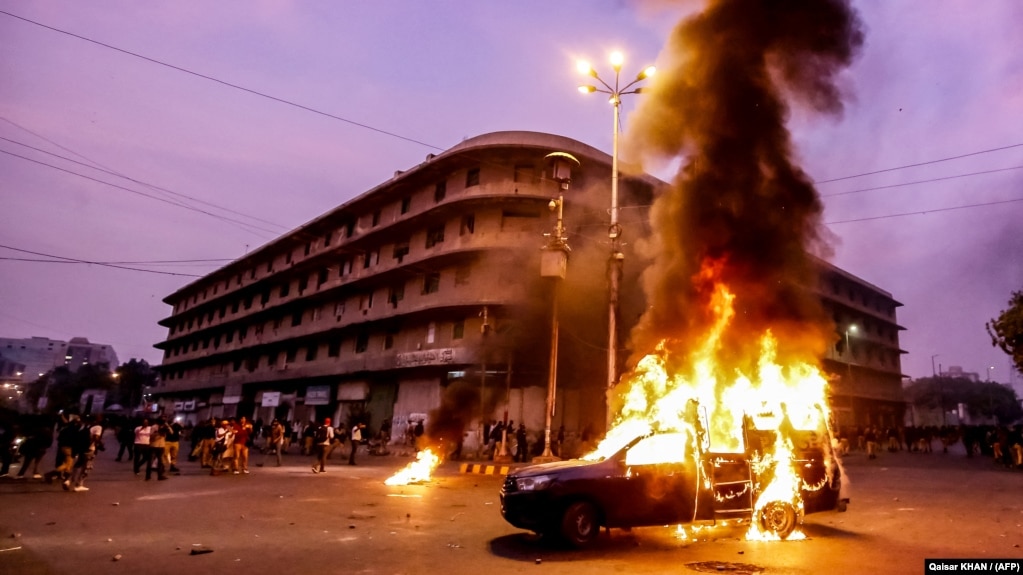
Smoke plumes from a police vehicle set on fire by supporters of Pakistan's blasphemy laws in the southern sea port city of Karachi in October 2024. 
 
Arrested on charges of blasphemy, the convicted often spend months in prison before an actual trial eventuates. Most blasphemy cases in courtrooms are pursued by private groups led by lawyers and backed by networks of volunteers who monitor social media, searching for potential violators of the blasphemy laws. Their aggressive efforts to identify and convict cases reflect a rising "politicization of blasphemy laws. they have made it their cause to punish any possible act of insult to what they hold in reverence", explined Peter Jacob, executive director of the Center for Social Justice Pakistan.
 
The Legal commission on Blasphemy Pakistan has pursued dozens of online blasphemy cases while denying charges can be contrived. "Never before have we seen such foul dishonouring of Islam, the Holy Quran, Prophet Muhammad and other revered figures", claimed Rao Abdur Raheem, a lawyer with the group.
 
Five men were sentenced to death in Rawalpindi in Punjab Province, over accusations of committing blasphemy online. Ten people accused of blasphemy were put to death through incidents of mob vigilante violence. Lat year a police report titled "Blasphemy Business Group" exposed a criminal network that threatened people with fabricated blasphemy charges to secure payoffs. They operated often with official complicity from the Federal Investigation Agency.  
 
https://ichef.bbci.co.uk/news/1024/cpsprodpb/18080/production/_130823489_9d3b528e02bcf1447285f527a9dc92e40205c808.jpg.webp
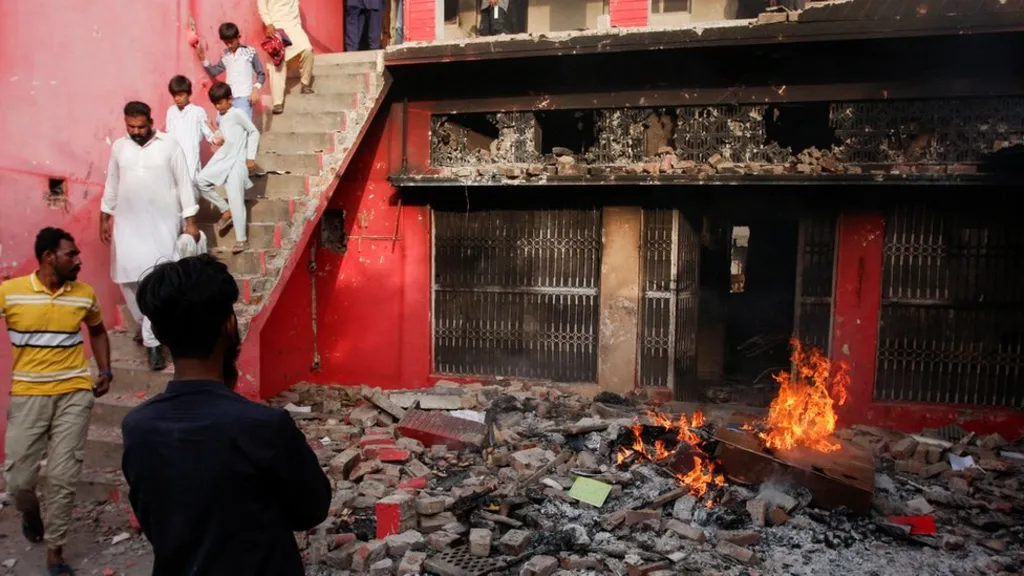
In August dozens of homes and churches were torched in eastern Pakistan after two Christians were accused of damaging the Quran   Reuters


Labels: , , , , , ,

Saturday, August 23, 2025

Tradition of Honor Killings in Pakistan

"Many communities and families insist that their misplaced sense of 'honor' is located in a woman's body and actions."
"That is also why control over a woman's actions and rights find so many colluders across the board in keeping heinous customs like this alive."
Senator Sherry Rehman, Pakistan
 
"In a country where conviction rates often fall to single digits, visibility — and the uproar it brings — has its advantages."
"It jolts a complacent state that continues to tolerate jirgas [Loya Jirgas ... 'grand councils'] in areas beyond its writ."
Constitutional lawyer Asad Rahim Khan  
https://media-cldnry.s-nbcnews.com/image/upload/t_fit-1000w,f_auto,q_auto:best/rockcms/2025-07/250722-honour-killings-rs-3ca01e.jpg
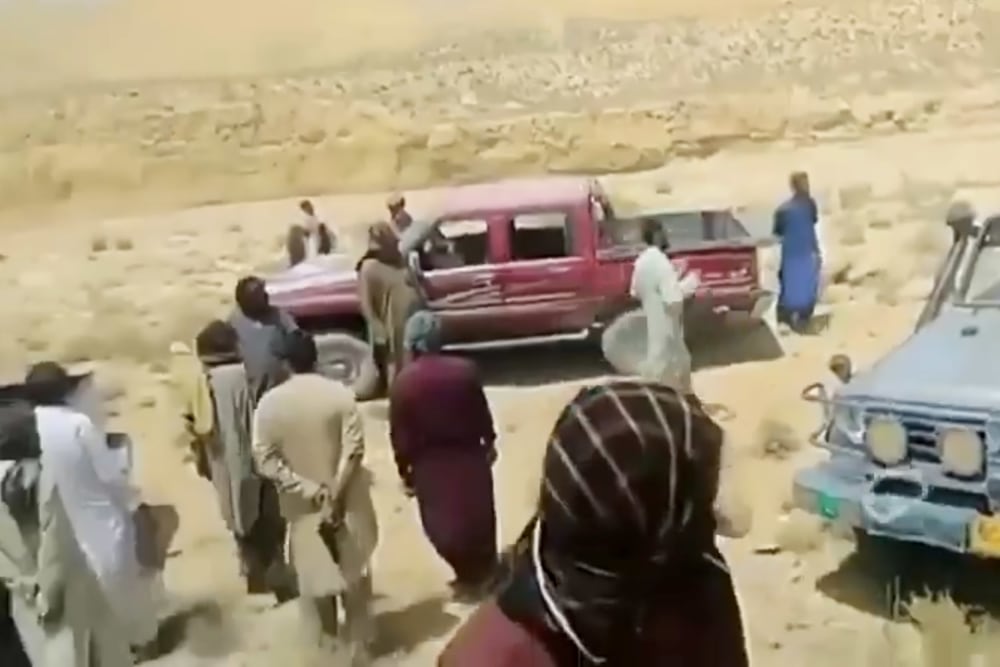
The scene in Balochistan province, Pakistan, before the "honor killing" was carried out. NBC News
 
The two people involved, a man and a woman, accused of having an illicit love affair -- in a country whose strict Islamic moral codes include capital punishment for women who stray from their assigned roles as subservient to men in all matters, for whom the human rights freedom of women in other societies are severely restricted; they may not be in the company of men other than husband, father, brother, uncle or risk the ultimate punishment -- were lured to a neutral place in their village where they were informed they were condemned to death.
 
Taken to an open desert in southern Pakistan, a village crowd of both men and women backgrounded them; for the women a warning lest they ever surrender to the temptation to dishonour their family, their clan, their village; for the men a validation that women who stray from their assigned role as modest wife, daughter, sister, there will be due punishment delivered to restore the honour their disgraceful actions blemished. 
 
Bano Bibi was 35, a wife and mother of three. The man accused of being her lover, Ehsanullah Samalani, 50, a father of four, was in this instance, also punished to restore the honour he had besmirched intolerably. She was shot first, three times, by her younger brother. Her mother, also present, condemned her daughter and supported the punishment that took her life -- for the killing "was necessary to cleanse our family's honor".  
 
Particularly in rural areas of Pakistan, honor killings are rampant; bringing shame by irregular, disapproved conduct by a woman will guarantee lethal punishment. And it is usually family members closest to the woman who will carry out the death sentence. Even a child who refuses marriage to an elderly man, thus bringing dishonor to her family can present as a candidate for death, for centuries-old cultural practices do not bend to the contours of modernity or human rights.
 
The double execution took place in mid-July. Since then, public protests have broken out, causing authorities to take notice, and with that notice, action. That action was spurred by an investigation that resulted in arrests, including that of Bano Bibi's mother for her role in the death of her daughter. On average a woman dies every day for the cultural crime of dishonoring family. A video of that double execution went viral, fully six weeks after the event.  
 
a woman in black and pink floral headscarf is held by two women with headscarves and face obscured and is escorted away.
Bano Bibi's mother, Gul Jan Bibi, said the killings were based on traditional Baloch traditions and were not sinful. (Reuters: Abdul Wali)
 
Pakistan, a nation of over 240 million where fundamental Islam is the law of the land  under Sharia, saw politicians and law enforcement officials spurred to take action. After all, they have time and again vowed to commit to the protection of women, and to take action against perpetrators of honor killings. But traditions die hard, even while women's lives are easily taken in punishment of carnal sins attributed to both the innocent and the 'guilty'.  Despite the government assurances of imminent action, tradition carries on. 
 
The video shows male onlookers watching in silent intensity, some of them filming the execution with their smart phones. Modernity is viewed through the lens of technology, but cultural tradition is set in the crystalline cast of a society whose moral piety is a death machine for any who dare challenge tradition through the irresistible draw of human emotions. 
 
The early June executions, thanks to the video and protests that accompanied its viewing, saw an investigation begin in July, leading to the arrest of over 15 people involved in the double killing. Last year over four hundred women were victimized by these cultural executions, according to the Human Rights Commission of Pakistan, independent of government. Pakistan does have laws to protect against gender-based violence; still such murders go unpunished; tribal code trumping civil law in rural Pakistan. 
 
Relatives most often kill women for refusing forced marriage, for seeking divorce, or for engaging in relationships that men categorize as violations of their values. Criminal convictions resulted in 0.5 percent of all reported honor killings last year. "Incidents every now and then get traction in the media, but it continues in a shameful way", stated Farah Zia, director of the Human Rights Commission of Pakistan. 
 
women wearing headscarves carry white cloth with green and red Arabic script. Behind are signs in English and Arabic.
A video of an "honour killing" of a woman and her lover in Pakistan has sparked protests in Quetta city.  (Reuters: Rizwan Saeed)

Labels: , , ,

Saturday, May 10, 2025

India's Operation Sindoor Against Pakistani Terrorists


"Pakistan and India have enough nuclear weapons to wipe the other side out several times over."
"Their nuclear weapons create a scenario for mutually assured destruction."
"[The arsenals are a defensive move to prevent and deter further fighting, because] neither side can afford to initiate such a war or hope to achieve anything from it."
Syed Mohammed Ali, security analyst, Islamabad, Pakistan 

"Pakistan has every right to give a robust response to this act of war imposed by India, and a strong response is indeed being given."
"[The] heinous act of aggression will not go unpunished".
Pakistan Prime Minister Muhammad Shehbaz Sharif
 
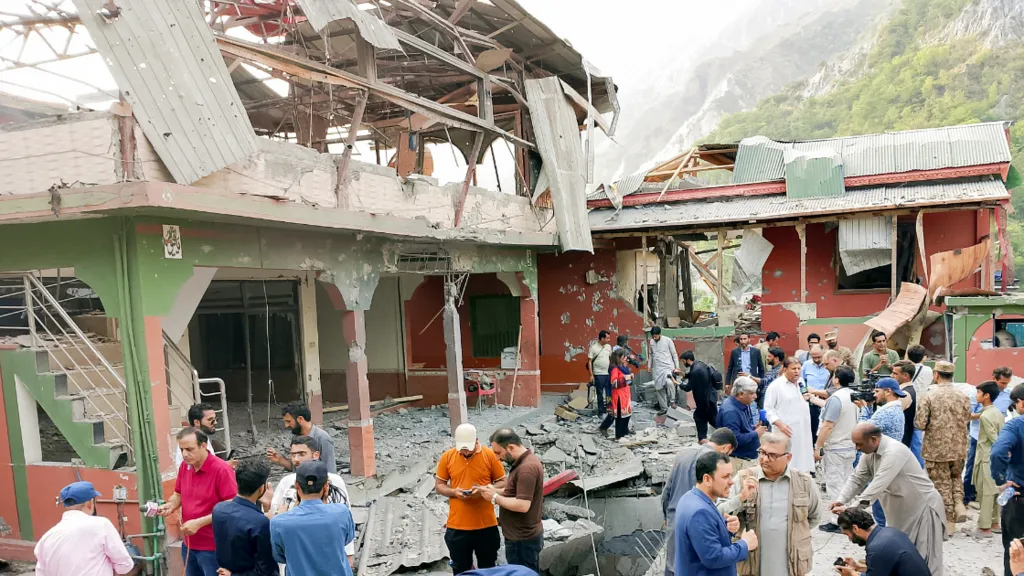
"Missile strikes by India in Pakistan-administered Kashmir targeted at least nine sites] where terrorist attacks against India have been planned."
"[The strikes - named] Operation Sindoor [were part of a] commitment [to hold] accountable [those responsible for the 22 April attack in Pahalgam, Indian-administered Kashmir, which left 25 Indians and one Nepali national dead]."
India Defence Ministry
https://ichef.bbci.co.uk/news/1024/cpsprodpb/1a45/live/5680fde0-2b69-11f0-8686-fb39aea3a90c.png.webp
People inspect a damaged mosque following India's strikes in Muzaffarabad in Pakistan-administered Kashmir   AFP via Getty Images
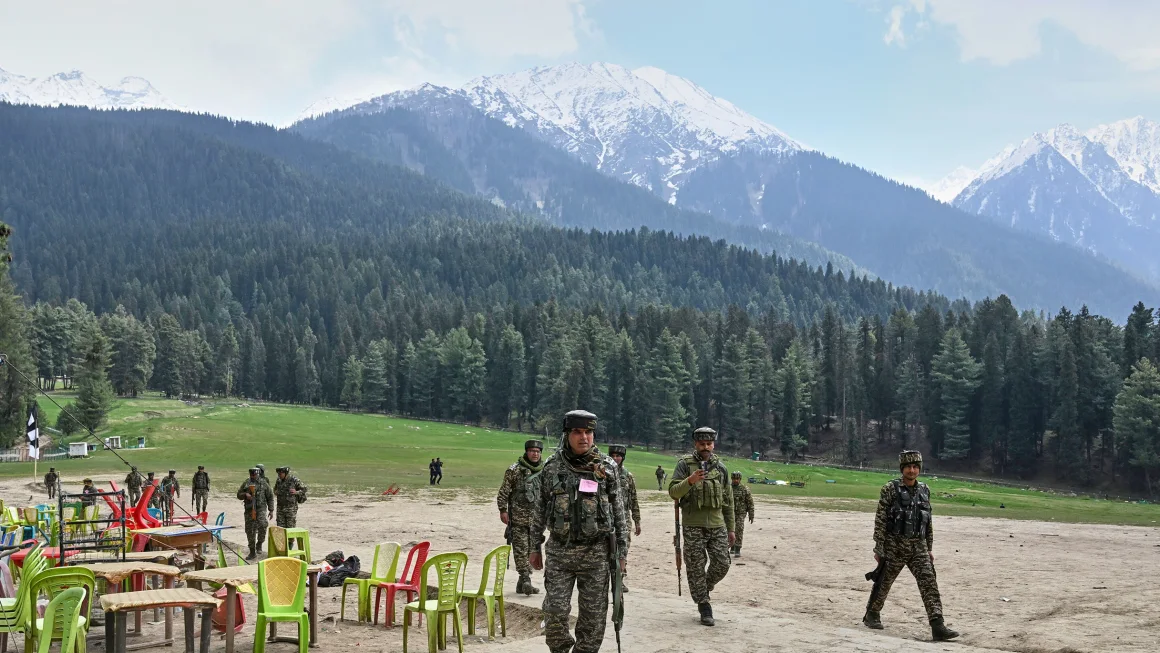
"Throughout 2024, violence continued in Kashmir in response to increasing efforts by New Delhi to consolidate territorial control. Attacks specifically targeted Indian travelers and workers in the region. In June 2024, militants opened fire on a bus carrying pilgrims traveling to a Hindu shrine in the town of Reasi. The attack killed nine and injured over thirty. In October, militants killed seven in Kashmir at a construction site for a tunnel project connecting Kashmir to the northern region of Ladakh."
"On April 22, 2025, tensions escalated after militants attacked Indian tourists in Kashmir, killing twenty-five Indian nationals and one Nepalese national. The incident marked the deadliest terrorist attack in Indian territory since the 2008 Mumbai attacks. India blamed Pakistan for harboring the group responsible for the attack and arrested two Pakistani nationals as suspects. Pakistan denied any involvement, and its defense ministry even suggested the attack was a “false flag operation.” Although no group has been officially identified as responsible for the attack, the Kashmir Resistance—an offshoot of LeT—claimed responsibility online."
Global Conflict Tracker
Both India and Pakistan have a stockpile of nuclear weapons, each 'reminding' the other of a guarantee of mutually assured destruction with neither country publicly disclosing their nuclear capabilities. Each is thought to have amassed between 170 and 180 warheads; short-, long- and medium-range. Each country has its own system of delivery to launch and propel their weapons to targets. The arsenals serve as a defense in prevention and deterrence of conflict beyond the conventional. 
 
Each is aware that neither Pakistan nor India could survive a first nuclear strike and be able to retaliate through "second-strike capability"; a sobering perspective for any government. Both lay claim to Kashmir in its entirety. Border skirmishes equate to instability in the region and have for decades. A heavily militarized border divides each country's part of Kashmir where three wars have been fought in the past. Armed insurgents on the Pakistan side of the divide resist Indian rule, with Muslim Kashmiris in support of the goal of uniting Kashmir under Pakistani governance. 
 
The number of border flare-ups and attacks in India's portion of Kashmir, prompted New Delhi toward an increasingly tough position on Islamabad, accusing it of supporting 'terrorism', which more than adequately describes the reality of the situation. India, as the most populous nation on the planet, spent $74.4 billion on defence in the current year; one of the world's largest arms importers.
 
https://microsites-live-backend.cfr.org/cdn/ff/RDbqGx7aEnmw-n5RZ1KSKoBUl1uLAB0Prufh-3_nV2M/1650906730/public/2022-04/14_India_Pakistan.jpg
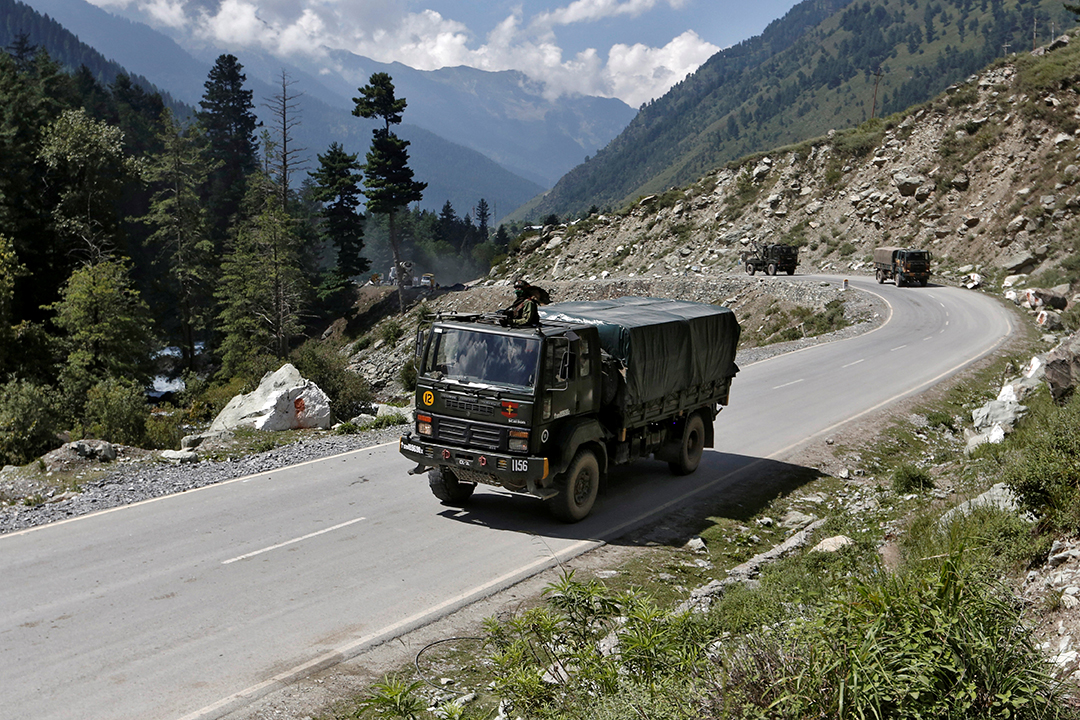
Indian army Trucks on highway leading to Ladakh, Kashmir    Danish Ismail, Reuters
 
Although Pakistan spends a considerable sum -- $10 billion last year -- in arms, India has over double the number of active armed forces personnel than Pakistan. But there is another looming threat that India has that Pakistan doesn't share; its neighbour China, with its aggressive maritime security stance in the Indian Ocean. On occasion both Pakistan and India launch operations into airspace and territories controlled by the other, intended for the most part to damage check-points, installations or sites used by militants. Their lethal antipathy toward one another is religion-driven, not territorial. 

For every step that India takes -- from closing down Pakistan's embassy in India, shutting off a traditional water supply agreement to Pakistan, closing its airspace to air traffic, to targeting sites in Pakistan known to harbour Islamist terrorist groups -- Pakistan follows suit and vows vengeance. Following missile strikes in Punjab province and Pakistan-administered Kashmir, a heavy exchange of fire between the two nations ensued. Pakistani Prime Minister Shehbaz Sharif commended his armed forces for shooting down five Indian jets, hit, he claimed after firing their missiles, while still in Indian airspace.
 
Three planes fell onto villages in India-controlled territory, although India made no official comments. During the April attack in Kashmir, some survivors informed Indian media that the gunmen singled out Hindu men and shot them dead at close range. Pakistan stands accused by India of being behind the attack by a new militant group, Kashmir Resistance. India has identified the group with links to Lashkar-e Taiba, a Pakistani militant group long accused by New Delhi of being supported by Pakistan. 

https://microsites-live-backend.cfr.org/cdn/ff/WFbm3fQomcDjBSRSwIfJtazBINAer5UJKwLB_XfuEwM/1745433127/public/2025-04/Pahalgam.JPG
Adnan Abidi, Reuters  An Indian soldier stands guard on a highway in Kashmir
 

Labels: , , , , , ,

Sunday, April 27, 2025

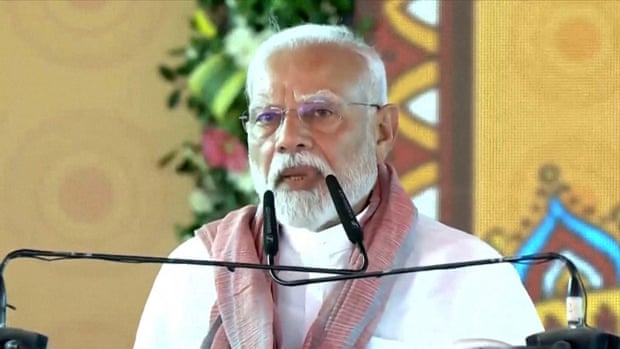
"We Will Pursue Them to the Ends of the Earth"

 
"Those behind this heinous act will be brought to justice."
"Our resolve to fight terrorism is unshakable and it will get even stronger." 
"India will identify, track and punish every terrorist, their handlers and their backers."
"We will pursue them to the ends of the earth."
Indian Prime Minister Narendra Modi
https://i.guim.co.uk/img/media/cbefe9f5ff06aa31113fb0fe19f6961d9bcc4de5/232_0_1458_820/1458.jpg?width=620&dpr=1&s=none&crop=none
Tensions escalate between India and Pakistan after Kashmir attack – video

"We will not only reach those who have perpetrated this incident but also those who, sitting behind the scenes, have conspired to commit such acts on the soil of India."
Indian Defence Minister Rajnath Singh
 
"We cannot get over the fact that such an incident has occurred, and that too in the place we call heaven on earth."
"Tourists have been coming to Kashmir since the last three or four decades and they have never been touched."
Akib Chaya, hotel owner, member, Kashmir Chamber of Commerce
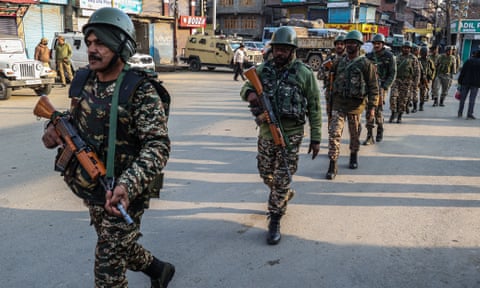
Indian soldiers in Anantnag, Jammu and Kashmir
Indian soldiers in Kashmir. The army confirmed there had been limited firing of small arms overnight. Photograph: Nasir Kachroo/NurPhoto/Rex/Shutterstock
 
"[Attempts to link Pakistan to the Pahalgam attack are] frivolous [Islamabad will respond to any Indian action]."
"Any threat to Pakistan’s sovereignty and to the security of its people will be met with firm reciprocal measures in all domains."
Pakistan statement
"Clear evidence of cross-border complicity" has been presented by Indian investigators in the wake of the gruesome attack on tourists in Indian Kashmir when gunmen opened fire in a deadly attack that saw 26 innocent people die. A group called the Resistance Front claimed responsibility for the attack. Indian officials identify it as a proxy for the Lashkar-e-Taiba based in Pakistan. For its part, Islamabad has vehemently denied any involvement, denying that India has in fact any proof of their accusations against Pakistan. 

The Kashmir attack represented the most deadly assault in years in the restive region, an attack that targeted civilians. The region has seen more than its share of anti-India attacks in the past thirty years. Indians are shocked and outraged at the deadly event, raising calls that their country take action against Pakistan. The initial claim for the attack was a terrorist group previously unheard of, that called itself the Kashmir Resistance. Pakistan's instant reaction was that there was no involvement on its part.
 
India's "belligerent measures" were condemned by Pakistan's National Security Committee. Claiming that while Pakistan remained committed to peace, it would never permit anyone to "transgress its sovereignty, security, dignity and inalienable rights". At a time when it was a Pakistani 'resistance' group that mounted the deadly attack, so in essence, Pakistan is condemning India for reacting to the transgression of ITS sovereignty, security, dignity and inalienable rights. How that makes sense is debatable. 

https://media.cnn.com/api/v1/images/stellar/prod/ap25113409962448.jpg?c=16x9&q=h_653,w_1160,c_fill/f_webp

The most immediate reaction was that of India, followed by Pakistan, cancelling visas for their nationals to enter the others' countries. New Delhi has been 'warned' by Islamabad for suspending a water-sharing treaty in the aftermath of the tragedy. All visas issued to Pakistani nationals were to be revoked effective Sunday; and all Pakistanis in India at the present time given notice they must leave before the expiration of their visas based on a revised timeline.
 
Other measures were also announced, including reducing the number of diplomatic staff, closing the sole land border crossing between the two nations, and suspending a crucial water-sharing agreement. Pakistan, in retaliation has closed its airspace for all Indian-owned or -operated airlines, as well as suspending all trade with India. Included in that suspension is trade to and from any third country. There were hints by government authorities representing both sides that matters could escalate militarily.
 
Both India and Pakistan claim Kashmir as their territory entirely, even as each administers a part of the disputed Kashmir. Clashes between the two countries' military break out occasionally and then die down almost spontaneously. Kashmiri separatists out of Pakistan mount terrorist raids of much smaller dimensions from time to time in a never-ending commitment to bring terror to Indian Kashmir. These are Islamist death squads brewed in Pakistan in reflection of the culture of war and confrontation between the two competitors for Kashmiri exclusive entitlement.
 
For the present, a number of Pakistani diplomats were ordered to leave New Delhi, while Indian diplomats were summarily recalled from Pakistan leaving diplomatic missions in each of the countries with reduced staff from May 1 forward. Indian citizens were advised not to travel to Pakistan by India's foreign ministry, which has also urged those of its citizens currently in Pakistan to depart for India.
 
The landmark water-sharing treaty in place between the two countries despite two wars and a major border skirmish, has now been suspended indefinitely, with Pakistan angrily responding to warn that any Indian attempt to stop or divert the flow of water would be considered an "act of war", to be met with "full force across the complete spectrum" of Pakistan's national power.
 
https://media.cnn.com/api/v1/images/stellar/prod/ap25113359875068.jpg?q=w_1160,c_fill/f_webp
 
"We very much appeal to both the governments … to exercise maximum restraint, and to ensure that the situation and the developments we’ve seen do not deteriorate any further."
"Any issues between Pakistan and India, we believe, can be and should be resolved peacefully through meaningful mutual engagement."
UN spokesperson, Stéphane Dujarric
 
"There are many imponderables Modi must deal with, including the significant capabilities of the Pakistan army."
"But given the horrific nature of the attack and the outrage that has convulsed the nation – the victims came from 15 states across India – the PM may have no option but to explore some major risks."
C Raja Mohan, veteran analyst, Indian Express
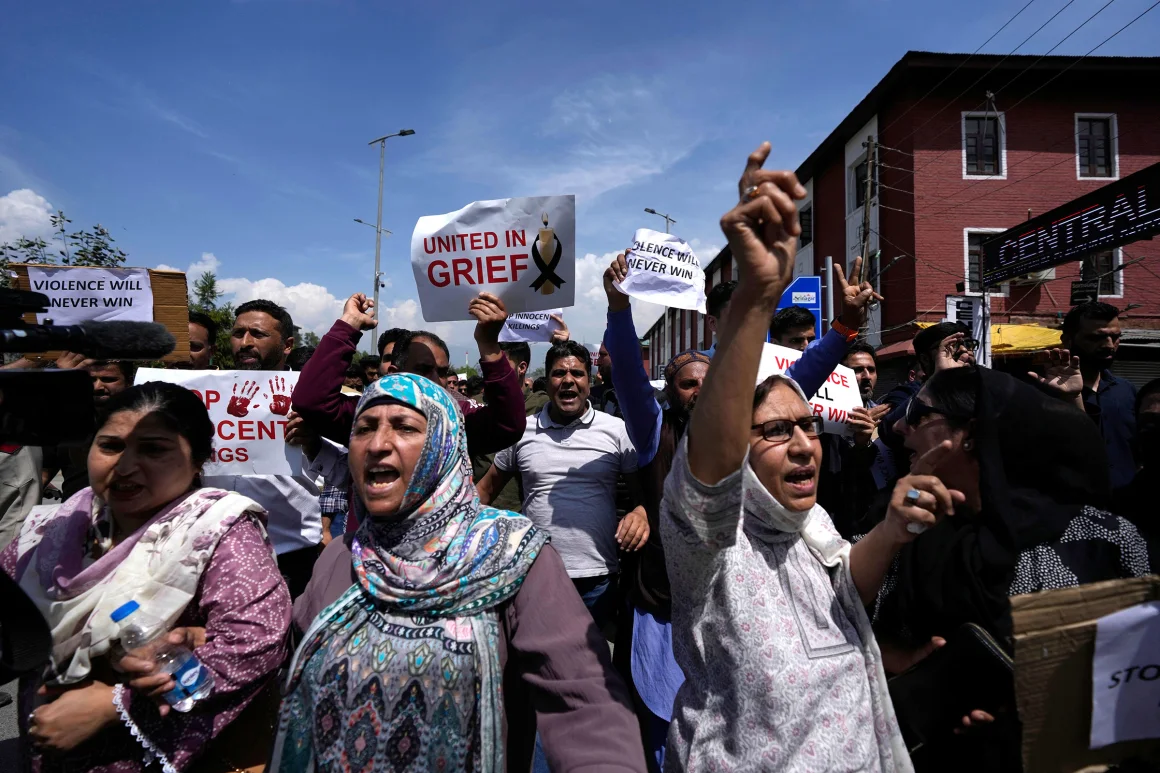
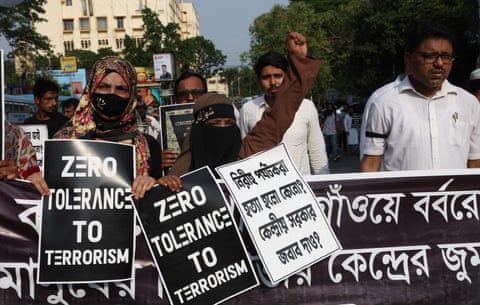
People hold placards at a protest
Supporters of the Indian Secular Front, along with others, stage a protest over the killing of more than 25 tourists at Pahalgam. Photograph: Rupak De Chowdhuri/NurPhoto/Rex/Shutterstock

Labels: , , , ,

Friday, March 14, 2025

Ancient Peoples' Demands of Ancestral Land Relinquished for Sovereign Recognition

"[I initially] fought together with other police officers [to try and hold off the militants until] the ammunition ran out."
"They [the BLA -- Balochistan Liberation Army] were moving in front of us on the mountain and they were much more numerous than us, in the hundreds."
"[With me were four railway police and two members of Pakistan's paramilitary Frontier Corps (FC).]"
"I told my companion to give me the G-3 rifle because it is a better weapon. When I got the rifle and the rounds, we also started firing back. I used to fire one shot at a time at them so that they could not come near us and the train... [But] in an hour-and-half, our rounds were over... We were helpless."
"They started checking cards and telling people to go this way, this way, [the hostages were separated into groups alongside the train, according to their ethnicity]."
"[The militants were receiving orders] They would get orders to kill, and they would pick up people from the group and kill them. They killed many people - both army personnel and civilians."
Railway Police Officer 
https://ichef.bbci.co.uk/news/1024/cpsprodpb/5550/live/80509800-0004-11f0-94e3-e9eb8df1ddd1.jpg.webp
More than 400 people were on the train when it was attacked  AFP

Armed insurgents attacked a passenger train in southwestern Pakistan on Tuesday in a scene of violent chaos. There were 440 passengers on the train, 21 of whom were killed by members of the separatist Baloch Liberation Army group before Pakistani security forces arrived to counter the assailants, and in the crossfire 33 of the attackers were killed, the passengers rescued. 

No passengers died because of the rescue operation, according to Information Minister Attaullah Tarar; the operation "has successfully reached its logical conclusion". He praised the military for "averting a potential catastrophe". 

Three soldiers stationed there and guarding the railway track were also killed in the attack on Tuesday. The Baloch Liberation Army were quick to claim responsibility for the train attack that some news reports stated took place in a tunnel in a remote part of Balochistan. Survivors contradicted the stated venue, claiming the attack took place in the open, before the train entered the tunnel.
 
According to the BLA, the group had been prepared to free passengers as long as authorities agreed with their demand that jailed BLA militants be released. Pakistani security forces are regular targets of the BLA which has also attacked civilians. Chinese nationals among thousands working on multibillion-dollar infrastructure projects in Balochistan have been frequent targets. 

https://media.cnn.com/api/v1/images/stellar/prod/gettyimages-2204018391.jpg?c=16x9&q=h_653,w_1160,c_fill/f_webp

The attacked train had been travelling from Quetta to the northern city of Peshawar when the militants blew up the tracks which forced the engine and nine coaches to come to a shuddering halt. Hostages' lives would be at risk should the government fail to negotiate, the BLA attackers warned.
 
Balochistan is the largest and least populated province in Pakistan. The ethnic Baloch minority claiming discrimination and exploitation by the central government demand, much like the Kurds in Kurdistan, that their ancient heritage territory be recognized as sovereign, their territorial homeland. Balochistan is a territory rich in natural resources such as oil and minerals.
 
Bordering Iran and Afghanistan, Balochistan has hosted a long-running insurgency with separatists demanding greater autonomy from the Islamabad government, and a larger share of the natural resources of the region. On either side of the Iran-Pakistan border insurgencies have impacted both countries whose governments each claim the other supports separatist groups.
 
The Pakistan military has become vulnerable to attacks with their frequent use of trains to travel from Quetta, capital of Balochistan, to other parts of the country. A train station in Quetta was attacked in November, when the BLA carried out a suicide bombing, which killed 26 travellers.
 

Labels: , , , ,

Wednesday, January 15, 2025

Raising Islamist Jihadists

"The ministry will open 10 regional centers in various states where the madrassa registration will be offered and those madrassas which will not meet requirements for registration will be closed."
Pakistan's Education Minister Shafqat Mehmood 
 
"[Successive Pakistani governments – both civilian and military – had attempted to reform madrassas but each time ended up surrendering more authority]."
"Even today, several ministries, such as religious affairs, education, interior, and commerce, and law enforcement and counter-terrorism bodies, have been dealing with the madrassa issue separately, making it more complicated."
Amir Tuaseen, Karachi-based analyst, former head, Pakistan Madrassa Education Board
 
"[More than 30,000 madrassas will soon be brought into the] mainstream [fold and overseen by the ministry of education.] An Islamic education will continue to be provided but there will be no hate speech."
Major-General Asif Ghafoor
https://cdn-i.pr.trt.com.tr/trtworld/w1180/h663/q70/0m_55909_Pakistanimadrassasone_1558340517230.jpg
There’s no exact number of madrassas in Pakistan but estimates put the number in the tens of thousands. They provide food, housing and a religious education to students from around the country. Many teach both male and female students.   AP
 
Religious seminaries in Pakistan have long been seen as contributing to violence and radicalization; their graduates have supplied recruits for the Taliban and other militant groups. In an earlier era, these same madrassas established all over Saudi Arabia with its strict Wahhabi code, furnished students enrolled within with the very same attributes. Students were taught to memorize the Koran, and this is what the curriculum consisted of. Radicalization was rife; it was from one of these madrassas in Saudi Arabia that a radicalized student by the name of Osama bin Laden went on to make terrorism through al-Qaeda a feared phenomenon.
 
Arabic is not the native language of Pakistan, but in the Pakistan-based madrassas it is Arabic that is taught, so that the students can recite all the passages of the Koran in Arabic. It is held that only Arabic can express the sacred scripture as it is meant to be. Pakistan's Islamic schools have long been a concern of the country's government. True, official Pakistan assured the United States and other NATO countries that it could be relied upon as a partner in the 'war against terrorism', while at the same time giving haven to the Afghan Taliban. Osama bin Laden's compound sat in Abbottabad, Pakistan.
 
Now, however, Pakistan, threatened by its own Taliban and violent jihadist Islamist groups has been attempting to control the content of the madrassas which typically teach only the Koran, and aspects from the Koran that glorify jihad. No other subjects taught in modern schools are part of the curriculum; this is a single and singular-faceted education system. They are not unique to Pakistan. Madrassas of this type have been established with Saudi funding all over the world.

The Pakistani Ministry of Education has enacted a requirement for madrassas to register with them in an effort to increase accountability. Islamist political parties resisted the government moves and the largest of the political parties, Jamiat Ulema-e-Islam, persuaded the government to end the registration requirement. A colonial-era law governing educational groups provides scant oversight of curricula, activities and funding.

The government cited concerns that the old system could undermine counterterrorism efforts and breach international commitments to fight money laundering and financing of terrorism. In Islamabad, anti-government protests emerged: "If the government deviates,the decision won't be made in Parliament, but on the streets" threatened Maulana Fazlur Rehman, chief of Jamiat Ulema-e-Islam. In the 1970s there were dozens of madrassas in Pakistan.
 
https://cdn-i.pr.trt.com.tr/trtworld/w664/h374/q70/0m_55905_madrassapakistani1_1558340965864.jpeg
Pakistani government is juggling with different options to regulate centuries-old madrassa system. One such option is to set up a Imam Hatip schooling system based on the pattern of Turkey, where Islamic schools offer a mix of religious and worldly education.  TRTWORLD

U.S. and Arab funding in the 1980s transformed the madrassas to recruitment centres for Islamic volunteers to fight the Soviet forces in Afghanistan. At present, some 30,000 madrassas operate in Pakistan. Some madrassa teachers endorsed the Al-Qaeda ideology, graduating future Taliban leaders. Following the attacks of September 11, 2001, pressure was exerted on Pakistan to regulate the schools. "The post-9/11 war on terror and events like the 2005 London bombings raised global concerns about the lack of effective madrassa monitoring", explained Abdur Rehman Shah, a madrassa affairs expert with Tongji University in Shanghai.

In 2014, Islamist militants attacked a military-operated school in north-western Pakistan and over 145 people were killed, leading to madrassas observation becoming central to counterterrorism efforts. Raids targeting seminaries suspected of militant links by security agencies followed. The government attempted to curb Islamist parties' influence over seminary boards in 2019. Over 17,500 madrassas enrolled 2.2 million students, according to official data. Poor Pakistani children were given free education, meals and housing.

Pakistan boasts the second-highest number of children not attending schools globally, with 22.8 million children from age 5 to 16 not attending school, representing 44% of the country's young. The country's public education system fails to meet the needs of millions of its children. Supported by private donations, madrassas partially fill the public system gaps. Their education consists largely of Islamic theology and Arabic. Many of the madrassas emphasize doctrinal purity and Islam's defense. 

Administrators of madrassas claim they are unfairly blamed for militancy.

"There are many people who go to liberal schools and are radicalized."
"Terrorism must be curbed, but scapegoating madrassas is not the solution."
Qari Shahid Gul, teacher, Karachi madrassa
https://cdn-i.pr.trt.com.tr/trtworld/w664/h374/q70/0m_55908_madrassapakistani3_1558339843492.jpeg
As there has long been a concern that the madrassas produce unskilled graduates who espouse intolerant misinterpretations of Islam, many organized attempts have already been made to "modernize" them. TRTWORLD


Labels: , , , , ,

Wednesday, August 02, 2023

The Democracy That Is Nuclear Pakistan

"The rising instability and militant attacks provide a window to all militant organizations, including ISKP [branch of Islamic State centred in Afghanistan], to ramp up their attacks."
"These attacks on police, political rallies and security forces have ended the brief illusion of peace in Pakistan."
Zahid Hussain, political analyst
 
"People were chanting 'God is Great' as the leaders arrived."
"[I was standing outside the tent] and that was when I heard the deafening sound of the bomb."
Khan Mohammad, local resident
https://i.guim.co.uk/img/media/71f986fdfba28d17bded61b5ef60db992f04928c/306_224_3150_1890/master/3150.jpg?width=620&dpr=2&s=none
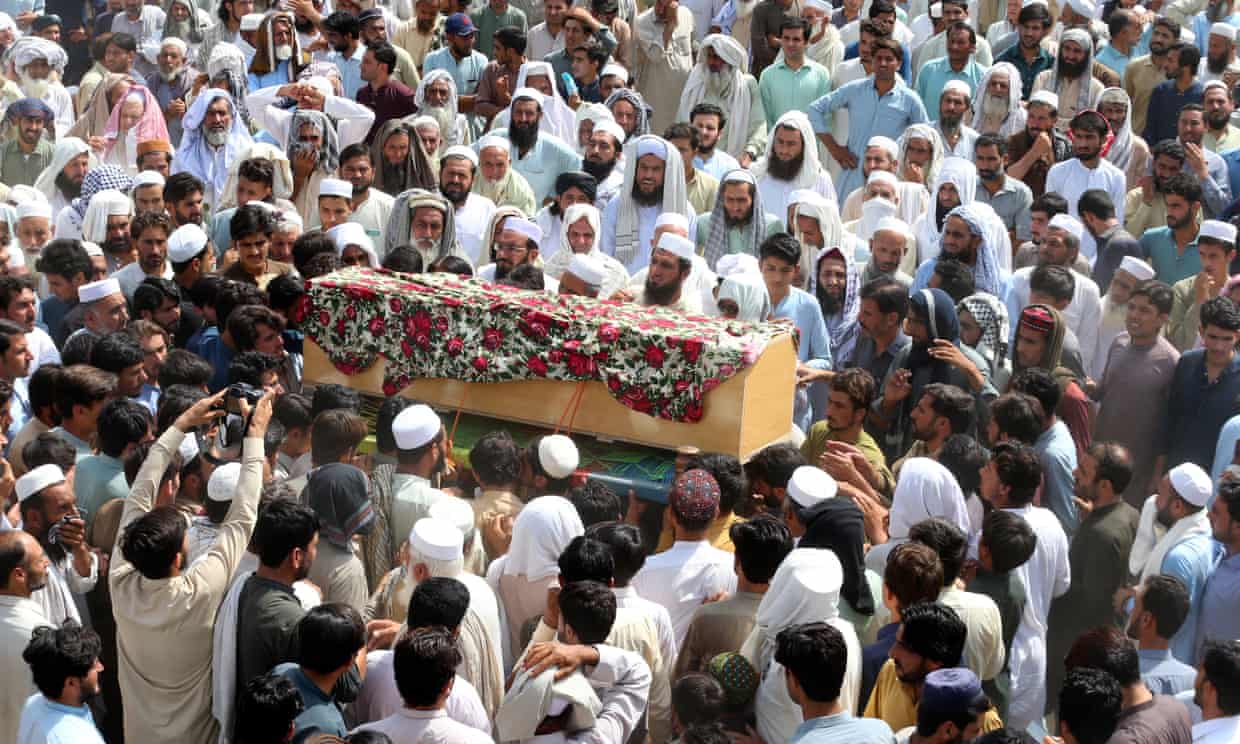
Relatives and mourners carry the casket of a victim killed in Sunday's suicide bombing in Khyber Pakhtunkhwa, Pakistan. Photograph: Mohammad Sajjad/AP

Violent Islamists have long made a comfortable home for themselves in Pakistan. It is where Osama bin Laden, the leader of al-Qaeda was given safe haven at Abbottabad, when U.S. troops in Afghanistan were searching for his whereabouts after the mastermind of the 9/11 events publicly celebrated its success. Masquerading as a 'partner' with the West in the campaign against terrorism, Pakistan's military and its Inter-Services Intelligence agency founded, trained and equipped the Afghanistan Taliban, recognized universally as a terrorist group.

Pakistan's leaders appear to have overlooked the growing militancy of its own Taliban in the process of supporting one that would eventually misrule its neighbour. The tribal villages in the mountains between Afghanistan and Pakistan are a never-ending source of vibrant, violent extremism, and a threat to Pakistan itself necessitating that the Pakistan military engage in battles as the tribal extremists made an effort to extend their territory, endangering nearby nuclear weapons depots.

From Pakistan, a terrorist group of extremist Islamists infiltrated and attacked Indian Mumbai in a bloody four-day assault and massacre that succeeded in killing over 160 people, by Lashkar-e-Taiba (LeT) or Army of the Pure, in November of 2008. The country is a breeding ground for terrorist groups. And now the Islamic State has claimed responsibility for the latest suicide bombing that killed 56 people attending an election rally for a pro-Taliban cleric.

The bombing took place in Bajur, wounding close to two hundred people, killing at least five children. A reflection of tribal/sectarian antipathies between Islamist groups, present in Kyber Pakhtunkhwa province, bordering Afghanistan. The ISIL group targeted the Jamiat Ulema Islam party whose chief is cleric and politician Fazlur Rehman, with ties to both the Afghan and Pakistani Taliban.

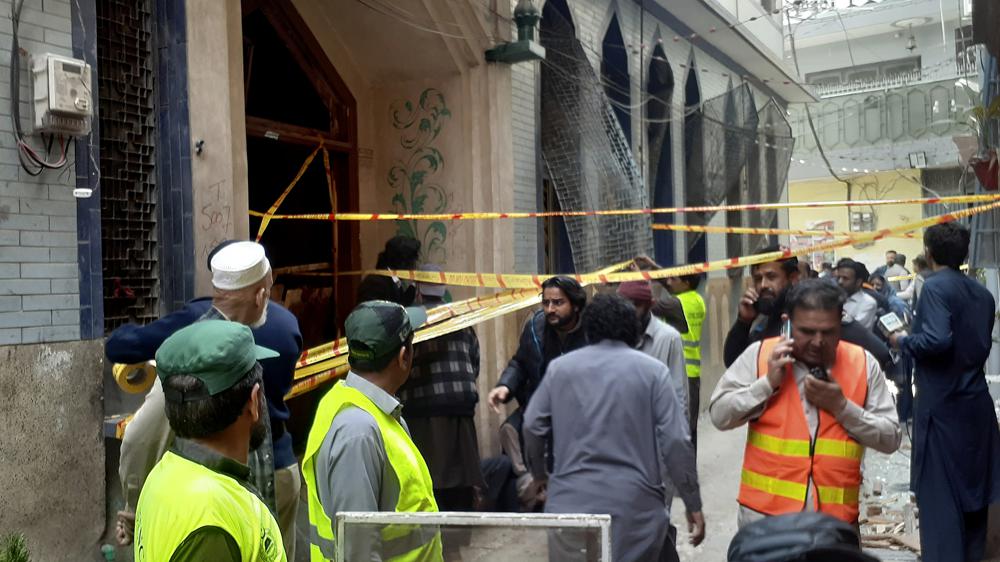
An estimated thousand people were crowded within a tent near a market, for a rally preparatory to fall elections. Khan Mohammad, a local resident who stood outside the tent and witnessed the aftereffects of the bomb blast, stated later that he had heard people crying for help. Minutes afterward, ambulances arrived to begin evacuating the hundreds of wounded people.
 
An ambulance arrives to pick up injured people.
An ambulance is set to transport injured people after a bomb explosion in the Bajur district of Pakistan's Khyber Pakhtunkhwa province on Sunday. (Rescue 1122 emergency service/The Associated Press)

 Investigating police knew well before the statement implicating the Islamic State in the carnage, that an initial investigation led them to believe that the regional affiliate of Islamic State, a Taliban rival, would be the likeliest source to have been involved. This, despite that a Pakistani security analyst pointed to factions that had broken off from the Pakistani Taliban as possible suspects, instead. Pakistan does not lack for any number of viral, vicious Islamist terror groups; they find their natural home there.

By Monday funerals were taking place for the dead. Local customs mandate that female relatives and children at their family homes, cry out loudly in their grief, while beating their chests in anguish. Hundreds of men gathered around to follow caskets to mosques and open areas for funeral prayers and then to trek into the hills for burial services in rituals as old as time itself.

Those that could be treated for relatively light wounds sustained in the blast were released from hospital while the critically wounded were transported to the provincial capital of Peshawar by army helicopters. Some critically wounded people died while in hospital and it is expected that the death count may yet climb again as more succumb to their grievous wounds.

https://i.cbc.ca/1.6922566.1690733683!/fileImage/httpImage/image.jpg_gen/derivatives/original_1180/pakistan-bomb.jpg
A worker inspects the scene of the explosion in the Bajur district of northwest Pakistan on Sunday. (Rescue 1122 emergency service/The Associated Press)

Labels: , , , , ,

Tuesday, March 08, 2022

What Goes Around Comes Around


"Panic spread among the worshippers when the firing started. I ran to save my life."
"Suddenly a man came in and started firing... He shot many people [and] then closed his eyes and blew himself up."
"After that, I have no idea what happened."
Hospitalized Pakistani worshipper at Shi'ite Peshawar mosque
Soldiers inspect the mosque after Friday's bomb blast in Peshawar. (Abdul Majeed/AFP/Getty Images)
 
The death toll of 58 Shi'ite worshippers last Friday at a Peshawar mosque is likely to rise, according to police, given that among the 194 that had been wounded in the attack, many were in critical condition. The suicidal attacker is among the dead. It had not immediately been confirmed who was responsible for the attack. The Pakistani Taliban claim they were not involved, and initially no other group had come forward to boast of the attack.

Pakistan's Shi'ites have long been under threat by the Sunni majority, targeted by Muslim Islamist militants; Islamic State and Tehreek-e-Taliban Pakistan. In a sense, this deadly sectarian conflict can be laid at the responsibility of Saudi Arabia whose Wahhabist sect of puritanical Islam, dating back centuries and more recently renewed, was spread, courtesy of Saudi oil money that enabled the building of madrasas built everywhere in the Muslim world and beyond.

Students attending such schools are taught the fundamentals of 'pure' Islam, in which the concept of violent jihad is considered one of the pillars of Islam, an obligation of all true faithful of Islam to engage. One of the better-known, modern day illuminati of the Wahhabist school of Islamism none other than Osama bin Laden. The targeted mosque was the sole place of worship for Pakistani Shi'ites in the old city of Peshawar.

"We are in a state of emergency and the injured are being shifted to the hospital", disclosed police officer Mohammad Sajjan Khan. Wahhabist Islam considers Shi'ism to be false Islam and those who practise it, no more and no less practising apostasy. Jihad is directed to destroy their lives since they are regarded as opponents not supporters of Islam. 
 
An armed assassin arrived at the mosque on a motorcycle. He fired at police when he was stopped, then forced his way into the mosque hall crowded with the faithful, began firing, and finally detonated his suicide vest. Prior to entering the mosque the attacker shot at police guards standing at the entrance to the mosque, killing one. Police had the impression there were two men involved, initially. 
 
An injured man sits on a stretcher in Peshawar, after a bomb blast in a mosque during Friday prayers. (Khuram Parvez/Reuters)

There is deadly irony in this situation in Pakistan. While ostensibly a partner in the global war against terrorism, Pakistan's Inter-Intelligence Agency trained and armed the Afghan Taliban which found haven inside Pakistan's mountainous regions bordering Afghanistan following the U.S.-led invasion of Afghanistan to roust Osama bin Laden and al-Qaeda whom the Taliban were sheltering in Afghanistan. 
 
Bin Laden himself was eventually domiciled in Abbottabad, Pakistan, his compound located near a Pakistani military garrison, where US special forces eventually caught up with him.

And while surreptitiously Pakistan, through its military was aiding and abetting the Afghan Taliban, in their own Islamist mountain tribal communities their own Taliban sprang up. The Pakistani Taliban became a threat the government of Pakistan had to reckon with, and still attempts to clamp down on. Although a unit of Islamic State eventually claimed it was involved in the suicide attack, it is entirely likely it was indeed the work of the Pakistani Taliban.

With the ascension to power in Afghanistan, the Afghan Taliban have emboldened the activities of the Pakistani Taliban. And they have launched attacks into Pakistan from the safe haven that Afghanistan has now become for them, despite that the Afghan Taliban had publicly vowed that the country they once again govern will never become a launching pad for terrorist attacks against their neighbours. 
 
Which was precisely what Pakistan had been from 2001 forward. Now, is is the government of Pakistan that has appealed to the governing Afghan Taliban to hand over any Pakistani Taliban on their soil who launch attacks into Pakistan. So far, none have been.

Rescue workers and volunteers gather at the site of bomb explosion in Peshawar, Pakistan, Friday, March 4, 2022. A powerful bomb exploded inside a Shiite Muslim mosque in Pakistan's northwestern city of Peshawar on Friday, killing more than 30 worshippers and wounding dozens more, many of them critically, police said. (AP Photo/Muhammad Sajjad)

Labels: , , ,

Monday, December 13, 2021

Fine Work,Darul Uloom Haqqania Madrasa!

"The world has seen their capabilities to run the country through their victories on both the diplomatic front and on the battlefield."
"[The Taliban takeover could have been even bloodier; but they] would not repeat the mistakes of the 1990s."
"We feel proud that our students in Afghanistan had first broken the Soviet Union and now sent the U.S. packing. It is an honour for the madrasa that its graduates are now ministers and hold high positions in the Taliban government."
"I advise the international community to give a chance to the Taliban to run the country."
"If they are not allowed to work there will be a new civil war in Afghanistan, and it will affect the entire region."
Rashidul Haq Sami, vice-chancellor, Darul Uloom Haqqania madrasa, Pakistan
Shiekh Idress, an Islamic scholar, speaking to a class of 1,500 students at Darul Uloom Haqqania seminary, one of Pakistan’s largest and oldest.
Photograph: New York Times
 
One of Pakistan's largest, oldest religious seminaries boasts its pride at having educated great numbers of Taliban leaders. No other school in the world can boast of such an achievement. Its alumni hold key positions in the new government of Afghanistan. Of course there are differing perceptions altogether of what the institute has achieved; its critics insist on the other hand, that it is a university of jihad, responsible for sowing violence across the region for many years.

Those that are not associated with the school and skeptical of its claims, express their concern that such extremist madrasas along with the Islamist entities linked with them may now feel even greater entitlement to help feed further radicalism in Pakistan and beyond. And Pakistan has an absolute embarrassment of such schools of jihad; altogether over 30000 seminaries. Perhaps more troubling, they are under government control.

But the school argues it has changed; and that the Taliban must be given the opportunity to demonstrate in real time that they have moved beyond the gratuitous brutality that marked their first rule in Afghanistan two decades earlier. Which would, of necessity, require overlooking entirely the surge of violence that brought them to power. Reports of reprisal killings, limits on girls attending school, and brutal clampdowns on free expression have thus far distinguished the reborn Taliban in their Islamic Emirate of Afghanistan.

Alumni of the Darul Uloom Haqqania situated some 100 kilometers from the border with Afghanistan founded the Taliban movement that ruled Afghanistan in the 1990s. The Pakistan military and its Inter-Services Intelligence agency work directly with the Taliban; training, arming, protecting them when the U.S.-led coalition sought to disband them and while the government of Pakistan portrayed itself as a 
'partner' in the 'war against terrorism'.

"Being the alma mater of scores of Taliban leaders, Haqqania certainly commands their respect", noted Azmat Abbas, author of 'Madrasa Mirage: A Contemporary History of Islamic Schools in Pakistan'. The acting interior minister of Afghanistan is Sirajuddin Haqqani who led much of the Taliban's military efforts. There is a $5 million reward for his capture through the U.S. government. The higher education minister is Abdul Baqi Haqqani, the new foreign minister Amir Khan Muttaqi, loyal alumni all.

Mr. Sami's father, known as the Father of the Taliban, was its previous chancellor, Samiul Haq. The Haqqani network is well known for its ferociously violent Islamist credentials. It wouldn't take much for it to turn against the government of Pakistan, but not as long as it has the approval and operates under the aegis of the government. The Haqqani Network, named after the madrasa, is the military wing of the Taliban. It is credited with taking American hostages, for suicide attacks, and for targeted assassinations.

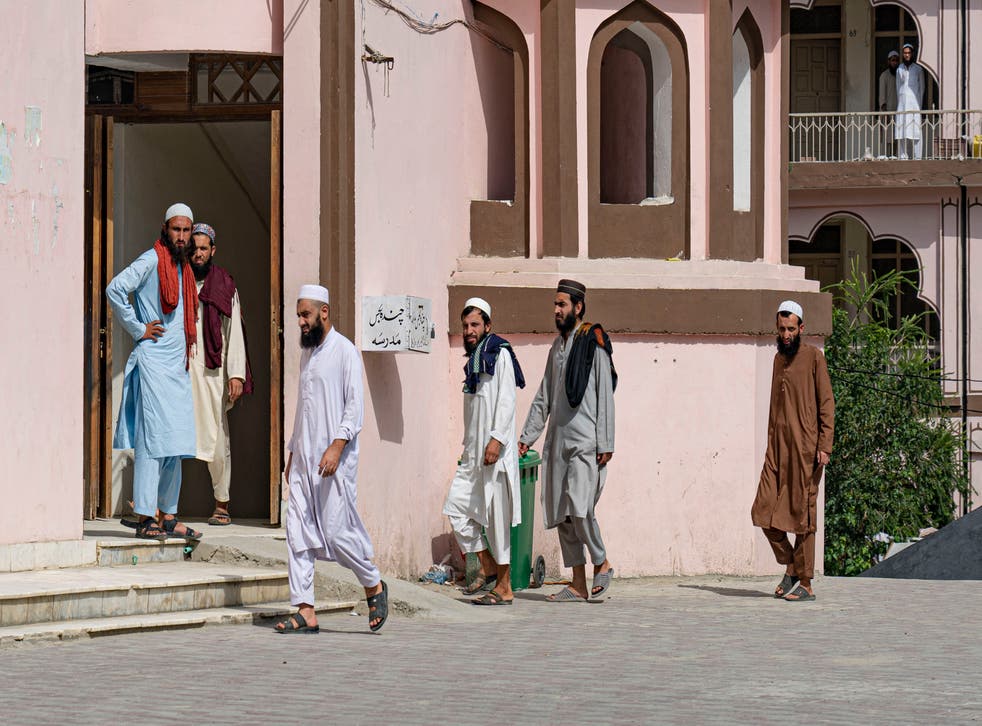
Over four thousand students, primarily from poor rural families, attend the seminary comprised of a network of multistory buildings in a riverside town east of Peshawar. The memorization of the Quran comprises a major proportion of their education, along with Arabic literature. Pakistan society has its own version of the Taliban, as violent and potentially dangerous as is their Afghan counterpart, equally in the terrorist camps of jihad.

<p>Darul Uloom Haqqania seminary in Khyber Pakhtunkhwa province, northwestern Pakistan</p>

Darul Uloom Haqqania seminary in Khyber Pakhtunkhwa province, northwestern Pakistan  (Bel Trew)


Labels: , , ,

Follow @rheytah Tweet