"Disrupting and Degrading and Blinding Iran's Ability to See, Communicate and Respond"
"The Iranians are throwing everything they have at this.""It is all hands on deck.""If their cyber operators are breathing, then they will be on their keyboards."Chris Krebs, former director, Cybersecurity and Information Security Agency (CSIA)"An Iran-linked group calling itself Handala claimed responsibility for a cyberattack on Portage, Michigan-based medical device maker Stryker Corp., carried out on March 11, 2026. Handala said the attack was in retaliation for events related to the conflict in Iran.""The cyberattack affected Stryker’s internal Microsoft software system, disrupting the company’s order processing, manufacturing and shipping.""As a scholar who researches cyber conflict, I’ve found that in periods of geopolitical tension such as the current U.S./Israel-Iran war, cyber operations often sit right next to missiles and airstrikes as a tool that states and state-linked groups use to inflict damage, probe weaknesses and signal resolve to their enemies.""The Stryker case is notable because it shows how quickly a regional conflict can translate into disruption for organizations far from the battlefield. It also illustrates the vulnerabilities of U.S. organizations, including those involved in critical infrastructure."
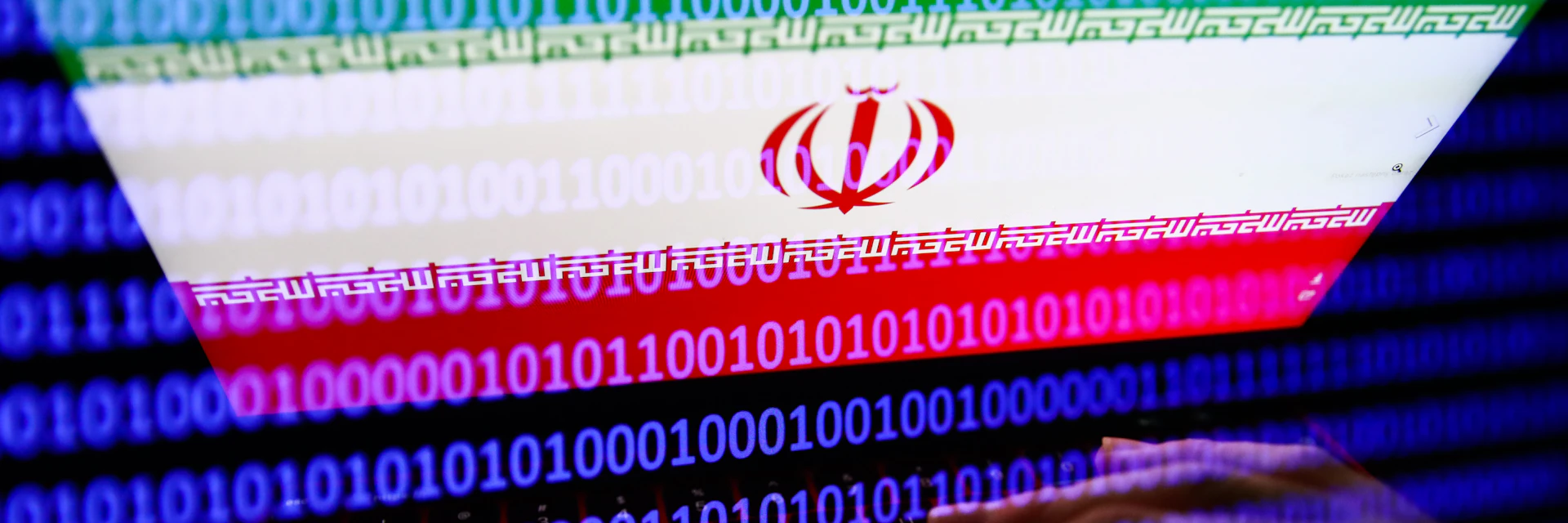 |
| Iran has long had sophisticated hacking operations. Jakub Porzycki/NurPhoto via Gettyimages |
Thousands
of Israelis earlier this month received texts purportedly from the IDF
that encouraged them to download a fake shelter app. Had they done so,
reams of personal data could have been stolen. This, while others in
Israel received a mass text that said: "Netanyahu
is dead. Death is approaching you and soon the gates of hell will open
before you. Before the fire of Iranian missiles destroys you, leave
Palestine." An obvious play to strew panic and
demoralization. According to cybersecu3rity experts, these messages
represent a minuscule portion of a vast cyberwar between Iran, Israel
and the United States.
Iranian
hackers who have stabled themselves in the digital shadows for years
are considered among the most reliably battle-hardened operatives Tehran
can depend upon in this aspect of the Islamic Republic's existential
war of survival. The ploy of sowing fear in the Israeli and American
public is a powerful yet little-appreciated weapon remaining at the
disposal of the Iranian regime, hoping to see some satisfying results in
public chaos and a move in both countries to call off the conflict.
These tactics, familiar to both Israeli and American cyber experts who
have long engaged in their own counter battle, employ their own.
Three
different levels of cyber operators have been identified in Iran, with
boundaries that are frequently blurry, according to analysts and former
cybersecurity officials. The Islamic Revolutionary Guard Corps and
Iran's Ministry of Intelligence operate the most experienced corps of
cyber hackers, with a wide array of front organizations whose purpose is
to introduce plausible deniability for attacks and the issuance of
public threats.
Semi-autonomous
hacking proxies, cybercriminals and contractors are also in the hire of
the Islamic Republic, with volunteer hackers bringing up the rear to
mobilize behind Tehran. Israel-based employees of a large U.S. defence
contractor are believed by cyber experts to have been doxxed. Emails of
politicians in Albania which hosts an Iranian opposition group have
received similar treatment, while a Polish nuclear research centre has
been infiltrated. The most sensitive espionage is thought to have gone
unreported.
A
hacking front named as Handala is believed by cybersecurity researchers
and the American government to be tied to Iranian intelligence; the
hacking group claimed to have wiped 200,000 devices in the most
consequential wartime cyber attack against the U.S. ever seen, according
to one of the most senior civilian U.S. cybersecurity officials, Chris
Krebs. It was Handala that claimed to have broken into FBI director Kash
Patel's personal email account, to publish personal photographs.
Iranian
hackers, no matter their level and association, are not quite the match
of the U.S. and Israel with their formidable offensive capabilities, an
illustration being the significant damage the Iranian nuclear program
sustained in 2009 with the unleashing of the mysterious Stuxnet
offensive. According to General Dan Caine, chairman of the joint chiefs
of staff, the U.S. launched cyber attacks just prior to the February 28
airstrikes on Iran "disrupting and degrading and blinding Iran's ability to see, communicate and respond".
Years
ago, Israel's cyber intelligence dealt one of the most telling blows of
the war, when it hacked the majority of traffic cameras in Tehran as
part of an extensive intelligence-gathering operation preceeding supreme
leader Ayatollah Ali Khamenei's assassination. A popular Iranian prayer
app was used by Israel to send notifications to millions inciting
regime defections: "Only this way can you save your life for Iran", one of the delivered messages read.
According
to analysts in cyber security Iran's more intensely threatening groups
methodically search for vulnerabilities such as entry points to
position themselves to target networks. Seedworm, a group the U.S. and
U.K. state has links to Iranian intelligence has been identified through
attempts to enter U.S. networks since early February, revealed
cybersecurity firm Symantec. Resulting in the group being extracted out
of a U.S. bank, an airport and software company supplying the defence
industry.
Iranian
cyberhacking is focused on breaking through Israel's hardened cyber
defences by launching thousands of wiper attacks on Israeli companies,
with success in hitting 50 of them. Security cameras hacked across
Israel and the Gulf aided Iran to target drone and missile strikes,
pointed out Israeli cybersecurity company Check Point Software. Gill
Messing at Check Point added Iranian hackers demonstrated a 'new level'
of "scale, effect and sophistication" co-ordinating strikes with the mass text messages sent to Israeli citizens.
There
is also speculation that Tehran, in throttling its internet for the
purpose of domestic censorship, might have inadvertently set back its
own hackers' advances in cyber offences. Although there is some fear
that Iranian hackers may have infiltrated undetected into sensitive
economic or military targets, biding time to suck up data. "They could have longterm access that they are not ready to burn", suggested Andy Piazza at cybersecurity firm Palo Alto Networks.
 |
| Since war began, Iranian hackers have been at work throughout the Persian Gulf region – and far beyond. Still from YouTube video |
Labels: Cyber Espionage, Cyber War, Cybersecurity, Islamic Republic of Iran, Islamic Republication Guard Corps, Israel, United States
posted by Pieface @ Sunday, April 05, 2026


<< Home