From the Sublime to the Mundane ... Moon Mission 2026
 |
| (Image credit: Space.com / Josh Dinner) |
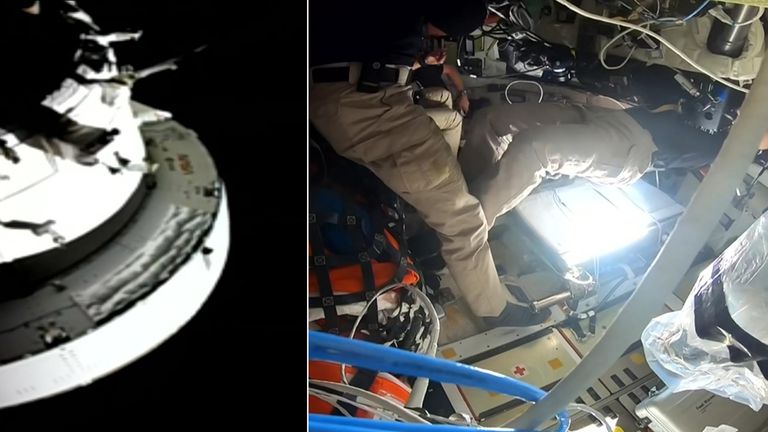
"That's one of the big, big events in the mission. Really leaving Earth's orbit ... to conduct the rest of the mission ... I think that will definitely make a number of people both up on the Orion and here on Earth breathe a little easier.""Depending on the precise timing when they get there [dark side of the moon], they will probably see some parts of the lunar surface on the far side sunlit that the Apollo astronauts did not have an opportunity to see."Jake Bleacher, chief exploration scientist, NASA"Humanity has once again shown what we are capable of, and it's your hopes for the future that carry us now on this journey around the moon."Jeremy Hansen, Astronaut, Artemis II"With this burn to the moon, we do not leave Earth, we choose it.""[I] was proud to call myself the 'space plumber' after fixing Orion's toilet.""I like to say that it is probably the most important piece of equipment on board, so we were all breathing a sigh of relief when it turned out to be just fine."Christina Koch, Astronaut, Artemis II
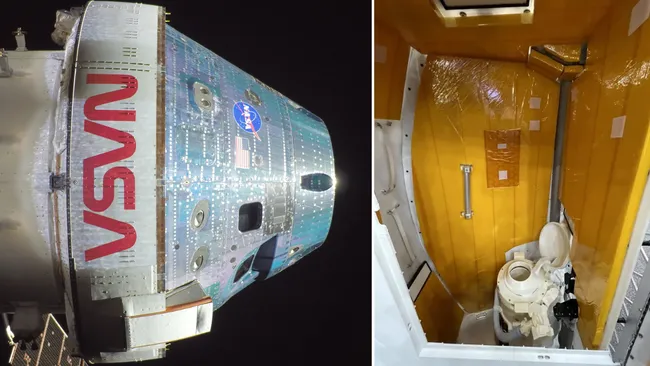 |
| NASA's Artemis 2 Orion space toilet is taking a starring role on the historic astronaut mission to the moon. (Image credit: NASA/Canadian Space Agency) |
Orion's
mission to the moon, around the moon, taking the four astronauts aboard
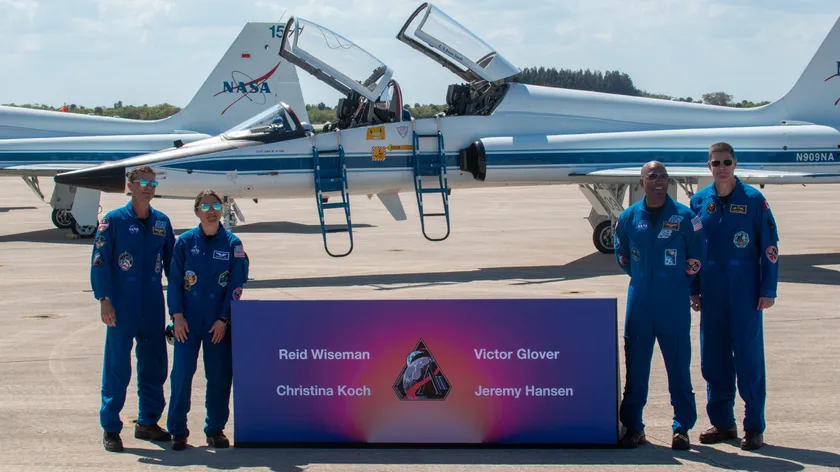
-- Reid Wiseman, Victor Glover, Christina Koch and Jeremy Hanson -- to
the furthest, highest point that humans have ever soared to beyond
Earth, is to take ten days in total, from blast-off Thursday to eventual
return the following Friday. On the mission, astronauts are to test
scientific operations while on the far side in a bid to assist NASA in
comprehending how human crews at the site can collaborate with
Earth-bound science teams.
It
will be the gravitational pull of the moon and the Earth that will
facilitate the return trajectory, without the requirement of mechanical
propulsion, when Orion slingshots around the moon in a figure eight. The
crew on its return will then experience one of the most
tense-expectancy moments of the mission with re-entry into Earth's
atmosphere, when splashdown in the Pacific Ocean brings their
precedent-setting mission to a conclusion next Friday.
On
Thursday evening, before sendoff, the Orion took six minutes to burn
its engine for liftoff. In the general excitement of the mission
proceeding, thoughts may have momentarily drifted to the sheer isolation
the crew would be experiencing in outer space beyond Earth's orbit; a
distance so vast that the crew would be totally dependent on their own
resourcefulness should anything go awry, when no outside source could be
depended on for reaction.
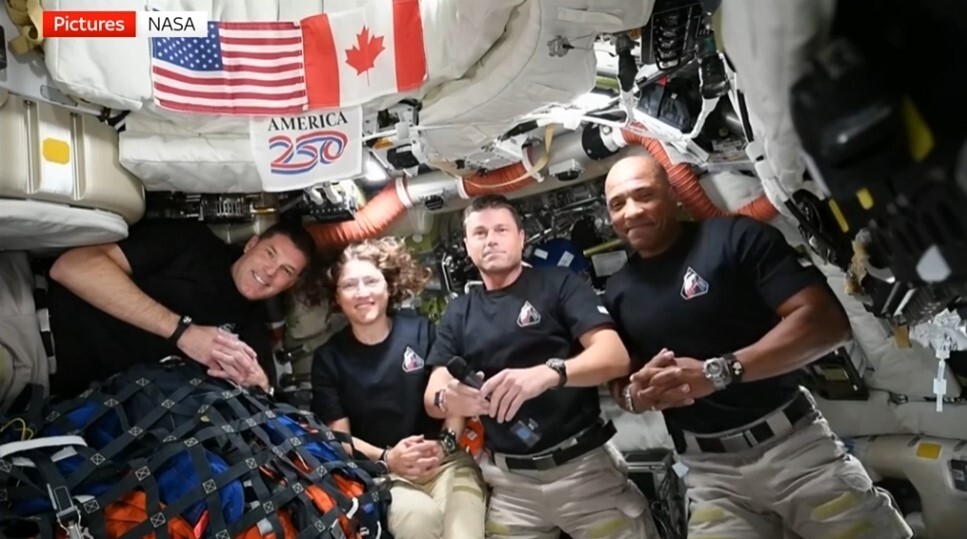 |
| Jeremy Hansen, Christina Koch, (mission commander) Reid Wiseman, Victor Glover NASA |
However,
the minds within the spacecraft no doubt disciplined to focus on the
minutiae of the mission, would not linger on exposure to deep-space
radiation from solar activity or cosmic rays once they reached beyond
the protection of Earth's magnetic field, and how that experience might
affect the state of their health. They are themselves a living
experiment.
Following
meticulous checks of life-support systems sufficed for confidence the
Orion spacecraft was prepared and ready to leave, the order NASA
officials gave to the "translunar injection" manoeuvre was finalized and Integrity fled the surly bonds of Earth, taking four courageous, prepared souls with it. "When
the engine ignites, you embark on humanity's lunar homecoming arc and
set the course to return Integrity and her crew safely home", Chris Birch, a NASA astronaut, said to the crew from mission control in Houston.
Four
days to reach the moon and each day of the 10 aboard the Orion capsule
has its roles to be played out by each of those aboard. It took speed of
1,275 feet per second in liftoff to initiate the spacecraft's sojourn
to the moon. Once on the far side, which they reached on Monday they
will witness the effects of an eclipse. When the moon blocks the sun
they will have the opportunity to observe the outermost layer of the
sun's atmosphere, the corona in a brilliant display of jetting gases.
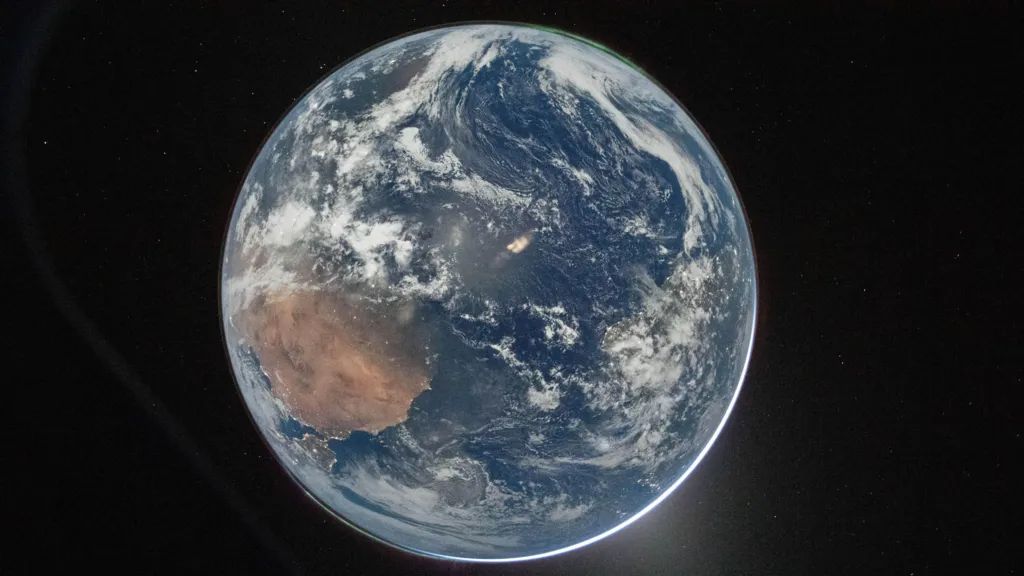 |
| Earth as seen from the Orion capsule in a new image taken last week Reid Wiseman/NASA |
"On the far side of the Moon, 252,756 miles away, Reid, Victor, Christina, and Jeremy have now traveled farther from Earth than any humans in history and now begin their journey home.""Before they left, they said they hoped this mission would be forgotten, but it will be remembered as the moment people started to believe that America can once again do the near-impossible and change the world.""[The mission] isn't over until they're under safe parachutes, splashing down into the Pacific."NASA Administrator Jared Isaacman
 |
| NASA |
Labels: 10-Day Journey, Artemis II, Far Side of the Moon, NASA, Orion Spacecraft Integrity
posted by Pieface @ Tuesday, April 07, 2026


<< Home