World War I With Drones
"Four years since Russia’s February 2022 full-scale invasion of Ukraine, Russia still occupies roughly 20 percent of the country after gaining almost five thousand square kilometers of territory in 2025.""Russia continues to bombard Ukrainian cities, while Ukraine maintains drone attacks on Russian oil infrastructure and military sites.""Since January 2022, Ukraine has received about $188 billion in aid from the United States and $197 billion from the European Union.""Fighting and air strikes have inflicted nearly 56,000 civilian casualties, while 3.7 million people are internally displaced, and 5.9 million are registered as refugees. 10.8 million people need humanitarian assistance."Global Conflict Tracker"In many respects, this war in Ukraine is the one that most closely resembles World War I.""[In both wars it was the intensity of firepower that forced armies to turn to trenches]: You bury yourself to protect yourself."
Michel Goya, former French colonel, historian
 |
| People visit the graves of their relatives, who were killed during Russia's attack on Ukraine, as a large-scale light installation illuminates the Lychakiv cemetery in Lviv, Ukraine, on Feb. 23, 2026, marking the fourth anniversary of the full-scale Russian invasion. (Roman Baluk/Reuters) |
The
heavy casualty counts and brutal infantry assaults of the ongoing war
in Ukraine strikes some war historian as comparable to conflict
conditions experienced during World War I. By June 11, the war in
Ukraine -- Vladimir Putin's 'special military operation' -- saw a point
in time where it has been prolonged for four years and three months, its
duration outlasting World War I's epic conflict.
Mr.
Putin's expectation that his large operational full-on incursion of
February 2022 would swiftly see Ukraine surrendering, his goal
accomplished in a mere matter of months if not weeks. The Ukrainian
counter offensive which saw Russia effectively opposed and the conflict
became a war of attrition, it would have seemed inconceivable to any
strategists, much less servicemen fighting for their lives on either
side of the hostilities that the war would drag on for so many weeks,
months and years.
Yet
the war has a life of its own, reflecting the level of determination on
both sides; Moscow's to achieve its objective; Kyiv to sustain its
sovereign rights and push its aggressor entirely out of its geography,
including from Crimea and Donetsk, both of which fell to Russia in
2014.
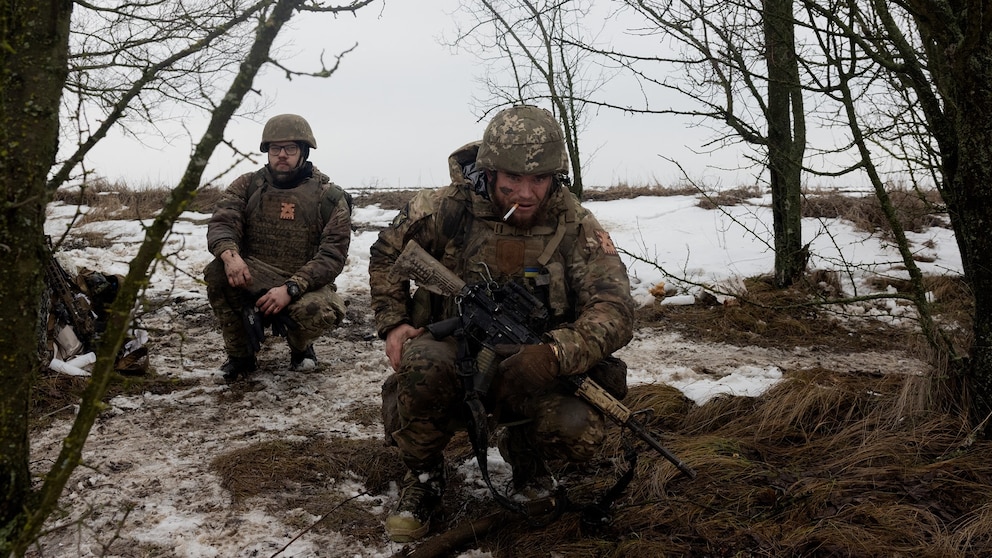 |
Tetiana Dzhafarova/AFP via Getty Images |
Recent
polls indicate that almost fifty percent of Ukrainians feel the war
will not end before 2027. Among Ukrainians many are prepared to argue
that the war's beginning in reality was 2014 when Russian troops with
the assistance of Russian-Ukrainian rebels swept Crimea to seize it for
Greater Russia, complementing Vladimir Putin's yearning for the days of
firm control of eastern Europe during the Soviet Union, and he a
modern-day Czar.
According
to Ukrainian historian Yaroslav Hrytsak, the conflict that Russia
imposed upon Ukraine will rank in historical accounts as among the most
consequential in modern European history. Alluding to both wars, having
altered geopolitics in Europe through the reshaping of military
alliances, driving a feverish defense buildup through NATO, unseen since
the end of the Cold War.
| The war in Ukraine has now exceeded the first world war in duration. And while the comparison between these two conflicts is imperfect, it is becoming difficult to ignore. |
A
century earlier, point out military analysts, it was the new
technologies of warplanes and tanks that drove the fighting antagonists,
while today advances in unmanned aerial war machines have taken centre
stage in an increasingly brutal onslaught against humans more attuned to
conventional warfare. As in 1914, so too in 2024, where a frozen front
line maintains a status quo and where neither attacker nor defender can
claim the upper hand.
Historians
see World War I trench warfare repeated in the trenches and bunkers
that Ukrainian soldiers have been using where assaults with artillery
barrages followed by storming enemy trenches by infantry squads were the
elemental formulaic schemes brought to play in the early years of the
current war, echoing what had been current a hundred years earlier.
Once
drones were brought into play, trench-like networks became outdated as
unsafe, where drones monitored the battlefield, striking with precision
greater than that of artillery shells. Survival now depends on smaller,
more discreet and deeper trenches to outfox the drones; shelters now
house a handful of soldiers in dugouts. As for the fearsome tanks of
WWI, they have become targets for drones, and have been largely
retired.
According
to Admiral Pierre Vandier, Supreme Allied Commander Transformation in
NATO, the Ukrainian front has been lethalized by drones. And the
strategy that Ukraine relies upon to use drones to strike deep into
Russia to hit its oil assets, strikes at its very economy which funds
Putin's special military operation. The battlefield has been flooded
with small attack drones of Ukrainian design and forward technology. "This is World War I, but with drones", said historian Yaroslav Hrytsak.

Labels: Crimea, Donetsk, Drone Technology, Russia Invasion of Ukraine, Trench Warfare, Ukrainian Counteroffensive
posted by Pieface @ Tuesday, June 23, 2026


<< Home