Black-On-Black Intolerance, Persecution, Aggression, Violence
"I've been harassed. For us, it's not about whether you are legal or not, and that is why everyone is very careful right now.""As long as you are a Nigerian, you are profiled and you are stereotyped immediately.""We are all very careful.""We are in the dark because we don't know how our government [in Nigeria] is going to react if any of us is to be affected or is to be killed.""[Both Pretoria and Johannesburg have the] biggest [migrant communities]."Chairman, Nigerian Union in South Africa, Olaniyi Abodedele"It is not okay because we are blacks, we are brothers... everybody comes here just to survive.""It's not what we expected as fellow African.""It's just making us scared - imagine if we're scared in our own African continent - what if we go to Europe?"Immigrant Security Guard"[The president ordered the] evacuation of imperiled Nigerian citizens who consider their lives at risk by continued stay in South Africa.""The price of your peace, and the safety of your children is not worth any sacrifices you have to make, or any assets you have to leave behind when fleeing a conflict zone or hate-infested environment."Nigerian Foreign Minister Bianca Odumegwu-Ojukwu"[Nigerians] living in South Africa legally [are being dreadfully mistreated].""If there were issues of illegality, that would be determined on a person-to-person basis. You can't just crown the entire Nigerians living in South Africa as living there illegally."Nigerian Humanitarian Affairs Minister Bernard Doro
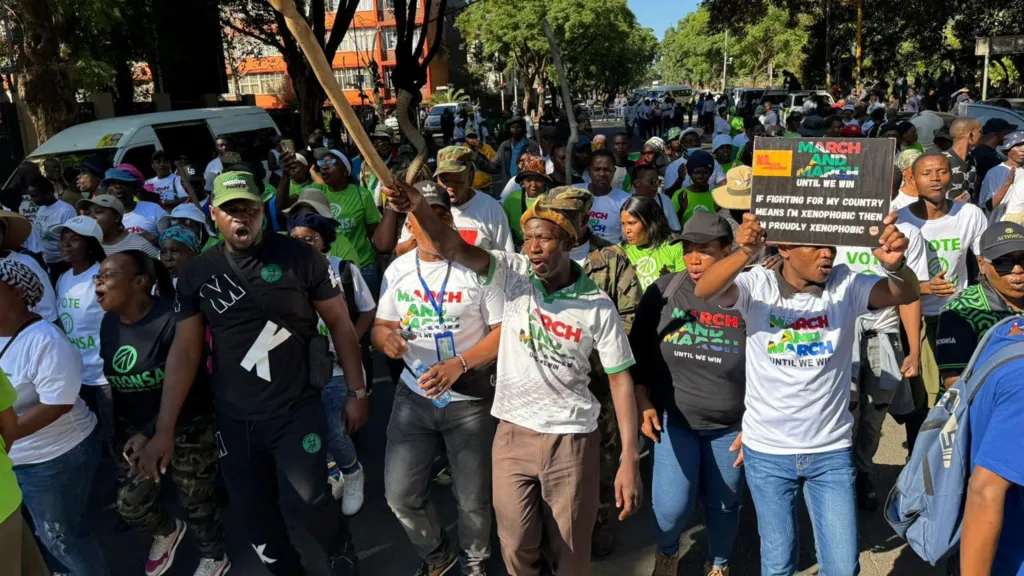 |
| Hundreds took to the streets of Pretoria to protest against immigration BBC / Thuthuka Zondi |
"I am very scared and traumatized.""The people came to my house and told me: 'You must leave. We don't want you people to stay here any longer, so you have to go to your country.' There were 10 and they were carrying weapons [machetes and whips].""They cut my husband on his head and his neck. They were holding his neck like they wanted to kill him.""Because of God he still survived, but he's in the hospital."Esnat Joseph, 36, Malawian
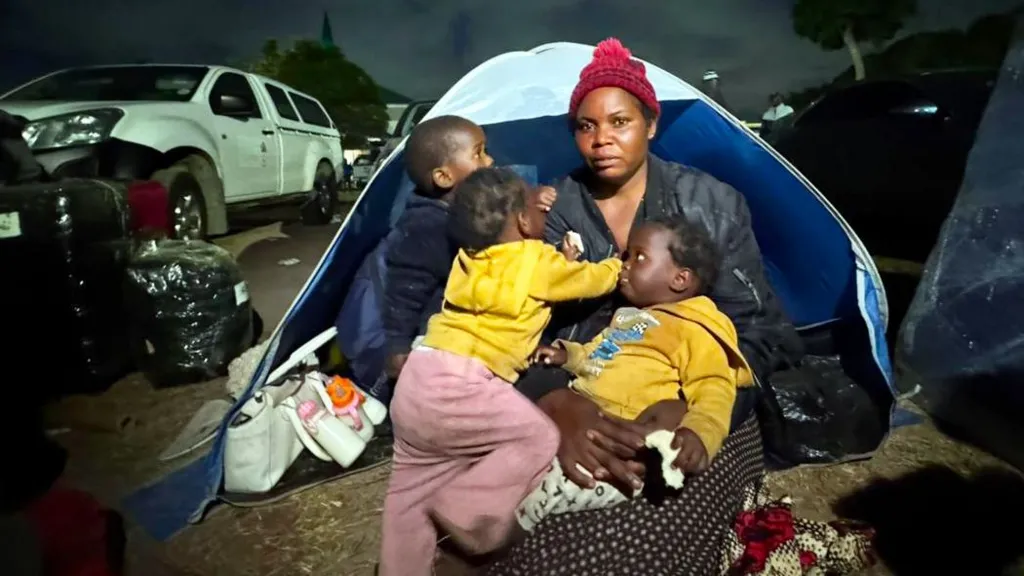 |
| Esnat Joseph said a gang of men came to her home in Durban to threaten the family - forcing her to flee with her triplets Thuthuka Zondi / BBC |
"If you come into South Africa with a passport that allows you to stay for 30 days. When it's 50 days, when it's two years, when it's five years, you know you're breaking the law.""We can't have South Africa being turned into a refugee site for all failed African states… every country prioritizes its citizens and we want the South African government to do the same."March and March leader Jacinta Ngobese-Zuma
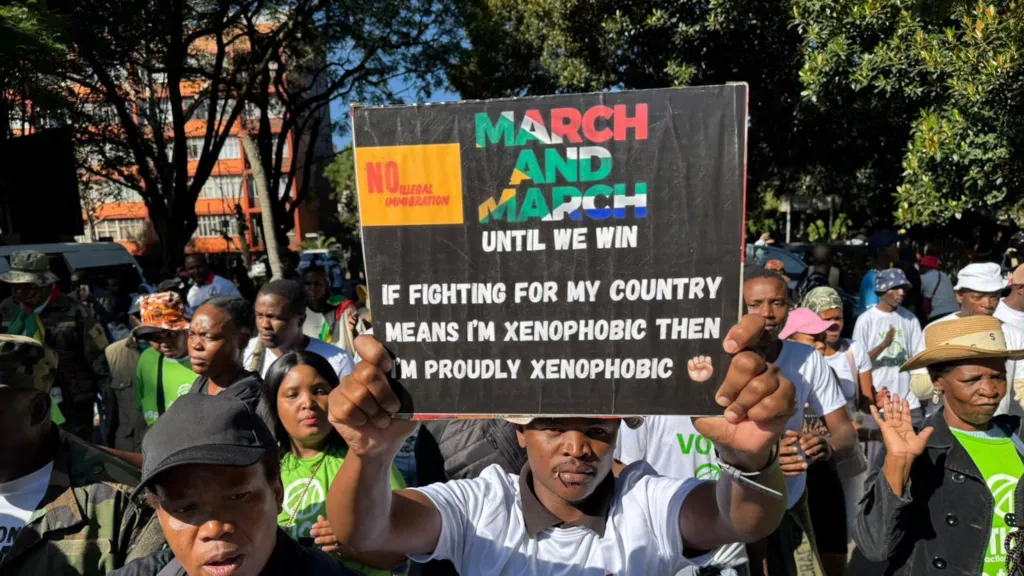 |
| Ghana's diplomatic mission told Ghanaians in the country to "place the highest priority on personal safety... [and] take precautionary measures" during the protests. BBC / Thuthuka Zondi |
Part
of repatriation ordered by the government of Nigeria following violent
anti-immigrant protests, the initial group of Nigerians returned home
from South Africa this week. On board the flight to Lagos was a total of
262 passengers and three officials, according to the Nigerian Ministry
of Foreign Affairs which earlier stated that over 1,000 Nigerians have
registered with them for voluntary return.
According
to authorities in South Africa, those returnees were found to be in the
country illegally, effectively contradicting the Nigerian officials who
had stated unequivocally that Nigerians were fleeing xenophobic attacks
against them by hordes of South Africans who march in the streets,
intimidating migrants as well as legal immigrants with the violent
vehemence of their expressed hatred of the presence of 'foreigners'.
Bearing sticks the marchers chant: "Mabahambe" - a Zulu phrase meaning "They must go".
Such
flights have been organized from South Africa by other African nations
whose nationals have been targeted by hate messages and threats of
violence, including Zimbabwe, Malawi, Ghana, Mozambique and others which
make up the 3 million non-South-Africans in the country, representing 5
percent of the population. Many of whom are there in South Africa,
welcomed for their cheap labour. While South Africa is the wealthiest
and most-developed of the regional African countries, it has a high
unemployment rate.
Countries
like Nigeria have taken note that since April, a series of new
anti-immigration protests have resulted in attacks against some
foreigners in South Africa; protests that highlight tensions between
foreign workers and locals who claim their jobs are being taken by
foreigners. Some South African officials speak of the protests and the
threats inherent in them as acts of xenophobia; words lacking any action
leading to a solution to the anger, resentment and fear.
According
to some returnees questioned by authorities in their home countries,
they lacked proper documentation in South Africa, while others stated
they had been unable to renew their residency papers for years, the
result of immigration bottlenecks imposed on Nigerians by South African
authorities. "I
was in South Africa for 11 years, and I was treated badly/ They did not
give us [Nigerians] resident permits because we were Nigerians", complained Eminaba Beatrice.
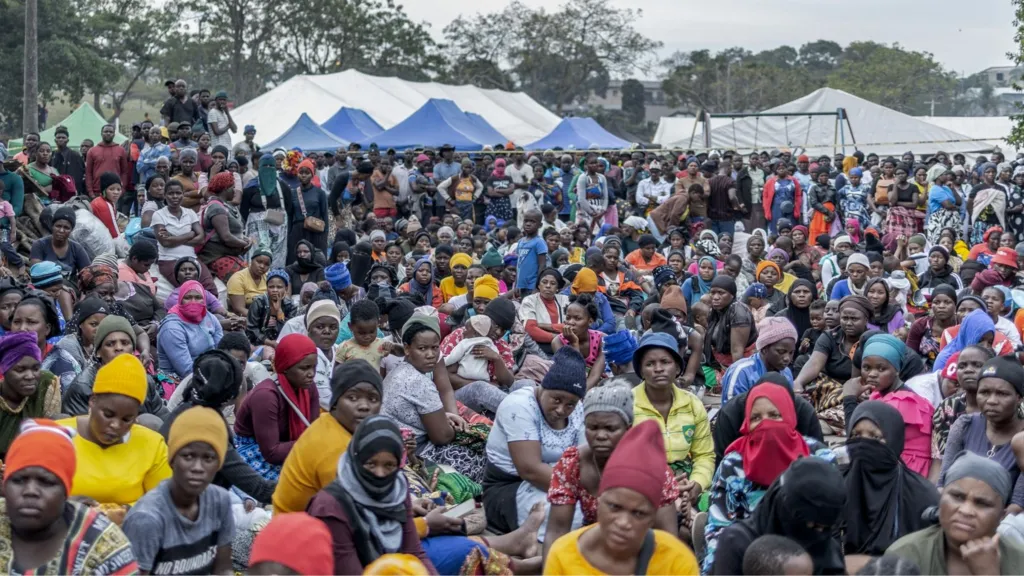 |
| Around 7,000 people have gathered in Durban asking to be repatriated to Malawi AFP via Getty Images |
"Political parties are scraping the bottom of the barrel in trying to lie to people that all our problems are the migrants, and if we get rid of the migrants, then we'll have no problems in South Africa.""This has been an ongoing phenomenon in South Africa and more recently, it has been associated with elections."Sharon Ekambaram, human rights lawyer, member, Kopanang Africa Against Xenophobia movement
Labels: Citizen Backlash of Xenophobia, Foreign Workers, Ghana, Immigrants, Malawi, Migrants, Nigeria, South Africa
posted by Pieface @ Saturday, June 20, 2026


<< Home