Power To The (Smog-Smothered) People
"We have been living with the factory for fourteen years, and we live in dust almost every day and can't sell our rice and other farm products.
"We need to live."
Nong Dinting, Huang Liangzheng, Baha, Yunnan province
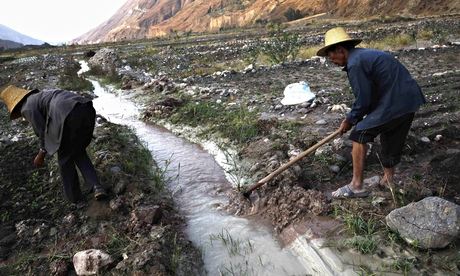
The Chinese public are
becoming increasingly critical of the fouling of the country’s air,
soil and waterways by decades of development. Photograph: Reuters/China
Chinese police have been busy arresting people at the local police station in Baha, a village in Yunnan province. Their crime was 'vigorously' protesting against the polluted waste water from a local metalwork factory. The factory guilty of discharging black smoke and and despoiling the environment. They wanted to speak with the factory authority, but were met with refusal.
Which was when the villagers smashed the factory's offices and equipment, and when police arrived, clashing with them as well. Sending a message, already forwarded to Beijing by hundreds of other such incidents with townspeople protesting against the corruption of their environment by factory owners oblivious of the poisoning effect of their factories' effluent, untreated and discharged into rural areas.
The villagers went on a furious rampage, smashing cars, equipment offices and dormitories. Police ordered all villagers who were involved in the clashes to surrender. And Mr. Huang, who said, "Yes, I am one of those people they are looking for and I have nothing to fear", was prepared to surrender himself to the police. The very obverse of the country's vaunted "harmony".
People in China are becoming increasingly aware of the power of bad publicity, shaming their government on the international scene. They are also becoming increasingly wedded to the euphoric power of mass protests to draw attention to their human rights grievances and demands that ameliorating action be taken in recognition of their demands.
In the past, protests have taken place along China's coastal region in reflection of the area's heavy industrial pollution. That people are feeling more empowered results as well from their elevated economic security in the emerging middle-class. Many of whom have travelled abroad and have been able to see for themselves in foreign countries that those citizens will not accept such raw conditions placing their collective health in peril.
This incident took place further inland. Last year the provincial capital, Kunming, was the site of large protests against a petroleum refinery planned for the area. The stepping-up of such vociferous and increasingly activist-violent protests has Beijing paying attention, concerned at the spread of civil activism in a country that values placid acceptance of encroaching factory pollution in the country's steady march toward capturing the world's marketplace of consumer products.
Labels: China, Crisis Management, Environment, Human Rights, Manufacturing
posted by Pieface @ Friday, February 14, 2014


<< Home