Starvation in Sudan
"Even we're [medical personnel] eating animal feed.""People [the international community] seem to have forgotten us.""Oh my God, it's a very painful story."Dr. Omar Selik, El Fasher, Sudan"Since April 2023, more than 600,000 people have been displaced from El Fasher and its surrounding camps. Inside the city, women and girls are enduring famine-level conditions, as classified by the IPC. With food stocks depleted and efforts by the United Nations and its partners to move in with supplies hampered by attacks, families are now surviving on animal feed and tree leaves. There have been repeated attacks on humanitarian personnel and assets in North Darfur over recent months.""More than forty-one health and educational facilities in the state have been destroyed, and supplies of medicine have been depleted. Pregnant women are giving birth into the hands of unskilled attendants with no access to emergency obstetric care. Women in need of reproductive health services and survivors of rape have no access to any medical services."UN Women
 |
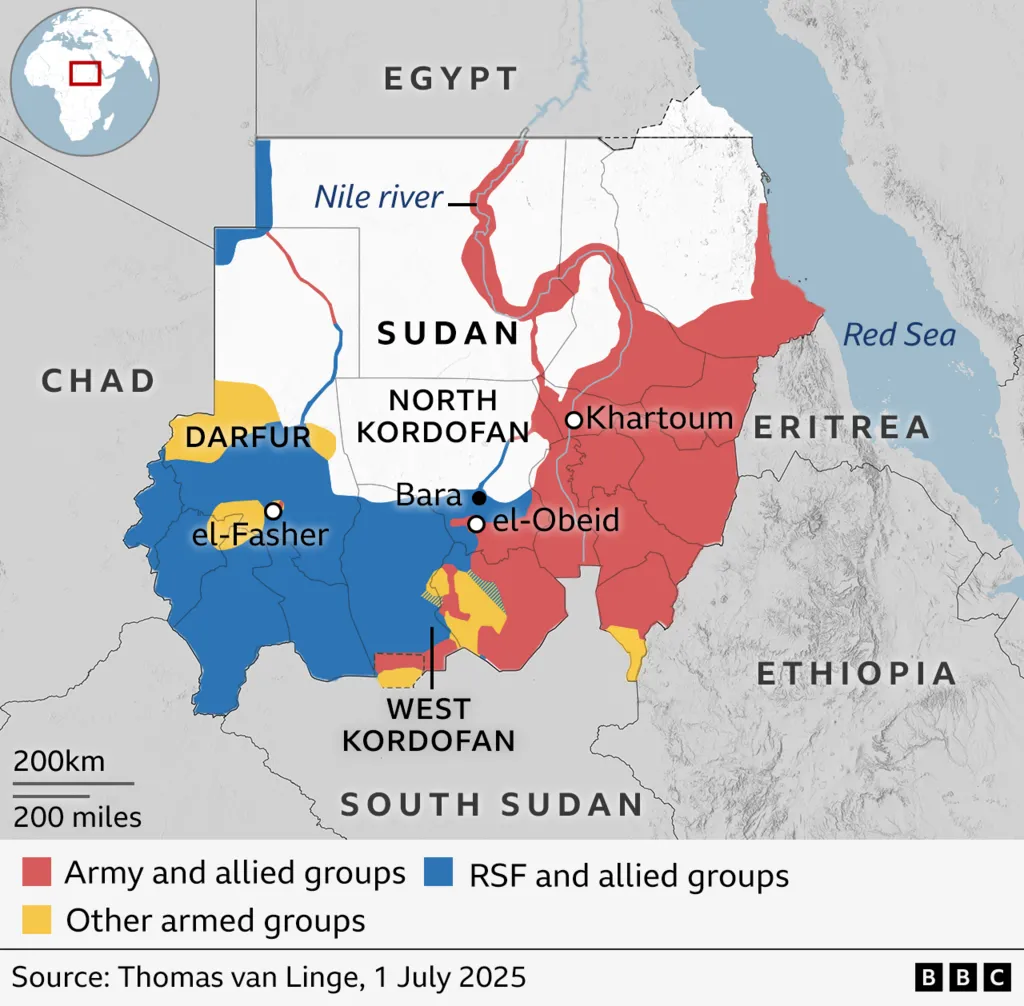
| El Fasher has been under siege for months as RSF paramilitary forces try to take control of western Sudan |
If
residents make the agonizing choice to remain they risk being bombed or
starved. Should they decide to leave in desperation, they risk being
killed, robbed or sexually assaulted. Over two years earlier, clashes
between Sudan's military and its paramilitary rival, the Rapid Support
Forces, broke out, a conflict that has forced some 12 million Sudanese
from their homes, killed tens of thousands, and set the stage for a
major famine which aid groups speak of as the world's largest
humanitarian crisis.
The
Rapid Support Forces were expelled from the capital, Khartoum, in March
and the group has since redoubled its campaign to capture Darfur, the
vast area where most R.S.F. fighters (once known as Janjaweed, Arab horsemen who savagely attacked Black Darfurian Muslim farmers) originated.
The focus on El Fasher is to dominate the last city standing in their
way to capture the entire Darfurian region under their command.
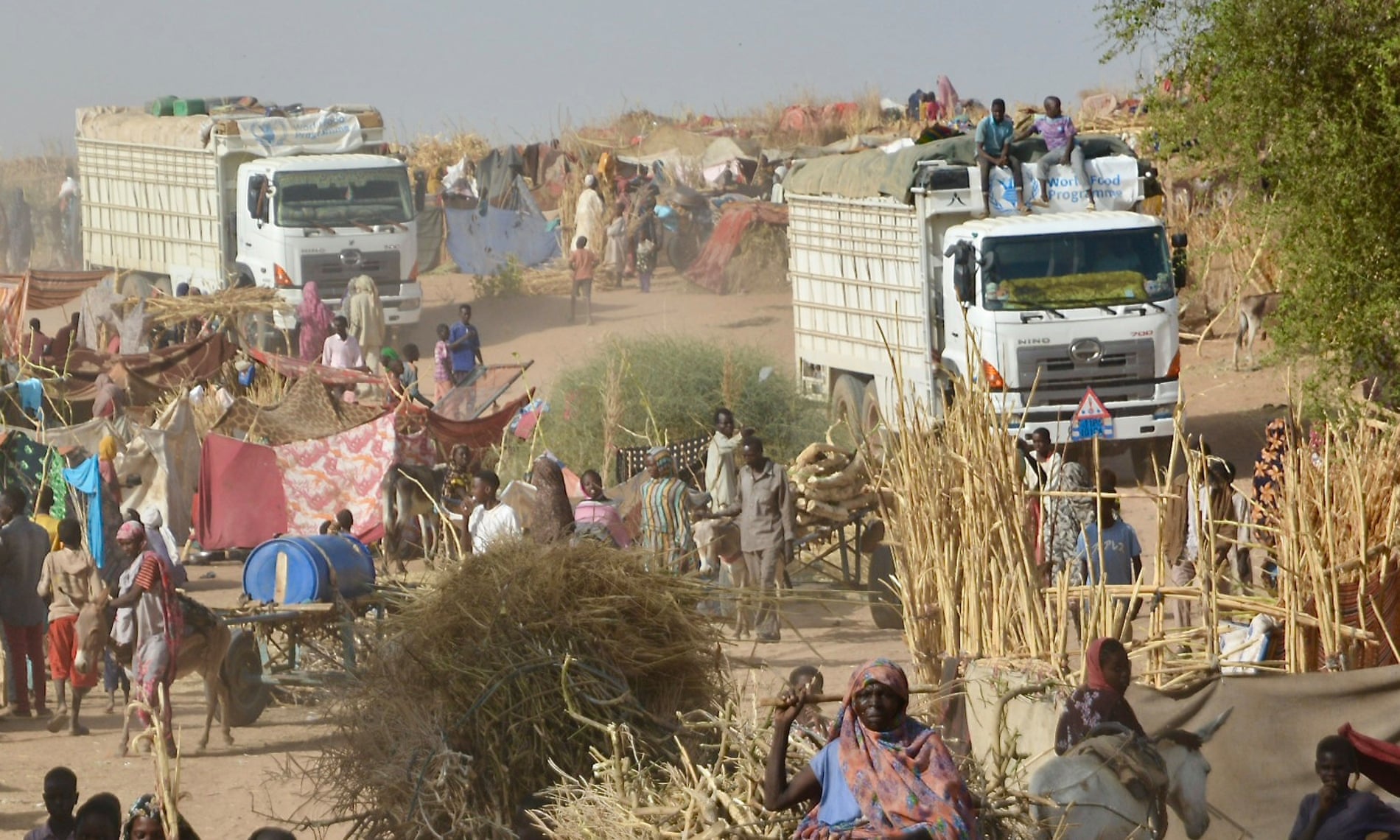 |
| The RSF allowed food to reach displaced people in Tawila, but not El Fasher, which they kept under a tight siege, 27 April. Photograph: Jérome Tubiana |
In
April the R.S.F. rampaged through the famine-stricken camp of Zamzam,
located 11 kilometers south of El Fasher, killing between 300 and 1,500
people, leading to a half-million people from El Fasher fleeing the city
in a panic of desperate survival. What followed was the erection of the
giant berm to keep people in and humanitarian groups out. Now some
260,000 residents are left in the besieged city where a kilo of pasta
costs ten times the normal price. The Emergency Response Rooms, a
humanitarian aid group, recorded the deaths of 14 children from
malnutrition over a recent two-week period, where cholera has now been
spreading.
United
Nations food convoys have been unable to deliver aid to El Fasher for
over a year, since they were attacked by drones in their approach to the
city. Five aid workers were killed when a strike in June on a 15-truck
convoy and another in August destroyed three trucks, forcing the
remainder to turn back. When young men scrambled over the berm during
the night in an attempt to flee the city, they were executed by R.S.F.
fighters.
Tawila,
a small town 65 kilometers to the west, packed with over 600,000
refugees, was able to be served by international aid groups but the
journey to reach Tawila is perilous, fighters roaming the area, robbing
or extorting fleeing civilians, raping the women, on a road lined with
shallow graves and abandoned bodies. At the Doctors Without Borders
hospital in Tawila, about 40 women, victims of rape, are treated weekly,
with evidence suggesting "that is nothing compared to the true rate".
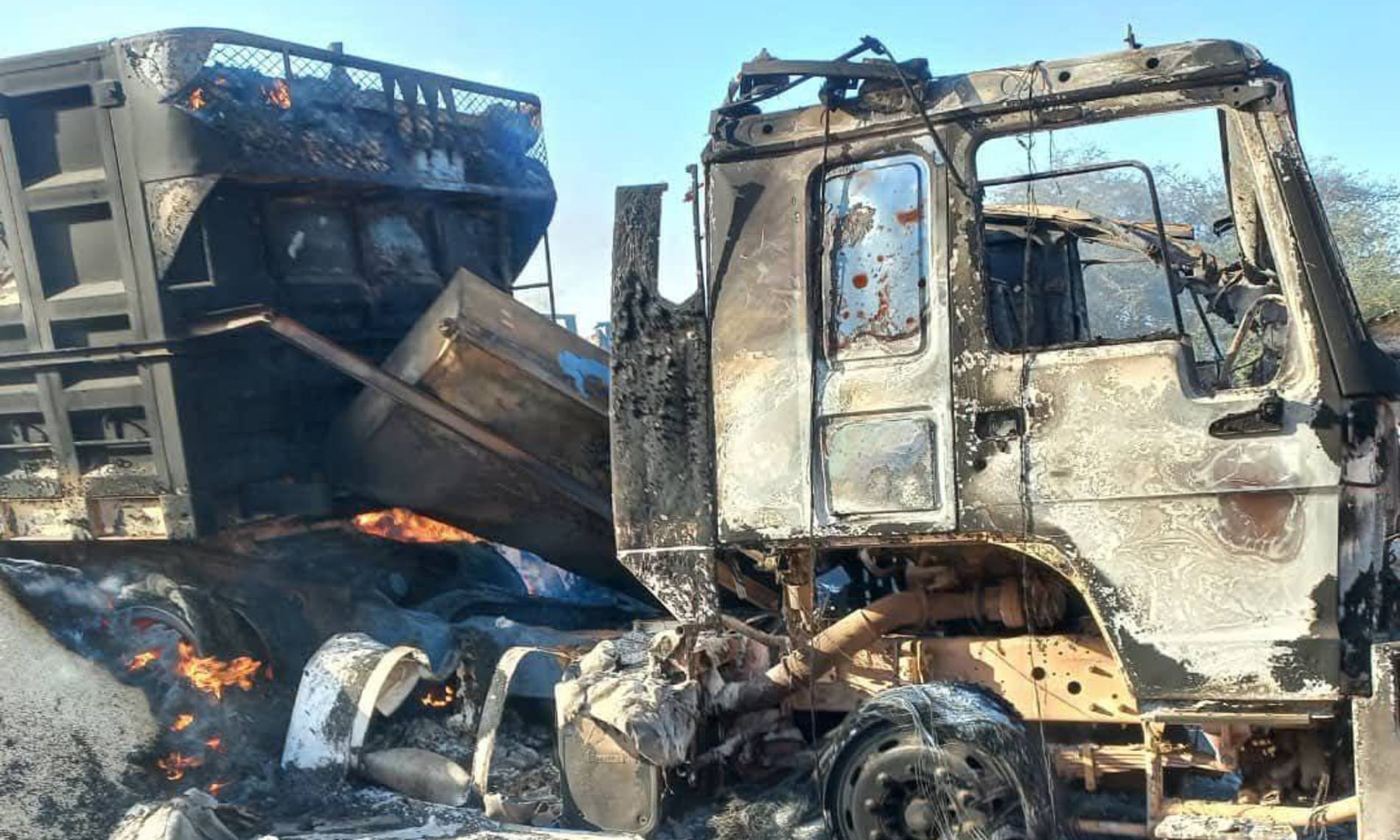 |
| A UN truck carrying aid to El Fasher destroyed by an RSF drone attack. Photograph: X/PresstvExtra |
Some
residents smuggle small amounts of food and medicine into the city,
through during the night scrambling over the earthen berm, but those the
fighters catch face beatings and threats. Of some 200 medical
facilities in El Fasher prior to the war, one only remains, the Al Saudi
hospital, where a handful of medics are hanging on, despite the
bombing, starvation and a dwindling supply of medicines. An R.S.F. drone
fired a missile into a crowded ward in January, killing 70 patients and
staff.
Doctors
at the hospital shelter in foxholes during bomb raids, while
malnourished patients are sustained with animal feed. Known locally as
ambaz, the animal feed is a dangerous alternative to human-grade food,
given that it is prone to fungal contamination. Thus far, 18 residents
have died recently after consuming ambaz. "But there is no other option", explained a senior doctor who has received death threats for his work, and chose to be quoted anonymously.
Labels: Besieging El Faher, Civil War, Darfur Region, Sudan
posted by Pieface @ Tuesday, September 30, 2025


<< Home