"We
are only able to reach those who are really on the verge of, if you
don't give them something now, they will not be there tomorrow."
"[In some areas, children are still getting food, but not pregnant mothers]. Literally, it's who dies first, and who dies next."
Hameed Nuru, Somalia director, World Food Program
"The situation has become unbearable."
"The American regime is led by a person who really doesn't care about anything happening outside his gates."
"The Americans are not honoring their commitment to the world."
Adan Bare Ali, deputy mayor, Dollow, Somalia
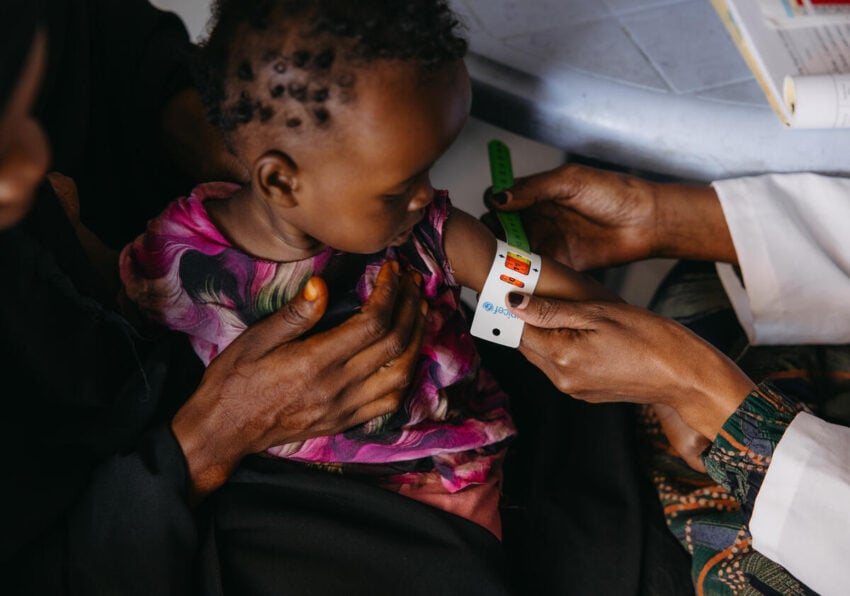
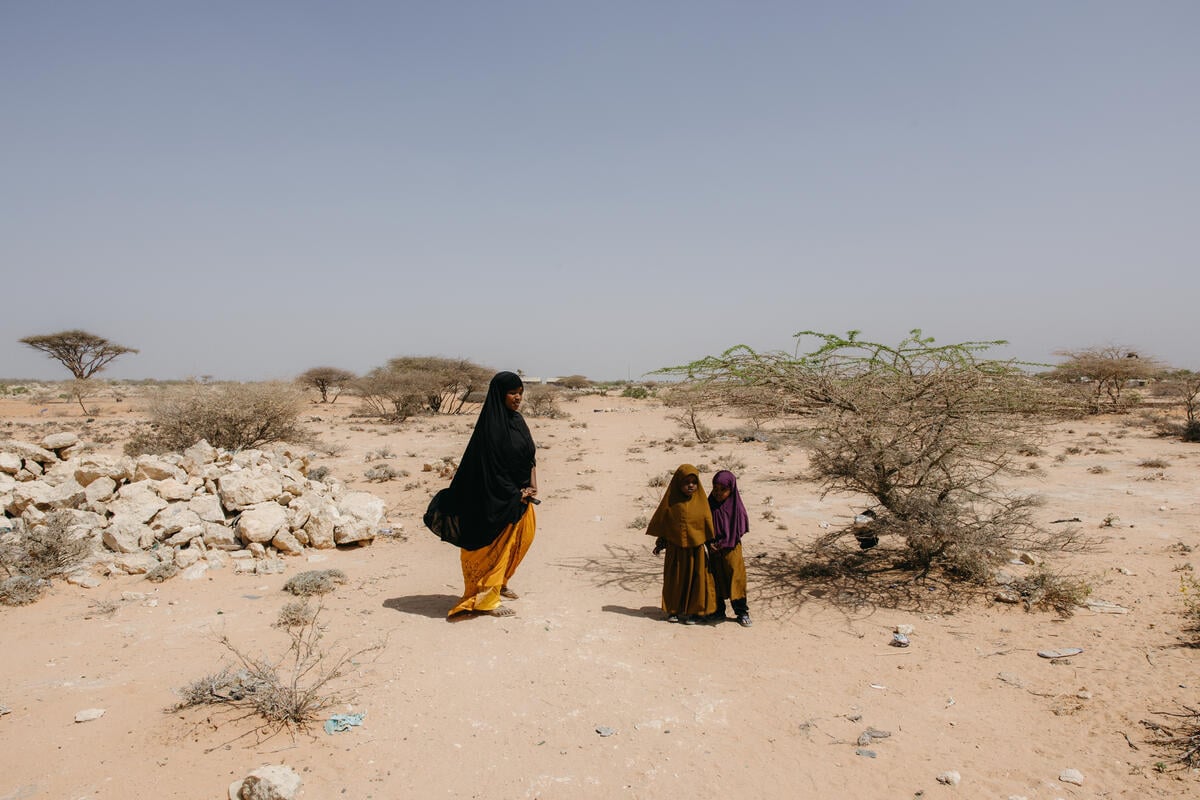
In northeastern Somalia, the Jeexdin Health Center is a critical medical
and nutrition clinic serving children and adults near Garowe and
Galkayo. Photo by Abigajla Conway)
In
Somalia, one of the world's poorest and least stable countries, acute
hunger is set to increase beyond its current state. When Russia invaded
Ukraine four years ago the global supply of fertilizers and cereal
grains was disrupted leading to fears of hunger, from Africa to South
Asia. A $43 billion humanitarian assistance drive led by governments and
multilateral institutions limited the human damage of primary
scarcities of the substances of life-sustaining provisions. Food aid,
water and medical care was delivered o the desperately needy, with $17
billion of that total supplied by the United States.
Currently,
humanitarian funding saw a disastrous drop to $28 billion, with the
share provided by the United States diminished to $4 billion. "The system has been eviscerated", stated the head of global advocacy at Mercy Corps, Kate Phillips-Barrasso. "This is the era of indifference", she concluded.
For
decades, Somalians have suffered through a brutal civil war, through
famine and the attacks of the fundamentalist Islamic group Al Shabab.
The country's most recent harvest was ravaged by drought. Approximately
one-third of the Somali population -- 6.5 million people -- encountered
hunger at levels described as an emergency, with the U.N. Food and
Agriculture Organization warning that over 1.8 million children under 5
were facing acute malnutrition. That was back in February, with the
situation since exacerbated due to the war in Iran.
An increasing number of displaced families in Somalia are experiencing
severe hunger. Near Garowe, Somalia. 2025 Photo by Abigajla Conway
A
mere 2 percent of all relief from international donors for Somalia was
derived from the United States. From providing humanitarian assistance
to Somalia in 2024 of $467 million, last year the U.S. administration
slashed that aid to $70 million. Dependent on oil from the United Arab
Emirates, Iranian strikes on production facilities in the Persian gulf
affected transport cessation, leading to the price of gasoline and
diesel over-doubling in price.
The
predictable response was trucking companies doubling and tripling costs
for trucking sacks of corn from Ethiopia over the border to Somalia.
Rice shipped into Somalian ports rose similarly. The price of water at
public wells tripled since many of the pumps use diesel for energy. One
third of fertilizers for Somalia's farming sector is derived from the
Persian Gulf so with stocks marooned at the Strait of Hormuz, farmers
face steeply higher operating costs.
Unaffordable
food in combination with fewer medical clinics in operation resulted in
children likelier to suffer malnutrition. Infants and toddlers with
severe cases of malnutrition were given therapeutic milk formula and
antibiotics, while those in greatest danger went to a stabilization unit
operated by UNICEF within a local hospital. Children on cots with
feeding tubes and some attached to oxygen, fought for their lives and
their futures.
The
largest source of aid in Somalia, the World Food Program, has
sufficient funding to support 300,000 people monthly through to July,
representing a fraction of the close to two million people a month it
was serving in early 2025. Somalia depends on imports for 70 percent of
its food, at a time when staple goods like rice and wheat have doubled
in price.
Three years ago, Tahliil Abdulahi Cali had 250
goats. Today he has 100. The rest died as the rains failed, season
after season, across his community in the Mudug region. Mohamed Said Barkhadle
"Our main concern is that though we have seen approximately 5,000 people coming out of El-Fasher toward Tawila, we don't know where the other hundreds of thousands have gone."
"That is worrying given the ethnic nature of targetting of violence toward civilians by the RSF."
"I've never seen anything so shocking in all my 15 years of my work."
MSF President Javid Abdelmoneim
This image grab taken from handout video footage released on the paramilitary RSF's Telegram account on October 26, 2025, shows RSF fighters holding weapons and celebrating in the streets of el-Fasher in Sudan's Darfur region [AFP]
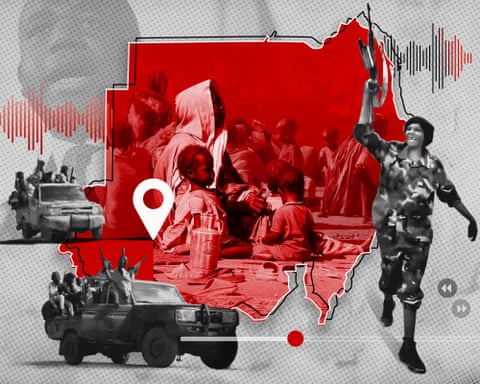
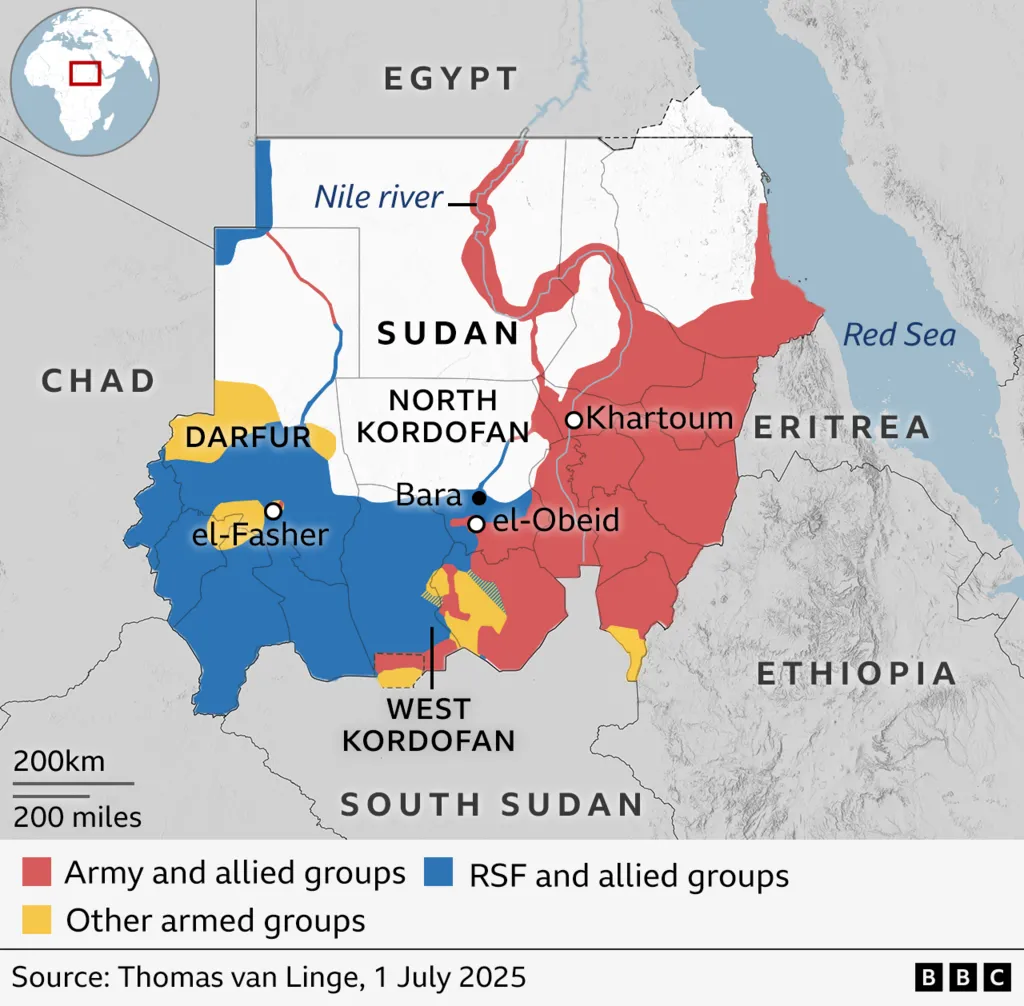
The fate of hundreds of thousands of Sudanese in flight from ethnically targetted violence in the western Sudanese city of El-Fasher remains unknown in the wake of satellite images indicating suspected mass graves. At war with the Sudanese military since 2023, with which it was once allied, the Paramilitary Rapid Support Forces (RSF) seized control of the strategic city of Al-Fasher in the Darfur region following a brutal 18-month siege.
Emerging reports of executions, sexual violence and abductions in and around El-Fasher has alarmed aid groups and the United Nations to the fate of ethnic minorities in yet another impending disaster rivalling the slaughter in Darfur when the RSF were known as the Janjaweed, Arab horsed tribesmen who attacked and raped and murdered hundreds of thousands of Fur, Masalit, and Zaghawa minorities mostly engaged in farming, as opposed to the Arab herdsmen, competing for territory.
New satellite imagery analyzed by Yale researchers suggest that mass graves are appearing in the city from which thousands have fled. Survivors in the town of Tawila, some 70 kilometres west of El-Fasher recounted to Medecines sans Frontieres 'harrowing' stories of "ethnically targeted torture, rape and summary executions", revealed a Sudanese-Iranian national.
Paramilitaries have taken full control now of all five state capitals in Darfur with the fall of El-Fasher, raising troubling concerns that Sudan could be partitioned along an east-west axis. The Humanitarian Research Lab at Yale University has revealed its finding of evidence consistent with "body disposal activities", leading to the worst fears being realized. "At least two earth disturbances consistent with mass graves - were identified -- at a mosque and at the former Children's Hospital."
Tens of thousands of people have been killed, millions have been displaced in the Sudan civil war which has also led to the largest displacement and hunger crisis in the world today, where both sides have been accused of widespread atrocities.
“It’s been almost a year since the State Department determined that the
RSF is committing genocide in Sudan. "These harrowing images from Yale
University’s Humanitarian Lab demonstrate that the genocide continues
unabated and largely ignored by the international community."
"The
testimony of refugees from el-Fasher also leaves no doubt that
ethnically targeted killings are the order of the day.” —
Clifford D. May, Founder and President, Foundation in Defense of Democracies
"On
5 October, Syria held elections
for its new legislature, the People’s Assembly. 119 representatives
were elected indirectly through electoral colleges. Elections were
postponed in three governorates—Suweida, which is currently held by the
Druze minority, al-Hasakah, and Raqqa, which are held by the Kurdish-led
SDF—due to security and political issues. On 23 October, supplementary
elections took place to fill three seats from the al-Hasakah and Raqqa
governorates, while, according
to the Syrian state news agency SANA, the remaining seats in these
governorates and in Suweida will stay vacant until “appropriate security
and political conditions are met for by-election”. The remaining
one-third of the Assembly’s seats are to be chosen directly by Sharaa.
The majority of elected members are Sunni Muslim and male, with only 13
percent
of representatives elected on 5 October having been won by women and
minorities. The Higher Committee for People’s Assembly Elections’
spokesperson, Nawar Najmeh, acknowledged “shortcomings” of the process,
highlighting the “unsatisfactory” representation for women and
Christians."
"Another issue is that UN sanctions on Ha’yat Tahrir al-Sham (HTS)—a
terrorist group, formerly affiliated with Al-Qaida and ISIL, whose
military campaign under Sharaa’s leadership led to the ouster of
Assad—are impacting the interim government. HTS—referred to as an alias
for the Al-Nusrah Front on the 1267/1989/2254 sanctions list—Sharaa, and
Syria’s interim interior minister Anas Khattab are all listed under the
1267/1989/2253 ISIL (Da’esh) and Al-Qaida Sanctions regime, which
imposes an asset freeze, travel ban and arms embargo on listed
individuals and entities. The Council is currently negotiating a draft
resolution that seeks to apply carve-outs to this sanctions regime,
aimed at facilitating economic engagement for Syria. The US, the
penholder on the file, authored the draft text."
"Many Council [UN Security Council] members also agree on the need for the Syrian interim
government to take decisive measures to address the threat posed by
foreign terrorist fighters (FTFs) and ISIL (Da’esh). China has been
particularly vocal in calling on Damascus to take a stronger stance on FTFs in the country, some of whom have reportedly
been integrated into the Syrian armed forces. Several FTFs constitute
part of the Eastern Turkistan Islamic Movement, which China considers a
terrorist organisation and is also listed under the UN 1267 sanctions
regime."
Security Council Report: Syria
"Al-Sharaa joined al Qaeda about 20 years ago, and was arrested in Iraq
in 2005. He spent six years in American and Iraqi prisons before his
release in 2011. He then led an affiliate of al Qaeda in Syria, and was
designated as a terrorist by the U.S. in 2013. In 2016, he renounced his
allegiance to al Qaeda."
"In November 2024, al-Sharaa led opposition forces in a stunning offensive that toppled the Assad regime."
CBS News
"An estimated 1,400 men, women and children were killed in massacres
in Latakia, Tartus and Hama governorates, including by members of the
government’s security forces."
"Updating the Third Committee
of the General Assembly – which focuses on human rights issues – on
Thursday, Mr. Pinheiro said that investigators had conducted on-site
visits to Latakia and Tartus in June of this year, and more recently to
Suweyda and surrounding areas."
"Mr. Pinheiro reported that his team continues
to receive reports of extra-judicial killings, torture and
ill-treatment and the forced displacement of Alawi civilians in Damascus
and western governorates."
"In Sweida, more than 30
villages in majority Druze areas have been entirely depopulated, looted,
and burned, and Commission investigators met many families and
witnesses who recounted the brutal killings of loved ones taken from
their homes."
"There is growing mistrust, he said, between the Druze and Bedouin
communities, and the interim government, which needs to hold the
perpetrators of the killings accountable and ensure such acts are never
repeated."
"The
Commission is gravely concerned that the stage is set for further
violence if swift action is not taken,” warned Mr. Pinheiro. “Rebuilding
trust will require dedicated efforts for dialogue, inclusion, and
justice for all victims.”
"The
UN-appointed independent rights expert raised growing concerns about
violence and discrimination directed against women, citing multiple
reports of women and girls being abducted by unknown armed actors, some
of whom were reportedly subjected to sexual violence and forced
marriage."
United Nations, UN News October 30 2025
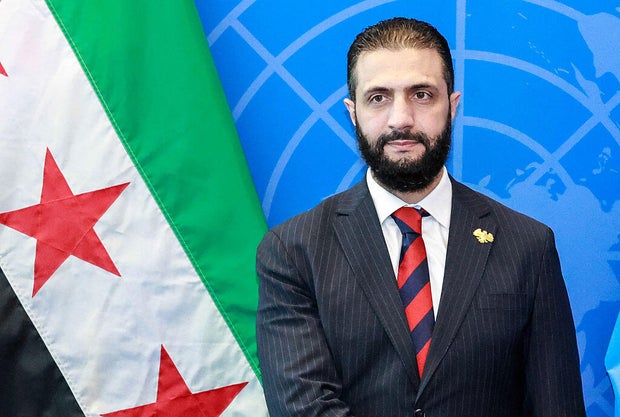
Syrian President Ahmed al-Sharaa at the
United Nations General Assembly at the U.N. headquarters in New York
City on Sept. 24, 2025.KENA BETANCUR/AFP via Getty Images
Led
by former jihadi fighter Ahmed al-Sharaa, Syria's new government
promised it would protect the many religious minorities that make up
part of the country's population, exhausted from the fourteen years of
civil war under former president Bashar al-Assad. Yet it was the
minority Alawite-Shiite population that became the first mass casualties
of the new regime, punishing them for al-Assad's Alawite presidency and
his war against the majority Sunni Syrian population whose complaints
of their second-class citizenship status led to al-Assad's all-out war
against his Syrian citizens, drawing in Sunni Islamist terror groups in a
prolonged conflict that Russia joined in support of the Alawite regime
in exchange for a seaport and a Russia-dedicated air base.
Having
distanced himself from his jihadi association, past relations with Al
Qaeda included, al-Sharaa persuaded nations of the Middle East as well
as the West that he would be good to his pledge of reigning in the
terrorist groups he was once so much a part of. His coalition, he
pledged, would no longer relegate the country's religious minorities
comprised of Christians, Druze, Alawites and Kurds among others -- to
hated, and therefore deserving of death -- heretic status.
His
pledges and personable appearance, changed from the standard jihadi
totalitarian garb, to tailored Wall Street-appropriate suits to
completely transform him from a ISIS-style terror threat, to a
reasonable, nicely groomed partner for peace and reconciliation lost no
time in persuading one-time enemies in the West that he was as good as
his word. A truly Western inclination to take people at their word,
failing to take into consideration that in Islam these are familiar
tactics to aid in gaining an advantage; to present as one agreeable to a
proposition running counter to the intended pursuit.
Yet
those who had reason to be suspicious of such a radical transformation
preferred to hold judgement and to await further persuasive actions and
declarations, regardless of any background chaos consistent with this
former terrorist's past performance. Nature is as mysterious as is human
nature, and so although a leopard cannot change its spots, perhaps
human beings can, after all, shed their ingrained convictions for the
greater opportunities perceived in taking on the mantle and mantra of
civilizational mores and conventions inimical to Islam's conquest
aspirations.
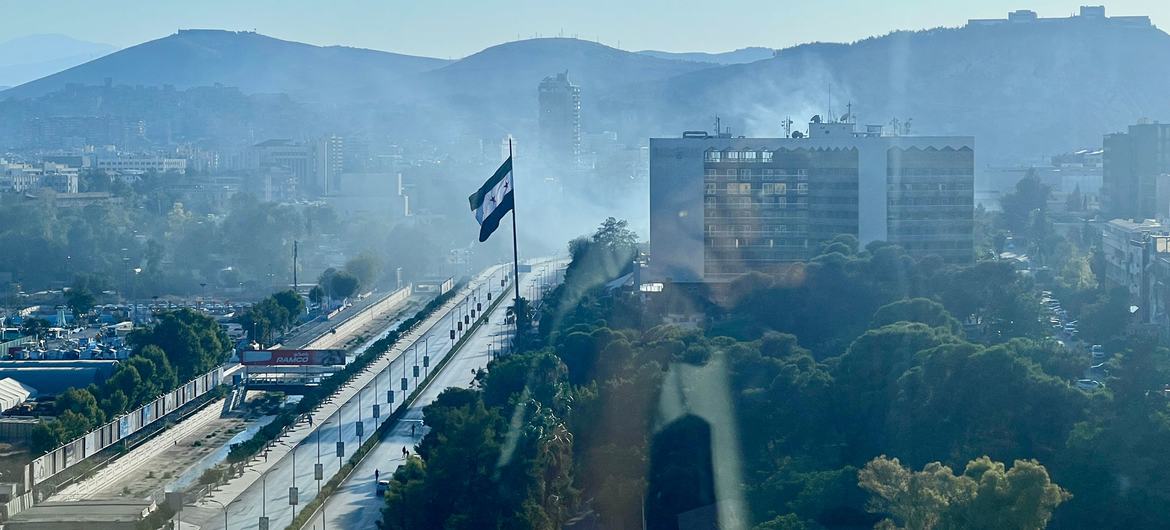
Smoke from bombed Ministry of Defence building in Damascus (July 2025) WFP/Jonathan Dumont
This
new persona enabled him to win the confidence of the United States,
Europe and Persian Gulf nations, backing his government, with himself as
'interim' president of a country surfacing from over a decade of losing
millions of its population in a desperate escape from atrocities
perpetrated by both the government and the terrorist groups that opposed
it. Syria now enjoys sanctions relief and financial support, no longer
isolated since al Assad's downfall and removal to Russia for political
haven. The revenge atrocities against the Alawites, the Druze and
Christians, are set aside as hiccoughs in the new government trying to
control the terrorists among them.
And
it was an unfortunate anomaly that government troops in their thousands
joined warring militias to take part in the bloody rampage against
civilians. One of the deadliest events of sectarian violence saw 2,000
Druse killed under Syria's new authorities. A massacre of government and
pro-governmental forces setting out to target and murder Syrian
minorities. An investigation and consequences for these outbreaks yet to
exonerate anyone, but no one is blinking. Leading the Kurds to hold
their counsel, perhaps not to opt after all, to integrating themselves
with the new government.
Perhaps
not so strangely, it seems that many of the 'fighters' who took part in
Sweida's execution-type atrocities against civilians carried out both
by government forces and those of the pro-government groups filmed their
atrocities, then posted these as trophy videos, striking fear in the
minorities across the country. Standing before the UN General Assembly
in September, Mr. al-Sharaa said he would "bring every hand stained with the blood of innocents to justice".
Waiting.
And
in the meanwhile, heading to Washington for another congenial meeting
with U.S. President Donald Trump, who thinks that the new Syrian
president is a "nice young man".
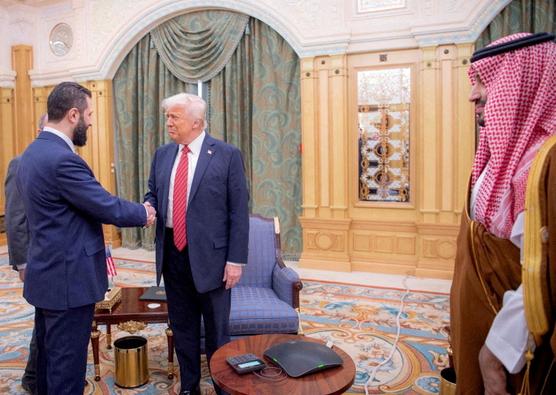
US President Donald Trump meets Syrian President Ahmed al-Sharaa in
Riyadh, Saudi Arabia, in this handout released on May 14, 2025.SAUDI PRESS AGENCY / VIA REUTERS
"People [the international community] seem to have forgotten us."
"Oh my God, it's a very painful story."
Dr. Omar Selik, El Fasher, Sudan
"Since April 2023, more than 600,000 people have been displaced from
El Fasher and its surrounding camps. Inside the city, women and girls
are enduring famine-level conditions, as classified by the IPC.
With food stocks depleted and efforts by the United Nations and its
partners to move in with supplies hampered by attacks, families are now
surviving on animal feed and tree leaves. There have been repeated attacks on humanitarian personnel and assets in North Darfur over recent months."
"More
than forty-one health and educational facilities in the state have been
destroyed, and supplies of medicine have been depleted. Pregnant women
are giving birth into the hands of unskilled attendants with no access
to emergency obstetric care. Women in need of reproductive health
services and survivors of rape have no access to any medical services."
UN Women
El Fasher has been under siege for months as RSF paramilitary forces try to take control of western Sudan
Some
40 severely malnourished children arrive daily seeking help at the last
functioning hospital in El Fasher, Sudan which has been bombed over 30
times, and there is nothing to give the children, other than animal
feed. This Sudanese settlement is the peak battleground of the brutal
civil war raging in Sudan. The city in Darfur's western region has been
under siege by the paramilitary intent on starving it into submission. A
30-kilometer earthen wall has been erected around the city's outer
boundaries, effectively locking everyone in, and keeping others out.
If
residents make the agonizing choice to remain they risk being bombed or
starved. Should they decide to leave in desperation, they risk being
killed, robbed or sexually assaulted. Over two years earlier, clashes
between Sudan's military and its paramilitary rival, the Rapid Support
Forces, broke out, a conflict that has forced some 12 million Sudanese
from their homes, killed tens of thousands, and set the stage for a
major famine which aid groups speak of as the world's largest
humanitarian crisis.
The
Rapid Support Forces were expelled from the capital, Khartoum, in March
and the group has since redoubled its campaign to capture Darfur, the
vast area where most R.S.F. fighters (once known as Janjaweed, Arab horsemen who savagely attacked Black Darfurian Muslim farmers) originated.
The focus on El Fasher is to dominate the last city standing in their
way to capture the entire Darfurian region under their command.
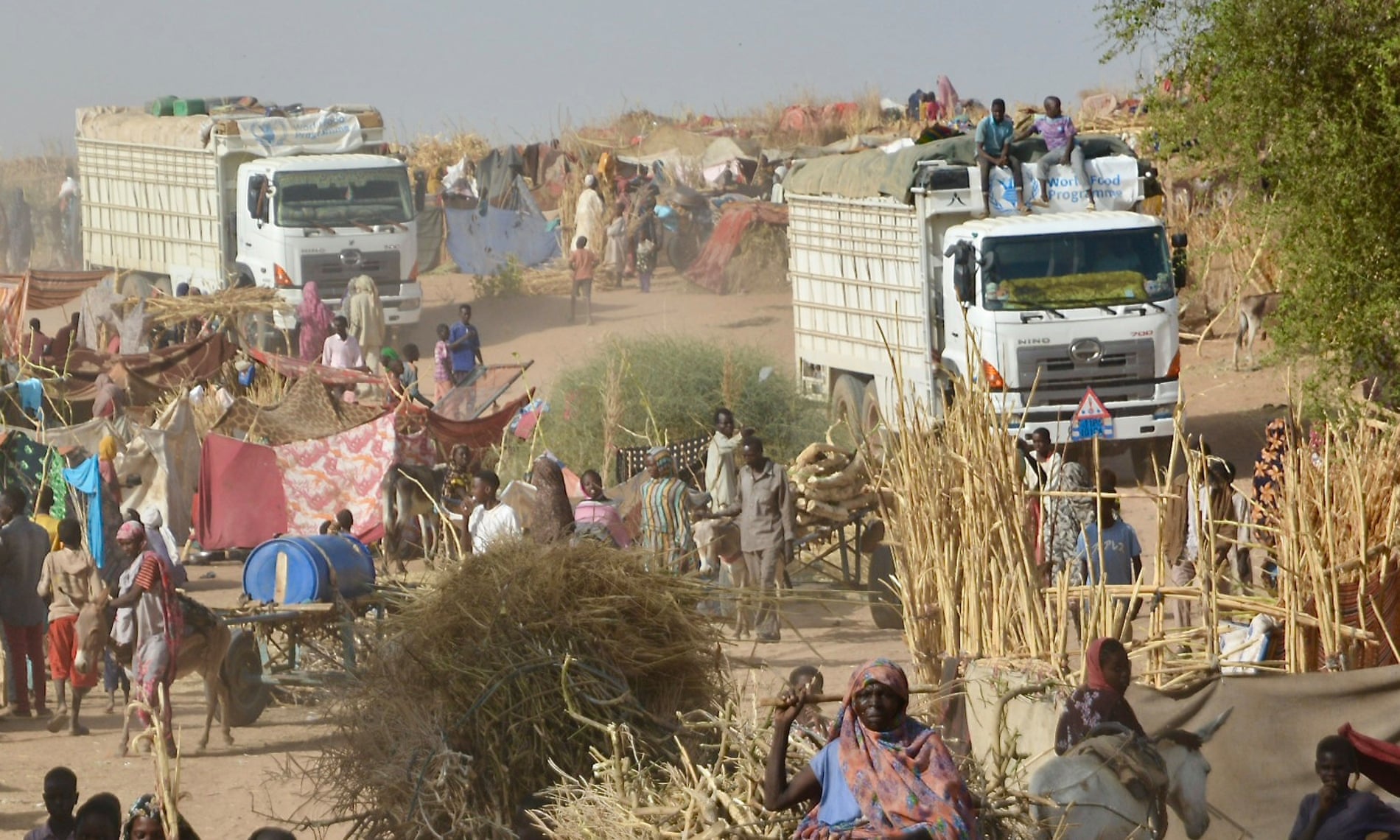
The RSF allowed food to reach displaced people in Tawila, but not El Fasher, which they kept under a tight siege, 27 April.Photograph: Jérome Tubiana
In
April the R.S.F. rampaged through the famine-stricken camp of Zamzam,
located 11 kilometers south of El Fasher, killing between 300 and 1,500
people, leading to a half-million people from El Fasher fleeing the city
in a panic of desperate survival. What followed was the erection of the
giant berm to keep people in and humanitarian groups out. Now some
260,000 residents are left in the besieged city where a kilo of pasta
costs ten times the normal price. The Emergency Response Rooms, a
humanitarian aid group, recorded the deaths of 14 children from
malnutrition over a recent two-week period, where cholera has now been
spreading.
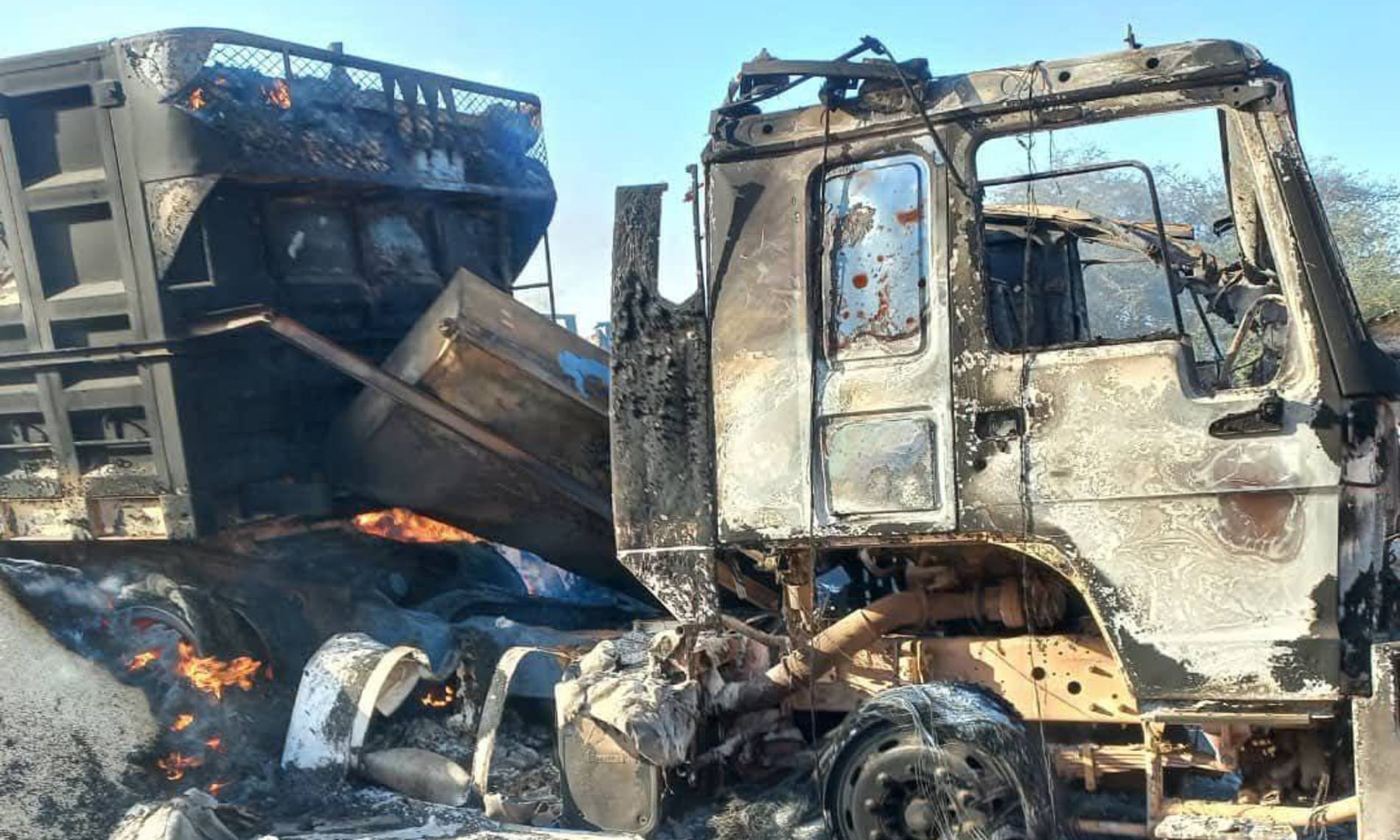
United
Nations food convoys have been unable to deliver aid to El Fasher for
over a year, since they were attacked by drones in their approach to the
city. Five aid workers were killed when a strike in June on a 15-truck
convoy and another in August destroyed three trucks, forcing the
remainder to turn back. When young men scrambled over the berm during
the night in an attempt to flee the city, they were executed by R.S.F.
fighters.
Tawila,
a small town 65 kilometers to the west, packed with over 600,000
refugees, was able to be served by international aid groups but the
journey to reach Tawila is perilous, fighters roaming the area, robbing
or extorting fleeing civilians, raping the women, on a road lined with
shallow graves and abandoned bodies. At the Doctors Without Borders
hospital in Tawila, about 40 women, victims of rape, are treated weekly,
with evidence suggesting "that is nothing compared to the true rate".
A UN truck carrying aid to El Fasher destroyed by an RSF drone attack.Photograph: X/PresstvExtra
Some
residents smuggle small amounts of food and medicine into the city,
through during the night scrambling over the earthen berm, but those the
fighters catch face beatings and threats. Of some 200 medical
facilities in El Fasher prior to the war, one only remains, the Al Saudi
hospital, where a handful of medics are hanging on, despite the
bombing, starvation and a dwindling supply of medicines. An R.S.F. drone
fired a missile into a crowded ward in January, killing 70 patients and
staff.
Doctors
at the hospital shelter in foxholes during bomb raids, while
malnourished patients are sustained with animal feed. Known locally as
ambaz, the animal feed is a dangerous alternative to human-grade food,
given that it is prone to fungal contamination. Thus far, 18 residents
have died recently after consuming ambaz. "But there is no other option", explained a senior doctor who has received death threats for his work, and chose to be quoted anonymously.
"We're really not clear on the scale of the destruction at this stage."
"They were talking about a town near Mandalay where 80 percent of the buildings were reportedly collapsed."
"But it wasn't in the news because telecommunications have been slow."
Lauren Ellery, deputy director of programs, Myanmar, International Rescue Committee
"Water, both in quantity and in quality, is immensely lacking in the
whole country and most specifically in the regions affected by the
earthquake."
"The lack of
water is creating an issue in terms of immediate survival, but could
also create an issue in terms epidemics in the future that we definitely
want to avoid."
Field Coordinator for Médecins Sans Frontières (MSF) Mikhael De Souza
People queue for relief supplies after a strong earthquake near the earthquake's epicenter, in Sagaing, Myanmar, March 31, 2025. Reuters
"With USAID
effectively gutted and critical staff receiving their final notices in
the midst of an emergency, the US Government's ability to respond to the
humanitarian crisis in Myanmar and future crises is severely
compromised."
"Speed, collaboration, and resources are life and death
matters when disaster strikes. The illegal decision to dismantle USAID
means the U.S. will be unable to show up like it has in past
emergencies."
"The
U.S. has already missed the first urgent window to help find survivors.
The second wave of crisis is the millions of people displaced who will
soon face threats of disease, hunger, and more without access to clean
water, food, shelter and other resources."
"The Trump administration must
step up and continue the U.S. legacy of providing partnership and
leadership right now for the communities who need urgent support."
Abby Maxman, president and CEO, Oxfam America
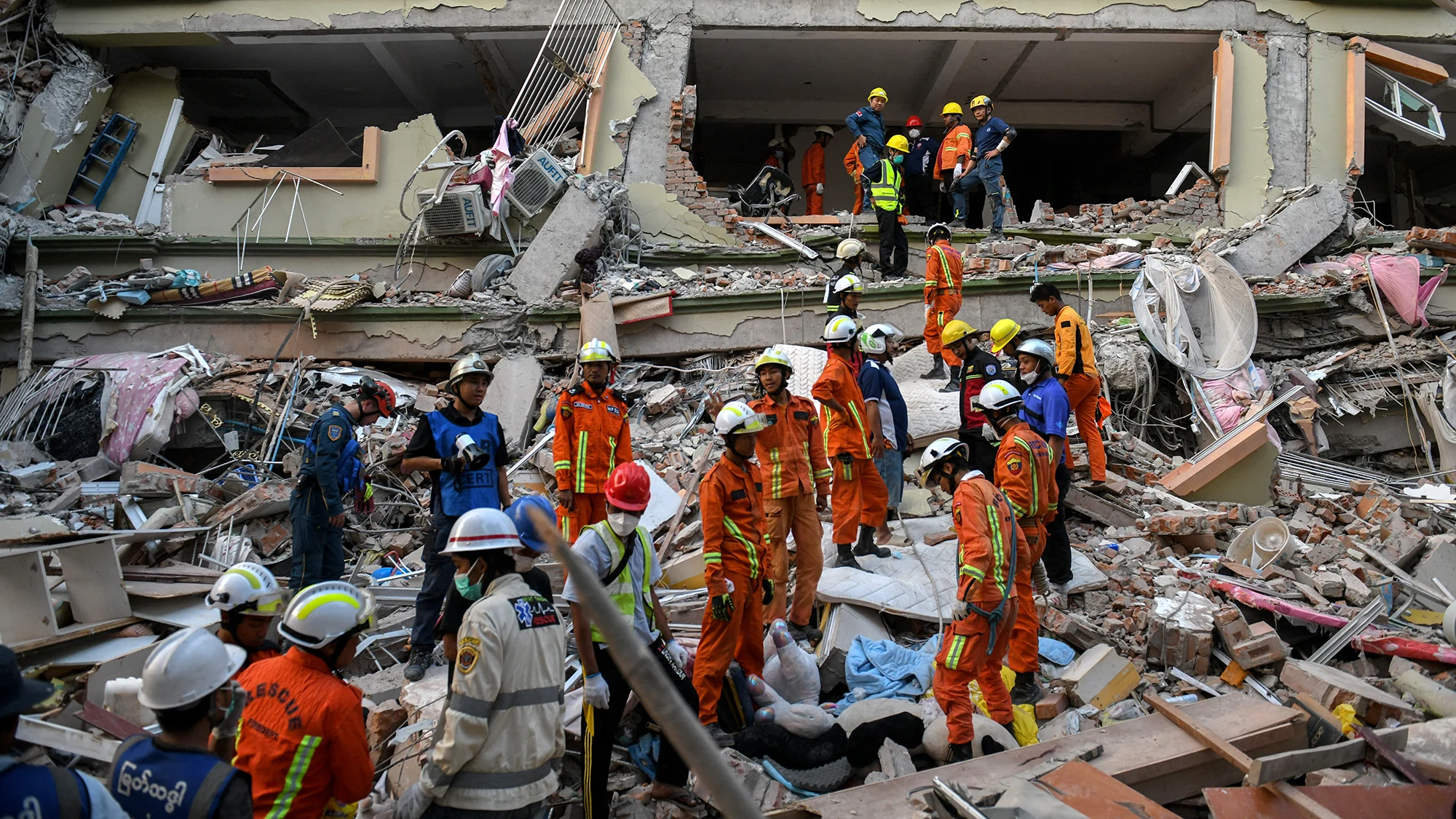
Rescue teams work to evacuate residents trapped under the rubble of a collapsed building in Mandalay, Myanmar, on Sunday. Sai Aung Main/AFP/Getty Images
Last week's massive earthquake in Myanmar has seen the death toll well past 2,000, according to state media. Rescuers spoke of several hundred Muslim, praying at mosques during Ramadan, were crushed to death when the mosques collapsed. A collapsing monastery crushed 200 Buddhist monks.
"The straight nature [of the fault]
means earthquakes can rupture over large areas - and the larger the area
of the fault that slips, the larger the earthquake."
"To accommodate all of this motion, [the Indian plate moving beneath the Burma microplate], faults - cracks in the rock - form which allow tectonic plates to 'slither' sideways."
"There have been six magnitude 7 or greater earthquakes in this region in the last century."
Dr Rebecca Bell, reader in tectonics at Imperial College London
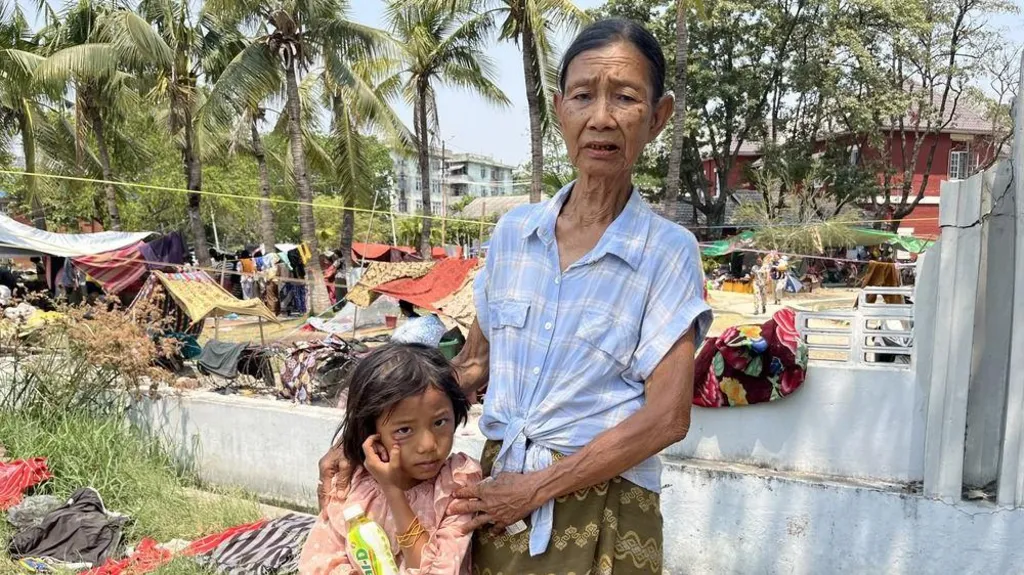
Daw Khin Saw Myint, 72, and her granddaughter are among thousands sleeping outdoors after losing their homes BBC
Bangkok is an impoverished country, a country embroiled in a civil war, where humanitarian organizations are already challenged in their efforts to respond to the needs of the civilian population. The effects of the earthquake are predicted to exacerbate the outbreak of hunger and disease.
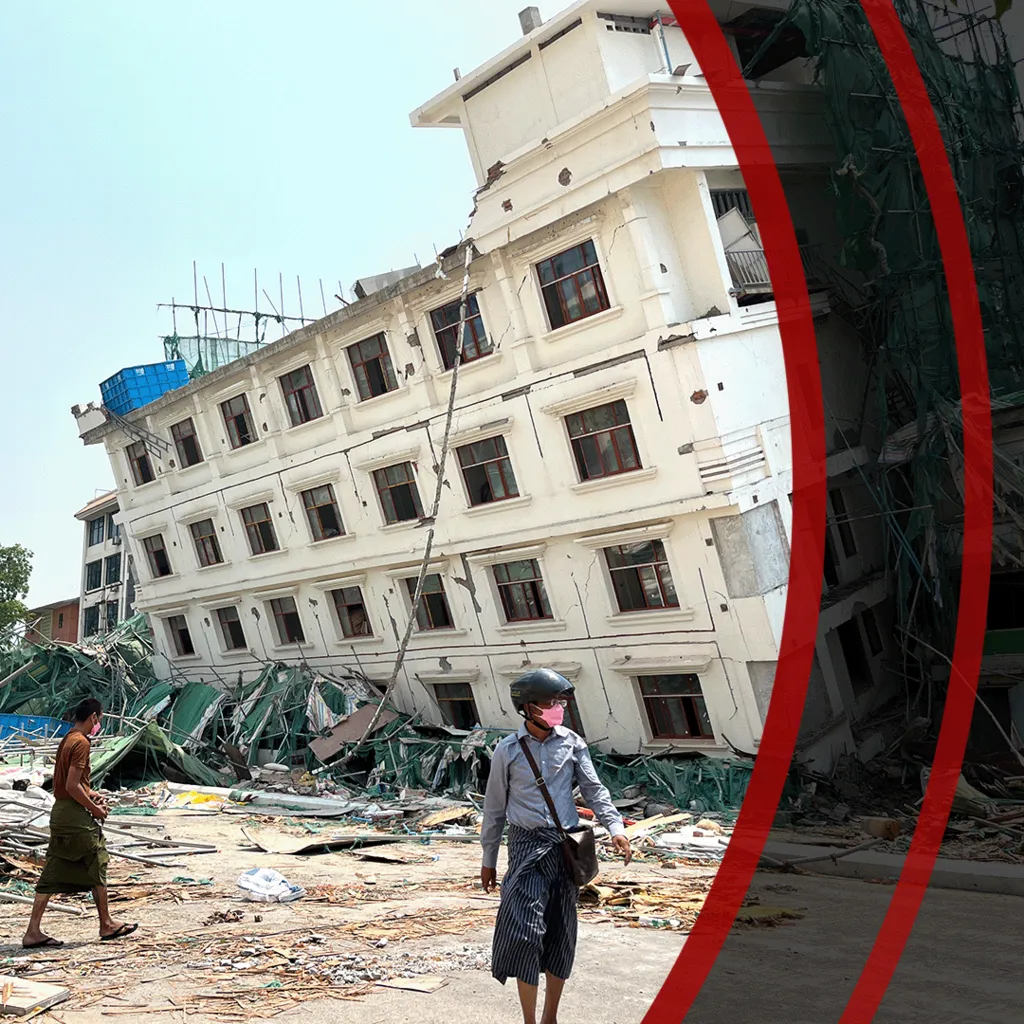
The 7.7 magnitude quake's epicentre on Friday hit close to Myanmar's second-largest city, Mandalay, damaging the city's airport. The tremor buckled roads while hundreds of buildings along the country's central area collapsed. Power outages have hampered relief efforts, as have shortages of fuel and problematic communications.
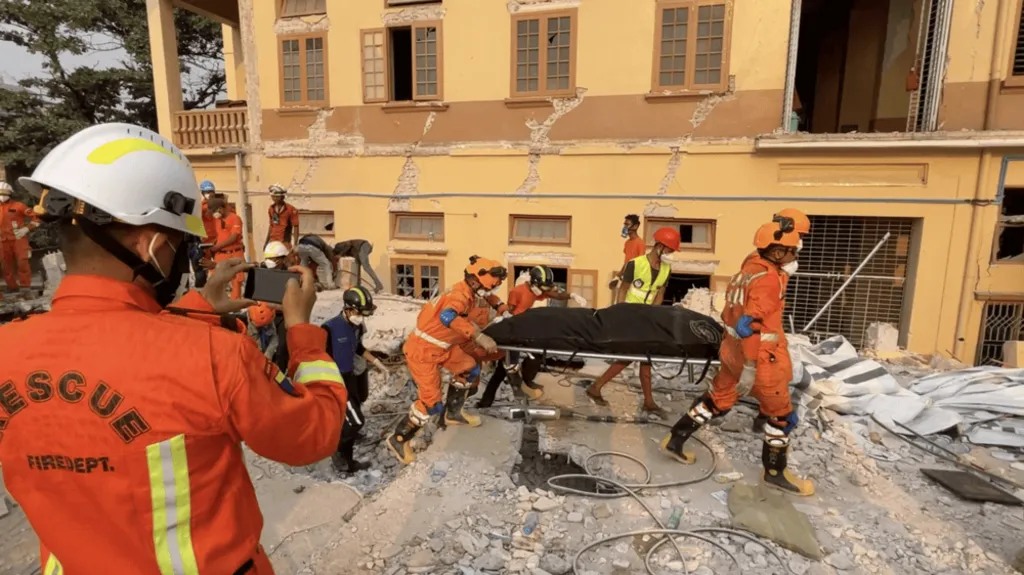
Search-and-rescue operations have been hampered by a lack of heavy machinery. The result of which has been rescuers without tools using their bare hands to remove rubble in their search for survivors. Daily temperatures in the region register 40 degrees celsius. At Mandalay's collapsed U Hla Thein monastery rescuers were still searching for some 150 of the dead monks.
Rescuers face tough conditions to retrieve the bodies of victims, with temperatures reaching nearly 40C BBC
Approximately 700 Muslim worshippers at Friday prayers were trapped and killed when mosques collapsed. According to a member of the Spring Revolution Myanmar Muslim Network, 60 mosques were damaged or destroyed. Several mosques were seen toppling, on videos posted on the Irrawaddy online news site.
Senior Gen. Min Aung Hlaing, leader of the military government, informed the prime minister of Pakistan that 2,065 people had died in the earthquake, and over 3,900 were injured, while some 270 people remain missing. Numbers that relief agencies expect to rise sharply in reflection of slow access to remote areas where communications are non-operational.
According to the World Health Organization, three hospitals were destroyed, with 22 others partly damaged in the region. A number of countries have sent rescue teams to the scene; Israel, Russia, China, India and a few southeast Asian countries. Millions of dollars in aid have been promised by the European Union, Britain, Australia, New Zealand, South Korea and others.
"There were power cuts, no running water, no access to cash. So I left with only $20. The city was complete mayhem when I left."
"There were women, children, families who were escaping villages along
the way. I thought at the time that only Khartoum had seen the most
destruction, but we saw villages that had clearly been devastated by the
war."
Lakshmi Parthasarathy, 32, U.S. Citizen
"There is no way to go outside of Khartoum. You can be shot, everything can
happen to you in the street."
"All the streets are captured by the militias."
"If this war continues for two or three months more, most of the
Sudanese people are going to die from poverty because the situation is
very, very difficult."
Musa Osman
El Sayeed, 55, Sudanese citizen
A
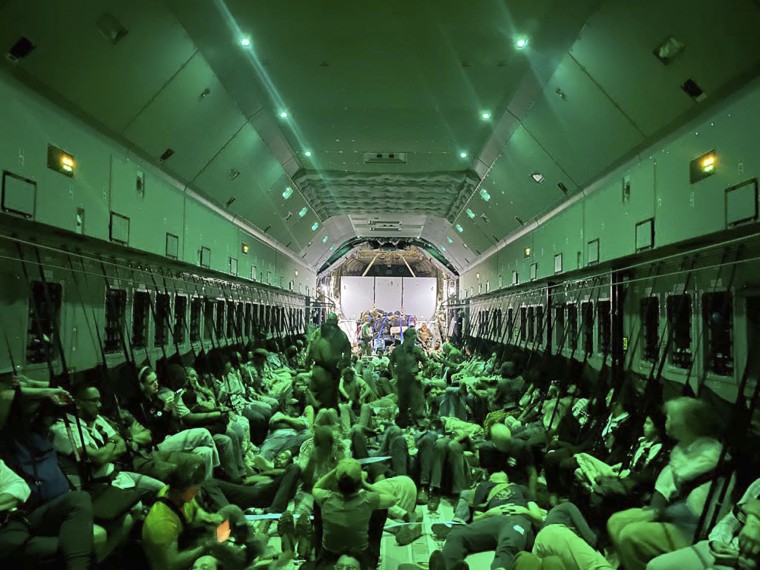
Spanish air force plane carried evacuees from Sudan to Madrid on
Monday. A European airlift has pulled out a wide variety of private
citizens from many countries. Spanish Defence Ministry via AP
For the people of Sudan, seeing the frantic international airlifts of
foreign nationals is a heart-sinking moment, indicating to them that the
international community holds out no hope that the two sides in the
conflict will reach an agreement any time soon, and the conflict of
which several ceasefires have been brokered and subsequently broken will
only escalate, leaving them in the middle of a maelstrom they will be
helpless to escape.
Foreign
governments have committed to airlifting hundreds of their diplomats
and other citizens out of the country to safety while Sudanese are left
to their own devices desperately seeking out ways they can leave the
chaos behind, believing that the two rival generals will raise their
present relatively low-level conflict to all-out civil war in their
battle for power, awaiting the completion of the foreign evacuations
before embarking on full-scale warfare.
Convoys
of foreign diplomats, civilian teachers, students, workers and families
from various countries made their way past the combatants at front
lines in Khartoum in an orderly but tense purpose to reach arranged
extraction points, while others drove to the country's east coast,
hundreds of kilometres distant.
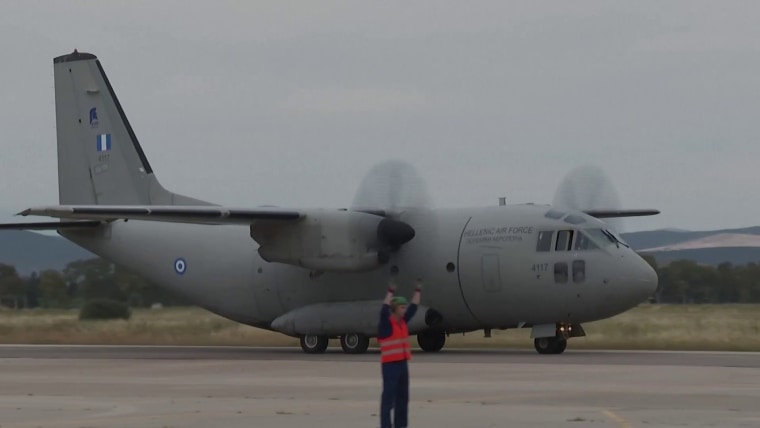
At
the airport a steady stream of European, Mideast, African and Asian
military aircraft flew in throughout the day Sunday and Monday to
collect the evacuees and fly them out to safety elsewhere; for many the
first leg of their trip back to their home countries. The last nominal
ceasefire with little reduction in fighting due to expire on Monday
evening.
Over
420 people of which total at least 273 were civilians have died, while
over 3,700 people have been wounded since the April 15 date when
fighting began. The country's military vows to fight to the end until it
accomplishes the crushing of the country's paramilitary opposition
group. Adequate reason why many Sudanese fear a dramatic escalation in
violence.
Sudan's
power-sharing negotiations with the ultimate goal of the military to
hold democratic elections and relinquish their power role to elected
civilians after the military coup, is being challenged by the
paramilitary troops with which it had a shared power agreement, but
which rejects elections and a civil, democratic government to be
returned in the East African country.
Canada
is one country that has not made plans to send in military aircraft to
evacuate the almost 1,600 Canadians formally registered in Sudan. It has
suspended consular services from the capital, noting that Canadian
diplomats would "temporarily work from a safe location outside the country", while still making an effort to aid their citizens in Sudan.
The New York Times
reported that U.S. special forces evacuated six Canadian diplomats,
along with 70 American diplomats and some as well from other countries.
Canadians were among a group evacuated by sea to Saudi Arabia. An
Egyptian expert on Africa, Amani el-Taweel, warned of "horrific
suffering" for Sudanese unable to leave. It is not possible, after all,
to evacuate an entire population of any country under military duress.
All the more so of a population of 46 million people.
This
is a country where humanitarian aid was already required by a third of
its population. And with an active conflict, aid agencies will no longer
be capable of reaching most Sudanese. "Warring parties will not heed any calls for a truce or a ceasefire"
once evacuations are complete, warned Ms. el-Taweel. Despite the
ceasefire set to expire, intensified airstrikes hit Khartoum's Nile-side
Kalakla district until the area was "razed to the ground".
Continued
fighting between the Sudanese military and their rival paramilitary
group the Rapid Support Forces saw heavy gunfire and thundering
explosions rock the city.
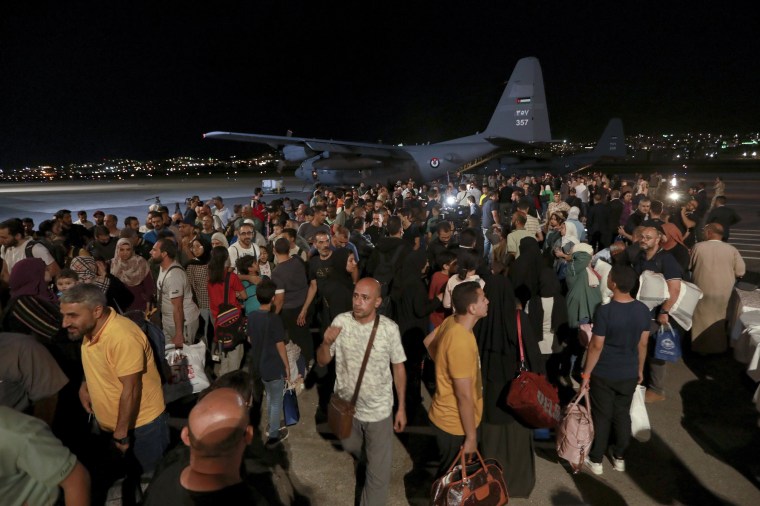
Civilians
evacuated from Sudan arrive at a military airport in Amman, Jordan, on
Monday. Foreign powers have sought to use a lull in fighting to get
citizens out.Raad Adayleh / AP
"One of the fighting parties had
seized control of the central public health laboratory in Khartoum and kicked out all of the technicians."
"That is extremely, extremely dangerous because we have polio isolates in
the lab. We have measles isolates in the lab. We have cholera isolates
in the lab."
"There is a huge biological risk associated with the occupation
of the central public health lab in Khartoum by one of the fighting
parties."
"[The expulsion of technicians and power cuts in Khartoum mean] it is not
possible to properly manage the biological materials that are stored in
the lab for medical purposes."
Dr. Nima Saeed Abid, World Health Organization representative in Sudan
"If this safe zone can be declared, we can resettle confidently
somewhere between 1 to 2 million refugees. Whether with the US or the
coalition forces, Russia
and Iran, we can walk shoulder to shoulder, hand in hand so refugees
can resettle, saving them from tent camps and container camps." "If we can extend the depth of this safe zone to a Raqqa and Deir ez-Zor
line, we can increase the number of Syrians who will return from
Turkey, Europe and other parts of the world." September 2019 "What did we do yesterday? We opened the doors." "We will not close those doors ... Why? Because the European Union should keep its promises." "We are not in a situation to handle a new wave of refugees [from Syria]." “We will not close these doors in the coming period and this will continue Why? The European Union
needs to keep its promises. We are not obliged to look after and feed
so many refugees. If you’re honest, if you’re sincere, then you need to
share." February 2020 Turkish President Recep Tayyip Erdogan
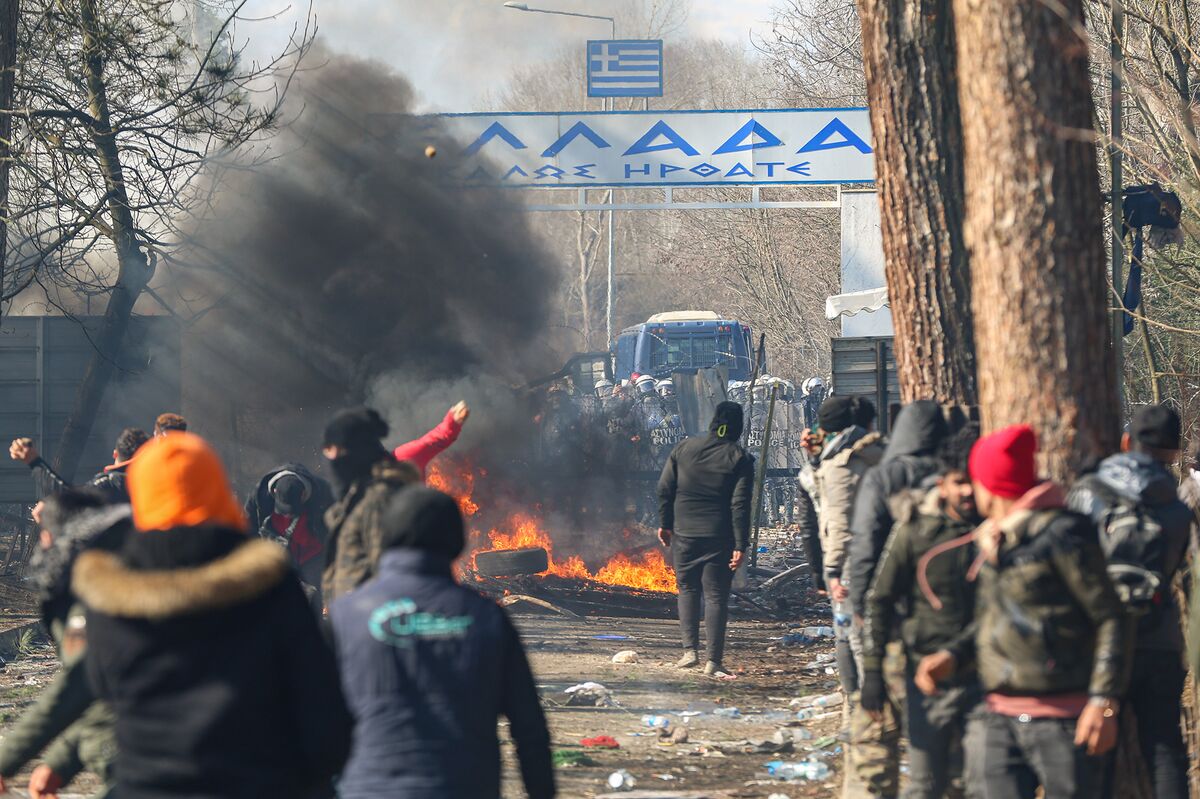
Migrants burn rubbish against Greek border police's intervention on Turkey's border with Greek in Edirne, Turkey on Feb. 29. Photographer: Enes Yildirim/Anadolu Agency via Getty Images
Recep Tayyip Erdogan is consumed with bitter bile and hatred. Well, who doesn't he hate? Kurds, for demanding their heritage geography and threatening to take their ancestral land from Turkey, Egypt, for outlawing the Muslim Brotherhood, Israel for committing 'genocide' on the Palestinians, the EU for refusing him membership, Syria's Bashar al Assad and his Alawite regime for victimizing its Syrian Sunni majority, Germany for treating expatriate Turks like 'second-class' citizens, and Greece, because that country has been Turkey's traditional enemy, as much a nemesis as Kurds.
A dilemma faced him, a strident and proud Islamist whose Sunni credentials were offended when Shiite minority Syria's ruling mass murderer sent millions of Syrians fleeing across the border into Turkey. Syrians they may be, but Sunnis as well, gathering in huge tent camps as an economic, social and political burden on Turkey which claims to be harbouring three and a half million in those squalid camps. The solution, as Erdogan saw it, would be to rid the border between Turkey and Syria of Kurds in their traditional towns and farming communities.
And so a campaign to liberate the corridor from the presence of Kurds, creating a vast exodus fleeing for their lives to leave space for the immediate move of a million Syrian Sunni refugees out of Turkey and back into Syria to settle on land that was never theirs. The intervention of fate when Assad moved his regime troops into the area, alongside Russian air power to strip the region of Syrian Sunni rebel groups simply complicated an already complex and violent situation.
Enraging Erdogan who failed to convince Vladimir Putin of Turkey's vital mission, just as the U.S. failed to be convinced that it should abandon its collaboration with the Kurds it depended on to face off with Islamic State.
And now, Greece, whose islands have been inundated with thousands of refugees crossing from Turkey into Europe, destroying the peace and tranquility of the residents' way of life is once again struggling to maintain its sovereign right to accept those they agree may enter, even while, as a member of the European Union, it and Italy have been the major losers in a massive influx of refugees from the Middle East and North Africa.
Migrants were also heading by sea to the Greek coast.Credit...Aris Messinis/Agence France-Presse — Getty Images
They are an unstoppable mass of humanity. Overland and by sea.The agreement that Turkey coerced the EU into four years earlier, to pay it billions of euros to aid in the upkeep of the Syrian refugee camps stemmed the tide of hundreds of thousands of refugees flooding into Europe for a while. Turkey now accuses the EU of failing in the extortion Erdogan imposed upon them, and they are now being punished accordingly. Deliberately opening the floodgates, making it known to refugees squatting in Turkey that the way has been opened, even busing them to the border, Erdogan is actively and maliciously punishing Europe.
The Greek army has been deployed to halt the influx, barbed wire barricades have been placed on the ground to cheers, boos and screams of the migrants. People get trapped between border posts on the Turkish side at the militarized land border, now the flashpoint for Turkey's war against Europe. An escape route for the steam of fury Erdogan has built against Russia and Syria, where Turkish troops are being targeted in Syria just as Syrian troops are in the crosshairs of militarized Turkish drones.
Erdogan is prepared to stand down should the EU suddenly become sensitive to Turkey's difficulties and support Turkey in its struggle against Syria. Meanwhile Turkish state television is live-streaming the exodus of Syrian and other haven seekers as they struggle to enter Europe. For the Syrian migrants it has been a joke to consider the Turkish facilitation. According to the International Organization for Migration of the UN, up to 10,000 refugees were treading through Turkey in hopes of reaching Europe.
Greece "came under an illegal mass and orchestrated attempt to raze our borders and stood up protecting not only our frontiers, but those of Europe, too", stated Stelios Petsas a Greek government spokesman. Of the 66 migrants who were arrested crossing the land border illegally, "none have anything to do with Idlib", he averred. "Our government is determined to do whatever it takes to protect our borders."
About
4,000 migrants of various nationalities were pressed against the
Turkish side of the border and an additional 500 or so people were
trapped between two border posts, but still on the Turkish side.Credit...Bulent Kilic/Agence France-Presse — Getty Images
Idlib's Homeless in Syria, Russia, Turkey Confrontation
"There is no house of concrete or of mud or even a chicken coop that is not inhabited." "People are in dire need of any shelter. Even a tent sometimes is not available." Maad al-Khalaf, 41, Sunni Syrian homeless exile
"I could not reach the helicopter crash location because the whole area
is being bombed." "The attacks on Idlib itself make it clear
that nowhere in this area is safe." Abd Albaset, 32-year-old refugee from Ma'arat
al-Nu', freelance war photographer
Syrian government helicopter is hit by a missile in Idlib province, Syria, Feb. 11, 2020. AP
"Our teams documented the killing of 208 people in January, including
60 children and 28 women." "In February, we retrieved the bodies of 127 people, 12 of them were
today, after regime airstrikes on Idlib city." "Northwestern Syria is
witnessing the largest military campaign to date by [the Syrian] regime,
Russian and Iranian forces." Sayeed Mousa Zaidan, spokesman, White Helmets
"The recent deployment of Turkish military has significantly increased
in the last two weeks both in terms of equipment and ground troops." "This is the biggest build-up of force by Turkey so far, but it still
seems within the defensive mode in terms of preventing the further
advance of the regime into Idlib." "They are trying to keep
this zone out of [Syrian President Bashar al-] Assad's hands until after
the implementation of a political process for Syria." Ammar Kahf, executive director, Omran Center for Strategic
Studies, Syrian affairs research organization, Istanbul
"We count up the assault on civilian infrastructure, and it's
unprecedented. In the past month alone, 11 medical facilities, 28
schools, seven refugee camps and nine groceries were bombed or shelled
in northwest Syria. The regime also targeted five civil defense White
Helmet centers, four bakeries, 19 mosques, three water stations, and two
power plants."
"As a result, our group made the tough decision to cease its
education and anti-extremism programs after our staff fled for safety." Isam Khatib, director, Kesh Malek, local mutual
aid organization
Civilians flee Idlib for safety near the Turkish border, 11 February 2020
Displaced Syrians, looking for haven once the overcrowded tent cities reached maximum, sought refuge in mosques. Then the mosques became crowded and the refugees strove to put together flimsy shelters in the olive groves. Winter arrived, trees lost their foliage and the shelters offered little in protection from the cold. Maad al=Khalaf is forced to share a tent with his wife and children along with another family. Once a landowner, before the civil war destroyed their lives, they live now on abandoned farmland adjacent the border with Turkey.
The family is but one among over a million people forced to leave their homes since the Syrian offensive began last April when Russian planes gave air cover to Syrian regime troops determined to retake all of Syria from its Sunni Syrian rebels. Of the total million, about 700,000 have been displaced n the last ten weeks alone after a ceasefire collapsed in December. This number is believed to represent the greatest number of displaced people in a single period in the last 9 years in Syria where now an estimated 3.6 million Syrian Sunni civilians remain forced up against the closed Turkish frontier.
A man wails after a government airstrike in Idlib, 11 February 2020
"Syra has the world's largest concentration of displaced people and it urgently needs a cessation of hostilities", Jens Laerke from the United Nation's Office for the Coordination of Humanitarian Affairs warned. Rebel militias numbering several thousand fighters, are defending their last bit of territory. The Syrian regime backed by its Russian allies have continued to blast the province with airstrikes. Over 60 hospitals and other civilian structures have been hit in deliberate efforts to coerce civilian populations to leave.
Leave they have, but there is nowhere for them to turn to. Turkey shut its border after the 2015 migrant crisis, housing some 3.5 million Syrian refugees in squalid refugee camps so Turkey now refuses to permit any more entrants. Moscow, the European backer of Bashar al-Assad, wields veto power in the United Nations Security Council, forestalling an emergency summit called by the United Kingdom, leaving the UN hamstrung in its wish to act. "The numbers are enormous", Mercy Corps, an NGO aid group working in Syria said of the recent exodus, struggling to provide basic aid to the refugees. "The worst part is that we saw this coming. The UN, the international community, the governments -- they all knew that we were here and that this was going to happen. And yet nothing has been done", the Mercy Corps spokesman said in frustration over their powerlessness in the desperate situation.
The question is, why would they expect anything to be done by the United Nations? It represents a wholly dysfunctional institution managed by the world's foremost human-rights abusing nations for whom corruption is an established government tool. And it is these failed nations that refuse to dignify human life that take command of the UN's focus and actions. And their focus happens to be on Israel, a country at peace with itself and its neighbours, whom Syria, Iraq, Lebanon, Turkey and Iran would, given the chance, destroy.
Yet Syria, Iraq, Lebanon, Turkey and Iran sit on many of the UN administrative arms. And the Human Rights Council chooses to overlook the countless human rights abuses, war crimes, crimes against humanity committed by all of them, preferentially focusing on Israel, accusing it of crimes they, not Israel commits, and doing their utmost to isolate and delegitimize the Jewish State.
"This report illustrates how the Syrian government has effectively criminalized the provision of nondiscriminatory care to all, regardless of political affiliation." "[Workers who provide care in line with their legal and ethical obligations are branded] enemies of the state [in Syria]." "[A majority of Syrian health care workers who fled the country were arrested] because of their status as care providers, and their real or perceived involvement in t he provision of health services to opposition members and sympathizers." Physicians for Human Rights report
"The law is problematic." "The reality is that under this law, anyone could be a terrorist." Mai El-Sadany, legal and judicial director, Tahrir Institute for Middle East Policy, Washington
"The continuing threat and persecution of professions including medical professionals is a huge barrier to returning." "To freely practice in accordance with their code of ethics -- they don't see that as possible." Rayan Koteiche, Physicians for Human Rights
The entrance of Idlib Health Directorate in November 2018. Photo: Getty Images.
For violations of human rights and the universal codes of military conduct in places of conflict of an unprecedented magnitude look no further than Bashar al-Assad's Alawite Shiite regime in civil war- conflicted Syria which has resulted in over a half-million Sunni Syrian deaths, internal displacement of millions of Syrians, and millions more swelling the ranks of the world's refugees. This butcher of Damascus who ranks Sunni protesters along with 'terrorists' and treats them accordingly with no humanitarian holds barred, stands out for the atrocities committed under his brutal watch in an area of the world where mass atrocities regularly occur.
His violations of what, during wartime is considered to be within the bounds of international conventions has been notable for their extremes, from the use of chemical weapons, to barrel bombs, to the bombing of bread lines, hospitals and clinics and marketplaces. His notorious torture of prisoners, arrest and torture of children, all the while claiming that everyone who opposes his brutality and scorched-earth responses to originally-peaceful protests are 'scum', set him apart and above those generally considered to be state-level war criminals.
Back in 2011 Assad's government enacted a counterterrorism law making it a criminal offence for health workers and physicians to render any aid to those whom he considers enemies of the Syrian state. The criminalization of medical care has seen the collapse of the nation's health care system. The crime-status of giving even the most basic of medical care, like disinfecting a wound or giving painkillers through clinics in neighbourhoods held by insurgents are punishable under a counterterrorism law.
In this file photo from 2017, a nurse carries a box of ventilation tubes
to prepare for sterilization as doctors perform an operation rebel-held
Douma [File: Mohammed Badra/EPA]
Where a special court is known to have tried tens of thousands of medical workers and others, under the law. A study released by Physicians for Human Rights speaks of health workers who are branded "enemies of the state", and as such they are free game for government vengeance. Extensive interviews were undertaken with 21 formerly detained Syrian health care workers who fled the country. Without exception they all had undergone fearful interrogations while imprisoned, along with torture. None wished to be identified by name in fear of retribution.
According to Ibrahim al-KIasem, a Syrian lawyer who represented detainees, trials in military courts are held in secret with detainees tried in the counterterrorism court minus lawyers. "The judges have the ability to do anything" in such settings, he stressed. Legal scholars and rights activists speak of the counterterrorism law as vague in identifying terrorism. That lack of specificity leaves the situation wide open for government agencies and the military to apply their own widely encompassing and inclusionary definitions of just who is a terrorist. Taking their cue from their president.
Those same legal scholars have no trouble whatever in stating that the law violates the Geneva Convention that obliges doctors and other health care professionals to treat the wounded and the sick, irrespective of which 'side' in a conflict they may support or be representative of. And nor would the vast majority of former detainees who fled the country contemplate returning at any given time, under current conditions imposed by the current regime.
Children at Al Hol camp in Syria get different services according to whether their parents are considered 'terrorist'.
(Ali Yousef/ICRC)
"Yet again, innocent civilians are paying the price for the political failure to stop the violence and do what is demanded under international law -- to protect all civilians." "Our worst fears are materializing." Mark Lowcock, UN humanitarian co-ordinator
"Most of the partners [medical facilities, hospitals] will never again share their coordinates with
the UN because it is not working."
“Last year six hospitals were attacked, and this month another
eight hospitals were attacked after their coordinates were shared with
the UN. So most NGOs in Syria decided to stop this process." Dr Mohamed Zahid, Physicians Across Continents, Syria
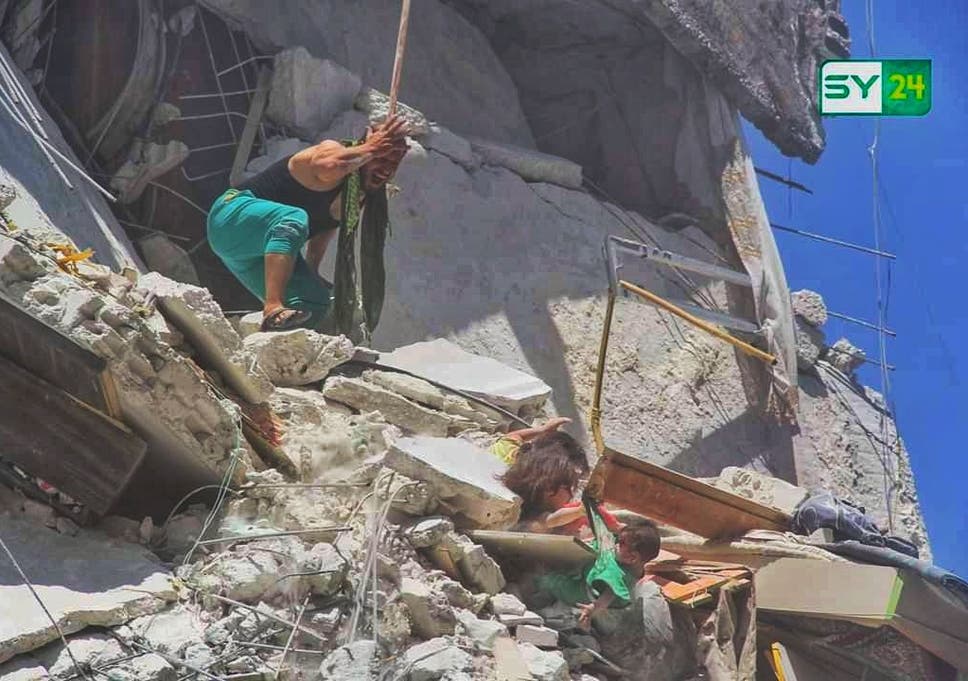
Amjad al-Abdullah reaches for his 7-month-old daughter who hangs from
the wreckage of their family home by a piece of her clothing following a
Syrian or Russian government airstrike in Idlib province
(
SY24
)
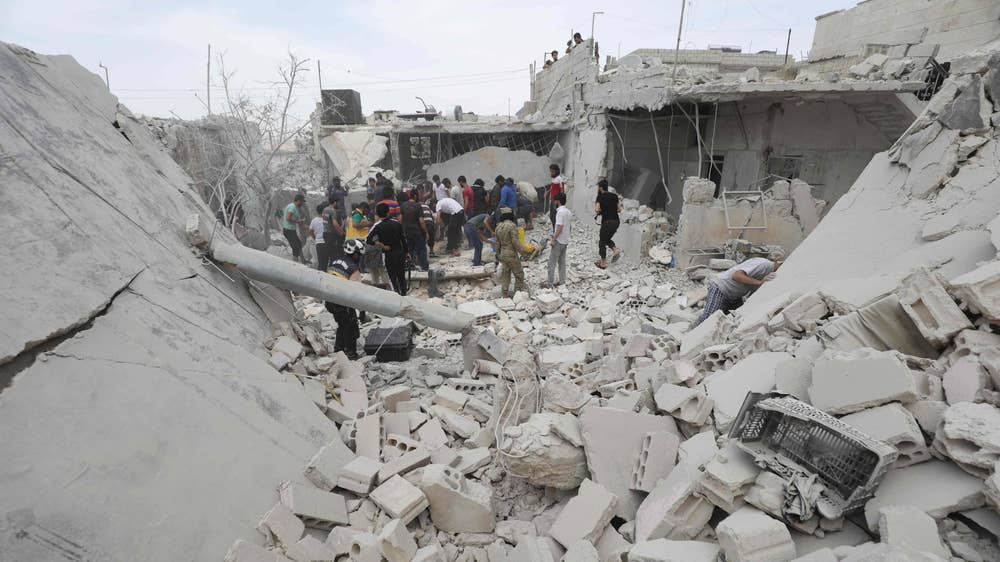
"There was dust everywhere in the air, and people
were screaming for help. I could see the young children clinging on to
each other."
"The father was screaming ‘Don’t move! Don’t move'!"
"The older child was still clinging on
to the baby. We rushed them to al-Shami hospital but they were running
out of blood supplies and had to take them to Idlib hospital."
"I stayed with the children, praying they would be safe."
Bashar al Sheikh, a photographer from Kafr Nabudah, Idlib
"The injuries we are seeing are horrific. It’s clear
that once again children have been killed and injured in indiscriminate
attacks."
"The children of northwest Syria have been caught
in violent conflict for 80 days with no lull. They have been denied
education, food, healthcare and forced to sleep under the trees in open
fields for months now." Sonia Khush, Save the Children, Syria
"Some of the dead bodies were torn into pieces or
burnt beyond recognition. Many of the victims were women and children,
some of them suffering the most horrific injuries."
"[The increased violence is] part
of a wave of new attacks on critical civilian infrastructure across
northwest Syria in recent months, including health facilities, schools,
water plants, and bakeries."
Mark Cutts, UN deputy regional humanitarian coordinator, Syria crisis
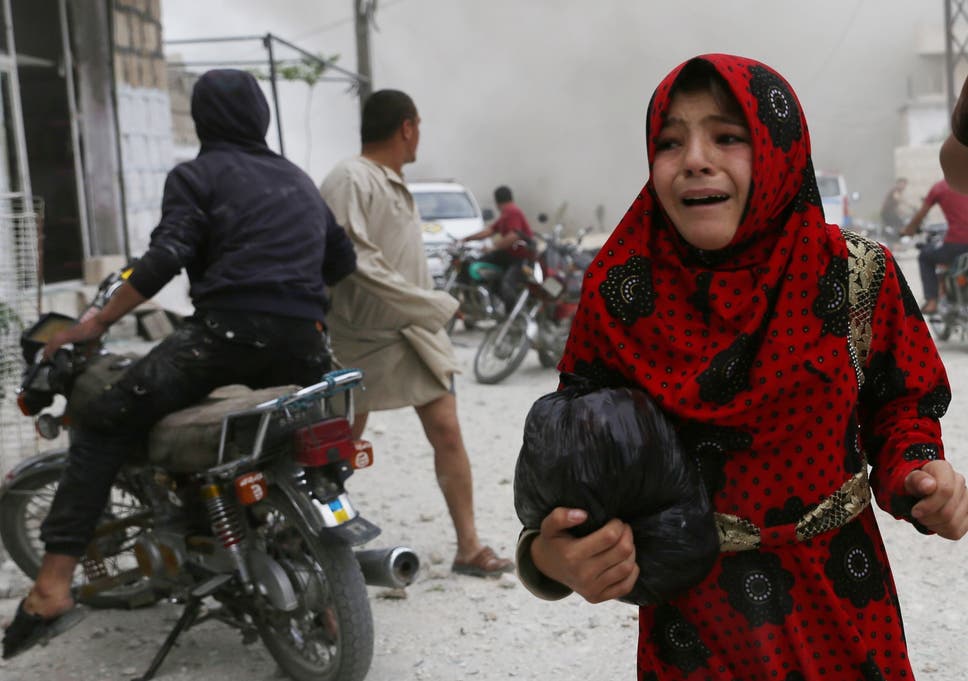
A Syrian girl runs for cover during an airstrike by pro-regime forces on Kfar Ruma last week
(
AFP
)
The father, Mr. Abdullah in the first photograph above, proved unable to save all of his children.
A life-shattering, soul-destroying dilemma for a father whose primary responsibility is to protect his children. Who, in their right minds, thinks of a government barrel-bombing its citizens, of a foreign entity operating in that government's airspace, bombing innocent civilians? Seven-month-old Tuqa
survived, but her five-year-old sister Riham died soon after the attack,
as did her mother, Asmaa. Two other sisters were severely injured, one
of them is still in a critical condition.
What a cruel irony that the children's mother shares the same name as the murderous tyrant's Bashar al-Assad's cosseted and protected wife whose own children are safe and secure from the heinous assaults of a mass murderer like her husband. Since 2011 when peaceful Sunni Syrian protesters rallied in protest against their status of inequality, the regime has been responsible for the deaths of a half million Syrians, and that number dated from three years ago; impossible to know how many since have died.
A member of the UN permanent Security Council is actively engaged in bombing innocent civilians of a country not its own, collaborating with a conscienceless tyrant whose response to a popular uprising of a disaffected majority of the country's sectarian-split population with all the deadly munitions, including chemical weapons, at his disposal. Iran's Republican Guard Corps, its proxy terror group Hezbollah, Shiite militant groups have all shored up Assad's military for the singular purpose of mass slaughter.
Russian Foreign Minister Sergei Lavrov speaking of the Syrian governorate of Idlib addressed it as an "abscess" needing to be "liquidated". The situation compelled humanitarian organizations to launch an appeal with the United Nations Office for Humanitarian Affairs, warning "Idlib is on the brink of a humanitarian nightmare unlike anything we have seen this century". Idlib? Syria? Sunni Syrians? Kurds? What does it all mean? Hasn't the issue been settled? Is the rebellion still on? People still being killed?
The world is tired of Syria. Disinterested in what's happening there. Outrage has been worn out. Out of sight, out of mind. The Islamic State was defeated, wasn't it? Its caliphate is gone, is it not? What's the problem? The Syrian Observatory for Human Rights has offered the world the figure of 2,641 'casualties' since the end of April, reflecting Idlib's agony under the regime's barrel bombs and Russia's fighter bombers. Bombed buildings are now rubble, upon which lie the dead and injured.
Since April 29 an estimated 25 hospitals and clinics have been destroyed. Deliberately targeted. Over 800 health workers have been killed since 2011 and 570 hospitals and clinics have been bombed. When thousands of Syrian civilians were slaughtered in Aleppo the world was aghast, calling for Assad's removal, but the Kremlin had other ideas. Without Vladimir Putin's helpful alliance with Bashar al-Assad it would indeed have been over, Assad defeated.
Now, it is the Syrian resistance that has been bombed into submission. With Recep Tayyip Erdogan on the sidelines awaiting his opportunity to move in and wreak his vengeance on the Kurdish population. Idlib's population had more than doubled, it became the catch-basin for all the rebels forced out of other surrounding areas, where they sought haven and the chance to recoup their resources. Soon joined by Islamist terrorist groups, including remnants of Islamic State. The presence gives justification cover to Assad and Russia to bomb the innocent.
Syria is absent six million of its population. Millions live in misery in Turkey whose government has begun the process of 'repatriation', ushering them back to Syria because not enough Syrian lives have been destroyed. Ankara can eye its own plans with relative impunity because the agreement with Europe to detain Syrian refugees disallowing them to reach an already-saturated Greece and Italy satisfied both Turkey's demand for payment and Europe's for disabling another potential refugee wave.
This represents a general opinion site for its author. It also offers a space for the author to record her experiences and perceptions,both personal and public. This is rendered obvious by the content contained in the blog, but the space is here inviting me to write. And so I do.





![In this file photo from 2017, a nurse carries a box of ventilation tubes to prepare for sterilization as doctors perform an operation rebel-held Douma [File: Mohammed Badra/EPA]](https://www.aljazeera.com/mritems/imagecache/mbdxxlarge/mritems/Images/2019/12/4/eb9f085e864a4fbeabf9d4fe9b4d5a70_18.jpg "When care becomes criminal: Syrian health workers 'targeted'")