Canada/China Agreement :The Winning Score Zip for Canada
"It is very, very upsetting to me and to our organization.""This is all about expanding the Communist party's influence and expanding their capabilities in Canada, in all those agreements, for transnational repression, political interference and disinformation."Edmund Leung, chair, Vancouver Society in Support of Democratic Movement"The two sides consented to provide mutual support and convenience for media to work in each other's countries, and provide greater convenience for two-way travel."Shen Haixiong, director/editor-in-chief China Media Group"Censorship [including self-censorship] is pervasive and alternative media voices are few or marginalized ... this includes traditional media such as newspapers, and in new media provided by online platforms and applications such as WeChat."Canadian Security Intelligence Service assessment
 |
"That was my major concern of the whole trip, this deal between the RCMP and China's public security.""All we can do is push for clarity, push for transparency and push for safeguards.""We're not in a position to change what has been agreed on between China and Canada.""All we can do is push for our own red lines and guardrails."Edmund Leung, Vancouver Society in Defence of Democratic Movement
Canadian
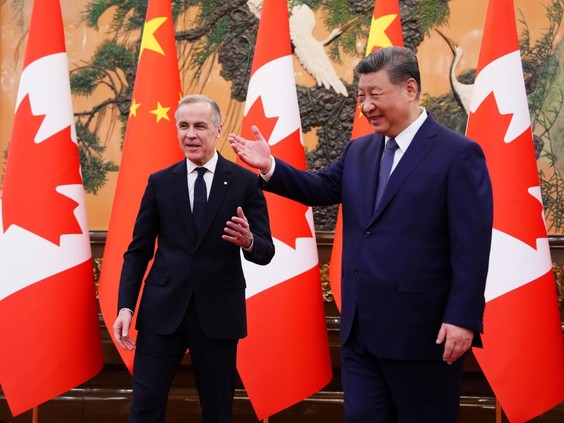
Prime Minister Mark Carney's 'strategic partnership' agreement he
entered into with Chinese President Xi Jinping in Beijing includes a
number of provisions that transcend the expansion of Chinese electric
car imports at a preferential tariff rate in exchange for eased tariff
barriers on Canadian canola, in Canada's 'reset' with China. According
to Cheuk Kwan, co-chair of the Toronto Association for Democracy,
speaking for the Canadian Coalition on Human Rights in China, "These are all Trojan horses."
Suddenly
gone, the awareness and caution occasioned by Beijing's political
interference in the 2019 and 2021 federal elections. At face value, the
proposed collaboration reflect "people-to-people ties and cultural exchanges", investment in museums, support for "digital content creators" and "visual artists", heritage, education, "travel exchanges and cultural ties", not to mention cooperation in the "creative industries" at the "sub-national level".
In other words the very soft-power that Beijing already utilizes to
extend its global reach. Now legitimized rather than remaining furtive.
As for Beijing's cooperation in a mission to "combat corruption",
cyber fraud and traffic in illegal synthetic drugs, the absurdity of
the proposal lies in the obvious reality of China being the very icon of
corruption, cyber fraud and illegal synthetic drug traffic. Fentanyl
has made its mark throughout Canada for years, in deaths by overdose and
the increase of opioid addiction with this most dangerous of chemical
compounds.
 |
As for the memorandum of understanding between the Royal Canadian Mounted Police and China's Ministry of Public Security (dreaded by the Chinese citizenry),
a series of scandals involving tortured witnesses and trumped-up
corruption charges served to sever a similar, previous such
collaboration of 25 years back. That, apart from the fact that a number
of Public Security divisions from China were operating clandestine
police stations in Montreal, Toronto and Vancouver to harass and
threaten Chinese Canadians.
Public
Safety Minister Gary Anandasangaree commented he was unable to provide
any assurance that the pact would interfere with Beijing's persistent
deployment of agents in Canada who spy on, intimidate, coerce
individuals and organizations within diaspora communities in Canada, to
target Chinese-Canadians.
In
another area of troubling potential, Carney's agreement with Beijing
would formalize Canadian operations of divisions of the Central
Propaganda Department of the Chinese communist Party's central
committee. These are arrangements with the full potential to enhance
opportunities for a Propaganda Department deputy minister among others
to expand control over media manipulation in Canada, as per the MOU
signed by Canadian ambassador to China Jennifer May.
There
are no independent journalists in the powerful China Media Group, they
are, rather, professionally skilled propagandists working for the state.
Reporters Without Borders cites China as the primary jailer of
journalists among member states of the UN. In the past several decades
Beijing's Canadian proxies have directed Chinese-language media in
Canada or bully them into submission.
"If the Chinese police have the ability to request information from Canada in their ongoing investigations, it's very bad news.""If we feel compelled to share information -- names and addresses or whatever -- we would simply be enabling China's transnational repression."Charles Burton, former diplomat, China expert
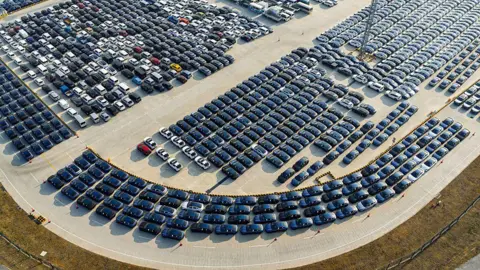 |
| China is the world's largest producer of EVs, accounting for over 70% of global production Getty Images |
"Prime Minister Carney can be pleased with the results of his first official visit to China. Through a temporary trade truce, and a list of political, economic and cultural MOUs, the federal government has effectively reset relations with China to where they were in 2016, before the arrest of Meng Wanzhou at the request of the first Trump administration.""The headline announcement is a reduction of Chinese tariffs on Canadian canola seed (from 85 to about 15 per cent) in exchange for a limited number of electric vehicle imports to Canada (49,000) per year at a 6.1 per cent tariff (Canada’s most-favoured nation rate). This outcome, and a one-year tariff reprieve on Canadian lobster and canola meal, will ease some farmer concerns in Western Canada.""Autoworkers, on the other hand, are expressing serious concerns about opening the door to Chinese EVs given the impact this has had on auto-producing European countries. “Lifting the surtax risks turning Canada into a dumping ground for China-owned companies at the expense of our domestic auto industry and the Canadian workers who rely on it,” said Unifor, the union which represents most Canadian auto workers, in a statement today.""The EV tariffs were imposed in 2024 to harmonize with the Biden administration’s cold war–like position with respect to China’s industrial dominance in automotive, renewables and, increasingly, high tech production. The tariffs and Biden-era subsidies, including EV consumer rebates, prompted an inflow of investment into electric battery and vehicle manufacturing in North America. Many of these auto sector plans were reversed when Trump dismantled Biden’s attempt at a green industrial strategy.""Removing the Canadian EV tariffs looks reasonable from the perspective of improving China relations, but it is a highly risky move absent a more elaborated industrial strategy for the automotive and other struggling manufacturing sectors.""An official statement from the PMO says that Chinese investment in Canadian EV supply chains and renewable energy is part of the arrangement. But as Unifor points out, this investment is not guaranteed. The anticipated five-year timeframe for the importation of affordable (under $35,000) EVs from China, within the annual vehicle limits, coincides with the introduction of similar and similarly priced models by North American producers including Ford and General Motors but may still undermine the market share (and therefore jobs) of union-made vehicles."Canadian Centre for Policy Alternatives
Labels: Battling Corruption ChinaStyle, Canada-China Relations, Canadian P Mark Carney, Chinese President Xi Jinping, Searching Alternate Markets, Surrendering To Propaganda
posted by Pieface @ Thursday, February 12, 2026


<< Home