Thursday, February 12, 2026

Canada/China Agreement :The Winning Score Zip for Canada

"It is very, very upsetting to me and to our organization."
"This is all about expanding the Communist party's influence and expanding their capabilities in Canada, in all those agreements, for transnational repression, political interference and disinformation."
Edmund Leung, chair, Vancouver Society in Support of Democratic Movement
 
"The two sides consented to provide mutual support and convenience for media to work in each other's countries, and provide greater convenience for two-way travel."
Shen Haixiong, director/editor-in-chief China Media Group 
 
"Censorship [including self-censorship] is pervasive and alternative media voices are few or marginalized ... this includes traditional media such as newspapers, and in new media provided by online platforms and applications such as WeChat."
Canadian Security Intelligence Service assessment 
https://smartcdn.gprod.postmedia.digital/nationalpost/wp-content/uploads/2026/01/Carney-China-20260116.jpg?quality=90&strip=all&w=564&h=423&type=webp&sig=2Q_smQV_5-fmuthUdlHTAA
"That was my major concern of the whole trip, this deal between the RCMP and China's public security."
"All we can do is push for clarity, push for transparency and push for safeguards."
"We're not in a position to change what has been agreed on between China and Canada."
"All we can do is push for our own red lines and guardrails." 
Edmund Leung, Vancouver Society in Defence of Democratic Movement 
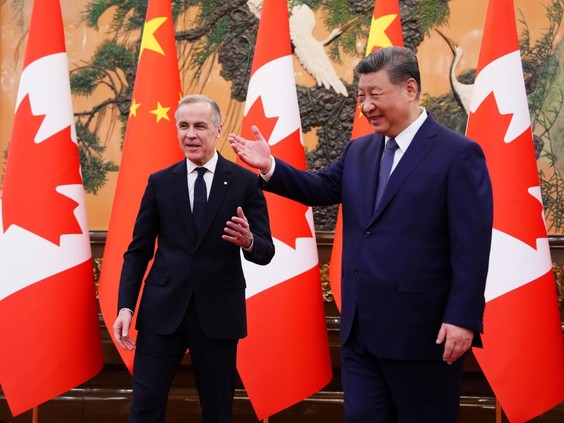
Canadian Prime Minister Mark Carney's 'strategic partnership' agreement he entered into with Chinese President Xi Jinping in Beijing includes a number of provisions that transcend the expansion of Chinese electric car imports at a preferential tariff rate in exchange for eased tariff barriers on Canadian canola, in Canada's 'reset' with China. According to Cheuk Kwan, co-chair of the Toronto Association for Democracy, speaking for the Canadian Coalition on Human Rights in China, "These are all Trojan horses."
 
Suddenly gone, the awareness and caution occasioned by Beijing's political interference in the 2019 and 2021 federal elections. At face value, the proposed collaboration reflect "people-to-people ties and cultural exchanges", investment in museums, support for "digital content creators" and "visual artists", heritage, education, "travel exchanges and cultural ties", not to mention cooperation in the "creative industries" at the "sub-national level". In other words the very soft-power that Beijing already utilizes to extend its global reach. Now legitimized rather than remaining furtive.
 
As for Beijing's cooperation in a mission to "combat corruption", cyber fraud and traffic in illegal synthetic drugs, the absurdity of the proposal lies in the obvious reality of China being the very icon of corruption, cyber fraud and illegal synthetic drug traffic. Fentanyl has made its mark throughout Canada for years, in deaths by overdose and the increase of opioid addiction with this most dangerous of chemical compounds. 
 
Clients wait outside of Insite, a supervised consumption site located in the Downtown Eastside, Vancouver, British Columbia
Overwhelmingly harmful fentanyl   Photograph: Getty Images
 
As for the memorandum of understanding between the Royal Canadian Mounted Police and China's Ministry of Public Security (dreaded by the Chinese citizenry), a series of scandals involving tortured witnesses and trumped-up corruption charges served to sever a similar, previous such collaboration of 25 years back. That, apart from the fact that a number of Public Security divisions from China were operating clandestine police stations in Montreal, Toronto and Vancouver to harass and threaten Chinese Canadians.
 
Public Safety Minister Gary Anandasangaree commented he was unable to provide any assurance that the pact would interfere with Beijing's persistent deployment of agents in Canada who spy on, intimidate, coerce individuals and organizations within diaspora communities in Canada, to target Chinese-Canadians.
 
In another area of troubling potential, Carney's agreement with Beijing would formalize Canadian operations of divisions of the Central Propaganda Department of the Chinese communist Party's central committee. These are arrangements with the full potential to enhance opportunities for a Propaganda Department deputy minister among others to expand control over media manipulation in Canada, as per the MOU signed by Canadian ambassador to China Jennifer May.
 
There are no independent journalists in the powerful China Media Group, they are, rather, professionally skilled propagandists working for the state. Reporters Without Borders cites China as the primary jailer of journalists among member states of the UN. In the past several decades Beijing's Canadian proxies have directed Chinese-language media in Canada or bully them into submission.   
"If the Chinese police have the ability to request information from Canada in their ongoing investigations, it's very bad news."
"If we feel compelled to share information -- names and addresses or whatever -- we would simply be enabling China's transnational repression."
Charles Burton, former diplomat, China expert
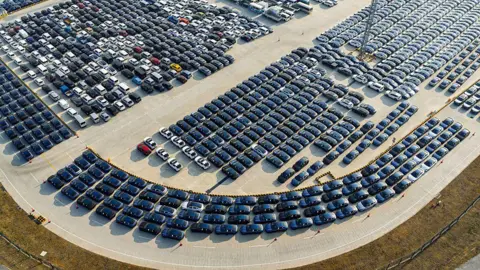
Getty Images Aerial view showing hundreds of new energy vehicles waiting to be loaded onto a ro-ro ship for export at Taicang Port on January 15, 2025 in Taicang, Suzhou City, Jiangsu Province of China.
China is the world's largest producer of EVs, accounting for over 70% of global production  Getty Images
"Prime Minister Carney can be pleased with the results of his first official visit to China. Through a temporary trade truce, and a list of political, economic and cultural MOUs, the federal government has effectively reset relations with China to where they were in 2016, before the arrest of Meng Wanzhou at the request of the first Trump administration."
"The headline announcement is a reduction of Chinese tariffs on Canadian canola seed (from 85 to about 15 per cent) in exchange for a limited number of electric vehicle imports to Canada (49,000) per year at a 6.1 per cent tariff (Canada’s most-favoured nation rate). This outcome, and a one-year tariff reprieve on Canadian lobster and canola meal, will ease some farmer concerns in Western Canada." 
"Autoworkers, on the other hand, are expressing serious concerns about opening the door to Chinese EVs given the impact this has had on auto-producing European countries. “Lifting the surtax risks turning Canada into a dumping ground for China-owned companies at the expense of our domestic auto industry and the Canadian workers who rely on it,” said Unifor, the union which represents most Canadian auto workers, in a statement today."
"The EV tariffs were imposed in 2024 to harmonize with the Biden administration’s cold war–like position with respect to China’s industrial dominance in automotive, renewables and, increasingly, high tech production. The tariffs and Biden-era subsidies, including EV consumer rebates, prompted an inflow of investment into electric battery and vehicle manufacturing in North America. Many of these auto sector plans were reversed when Trump dismantled Biden’s attempt at a green industrial strategy."
"Removing the Canadian EV tariffs looks reasonable from the perspective of improving China relations, but it is a highly risky move absent a more elaborated industrial strategy for the automotive and other struggling manufacturing sectors."
"An official statement from the PMO says that Chinese investment in Canadian EV supply chains and renewable energy is part of the arrangement. But as Unifor points out, this investment is not guaranteed. The anticipated five-year timeframe for the importation of affordable (under $35,000) EVs from China, within the annual vehicle limits, coincides with the introduction of similar and similarly priced models by North American producers including Ford and General Motors but may still undermine the market share (and therefore jobs) of union-made vehicles."
Canadian Centre for Policy Alternatives 

Labels: , , , , ,

Thursday, January 11, 2024

Sleepwalking Into a Colossus's Web of Monopolistic Influence


https://cdn-live.foreignaffairs.com/sites/default/files/styles/_webp_x_large_1x/public/images/2023/05/19/RTX78F6P_1.JPG.webp?itok=QicsdAq1
Chinese President Xi Jinping and Greek Prime Minister Kyriakos Mitsotakis at the port of Piraeus, Greece, November 2019   Orestis Panagiotou / Reuters
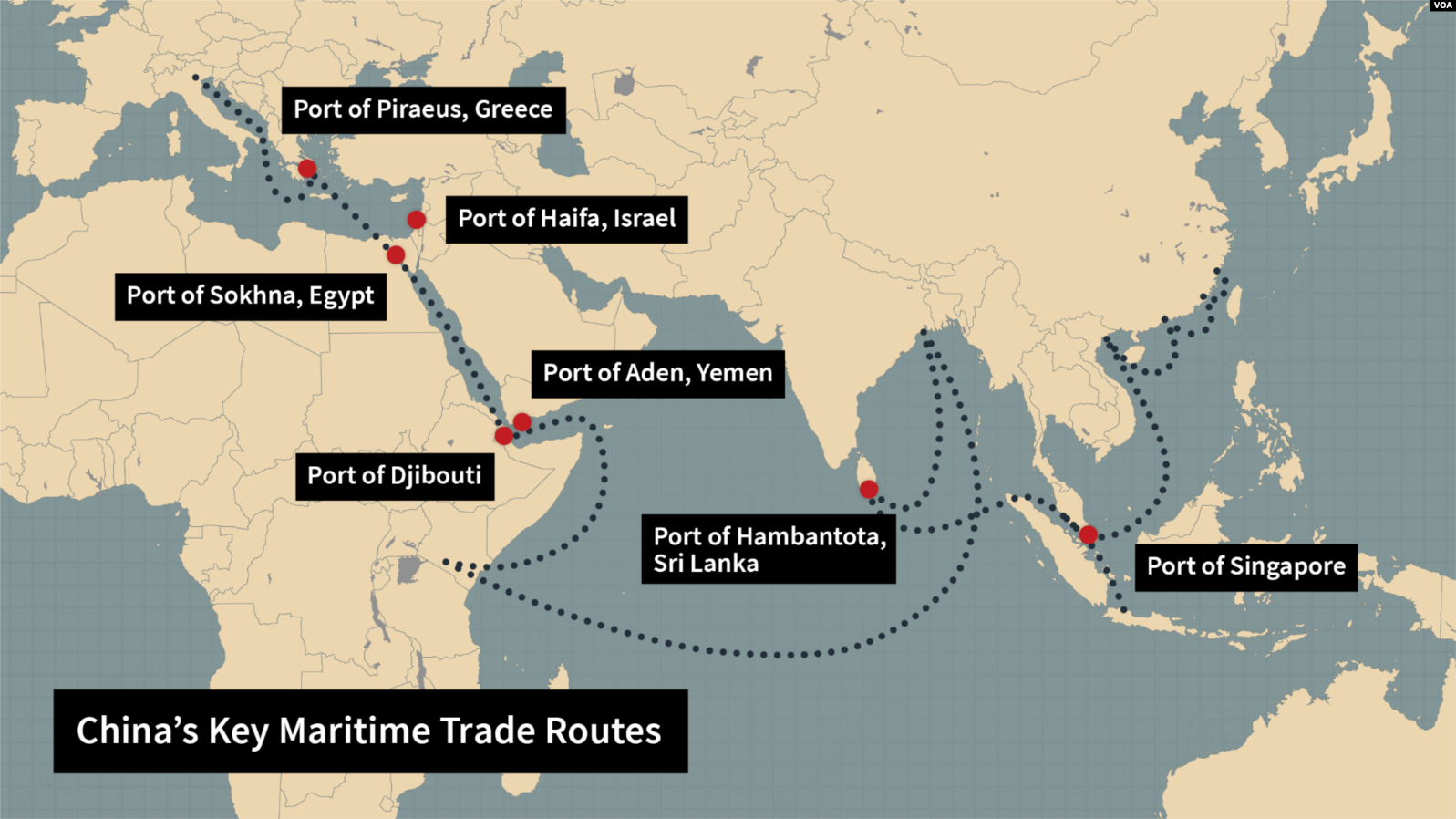
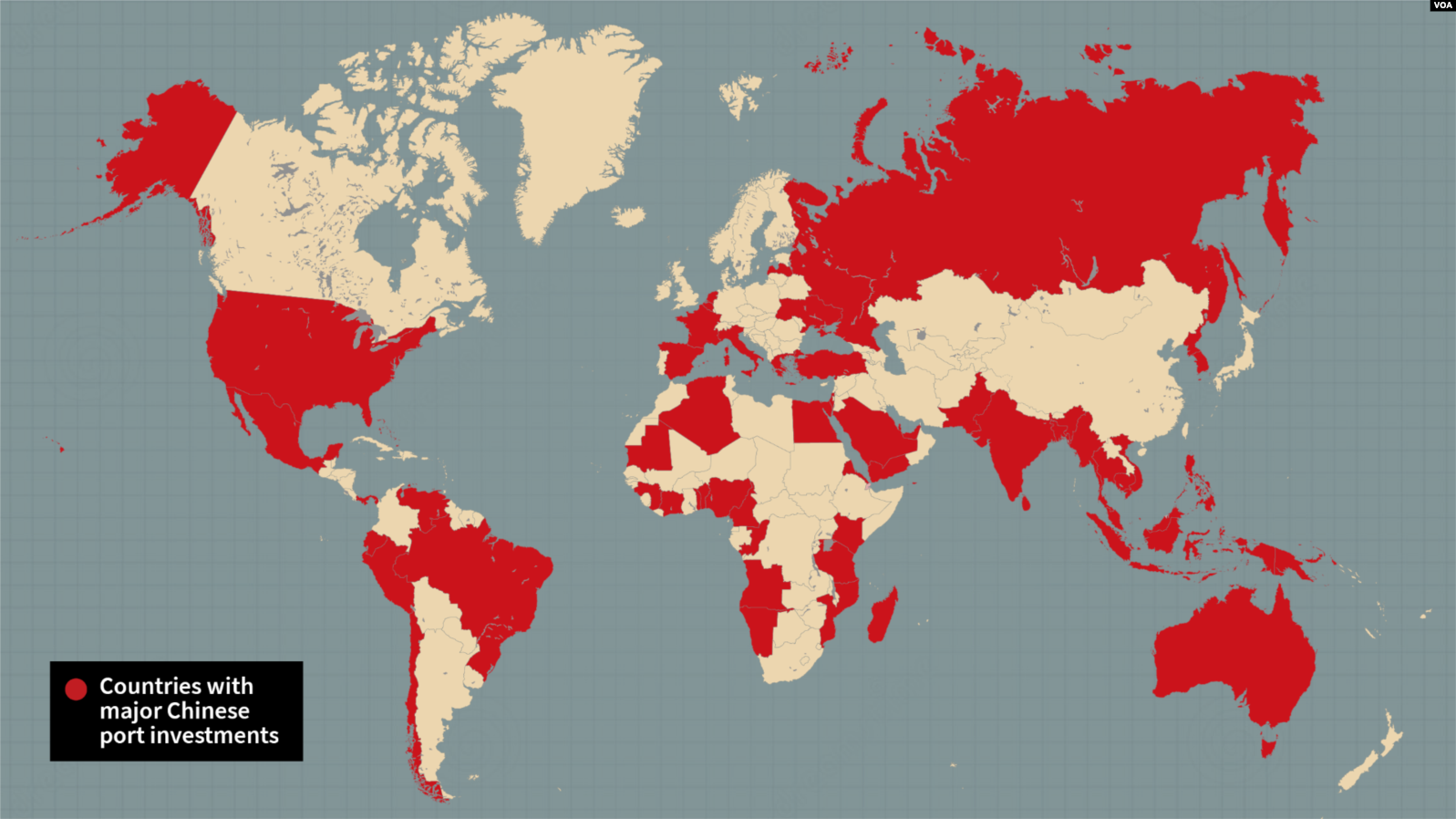
"The original Maritime Silk Road, as laid out in Chinese documents, focused on three main routes. The plan has expanded to include the Atlantic and the Americas. Latin America is one of the fastest-growing destinations for Chinese port investments."
"China manages ports at both ends of the Panama Canal. It is building from scratch a US$3-billion megaport at Chancay in Peru that will transform trade between China and Latin America, enabling the world's largest container ships to dock on the continent for the first time."
Liz Sly/Julia Ledur, The Washington Post
 
"This is not coincidental."
"I firmly believe there is a strategic aspect to the particular ports they're [Beijing/Chinese Communist Party] targeting for investment."
Carol Evans, director, Strategic Studies Institute of the U.S. Army War College
Voice of America

President Xi Jinping thinks long term, strategically. His is a carefully thought-out program to bring the China that he administers to the head of the global trade enterprise in every conceivable way. Once China was inducted into the global community through membership in the World Trade Organization thanks to then-U.S. President Bill Clinton's interpretation of the West's useful collaboration in trade with China, Beijing never looked back. In seemingly no time at all, cheap labour brought inexpensive goods manufactured in China to the world's consumers, bringing an end to domestic manufacturing in countries eager to please their publics with less pricey goods.
 
That loss of manufacturing stemming from an inability to compete with the manufacturing colossus, made those countries dependent on China's low-paid workforce in production of goods. China then turned to rare-earth elements, minerals that modern technical advances were dependent on, planning for a monopoly enabling China to cheaply produce highly technical products, leaving the world dependent on it once again. And when the economy was linked with the environment and a global agreement to reduce environmental carbon and GHGs, it monopolized alternate energy sources where China produces the world's greatest number of wind turbines. And electrical grids.
 
Beijing has stealthily established a secure network of global ports, central to world trade and navigation. Beijing presented its goal in these investments as commercial, but over time the United States and its allies have become increasingly thoughtful of the potential military applications and their implications for the future inherent in an expansion of Beijing's plans for the future. The port networks established to this point reflect China's ambitions, stated by President Xi as a Chinese "maritime superpower"
 
VOA

A decade ago, when President Xi made that statement, China had global stakes in 44 ports; that has grown at the present to its owning or operating terminals and ports at close to 100 locations in over 50 countries, incorporating every ocean and continent on the globe, many located along the world's most strategic waterways. The investments made by companies owned in the majority by the government of China, making Beijing and the CCP the largest operator of ports supplying global supply chains. That represents critical domination.

Furthermore, these investments allow Beijing a window into business dealings of competitors, useful in aiding China to defend its own supply routes, to spy on any military movements of the United States and to engage potentially in U.S. shipping, analysts point out. Chinese warships already view these Chinese-owned ports or terminals as ports of call, like the Chinese flotilla entering the Nigerian port of Lagos this past summer.

Adjacent the Chinese-operated port of Djibouti, China acknowledged in 2015 that it was building a military base which officially opened two years later, a mere six miles from a U.S. military base in the country. Djibouti lies on one of the busiest shipping lanes -- located at the narrow entrance to the Red Sea -- in the world; ten percent of global oil exports and 20 percent of commercial goods pass through the narrow strait, to and from the Suez Canal.
 
https://i0.wp.com/dredgewire.com/wp-content/uploads/2023/11/imrs.png?resize=800%2C600&ssl=1
Chinese-operated port of Djibouti. (Carl de Souza/AFP/Getty Images)
 
Many of the port locations are at strategic choke points, complete with high shipping traffic where sea routes are narrow and ships can be vulnerable. At Khalifa in the Persian Gulf by the crucial Strait of Hormuz, just 50 miles from an important U.S. military base, China has revived an intention to establish military facilities. Beijing's influence has also been increasing in ports on Egypt's Suez Canal where Chinese shipping companies announced investments in ports of Ain Sokhna and Alexandria terminals.

China's ambitions are large and far-seeking, to the extent that it controls or has major investments in over 20 European ports, allowing Beijing significant influence of the supply routes on the continent where many serve as vital logistics and trans-shipment points for NATO and the American Navy. "It's a significant national and economic security concern", stated Michael Wessel of the U.S.-China Economic and Security Review Commission.

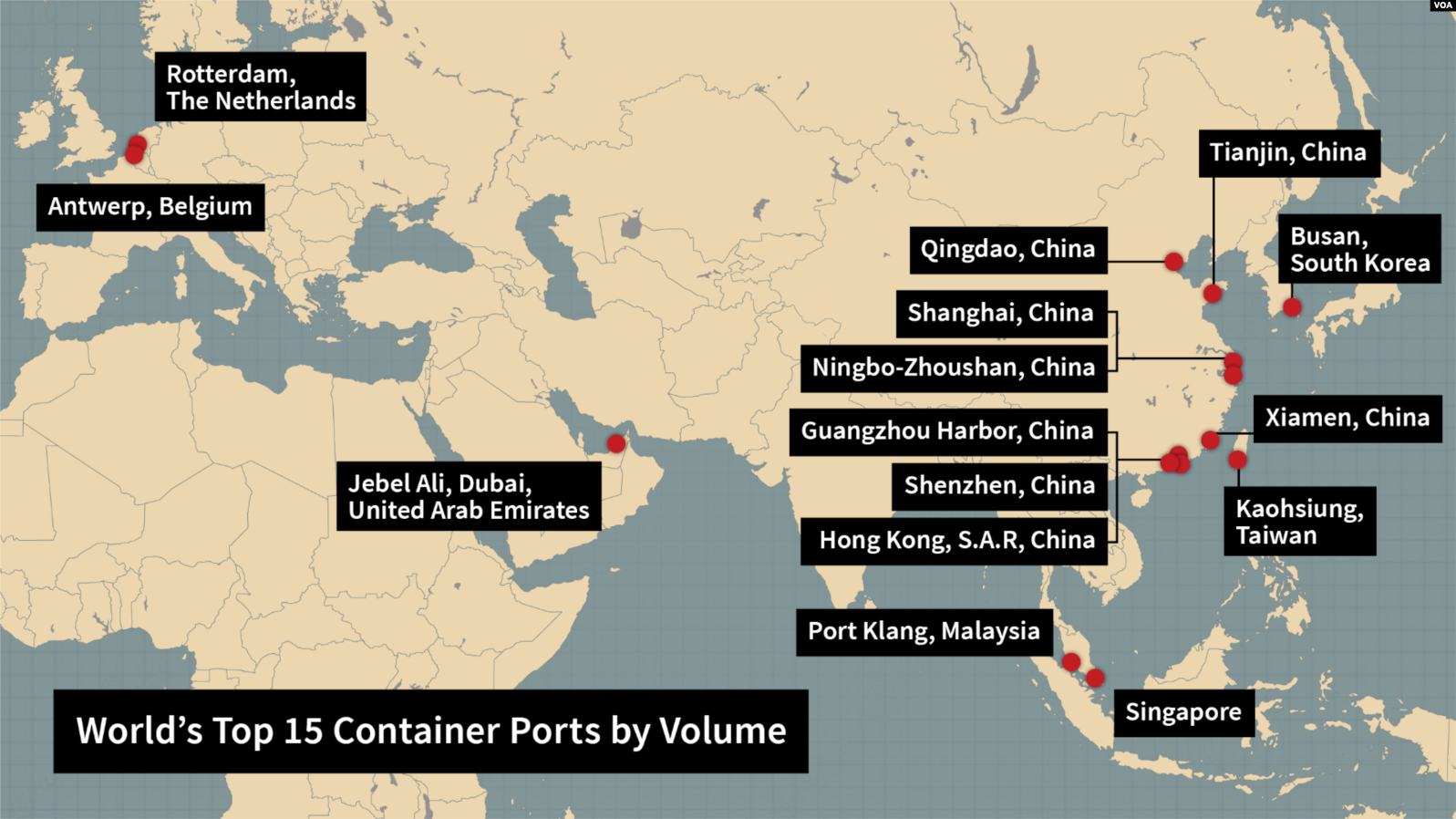
A little-known software system named Logink -- a digital logistics platform owned by the Chinese government -- has enabled China to secure a commanding position that allows it access to vast numbers of normally proprietary information on the movement, management and pricing of goods moving around the world. At least 24 ports, including Rotterdam and Hamburg adopted the Logink system; an issue that compelled the U.S. Transportation Department to put out an advisory, warning American companies and agencies to avoid interacting with the system at risk of espionage and cyberattack.


Labels: , , , ,

Monday, December 19, 2022

China, Aspiring World Power


"China remains, as it has these 3,000 years, one of the world's most important nationalities, but it retains the unseemly disadvantages of a totalitarian power."
"No one can believe a word the Chinese government says on any subject or a number that it publishes."
"Hundreds of millions of Chinese essentially still live as they did a thousand years ago, the whole country is debt-ridden, prominent citizens not infrequently just disappear, and the government is thoroughly corrupt by Western standards."
"In the same measure that China should not be underestimated, nor should it be blindly cited as giving any indication of the way forward in policy terms for other states."
Conrad Black, National Post
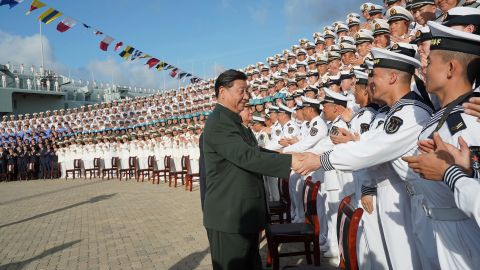
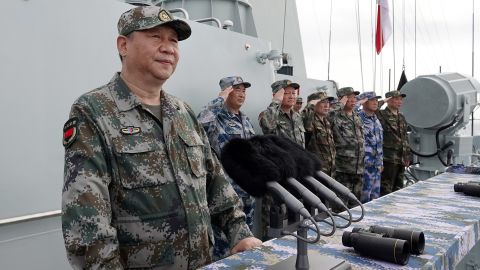
Chinese President Xi Jinping, meets with representatives of the aircraft carrier unit and the manufacturer at a naval port in Sanya, south China's Hainan province on Dec. 17, 2019.
Chinese President Xi Jinping, meets with representatives of the aircraft carrier unit and the manufacturer at a naval port in Sanya, south China's Hainan province Li Gang/Xinhua News Agency/Getty Images

China, at one time in its past elevated to positions of power and influence in government and its civil service, individuals with outstanding intellectual achievements whose grasp of the elements of their special interests were recognized for their excellence and performative quality. It was merit and merit alone that qualified people for the positions they occupied. The wisdom of Chinese sages came from a place of experience and creative thought. 

It was a time before the ideological messages of totalitarian communism led its proponents to shed their pride in their heritage and the achievements of merit and intelligent reasoning. The creative arts and philosophical advances made by a once-great society were all sacrificed to the cutting block of shunning the old and bringing in the new. And with the 'Cultural Revolution' a great broom of mass sacrifice of humanity swept the stage clean for mass indoctrination.

The world now sees the results; a vast population living under a humanity- and human-rights-hostile regime of total command. Mind control, population control, control of adversarial proponents of human rights and liberties. The Chinese Communist Party heralds itself as having manipulated events to combat and conquer poverty and ignorance, raising its countless millions of indigent poor to a middle-class position.

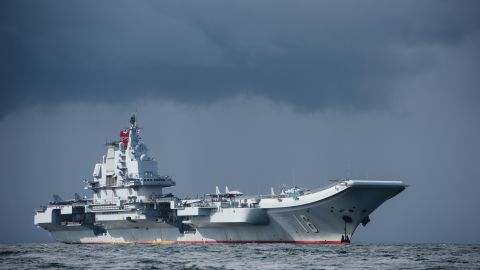
China's first aircraft carrier, Liaoning, arrives in Hong Kong waters on July 7, 2017.
Chinese aircraft carrier, Liaoning, arrives in Hong Kong waters ANTHONY WALLACE/AFP/AFP/Getty Images

Beijing lauds itself for becoming, through clever exploitation of the free world's willingness to trust that its openness to the vast world of communism that accommodated enterprise and capitalism under a veneer of open cooperation in trade and production, a world colossus of manufacturing and trade. Powerful enough that its cheap and abundant labour was able to shutter factories all over the world whose production, labour and transport costs resulted in consumer goods unmatched in scale and prominence.

Beijing's growing self-confidence in league with its contempt for open, democratic societies led to an inflation of its superiority complex to feed its hunger for greater global respect, a larger power base and a voracious territorial ambition. Its grasp for power and influence continues to surge. Its self-entitlement to great power status unabated, its long arms of espionage, military and commercial, continue unabated. 

The world now recognizes a China that several decades of accommodation has transformed immeasurably. A totalitarian government that exploits other nations' advances in science and technology, a government that victimizes its people into submission, a government that interferes in the internal affairs of other nations creating instability and hostility wherever it intrudes.

In this April 12, 2018, file photo released by Xinhua News Agency, Chinese President Xi Jinping, left, speaks after he reviewed the Chinese People's Liberation Army (PLA) Navy fleet in the South China Sea. From Asia to Africa, London to Berlin, Chinese envoys have set off diplomatic firestorms with a combative defense whenever their country is accused of not acting quickly enough to stem the spread of the coronavirus pandemic.
In this April 12, 2018, file photo released by Xinhua News Agency, Chinese President Xi Jinping, left, speaks after he reviewed the Chinese People's Liberation Army (PLA) Navy fleet in the South China Sea. From Asia to Africa, London to Berlin, Chinese envoys have set off diplomatic firestorms with a combative defense whenever their country is accused of not acting quickly enough to stem the spread of the coronavirus pandemic.  Li Gang/Xinhua/AP


Labels: ,

Monday, February 15, 2021

Personage to Personage : Re-setting the Dial : Working Things Out

Personage to Personage : Re-setting the Dial : Working Things Out

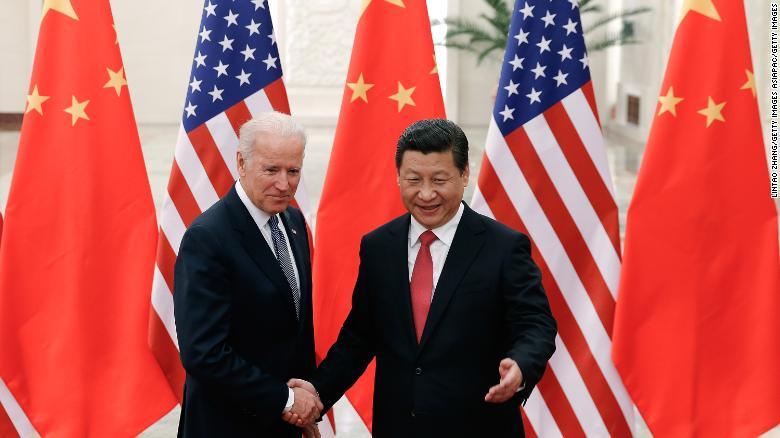
Then Vice-President Joe Biden shakes hands with Chinese leader Xi Jinping during a visit to Beijing in 2013.

"[President Biden] underscored his fundamental concerns about Beijing's coercive and unfair economic practices, crackdown in Hong Kong, human rights abuses in Xinjiang, and increasingly assertive actions in the region, including toward Taiwan."
White House readout 

"You [President Biden] have said that America can be defined in one word: Possibilities."
"We hope the possibilities will now point toward an improvement of China-US relations."
"[Issues of Taiwan, Hong Kong and Xinjiang are] China's internal affairs and concern China's sovereignty and territorial integrity." 
"The US side should respect China's core interests and act prudently." 
Chinese President Xi Jinping
"[The call was] robust and comprehensive."
"Modern-day historians can certainly confirm that there are few presidents who came into this job with more of a history on engaging with Chinese leadership."
White House Press Secretary Jen Psaki 
 
"Xi-Biden telephone call sends positive signals to world."  
"[Biden pledged to communicate in] the spirit of mutual respect and to improve mutual understanding and avoid miscommunication and miscalculation."
State news agency Xinhua


"[The new administration is] being very careful in our initial interactions with China [but preparatory discussions with allies had put Biden in a\ strong position [to negotiate with his Chinese counterpart]."
"This is a sustainable strategy that will play out over the course of years.We need to stick with this, play the long game, and make investments in these foundational components."
"[While there was] merit in the basic proposition [of a strategic competition with China, there were] deep problems [with how the Trump administration had gone about it—specifically, Trump’s reluctance to engage with key allies on the issue and bungling of the pandemic response]."
"[There would be adjustments to the Trump-era China trade policy, which] will depend on internal consultations across government and consultations with partners in Europe and Asia. [But tariffs put in place by the previous administration will remain for the time being while the policy is under review.]"
"On trade, we have maintained tariffs laid down over the last few years not because we think the trade war was particularly successful, but because we have to [proceed] very carefully, in consultation with partners and allies, [and] work through the sources of leverage we have on the economic front."
Senior Biden administration officials
"If we don't get moving, they [China] are going to eat our lunch."
"They're investing billions of dollars dealing with a whole range of issues that relate to transportation, the environment and a whole range of other things."
"We just have to step up."
U.S.President Joe Biden
The first communication by telephone between U.S.President Joe Biden and Chinese President Xi Jinping is being carefully watched and deciphered by allies and other interested parties to try to detect which way the wind is blowing. Confrontation, President Xi warned, would result in a "disaster" for both nations. And it seems that he is preaching to the converted, from the same playbook that the new U.S. president has consulted and sings from.

Although President Biden has spoken of China as America's "Most serious competitor", insisting the U.S. will "out-compete" Beijing, President Xi calls for "win-win" cooperation. Both, it would seem on the evidence, are right. And the rest is commentary. The two hour conversation refreshes both men's erstwhile diplomatic relationship circa the Obama administration, after a troublesome interregnum. During which time Beijing became more assertively aggressive and his American counterpart returned the compliment.

According to the White House account of this telephone chat between old collegial adversaries, President Biden emphasized America's priorities to preserve a free and open Indo-Pacific where the United States and China compete as strategic rivals. He spoke of "fundamental" concerns relating to Beijing's "coercive and unfair" trade practices, along with human rights issues that would include the crackdown in Hong Kong and the plight of Yuhgurs in Xinjiang, and Taiwan aggression.

Oh, and China's coronavirus response. Each and every point one that President Xi would have complacently batted off as of no concern to the United States considering these are internal issues of China's sovereign right. President Xi, chiding his American counterpart for rude commentary would have guided him toward 'right thinking' to re-establish methodology in the avoidance of misjudgements, Beijing's way, with all respect due to China's territorial integrity over which Washington would do well to proceed with caution.

While President Xi received President Biden's good wishes on the Chinese New Year, President Biden received President Xi's congratulations on hoisting former President Trump out of the White House. The true "thug" evacuating the premises, alluding to candidate Biden's unfortunate slip in ascribing the word "thug" to President Xi, as a fundamental tool in all political skirmishes to gain voter advantage. A focus to "pressure, isolate and punish China" would go nowhere, be of no concern to Beijing and ultimately be set aside for the nonce.

There is a resolution to maintain a more multilateral approach in cooperation with Beijing on issues such as climate change and placing pressure on North Korea's ambitions to achieve nuclear munitions. A bond ensues when two men share private meetings over the years eating up thousands of travel miles to do so. A convivial renewal of relationships between two perpetually smiling statesmen, can only be a good thing, we are to assume. Oh, and working together on COVID-19.

First Biden-Xi Phone Call Shows Not Much Has Changed in US-China Relations

Then-Vice President Joe Biden and then-Chinese Vice President Xi Jinping take part in an official welcome ceremony at the Great Hall of the People, in Beijing, China, August 18, 2011.    Credit: Official White House Photo by David Lienemann


Labels: , , ,

Follow @rheytah Tweet