Ultimately, Death
"Russia saw [Russian opposition leader Alexei] Navalny as a threat.""By using this form of poison the Russian state demonstrated the despicable tools it has at its disposal and the overwhelming fear it has of political opposition.""[The attack] must have been authorized at the highest level, by President Putin."British Foreign Secretary Yvette Cooper[I was] certain from the first day [that Alexei was poisoned], but now there is proof.""Putin killed Alexei with chemical weapons.""[Putin is] a murderer [who must be held accountable]."Yulia Navalnaya, Alexei Navalny's wife"No one but Putin's henchmen will be able to say in detail what happened on February 16, 2024, in the Russian penal colony.""But it is clear that Russian authorities had the possibility, the motive and the means to administer the poison to Navalny."German Foreign Minister Johann Wadephul
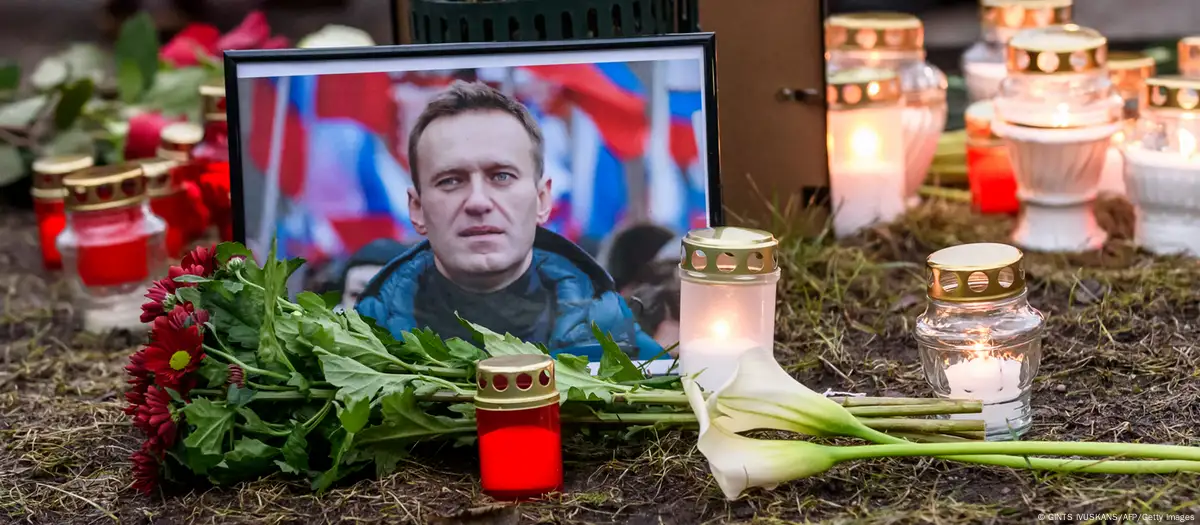 |
| The longtime Kremlin critic died in prison following charges he decried as politically motivated Image: GINTS IVUSKANS/AFP/Getty Images |
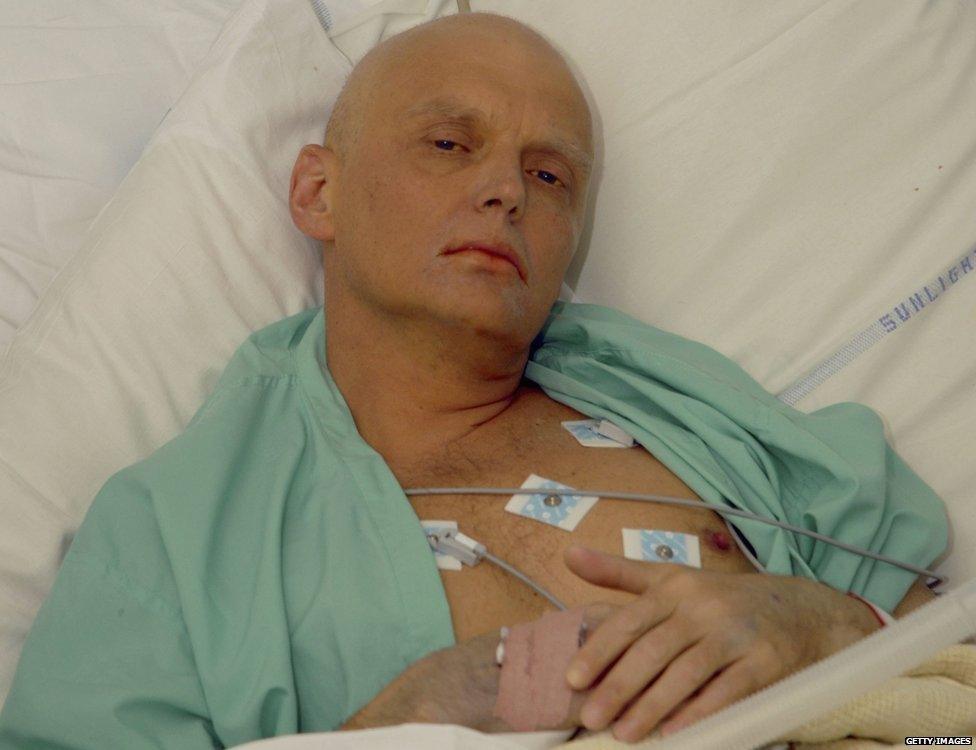 |
| Alexander Litvinenko in ICU, Getty Images |
In
2006, former Russian agent Alexander Litvinenko died an excruciating
death in a London hospital. He had become a stern critic of the Kremlin.
The radioactive isotope polonium-210 had been slipped into tea he was
served, and it went right to work painfully degrading his bodily
functions. It took an agonizing 21 days of unremitting pain for the man
to die, while doctors working to help save his life tried to diagnose
what was killing him; radioactive poisoning.
In
Salisbury England in 2018 the Kremlin launched an attack targeting
former Russian intelligence officer Sergei Skripal, with the nerve agent
Novichok that made Skripal and his daughter seriously ill, but they
survived. When a British woman came across a discarded bottle holding
traces of the nerve agent, she died of its effects. Subsequently British
intelligence found traces of the biological weapon in various places,
posing a deadly threat to the public.
In
2020, Alexei Navalny was poisoned with a nerve agent that he identified
as an attack by the Kremlin. This was not the first time attempts to
poison him and cause his death occurred and he recognized the method and
the medium as he became deathly ill. He was flown to Germany for
medical attention, where he was treated and recovered from the attack.
Rather than remain in safety out of the reach of the Kremlin he decided
to return to Russia, where he was immediately imprisoned, with
trumped-up charges.
Given
one sentence after another on the basis of charges that could never
stand up to scrutiny, he was imprisoned for years, and finally sent to
the 'Polar Wolf' penal colony for an additional 19-year sentence. He was
weak and ill and to no one's surprise several years later, he died in
that prison in the Russian Arctic. Cause of death, according to Russian
authorities; high blood pressure caused by cardiac arrythmia.
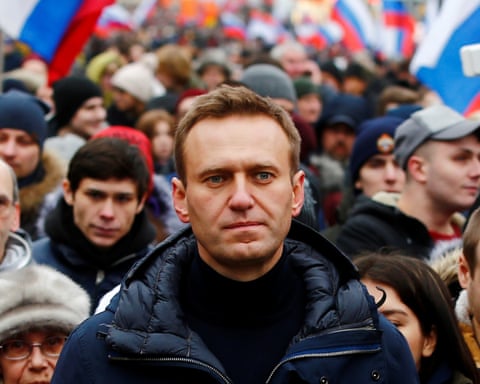 |
| Russian opposition leader Alexei Navalny in 2015 Photograph: Sefa Karacan/Andalou/Getty Images |
Now,
the foreign ministries of the U.K. France, Germany, Sweden and the
Netherlands have announced findings from analyses in European
laboratories of Navalny body samples that "conclusively confirmed the presence of epiatidine",
a neurotoxin secreted by South American dart frogs. A toxin not found
anywhere in Russia; but one that could be imported or chemically
produced in a lab. "Russia had the means, motive and opportunity to administer this poison", a joint statement read.
Leading
to the five countries reporting Russia to the Organization for the
Prohibition of Chemical Weapons for a breach of the Chemical Weapons
Convention. Crusading against official corruption, Navalny staged
massive anti-Kremlin protests. Navalny's poisoning demonstrates "that Vladimir Putin is prepared to use biological weapons against his own people in order to remain in power", stated French Foreign Minister Jean-Noel Barrot.
Last
year, said Navalny's widow Yulia Navalnaya, two independent labs found
her husband was poisoned shortly before his death. While according to
Russian authorities, the imprisoned politician fell ill following a
walk, dying from natural causes. Epibatidine acts on the body similarly
to nerve agents, causing shortness of breath, convulsions, seizures,
slowed heart rate, and ultimately death.
 |
| Russian opposition politician Alexei Navalny appears on a screen via video link from the IK-6 penal colony in the Vladimir region, during a court hearing to consider an appeal against his sentence in the criminal case on numerous charges, including the creation of an extremist organization, in Moscow, Russia September 26, 2023 Reuters |
Labels: Alexei Navalny, Convention Against Prohibited Chemical Weapons, Kremlin, Poisoning, Vladimir Putin
posted by Pieface @ Monday, February 16, 2026


<< Home