"Russia saw [Russian opposition leader Alexei] Navalny as a threat."
"By
using this form of poison the Russian state demonstrated the despicable
tools it has at its disposal and the overwhelming fear it has of
political opposition."
"[The attack] must have been authorized at the highest level, by President Putin."
British Foreign Secretary Yvette Cooper
[I was] certain from the first day [that Alexei was poisoned], but now there is proof."
"Putin killed Alexei with chemical weapons."
"[Putin is] a murderer [who must be held accountable]."
Yulia Navalnaya, Alexei Navalny's wife
"No one but Putin's henchmen will be able to say in detail what happened on February 16, 2024, in the Russian penal colony."
"But it is clear that Russian authorities had the possibility, the motive and the means to administer the poison to Navalny."
German Foreign Minister Johann Wadephul
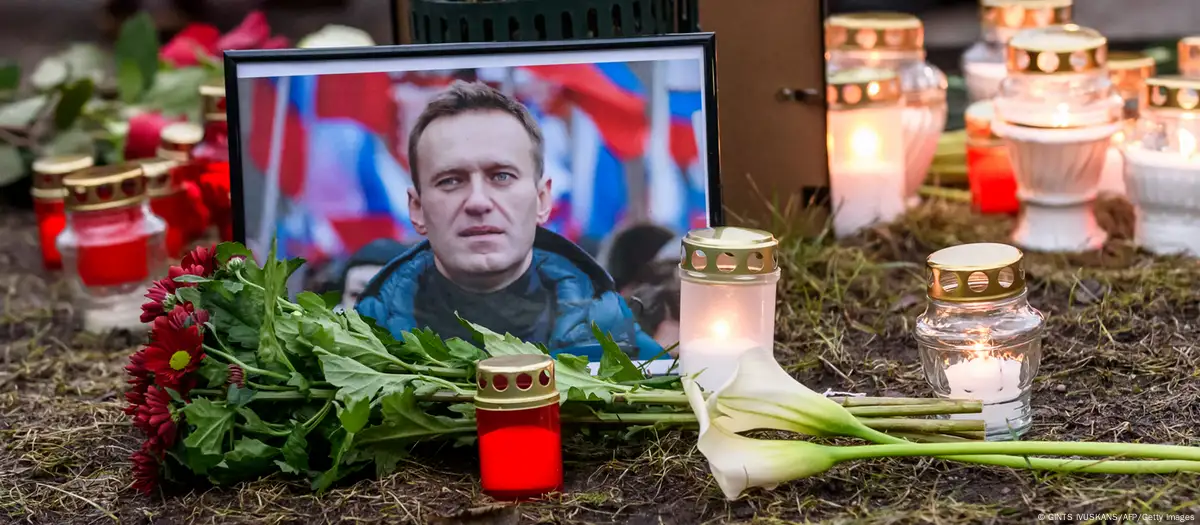
The longtime Kremlin critic died in prison following charges he decried as politically motivatedImage: GINTS IVUSKANS/AFP/Getty Images
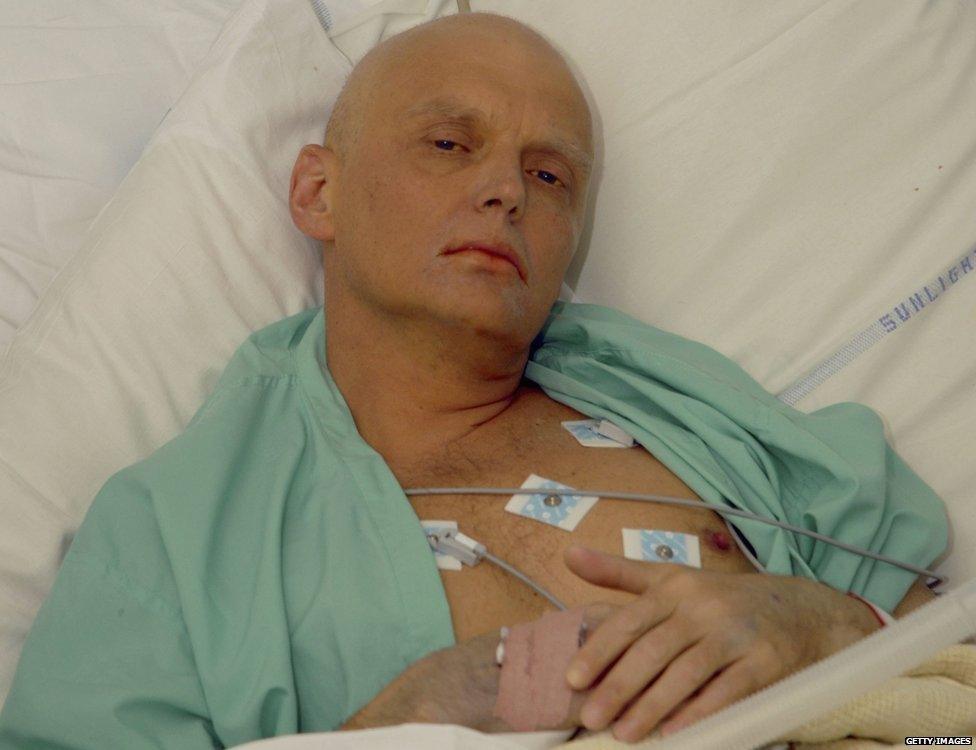
Alexander Litvinenko in ICU, Getty Images
In
2006, former Russian agent Alexander Litvinenko died an excruciating
death in a London hospital. He had become a stern critic of the Kremlin.
The radioactive isotope polonium-210 had been slipped into tea he was
served, and it went right to work painfully degrading his bodily
functions. It took an agonizing 21 days of unremitting pain for the man
to die, while doctors working to help save his life tried to diagnose
what was killing him; radioactive poisoning.
In
Salisbury England in 2018 the Kremlin launched an attack targeting
former Russian intelligence officer Sergei Skripal, with the nerve agent
Novichok that made Skripal and his daughter seriously ill, but they
survived. When a British woman came across a discarded bottle holding
traces of the nerve agent, she died of its effects. Subsequently British
intelligence found traces of the biological weapon in various places,
posing a deadly threat to the public.
In
2020, Alexei Navalny was poisoned with a nerve agent that he identified
as an attack by the Kremlin. This was not the first time attempts to
poison him and cause his death occurred and he recognized the method and
the medium as he became deathly ill. He was flown to Germany for
medical attention, where he was treated and recovered from the attack.
Rather than remain in safety out of the reach of the Kremlin he decided
to return to Russia, where he was immediately imprisoned, with
trumped-up charges.
Given
one sentence after another on the basis of charges that could never
stand up to scrutiny, he was imprisoned for years, and finally sent to
the 'Polar Wolf' penal colony for an additional 19-year sentence. He was
weak and ill and to no one's surprise several years later, he died in
that prison in the Russian Arctic. Cause of death, according to Russian
authorities; high blood pressure caused by cardiac arrythmia.
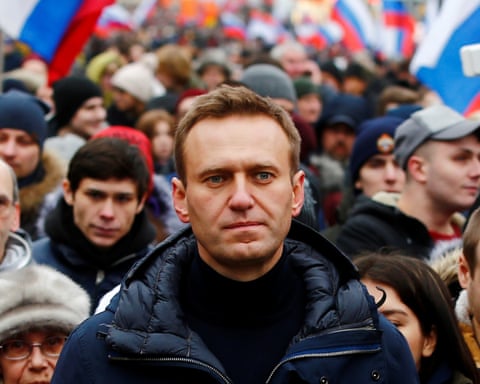
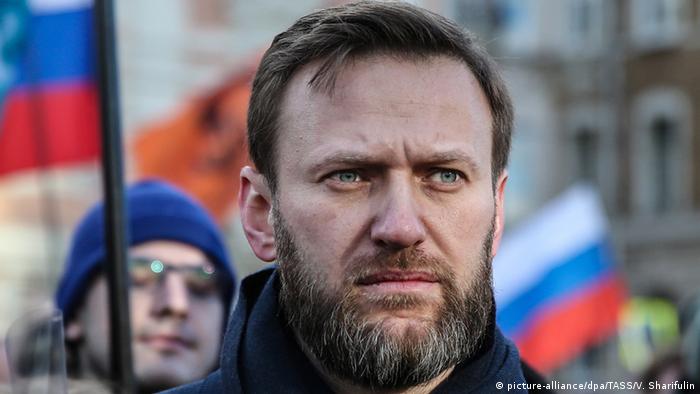
Russian opposition leader Alexei Navalny in 2015Photograph: Sefa Karacan/Andalou/Getty Images
Now,
the foreign ministries of the U.K. France, Germany, Sweden and the
Netherlands have announced findings from analyses in European
laboratories of Navalny body samples that "conclusively confirmed the presence of epiatidine",
a neurotoxin secreted by South American dart frogs. A toxin not found
anywhere in Russia; but one that could be imported or chemically
produced in a lab. "Russia had the means, motive and opportunity to administer this poison", a joint statement read.
Leading
to the five countries reporting Russia to the Organization for the
Prohibition of Chemical Weapons for a breach of the Chemical Weapons
Convention. Crusading against official corruption, Navalny staged
massive anti-Kremlin protests. Navalny's poisoning demonstrates "that Vladimir Putin is prepared to use biological weapons against his own people in order to remain in power", stated French Foreign Minister Jean-Noel Barrot.
Last
year, said Navalny's widow Yulia Navalnaya, two independent labs found
her husband was poisoned shortly before his death. While according to
Russian authorities, the imprisoned politician fell ill following a
walk, dying from natural causes. Epibatidine acts on the body similarly
to nerve agents, causing shortness of breath, convulsions, seizures,
slowed heart rate, and ultimately death.
Russian opposition politician Alexei Navalny appears on a screen
via video link from the IK-6 penal colony in the Vladimir region, during
a court hearing to consider an appeal against his sentence in the
criminal case on numerous charges, including the creation of an
extremist organization, in Moscow, Russia September 26, 2023 Reuters
The Murder of Alexei Navalny -- The Ambition of Vladimir Putin
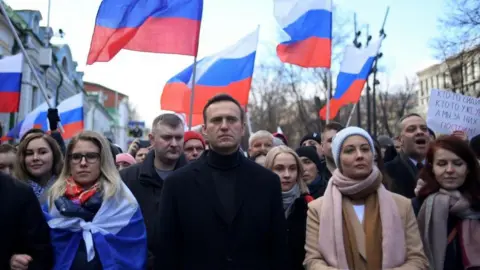
Alexei Navalny (centre) and Yulia
(right) at a march held in memory of murdered Kremlin critic Boris Nemtsov
in Moscow on 29 February 2020
"A free, peaceful, happy Russia, a beautiful Russia of the future, which my husband dreamed of so much -- that is what we need."
"I want to live in this Russia. I want our children to live in it."
"I want to build it with you [Navalny supporters]."
Yulia Navalnaya, bereaved wife of Russian opposition leader Alexei Navalny
"For two years, Ukrainian soldiers have fought for our lands, repelling countless attacks, and liberated roughly half of the [Russian]-occupied territories."
"But this is not a tale about mythical strength and Valhalla. There are losses and injuries. Even wounded soldiers must return to the front -- and they return to a land that will remember every scar on it."
"We are still here. The Russians are still here, standing on foreign land and trying to take more of it."
Only a week ago Navalny appeared at a court, appearing fit and healthy, his mood firm, joking and laughing. A day later, he suffered a mysterious calamity while incarcerated in the Arctic penal colony where he is serving 27 remaining years of a 30-year sentence for 'extremism', along with a number of fabricated offences -- his short-lived 47 years suddenly concluded.
This was a man whose moral fibre was unbreakable. The second time he was poisoned as a thorn in the side of the Kremlin and Vladimir Putin, he was saved from impending death, spirited out of Russia by his supporters where German physicians in Berlin concluded that Novichok, a lethal nerve agent, had been administered to him by stealth. After his recuperation, he challenged Russia by returning, and was speedily arrested as promised.
He loved Russia, felt it his home, wanted to rescue it from the thugs determined to emulate the Soviet era, and Putin's desire to install himself permanently as Stalin's born-again successor. Navalny's courage and stalwart insistence that Russia could, should and would be saved from the evil dominating it, the corruption, the violence, the inhumanity and the rapacious grip of its current overlords.
A gangland of corrupt politicians, a Kremlin that concurs with the delirious insistence that Russia's heritage in Ukraine supersedes any sovereignty that Ukrainians insists is their right as a state with its own culture, heritage and values. The hegemonic reach of Vladimir Putin's re-acquisition of a Soviet satellite justified his explanation that Russian-speakers in Ukraine needed to be rescued from the neo-Nazi tentacles of the government in Kyiv.
When Russia's prison service shocked, yet did not surprise the world with its announcement of the sudden mysterious demise of Navalny of "sudden death syndrome" at the Polar Wolf prison colony, 1,900 kilometres northeast of Moscow in the Yamalo-Nenets region, Yulia Navalnaya was scheduled to make an appearance at the Munich Security Conference. Suddenly widowed, her acute grief had her question herself about speaking with his death so raw and new.
But she did, making an impassioned plea to the audience and to her husband's Russian supporters, that it was incumbent upon them all to help make her husband's dream of a Russia free from Communism, corruption and political coercion. Ukraine's existential struggle to free itself of Moscow's murderous destruction of a sovereign nation unfortunate enough to exist on Russia's border, echoed Yulia Navalnaya's appeal to help effect a different Russia.
"I thought, should I stand here before you or should I go back to my children? And then I thought: what would Alexei have done in my place? And I'm sure that he would have been standing here on this stage", she told her audience.
Ah yes, Ukraine's plight, defending itself against a rapacious territorial-hungry aggressor utterly lacking conscience, more than willing to sacrifice human lives, both Russian and Ukrainian, and in the process remorselessly destroy towns and cities with their heritage significance; create millions of displaced people and refugees, and plunder the geography of its rightful ownership. Ukrainian President Volodymyr Zelenskyy continues his dogged canvass of Ukraine's purported democratic allies.
As the first of the dominoes under direct threat of complete absorption by Russia, he endlessly visits capital after capital to speak to their executive branch, to address their parliaments, to relate to them what many are all too aware of; first Ukraine, then the Balkan states, and then an eye from eastern Europe to the western portion. The joint-nations defense forces that is NATO responded with vigour to supply the Ukrainian military with the needed technical hardware to confront the Russian military.
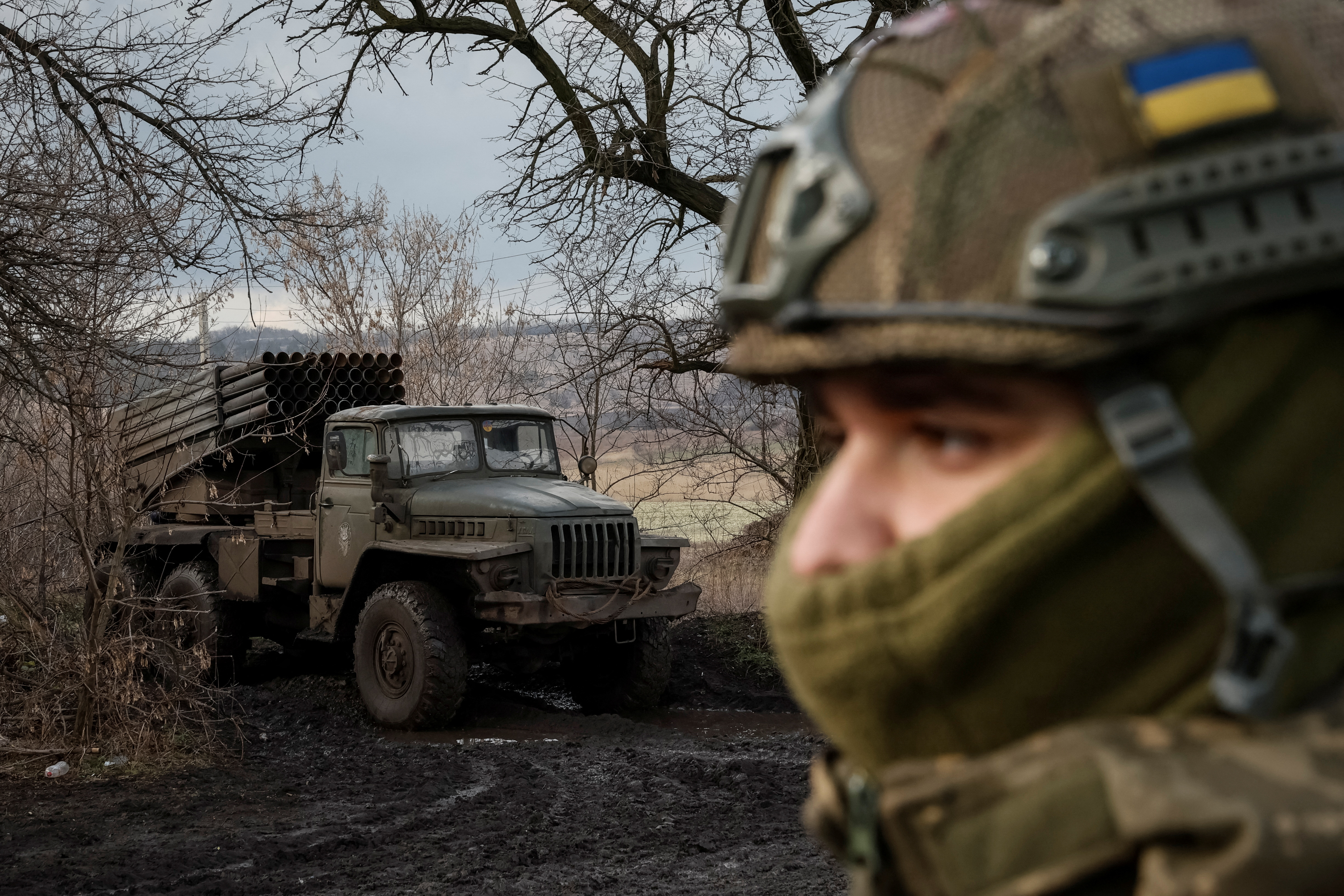
A Ukrainian serviceman of the 59th Separate Motorized Infantry
Brigade of the Armed Forces of Ukraine looks on next to a BM-21 Grad
multiple launch rocket system near a frontline at an undisclosed
location in the Donetsk region, Ukraine, February 4, 2024. REUTERS/Alina
Smutko
War is an expansive and expensive enterprise. Costly armaments, while wreaking wholesale destruction on a country's infrastructure and geography, let alone its lives, must be replaced expeditiously so the tempo of resistance is not lost and in the best-case scenario defense can be transformed into offensive action when supplies are at the ready. But goodwill and the best of intentions are occasionally expendable when two belligerents manage to hold their own.
The dogged courage of a military to defend its homeland against the violent incursion of a neighbour's malicious disregard for human life that impels it to bomb hospitals, schools, energy sources, a wholesale destruction of a nation, terrorizing the population into a state of final weary acceptance that 'normal' will remain in the dictionary, with no real meaning for them for a long time inspires admiration. One dimmed in time in the ennui of an endless war and exhaustive contributions to keep that war going.
At Munich, Denmark stepped into the breach of Washington's insufficient, tardy and reluctant supply of desperately needed weaponry to counter a much larger military's endless supply of arms from those in its thrall. Denmark, at Munich, pledged its "entire artillery" reserves. "They are asking us for ammunition now, artillery now. From the Danish side, we decided to donate our entire artillery", announced Danish Prime Minister Mette Frederiksen.
The European Union too is pushing its defence industry production in hopes of aiding Ukraine in holding the line against Russia. And in Russia, news of Navalny's death brought mourners out to the city streets in St.Petersburg, and towns and villages east of the Urals. Impromptu monuments of grief, blossomed, and prayers were said for the courageous hero that Navalny represented to Russians living in poverty. Those gathering in 'illegal' assemblies to express their support for a different Russia risked arrest.
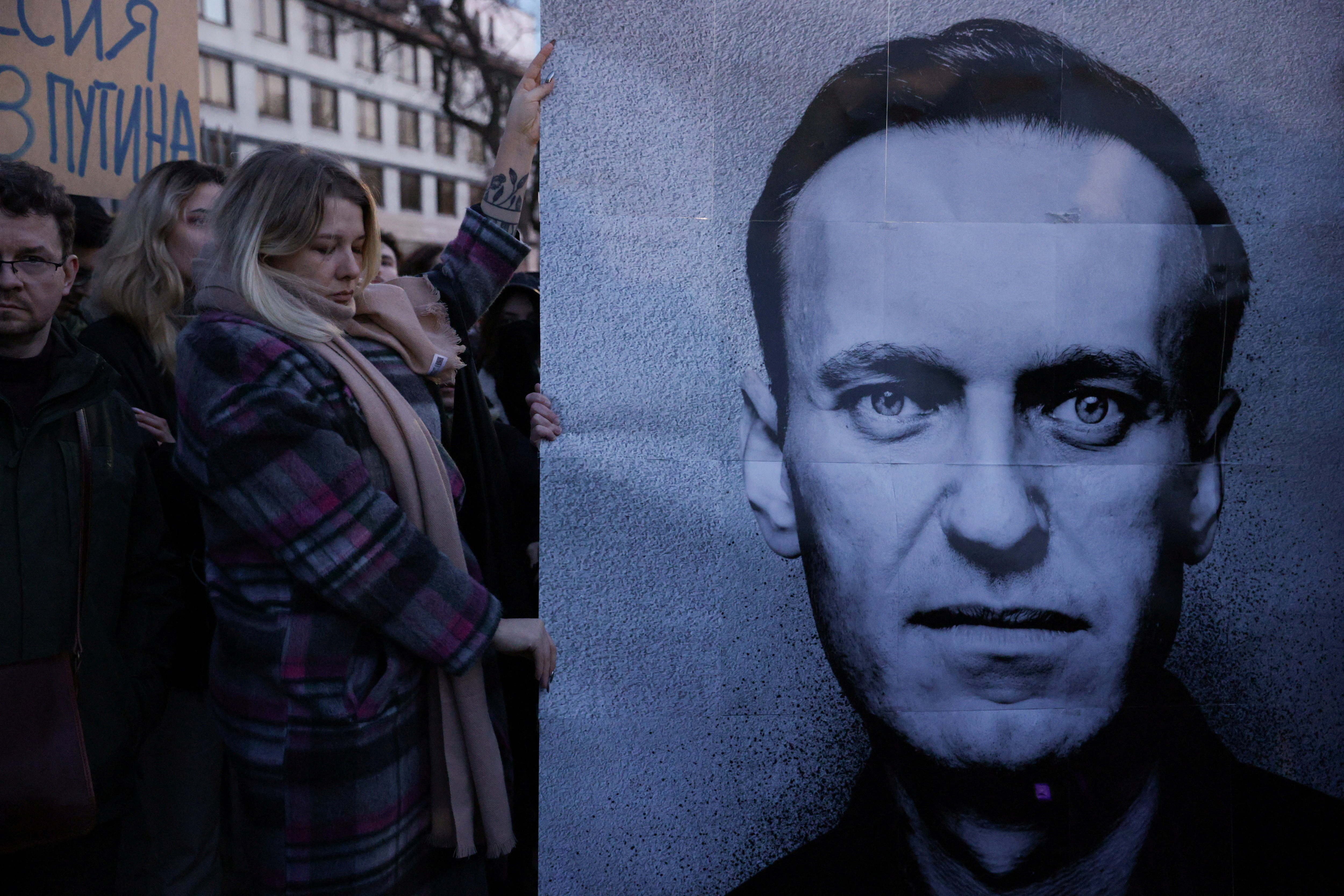
People gather outside the Russian embassy, following the death of
Russian opposition leader Alexei Navalny, reported by prison authorities
in Russia's Yamalo-Nenets region where he had been serving his
sentence, in Warsaw, Poland, February 16, 2024. Dawid Zuchowicz/Agencja
Wyborcza.pl via REUTERS/File Photo
"Block all their real estate, accounts and yachts ... seize their accounts, their yachts, from Scheherezade to the smallest one."
Ukrainian President Volodymyr Zelenskyy
"We've been investigating Putin's corruption for over a decade, and there is one thing we know for sure. Putin never keeps assets under his own name."
"A dozen of Vladimir Putin's personal guards and servants are constantly maintaining one of the world's largest yachts docked in an Italian port."
"We think that this is solid enough proof that Scheherazade belongs to Putin himself and must be immediately seized."
Maria Pevchikh, member, Navalny's Anti-Corruption Foundation
A view shows the Scheherazade in a repair dock at the Tuscan port of Marina di Carrara on March 22, 2022.Photo by FEDERICO SCOPPA/AFP via Getty Images
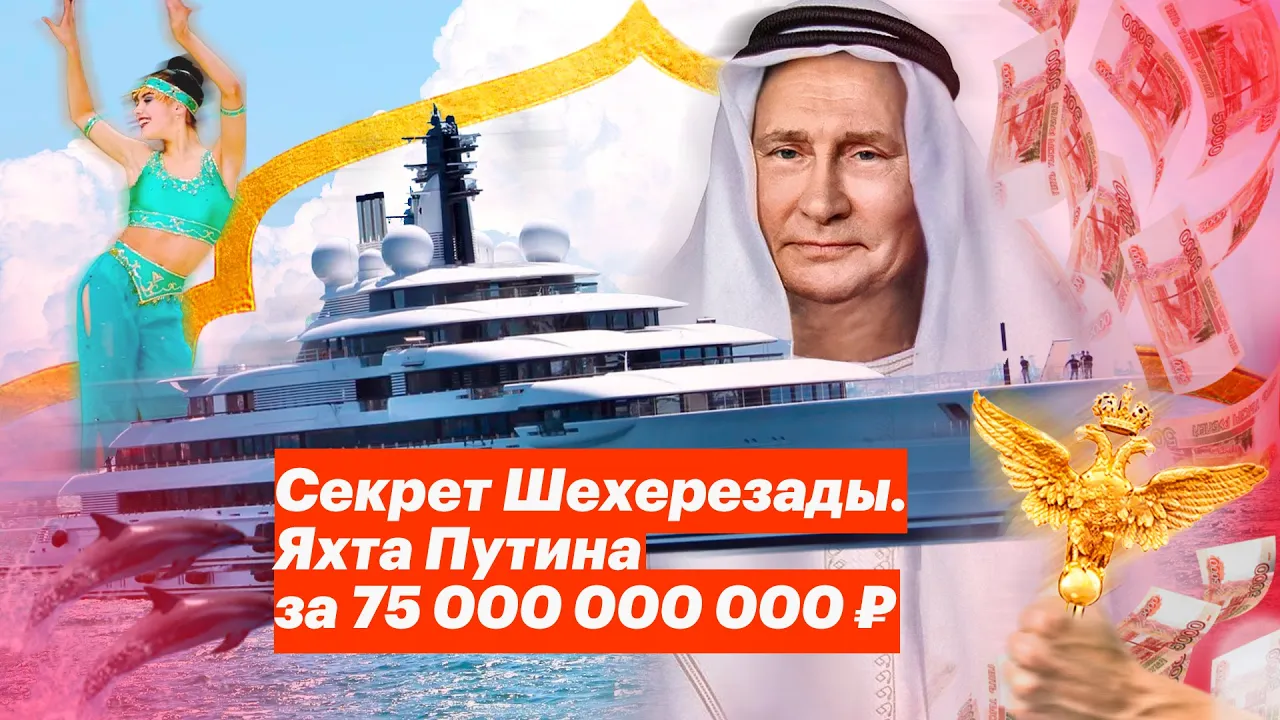
It's a super-yacht, in size and grandeur the mother of all super-yachts. Its name is that of the legendary story-teller of 1001 Nights' medieval Middle Eastern fame. It is also the world's most valuable vessel whose owner's identity has been a mystery. At $825 million in value it has a retractable roof over its swimming pool, one that converts into a dance floor. It has two helicopter landing pads, gold-plated bathroom fixtures and eight luxury cabins with ample room for eighteen guests.
According to one crew member, the ship is manned by an international crew at those times when the owner is not actually on the yacht and those are called "boss-off" times. When the owner is personally present on the yacht, these are "boss-on" times, when the crew is replaced by "an all-Russian staff". That all-Russian staff is reportedly comprised of members of the Russian Federal Security Service who provide personal security for the Russian President, Vladimir Putin.
An anti-corruption unit loyal to Alexei Navalny the most prominent of Vladimir Putin's political opponents whom he attempted to murder by poison, yet did a remarkable recovery thanks to medical treatment in Germany has been busy at work. When Mr. Navalny decided to return to Russia he was immediately arrested on a trumped up charge that netted him prison time and additional charges leading to a more prolonged incarceration. His political colleagues have been threatened but they continue to work at revealing the extent of corruption under Mr. Putin.
Previously their campaign had released a video showing the sumptuous interior of a presidential mansion built by Vladimir Putin, a palatial palace to reflect the grandeur of Russia's supreme commander, president-for-life, Vladimir Putin, in Sochi. The Anti-Corruption Foundation investigators discovered that the yacht is owned, albeit with great secrecy, by none other than Russia's president. The yacht is currently at an Italian shipyard for maintenance.
The Scheherezade was launched in 2020, registered to a company in the Marshall Islands, sailing under a Cayman Islands flag. A dozen of its crew registered at the official address of the Russian Federal Security Service stationed at the Sochi Black Sea residence, providing security for President Putin. "We found another $700 million that Putin stole from the Russians: the yacht, for which Russian soldiers are now dying", said Leonid Volkov, a close associate of Mr. Navalny.
To save himself from his own future, Mr. Putin might consider the advisability of leaving Moscow permanently, settling onto his yacht and sailing off forever and a day into the wide blue yonder; his escapade and escape from the consequences of the disasters he has brought upon both Ukraine and Russia, not to mention the wider world, will be the stuff of the one-thousand-and-second story in the famed group a clever woman thought up to save herself. Now Scheherezade can carry Putin off to a magical island to save himself.
"Putin really cares very much about money. So our short answer is to sanction his close friends, his oligarchs, the holders of his assets."
"The idea is to build leverage against Putin and his friends, because every time Europe or the United States tries to build bridges, to compromise, to build a dialogue, unfortunately Putin, in his psychology considers it to be just a sign of weakness."
"[Sanctions] would allow veteran leaders to talk to Putin from a much stronger position than they talk now, because money really matters a lot for him. That's our idea. Appeasement politics, unfortunately, has failed."
"Let me suggest that the key part of the story is the U.K. here. If you can kind of push and influence the Ul.K. informally, it's the most essential because 80 percent of those assets in question are being stashed in London."
Leonid Volkov, Top aide to imprisoned Russian dissident Alexei Navalny
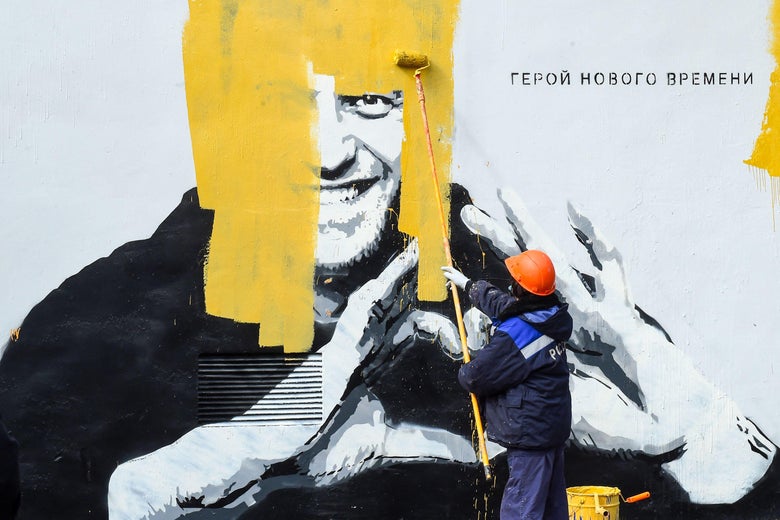
A worker paints over graffiti of jailed Kremlin critic Alexei Navalny in Saint Petersburg on April 28, 2021.OLGA MALTSEVA/Getty Images
Speaking from Lithuania by video link to the members of Canadian Parliament on the House of Commons Foreign Affairs Committee about Vladimir Putin's staunchest critic Alexei Navalny, and the trials and tribulations he has suffered, the top aide to the imprisoned dissident informed the best method of helping Navalny is through sanctions on oligarch allies of the Russian president. That those loyal to him would be placed under sanction by the West, he maintained, would represent a productive move certain to antagonize Mr. Putin while affecting his wealth and the assets of his friends.
Having been poisoned to near death, saved only by the intervention of Germany, his hospitalization and treatment there, where the nerve-agent poison used to attempt his murder was identified as a military chemical developed and in the hands of the Russian military, Mr. Navalny has since been imprisoned as punishment to his corruption focus on the Kremlin and the country's president. Allies of Mr. Navalny are, in addition, under constant threat of prosecution by Russian authorities.
The opposition movement is on the cusp of being declared illegal by a top Russian court. Asked by one of the committee Members of Parliament what Canada could undertake to assist Mr. Navalny, Mr. Volkov made his advisory with a focus on the ruble. Canada had joined the United States and the European Union in sanctioning nine senior officials in Russia over Navalny's treatment in March. Russia's top prosecutor was among them, as well as the head of Russia's prison system and the FSB security agency head.
No businessmen were targeted by the sanctions who are Putin allies. Mr. Volker pointed out that sanctioning such oligarchs would represent the best way to exert pressure while acknowledging the impossibility of trying to cut Mr. Putin's source of funds off. "I understand how complicated these processes are, how many legal complications", Mr. Volkov said while emphasizing that Canada should place its focus on persuading the U.K. to join in with more sanctions.
This was the second occasion when the House Foreign Affairs Committee spoke with Mr. Volkov. Their initial attempt on April 22had been foiled by Russian pranksters evidently skilled in the art of targeting politicians from Western democracies. Mr. Navalny has now been imprisoned for 108 days, in the process of recovering from a self-imposed hunger strike to draw attention to the fact that he requires medical attention, denied him in prison.
"The requirement of his hunger strike was to get doctors of his choosing, trusted doctors, to mind him", explained Mr. Volkov. Once a compromise was reached, with Mr. Navalny receiving improved medical treatment, he abandoned his hunger strike. "He's recovering from the hunger strike, but it takes time. The hunger strike lasted for 24 days, you need pretty much the same time for a safe recovery", Mr. Volker pointed out.
This file photo provided by Leonid Volkov and Russian opposition leader
Alexei Navalny, right, are seen in Germany in a Sunday, Jan. 17, 2021,
handout photo published to social media. The chief of staff to the
imprisoned Russian president critic Alexei Navalny is calling on Ottawa
to impose new sanctions on who he descripted as “Vladimir Putin’s
oligarchs.” THE CANADIAN PRESS/AP-HO, Leonid Volkov
"There is a generational change. In the federal level polls, Putin is still doing very good."
"But in polling for voters under 30, Navalny is doing beter than Putin, even despite all the force of the propaganda machine."
"So the clock is ticking in our favour.It's a slow, historicl process, but it's inevitable."
Vladimir Putin in His Crosshairs ... Defending Alexi Navalny
"Our entire investigation is about Putin using his best friends to hide
his assets. In response, the Kremlin shows Rotenberg and declares him
the owner of the palace."
"They think that they are saving the
situation, but in fact they are doing the exact opposite."
Maria Pevchikh, one of the investigation's
authors
"Of course, they are giving me 14 days not for tweets and retweets, but
for the fact that the video about Putin's palace has become so popular."
"Because so many people took to the streets. Because I'm dating [Georgy -- Anti-Corruption Foundation investigator Georgy Alburov, one of the
filmmakers of the documentary that investigated the Black Sea property]."
Anna Vellikok, Anti-Corruption Foundation member
"The
fact that Anna Vellikok is now being tormented the same way as Oleg
Navalny was has been driving me crazy."
"They
are just family members of those who dared to jump at Putin personally
and talk about his palace built on bribes. How is this not 1937? [the height of purges led by Joseph Stalin]."
Inga Kudracheva, HR manager
based in Moscow
A policeman detains a man while protesters try to help him, during a
protest in St. Petersburg on Sunday against the detention of opposition
leader Alexey Navalny.
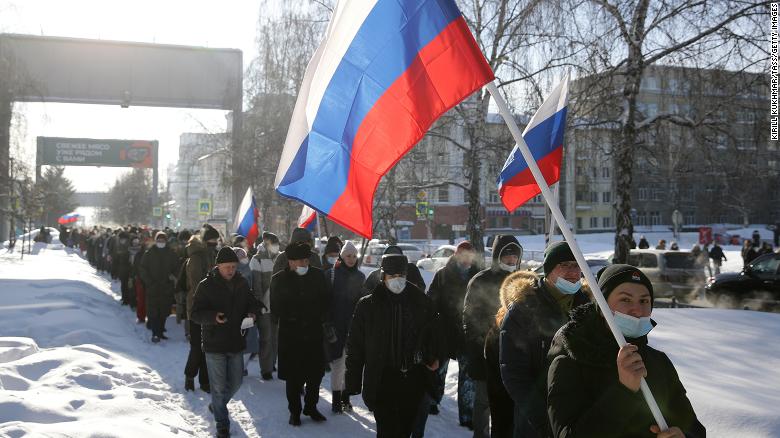
Once again, tens of thousands of Russians were out on the streets Sunday demanding Alexei Navalny be released despite a security lockdown unusual in its severity. Protests erupted in dozens of Russian cities from east to west in support of the jailed opposition leader, the vast numbers challenging the threat of prosecutions by government. Last week the figure of those arrested came to 4,000 and room couldn't be found to house them in detention centres; many had to sleep in the back of police vans overnight.
Yesterday, an increase of a thousand people, making for a total of 5,000 protesters were arrested by riot police as they chased protesters through Moscow streets and protesters and police engaged in standoffs in St.Petersburg. Navalny's wife Yulia Navalnaya was one of those detained, though she was later released. The fury of protesters had she been imprisoned would have been explosive.
With the capital blocked off, Moscow protesters formed a huge column to march to the train station. People were there, they told interviewers because they'd "had enough" of endemic government corruption. "Intimidation works. A lot of people were too scared to go out. Authorities see that they can jail people and not worry about higher numbers", said Tatyana Stanovaya, head of the R.Politik political analysis firm.
"What we're seeing right now is just a small fraction of those who are unhappy, but they're too scared to come out" said Yelena, 52, taking part in the first protest in her life, because she'd "had enough". What tipped them over the edge was the video released by Navalny after his arrest claiming that Russian President Vladimir Putin was the owner of a billion-dollar property on the Black Sea coast. Over 100 million people had viewed the video on YouTube.
Demonstrators take part in an unauthorised protest Sunday in support of Navalny in central Novosibirsk
"I've always been the typical passive opposition supporter but you reach the point when you can't take it any longer."
"When they're trying to kill a person and then put him in jail -- that was the red line for me."
Ksenia, 40, auditor, Moscow
Protesters were chased by riot police onto the ice of the frozen Amur Bay in Vladivostok by riot police, the protesters chanting "my Russia is in prison!". In St.Petersburg thousands of riot police blocked off Palace Square and the Nevsky Prospekt main street while protesters marched on adjacent streets, clapping, while police stood in formation blocking roads.
Navalny has attracted supporters from across the political spectrum. His poisoning with the military-grade nerve agent in Siberia in August shocked Russians. He returned after recuperating in Germany, reasoning that if he released the Putin-corruption-incriminating video while abroad it would be taken that he was fearful of facing the consequences; only on his return and subsequent arrest was the video released to great effect.
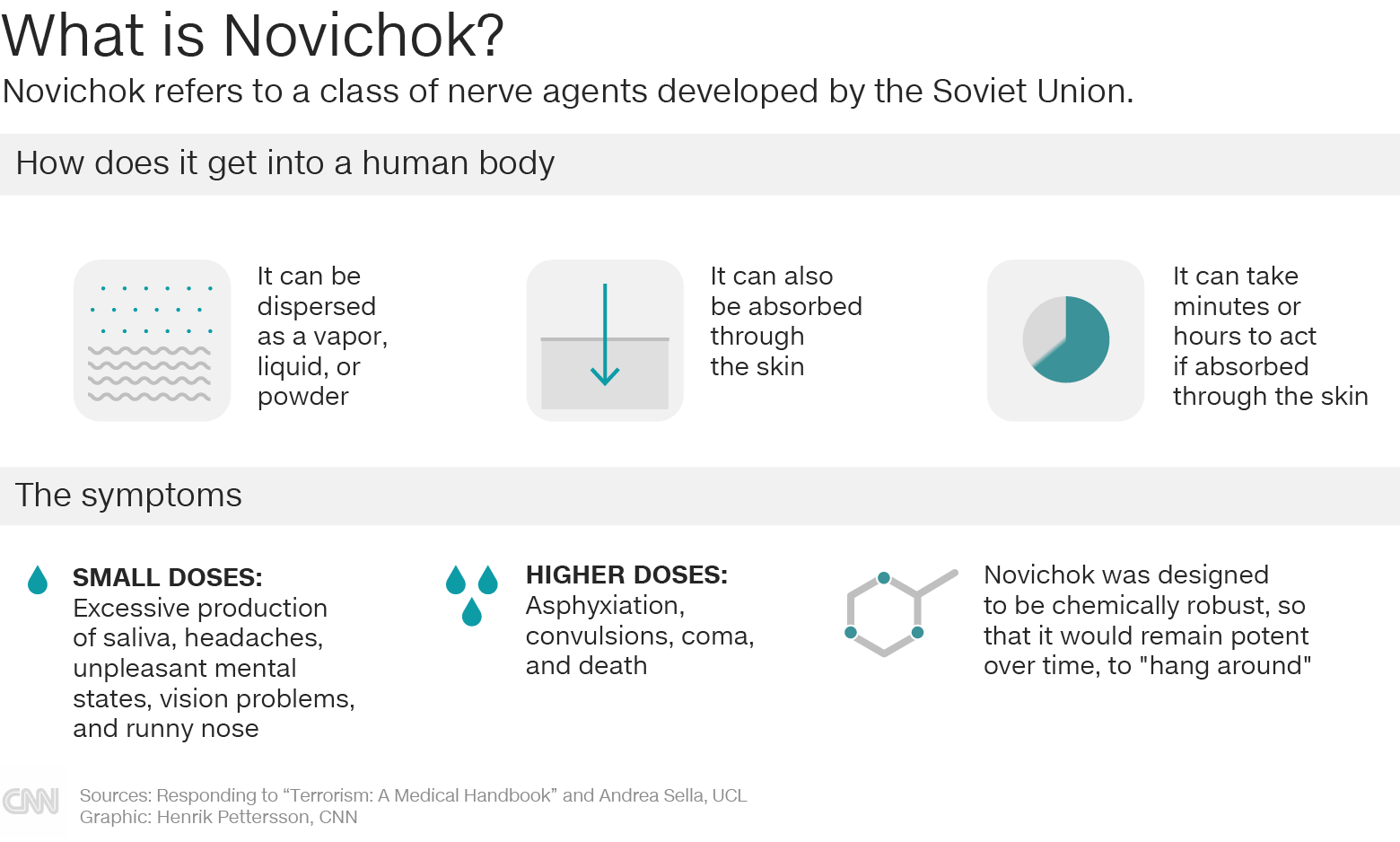
"This is disturbing information about the attempted murder through poisoning against a leading Russian opposition figure. Alexei Navalny was the victim of an attack with a chemical nerve agent of the Novichok group. This poison could be identified unequivocally in tests." "This poison can be detected without a doubt in the samples. This
means that Alexei Navalny is definitely the victim of a crime. They wanted to silence him and I condemn this in the strongest
possible terms, also on behalf of the entire Federal Government. There
are very serious questions now which only the Russian government can
and must answer. The fate of Alexei Navalny has received a
lot of attention worldwide. The world will wait for an answer." German Chancellor Angela Merkel
"The Russian government must now explain what happened [to Navalny]. It's
outrageous that a chemical weapon was used against Alexei Navalny. We
have seen first-hand the deadly consequences of Novichok in the UK. We will work with international partners to
ensure justice is done." British Prime Minister Boris Johnson
"The Russian government has a clear case to answer. It must
tell the truth about what happened to Mr Navalny. We will work closely
with Germany, our allies and international partners to demonstrate that
there are consequences for using banned chemical weapons anywhere in the
world."British Foreign Secretary Dominic Raab
"The identification of the poison as
being one of the family of Novichok agents points extremely strongly
towards the Russian government being responsible for this outrage. The
Russian government has the motivation for it, but also the track record
on multiple levels. It shows both their ruthlessness but
also their level of impunity. It is clear that they care little about
international opinion and are prepared to act because they know that the
consequences are extremely small."Andrea Sella, professor of inorganic chemistry, University College London
It is glaringly obvious by now that you cannot be a high-profile critic of the Kremlin, much less of Russian President Vladimir Putin with impunity. Punishment will arrive sooner or later and whether it is sooner or later it is often a final judgement. Kremlin critic Alexei Navalny is by no means an exception; he is symbolic of the rule. Berlin, according to its indomitable chancellor, awaits an explanation from Moscow. Moreover, Frau Merkel who is normally unwilling to push Mr.Putin to the wall appears now to be willing to do so.
She warns that Germany is prepared to consult its allies in NATO, how the collective should respond to the outrage of a national leader committing to a deadly assault on a critic with a high profile. Not that this is unusual, far from it. There have been numerous other deadly assaults, some of them resulting in grievous harm, others in the finality of death, and some of them executed clumsily enough to point the finger in the clues left behind, at none other than state involvement.
New Western sanctions against Russia loom in the near future. Old sanctions linked to Moscow's Crimean adventure in its covert battle with Ukraine, have done ample harm to Russia's economy. Moscow in its defence denies any involvement in the unfortunate affair that has struck a Russian citizen so outrageously. Germany's contention of state involvement in the atrocious affair is unjustified, with no evidence whatever. Moscow is offended by the manner in which Berlin released the information regarding Navalny.
Airlifted to Germany which offered haven to the comatose, very ill man whom a deadly nerve agent had poisoned, despite the balking of Russian doctors responding to the 44-year-old's emergency situation deeming him too ill to move, and denying that a poisonous substance was responsible for his collapse, the definite identification of the substance that almost took his life must leave them feeling galled by their part in the entire affair linked to their government.
According to the medical experts at Berlin's Charite hospital where Mr.Navalny's welfare is being looked to, the patient remains in serious condition in an intensive care unit, connected to a ventilator. Potential long-term consequences of the poisoning cannot be ruled out. According to Lithuanian Foreign Minister Linas Linkevicius, Russian authorities were most certainly involved in the poisoning given the certain identification of the Novichok poison by the German government.
"Alexei was forcibly detained and taken away. He did not resist. Lawyers
are still at the FBK, and there's a search underway." "[Police timed the raid to coincide with the filming of an episode of
Navalny's YouTube show 'Navalny Live' so that] there can be no show." "[Last week's episode — which covered a shooting outside the FSB
building and Putin’s press conference — garnered nearly 1.5 million
views], a record number." "They didn’t like that success. If they search our offices they can seize our
technical equipment, so there can be no show." Kira Yarmysh,
Navalny's spokeswoman
Lawyer-turned-political campaigner has been among the most prominent
figures of Russia's opposition to President Vladimir Putin. Navalny
came to prominence in 2008, when his blog exposing malpractice in
Russian politics and among the country's major state-owned companies
came to public attention. Revelations published on his blog even led to
resignations, a rarity in Russian politics.
The driving force behind major anti-government protests thoughtfully livestreamed a video from his office while Russian law enforcement officers used an electric saw on Thursday morning to cut through the front door of his office. One wag described it as New Year's fireworks. The foundation's employees were ushered into a room by several masked men, telling them "Put your face to the wall! Stay where you are!" The room was nicely decorated with a Christmas tree and a disco ball. This was all recorded until the officers disabled the CCTV cameras.
Not by any means the first raid on Navalny's Anti-Corruption Foundation in Moscow. It followed hard on one of his allies being detained and shipped off to a remote Arctic base for military service. To some in Navalny's movement it represented a kidnapping. The Kremlin appears to have initiated an unusually vigorous crackdown on its most effective, vociferous critics whose growing popularity and support is somewhat concerning to them.
According to Mr. Navalny and his spokesperson, the raid was precisely timed for a purpose; the disruption of his weekly YouTube presentation, set to be streamed live that evening. "They clearly chose this day because I have a show tonight", he tweeted. His show the week before had over 1.4 million views on YouTube, evidence of just how provocatively popular it is. And how much of a potential threat it poses to the Kremlin.
Each time one of these raids occurs equipment, including cameras for streaming YouTube shows are seized; the effort's obvious purpose revealed. State-ordered theft, in other words. The foundation's bank account, where donations are collected to pay for operating expenses, was blocked. An employee of the Anti-Corruption Foundation, tweeted to caption the video of the sparks flying when the electric saw sliced through the office door: "New Year's Eve fireworks".
Navalny was ordered in 2017 by a court ruling to remove a YouTube video of his investigation into the secret wealth of Russian prime minister Dmitry Medvedev, a video that had gone viral. A wave of nation-wide protests was triggered by the 50-minute film in the spring of 2017 after having been viewed over 32 million times. Obviously the Kremlin was not impressed.
Police broke into the flat of Ruslan Shaveddinov, 23, a colleague and supporter of Mr. Navalny. He was taken in for questioning, then sent to the Arctic to serve at a secret military base even while he had appealed against his military conscription. So there was the answer to his appeal. His voice as an ally of Mr. Navalny will not be heard for a while, not as long as he remains on the remote archipelago known as Novaya Zemlya. ,
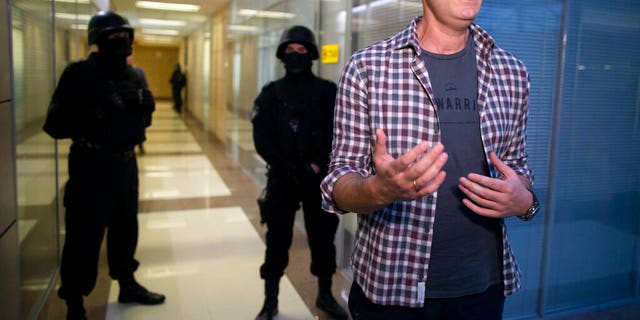
Russian opposition leader Alexei Navalny speaking to the media as police
stood guard at the Foundation for Fighting Corruption office in Moscow.
(AP)
This represents a general opinion site for its author. It also offers a space for the author to record her experiences and perceptions,both personal and public. This is rendered obvious by the content contained in the blog, but the space is here inviting me to write. And so I do.