Canadian Justice: Ease off on Abusers, Leave the Abused to Fend for Themselves
"The only way to make myself feel safe was to remove myself and get as far away from the threat as possible.""I feel safer here [Mexico] because the person that attacked me does not live here. That's just basic common sense.""I feel safer because I'm very far away. ... It could have been Germany, it could have been Peru, it could have been the USA."Anne Welyki, The Elevate Report"All eight charges, five in the provincial and three in the federal were stayed against my ex.""I can't say his name, because it will forever be known as 'alleged' abuse.""I can't live in Canada anymore, because it's not safe for me."Cait Alexander, now resident in California
| The caption for this photo posted to X on June 5 reads: "Thank you Pierre Poilievre for taking the time to chat. I would have loved the opportunity to share in detail why I left Canada and how I believe it can be fixed." (Credit: Lioness0817/X) |
The
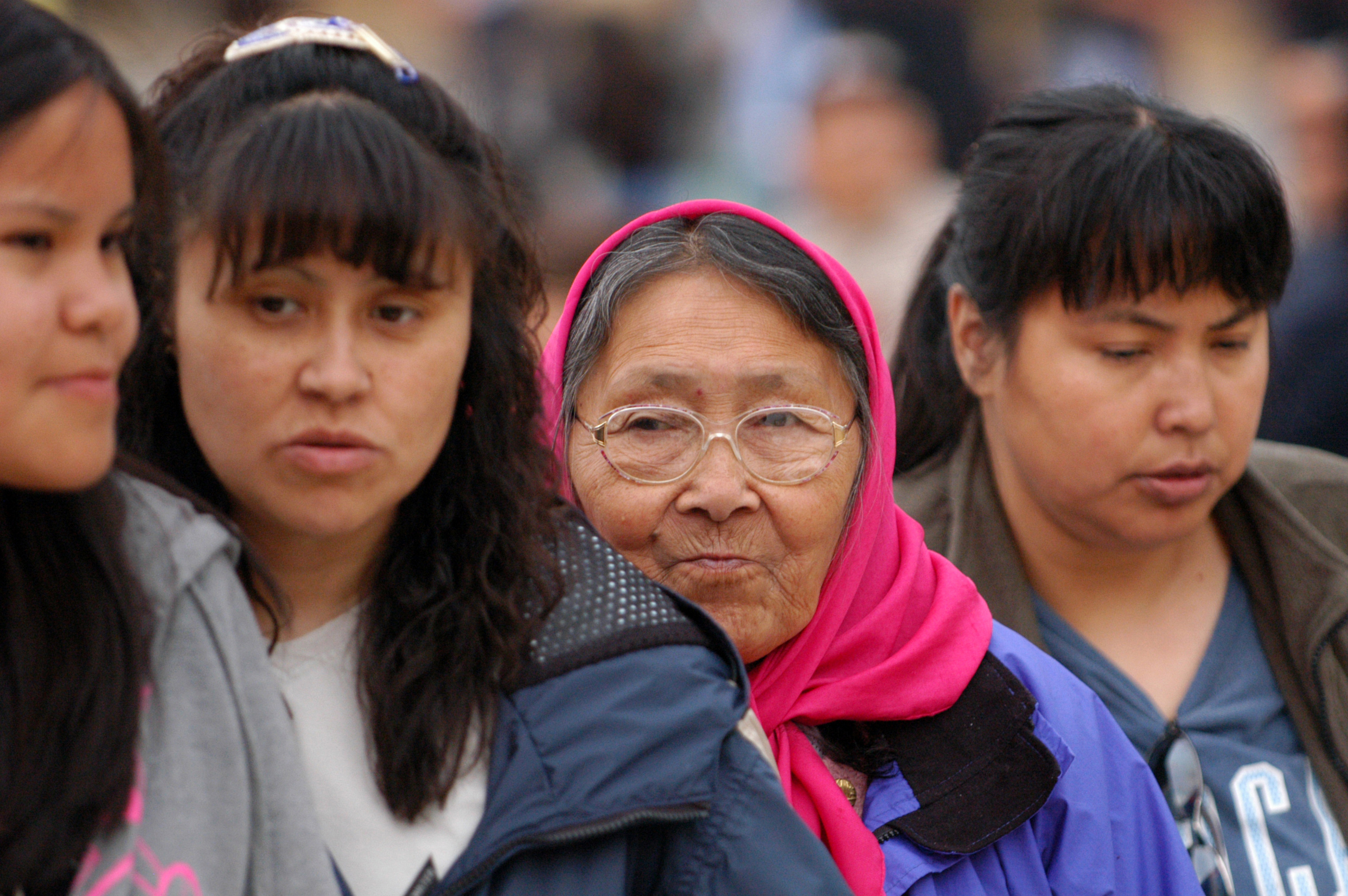
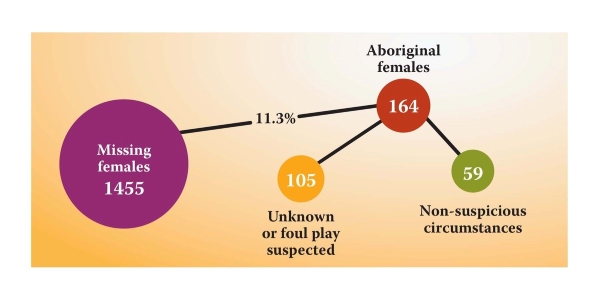
infamously intractable issues of violence against Canadian aboriginal
women has been a matter of shame, but not much mystery in the matter of
'Missing and Murdered Aboriginal Women' in Canada. With government
vowing time after time that this tragic civilizational assault against
the most basic of human rights for women of Indigenous heritage must
stop. This is an issue well enough known, that for the most part
injuries and deaths and absences of aboriginal women are the result of a
cultural abomination, when they are victimized by none other than their
intimate partners, aboriginal men.
In
Canadian jurisprudence it has become a fait accompli that when judging
aboriginal men for crimes they must be viewed through the prism of
colonialist trauma. Prison sentences meted out to aboriginal men who
commit crimes and are convicted of those crimes must take into account
their aboriginal backgrounds and the assumption that they are victims of
racism, poverty and lack of opportunities in the white society that
colonized Canada thus victimizing the Indian tribes already settled in
the country. In penalizing Indigenous men to a lesser degree than their
crimes warrant, Indigenous women are doubly victimized.
 |
| Assembly of First Nations |
But
this uneven application of the law has also been extended to include
people of colour as well as migrants without status. Indigenous men and
Blacks are over-represented in Canadian prisons despite that they
represent a minority in Canada. Their penchant for committing crimes
against society is higher than other groups in society, including the
majority. That their numbers are over-represented in comparison to their
minority numbers within the population is viewed as a fault in Canadian
society, rather than as a possible reading that these groups tend to
gravitate in greater numbers to the commission of crimes.
To
sentence a migrant, refugee or undocumented person in Canada to a
prison term long enough for them to be incarcerated in a federal prison
is to consign them to a removal order by Canadian Border Services,
leading judges to opt for lesser sentences through the compassionate
lens of 'fairness' to a presumed underdog. Invariably all too frequently
those who commit criminal acts tend to take advantage of the situation,
where bail is also readily available, enabling them to return to the
commission of criminal acts resulting in minimal punishment.
Conservative
leader Pierre Poilievre happened to describe an encounter he had with a
woman from Vancouver who left the country for her personal safety under
duress. At Vancouver International airport the woman had approached Mr.
Poilievre to briefly inform him that she had left Canada to escape from
an attacker. "You're my favourite Canadian", she told him. Then she described her reason for leaving Canada. "I said I'd like to come home, and he said, in return 'We're going to get you home'," she later explained during an interview on the podcast The Elevate Report.
For
his part, Mr. Poilievre mentioned the encounter with an anonymous woman
when he responded to a question during a Vancouver press conference
about public safety. "I met a lady at the airport the other day who told me that she moved from Vancouver to Mexico so that she would feel more safe",
he stated. Online mockery over the statement was quick to follow.
Flavio Volpe, president of the Automotive Parts Manufacturers'
Association wrote on social media: "Of all the things that did not happen, this one did not happen the most."
Doubts
over the veracity of Mr. Poilievre's statement was raised again when a
reporter, after speaking to World Cup fans in Vancouver relayed to him
that they felt "pretty safe"; that "data shows that Mexico is far more unsafe than Vancouver". Mr. Poilievre was not to be shaken; he responded that the encounter at the airport really had occurred, that "there
are a lot of women who frankly feel very unsafe in Canada today. And
there are cases we've had of women testifying before parliamentary
committees that they have left Canada because their partner, their
violent partner, has been released from prison despite crime after crime
after crime."
 |
End Violence Everywhere |
Cait Alexander who had testified to the Status of Women Committee in 2024, founded the group End Violence Everywhere.
She had been brutally beaten by an intimate partner who was freed on
bail the following day. She lives now full-time in California.
"I left the country for certain reasons and I'm upset about it. I love my country.""Do you think this would be my first choice. Or do you think I would rather be at home with my friends and family?"Anne Welyki
Labels: Canada's Soft-on-Crime Justice System, Conservative Leader Pierre Poilievre, Discounted Convictions, Easy Bail, Missing and Murdered Aboriginal Women, Violence Against Women
posted by Pieface @ Wednesday, July 01, 2026


<< Home