Irish Expose, Russian-Owned Alumina Plant, Limerick, Ireland
"The European Commission is not expected to rush into a decision about whether exports of raw materials from Aughinish Alumina to Russia should be cut off by economic sanctions, The Irish Times understands.The Government’s confidential report investigating the Co Limerick plant shows the Rusal-owned company has become increasingly dependent on selling alumina to Russia since Moscow’s invasion of Ukraine, as demand from other European countries declined due to concerns about Aughinish’s Russian ties and ownership.""The unpublished report, seen by The Irish Times, could not find evidence proving alumina exported by Aughinish was ultimately used by Russian arms producers and defence contractors, but officials said their investigation was hamstrung by a lack of access to information about activities inside Russia and reliable internal trade data.""Reporting by The Irish Times and a consortium of European media outlets revealed vast amounts of alumina refined in Aughinish was being shipped to smelters based in Russia making aluminium, which is sold to ASK, a Moscow trading company known to supply the alloy to Russian arms and missile manufacturers."The Irish Times"[Our aluminum has] no connection whatever to the Russian military supply chain.""[We will order an] independent third-party verification by a competent global company, who will monitor the alumina flows from Aughinish and subsequent export out of Russia."Aughinish Alumina
 |
| The Aughinish Alumina plant in Co Limerick. Photograph Nick Bradshaw |
Europe's
largest alumina refinery sits on a sylvan plain, in Ireland's Limerick
County on the Shannon river estuary. The enterprise that employs about
500 locals, is now at the centre of a dispute pitting support for
Ukraine against the potential loss of that local employment. Owned by
Russian aluminum giant Rusal, which according to Swedish tax authorities
recently, is under the control of sanctioned oligarch Oleg Deripaska.
Calls
for Ireland to halt exports to Russia have newly arisen, despite that
alumina exports are not at the present time subject to European Union
sanctions. The company launched its Ireland production in 1983. Around
1.9 million tonnes of alumina is produced annually at the plant,
according to the company. Following a March investigation by the Irish Times daily, plus a consortium of journalists (the OCCRP),
raw material it is alleged, was shipped from Aughinish to Russia,
processed into aluminum sold to a Moscow-based trader who supplies
Russian arms manufacturers.
That public revelation inspired a government probe, where Enterprise Minister Peter Burke stated that "no adverse findings" had
shown up against the refinery Since the investigation had been unable
to determine where alumina was traded once it entered Russia given a
lack of internal Russian trade data, the statement of 'no adverse
findings' appears both to reflect hopeful incompetence and a lack of
government interest.
Half
of the refinery's alumina exports were shipped to Russia in the first
quarter, according to official Irish data published this month; an
increase from 43 percent in 2025 -- while 40 percent was shipped to the
European Union. The exports. as far as Ukraine is concerned, erase
concerns over economic activity out of Ireland that could be aiding
Russia's war effort. "Every
supply of strategically important raw materials that strengthens
Russia's capacity to sustain its aggression raises serious questions", urged the Ukrainian Embassy in Dublin.
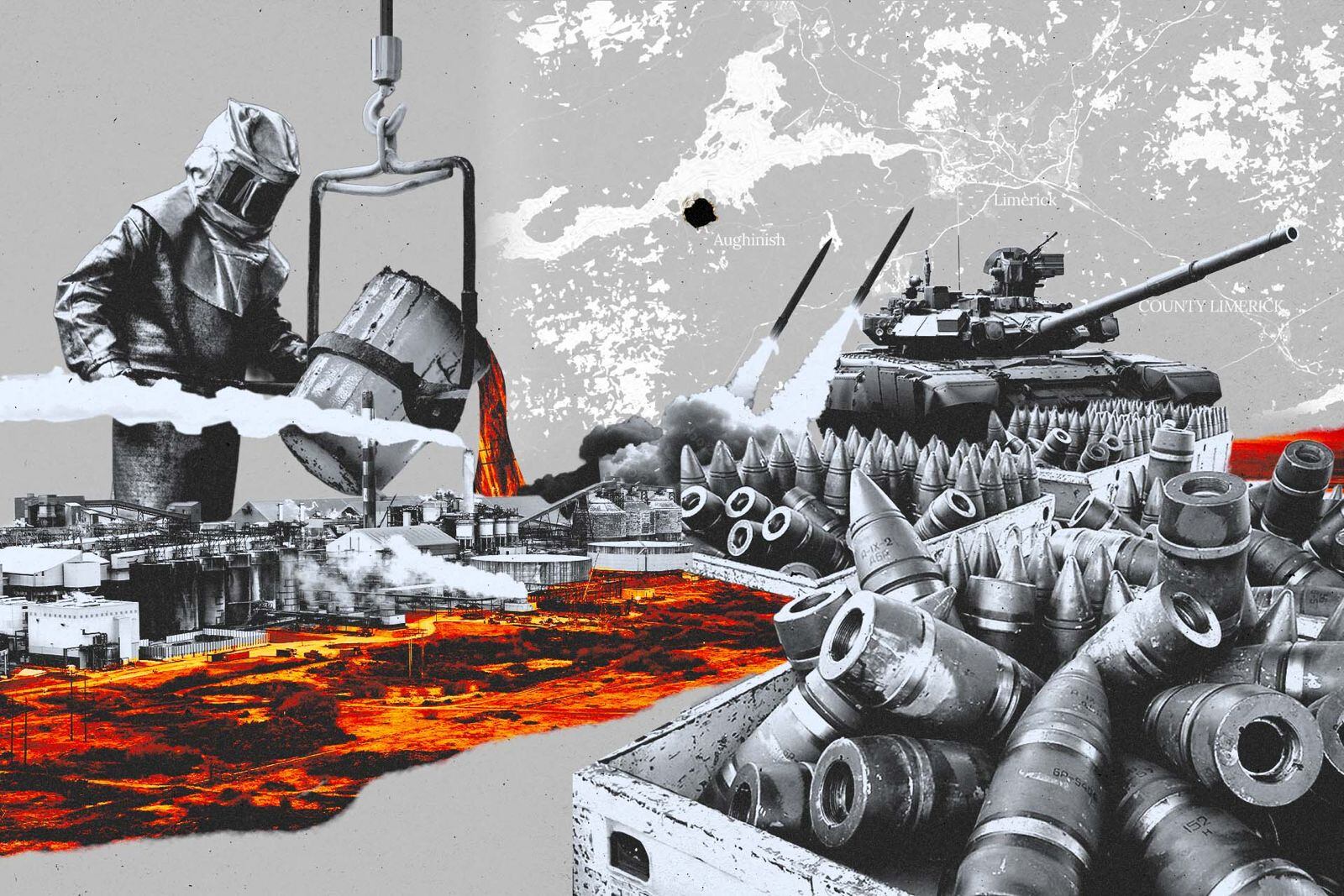 |
| Aughinish Alumina in Co Limerick supplies vast amounts of raw materials to Russian aluminium smelters, according to an investigation by The Irish Times and the Organised Crime and Corruption Reporting Project (OCCRP). Irish Times |
During
a visit by Irish prime minister Micheal Martin to Kyiv, to mark
Ireland's six-month rotating EU presidency, Ukrainian President
Volodymyr Zelenskyy welcomed Ireland's engagement on the issue.
"It is important that appropriate steps are taken to ensure that the Russian war receives no support whatsoever".
Surely an uncomfortable moment for the Irish prime minister given
Ireland's support for Ukraine, weighed against its non-intervention at
one of Europe's last major Russian-linked industrial assets.
Within
the European Union, Ireland, albeit militarily neutral, has been among
Ukraine's strongest political supporters, claiming it is fully committed
to sanctions against Russia. Outside the Irish parliament in Dublin,
Ukrainian flags fly alongside Ireland's and the EU's flags. "The whole thing around Aughinish doesn't match, we need to be banning those exports", said opposition lawmaker Patricia Stephenson; the government's position was difficult to reconcile.
Government
ministers, said Stephenson, should work with the EU to secure
alternative markets for the refinery's alumina while preparing
contingency plans, including examining nationalization, should it be
deemed necessary. The refinery's strategic importance as a major
employer in rural western Ireland, and a key supplier to Sweden's and
France's aluminum smelters, which supply European heavy industry, are
issues more to the heart of those ministers.
"Nobody wants to see local jobs lost. But we shouldn't be sending the stuff to Russia",
said local businessman John Cassels in Foynes village across the
estuary from the refinery, the location of a port that handles the
refinery's exports.
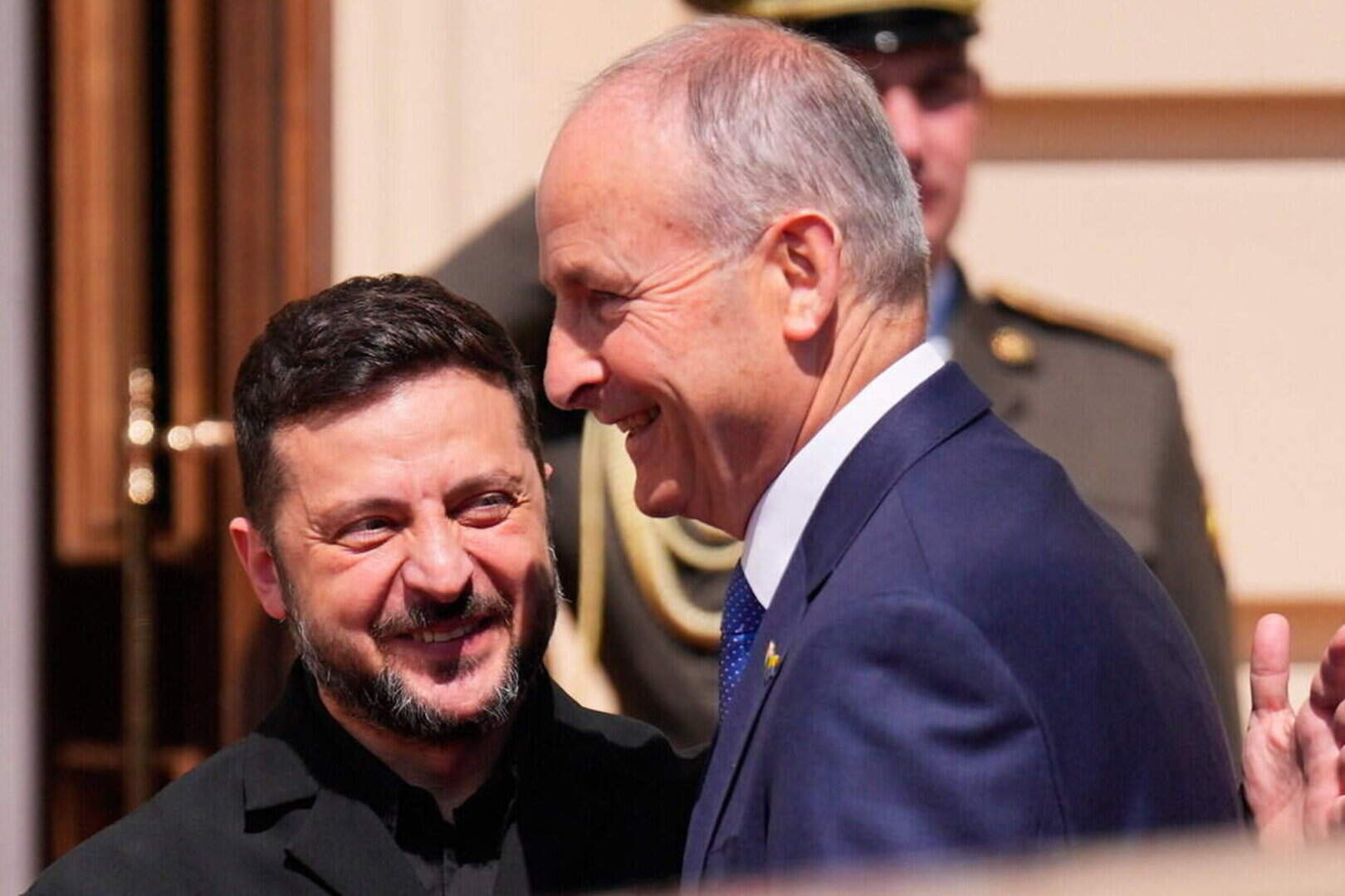 |
| Ukrainian President Volodymyr Zelensky (left) greets Taoiseach Micheál Martin as he arrives at the Presidential Palace in Kyiv last week Niall Carson/PA |
Labels: Alumina Produced for Russia-Ukraine Conflict, Alumina Refinery, Aughinish Alumina Industrial Complex, County Limerick, European Union
posted by Pieface @ Tuesday, July 28, 2026


<< Home