Irish Expose, Russian-Owned Alumina Plant, Limerick, Ireland
"The
European Commission is not expected to rush into a decision about
whether exports of raw materials from Aughinish Alumina to Russia should
be cut off by economic sanctions, The Irish Times understands.
The
Government’s confidential report investigating the Co Limerick plant
shows the Rusal-owned company has become increasingly dependent on
selling alumina to Russia since Moscow’s invasion of Ukraine, as demand
from other European countries declined due to concerns about Aughinish’s
Russian ties and ownership."
"The unpublished report, seen by The Irish Times,
could not find evidence proving alumina exported by Aughinish was
ultimately used by Russian arms producers and defence contractors, but
officials said their investigation was hamstrung by a lack of access to
information about activities inside Russia and reliable internal trade
data."
"Reporting
by The Irish Times and a consortium of European media outlets revealed
vast amounts of alumina refined in Aughinish was being shipped to
smelters based in Russia
making aluminium, which is sold to ASK, a Moscow trading company known
to supply the alloy to Russian arms and missile manufacturers."
The Irish Times
"[Our aluminum has] no connection whatever to the Russian military supply chain."
"[We
will order an] independent third-party verification by a competent
global company, who will monitor the alumina flows from Aughinish and
subsequent export out of Russia."
Aughinish Alumina
 |
| The Aughinish Alumina plant in Co Limerick. Photograph Nick Bradshaw |
Europe's
largest alumina refinery sits on a sylvan plain, in Ireland's Limerick
County on the Shannon river estuary. The enterprise that employs about
500 locals, is now at the centre of a dispute pitting support for
Ukraine against the potential loss of that local employment. Owned by
Russian aluminum giant Rusal, which according to Swedish tax authorities
recently, is under the control of sanctioned oligarch Oleg Deripaska.
Calls
for Ireland to halt exports to Russia have newly arisen, despite that
alumina exports are not at the present time subject to European Union
sanctions. The company launched its Ireland production in 1983. Around
1.9 million tonnes of alumina is produced annually at the plant,
according to the company. Following a March investigation by the Irish Times daily, plus a consortium of journalists (the OCCRP),
raw material it is alleged, was shipped from Aughinish to Russia,
processed into aluminum sold to a Moscow-based trader who supplies
Russian arms manufacturers.
That public revelation inspired a government probe, where Enterprise Minister Peter Burke stated that "no adverse findings" had
shown up against the refinery Since the investigation had been unable
to determine where alumina was traded once it entered Russia given a
lack of internal Russian trade data, the statement of 'no adverse
findings' appears both to reflect hopeful incompetence and a lack of
government interest.
Half
of the refinery's alumina exports were shipped to Russia in the first
quarter, according to official Irish data published this month; an
increase from 43 percent in 2025 -- while 40 percent was shipped to the
European Union. The exports. as far as Ukraine is concerned, erase
concerns over economic activity out of Ireland that could be aiding
Russia's war effort. "Every
supply of strategically important raw materials that strengthens
Russia's capacity to sustain its aggression raises serious questions", urged the Ukrainian Embassy in Dublin.
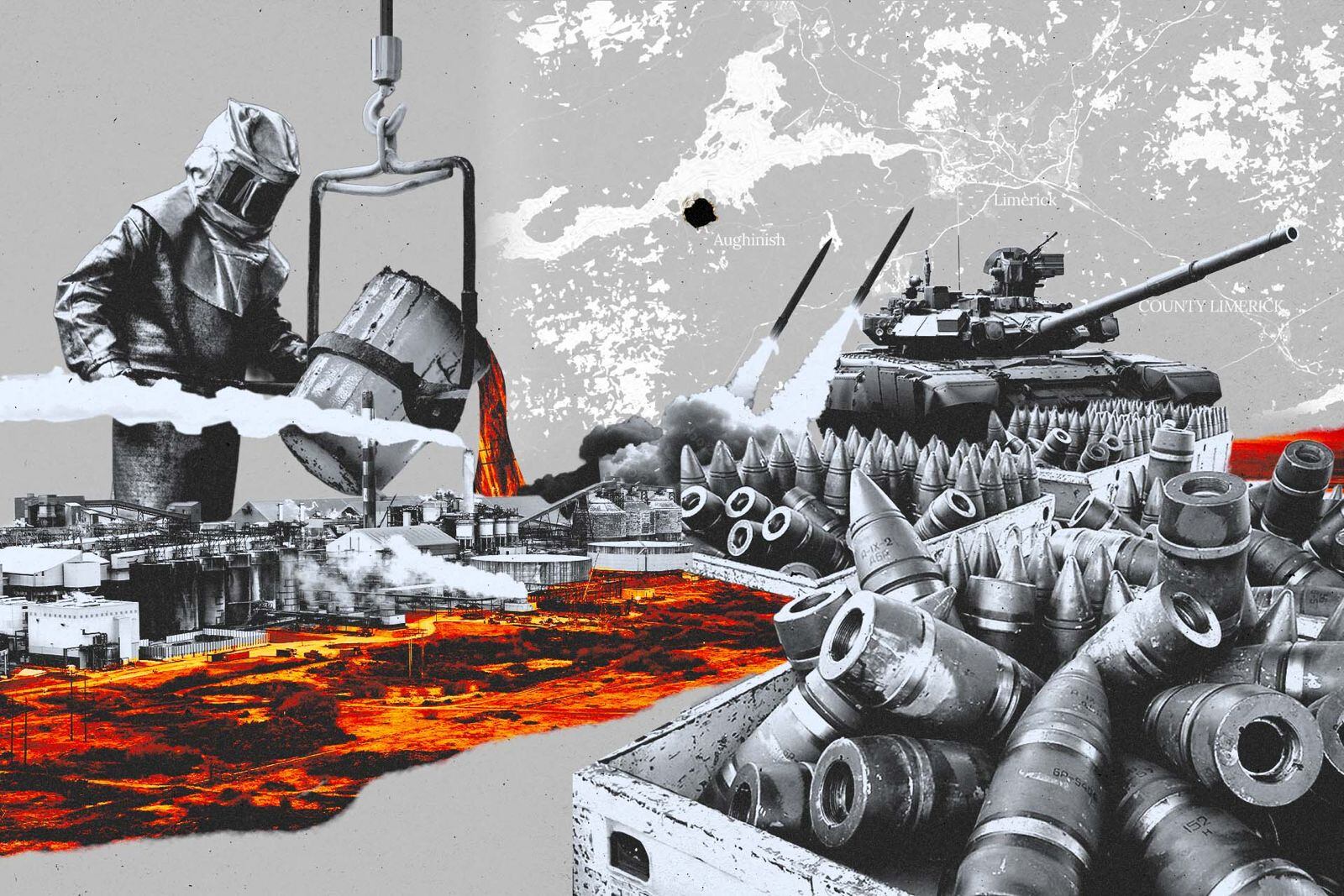 |
| Aughinish Alumina in Co Limerick supplies vast amounts of raw materials
to Russian aluminium smelters, according to an investigation by The
Irish Times and the Organised Crime and Corruption Reporting Project
(OCCRP). Irish Times |
During
a visit by Irish prime minister Micheal Martin to Kyiv, to mark
Ireland's six-month rotating EU presidency, Ukrainian President
Volodymyr Zelenskyy welcomed Ireland's engagement on the issue.
"It is important that appropriate steps are taken to ensure that the Russian war receives no support whatsoever".
Surely an uncomfortable moment for the Irish prime minister given
Ireland's support for Ukraine, weighed against its non-intervention at
one of Europe's last major Russian-linked industrial assets.
Within
the European Union, Ireland, albeit militarily neutral, has been among
Ukraine's strongest political supporters, claiming it is fully committed
to sanctions against Russia. Outside the Irish parliament in Dublin,
Ukrainian flags fly alongside Ireland's and the EU's flags. "The whole thing around Aughinish doesn't match, we need to be banning those exports", said opposition lawmaker Patricia Stephenson; the government's position was difficult to reconcile.
Government
ministers, said Stephenson, should work with the EU to secure
alternative markets for the refinery's alumina while preparing
contingency plans, including examining nationalization, should it be
deemed necessary. The refinery's strategic importance as a major
employer in rural western Ireland, and a key supplier to Sweden's and
France's aluminum smelters, which supply European heavy industry, are
issues more to the heart of those ministers.
"Nobody wants to see local jobs lost. But we shouldn't be sending the stuff to Russia",
said local businessman John Cassels in Foynes village across the
estuary from the refinery, the location of a port that handles the
refinery's exports.
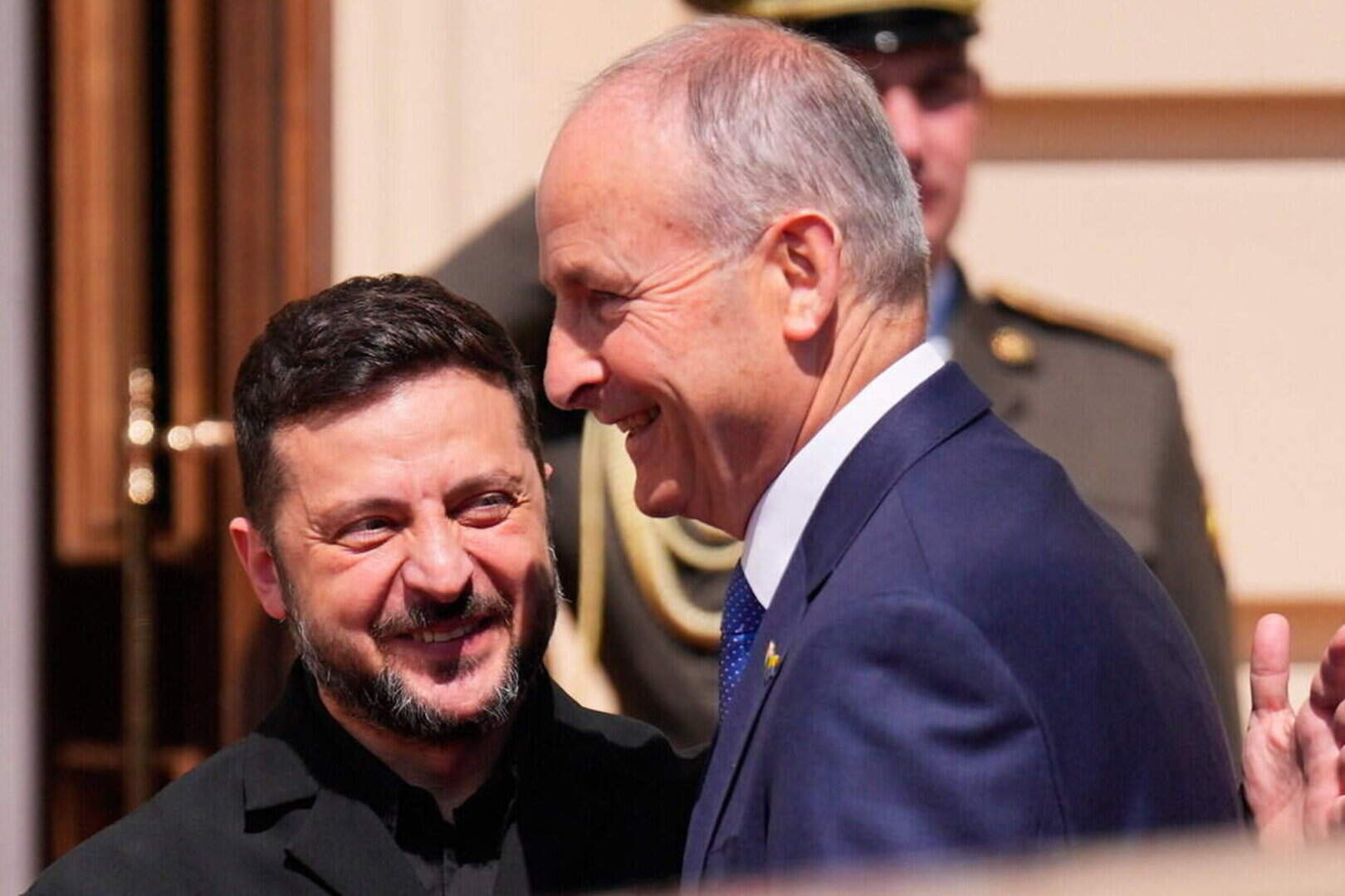 |
| Ukrainian
President Volodymyr Zelensky (left) greets Taoiseach Micheál Martin as
he arrives at the Presidential Palace in Kyiv last week Niall Carson/PA |
Labels: Alumina Produced for Russia-Ukraine Conflict, Alumina Refinery, Aughinish Alumina Industrial Complex, County Limerick, European Union
Ukraine's 'Blood Experience' Parlaying Drone Expertise for Military Technology
"One
night in March, a two-person Ukrainian crew established a record for
the Ukrainian Armed Forces by shooting down, in one engagement, 23 Russian Shahed drones
with Sting interceptor drones designed by the Ukrainian military
technology company Wild Hornets. The story is noteworthy not only for
the number of intercepted drones, but also for the operation’s cost
efficiency and Ukraine’s interceptor-production capacity behind it."
"A
Sting interceptor costs about $2,500. In comparison, a single U.S.-made
Patriot interceptor missile that does the same job costs
more than $3 million and requires significantly more time and resources
to build and operate than a drone. Lockheed Martin produced
approximately 600 of the most advanced PAC-3 type of Patriot missiles
last year; meanwhile, the Ukrainian Armed Forces used about 700 of these
interceptors in the span of only four winter months in 2025-2026."
"The conflict in the Middle East has further exposed the shortcomings
of a high-end, slow-production approach to defense systems. In March
2026, when Iran launched
hundreds of Shaheds at Persian Gulf states, countries with the most
advanced U.S.-supplied air defense systems outside NATO watched their
defense capabilities erode as their interceptor stockpiles drained
quickly. The air defense systems worked as intended, yet they were not
designed to protect against the intensity and scale of Iran’s attacks."
"Kyiv
is building drones in massive quantities out of wartime
necessity against Russia’s ongoing full-scale assault, now in its fifth
year. A key part of that necessity is Russia’s large-scale use of
Iranian-made Shahed drones against Ukrainian cities and infrastructure.
That Russian campaign has raised serious questions about Iran’s
responsibility
under international law. In response, Ukraine is rewriting the global
rules of air power and air defense, replacing sheer mass and large
stockpiles of weapons as key factors in warfare with the benefits of
quantity, speed, and the ability to learn faster than the enemy. It is a
novel and adaptive, low-cost military-industrial model that is already
catching the interest of other countries."
Lesia Bidochko, Just Security
 |
| Ukrainians train with handheld drones. (Photo by Sean Gallup/Getty Images) |
"Together
we can work on joint production, on making all of the
components of the systems work, and provide both defense industrial
bases with the impetus needed to step up investments and production
[following The European Union and Ukraine's drone deal to merge
Ukrainian expertise in unmanned warfare with the continent’s industrial
capacity, with the goal of ramping up production of drone and
counter-drone systems]."
"In Europe, we already have huge technological and industrial capacity
that can be deployed. And we have safe and secure production sites that
can help to scale up. But we do not have that battle-tested knowledge and expertise that
Ukraine has forged. So the point I am making is that we need to combine
our strengths. Together, we can work on joint production."
European Commission President Ursula von der Leyen
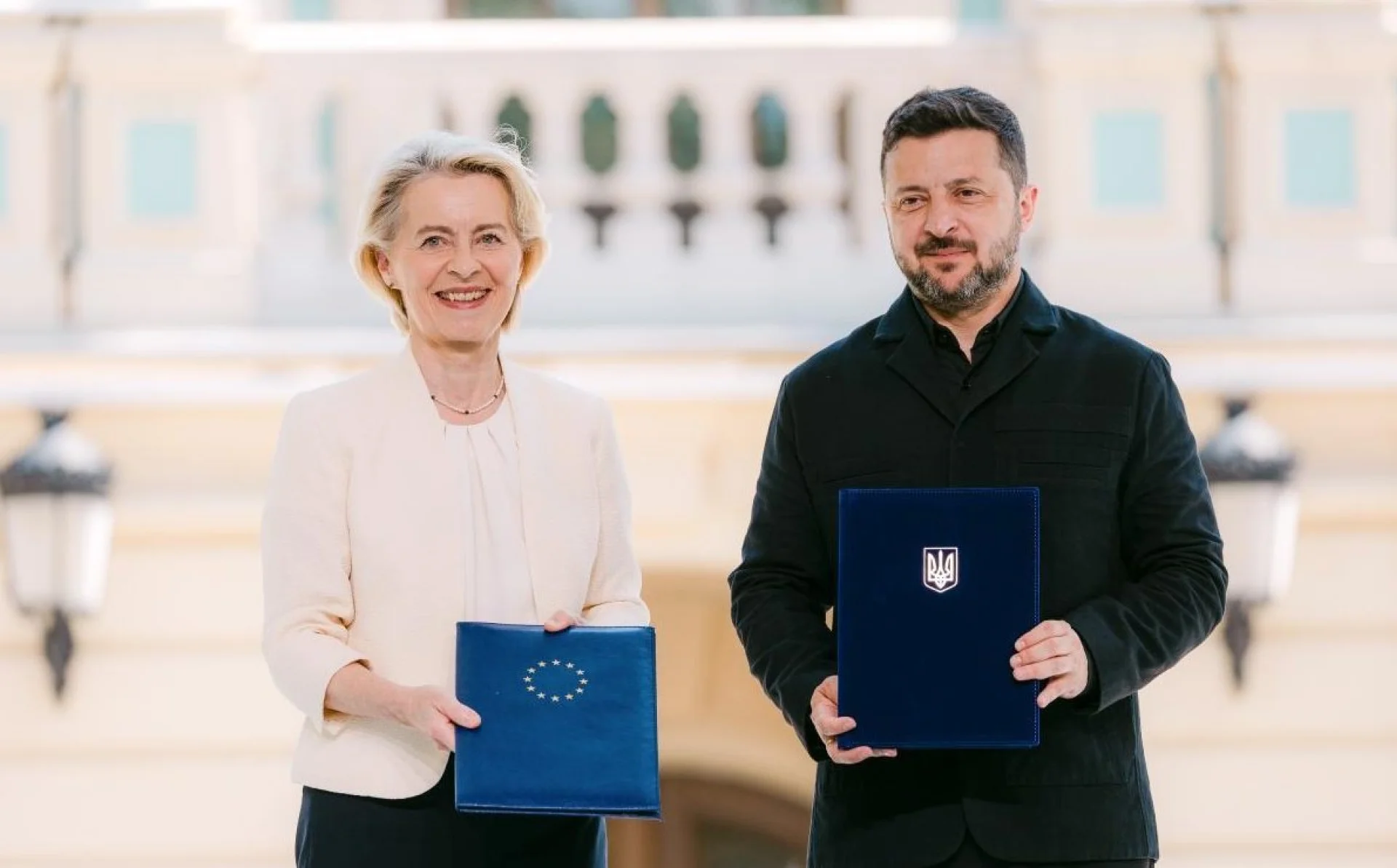 |
EU launches Ukraine defence industrial partnership, Drone Deal and disburses €1 billion for drones EU Neighbours East |
Kyiv
can be credited with many outstanding features in this uneven war
imposed upon Ukraine by Vladimir Putin's ambitions to restore Greater
Russia; among them the courage and intestinal fortitude to counter the
full-scale invasion in its fifth year and add to that the determination
to win this war, whatever it takes to repel the Russian beast. And nor
can its ingenuity in designing new technological weapons of its own
manufacture to match anything Russia obtains from the Islamic Republic
in this new era of drone warfare, much less its entrepreneurial
enterprise in marketing its products and its experience be overlooked.
So
while Russian drones -- the Iranian Shaheds -- have wrought their
weight in deadly measure as a means to kill thousands of soldiers and
civilians in Ukraine, countermeasures to Russia's innovative
first-person-view vehicles, jet power, fibre-optic tethers and similar
innovations have led to Ukraine developing its own versions in
countering the Russian military's. EU member-states such as Croatia,
Spain, Italy, Poland, the Netherlands, France, Denmark and Germany now
see their own firms aligning with Ukrainian companies that specialize in
first-person-view combat drones.
Ukrainian
President Volodymyer Zelenskyy, pushing the drone deals whenever and
wherever he can now realizes a ready market. Where Hezbollah deploys
unmanned aerial vehicles to attack Israel, and Iran uses them against
several regional countries, a case in point. Kyiv has signed ten-year
security agreements with Gulf allies Qatar, Saudi Arabia and the United
Arab Emirates since the joint U.S.-Israel aerial attacks on the Islamic
Republic which led to its missiles and drones hitting its neighbours'
U.S. military bases. A proposal, Zelenskyy stated is
"also on the table for our American partners".
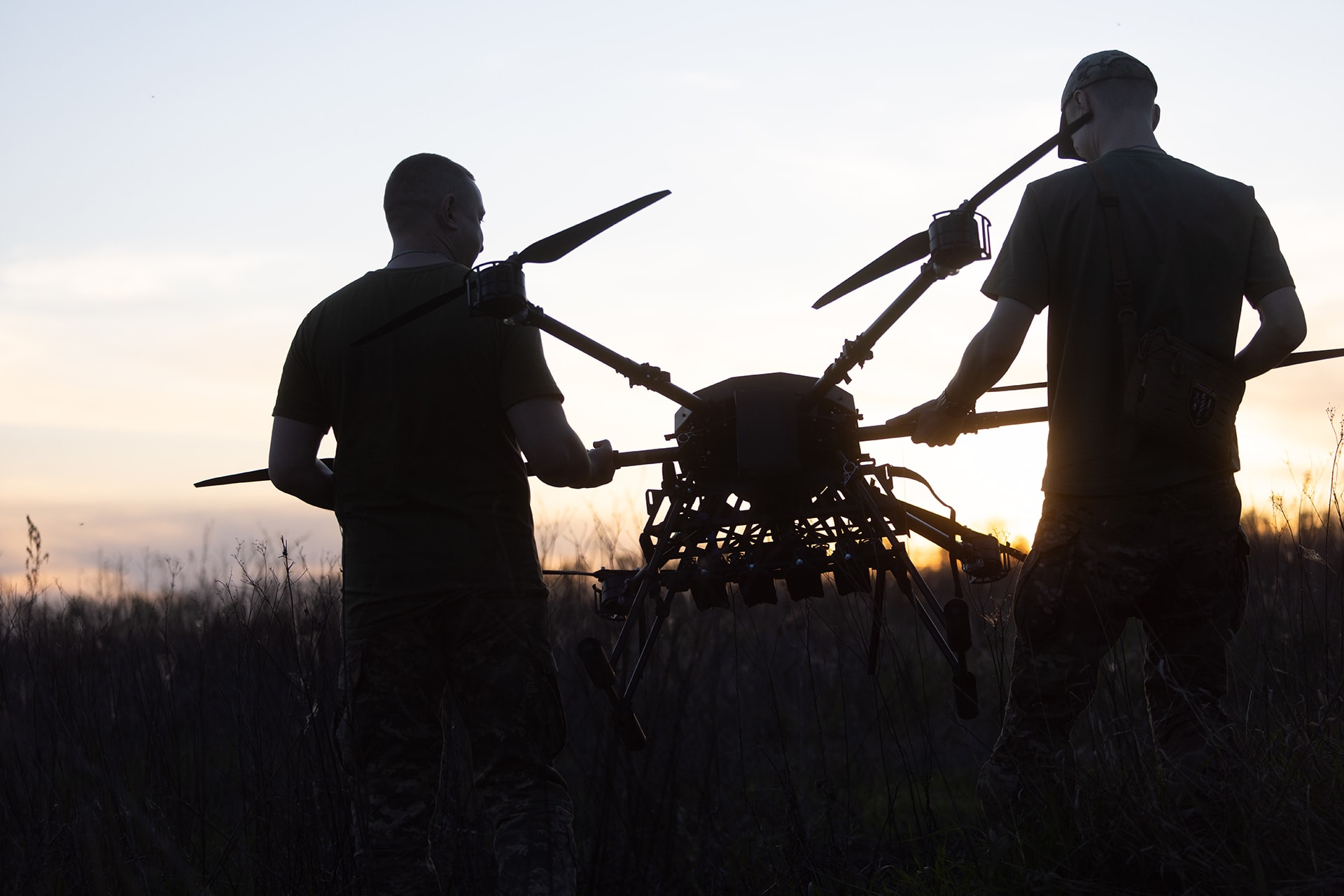 |
| Ukrainian
soldiers of the 127th Heavy Mechanized Brigade carry a Heavy Shot UAV
across a field on May 8, 2026, in Kharkiv Oblast, Ukraine.
Yevhen Titov/Global Images Ukraine via Getty Image |
"Latvia will adopt Ukraine's unique combat experience in airspace defence against drone attacks."
"[The
deal includes] immediate access to technologies, but most importantly,
the immediate arrival of Ukrainian anti-drone combat unit experts in
Latvia."
"Our skies can only be protected if we follow Ukraine's example, know-how and experience."
Latvian Prime Minister Andris Kilbergs
A
joint drone production facility is to be built near Latvia's border
with Russia. Russia's Eastern Europe neighbours are fully cognizant of
the potential danger they are in, following Ukraine's invasion, led by
the Russian President's roving eye and territorial acquisitiveness. Kyiv
anticipates more military and economic support, in particular
American-produced Patriot missiles in short supply, given U.S. forces
fighting Iran. Its breakthrough arrived when President Trump stated Kyiv
would be allowed to make Patriot missiles itself in Ukraine.
"The terms must be beneficial for Ukraine, and the proceeds from exports must strengthen Ukraine's defence",
stated President Zelenskyy of plans to release exports of Ukrainian
drones. Reliance on early warning systems, radar, electronic warfare,
mobile fire groups, helicopters, jet fighters and interceptors encompass
Ukraine's anti-drone defences. Interceptors are increasingly being
realized as the main line of defence for intercepting drones.
Over 100 Ukrainian companies produce interceptors. "We have approximately 15 to 20 very effective interceptors, which are also extensively used at the front",
revealed Andrii Hrytseniuk, chief executive of Ukrainian government
organization Bravel, providing a platform for the country's defence tech
sphere.
 |
A Sting interceptor drone flies during drills at the
Yatagan School for Unmanned Aerial Systems in the Kyiv region, Ukraine, Efrem Lukatsky/AP |
"There
is no one single bullet. There is sort of this funny magical thinking
that a lot of people are doing in terms of 'hey, just send us all your
drones or your interceptors'. "
"And
what people are sort of missing is that is, even though there's tech
and that's what everybody sees, it's only one piece of everything."
Deborah Fairlamb, American investor in military technology
Labels: Drone Warfare, European Union, Joint Drone Facilities, Middle East, Russian Invasion of Ukraine, Ukraine's Anti-Drone Experience, Ukrainian Counteroffensive
"We Will See Where Things Lead..."
"The
problem with the strait is this. Let's say we do a great job. We say we
got 99 percent. One percent is unacceptable, because one percent is a
missile going into the hull of a ship that cost $1 billion."
"If we do a 99 percent decimation, that's no good."
"I
read a story today that I'm desperate to make a deal. I'm not. I'm the
opposite of desperate. I don't care. ... In fact, we have other targets
we want to hit before we leave. "
"I
don't like to say this, we've won this. This war has been won. They
have no navy and they have no air force, and they have nothing."
"And we literally have planes flying over Tehran and other parts of their country They can't do a thing about it."
U.S. President Donald J. Trump
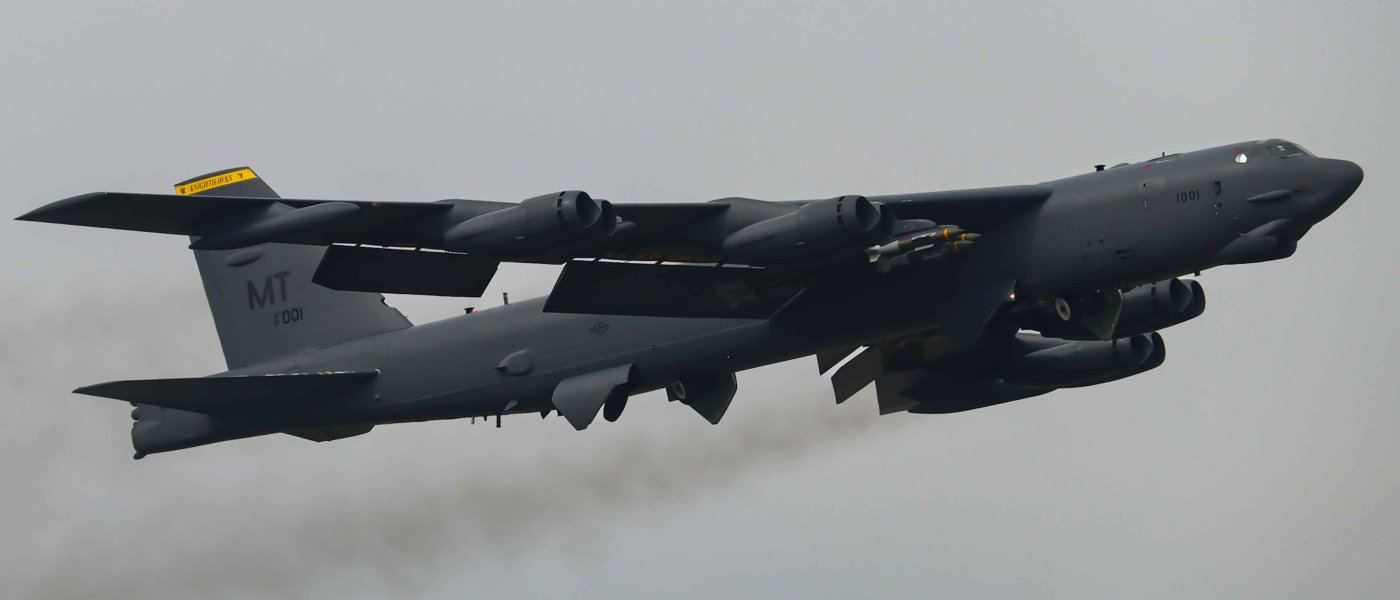 |
| Photo: Lee Hathaway |
"Iran wants to fight this war of attrition."
"Once the war got underway, they had two objectives. One was to survive, but the second was to outlast Trump."
"Make the U.S. feel so much pain through the economy, strikes on the energy infrastructure, that they don't do it again."
"What they're trying to ensure is that Israel doesn't go in and do a war like they do in Lebanon every six months."
Nate Swanson, former U.S. diplomat
"Mr. President, you are acting now to ensure future generations do not have to live under the threat of a nuclear-armed Iran."
"Unlike Iraq, this isn't a tie. This is not parity. This is is not chaos. This is success."
"Pure American success on plan."
U.S. Defense Secretary Pete Hegseth
"The American position was essentially Iranian surrender, and the Iranian response was essentially American surrender."
"The
American position was, 'Get rid of your nuclear program, missiles and
proxies', and the Iranian position was, 'Compensate us for our losses,
and get out of the Middle East'."
Ilan Goldenberg, Middle East policy adviser for the Biden administration
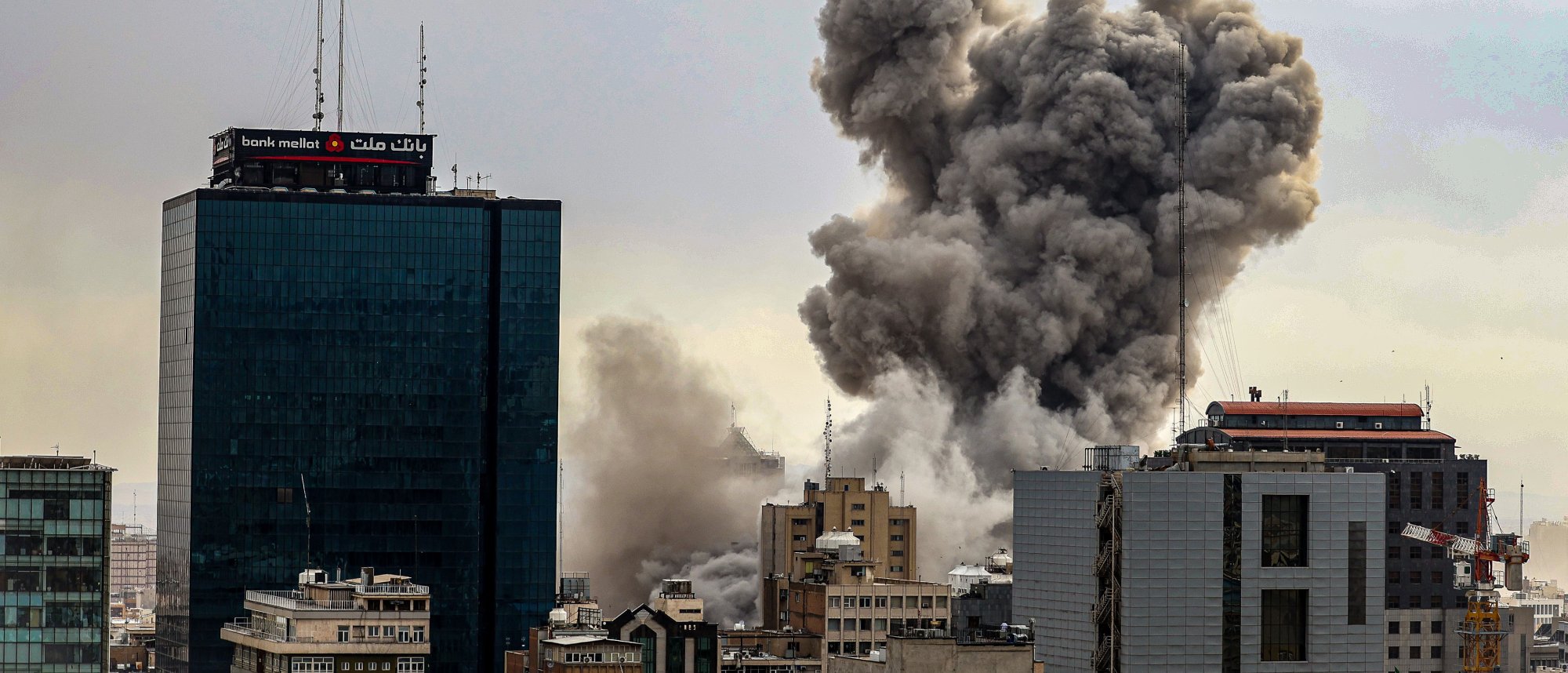 |
| War in Iran Center for Strategic and International Studies |
Four
weeks after the start of the February 28 aerial bombardment by U.S. and
Israeli warplanes over Iran, those left in positions of power to
represent the Islamic regime are no closer to surrendering to American
demands than they were prior to the conflict. This, despite that their
elite leaders both at the governing level and from the Islamic
Republican Guard Corps have been dispatched to hold counsel with the
Hidden Mahdi in Paradise, and a succession of lesser authority figures
stepping in to take their place, in a roundtable of continuing precision
strikes picks off each substitute.
The
situation appears now to be in the defiant hands of the IRGC and even
there it is questionable who has assumed the position of elite enforcer.
On the American side, the war has proven to be extremely unpopular
among American citizens. The U.S. legacy press is not in support of
ongoing hostilities, the European Union is tying itself into knots
trying to avoid Mr. Trump's accusations of elusive allies in a pinch,
and China and Russia are ever ready at the UN to vote down any sanctions
against their ally, Iran.
The
signature closure of the Strait of Hormuz has struck the world economy
and the stock market, an uncomfortable position for the Trump
administration to find itself glued to. The threat and danger to global
shipping targeted by Iran and the IRGC has thrown the shipment of oil,
gas and fertilizer off kilter. The U.S. is self-sufficient in energy
resources; it is Europe whose sourcing of energy revolves hugely around
Iran that will suffer; still none among them is prepared to enlist in
the U.S.-Israeli conflict in Iran.
The
Gulf States, most geographically vulnerable to a desperate Iran with
too many missiles and drones at its disposal, and receiving the blunt
end of Iranian revenge-spite, speak of defence, but mostly hang their
expectations on the U.S.-Israeli duo to rid the Middle East of the
simmering threat of the Islamic Republic's nuclear threat and its
terrorist proxies. They are anxious to see the job done and over with
and the threat they've been living under since 1979 dispensed with.
Pressing
help from the European and Asian nations to secure the Strait of
Hormuz, Secretary of State Marco Rubio met with as much success as did
the U.S. President. All are eager to do their part with one proviso: the
conflict must first come to an end. In five national surveys in a week
it was revealed that Americans oppose the war and fail to approve of its
handling by their president. This, though Americans support efforts to
stop Iran from nuclear weapons.
"We
will see where things lead, and if we can convince Iran that this is
the inflection point, with no good alternatives for them other than more
death and destruction -- we have strong signs that this is a
possibility -- and if a deal happens, it will be great for the country
of Iran, for the entire region and the world at large."
Steve Witkoff, U.S. peace envoy
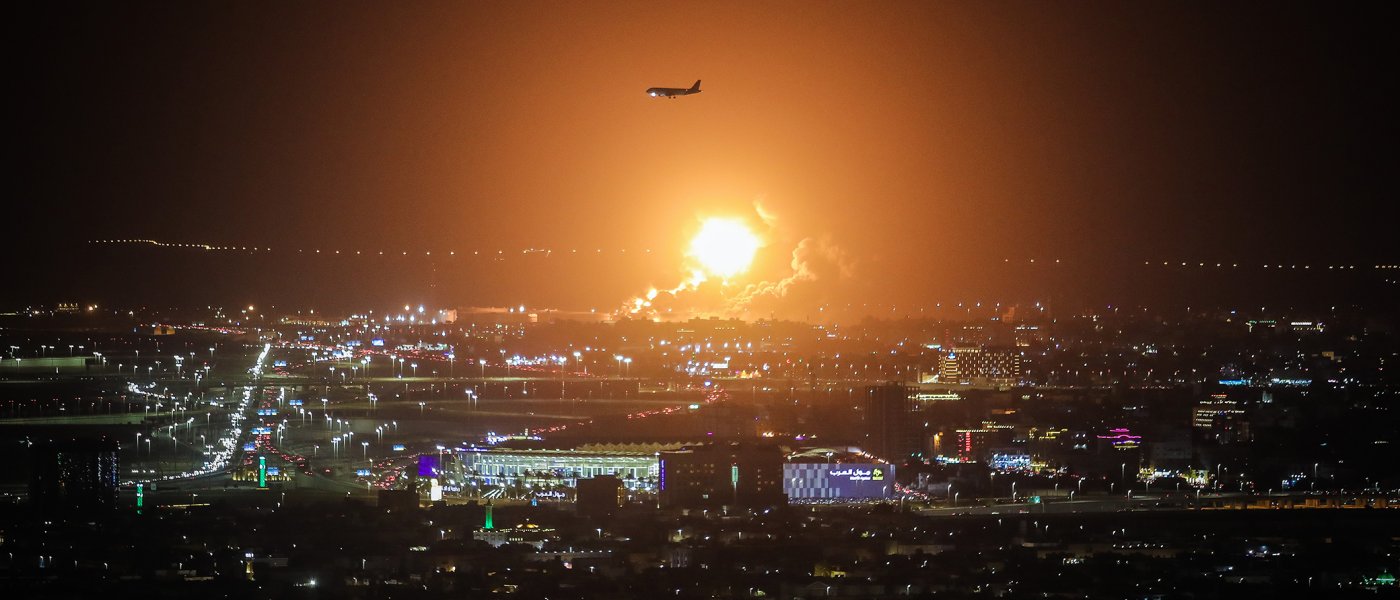 |
| Photo: Stringer/Anadolu Agency/Getty Images |
Labels: European Union, Gulf States Islamic
Republic of Iran, Islamic Republican Guard Corps, Strait of Hormuz, U.S.-Israel Aerial Conflict Over Iran
Peace? Of Course Peace!!!
"The
United States is the creator of NATO, its main sponsor. All the main
resources come from the U.S. -- money, military technology weapons,
ammunition, everything."
"And
in the new U.S. National Security Strategy, Russia is not named as an
enemy or a target. Yet the NATO secretary general is preparing for war
with us."
"What is that? Can't you read?"
Russian President Vladimir Putin
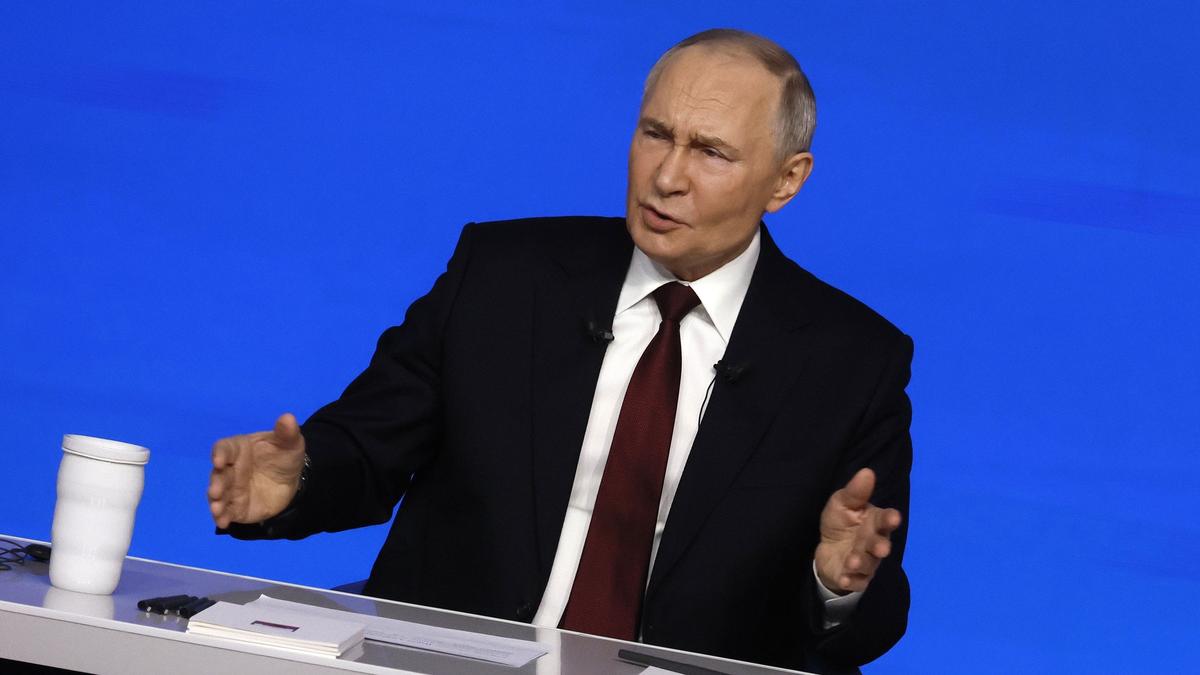 |
| Vladimir Putin during his annual Direct Line call-in show at Moscow’s
Gostiny Dvor, 19 December 2025. Photo: EPA / SERGEI ILNITSKY |
"The financial package for Ukraine has been finalized. Ukraine is granted a zero-interest loan."
"These funds are sufficient to cover the military and budgetary needs of Ukraine for the two years to come."
"If
Russia does not pay reparations we will -- in full accordance with
international law -- make use of Russian immobilized assets for paying
back the loan."
German Chancellor Friedrich Merz
"[The U.S. is trying to] figure out if we can nudge both sides to a common place."
"We understand that you're not going to have a deal unless both sides have to get."
"Both
sides will have to make concessions if you're going to have a deal.
You may not have a deal. We may not have a deal. It's unfortunate."
U.S. Secretary of State Marco Rubio
"The
key question [relating to the U.S.-proposed plan to end the 4-year war]
remains how the United States responds after consultation with the
Russians. At this point, I honestly don't know, but I will know later
today."
"This
[agreement between Ukraine and Portugal for joint production of
maritime drones] is one of the most promising areas of defence
co-operation. What matters now is delivering results, and all parts of
Europe must have sufficient capabilities to counter any threats."
Ukrainian President Volodymyr Zelenskyy
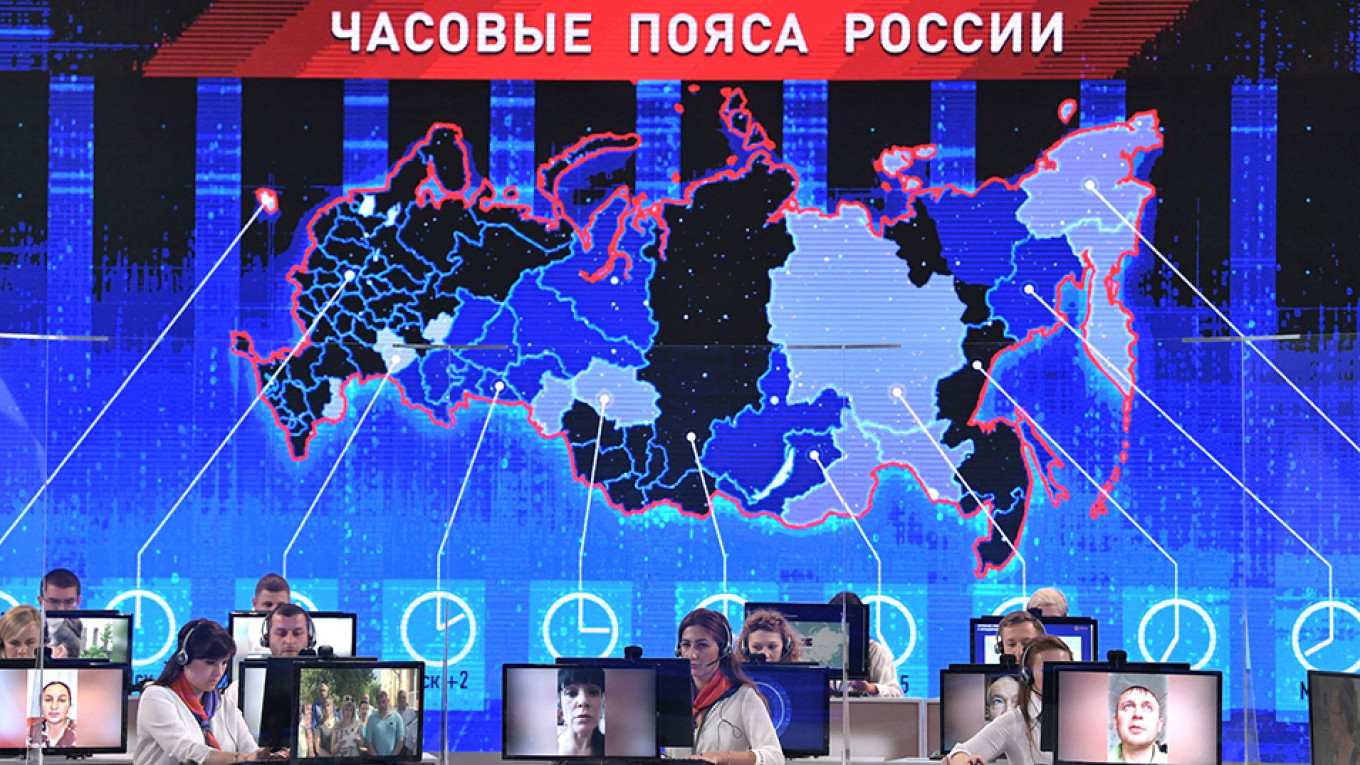 |
| Moscow Times |
According to the Russian Defence Ministry it struck unspecified "transport and storage infrastructure used by the Ukrainian armed forces"
as well as energy facilities supporting Kyiv's war effort. But then,
Ukrainian drones have hit a Russian oil rig, the military patrol ship
Okhotnik and other facilities as the ship patrolled the Caspian Sea near
an oil and gas production platform at the Filanovsky oil and gas field,
also hit, as well as a radar system in the Krasnosilske area of
Crimea.
Nothing,
however, stops Mr. Putin from sneering at Ukraine's presumably feeble
efforts at defence and offence, as, he claims, Russian forces are
clearly winning the war that Ukraine is responsible for starting and he,
Vladimir Putin, is anxious to put an end to. During the annual
question-and-answer availability session staged by the Kremlin, Mr.
Putin responded to many questions put to him. And in the process beamed
over the fact that U.S. President Trump had shunted aside America's
European allies in favour of Russia.
In
responding to journalists and the general public in Russia the Russian
president expressed his confidence on the trajectory of the Ukraine war
while denying any responsibility for the war's consequences in massive
human casualties, since it wasn't his fault at all, but rather that of
the West. Sneering at NATO secretary-general's assertion that Russia
might attack a NATO country within five years, pointing to the U.S.
National Security Strategy linking Russia to "strategic stability". As for the security document; it is "largely consistent with Russia's intentions".
 |
| "He can come back when he is ready for peace" Vladimir Zelensky and US President Donald Trump REUTERS/ Brian Snyder |
"When
I arrived in Anchorage, I said these would not be easy decisions for
us. But we agree to the compromises being 'proposed'. To say that we
reject anything is absolutely incorrect and has no basis."
"The
ball is entirely in the court of our opponents, so to speak, and, first
and foremost, the leaders of the Kyiv regime and their, in this case,
and above all, European sponsors."
President Vladimir Putin
It
is, he reiterated, Kyiv that is refusing to end the war, while Moscow
was prepared for peace with Ukraine and is willing to compromise to end
the conflict, while Ukrainian forces were retreating "in all directions". Terms suitable to Moscow are all that Russia is asking for to achieve peace. Terms eliminating "the root causes" of the conflict. Russia bears no responsibility for human war casualties "as we did not start that war".
While
having assured President Trump that Russia stood willing to compromise
in peace talks, Russia is also prepared to absorb more of Russia's "historical lands" from
Ukraine through military force if negotiations to end the war on
Russian terms failed. Those Russian terms are, he contends, completely
reasonable; the surrender of both Ukrainian territory in Russian hands,
and portions still held by Ukraine. Oh and by the way, Ukraine taking
steps to downsize its military and forego the weapons it holds to a
limited number.
Right:
no NATO presence in Ukraine as a guarantor of peace conditions upheld,
nor any future attempt by Ukraine to join NATO. As for reconstruction
costs associated with rehabilitating and rebuilding Ukraine, reparations
are of no concern to Russia; Europe can foot the bill. Europe's
decision to help fund Ukraine's continuation of its offensive saw EU
Council President Antonio Costa declaring: "We have a deal. Decision to provide 90 billion euros of support to Ukraine for 2026-27 approved. We committed, we delivered."
Belgium
continues to hold out on the EU's plan to use frozen Russian assets for
Ukraine's war effort and reconstruction. The International Monetary
Fund estimated 137 billion euros would be needed by Ukraine in 2026 and
2027. The 210 billion euros of Russian assets frozen mostly in Belgium
would fit the bill nicely. While Putin's ally, Hungarian Prime Minister
Viktor Orban who sees himself as a peacemaker declared:
"I would not like a European Union in War. To give money means war".
"Western
leaders created this situation themselves and continue fanning the
flames by saying they are preparing for war with Russia. [It is]
nonsense [that Russia wants a war with Europe]."
"I
have no doubt that you and I will witness new successes of our armed
forces, our troops on the contact line before the end of this year.
That's the plan."
President Vladimir Putin
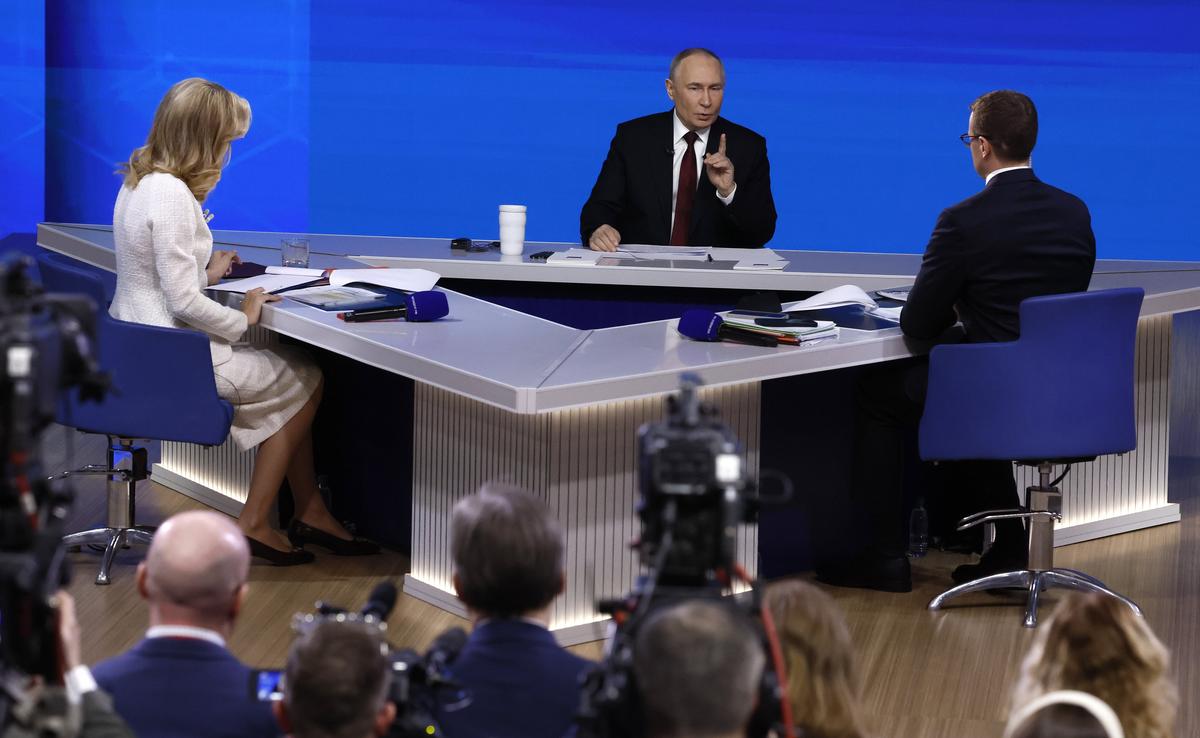
|
Putin answers questions as presenters Pavel Zarubin and Yekaterina Berezovskaya look on. Photo: EPA / SERGEI ILNITSKY |
Labels: 'Special Military Operation', Donald J. trump, European Union, NATO, Russian Invasion of Ukraine, Vladimir Putin, Volodymyr Zelenskyy
Abandoning Allies and Making Deals
"For
many countries outside the West, it has become a viable option to
forge strategic agreements with China rather than the United States."
"China
and Russia, together with other like-minded states, are seeking to
reduce Western -- and particularly U.S. -- global influence."
"At the same time, uncertainty has grown over how the United States will prioritize its resources in the future."
"This
gives regional powers greater room for manoeuvre, enabling them to
choose between the United States and China or to strike a balance
between the two."
"The
strategic importance of the Arctic is rising as the conflict between
Russia and the West intensifies, and the growing security and strategic
focus on the Arctic by the United States will further accelerate these
developments."
Danish Defense Intelligence Service report
 |
|
"The
goal of these Russian cyber and disinformation attacks is clear: It is
to divide society, stir up mistrust, provoke rejection, and weaken
confidence in democratic institutions."
"This
targeted manipulation of information is one of a wide range of
activities by Russia aimed at undermining confidence in democratic
institutions and processes in Germany."
German foreign ministry spokesperson Martin Giese
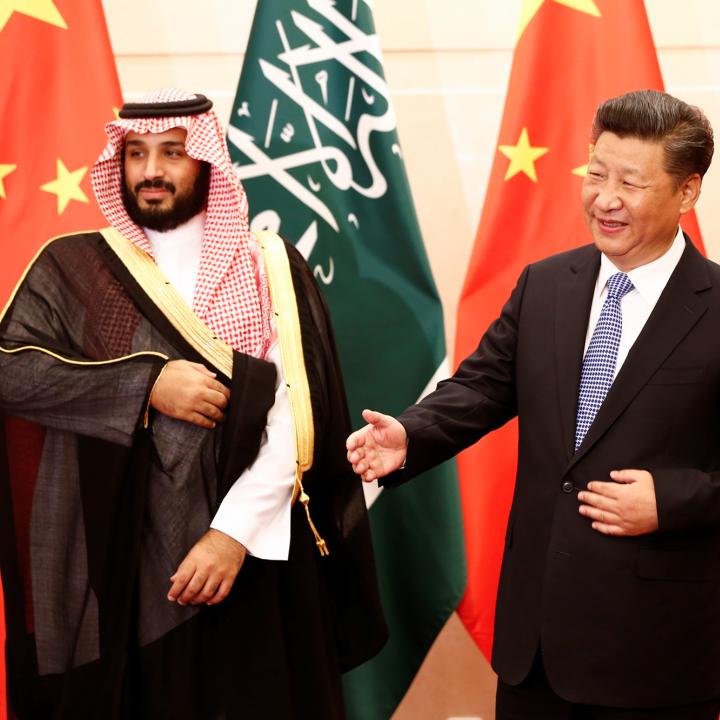
"Chinese Foreign Minister Wang Yi said on Sunday that China has always
regarded Saudi Arabia as a priority in its Middle East diplomacy and an
important partner in its global diplomatic strategy, and is willing to
work with Saudi Arabia to elevate bilateral ties to new heights."
"Wang Yi, also a member of the Political Bureau of the Communist Party
of China (CPC) Central Committee, made the remarks while co-chairing
the Fifth Meeting of the Political Sub-committee of the China-Saudi
Arabia High-level Joint Committee in Riyadh with Saudi Foreign Minister
Faisal bin Farhan Al Saud."
"Wang said that Saudi Arabia is an important member of the Arab and
Islamic worlds and an independent force in the process of
multipolarization."
"In recent years, under the strategic guidance of Chinese President Xi
Jinping and Saudi King Salman bin Abdulaziz Al Saud as well as Saudi
Crown Prince Mohammed bin Salman Al Saud, exchanges and cooperation
across all fields between the two countries have progressed in a sound
and steady manner, he said, adding China-Saudi relations have
increasingly gone beyond the bilateral dimension, taking on growing
strategic significance and global influence."
China Daily
 |
| Washington Institute for Near-East Policy |
Deliberately,
the Trump administration has put its allies on notice of the withdrawal
of the United States from its historical, post-WWII position as
protector of Western democratic interests globally. Threats that
surfaced with the potential to destabilize the security of Europe and
allies further abroad brought the U.S. front and centre in its role as
global policeman. The objective was always defence of democracy in the
global order and with it the central position of capitalism, the engine
that brought prosperity to Western economies.
When
the people of the great United States of America decided to bring a
dedicated businessman whose focus was always 'getting a deal' and
winning concessions by coercive means to strike that deal whether it be
real estate or tariffs, diplomatic tradition between allies was stood on
its head. Allies could be casually dumped but the ultimate goal of
mercantilism must always be pursued with the passion of amassing ever
greater wealth, and that achievement came at a cost to former allies, so
be it.
In
pursuit of that wealth and the prestige that accompanied it, the Trump
administration was more than willing to jettison its relations with
Europe and its North American partners, and if any took umbrage at
side-issues such as imperialist territorial gain, that was their
problem. In surrendering the position of leader of global alliances, the
United States forfeited the global esteem it had earned. Agitated,
discomfited allies, realizing their new vulnerability huddled for
support between themselves envisioning the plight of Ukraine under
Moscow's military heel becoming their own.
 |
| Vladimir Putin attending a meeting with Xi Jinping during the Russian delegation’s visit to China in 2024. Photo: Ministry of Transport of the Russian Federation |
And
so a report issued in Denmark asserts the reality facing Europe: that
the United States is asserting its will, threatening military force
against friend and foe alike. At the very time that China and Russia,
taking advantage of the monumental split they see between the U.S. and
its allies, recognize the opportunity to commit to their own, covert
schemes to further diminish Western global dominion, particularly that
of the United States.
Denmark
is particularly offended as a NATO and European Union member as well as
an ally of the United States to be facing a situation where President
Donald Trump has eyed the military advantages as well as mineral
deposits to be had in taking Greenland, nominally part of Denmark, at a
time when both Russia and China are themselves preparing to influence
and take possession of mineral deposits in the Arctic, and Russia has
not been shy about building military installations in an assertion of
sovereignty in disputed polar territories.
 |
Rising tensions in the resource-rich Arctic The
U.S. is monitoring military cooperation between Russia and China in the
resource-rich Arctic. ABC News |
"Several articles published in September 2025
revived alarmist positions on threats to Canada’s sovereignty. Their
authors paint a bleak picture of a Canada unable to control its Arctic
territory and facing aggressive China and Russia, which have great
ambitions for its territory."
"These grim scenarios include Russian
icebreakers sailing through the waters of the Arctic archipelago,
Chinese bases built without the knowledge of Canadian authorities, and
even an attack on the Canadian Arctic by the Russian military."
"The
problem is that this bleak picture is based on highly theoretical
scenarios and irrelevant observations. Worse still, it probably misses
the real issues, which lie both in the need for the Canadian government
to ensure a governmental presence in the North and to counter any
challenges to its sovereignty in the Beaufort Sea and the Northwest
Passage by the United States."
Network for Strategic Alliances, Department of National Defense of Canada
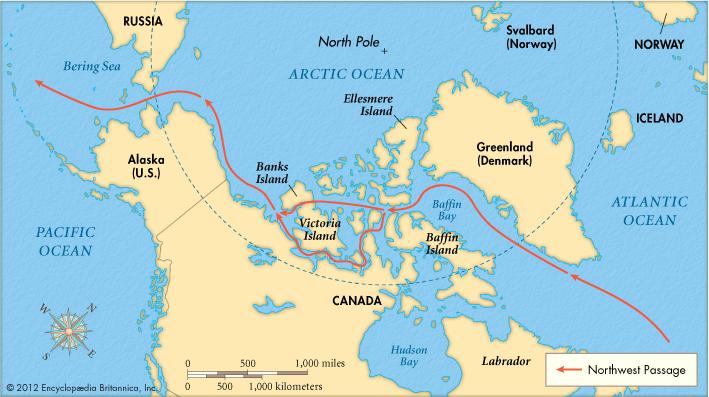 |
| Northwest Passage, historical sea passage of the North American
continent. It represents centuries of effort to find a route westward
from the Atlantic Ocean to the Pacific Ocean through the Arctic
Archipelago of what became Canada. |
Labels: Canada, European Union, Geopolitics NATO, U.S. President Donald J. Trump, United States
The New World Order
"Now it's clear, Vance's speech in Munich and the many tweets of President Trump have become official doctrine of the United States, and we must act accordingly."
"[Europe must understand that postwar alliances] have changed [ and to be read to] protect ourselves not only against our adversaries, but also against the allies who challenge us."
"What we cannot accept is this threat of interference in Europe's political life."
"The United States cannot replace European citizens in choosing which are the right parties and which are the wrong parties."
European Council President Antonio Costa
"There is a growing recognition that their strategy did not work."
"It's becoming clearer that, obviously, it's expressed by the Trump administration, but there seems to be a bigger MAGA sort of world view in which Europe is identified as Public Enemy No. 1."
Nathalie Tocci, director, Institute for International Affairs, Rome
"On the question of Europe and President
Trump's comments, what I see is a strong Europe, united behind Ukraine
and united behind our longstanding values of freedom and democracy."
"And I will always stand up for those values and those freedoms."
British Prime Minister Keir Starmer
 |
| U.S. President Donald Trump shakes hands with Russian President Vladimir
Putin before a joint news conference following their meeting at Joint
Base Elmendorf-Richardson in Anchorage, Alaska, U.S., August 15, 2025. (Sputnik/Gavriil Grigorov/Pool via REUTERS ) |
Continental Europe has been losing share of global GDP—down from 25 percent
in 1990 to 14 percent today—partly owing to national and transnational regulations
that undermine creativity and industriousness.
But this economic decline is eclipsed by the real and more stark prospect of
civilizational erasure. The larger issues facing Europe include activities of the
European Union and other transnational bodies that undermine political liberty and
sovereignty, migration policies that are transforming the continent and creating
strife, censorship of free speech and suppression of political opposition, cratering
birthrates, and loss of national identities and self-confidence.
Should present trends continue, the continent will be unrecognizable in 20 years or
less. As such, it is far from obvious whether certain European countries will have
economies and militaries strong enough to remain reliable allies. Many of these
nations are currently doubling down on their present path. We want Europe to
remain European, to regain its civilizational self-confidence, and to abandon its
failed focus on regulatory suffocation.
This lack of self-confidence is most evident in Europe’s relationship with Russia.
European allies enjoy a significant hard power advantage over Russia by almost
every measure, save nuclear weapons. As a result of Russia’s war in Ukraine,
European relations with Russia are now deeply attenuated, and many Europeans
regard Russia as an existential threat. Managing European relations with Russia
will require significant U.S. diplomatic engagement, both to reestablish conditions
of strategic stability across the Eurasian landmass, and to mitigate the risk of
conflict between Russia and European states.
It is a core interest of the United States to negotiate an expeditious cessation of
hostilities in Ukraine, in order to stabilize European economies, prevent
unintended escalation or expansion of the war, and reestablish strategic stability
with Russia, as well as to enable the post-hostilities reconstruction of Ukraine to
enable its survival as a viable state.
National Security Strategy of the United States of America, November 2025
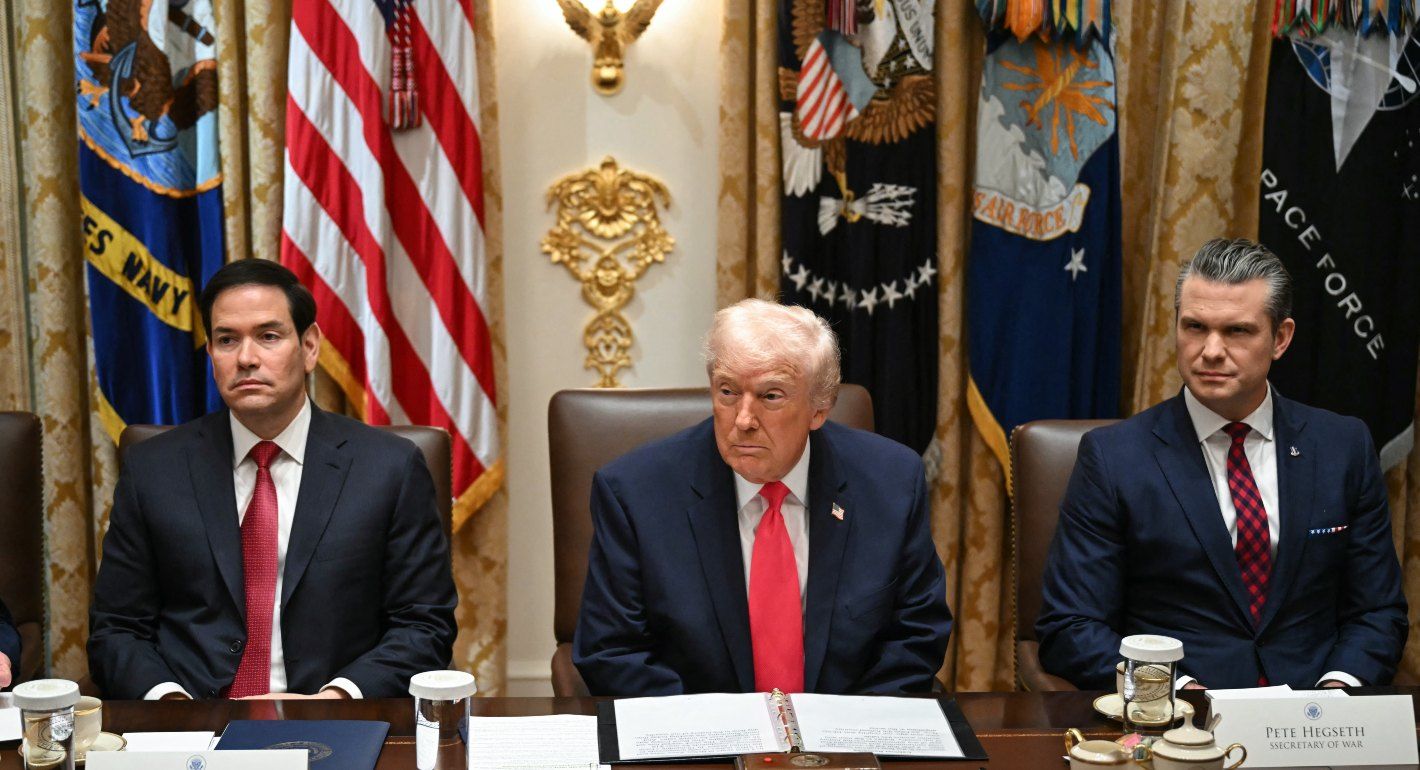
Across the pond, European leaders are furiously debating the new American national security strategy, in particular that portion that focuses on Europe and consigns it to a fast-fade into past history, berating it for not paying sufficient attention to its immigration policies and positing that Europe is on its way to losing all it holds dear, its history, culture, values. Yet, since America is so besotted with Europe it still hopes it can 'regain its civilizational self-confidence', so there is yet hope for poor, degraded, fumbling and weak Europe.
The offending document, according to European officials, has made formal policy from the Trump administration's critiques of European democracies. In very particular, Europe has been no help to the White House in its selfless bid to stop the war in Ukraine. A Ukraine, by Mr. Trump's reckoning that deserves to forfeit great chunks of its territory because it was too weak to defend itself from the territorial imperative of a strong neighbour, attached to a man whom Mr. Trump admires.
If Europe, much less the world at large, does not yet know that Donald J. Trump, president of the great United States of America has a keen admiration for strongmen, then perhaps there is no hope for any nation or nations that haven't yet grasped that they must counter a force of the nature of a man who sees much to admire in autocrats, dictators, even terrorists. Say, for example, President Trump's accommodation with such global menaces as Russia's Vladimir Putin, North Korea's Kim Jong Un, Turkey's Recep Tayyip Erdogan, Qatar's Tamim bin Hamad Al Thani and Syria's new president Ahmed al-Sharaa (a 'nice' young man).
Alluding disparagingly to the presence of malign Middle East actors in Europe who have immigrated, migrated, refugee'd themselves throughout France, Britain and Germany to dilute and imperil by sheer force of numbers in their genteel jihad of citizen-occupation as the death knell of Europe proceeds, President Trump conveniently overlooks the very fact that the United States of America has a more-than ample presence of the same in a stealth yet observable quotient, where even some infamously virulent anti-American Somalis and Palestinians have been voted into Congress.
It is the stinging rejection of European powers to the U.S. 'peace plan' for Ukraine that generates much of the current umbrage by the American president to Europe, which has made its way into the national security strategy, alongside the disregard that exudes from some key members of the Trump administration who have little but contempt for their European counterparts. Understandably, Ukraine rejects outright the brilliant plan brought to him courtesy of Mr. Trump, to demean himself and his nation by handing over territory to a rapacious enemy.
Strangely enough, Europe, fearing Vladimir Putin's greedy eye, has no wish to be party to rewarding him for his invasion of a neighbour, by supporting the 'peace plan', which is, after all, a complete repudiation of Ukraine's human rights and international right to sovereign protection. Downplaying NATO, and forcing the defence alliance to exclude Ukraine in the future, sternly advising that there be no NATO presence to guarantee a post-peace security for Ukraine, is in actual fact, Vladimir Putin's terms to end its vicious war, along with an insistence on Ukraine agreeing on reducing its military and armaments.
Then there are strictly financial/economic considerations; Europe has no 'right' to fine powerful and intrusive social media giants; after all, who do they think they are to interfere with American reach and profit? The American technology industry is answerable only to the United States, not to the European Union, and if Europe doesn't believe Mr. Trump, then Elon Musk's voice should surely make them tremble as he recommends their abolition.
Europe, still in a state of disbelief over Vice-President JD Vance's February speech at the Munich Security Conference -- accusing governments in Europe of censoring political opponents, the far right in particular through the restriction of hate speech, and they created 'horrors' through the acceptance of too many immigrants -- recognize that earlier attack as a forerunner of the new national security document. Injury after penalty, following on the surprise imposition of punitive tariffs in trade with the U.S. A U.S. at war with its own Democratic opposition party, fully invested itself in far-right ideology.
 |
| British Prime Minister Keir Starmer, Ukrainian President Volodymyr
Zelenskyy, French President Emmanuel Macron and German Chancellor
Friedrich Merz chat outside 10 Downing Street following a meeting, in
London on Dec. 8. (Adrian Dennis/Pool/Reuters) |
"[The U.S. strategy describes the continent as] the only world region apparently in which democracy is under threat [and] buys into a narrative [on Russia, which has blamed Europeans for its war in Ukraine]."
"The whole thing is completely, I mean, off the bender."
Nathalie Tocci
Labels: Aggression, Assaulting Europe, European Union, National Security Strategy of the United States of America, Trade, U.S. President Donald Trump, United States of America
Russian European Airspace Violations
"The repeated violations of our airspace are unacceptable. The message is clear: Russia is testing the European Union and NATO."
"And our response must be firm, united and immediate."
"At today's meeting, we agreed to move from concept to concrete actions."
"[Ministers
backed a broad plan to bolster the EU's eastern defences; the]
immediate priority [should be a] drone wall, with advanced detection,
tracking, and interception capabilities."
EU defence commissioner Andrius Kubilius
"[Ukraine is] ready to participate [in the project]."
"The drone wall will create a fundamentally new defence ecosystem in Europe, of which Ukraine is ready to be a part."
Ukraine's defence minister Denys Shmyhal
 |
| A mobile radar installation
is seen at the Danish military site on Amager, Pionegaarden, near the
village of Dragoer and on the coast of Oresund, the sea between Denmark
and Sweden, on Friday, Sept. 26, 2025. (Steven Knap/Ritzau Scanpix via
AP) |
The urgent need to create a "wall" of
anti-drone defences following airspace violations by Russia, was
unanimously agreed to by European Union countries on Friday. The threat
that was made glaringly obvious this past week when unidentified drones
gave Denmark and Norway little option but to close down some of their
airports gave sharp focus to the extent and breadth of the threat facing
EU and NATO-member nations.
Online
discussions were held by the EU defence commissioner with ministers
from ten EU states located mostly along the bloc's eastern border.
Ukraine, though not a member of the EU, was invited to take part in the
discussions, given its proven capabilities to detect and disarm the
missiles in their airspace by shooting down Russian drone swarms.
The
meeting participants agreed that focus would initially be on the
development of a network of sensors to assist in better detection of
such threatening incursions', feasibly on line within a year. Building
full interception capabilities would take longer in the goal of
intercepting the drones. Ursula von der Leyen, EU chief, in a keynote
speech this month produced the first call for a "drone wall", mere hours following a NATO shoot-down of Russian drones in Poland.
 |
An engineer
watches a Ukrainian-made quadcopter drone at an undisclosed location in
Ukraine, June 12, 2025. (AP Photo/Efrem Lukatsky) |
NATO's
initial response had little option given its unpreparedness, other than
to use top-of-the-range fighter jets to fire expensive missiles with an
aim of shooting down a handful of cheap Russian drones, emphasizing
gaps in the alliance's arsenal for addressing such airborne threats.
Since then, the alliance conveyed additional hardware to its eastern
flank, yet the sort of low-cost capabilities of fending off Russian
attack drones lack Ukraine's experience.
The
proposal for the "drone wall" represents a portion of the broader
impetus by Europe to support an addition to its defences in recognition
of the threats emanating from Russia. The program thus considered
should be regarded as a new flagship defence project being worked on by
the bloc in its response to Moscow's growing belligerence.
 |
| Ukrainian soldiers prepare
to launch an Avenger UAV drone in Ukraine’s Kharkiv region, Wednesday,
Sept. 24, 2025. ( AP Photo/Yevhen Titov) |
Labels: Challenging Europe's Air Spaces, Eastern Europe, European Union, NATO, Russian Drone Swarms, Russian Invasion of Ukraine, Wider Russian Threat
Europe's Russian Threat
"Russia is already a direct threat to the European Union."
"[Moscow
is spending more on defence than the EU's 27 member states combined,
and this year will invest more on defence than [on] its own health care,
education and social policy combined."
"This
is a long-term plan for a long-term aggression. You don't spend that
much on [the] military, if you do not plan to use it."
"Europe is under attack and our continent sits in a world becoming more dangerous."
"Today, against NATO and the EU, Russia doesn’t stand a chance. But we must stick together."
"When NATO leaders meet next week, keeping unity in the alliance is as much a priority as spending more on defence."
EU Foreign Policy chief Kaja Kallas
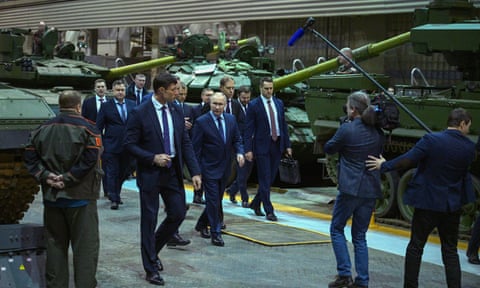 |
| Vladimir Putin during a visit to the Urakvagizavid factory, Russia's largest producer of tanks: Photo: Sputnik/Kremlin Pool/EPA |
Acts
of sabotage and cyberattacks by Russia toward members of the European
Union have not endeared them to Moscow in their studied opinion of the
Kremlin's plans post-Ukraine war. That Russian President Vladimir Putin
has overseen a massive military spending spree leads to the conclusion
that relations with Russia stand the potential of degrading even further
than merely criticizing it for invading and annexing parts of
territorial Ukraine. That, if in the final analysis, Moscow achieves at
least a part of its territorial aggression in Ukraine, it will continue
to cast its malevolent eye on its squirming 'near abroad' seems
inevitable.
There
is a fairly general consensus among most EU members that Mr. Putin has
plans for future use of his armed forces. Its ongoing airspace
violations, provocative military exercises and energy grid attacks, on
pipelines and undersea cables, represent in their opinion a testing of
the waters, so to speak, as well as a deliberate move to deliver a
message for the future. No one in Europe, they feel, can feel securely
immune from Putin's roving eye and his territorial ambitions to make
Greater Russia even greater at their expense.
According
to NATO Secretary-General Mark Rutte, Russia is producing weapons and
ammunition in three months in a quantity and of technical efficiency
rivalling the entire output of the 32 allies combined can produce in a
year. Russia, he believes, could be in a position to launch attacks on
NATO allies come the end of the decade. Europe is becoming increasingly
alarmed over the potential of Russia's capacity for mischief.
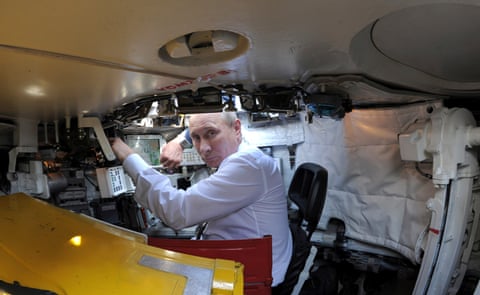 |
| Vladimir Putin sits in a T-90AM tank at the Russian Expo Arms in the Urals city of Nizhniy Tagil in 2011. Photograph: Alexei Druzhinin/AP |
Even
to the extent that Russia might wish to test the organization's Article
5 security guarantee, the assurance to its members that should any one
of their members come under attack, NATO would act as one in response;
the entire 32-member alliance would be committed to militarily defend
any one of their members coming under a military attack by an outside
source. This is a pact that is taken seriously, presumably acting as a
clear deterrent to any member-state of the alliance coming under attack
from malign forces.
NATO
allies officially recognized that significant and cumulative
cyberattacks could be viewed as representing a situation analogous to an
armed attack, and as such could lead to an invocation of Article 5.
Although that recognition of a prevailing situation was formally
accepted in 2021, those same attacks have continued, with the alliance
making no move to counteract them collectively. A malign actor
perceiving sound and fury but no reaction could very well make their own
conclusions based on probing the intent and analyzing the lack of
response.
Europe
finds itself somewhat rudderless of late, with new realities brought to
the fore under the Trump administration in the United States, their
foremost sponsor for decades. Reliance on the steady commitment of the
United States to guide and direct the alliance has come under the sharp
new lens of an altered political environment, leaving Europe adrift in
indecision, a quandary propelling it to commit to greater responsibility
for the outcomes of its relations with outlier nations.
Europe
feels more vulnerable without the assured military canopy of the United
States under the Trump administration that blows hot and cold with
conflicting positions and alarming statements issuing from the American
president. It is learning to fend for itself. Its support for Ukraine in
its battle against predatory Russia remains firm, albeit weary; a
general feeling of reduced assurance in the precarious position it now
finds itself in, makes the alliance both nervous and defiant.
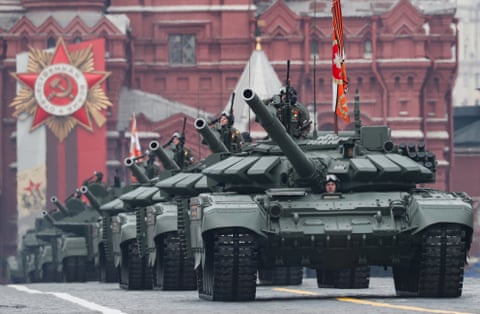 |
| Military hardware in Red Square during Russia’s annual Victory Day military parade in May 2022. Photograph: Yuri Kochetkov/EPA |
"We are very certain, and we have intelligence evidence for this, that Ukraine is just a step on the path to the West."
"[Russia's
goal is to expand its sphere of influence westward]. They want to
catapult NATO back to the state it was in at the end of the 1990s."
"They want to kick America out of Europe, and they'll use any means to achieve that."
Bruno Kahl, German's Foreign Intelligence Service chief
Labels: European Union, NATO, Russia's Endgame, Russian Invasion of Ukraine, Russian Military Buildup, Russian President Vladimir Putin
U.S. President Donald Trump's Trade War With Canada
"All gloves are off."
"Canada
is being hit hard from its historically strongest ally, and it may be
politically expedient to target individuals like Musk who garner
outsized influence over the U.S. administration."
James Hinton, senior fellow, Centre for International Governance Innovation
"Provinces would need to heavily subsidize new infrastructure to replace Starlink, which could take years to implement."
"Legally,
targeting Musk's companies could be seen as overreach and Musk could
sue in Canadian or U.S. courts to challenge such measures."
"[A bull's-eye on Musk's back also] risks looking like a personal vendetta rather than a rational economic response."
Andreas Schotter, professor of International business, University of Western Ontario Ivey School of Business
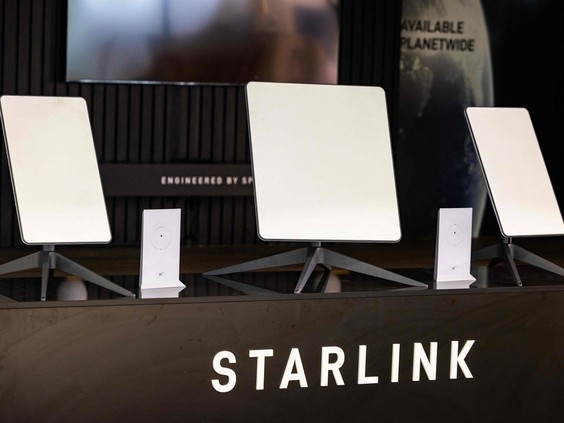 |
| Starlink
satellite antennas are seen at the Internationale Funkausstellung
(IFA), the international trade show for consumer electronics and home
appliances, on August 31, 2023. Photo by ODD ANDERSEN /Getty |
As
it begins to appear more and more inevitable that Donald Trump is
prepared to launch another painful trade war with Canada, Mexico, China
and the European Union in his determination to, in his opinion, put a
stop to other countries' reliance on America's generosity, helping them
to fund their own economic advance to the detriment of that of the
United States, former allies and trade partners are mulling their
options in an effort to stop the roller-coaster destruction of the
global economy.
Economists
everywhere agree that a substantial trade war such as what Mr. Trump is
gearing up for will have the end effect of harming the world's economy,
as it plays havoc in targeted nations' economies, bringing many to the
point of inflationary stress, certain to impact heavily on national
populations' quality of life. There is also the recognition that the
United States itself will not come away free from the impact of such a
draconian move as Mr. Trump contemplates.
In
Canada, government authorities at every level are making plans and
consulting with one another in a combined effort to produce a protective
shield as much as possible to avoid the harm certain to arise when a
commanding country whose industries are enmeshed with those of the very
countries being targeted will produce harmful effects that will bring
economies to their knees. In Ontario, Canada's wealthiest province, a
plan is afoot to target Elon Musk in recognition of his influence with
the Trump White House.
Ontario
Premier Doug Ford announced his intention to begin the process by
"ripping up" the province's $100 million contract with Starlink, Elon
Musk's satellite internet provide operated by aerospace company Space
Exploration Technologies Corp. Signed last November, the deal was on
tap to provide internet access for Canadians resident in rural
communities. "Ontario won't do business with people hellbent on destroying our economy", blustered Premier Ford, leading other premiers to scrutinize their own Starlink contracts.
 |
| Ontario Progressive Conservative Leader Doug Ford holds a news
conference in Etobicoke on Feb. 3, 2025. Later Ford said, with the U.S.
pausing tariffs, Ontario will also pause its retaliatory measures. (Evan Mitsui/CBC) |
A
situation that elicited a shrug from Mr. Musk who responded to the
Premier's X warning statement with a two-word "Oh well". This type of
criticism will be no surprise to a man who has aligned himself so
intimately with the Trump administration, taking on the role of
efficiency czar to a President whose unexpected turn against his U.S.
allies has drawn surprise and resentment from his international
colleagues.
Emmett
Macfarlane, political science professor at University of Waterloo in
Ontario, approved of the move to send a powerful message to Musk. "Appeasement does little to stop a bully. We should exercise our powers to punch the bully (metaphorically) in the nose", he said in support of the Starlink cancellation threat.
Aside
from the Starlink contract, there is the issue of Musk companies in
operation across Canada; Tesla alone operates 32 stores, Canada's most
popular electric vehicle brand. Should a 100 percent tariff be slapped
on Tesla vehicles the purchase price would be pushed from its current
$56,000 tab into a sphere most electric vehicle buyers would consider
hands-off.
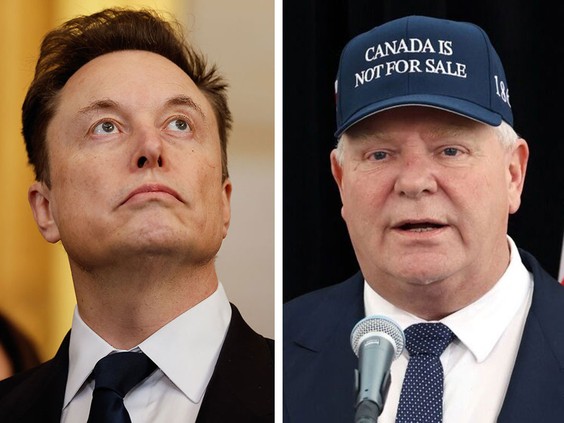 |
| Doug Ford, right, says Ontario is ending its contract with Starlink, the satellite company controlled by Elon Musk, left. Photo by Getty Images/The Canadian Press |
"A $100 million contract when he's worth [over] $400 billion -- this is just a flea on his side."
"If
we want to truly irritate the Americans, we need to move beyond
thinking about what kind of ketchup we buy and think of ways of hitting
their [digital] service providers without unduly harming Canadian
consumers."
Daniel
Trefler, trade economist, Canada research chair in competitiveness and
prosperity, Rotman School of Management at University of Toronto
Labels: Canada, China, Elon Musk, European Union, Mexico, Starlink, Tesla, Threat of Trade Wars, U.S. President Donald Trump


