Fired for Cause, not Discriminatory
"When he used his title in a letter supporting a friend's, client's, or potential client's immigration application, [Kalisa] did so in an effort to increase the chances that it would be approved.""If it was approved, and the client or potential client became able to travel to Canada to view properties, [Kalisa] could gain a personal and business advantage, whether in the short or long term."It seems unlikely to me that that trend would continue for 13 years ... if the grievor was merely confirming to those concerned that their applications were being processed.""I find that it is more likely than not that he shared additional information not available to the public about the status of the applications in question."Labour Tribunal
 |
| Photo: Bohao Zhao |
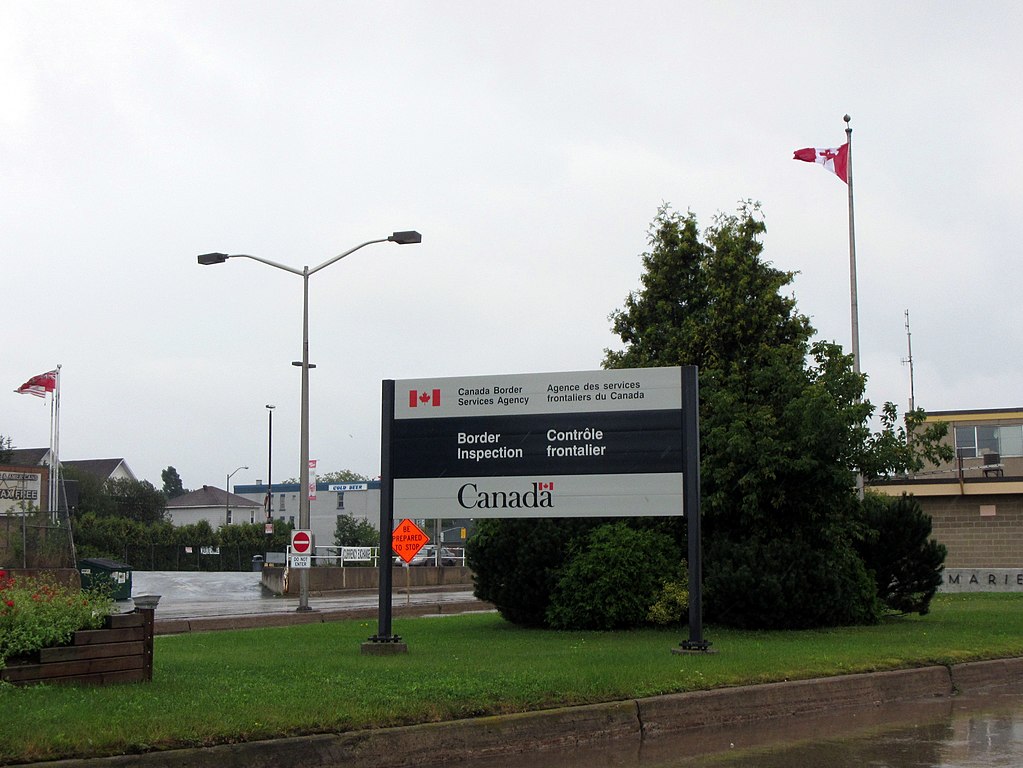
A recently published online February decision of the federal labour tribunal confirmed the firing in 2017 of a longtime Canada Border Services Agency employee, while Placide Kalisa, who was contesting his dismissal, characterized it as discriminatory, given his ethnicity. He plans to contest his firing confirmation by filing discrimination lawsuits against the CBSA and his former union which had refused to represent his grievance against his firing.
Placide
Kalisa was found, for 13 years of his employment with the federal
border services, to have accessed government databases improperly,
passing confidential information on to immigration applicants, among
them some who would become his clients as an after-work real estate
agent. Kalisa was a senior program officer, his job was to recommend
whether the agency could safely remove inadmissible foreign nationals to
certain countries.
Deeply
connected to the Rwandan community in Canada, Kalisa had emigrated
decades earlier from Rwanda, and worked as a part-time real estate agent
and manager. The tribunal had found that Kalisa had committed dozens pf
"worrisome" unauthorized searches of sensitive CBSA and Immigration,
Refugees and Citizenship Canada databases from 2003 to his suspension in
2016. Some of those who benefited from his illegal intervention later
became his real estate clients.
 |
| Canada Border Services Agency patch |
In
the space of two months, Kalisa had searched an IRCC database on 32
occasions after a Rwandan identified in the decision as "A.K." contacted
him to ask why it was that his visa application had been denied. Once
he confirmed that A.K.'s background cleared any suspicion of having been
involved in the 1994 genocide in Rwanda, Kalisa undertook an invitation
letter for the man and his spouse, asking a colleague to sign in his
stead.
Kalisa
was aware that A.K.'s purpose in coming to Canada was to acquire a
condominium, and his invitation letter would support the visa applicant
persuasively. Indeed, Kalisa had admitted he had written invitation
letters and had conducted database searches for some seven individuals
at the very least; each letter identified him as a CBSA employee which
his agency title made clear.
While
Kalisa denied wrongdoing throughout the grievance process, the tribunal
dismissed his explanations for his actions, terming his testimony "implausible or unpersuasive".
Kalisa, who required a top-secret security clearance for his CBSA work,
had somehow forgotten to inform his employer that one of his friends
happened to be a suspected criminal. The Rwandan embassy had given
Kalisa a list of suspected war criminals with his friend's name on it.
 |
| Placide Kalisa, Realtor |
Because
Kalisa said he was certain his friend was not a war criminal, he failed
to disclose his relationship, he explained to an unimpressed tribunal. "It
was not for [Kalisa] to decide whether the embassy was right or wrong
to include D.N.'s name on a list of suspected war criminals ... He was
obligated to inform his manager of his association with D.N. He did not", the tribunal wrote.
A
series of trips that Kalisa took to Rwanda booked by D.N. led the
Canadian Security Intelligence Service to begin an investigation that
motivated CBSA to look into the work activities of its employee, in
2014. Two years on, CBSA reviewed Kalisa's security clearance, and his
unauthorized searches in CBSA and IRCC databases were revealed, leading
to his suspension and finally, his firing.
"Since 2015, database usage -- including all adds/moves/changes/deletes -- are captured, logged, and stored to a repository which is accessible for internal auditing functions.""Any new or updated systems are required to record to this system for auditing purposes."Canada Border Services Agency spokesperson Rebecca Purdy
Labels: Canada Border Services Agency, CBSA Employee Placide Kalisa, Databases, Firing, Grievance, Illegal Searches, Immigration, Labour Tribunal, Rawandan Community, Refugees and Citizenship Canada
posted by Pieface @ Thursday, April 23, 2026


<< Home