The Intransigent, Defiant, Deadly Islamic Republic
"They asked for a time out [from military action]. They wanted to go to the funeral of Khamenei. And I said, ‘Give it to them.’ And they started shooting missiles. I mean, it was the craziest thing.""I don’t want to deal with them anymore. They’re scum. You know what scum is? They’re scum. They’re sick people. They’re led by sick people and they’re vicious, violent people. And if they had a nuclear weapon, they’d use it. As far as I’m concerned, it’s over.""They’re liars. If I make a deal with them, we have a deal. And he [the Iranian negotiator] goes out, he talks. We make a deal, everyone’s agreed: no nuclear weapon. We make a deal, they [the Iranian delegation] go outside, talk to the press, and they say, ‘We never even talked about it.’ There’s something wrong with them. They’re cuckoo. As far as I’m concerned, it’s over."U.S. President Donald Trump

On
again, off again. Decisions made spontaneously reflecting an impulsive
of-the-moment thought process, leavened with emotional irritation. An
incendiary situation whose outcome is vital to the well-being not only
of the population of the Islamic Republic who have suffered since 1979
under the theocratic rule of a totalitarian state imposing its will,
meting out imprisonment, torture and death to all who oppose it. And to
the larger community inhabiting the Middle East, as the source of
inciting to terrorism through sponsorship of select militias whose
formation is vital to the regime's agenda of conquest where the al-Quds
branch of the Islamic Republican Guard Corps recruited, trained, armed
and tasked them as proxy militias to carry out its death-cult orders.
From
Hezbollah to Hamas to Palestinian Islamic Jihad and Iraqi Shia militias
all loyal to the regime, the noose tightened not only on Israel, marked
for annihilation by the Ayatollahs, but Sunni-majority countries in the
region as well; not for annihilation but the conquest of domination.
Its weapons' focus as a means to assert its dominance through
technological means with missiles and drones, and aspirationally, a
nuclear program to allow the Iranian regime to wield the most fearful of
all weapons to achieve its goals.
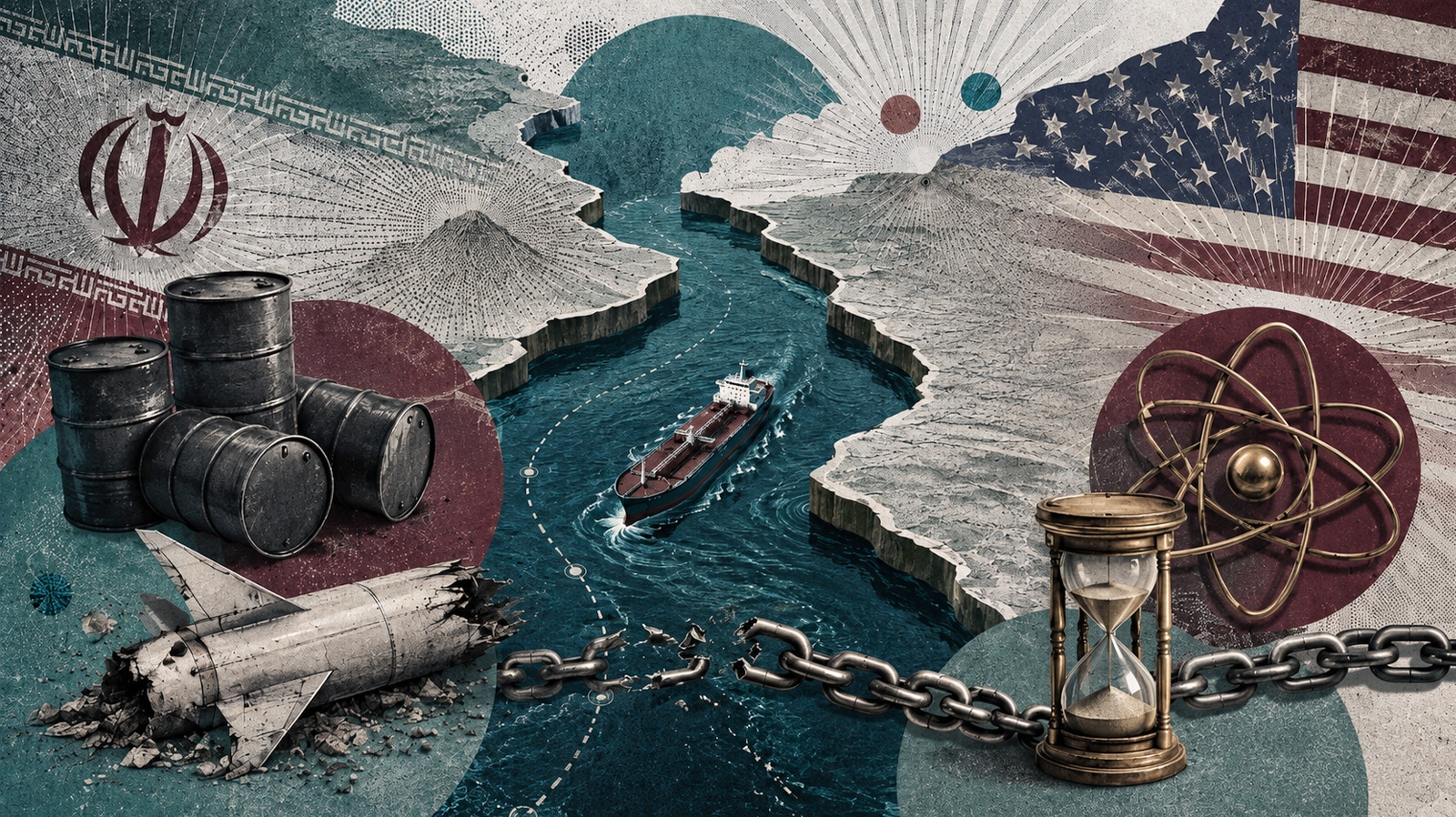
Upended
briefly and temporarily when joint aerial strikes by Israel and the
United States complicated those plans by assassinating through pinpoint,
intelligence-gathered strikes, military commanders, religious figures,
including the most senior cleric whose direct messaging from above
moved the strings of the dread and powerful IRGC puppets to action along
with nuclear scientists, and strategic strikes on nuclear sites and
weapons depots. Any other country would reel from the strength of those
blows, but not Iran.
It
had only months earlier destroyed the lives of thousands of its
disaffected people whose effrontery in massing by the tens of thousands
in street demonstrations throughout the country to demand an end to the
regime, and the right to live as free people, enjoying liberty as a
human right, refusing the straitjackets of passivity in fear of
consequences. Their punishment by state police, the Basij and the
Iranian military was swift, decisive and deadly. Battling
military-to-military of two well-armed attacking countries required
another tack; the manipulation of circumstances and in this case cutting
off global shipping to inflict pain internationally.
"They want recognition of Iran basically having control of the Strait of Hormuz. That is their bottom line. That is their leverage with the United States and the West that has replaced earlier enriching higher and higher levels of uranium.""Fundamentally, they think time is on their side. They can suffer more than the Americans and the Gulf and that's what they're gambling on."Alex Vatanka, senior fellow, Middle East Institute
The
Strait of Hormuz became the winning move for Iran in this chess game of
a war. Following the February 28-initiated strikes on Iran, since April
8, President Trump declared one ceasefire initiative with Iran after
another as oil prices gushed skyward and Washington grappled with the
dilemma of lifting itself out of a quagmire it had no stomach to pursue,
in a war that proved hugely unpopular with American voters. This was a
president who had given the impression that he meant what he said; no
more U.S. troops involved in endless MidEast wars.
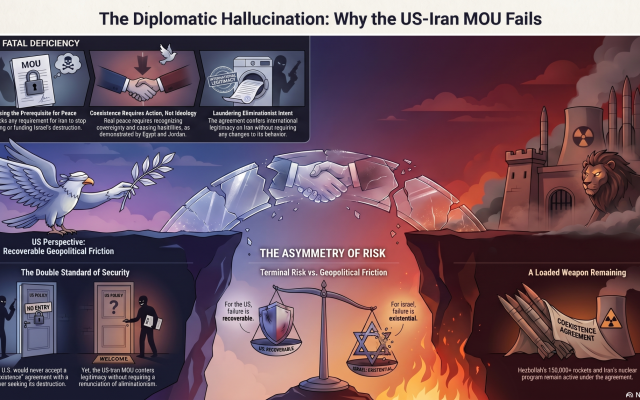
Instead,
Mr. Trump had to focus on the measure that Iran took to disrupt world
energy supplies, along with fertilizer and other critical supplies to a
dependent world. Any tankers or cargo ships leaving the Gulf States for
their usual destinations crossing through the Strait risked Iranian
drones or missiles and before long ships one after another were stranded
awaiting an opportunity that never came. Then came the system of fees
inaugurated by the IRGC for safe passage. Followed by negotiations and a
Memo of Understanding and the war footing went limp, all in abeyance.
While
the U.S. administration faces the democratic anger of its population
persuading it to leaven its actions accordingly, no such constraints
face the Islamic Republic, for its population is forcibly mute and as
much as it detests its government, the fear, anger and resentment of up
to 35,000 lives destroyed only a few months ago, acts as an anchor to
further action against a government that will not be dislodged. The
Islamic regime has decided to wait things out. Until enough pressure
from the U.S. public and the international community against a
continuation of the war, forces the U.S. military to withdraw.
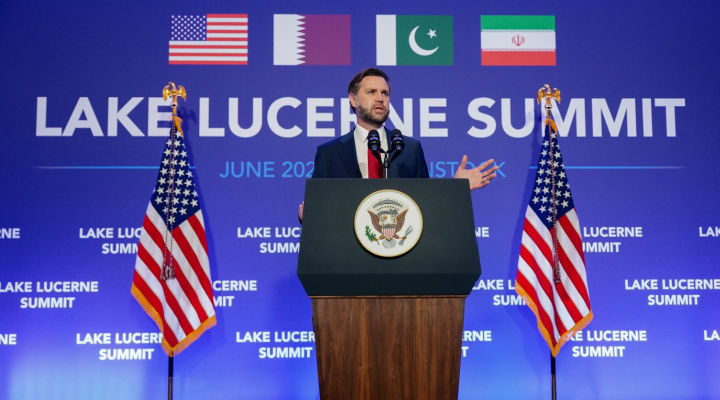 |
| US Vice President JD Vance speaks to members of the media before boarding Air Force Two, after the US and Iran held high-level talks at the Lake Lucerne Summit, at Emmen Military Air Base, Emmen, Switzerland, June 22, 2026. Photo: REUTERS/Nathan Howard/Pool |
"Iran is trying to avoid another full-scale war. But it also believes that failing to respond caries its own risks because it would project weakness and invite further pressure.""Iran's calculation is that calibrated, limited escalation can restore deterrence without crossing the threshhold into all-out war."Negar Nirtazavi, senior fellow, Center for International Policy
Labels: Ayatollah Ali Khamenei, Islamic Republic of Iran, Israeli-U.S. Joint Aerial Strikes, Military Commanders, Missile Stockpiles, Nuclear Installations, Nuclear Scientists, Strait of Hormuz
posted by Pieface @ Saturday, July 11, 2026


<< Home