"Anytime a carrier moves close to shore, and especially into confined waters, the danger to the ship goes up significantly." "It becomes vulnerable to diesel submarines, shore-launched cruise missiles and swarming tactics by small boats armed with missiles [Iranian arsenal of weaponry and tactical manoeuvres]." James Stavridis, retired admiral, former supreme allied commander, NATO
"We can reach Iran from here easily. They can reach us when we're there [Persian Gulf, Strait of Hormuz]. When we're here, [North Arabian Sea] they can't." "I wouldn't say we are sitting ducks because we have offensive capability. But as you get further out into the North Arabian Sea, they just can't see us." "All the systems were on; all the lights were green; we were waiting for the order [to attack Iran in the wake of the U.S. drone shoot-down]. And the order didn't come." Rear Admiral Michael E. Boyle, commander, carrier strike group U.S.S. Abraham Lincoln
"I stayed on shift that night. You're preparing for the offensive but also have to be ready to play defence. [Like being in] the eye of the tiger." "You could feel the stress in the younger sailors." "Relief? Yeah. Whatever caused us not to have to push the button, we're happy." "We recognize that tensions are high, and we don't want to go to war. We don't want to escalate things with Iran." Capt.William Reed, fighter pilot, commander, U.S.S. Abraham Lincoln air wing
In this April 1, 2019, file photo, the USS
Abraham Lincoln deploys from Naval Station Norfolk. (Kaitlin cKeown/The
Virginian-Pilot via AP, File)
The U.S.S. Abraham Lincoln sails in the North Arabian Sea at the present time; it is in the Middle East, in the words of President Trump: "to send a clear and unmistakable message" to Iran that the United States will brook no interference in its interests in the region. Except that it is tolerating for the moment, at least, interference in its presence in the region. For the last four months the nuclear-powered aircraft carrier has steered clear of approaching anywhere close to Iran's shoreline, even within international waters.
The navy's 5th Fleet, with its headquarters in Bahrain, has decided the better part of valour for the time being is to steer clear of Iran, to remain out of sight, out of reach, deliberately avoiding the appearance of provocation. Should an aircraft carrier -- the reasoning goes -- steam as is usual through the Strait of Hormuz its presence could provoke conflict of the type the Pentagon would prefer not to be engaged in at a time when the U.S. has countered Iran in every direction with sanctions.
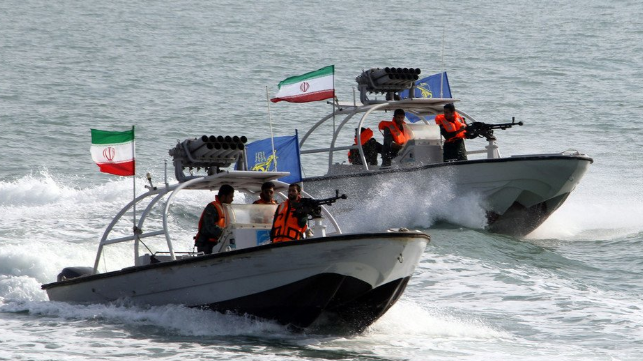
Iran's fast-attack craft, the type repeatedly used to harass ships in the Persian Gulf.Fars News Agency Photo via USNI News
So the North Arabian Sea it is, some 600 nautical miles from the Strait of Hormuz, mostly off the coast of Oman. This is not necessarily convenient for the ship nor its crew of 5,600 men and women aboard the carrier, given the huge waves and fierce undertow in the North Arabian Sea, so much so that fighter pilots are hard put often to catch the wire as they land on the pitching carrier. The Persian Gulf on the other hand, is calmer; seasonal monsoons hit the North Arabian Sea.
According to Naval authorities, however, from their position in the North Arabian Sea, F/A-18s still catapult off the flight deck heading toward Iran, remaining clear of the 19-kilometre border of Iranian airspace. The warplanes simply take flight above Oman and other gulf allies to get to the Persian Gulf and the planes are capable of striking Iran if needed, as readily from the North Arabian Sea as from the Persian Gulf, while remaining out of the way of watchful Iranian eyes.
Normally, when things are on a calmer plateau, American aircraft carriers regularly ply the Persian Gulf. U.S. fighter pilots attached to the Nimitz were deployed in 2017 to strike Iraq and Syria against the Islamic State group and in 2015 with the Theodore Roosevelt when navy fighters were hitting targets in Ramadi, Iraq and elsewhere against Islamic State. Even then the carriers tangled routinely with Iranian fast boats operated by the IRGC.
The Nimitz-class aircraft carrier Abraham Lincoln in the Indian Ocean in a US Navy handout photo dated January 18, 2012.REUTERS/U.S. Navy/Chief Mass Communication Specialist Eric S. Powell/Handout
"Heightened military activity and increased political tensions in this
region continue to pose serious threats to commercial vessels.
Associated with these threats is a potential for miscalculation or
misidentification that could lead to aggressive actions." "In at least two of these incidents, vessels reported GPS interference. One vessel reportedly shut off its Automatic
Identification System (AIS) before it was seized, complicating response
efforts. Vessels have also reported spoofed bridge-to-bridge
communications from unknown entities falsely claiming to be U.S. or
coalition warships." U.S. Maritime Administration (MARAD)
U.S. Marine Corps Cpl. Michael Weeks,
ranges nearby boats from USS John P. Murtha during a Strait of Hormuz
transit, Arabian Sea off Oman, in this picture released by U.S. Navy on
July 18, 2019.Adam Dublinske/U.S. Navy/Handout via REUTERS
The Islamic Republic of Iran brooks no interference in its aspirations to become a regional power, nor its intentions to become a nuclear power. At the same time that Sunni majority regional nations have formed a unified front against Iran's Shiite clique with Saudi Arabia defensive over its accepted role as the commanding senior Middle East nation whose stewardship of Mecca and Medina give it both regional and universal authority, Iran has continued its recruitment of allies in Syria, Iraq, Lebanon and Qatar, while supporting Houthi rebels in Yemen where a proxy war is playing out.
With the Trump administration pulling out of the feeble nuclear agreement with the Republic of Iran, still supported by the EU, and additional sanctions applied to an Iran that the world recognizes for its support of terrorist groups like Hezbollah and Hamas along with its ongoing provocations in missile development and threats to the existence of Israel, Iran's economy has suffered and continues to plummet. An always-irascible Ayatollah-ridden authority has long threatened to disrupt shipping in the Strait of Hormuz.
With the authority given to the Islamic Revolutionary Guard Corps to launch piracy on the high seas tensions continue to build in the water between the Gulf of Oman and the Persian Gulf, which hosts the world's greatest oil shipments with over 15 million barrels of oil passing through the Strait daily heading to all corners of the globe. Iran has seized three tankers in several weeks as they sailed through the Strait, claiming they were in its territorial waters and illegally shipping oil.
Iran's Revolutionary Guard has released footage showing some of its
forces boarding the British tanker Stena Impero in the Strait of Hormuz.
Photo: Iranian Revolutionary Guard
A British tanker among them, in retaliation for an Iranian tanker that was stopped and taken into custody in Gibraltar on British authority carrying contraband oil to Syria, in direct violation of international sanctions placed on the murderous regime of Bashar al-Assad. It's clear enough that the IRGC is conducting acts of intimidation and piracy, another kind of terrorism, which the Supreme Leader, Ayatollah Ali Khamenei claims to be perfectly justified since they're stopping illegal activity.
This is Iran's way of messaging the world that it has options of its own to pursue in retaliation for the sanctions that have been strait-jacketing its economy, causing unrest among the population resulting from the straitening situation of enforced austerity and general insecurity, under perceived threat by the United States. Global markets, meanwhile are reeling in uncertainty over their shipping routes. Vulnerable to strange tanker blasts, or to the potential of being hijacked.
Now reports have emerged from the U.S. Maritime Administration that two incidents have occurred with commercial vessels where ships reported interference with their Global Positioning System along with communications falsely claiming by unknown entities to be from U.S. or other warships, warning the ships not to respond with violence should someone attempt to board them. The contention is that Iran is making use of GPS jammers to target aircraft and ships emanating from an island close to where the Strait of Hormuz begins.
As tensions between the U.S. and Iran rise, a series of incidents has
put a strategic maritime waterway back into the spotlight: The Strait of
Hormuz. Photo: Getty Images
According to the MARAD source, this is an effort to guide these ships by implication to stray into Iranian territorial waters or airspace. At which point they are fair game to be detained by the IRGC.
In the spirit that all is fair in the war of sanctions and guerrilla tactics, Iran-style. What gives Iran breathing room is its association with China, an important client and supporter, as a member of the UN Security Council, and buyer of Iranian oil.
Iranian IRGC attack boats (file image via state media)
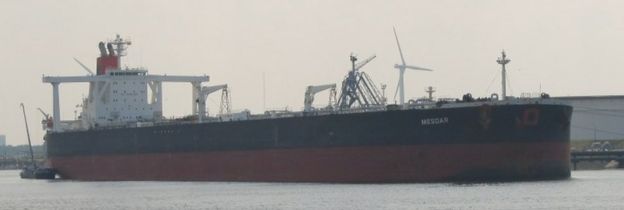
"Communication has been re-established with the
vessel and Master confirmed that the armed guards have left and the
vessel is free to continue the voyage." "All crew
are safe and well." Mesdar's manager, Norbulk Shipping UK
"In a bid to identify and fight organized smuggling ... the patrol boats of the Guards' naval forces abruptly stopped one of the foreign vessels which carried 1 million litres of smuggled fuel." Iranian Revolutionary Guard Corps
The Stena Impero
"[The ship was making an entry from the exit point of the Strait of Hormuz
in the south], disregarding the established procedures that require all
entries be made through the northern pass." "[The ship has been escorted to Iranian coastal waters for further legal
procedures and investigations'." Fars news agency
Britain is advising that all maritime activity in the Strait of Hormuz should be suspended for the time being, citing the piracy being engaged in by the Islamic Republic of Iran. Earlier in the week a foreign ship, accused of "smuggling fuel" was intercepted south of Larak Island, Iran, in the Strait of Hormuz, its crew of a dozen arrested. Now they've been freed. "Our analysis right now is that nothing has actually happened" reported TankerTrackers on Twitter.
According to the best guess of experts closely monitoring events the amount of onboard cargo of the ship was insignificant, that it would appear Tehran towed the vessel for the purpose of drama, a show of strength, in the wake of Britain having impounded an Iranian supertanker off Gibraltar earlier in the month. And subsequently warning Britain of consequences to come. Those consequences appear to have arrived.
The Guards' seizure of the British-tagged tanker Stena Impero is yet another risky chess move by the Republic in its undeclared war with the West. In obvious angry desperation at its inability to export Iranian oil as previously with the added U.S. sanctions that followed President Trump's withdrawal of American support for the 2015 Iranian nuclear agreement, last year, Tehran is hitting out at one of the European countries that has been at the forefront of attempting to mediate and find a way to circumvent U.S. sanctions.
It appears that a second British ship has now also been detained. This is a high stakes game Tehran is playing. All its previous provocations have mostly targeted ships belonging to its Middle East Sunni rivals. The issue of tangling with the U.S. in the matter of shooting down a U.S. drone, and the U.S. more latterly destroying an Iranian drone buzzing a U.S. naval carrier has increased tensions. Europe had attempted to remove itself from entanglement in disputes between Washington and Tehran.
British Prime Minister Theresa May has called for an emergency meeting to discuss the urgency of escalating confrontations. The meeting, explained British foreign secretary Jeremy Hunt is to determine “what we can do to swiftly secure the release of the two vessels". Later he said further, "We’re
not looking at military options; we’re looking at a diplomatic way to
resolve the situation. But we are very clear that
it must be resolved."
"[Sanctions are meant] to stop Europe
from buying Syria’s oil, they are not about another country selling oil
to Syria." "This is a very childish and ridiculous excuse by the British. They should officially announce that we are servants of America and act
on behalf of America." "America has returned their favor well by
insulting their ambassador and their prime minister." Iranian Foreign Minister Mohammad Javad Zarif
"[The timetable for
relieving the HMS Montrose, a frigate operating in the Persian Gulf,
with the larger HMS Duncan destroyer in the wake of the recent
developments has been moved forward]." "This will ensure that the UK alongside international partners can
continue to support freedom of navigation for vessels transiting through
this vital shipping lane." British Ministry of Defense
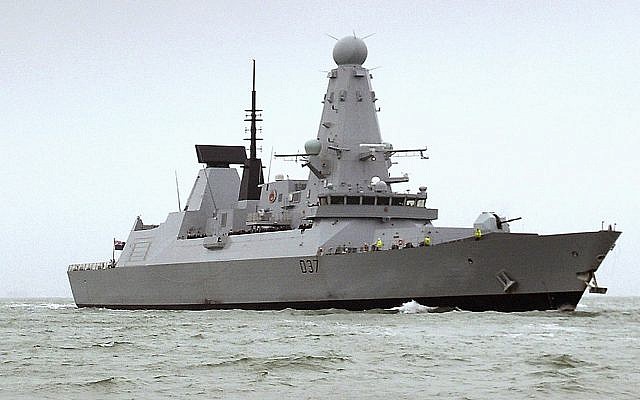
A file photo of the HMS Duncan, a Type 45 Destroyer, which will relieve
HMS Montrose in the Persian Gulf as Iran threatens to disrupt shipping
(Ben Sutton/UK Ministry of Defence via AP)
"[The British naval escort, HMS Montrose] was forced to position herself between the Iranian vessels [and the ship]." "[The navy ship issued] verbal warnings to the Iranian vessels, which then turned away." "We are concerned by this action and continue to urge the Iranian authorities to de-escalate the situation in the region." British government statement
"There was an attempt -- it appears to be that there was an attempt -- by some small naval vessels to take over a commercial vessel." "The British had a military escort, and that took care of the situation ... Having said that, the freedom of navigation is a fundamental principle and a norm for the international order that has been in place now for seven decades, and we play a crucial role to enforce that norm." U.S. Army General Mark Milley
"The enemy is going to regret this act." "They would not have done it if they had done the minimum calculation." Rear Admiral Ali Fadavi, deputy Revolutionary Guard commander
So the Islamic Republic of Iran is outraged; they did no such thing as dispatch their naval forces to challenge the tanker British Heritage approaching the northern entrance to the Strait of Hormuz, an Isle of Man-flagged tanker operated by the oil and gas company BP (British Petroleum), based in London. There had been no confrontation whatsoever with foreign vessels in the past 24 hours, according to Iran's Islamic Revolutionary Guard Corps.
Strangely enough, an American aircraft flying overhead had captured footage of the Iranian ships interacting with the British vessels, the oil tanker and its naval escort, HMS Montrose. Iran had, with its usual bombast, threatened retaliation from the apprehension of its supertanker in the Mediterranean Sea with its oil cargo headed in a circuitous route toward the Syrian coast.
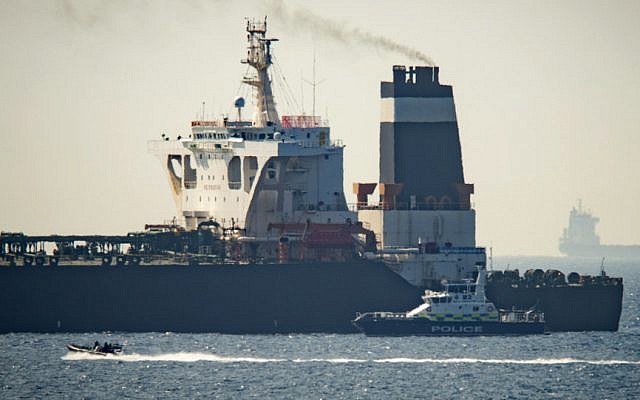
The Grace 1 super tanker in the British territory of Gibraltar, July 4, 2019. (AP Photo/Marcos Moreno)
Gibraltar authorities took steps to halt the vessel clearly bringing oil to the Syrian refinery at Banias, in violation of European Union sanctions. Its misfortune was that it approached the British territory of Gibraltar, where in Iran's words "an act of piracy" took place. Britain was attempting to "increase tensions" with its claims that the British Heritage faced a restraint to passing through the strait. Its claims utterly "worthless", according to Iranian Foreign Minister Mohammad Javad Zarif.
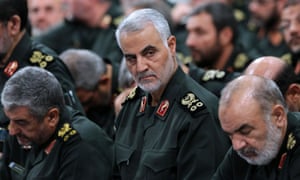
Qassem Suleimani (centre) says Trump may start a war but Iran ‘will end it’.
Photograph: HO/AFP/Getty Images
"Economic terrorism" against Iran was clearly at play in the seizure of the Iranian vessel; instigated by a U.S.-led campaign. And so, little wonder that the British Heritage steaming through the Gulf of Oman encountered a 'misunderstanding'. A reminder that despite authorization allowing "specified ships" suspected of violating EU sanctions to be detained, this is a game that the targets can also plan to their own advantage.
Gibraltar authorities arrested the captain and chief officer of Grace 1 on suspicion of breaching the sanctions, according to a spokesperson from the Royal Gibraltar police, with documents and electronic devices seized as well. A "political demonstration", according to Richard Dalton, a former British ambassador to Iran, of the Republic overplaying its sanctions-weakened hand.
All of these actions feed into apprehension of a trigger leading to a wider conflict as a result of too many mysterious provocations ranging from oil tanker attacks near the Strait of Hormuz that Iran is blamed for, along with Iranian-backed Houthi rebels in Yemen launching attacks on Saudi Arabia, capped off by the downing of a U.S. military drone in international airspace that Iran claimed to have been justifiably shot down within Iran's air space.
Thousands of troops, an aircraft carrier, nuclear-capable B-52 bombers and advanced fighter jets have been sent by the United States to the Middle East. A warning exercise, or a warm-up exercise? Time has a habit of eventually revealing what has been suspected is what finally eventuates.
Secretary of State Mike Pompeo says goodbye to
Saudi Foreign Minister Adel al-Jubeir in Jeddah, Saudi Arabia, on June
24, 2019, after meeting with Saudi leaders as part of an effort to build
a “global coalition” against Iran. (Jacquelyn Martin/Pool/AFP/Getty
Images)
"This drone was in international waters, clearly. We have it all documented. It's documented scientifically, not just words." "[Someone] loose and stupid [in Iran shot down the drone'; this country will not stand for it, that I can tell you." "[It made] a big, big difference [that a U.S. pilot was not threatened. The use of force is] always on the table until we get this solved." "I don't want to kill 150 Iranians ... I don't want to kill 150 of anything or anybody unless it's absolutely necessary [by launching a retaliatory strike]." "We very much appreciate [that Iran's Revolutionary Guard decided not to shoot down a U.S. spy plane carrying over 30 people]." U.S. President Donald Trump
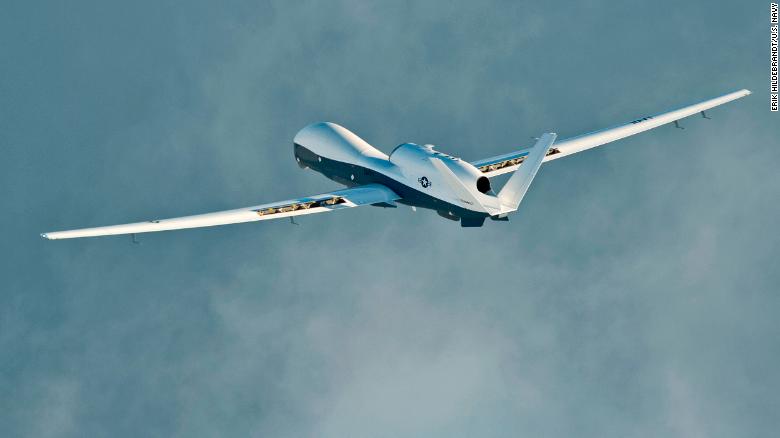
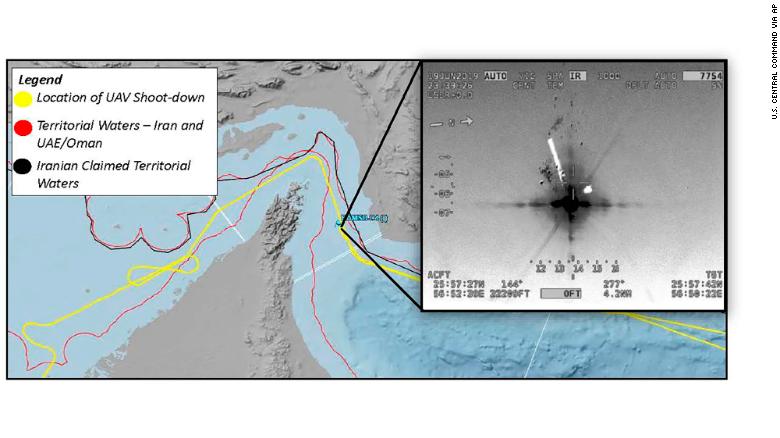
"[The drone] was shot down by an Iranian surface-to-air missile system while operating in international airspace over the Strait of Hormuz." "This was an unprovoked attack on a U.S. surveillance asset at international airspace." U.S. Central Command
"At 00:14 U.S. drone took off from UAE in stealth mode and violated Iranian airspace." "We've retrieved sections of the U.S. military drone in OUR territorial waters where it was shot down." Iranian Foreign Affairs Minister Mohammad Javad Zarif
American national security officials and White House congressional leaders debated an urgent military response last Thursday over a retaliatory strike related to the shooting down of a U.S. surveillance asset when Iran launched a missile from the Iranian coastline along the Gulf of Oman. A robust military response was favoured by Secretary of State Mike Pompeo and National Security adviser John Bolton; not so much, it appears by high-echelon military officials concerned over a spiralling escalation, trapping U.S. forces in the region.
That the drone strike took place a short while after previous Iranian disturbances which they deny but which left two damaged oil tankers that were traveling through the Strait of Hormuz, the oil world's vital waterway -- following hard on the heels of an earlier incident, and the declaration by the Islamic Republic that it planned to breach the key limits on its uranium enrichment of the 2015 pact which the U.S. withdrew from a year ago, spelled a constellation of disagreeable prospects. None of which ignored the necessity to keep Iran from possessing nuclear weapons.
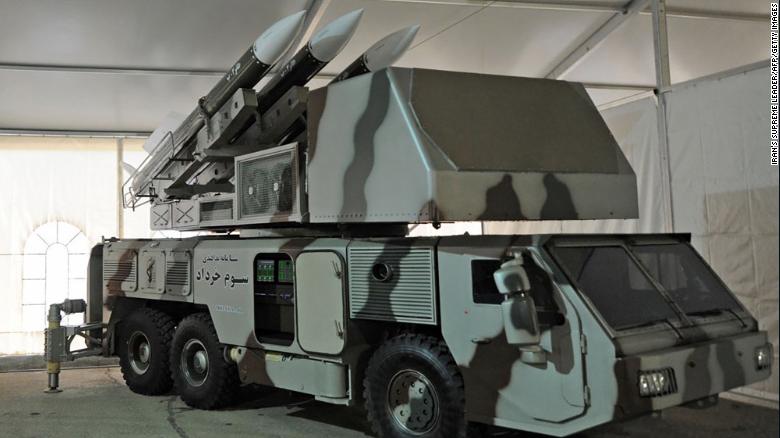
A Khordad-3 air defense system.
The
IRGC said it used a "3rd of Khordad" surface-to-air missile system,
images of which have been circulating now on social media as a symbol of
Iranian prowess
Iran released its own GPS coordinates, placing the drone 8 miles off its coast and within the 12 nautical miles from shore claimed as Iranian territorial waters. The high altitude RQ-4 Global Hawk made by Northrop Grumman was no toy, about the size of a 737, costing a cool $100 million, and developed to evade the surface-to-air missile that brought it down, serving as a wake-up call to U.S. Defense officials.
The event gave Iran cause to accuse the United States of committing "a very dangerous and provocative act", in a dry reversal of what the U.S. most certainly could have described Iran's actions. According to a Pentagon official the drone was no closer to the coast of Iran than 21 miles, placing it firmly in international airspace. Iran's ambassador to the United Nations, helpfully explained that Tehran "does not seek war", but "is determined to vigorously defend its land, sea and air", and so it did...
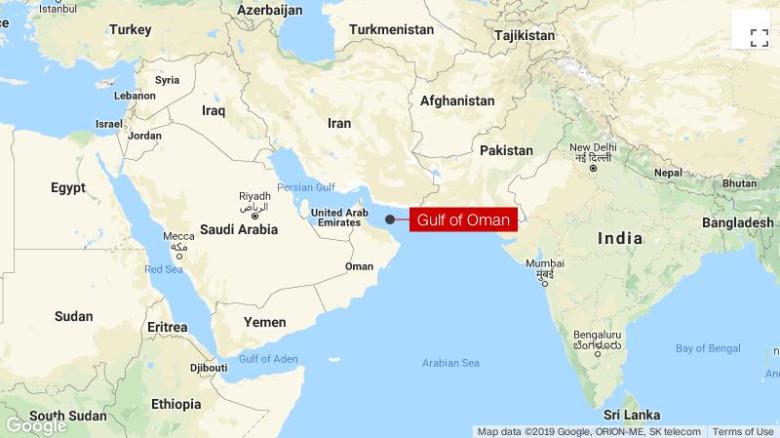
"It is the assessment of the United States government that the Islamic Republic of Iran is responsible for the attacks that occurred in the Gulf of Oman today." "This assessment is based on intelligence, the weapons used, the level of expertise needed to execute the operation, recent similar Iranian attacks on shipping, and the fact that no proxy group operating in the area has the resources and proficiency to act with such a high degree of sophistication." "Iran's Supreme Leader rejected Prime Minister Abe's diplomacy today by saying he has no response to President Trump and will not answer." U.S. Secretary of State Mike Pompeo
"We need to remember that some 30 percent of the world's [seaborne] crude oil passes through the straits." "If the waters are becoming unsafe, the supply to the entire Western world could be at risk." Paolo d'Amico, chairman, INTERTANKO Tanker association
Iran has threatened to close the Strait of Hormuz for years. It has on occasion committed to hostile acts against other countries' vessels passing through the Strait. More latterly it re-issued those threats in response to its deepening economic crisis brought on by the new sanctions imposed by the Trump administration to force the Republic to return to the bargaining table, after the White House withdrew from the nuclear agreement signed between Iran and the members of the Security Council plus Germany and the EU.
President Trump has stated his intention on forcing Iran to stand back from its nuclear enrichment entirely, along with the threats inherent in continued development of missiles, an issue of great importance to the region, and which the 2015 Iran nuclear deal failed to address. That, and its ongoing support of and incitement to violence of its proxy militias in Lebanon, Syria, Iraq and Yemen representing additional issues of huge importance both in the Middle East and abroad.
Tensions have been growing between Washington and Tehran since President Trump cancelled U.S. support for the Iranian nuclear agreement when he stated the obvious, that it had no teeth. Secretary of State Pompeo minced few words when he noted that behind the attacks lay a "maximum pressure campaign" of sanctions imposed by the administration he is part of. Sanctions designed to force Iran to negotiate the future of its nuclear program and its militia support threatening the stability of the Middle East.
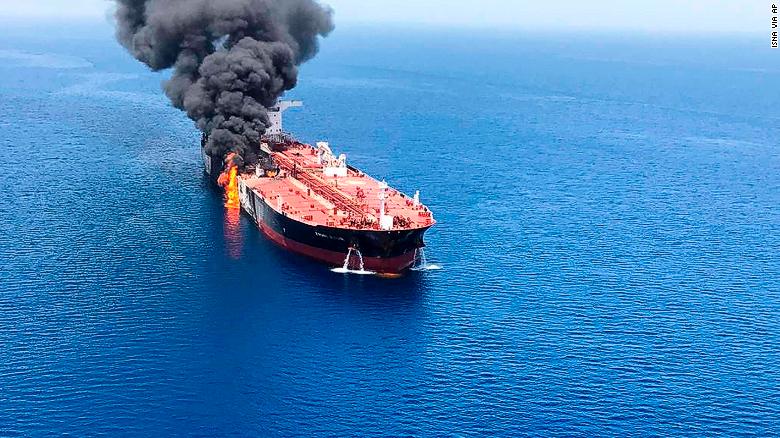
This still, obtained by AFP from Iranian State TV IRIB, purports to show
smoke billowing from a tanker said to have been attacked off Oman
These most recent attacks near the entry to the Strait of Hormuz which represents a critical shipping artery for Gulf energy producers and Saudi Arabia have all the hallmarks of Iran's viciously destructive skulduggery. Iran's May12 attacks on four tankers set the pattern, and it appears to be on repeat, though Iran denies any involvement.
According to Iranian Foreign Minister Mohammad Javad Zarif the incidents are "suspicious", and he's certainly right there; suspicious to others, a seemingly logical manoeuvre to Iran, however.
Thursday's attack targeted a Japanese and a Norwegian tanker, just as Japanese Prime Minister Shinzo Abe was attempting to persuade Iran, on a diplomatic mission to Tehran, to de-escalate the situation and agree to negotiations with the United States.
The crew of the Kokuka Courageous tanker owned by Japan was safely picked up after the tanker was hit by a suspected torpedo. On the side of the Japanese tanker an unexploded device, presumably a limpet mine, was seen. It would appear that an Iranian ship and crew were dispatched to remove the mine from the Japanese tanker. The Norwegian-owned Front Altair was the first of the two to be attacked; its crew abandoned ship between Gulf Arab states waters and Iran following a blast.
That explosion was theorized to have been caused by a magnetic mine setting the ship ablaze, with a huge plume of smoke reaching toward the sky. Its crew was plucked to safety by a passing ship that handed them to an Iranian rescue boat. According to Saudi Arabia, this latest incident, along with new attacks on Saudi soil by Houthi rebels from Yemen, represent a "major escalation" of hostilities between Iran and the Gulf nations.
As an ally of Iran, Russia has urged caution, urging no one to rush to judgement, much less use the incident to place additional pressure on Tehran.
"Our
policy remains an economic and diplomatic effort to bring Iran back to
the negotiating table at the right time to encourage a comprehensive
deal that addresses the broad range of threats [from Iran]." "Iran should meet diplomacy with diplomacy, not with terror,
bloodshed and extortion." U.S. Secretary of State Mike Pompeo
This represents a general opinion site for its author. It also offers a space for the author to record her experiences and perceptions,both personal and public. This is rendered obvious by the content contained in the blog, but the space is here inviting me to write. And so I do.
/arc-anglerfish-arc2-prod-mco.s3.amazonaws.com/public/OEAQJTQKNFGHVFPSFYSZBS3GEQ.jpg)