The Sting of the I.R.G.C. 'Mosquito Boats'
"The Islamic Republican Guard Corps navy works more like a guerrilla force at sea.""It is focused on asymmetrical warfare, especially in the Persian Gulf and the Strait of Hormuz.""So instead of relying on big warships and classic naval battles, it depends on hit-and-run attacks."Saeid Golkar, Guards expert, political science professor, University of Tennessee, Chattanooga"When it is very bumpy, they [armed forces onboard] cannot shoot.""[They are also ill-equipped to go head to head with a warship, and would likely suffer] very heavy casualties [in any direct assault on one].""Even if they tried to saturate the ship’s defences by attacking from multiple directions, they would be extremely vulnerable to the air support that would be called in.""It is going to be much harder to eliminate the small boat threat than it was to destroy Iran’s larger naval vessels, which were big targets that were relatively easy to find and track and, at most, only had a limited ability to defend themselves from air attack."Jeremy Binnie, Middle East specialist, defence intelligence company Janes
 |
| The IRGC speed boats are fast, light, and easily replaceable. NurPhoto via Getty Images |
The
flotilla of small, fast boats whose purpose by the IRGC has been to
harass local and international shipping through the Gulf, has turned now
to threatening and firing upon global shipping in the Strait of Hormuz
during the recent face-off between the U.S. and the Islamic Republic of
Iran -- or what's left of it, aside from the IRGC. The Islamic
Revolutionary Guard Corps is separate and apart from the regular Navy of
Iran, which had been struck a cataclysmic blow in the opening days of
the aerial bombardment.
Over
90 percent of Iran's navy's fleet was destroyed, according to U.S.
General Dan Caine, chairman of the Joint Chiefs of Staff. They all,
including the country's major warships, were sunk and sit now on the
ocean's bottom. At the same time, an estimated 50 percent of the fast
attack boats belonging to the Guards were sunk. Estimates of the total
number of these small ships prior to the U.S. sinking of the fleet
ranged from hundreds to thousands. They are still not now in short
supply.
 |
| Arrival of new shipment of IRGC fastboats. Photo via Mehdi H |
The
size of the boats make them mostly invisible on satellite images from
where they're moored alongside piers, where the excavation of deep
caves along the rocky coastline shelters them, prepared for deployment
at a moment's notice. During the current conflict, at least 20 vessels
were attacked by the 'mosquito fleet', according to the International
Maritime Agency. Analysts consider the attacks to have been by drones
fired from mobile launchers on land.
As for the small boat arsenal which poses a major threat to commercial shipping both in the Gulf and the Strait, "It remains a disruptive force. You never quite knew what they were up to and what their intentions were", commented Admiral Gary Roughead, retired chief of U.S. Naval Operations. "The IRGC navy has always believed that it is at the forefront of the confrontation with the Great Satan", added specialist on the Guards navy, Farzin Nadimi from the Washington Institute think tank.
According
to experts, these small boats can reach speeds of over 100 knots.
Larger, more sophisticated warships were also recently developed by the
Guards, and they too were targeted when the U.S. bombardments focused on
bombing Iran's naval fleet as well as its fleet of warplanes. The
largest drone carrier, the Shahid Bagheri, a converted container ship
able to launch anti-ship missiles, was also hit by U.S. air strikes.
It
is the swarms of small boats that pose an ongoing threat to commercial
vessels which have no defences against such attacks. U.S. warships, on
the other hand, can counter a potential swam of small boats with their
high-caliber cannons and additional weaponry.
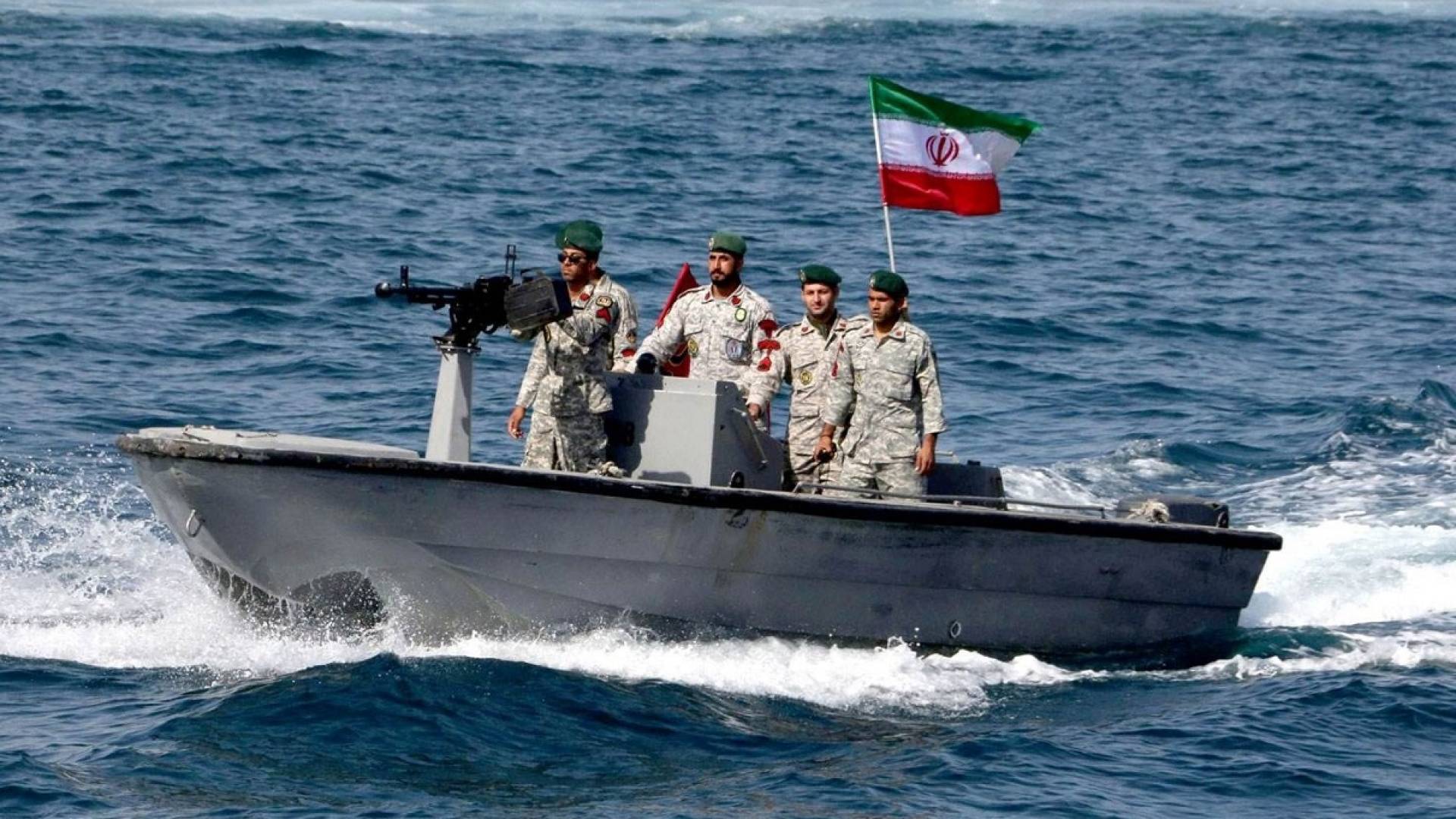 |
60 percent of IRGC fast boats still threaten shipping lanes: WSJ |
Labels: Conflict, Islamic Republican Guard Corps, Persian Gulf, Small-Boat Fleet, trait of Hormuz, U.S.-Israel Aerial Bombardment of Iran
posted by Pieface @ Tuesday, April 28, 2026


<< Home