Making a Mockery of UN Nuclear Vigilance
"Electing Iran to the committee, just days after its non-compliance was referred to the United Nations Security Council, would be beyond shameful and an embarrassment to the credibility of this body."
"[The decision represents] an affront [to the International Atomic Energy Agency and its critical screening work]."
U.S. Ambassador Preston Wells Griffith III
"[This objection by Washington is a] childish type of behaviour."
"Nuclear science, technology, expertise and industry have taken deep roots in the country and cannot be eliminated through military actions or assassinations."
"Iran will not surrender."
Behrouz Kamalvandi, deputy head, Atomic Energy Organization of Iran
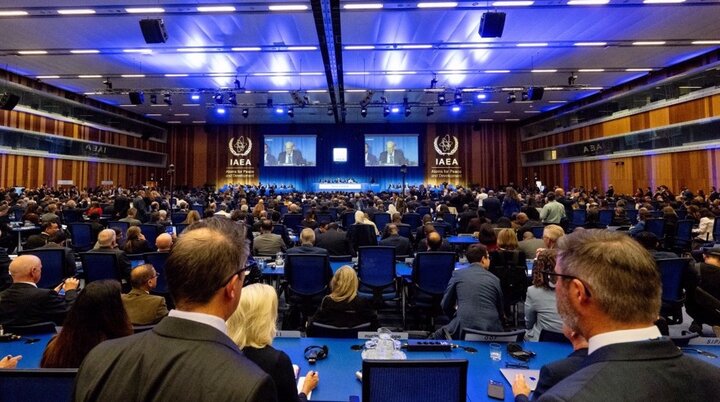 |
| Diplomats attend the Board of Governor’s Meeting of the International Atomic Energy Agency (IAEA) at the agency's headquarters in Vienna, Austria on September 14, 2026. (Photo by AFP)
|
As insane as it seems to anyone conscientiously following the news in the Middle East, the Islamic Republic of Iran which should rightfully be viewed as a pariah of a nation, dedicated to establishing itself as an unparalleled power in the Middle East while posing a threat to the greater world order with its stealth infiltration in tandem with that of the Muslim Brotherhood in Western democratic nations with a goal to undermining the values inherent in free and civil society to attain a position of theistic control through jihad by both diplomatic and violent means, has been favoured with a seat on a board overseeing the work of the International Atomic Energy Agency.
This stunning turn of events staggers belief in the function of the United Nations, already under suspicion over its focus and support of the many facets of autocracy within its membership and its entanglement with coercive, exploitive states that persecute their own citizens. Iran is one of those most egregious of states, a theocracy that strangles internal dissent to its restrictive domination of peoples' lives. Its determination to develop nuclear weapons, allied with its technological advances in ballistic missile delivery systems and its formation of, training and financing of terrorist groups make it a dire threat to civilized society.
Yet, thanks to the cohesion of Muslim groups and the lobbying efforts of the 57-member Organization of Islamic Cooperation, alongside the Arab League -- a country whose minority Shiite brand of Islam with its goal of supremacy over the majority Sunni nations neighbouring it, many of which, in the Persian Gulf, were treated to barrages of missiles and military drones in Iran's conflict with the United States -- supported Iran's candidacy for the position, against the efforts of the United States to deny it that status.
Key issues such as nuclear safety and security, concerning the International Atomic Energy Agency, and its spurned efforts by Iran to continue making routine checks at Iranian nuclear sites, leaving it virtually deadlocked, provided the backdrop to its general conference. On Tuesday, Tehran, with support from the very Persian Gulf neighbours which had been the recipients of the Islamic Revolutionary Guards' firing of missiles and drones, helped Iran succeed in claiming a seat on the IAEA committee.
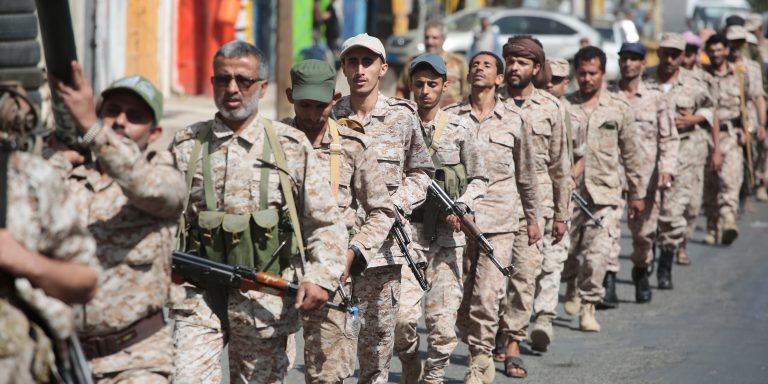 |
| Intel Brief: Iran War Solution Nowhere in Sight as U.S. and Iran Remain Entrenched AP Photo |
In a secret ballot, 44 countries supported Iran's nomination, as opposed to 35 voting to deny Iran that seat, while 42 nations abstained from the vote. Iran is the only non-Arab (it is Aryan) Muslim state in the Middle East, surrounded by Arab nations and one tiny Jewish nation. What they have in common excluding Israel, is Islamic religious devotion, the sectarian divide aside. Yet despite the threat that Iran poses to its neighbours, having sent thousands of missiles and drones into their territory up to a month earlier, the religious ties that bind won the day for Iran.
Iran, in fact, boosted by its Islamic bedfellows, has been appointed to a number of UN-body groups, one dedicated to the protection of women's rights among them in a wildly inappropriate match. Earlier Iran had been appointed by its fellow Middle Eastern neighbours to the organizing body of the conference itself. In the meanwhile, a country that refuses entry to the very body it now sits on a board for, making the entire exercise one of bemusing sanctimony, leaves the International Atomic Energy Agency unable to fulfill its mandate.
The work of the IAEA has been roadblocked in the single country in the world whose secretive, illegal, and dangerous nuclear work poses a direct threat to humanity. Iran wants to possess nuclear weaponry, as a theocracy that believes in the return of the Hidden Mahdi, whose reappearance will mean the end of humanity, when only the faithful in Islam will rise to Paradise, while all others descend to a place of eternal agony as punishment for denying Islam. Their logic is to create conditions of civilizational dysfunction so severe it will hasten the reappearance of a religious symbol of total world destruction.
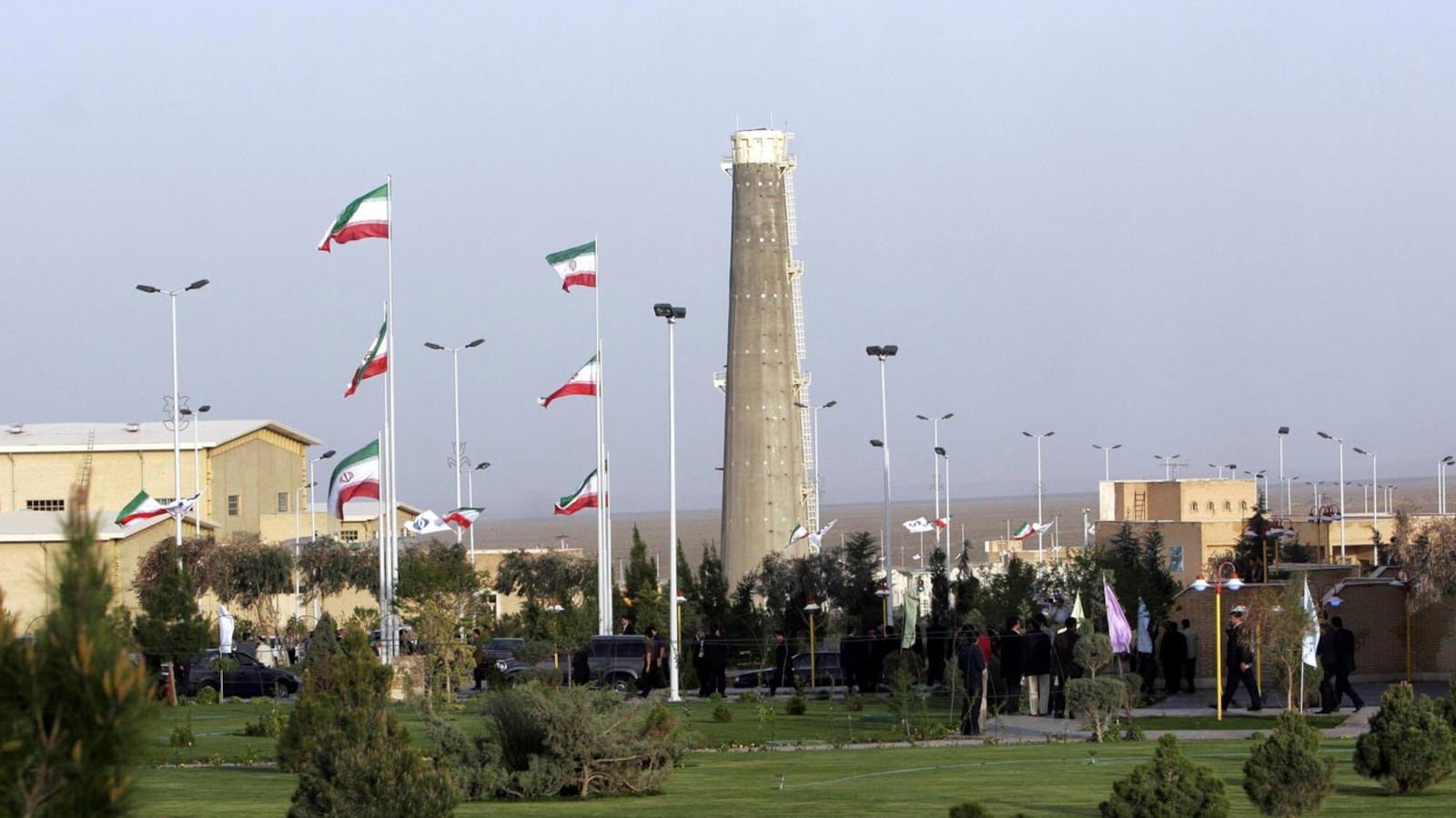 |
| This shows Iran's nuclear enrichment facility in Natanz, Iran, on April, 9, 2007. (AP Photo/Hasan Sarbakhshian, File) |
Labels: International Atomic Energy Agency Iran's Nuclear Ambitions, Islamic Republic of Iran, Islamic Revolutionary Goard Corps, Persian Gulf, UN Mockery, United Nations
The Sting of the I.R.G.C. 'Mosquito Boats'
"The Islamic Republican Guard Corps navy works more like a guerrilla force at sea."
"It is focused on asymmetrical warfare, especially in the Persian Gulf and the Strait of Hormuz."
"So instead of relying on big warships and classic naval battles, it depends on hit-and-run attacks."
Saeid Golkar, Guards expert, political science professor, University of Tennessee, Chattanooga
"When it is very bumpy, they [armed forces onboard] cannot shoot."
"[They
are also ill-equipped to go head to head with a warship, and would
likely suffer] very heavy casualties [in any direct assault on one]."
"Even
if they tried to saturate the ship’s defences by attacking from
multiple directions, they would be extremely vulnerable to the air
support that would be called in."
"It is going to be much harder to eliminate the small boat threat than
it was to destroy Iran’s larger naval vessels, which were big targets
that were relatively easy to find and track and, at most, only had a
limited ability to defend themselves from air attack."
Jeremy Binnie, Middle East specialist, defence intelligence
company Janes
 |
| The IRGC speed boats are fast, light, and easily replaceable. NurPhoto via Getty Images |
It
all began when recreational boats were mounted with rocket-propelled
grenades or machine guns, when Iran first began using small boats that
were fast, maneuverable, and deadly when patrolling the Strait of Hormuz
and the Persian Gulf. Those recreational craft underwent a
transformation when a range of specially designed small boats, along
with miniature submarines and marine drones were built to the IRGC
specifications, over the years. That 'mosquito fleet' of small boats has
become a real and present threat in the Strait as a consequence of the
U.S.-Israeli conflict in Iran.
The
flotilla of small, fast boats whose purpose by the IRGC has been to
harass local and international shipping through the Gulf, has turned now
to threatening and firing upon global shipping in the Strait of Hormuz
during the recent face-off between the U.S. and the Islamic Republic of
Iran -- or what's left of it, aside from the IRGC. The Islamic
Revolutionary Guard Corps is separate and apart from the regular Navy of
Iran, which had been struck a cataclysmic blow in the opening days of
the aerial bombardment.
Over
90 percent of Iran's navy's fleet was destroyed, according to U.S.
General Dan Caine, chairman of the Joint Chiefs of Staff. They all,
including the country's major warships, were sunk and sit now on the
ocean's bottom. At the same time, an estimated 50 percent of the fast
attack boats belonging to the Guards were sunk. Estimates of the total
number of these small ships prior to the U.S. sinking of the fleet
ranged from hundreds to thousands. They are still not now in short
supply.
 |
| Arrival of new shipment of IRGC fastboats. Photo via Mehdi H |
The
size of the boats make them mostly invisible on satellite images from
where they're moored alongside piers, where the excavation of deep
caves along the rocky coastline shelters them, prepared for deployment
at a moment's notice. During the current conflict, at least 20 vessels
were attacked by the 'mosquito fleet', according to the International
Maritime Agency. Analysts consider the attacks to have been by drones
fired from mobile launchers on land.
As for the small boat arsenal which poses a major threat to commercial shipping both in the Gulf and the Strait, "It remains a disruptive force. You never quite knew what they were up to and what their intentions were", commented Admiral Gary Roughead, retired chief of U.S. Naval Operations. "The IRGC navy has always believed that it is at the forefront of the confrontation with the Great Satan", added specialist on the Guards navy, Farzin Nadimi from the Washington Institute think tank.
According
to experts, these small boats can reach speeds of over 100 knots.
Larger, more sophisticated warships were also recently developed by the
Guards, and they too were targeted when the U.S. bombardments focused on
bombing Iran's naval fleet as well as its fleet of warplanes. The
largest drone carrier, the Shahid Bagheri, a converted container ship
able to launch anti-ship missiles, was also hit by U.S. air strikes.
It
is the swarms of small boats that pose an ongoing threat to commercial
vessels which have no defences against such attacks. U.S. warships, on
the other hand, can counter a potential swam of small boats with their
high-caliber cannons and additional weaponry.
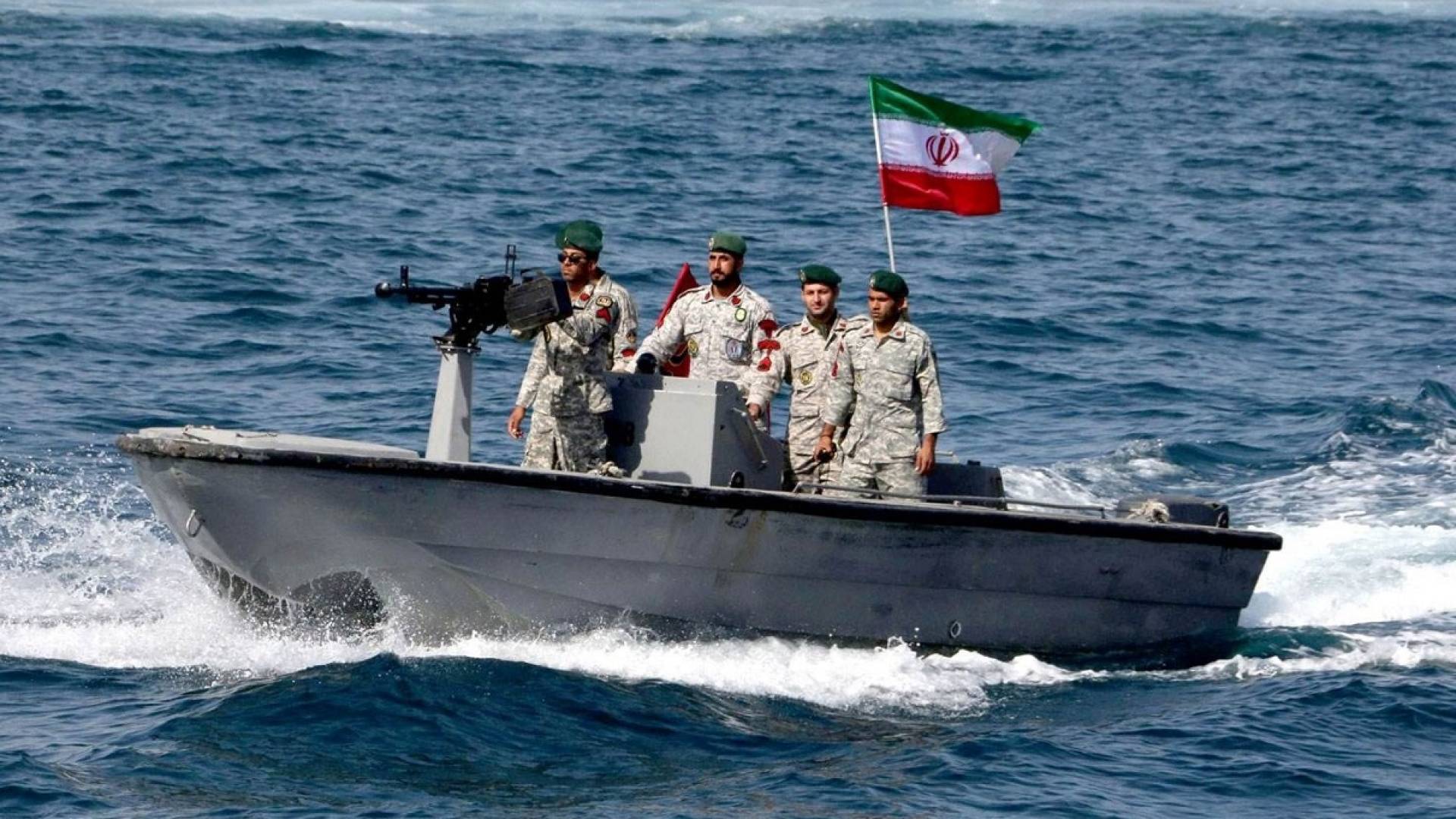 |
60 percent of IRGC fast boats still threaten shipping lanes: WSJ |
Labels: Conflict, Islamic Republican Guard Corps, Persian Gulf, Small-Boat Fleet, trait of Hormuz, U.S.-Israel Aerial Bombardment of Iran
Sailing on Eggshells
"Anytime a carrier moves close to shore, and especially into confined waters, the danger to the ship goes up significantly."
"It becomes vulnerable to diesel submarines, shore-launched cruise missiles and swarming tactics by small boats armed with missiles [Iranian arsenal of weaponry and tactical manoeuvres]."
James Stavridis, retired admiral, former supreme allied commander, NATO
"We can reach Iran from here easily. They can reach us when we're there [Persian Gulf, Strait of Hormuz]. When we're here, [North Arabian Sea] they can't."
"I wouldn't say we are sitting ducks because we have offensive capability. But as you get further out into the North Arabian Sea, they just can't see us."
"All the systems were on; all the lights were green; we were waiting for the order [to attack Iran in the wake of the U.S. drone shoot-down]. And the order didn't come."
Rear Admiral Michael E. Boyle, commander, carrier strike group U.S.S. Abraham Lincoln
"I stayed on shift that night. You're preparing for the offensive but also have to be ready to play defence. [Like being in] the eye of the tiger."
"You could feel the stress in the younger sailors."
"Relief? Yeah. Whatever caused us not to have to push the button, we're happy."
"We recognize that tensions are high, and we don't want to go to war. We don't want to escalate things with Iran."
Capt.William Reed, fighter pilot, commander, U.S.S. Abraham Lincoln air wing
/arc-anglerfish-arc2-prod-mco.s3.amazonaws.com/public/OEAQJTQKNFGHVFPSFYSZBS3GEQ.jpg) |
In this April 1, 2019, file photo, the USS
Abraham Lincoln deploys from Naval Station Norfolk. (Kaitlin cKeown/The
Virginian-Pilot via AP, File)
|
The U.S.S. Abraham Lincoln sails in the North Arabian Sea at the present time; it is in the Middle East, in the words of President Trump:
"to send a clear and unmistakable message" to Iran that the United States will brook no interference in its interests in the region. Except that it is tolerating for the moment, at least, interference in its presence in the region. For the last four months the nuclear-powered aircraft carrier has steered clear of approaching anywhere close to Iran's shoreline, even within international waters.
The navy's 5th Fleet, with its headquarters in Bahrain, has decided the better part of valour for the time being is to steer clear of Iran, to remain out of sight, out of reach, deliberately avoiding the appearance of provocation. Should an aircraft carrier -- the reasoning goes -- steam as is usual through the Strait of Hormuz its presence could provoke conflict of the type the Pentagon would prefer not to be engaged in at a time when the U.S. has countered Iran in every direction with sanctions.
 |
|
Iran's fast-attack craft, the type repeatedly used to harass ships in the Persian Gulf.
Fars News Agency Photo via USNI News
|
So the North Arabian Sea it is, some 600 nautical miles from the Strait of Hormuz, mostly off the coast of Oman. This is not necessarily convenient for the ship nor its crew of 5,600 men and women aboard the carrier, given the huge waves and fierce undertow in the North Arabian Sea, so much so that fighter pilots are hard put often to catch the wire as they land on the pitching carrier. The Persian Gulf on the other hand, is calmer; seasonal monsoons hit the North Arabian Sea.
According to Naval authorities, however, from their position in the North Arabian Sea, F/A-18s still catapult off the flight deck heading toward Iran, remaining clear of the 19-kilometre border of Iranian airspace. The warplanes simply take flight above Oman and other gulf allies to get to the Persian Gulf and the planes are capable of striking Iran if needed, as readily from the North Arabian Sea as from the Persian Gulf, while remaining out of the way of watchful Iranian eyes.
Normally, when things are on a calmer plateau, American aircraft carriers regularly ply the Persian Gulf. U.S. fighter pilots attached to the Nimitz were deployed in 2017 to strike Iraq and Syria against the Islamic State group and in 2015 with the Theodore Roosevelt when navy fighters were hitting targets in Ramadi, Iraq and elsewhere against Islamic State. Even then the carriers tangled routinely with Iranian fast boats operated by the IRGC.
 |
|
The Nimitz-class aircraft carrier Abraham Lincoln in the Indian Ocean in a US Navy handout photo dated January 18, 2012.
REUTERS/U.S. Navy/Chief Mass Communication Specialist Eric S. Powell/Handout
|
Labels: Iran, IRGC, North Arabian Sea, Persian Gulf, Strait of Hormuz, U.S.Strike Carriers
Iran's Destabilizing Influence
"Although Iran likely has no intention to target civil aircraft, the presence of multiple long-range, advanced anti-aircraft-capable weapons in a tense environment poses a possible risk of miscalculation or misidentification, especially during periods of heightened political tensions and rhetoric."
U.S. Federal Aviation Administration warning
"[The warning represents America's] psychological war against Iran."
"One cannot forget the fact that it was indeed a U.S. warship that wantonly targeted an Iranian civilian passenger aircraft [1988 accidental shooting down of an Iran Air passenger plane flying from Tehran to Dubai, mistaken for an Iranian F-14 jet-fighter during the Iran-Iraq war]."
"The U.S. has yet to apologize for that act of terrorism against Iranian civilians."
Iranian mission to the United Nations
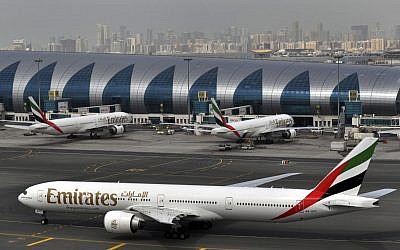 |
| An Emirates plane taxis to
a gate at Dubai International Airport at Dubai International Airport in
Dubai, United Arab Emirates. (AP Photo/Adam Schreck) |
What the Iranian mission to the United Nations was referring to was a 30-year-old incident when the USS Vincennes was engaged in a chase of Iranian speedboats that had opened fire on a helicopter as they fled into Iranian territorial waters.The ship mistakenly identified an Iran Air passenger jet on its way to Dubai, as an Iranian F-14 fighter jet and fired two missiles at it, resulting in the death of all aboard the flight. A tragedy in the field of combat during the Iran-Iraq war.
 |
| Young boys, aged 12-17 years, wore red headbands with the words 'Sar
Allah' in Farsi (Warriors of God) and small metal keys that the
Ayatollah declared were their tickets to Paradise if they were martyred
in their mission |
During a deadly war between two neighbours; Iran and Iraq. A war where Iranian teens were sent into minefields convinced to become martyrs whose deaths would clear the way for seasoned Iranian military troops to enter the field of combat without fear of being blown up by the mines. The Iranian teens were each given a 'key' to Paradise to take with them, a talisman that would ensure they would be rewarded for their courageous act of heroism in the greater interests of the Islamic Republic of Iran.
The current tensions in the Gulf have resulted as a stand-off between the Iranian Republic and the United States initiated with the White House pull out of the nuclear deal that President Trump cancelled, imposing fresh sanctions on Iran and the theistic regime responding that nothing would now hold them back from refining uranium to weapons-grade material. That, added to Iran's continual threats to close the Gulf to all shipping but their own and recent disabling of three ships by Hezbollah, near the United Arab Emirates coast, and a Houthi strike on Saudi Oil refineries.
More than ample provocation. And despite Iran's continual challenges to its Sunni Middle East rivals and by extension to the United States; threats aside, Iran claims to be disinterested in engaging in a full-scale war with the United States. At the very same time its Islamic Revolutionary Guard Corps heads snarl their own warning to the U.S. that should any effort be made on their part to contest Iran the costs to the United States would be beyond consequential. If there is anything that Islamic nations both Arab and Persian excel at, it's hyperbolic intimidation.
Iran feels it should be able to impose threats and intimidate its neighbours, complete with sabotaging their oil tankers and bombing oil pipelines without repercussions. They simply have to shrug and state they weren't involved, despite giving imperative orders to their affiliated terrorist groups. The hubris of the Iranian ayatollahs is beyond impressive, though it does stray into the territory of rabid fanaticism typical of fundamentalist psychopaths.
Iraq is discombobulated that ExxonMobil has abandoned ship, so to speak, evacuating their staff from Basra; obviously heeding all the warning signs of impending clashes should impetuosity continue partnering with oblivious disregard for penalties. Bahrain has ordered its citizens to leave Iraq and Iran given
"the recent escalations and threats". Iraq's oil minister, Thamer al-Ghadban states:
"The temporary withdrawal of employees has nothing to do with
security in southern Iraqi oil fields or any threats.The reasons are political and probably linked to tensions in the region." Well -- 'probably'.
 |
| Workers walk in the Nihran Bin Omar field north near Basra, Iraq, in
2017. An Iraqi oil official says employees of energy giant ExxonMobil
have started evacuating an oil field in the southern province of Basra
amid rising tensions between the United States and Iran. | AP |
The White House response to the Iranian challenges to the European partners of the nuclear deal and allied threats has been to order an aircraft carrier and B-52 jet bombers into the area. Perhaps a trifle more ominous is the order for all non-essential U.S. staff to remove themselves from diplomatic posts in Iraq. A move that Iraq views with considerable alarm; pitting it between its two allies, the Islamic Republic of Iran and the United States of America. A most uncomfortable position it has no wish to occupy.
Yet neither is U.S. President Donald Trump
"seeking war". Still the 60-day warning deadline for new terms whose absence will hasten the enrichment of uranium to weapons-grade for a Tehran that has no interest in nuclear weapons, much less the building of atomic warheads to sit atop those more technologically advanced Intercontinental Ballistic Missiles Iran has boasted could reach the continental U.S. mainland... Oh, and Israel, the lesser of the two targets in difficulty in achieving Iran's goal, but the greater of its ambitions.
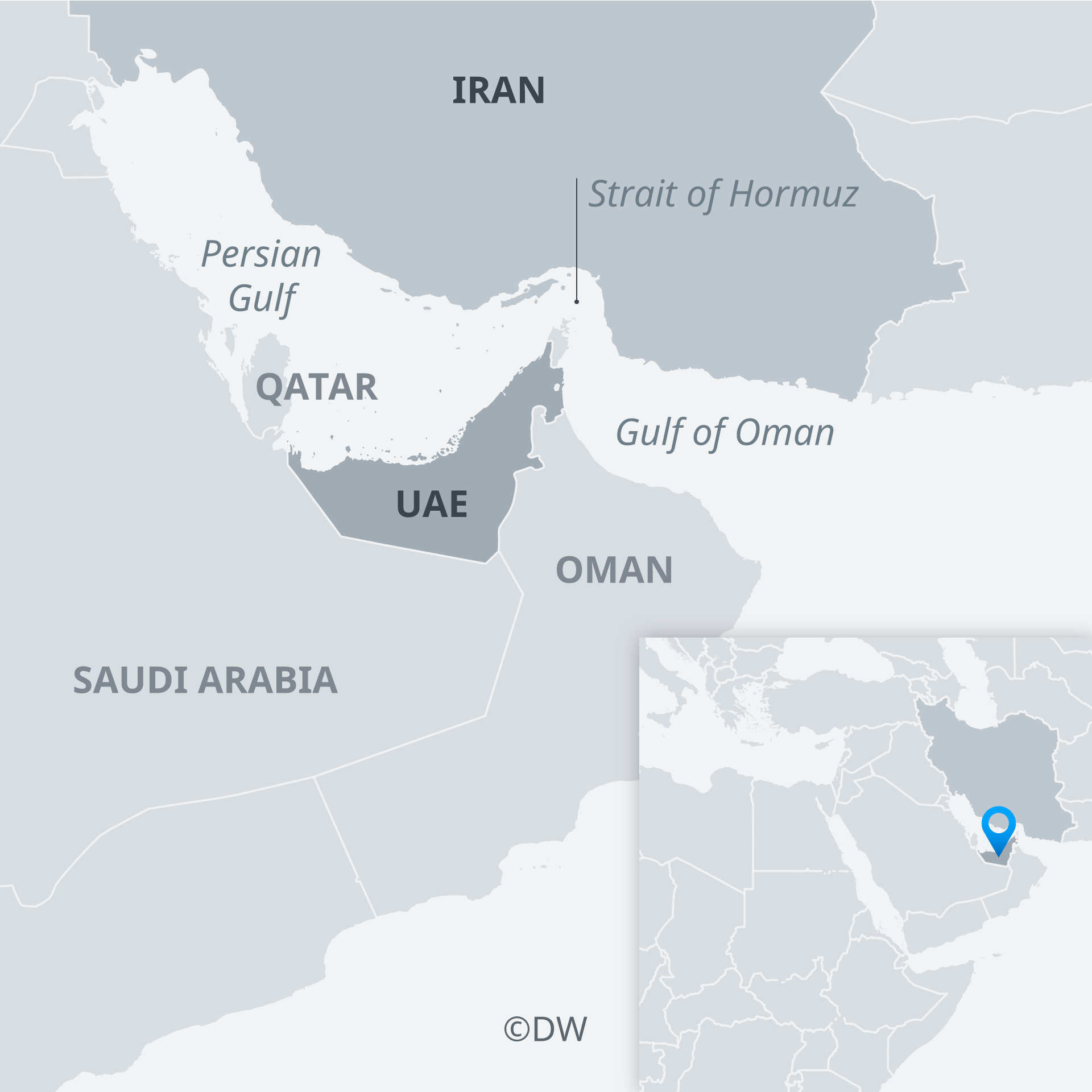
Aircraft flying in the region, warning aside, noted the FAA in its heads-up to Airmen, cautions that all commercial aircraft in flight over the Persian Gulf and the Gulf of Oman must be aware of Iranian weaponry and fighter jets; that aircraft might conceivably experience navigation instruments interference and jamming of their communications systems
"with little to no warning".
"There has never been a threat or risk to civilian air traffic in the Persian Gulf from Iran" responded Alireza Miryousefi,
Minister and head of Media office, Iranian Mission to the United Nations.
Labels: Aircraft, Islamic Republic of Iran, Persian Gulf, Shipping, Threats, United States


