There is Popularized Impression And There is Reality
"We discovered that, in our opinion, much of the coverage of the Gaza war is just factually wrong. If Israel wanted to kill as many civilians as possible, like in a genocidal situation, or was even indifferent, it could just kill hundreds with one bomb.""You don't see any clip or other forensic evidence in the Gaza war for frontal massacre, putting a line of civilians against the wall and mowing them down, or executing prisoners from close range, you know one by one.""[The Palestinian-American Medical Association claimed children were shot by snipers] intentionally, virtually every day. We don't rely on any source that our critics cannot check and verify by themselves.""Allegations of indiscriminate or disproportionate bombing as evidence of genocidal intent are also examined, and found wanting. The IDF, according to the study employed an array of unprecedented precautions to limit collateral civilian damage, including advance warnings.""[Deaths in] safe zones [were rare, relative to active combat areas].""Safe zones, as defined in international law, should actually be the initiative of the defender. Hamas shot hundreds of rockets from the safe zones."Professor Danny Orbach, military historian, History and Asian Studies, Hebrew University, Jerusalem
Debunking the Genocide Allegations
The Begin-Sadat Center for Strategic Studies, Bar-Ilan University, Jerusalem
International
affairs has been gripped by the claim that Israel is committing
genocide in Gaza. A claim that has been embraced by those calling
themselves experts in the field of human rights, and by leaders of
countries that Israel formerly considered Western democratic allies.
Recently, a new study has been published that through thorough research
of the accusation and meticulous attention to the reality of proofs
available has found the accusations to be entirely false in their
hysterical and often triumphant declarations.
The
Israeli think tank's study runs to 330 pages, entitled "Debunking the
Genocide Allegations", where military historians and quantitative
analysts systematically address the claims accusing Israel of crimes
against humanity. Their conclusions following careful study is that the
evidence fails to support the charge that Israel is committing genocide
in its offensive against the Palestinian terrorist group Hamas which
perpetrated a mass atrocity in southern Israel when thousands of its
operatives rampaged through farming villages raping and slaughtering
Israelis. A massive crime against humanity itself that instigated the
conflict in Gaza.
Around
the time of the study's release, a United Nations group -- the
Independent International Commission of Inquiry on the Occupied
Palestinian Territory -- had issued its own report. Theirs, concluding
that genocide against Palestinians in Gaza is being perpetrated by
Israel. According to the commission, Israeli authorities and security
forces carried out four of the five qualifying acts for genocidal intent
outlined in the 1948 Genocide Convention: killing members of a group;
causing serious bodily or mental harm; deliberately inflicting
conditions of life meant to destroy the group; and imposing measures
intended to prevent births.
 |
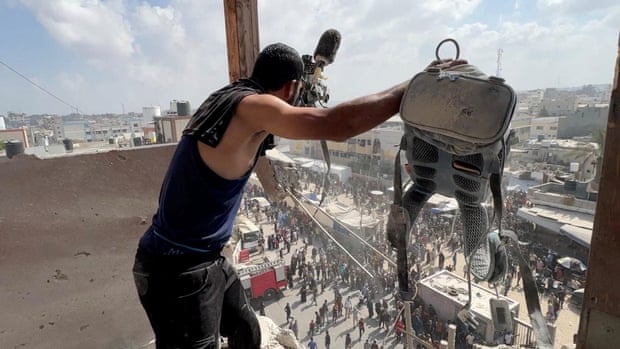
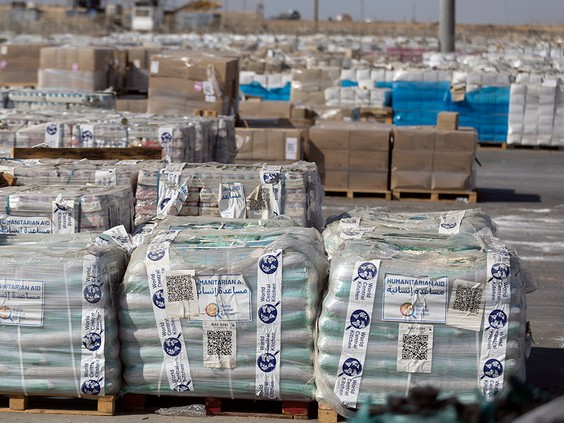
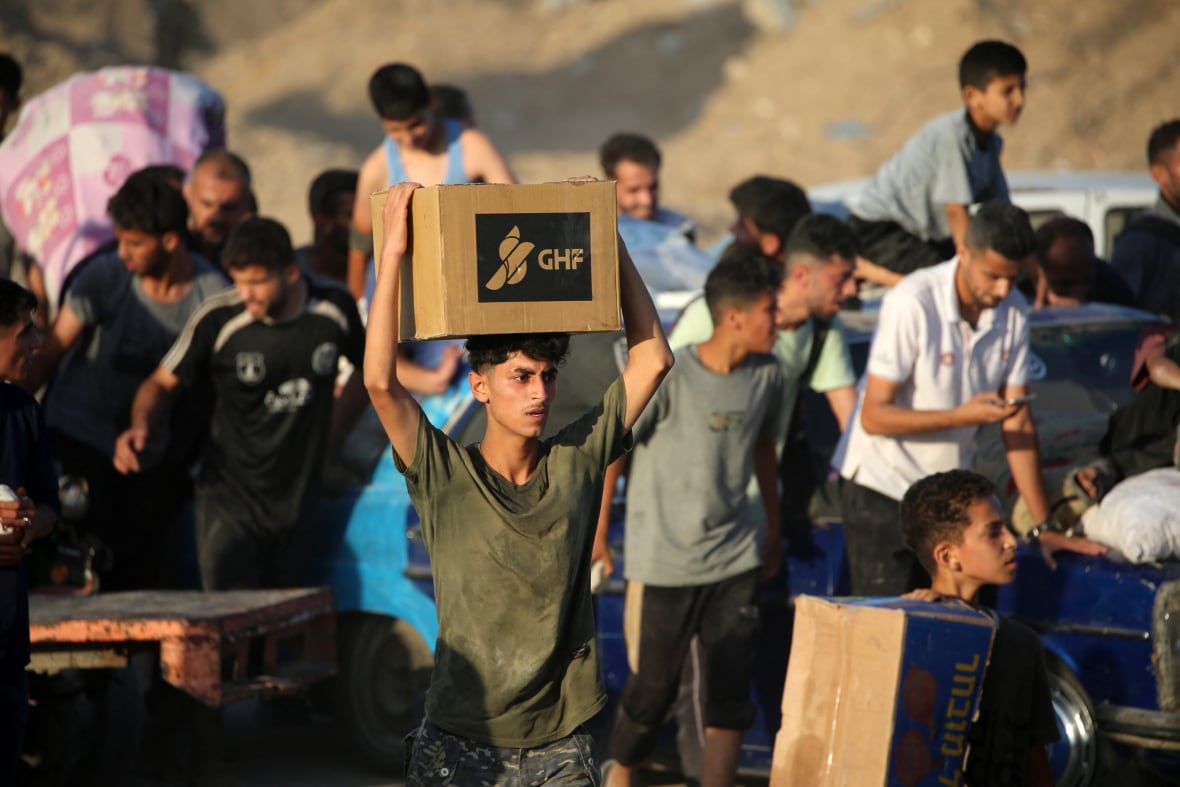
| Palestinians leave a food distribution point run by the US and Israeli-backed Gaza Humanitarian Foundation with bags and boxes, near the Netzarim corridor in the central Gaza Strip, on August 3, 2025. Photo: Eyad BABA / AFP |
The researchers working alongside Dr. Orbach took "a multi-layered approach" with
the use of open-source facts, legal analysis and ethical analysis.
Released through the Begin-Sadat Center for Strategic Studies at
Bar-Ilan University, the report reached a conclusion wildly divergent
from that of the UN body. The focus on intentionality, central to the
genocide allegations, that Israel deliberately took measures to
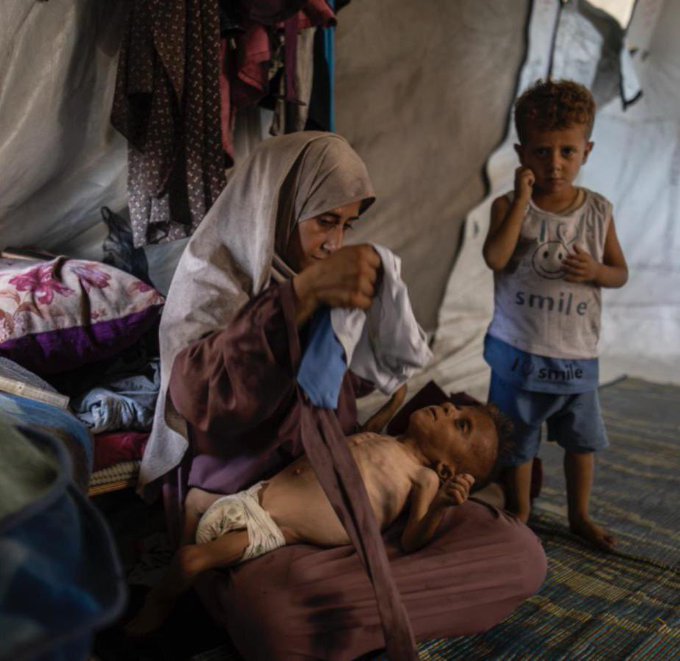
annihilate the population of Gaza through a program designed to starve
civilians, massacre non-combatants and bomb indiscriminately, were found
to be totally inaccurate; in fact completely manufactured slander.
The
vast majority of civilians in this war, pointed out Dr. Orbach, were
killed for a variety of reasons not represented by malicious intent;
being caught in the crossfire, misunderstandings or incorrect
assumptions by Israeli soldiers, or having been used as living shields
by Hamas. One core plank in the genocide accusation is that Israel
deliberately sought to starve the population of Gaza. supported through
repeated claims by humanitarian groups. Fundamental methodological and
factual errors compounded the issue, found the study authors; the
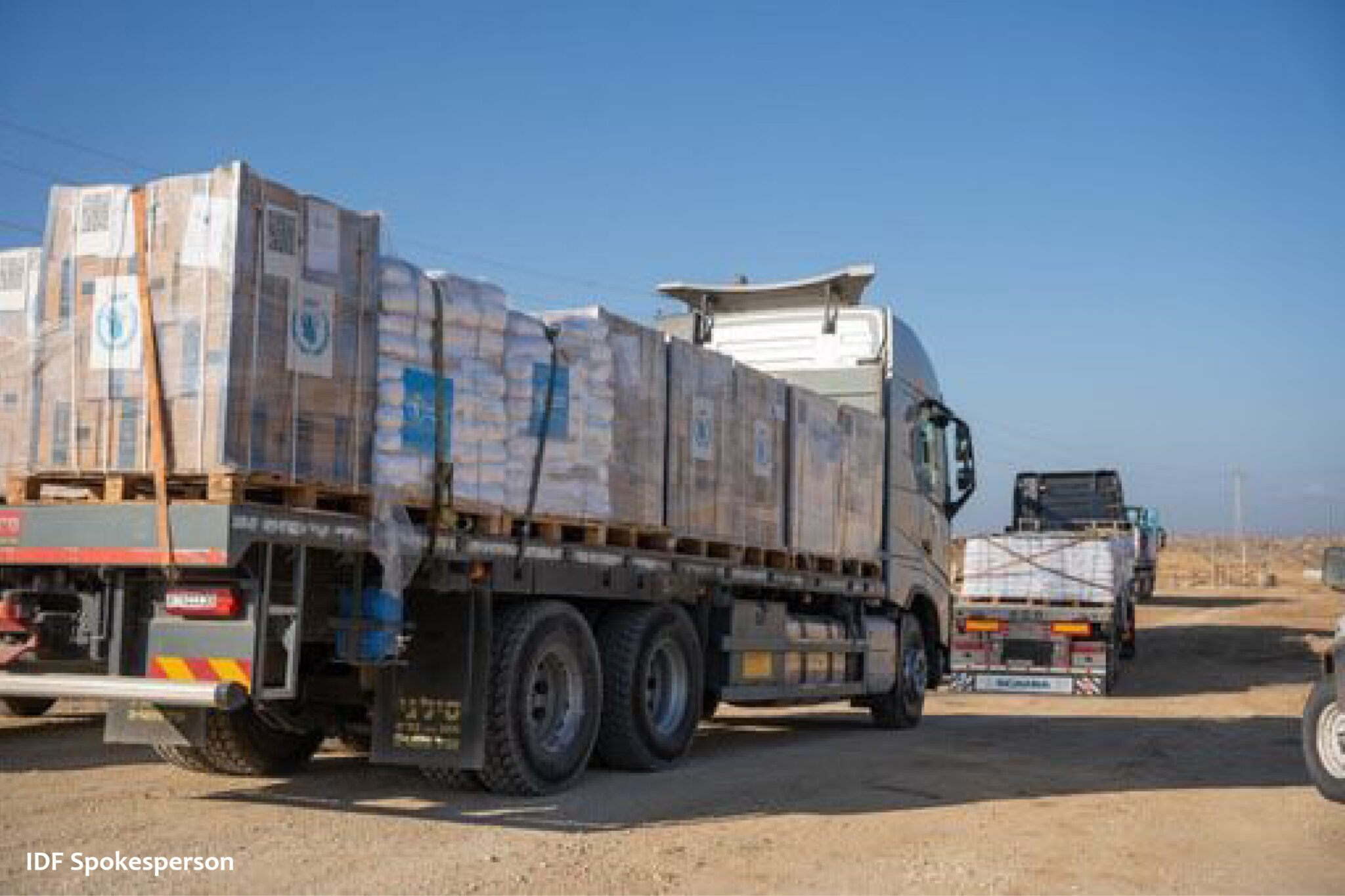
benchmark of 500 aid trucks daily as minimum for Gaza's population
survival was based on misinterpreted prewar data when the actual average
of food trucks entering Gaza in 2022 was 73 daily.
"[The United Nations] bears responsibility for the death of many Gazans, by not cooperating with evacuations to safe zones when there was still time.""Hamas, furthermore, ought to have opened its network of underground tunnels for civilian safety.""What Hamas did was put Palestinian civilians in danger intentionally, because they knew that the world will blame Israel.""The humanitarian bias [coming from UN agencies and human rights organizations who suspect a humanitarian disaster is about to happen and] exaggerate in order to mobilize public opinion.""Political biases of the experts suddenly became very important. These manipulations meet a very eager audience. ...Then it gets more and more space in the media."Professor Danny Orbach
 |
| Troops of the IDF’s Golani Brigade are seen operating in the Morag Corridor area of the Gaza Strip, in a handout photo issued by the military on April 17, 2025. Photo: Israel Defense Forces |
During
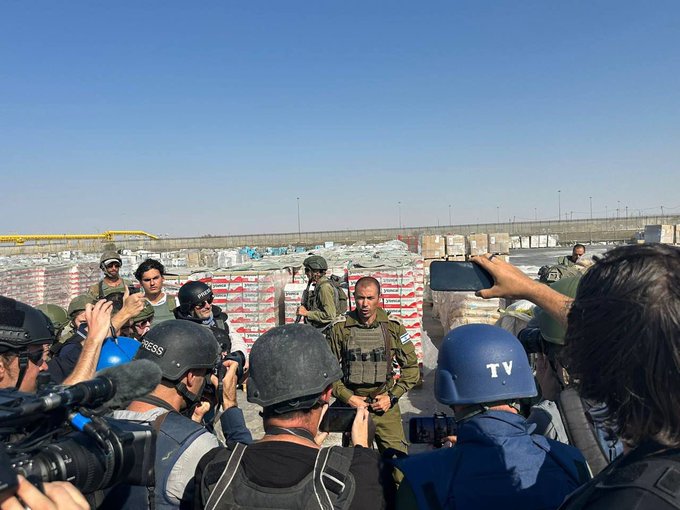
much of the conflict, in fact, Israel facilitated food entry into Gaza
at or above prewar levels. No wars predating the conflict in Gaza saw
any military undertaking the care of the population whose country they
had invaded for defensive/offensive reasons "where one side supplied humanitarian aid in massive amounts"
for two years, to enemy-controlled territory. And nor did gruesome
predictions that tens of thousands would die of starvation materialize.
Medical and mortality data that Hamas's own Gaza health ministry
gathered failed to register famine or mass nutrition-related deaths.
Neither
surveys on the ground nor reliable nutritional assessments validated
claims of widespread starvation based on circular citations and media
echo chambers. As to the charge that Israel acted on a policy of
systematically killing civilians, the study authors relied on the
absence of intent and systematic execution; prerequisites of genocide's
legal definition. The researchers stated no credible proof was found
that Israeli policy-directed attacks aiming to kill civilians could be
found after surveying extensive forensic evidence, testimonies and video
documentation from Gaza.
61
of some 50,000 war casualties by official Gazan counts only could be
plausibly attributed to deliberate IDF actions, linked to unreliable or
disputed sourcing. According to the study, the IDF employed an array of
unprecedented precautions for the purpose of limiting collateral
civilian damage, including advance warnings of strikes. Dr. Orbach
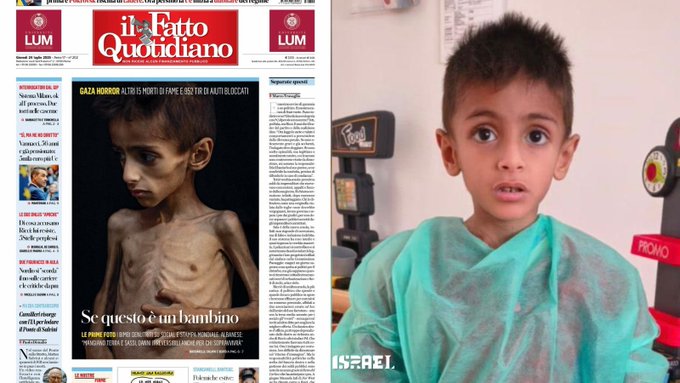
described a phenomenon akin to a domino effect, when anti-Israel
individuals stationed within world bodies make false claims, then quoted
by NGOs, and subsequently appear in the media, finally cited by other
publications "So the average viewer thinks there are numerous sources which document the Israeli crimes in Gaza."
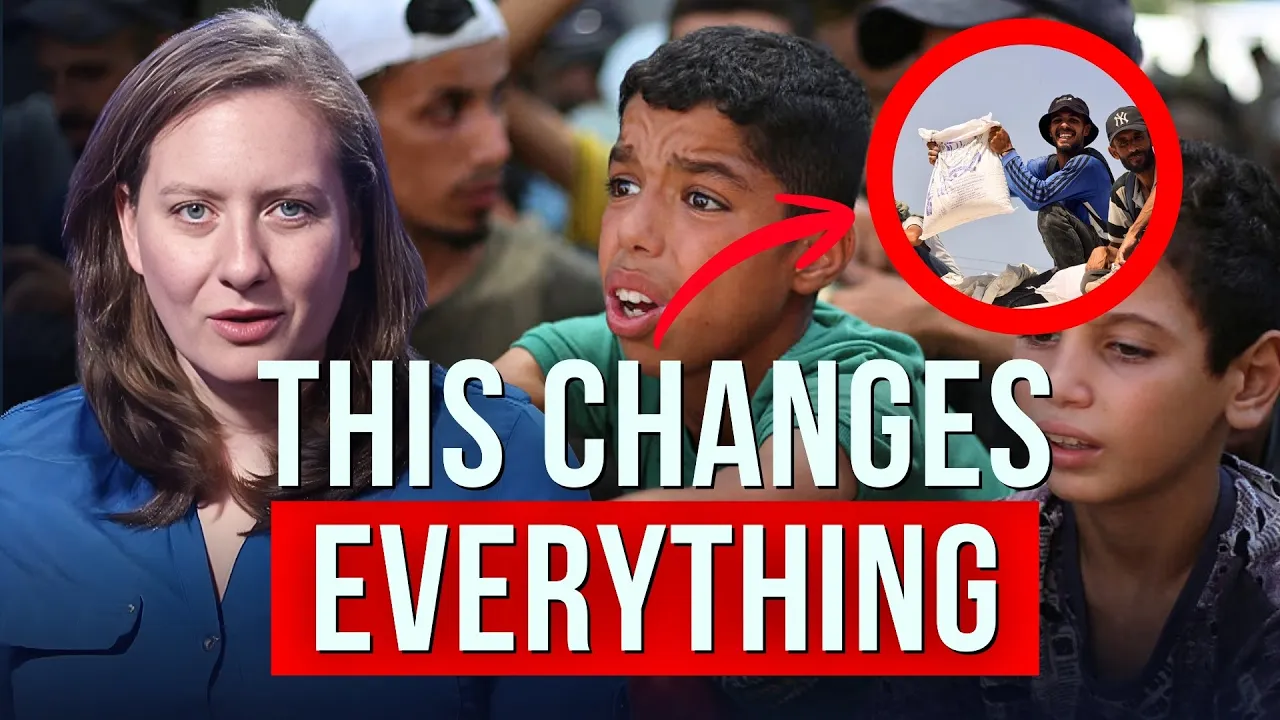
"So the average viewer thinks there are numerous sources which document the Israeli crimes in Gaza. On a similar idea, a report from the Network Contagion Research Institute and the Rutgers University Social Perception Lab, called "The 4th Estate Sale" How American and European Media became an Uncritical Mouthpiece for Designated Foreign Terror Organization [made the case that large numbers of media uncritically parroted Hamas talking points].""The Hamas-run health ministry published in the beginning of the war that 70 percent of the war casualties are women and children. Even they retracted this later. But again the retraction was very silent, and the initial news was very loud."Professor Danny Orbach
 |
Labels: Ample Food Aid, Casualty Numbers, Claims of Genocide, Deliberate Obfuscation of Reality, Gazan Palestinian Population, Hamas Atrocities in Southern Israel, Israel Defense Forces in Gaza
posted by Pieface @ Monday, September 22, 2025