Memories of Newfoundland's 9/11 'Guests' : Operation Yellow Ribbon
 |
| NBC New York |
"Our college year just started ... And it was a normal morning. Everybody was in class, or wherever they were supposed to be.""Everybody started crowding around the television, some radio. And the campus virtually came to a standstill.""When the passengers came down to their breakfast, it was like walking into a first-class hotel. I mean, everything in the world that you wanted for breakfast was available.""The big problem our cooks had, after the first day, was the stores were running out of food. [But] our cooks had managed to secure, you know, 250 or 300 chicken breasts in their raid of the stores the night before.""The Salvation Army took control of the local hockey rink, and ... turned that into a walk-in cooler."Newfoundlander Mac Moss
 |
| T |
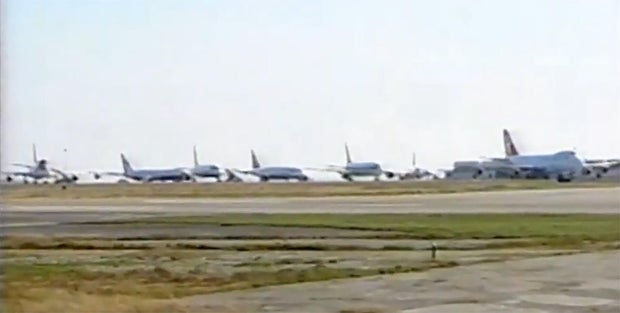
Gander is about 335 kilometers distant from St. John's, the capital of Newfoundland. In 2001 the eyes of the world turned on northeastern Newfoundland, as it became known as a temporary haven for frightened Americans unable to fly through American skies for the period of time that U.S. internal security locked its airspace to flight in the grimly sober aftermath of the al-Qaeda terrorist attack on New York's Twin Towers, Washington's Pentagon, and the Pennsylvania interruption by passengers of a third plane heading for destruction of yet another U.S. landmark.
The world was shocked into incredulity at the brazen unexpected, appalling violence unleashed by terrorists overcoming passenger flight pilots on a massive suicide-mission to steer the planes they commandeered directly into iconic American buildings, to destroy them and all the lives that occupied them on that fateful day. A quarter-century has since passed, but for Newfoundlanders who cared for over 6,700 stranded Americans for days following the attacks, that memory will last as long as they do, and beyond.
At that time, principal of the Gander Campus of the College of the North Atlantic, Mac Moss was alerted to the attacks when a staff member called to tell him "We're listening to the radio up here. And a plane just flew into one of the World Trade Center Towers". The emergency services of the town of Gander soon called him, asking whether accommodation could be made by the campus to look after incoming planeloads of passengers, to provide shelter, first aid and food. "I knew the size of the campus, the space we had available, and I said yes", said Moss.
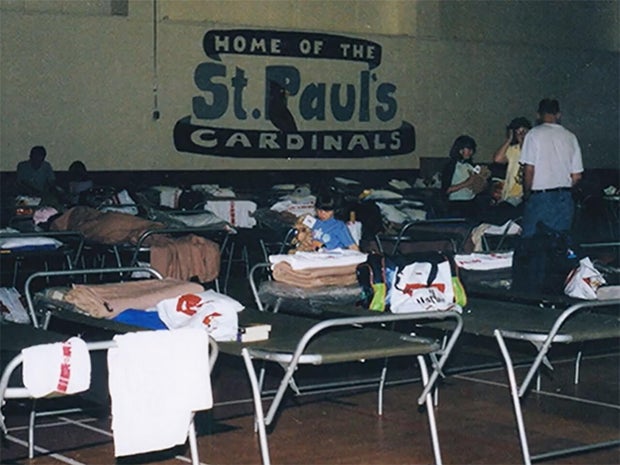 |
A jumbo jetload of people disembarked at 7:00 p.m., carrying 234 passengers, the first of two such planes the college ended up hosting. It just happened that the college had commercial cooking and electronics classes on tap, allowing students and staff to prepare hot food, set up television feeds, install microphones in the cafeteria and gather linked supplies Employees of the college and their spouses volunteered bedding and food for their 'guests'. Free medical treatment, including prescription renewals was provided by Gander. A few student nurses assisted. "We had them set up serving a little triage area", recalled now-retired former principal Moss.
Tight living conditions necessarily prevailed for the passengers, with "20 or 30 people to a room, and ... they were lying on a tile floor, with just a blanket or a sheet underneath them. If they didn't have a pillow, we gave them an extra sheet to put over shoes for pillows". Once the passengers left, Mr. Moss recalled, he had slept only several hours in those three days when his campus hosted the passengers. He eventually published a book, 'Flown into the Arms of Angels: Newfoundland and Labrador's Unsung Heroes of 9/11', in 2021
Some of those American 'guests' have remained in contact with some of the Newfoundlanders who had hosted them during that fearful, trying time. The impression the entire event held with him, recalls Mr. Moss is "how well our towns -- plural our towns -- were prepared to handle such an event, and they didn't know it, because they had never experienced [this] before".
The Town of Gander has planned a "Parade of First Responders", along with a special remembrance of the thousands of lives lost in 9/11. The commemorative events for the 25th anniversary of the plane landings and the American citizens who became temporary guests, will host a number of notables, expected to speak at the commemoration. Among them, U.S. Ambassador Pete Hoekstra, Newfoundland and Labrador Premier Tony Wakeham, and former prime minister Jean Chretien, in office on the day of the attack when between 224 and 240 U.S. flights were diverted from U.S. airspace to Canadian airports.
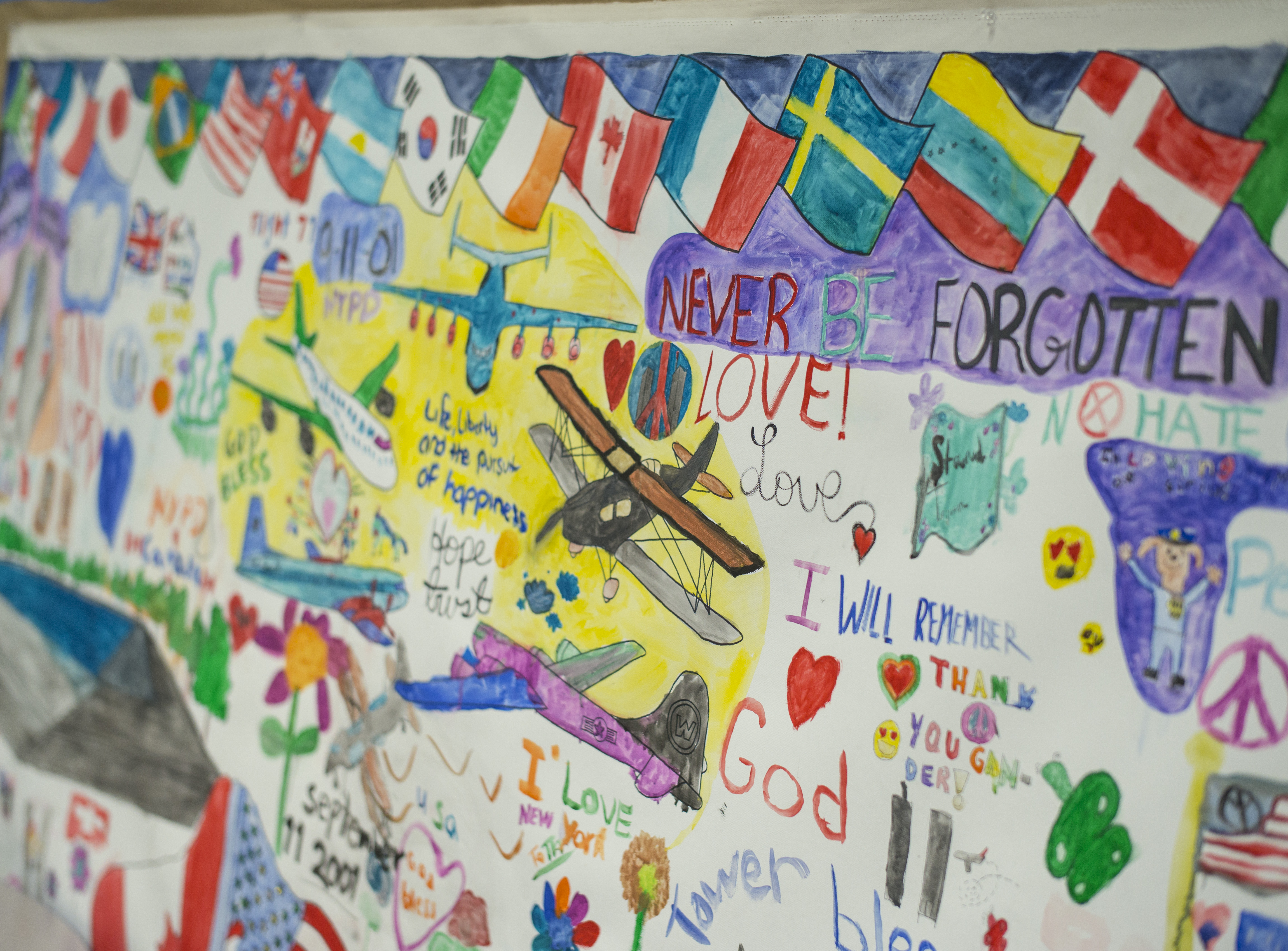 |
Mural Thanks Gander for Hosting Stranded Travelers on 9/11, Memorial and Museum, Gander, Nfld |
"I did over 300 interviews, and I always asked them the same question: 'How did you feel after the passengers left'?""What they remembered most was the total exhaustion.""After the passengers left, I don't think I had a good night's sleep for two or three months [mulling over details of the few days hosting confused U.S. plane passengers]."Newfoundland host Mac Moss
Labels: 9/11 Tragedy, Closed American Airspace, Commemoration, Newfoundland, Planeloads Landing in Gander/Nfld
posted by Pieface @ Wednesday, September 09, 2026


