Thursday, November 07, 2024

A Painful, Measured and Timely Dismissal


"Unfortunately, over the past months, the trust between me and the minister of defence has been broken." 
"There were significant gaps regarding the management of the [military] campaign,and these gaps were accompanied by statements and actions that contradicted the decisions of the government."
"I made repeated efforts to bridge these gaps, but they only widened."
"These issues even reached the public in an unacceptable manner, and, worse, became known to our enemies, who took pleasure and found advantage in it."
Israeli Prime Minister Benjamin Netanyahu
https://ichef.bbci.co.uk/news/1024/cpsprodpb/c6be/live/dda75400-9ba3-11ef-8e3e-5bfa33da8025.jpg.webp
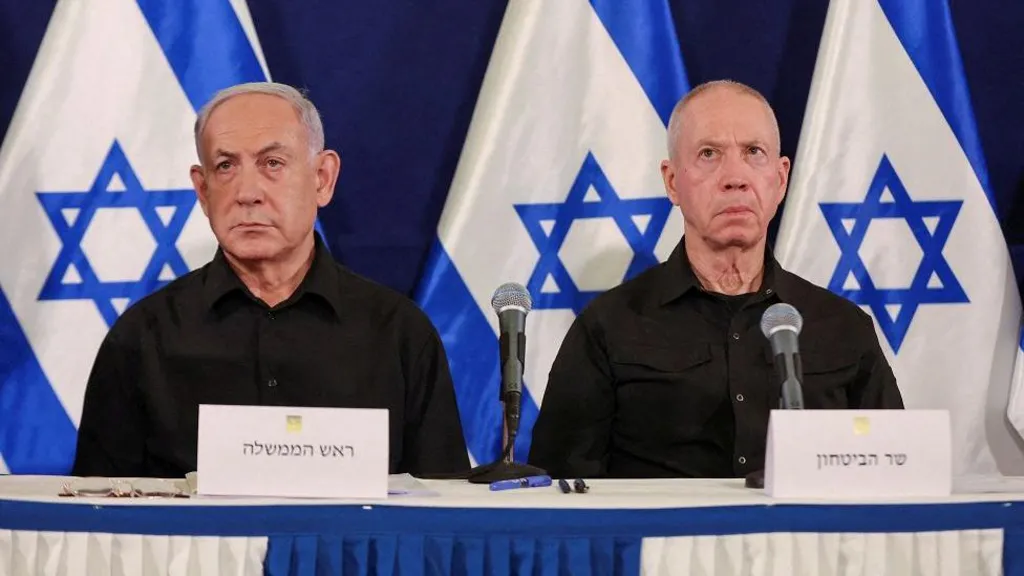
A photo from October last year; Netanyahu, Gallant during a press conference   Reuters

That explanation for the shocking dismissal of Israel's minister of defence is more than adequate reason that Mr. Netanyahu's decision, albeit difficult, was necessary. The elected principal authority responsible for the welfare and security of the country should not and cannot be abused by anyone regardless of their conviction that their solution to unprecedented and dangerously existential events have greater resonance with the goal of safeguarding the country and its citizens. Collaboration and cooperative efforts to find workable solutions take place during decisive cabinet meetings, not in the heat of the battlefield or during times of stressful and unwarranted decision-making in contradiction to the plans of the leader of the nation.

A breakdown in trust is a sorrowful admission that collegial political collaborative reliability has been broken. No country can possibly achieve its primary goals of maintaining its legitimacy and security in the face of ongoing multiple threats of violence when its primary officials fail to agree on strategies meant to address threats against its very existence. Defence Minister Yoav Gallant may swear that his first and foremost interest is in safeguarding the country, but unity in government is required, to that end.

A replacement has been named, in Foreign Minister Israel Katz, who has the confidence of the Prime Minister, while a replacement for his position, Gideon Sa'ar, currently Minister-without Portfolio  is prepared to take on the post of top diplomat. Loyalty as well as preparedness and situational familiarity and experience are all necessary attributes in support of a government embattled not only by hostile exterior forces, but aggravated internal forces as well.

Mr. Netanyahu had informed Gallant his firing would have 48 hours before the move came into effect through a letter of dismissal, which concluded with the obligatory courtesy of commendation despite the tense and stressful circumstances: "I would like to thank you for your work as defence minister". A face-to-face meeting over the issues involved was said to have taken no more than three minutes before it concluded.

It seems that a total clean sweep of the top echelon of the military, alongside that of the defence minister was in the cards, perhaps not surprisingly. Together Messrs. Netanyahu and Katz have revealed their intention to replace Israel Defense Forces Chief of Staff Lt. Gen. Herzi Halevi along with other senior Israeli security officials. The defence minister responded to his firing by writing: "The security of the State of Israel was and will always remain my life's mission." But evidently not in tandem with the ruling government.

Prime Minister Netanyahu, along with other coalition members had condemned Gallant six months earlier for having demanded that Jerusalem commit to Palestinian control over the Gaza Strip once the conflict with Hamas was resolved. Following the Israel Defense Forces' discovery of the bodies of six hostages in a Hamas tunnel in southern Gaza,  Gallant demanded the Prime Minister turn away from his vow to maintain IDF troops on the Philadelphi Corridor, as a measure to prevent a reoccurrence of October 7.

In a belated bid to stave off his dismissal,Yoav Gallant apologized. But it represented that classic dilemma of 'too little, too late', at a time when the majority of Likud Party members had lost faith in Defence Minister Gallant, urging that he be fired from his vital position, according to a JNS/Direct Polls survey taken back in July.
"In the midst of a war, more than ever, full trust is required between the prime minister and defense minister"
"Unfortunately, although in the first months of the campaign there was such trust and there was very fruitful work, during the last months this trust cracked between me and the defense minister."
Prime Minister Netanyahu

Labels: , , , ,

Wednesday, March 29, 2023

Dividing a Nation


"[In Israel at the present time] judges are appointed by the president [an otherwise-ceremonial executive position] on the advice f the judicial selection committee, composed of nine members including three Supreme Court justices and two representatives of the Israel Bar Association."
"Given that Supreme Court appointments require the consent of seven members the legal profession maintains a de facto veto over the makeup of the court, a situation unique to Israel."
"The proposed legislation would turn the committee into an 11-member panel, six of which would be controlled by the governing coalition. The bill was amended earlier this week to give the government control over the first two Supreme Court appointments that come up during its tenure, but require the support of an opposition member for a third and both a judicial representative and an opposition MK for a fourth"
Jesse Kline, National Post
 
"We are on the path toward a dangerous collision in Israeli society. We are in the midst of a crisis that endangers the basic unity between us. Such a crisis requires us all to act responsibly."
"When there's an opportunity to avoid civil war through dialogue I, as prime minister, am taking a time-out for dialogue."
"[I remain determined to pass a judicial reform but in the interim we opt for] an attempt to achieve broad consensus."
Israeli Prime Minister Benjamin Netanyahu
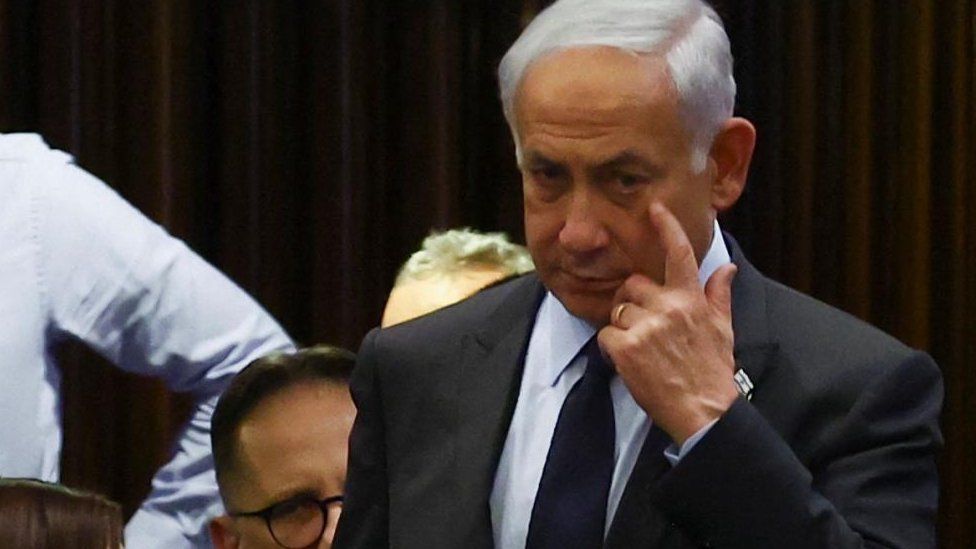
netanyahu at knesset, 27/3
           

Israel's fifteen-member Supreme Court is free to serve until age 70. Given the notoriously short term governments thanks to the electoral system of proportional representation, and the number of political parties representing every facet of Israeli society, governments have a tendency to instability. When elections take place, the party receiving the most votes of a fractured total vote count representing all the competing parties with their partisan interests, must seek a coalition in support of a shared government to gain sufficient seats to govern.

In the instance of Benjamin Netanyahu's Likud party, with him as head having received the the most votes, alliances were made with right-wing parties, chief among them the ultra-orthodox. Prime Minister Netanyahu was minded in agreement with his government partners to make judicial reforms for the purpose of reasserting elected government authority in enacting legislation, often usurped by the unelected social-justice-focused Supreme Court. 

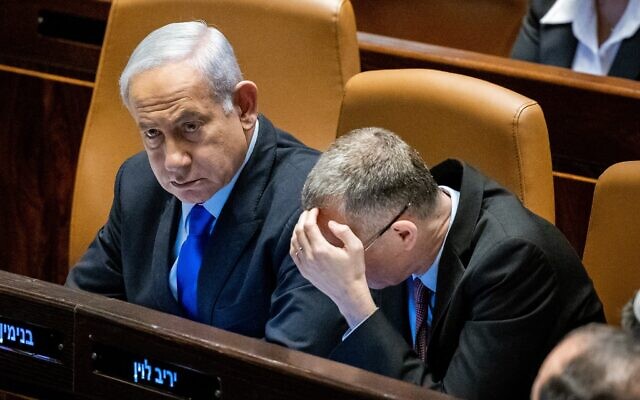
PM Netanyahu & Justice Minister Yariv Levin (Flash90)
The previous government and its coalition partners were focused on the left. In the last general election a majority of voters indicated they were intent on a change of government. Which was not hugely celebrated by the outgoing government whom the electorate had just 'fired' from office. They viewed the current government's move to amend the appointment capabilities of the judicial selection committee inconvenient to their perspective, in the process muting the authority taken by the Supreme Court to challenge the elected government.

Claiming that such a change would deleteriously affect the nature of Israel's democracy and neuter the Supreme Court, the opposition in the Knesset set about persuading their supporters among Israel's left wing that should this change take effect, their rights would be impacted and the country they love would be democracy-impaired, while the government in power would become increasingly autocratic. The protests began, with thousands and tens of thousands of Israelis taking to the streets in protest.

While Prime Minister Netanyahu sought repeatedly to reassure the protesters that Israel's democracy would remain unchanged, asking for patience, the opposition continued to incite people to remonstrate and the protests continued and grew with people expressing their vehement denial of the government to proceed with legislating the change it envisioned to deter the Supreme Court from its activist agenda, impairing government initiatives.

Before long, reservists in the Israel Defence Forces joined the protests, refusing to show up for duty. Then the pilots began their agitation, refusing as well to allow the government to proceed with its plans. Historically the Israeli Supreme Court played an important role in protecting the rights of Arab-Israeli citizens, of women, of non-Orthodox Jews and of the gay community. Now, thanks in part to the agitation caused by the Knesset opposition so recently tossed out of power, protesters believe this work of the Supreme Court would become imperiled.
 
There is also suspicion that forces outside the country have been involved in supporting and promoting the protests; specifically charges have been made that the U.S. State Department is involved. Infamously, during the Obama administration, in his earlier stint at government, Benjamin Netanyahu was treated with contempt and diplomatically insulted repeatedly. President Joe Biden, Barack Obama's successor in the Democratic Party, inherited all the anti-Netanyahu bias of his predecessor.
 
A Democratic-ruled United States is in no mind to see a right-wing Israeli government interacting with it. The situation in Israel has become seriously destabilizing. All the more so when members of its military, as professional an army as any of the best anywhere in the world, is facing mass insurrection. A nation surrounded by terrorist groups, funded as proxies by the Islamic Republic of Iran with its stated goal of destroying the Jewish state is not in a good place when it cannot function to its full professional capacity. 
 
Hamas and Hezbollah have both tested the waters of this sea-change in the professionalism of the IDF. Exploratory forays by each were apprehended but if the situation in Israel continues to deteriorate further, chaos will erupt, leaving the country vulnerable both to its own destabilizing hysteria with political/sectarian factions becoming ever more polarized, and from the exterior always prepared to take any advantage they can detect to pursue their agenda of violence.

With Monday's decision to explore further negotiations with the official Israeli opposition in an effort to cool down the fires of partisan outrage over a decision by the new government to bring the outsize influence of the Supreme Court into line with those of most other democratic nations of the world, the impasse must come to a mutually agreeable conclusion, one that will forestall further disintegration of civil discourse and continue imperilling the nation.

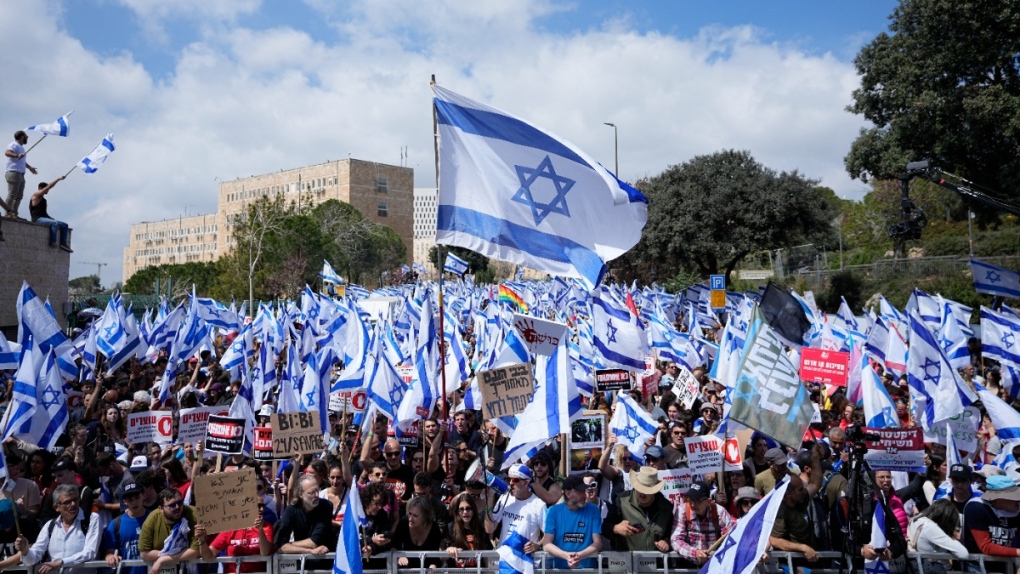
Israelis protest against Prime Minister Benjamin Netanyahu's judicial overhaul plan outside the parliament in Jerusalem, March 27, 2023. (AP Photo/Ohad Zwigenberg)

Labels: , , , , ,

Follow @rheytah Tweet