Friday, May 08, 2026

China's Territorial Ambitions Linked to Mining Assets and Conflict

"China is pouring enormous resources in an effort to emerge a a world-leading oceanographic power."
"[With mapping of this nature], you can use it for science, and you can use it for warfare."
Bruce Jones, naval affairs and foreign policy expert, Brookings Institution
 
"Dozens of Chinese research vessels are on a quest to map the sea floor at strategically vital regions of the world's oceans."
"Some of the surveying is for mineral deposits and fishing grounds, but the data the ships collect has a military application."
"It gives Beijing a detailed picture of the maritime environment in which submarine battles will be waged if conflict erupts, naval experts say."
Reuters 
 
"The scale of what they’re doing is about more than just resources."
"If you look at the sheer extent of it, it’s very clear that they intend to have an expeditionary blue-water naval capability that also is built around submarine operations."
Jennifer Parker, adjunct professor of defense and security, University of Western Australia; former Australian anti-submarine warfare officer 
 
"It is frankly astonishing to see the enormous scale of Chinese marine scientific research."
"For decades, the U.S. Navy could assume an asymmetric advantage in its knowledge of the ocean battlespace."
"[China’s efforts] threaten to erode that advantage. It is obviously deeply concerning."
Ryan Martinson, associate professor, Chinese maritime strategy, U.S. Naval War College   
https://www.reuters.com/resizer/v2/CXLQ7HZIQVAMJGGFQWM6KTHS3A.jpg?auth=fa084d302ab1eba84a060f3353e7d30fbdad4faba65e53c0485eac3ec6e99a8d&width=1920&quality=80
The Dong Fang Hong 3 docked in Qingdao, Shandong province. The research ship, whose name translates to "The East is Red," spent 2024 and 2025 moving back and forth in the seas near Taiwan and Guam, and around strategic stretches of the Indian Ocean, ship-tracking data shows. Cnsphoto via REUTERS
 
An atlas of deep-sea mineral deposits was recently published by a research arm of the Chinese government, highlighting Beijing's aspirations to mine the ocean floor, while  underscoring its claims to waters disputed by its geographic neighbours. The maps as well as pinpointing mineral deposits on the ocean bottom, supply the Chinese military with a deep understanding of the seafloor in strategically vital waters. According to experts, this provides Beijing with a clear advantage, should submarine warfare ever break out.
 
Pressure has been placed on other countries ramping up similar efforts, in the wake of the China Geological Survey announcement. The need for other countries to engage in similar oceanographic mapping is critical to reducing dependence on China for critical minerals and rare earth elements which at present, Beijing controls to a great extent globally. It has been well proven that ocean sediments are richly endowed with valuable resources, among them cobalt, nickel and manganese.
 
https://www.reuters.com/resizer/v2/NPKMHWYK3ZBBLPE2DRBG4RUZIU.jpg?auth=57e8e8e87dbae35c8a7e7bad1fa380babda531fee2b74aa87cefa9bf362aaa5a&width=720&quality=80
The USS Minnesota in Western Australia in February 2025. China's mapping of the ocean floor has often focused on areas through which U.S. and allied submarines would need to move during a conflict. U.S. Navy/Lt. Corey Todd Jones/Handout via REUTERS
 
Historically, the United States dominated in ocean-science fields. China has been investing in changing that to its advantage; closing the gap, equipping its military with knowledge enabling it to fight underwater, fear Western experts. The recently published atlas, according to the China Geological Survey website, maps locations and concentrations of a myriad of resources, data amassed from two decades of research and samplings at over 10,000 locations.
 
The atlas included the East China Sea and the Yellow Sea, where Beijing aggressively claims territory, despite that its neighbours have historically considered those territories to be theirs. With control of the majority of the world's key critical metals and rare earth resources essential in modern weapons and technologies, Beijing's dominance has its political dimension, as when it chose to restrict exports during disputes with both the United States and Japan.
 
For its part, Japan is developing its own seabed mining program, partially in a bid to reduce  reliance on Chinese supplies. The Japanese government in February announced that it had  retrieved mud rich in rare earths from depths of over 6,000 meters. International law customs determining national boundaries do exist.  However, occupying and managing a territory can serve the purpose of heavily supporting a nation's claim to owning it, simply by consistent presence.
 
And this appears to be China's modus operandi; to have a presence on disputed territory; land, sea or air. In the territorial waters of other countries, Chinese deep-sea exploration ships have made frequent appearances; including close to the Aleutian Islands in Alaska; as far from actual Chinese territory as can be imagined. Closer to home, China has tested seabed mining equipment in areas claimed by Taiwan and the Philippines.
 
https://www.reuters.com/resizer/v2/3XTJCWE6CRASBN3HHUBT2NEQVI.JPG?auth=52a8341031604a6c36c7eec0f976019da50bf649880397b5237947326e8a131a&width=1920&quality=80
Nuclear-powered Type 094A Jin-class Chinese ballistic missile submarines in the South China Sea in 2018. By mapping and monitoring the oceans, China is gathering critical data to deploy its submarines more effectively and hunt down those of its adversaries, naval-warfare experts say. REUTERS/Stringer


Labels: , , , , , ,

Saturday, May 03, 2025

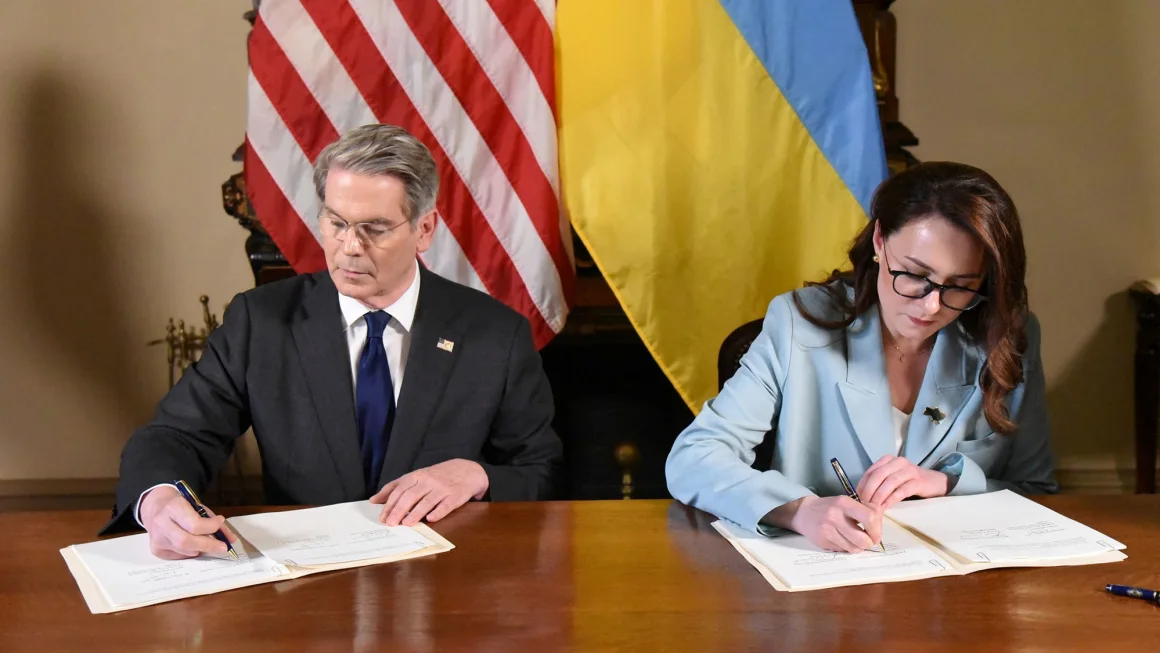
Kyiv -- Washington -- We Have a Deal!

"We have formed a version of the agreement that provides mutually beneficial conditions for both countries."
"This is an agreement in which the United States notes its commitment to promoting long-term peace in Ukraine and recognizes the contribution that Ukraine has made to global security by giving up its nuclear arsenal."
"[Among terms of the agreement are] full ownership and control [with resources staying with Ukraine]." 
"All resources on our territory and in territorial waters belong to Ukraine. It is the Ukrainian state that determines what and where to extract. "
"Subsoil remains under Ukrainian ownership – this is clearly established in the Agreement."
Ukraine Deputy Prime Minister (Economy Minister) Yulia Svyrydenko
 
"As the President has said, the United States is committed to helping facilitate the end of this cruel and senseless war. [This is a] historic economic partnership."
"This agreement signals clearly to Russia that the Trump Administration is committed to a peace process centered on a free, sovereign, and prosperous Ukraine over the long term."
"And to be clear, no state or person who financed or supplied the Russian war machine will be allowed to benefit from the reconstruction of Ukraine."
U.S. Treasury Secretary Scott Bessent 
https://media.cnn.com/api/v1/images/stellar/prod/2025-05-01t071905z-1542748703-rc2v8ea5aotk-rtrmadp-3-ukraine-crisis-us-deal.JPG?c=16x9&q=h_653,w_1160,c_fill/f_webp

Finally, Ukraine has signed an agreement with the United States allowing Washington access to the country's critical minerals along with other natural resources. Kyiv had long held out for guarantees of security of its sovereign territory to accompany any such agreement. And this is what it now feels it has secured with this altered agreement. President Zelenskyy refused to sign any agreement that left out the vital assurance of protection from Russia's ongoing territorial designs on Ukraine. His adamant refusal to sign anything that left out this critical assurance angered and frustrated U.S. President Donald Trump but in the end the Ukrainian demands were unavoidable and were finally met.
 
Kyiv now feels a degree of assurance that the agreement will go a long way to securing the long-term support it needs for its existential defence against Russia's territorial imperative. Previous versions of the agreement that merited Ukraine's refusal had placed Kyiv as a junior partner in the agreement, with Washington accessing unprecedented rights to Ukraine's prized natural resources. Not yet ratified by the Ukrainian parliament, the last rendition of the agreement establishes a reconstruction fund for the embattled country that Ukraine's cabinet views as a potential insurance of future U.S. military assistance.
 
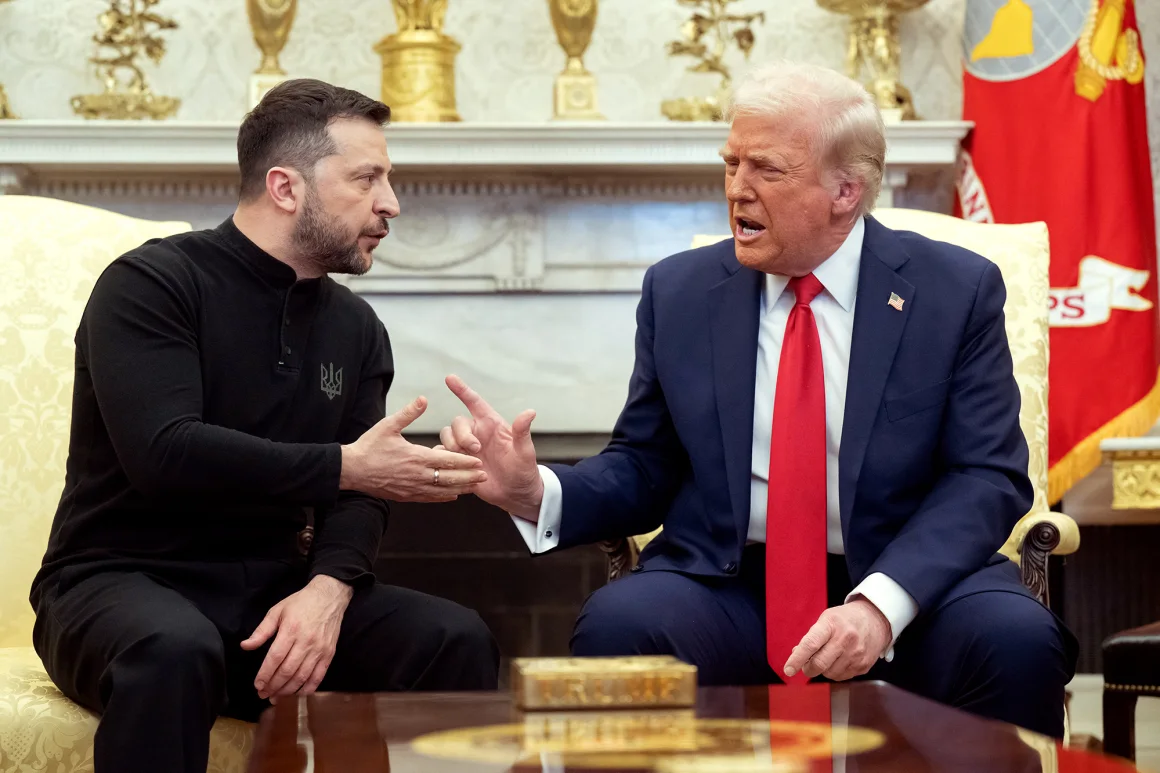
The original such agreement had been upset on the cusp of being signed when a tense Oval Office meeting between President Trump, Vice-President JD Vance and Ukrainian President Volodymyr Zelenskyy erupted into a shouting match of accusations and protestations of intent. The undiplomatic and humiliating treatment of President Zelenskyy by his Washington hosts was unprecedented. Since then a prolonged period of adjusted re-engagement finally resulted in Washington heeding Ukraine's position more clearly and Ukraine prevailing in its efforts to have President Trump fully cognizant of realities.
 
https://media.cnn.com/api/v1/images/stellar/prod/gettyimages-2201830748-20250305124751651.jpg?q=w_1160,c_fill/f_webp

This agreement of benefit to both sides, includes oil and natural gas along with rare earth elements, but does not include resources representing a current source of revenue for Ukraine. Where President Trump had originally demanded that profits from new investments under the deal be used to pay the U.S. for its years of material support in providing military assets to Ukraine during its war with Russia, that is no longer the case. Full ownership of the resources remains with Ukraine which will determine what can b e extracted and where it can be extracted.
 
Some 55 minerals are included specifically in the text but more can be included. Critical minerals such as titanium, lithium and uranium are included in the agreement, along with a group of 17 elements essential to a variety of consumer technology such a s cellphones, hard drives and electric and hybrid vehicle production. Elements such as lanthanum, cerium and scandium are also listed. Ukraine is expected to contribute 50 percent of future profits from natural resources into a fund supported through the U.S. International Development Finance Corporation. 

President Zelenskyy rejected the initial Trump administration deal where Washington expected $500 billion in profit from exploited minerals -- stating he would never sign off on an agreement "that will be paid off by ten generations of Ukrainians". Ukraine's rare earth industry's potential is not yet clear since geological data has yet to be assembled of the mineral reserves scattered across the  vast Ukrainian terrain. Ukraine's reserves of titanium, a key component in the aerospace, medical and automotive industries are thought to be among Europe's largest natural deposits. As well as some of Europe's largest known reserves of lithium in Ukraine; required for the production of batteries, ceramics and glass.
 
Nothing during times of violent conflict, is as simple as it may appear. According to data from We Build Ukraine, a Kyiv-based think tank, an estimated 40 percent of Ukraine's metallic mineral resources are under Russian occupation, and therefore inaccessible. All the more reason for the United States to protect its investment in Ukraine under this agreement by enforcing a 'hands off' warning to Moscow in its intentions to continue annexing Ukrainian territory to be absorbed into Greater Russia. How and whether serious negotiations take place between Ukraine and Russia forcing Ukraine to cede territory to Russian aggression is a matter for another place and another time. 
 
https://media.cnn.com/api/v1/images/stellar/prod/gettyimages-2201331046-20250430133506495.jpg?q=w_1160,c_fill/f_webp
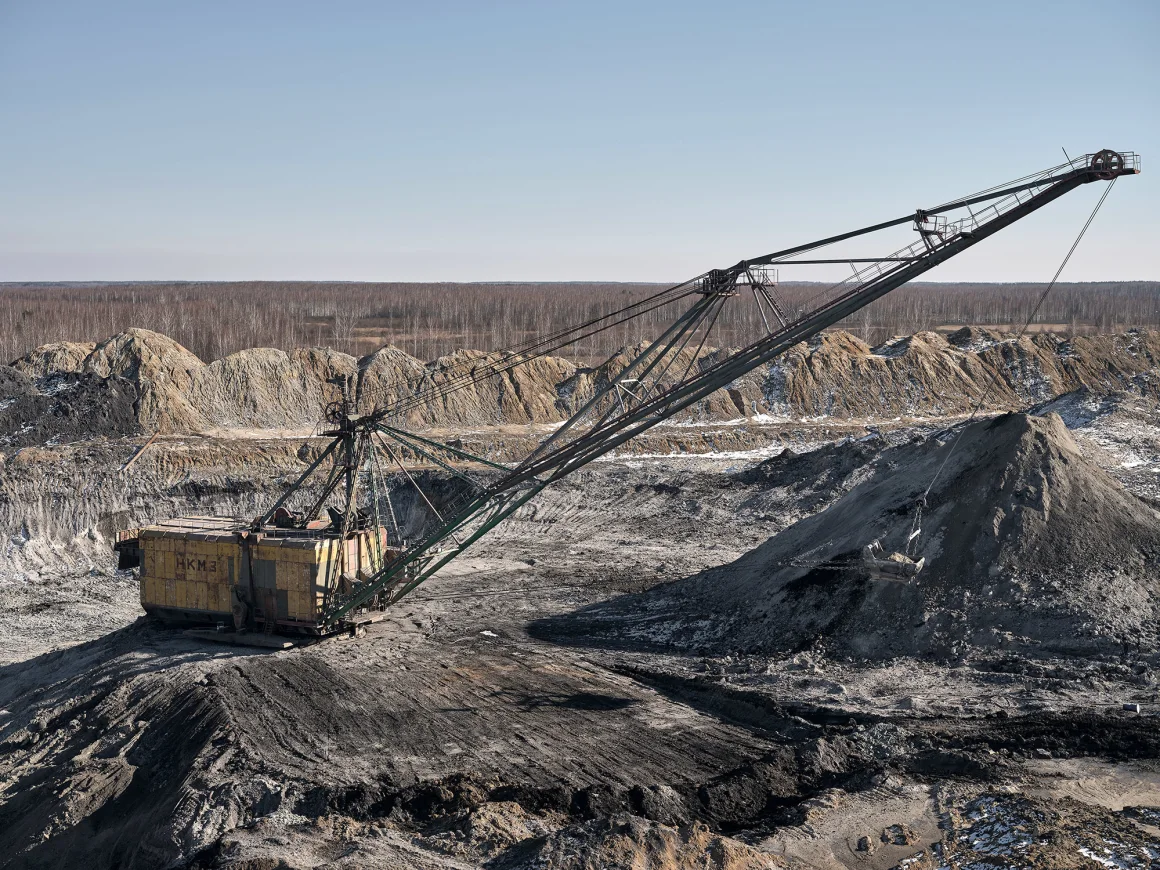
An excavator mines rare earth materials in the Zhytomyr region of Ukraine in February 2025, as companies continue operations despite the war.  Kostiantyn Liberov/Libkos/Getty Images


Labels: , , , , , , , ,

Follow @rheytah Tweet