Russia's Jet-Powered Drones
"Last month, according to our statistics, there were 1,500 jet UAV attacks. This month, we've already counted 3,000 jet drones.""Based on our intelligence data, the Russians have plans to produce 36,000 to 40,000 UAVs per yer -- that is, more than 3 ,000 per month.""It's safe to say they have already reached that production capacity."Serhiy Beskrestnov, adviser to President Volodymyr Zelenskyy"[Such strikes have] once again highlighted a critical issue facing Ukraine: The Armed Forces of Ukraine have reached a breaking point regarding their shortage of surface-to-air missiles.""Missiles are more expensive and complex to manufacture, making their daily use unfeasible. Geran drones, however, offer an immediate operational advantage.""Looking long term, with the potential for production and launch capacities up to 5,000 units per month, they can be used to exacerbate the air defence shortages and intensify strikes on Ukrainian territory."Mikhail Zvinchuk, Russian military blogger
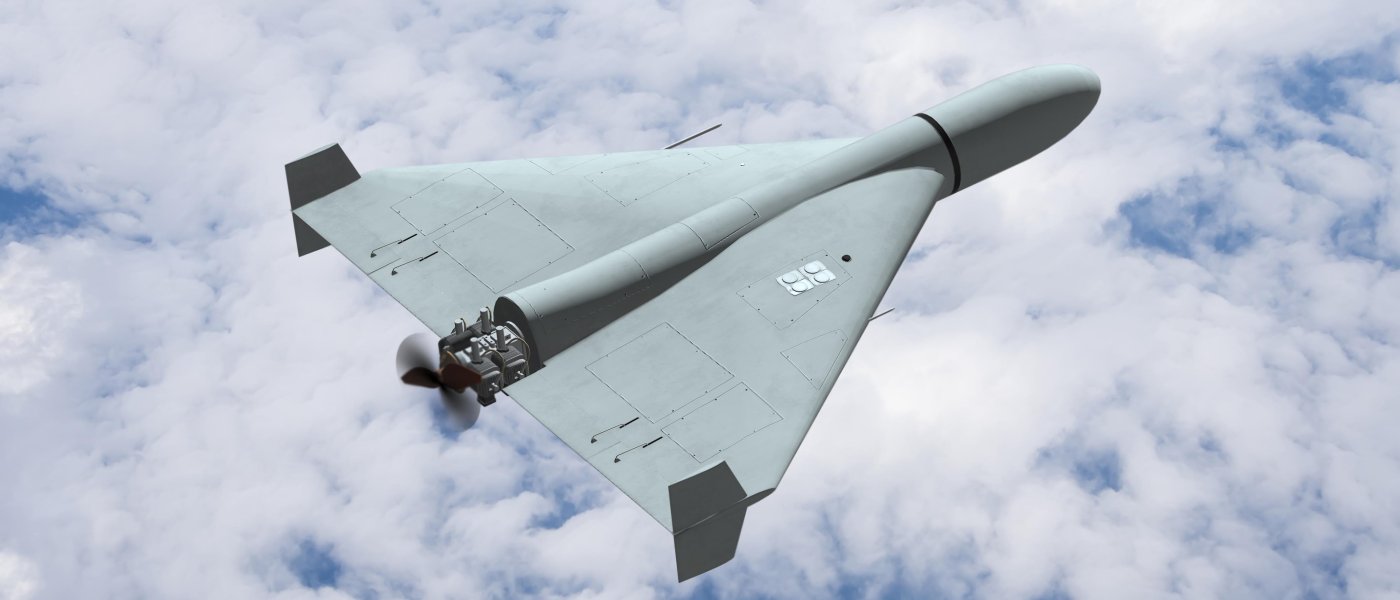 |
From Shahed to Geran: Russia reinvents the One-Way Attack Drone Photo: Anelo/Adobe Stock |
"We'll give them the right to make Patriots. We'll show them how to do it", said U.S. President Donald Trump, pressed by Ukrainian President Volodymyr Zelenskyy to do more to help Ukraine defend itself from Russian attacks on its civil infrastructure, missiles and drones hurled in great numbers at Ukrainian cities throughout the vast geography of the nation. Then came the qualifier: "advanced technology is a hard thing to give away".
Over 2,800 jet-propelled drones that fly twice as fast as less advanced ones, were launched in numbers meant to overwhelm Ukraine's defences, to force Kyiv to resort to more high-tech methods for self-defence. More than half of the unmanned aerial vehicles (UAVs) that Russia launches now to "wear down" Ukraine are jet-propelled. "There were almost 1,500 drones of all types in these four days alone, about 800 of them jet powered", stated President Zelenskyy.
Developed from basic Iranian Shahed drones, the Geran-4 and Geran-5 models are capable of speeds of up to 400 kilometres per hour. Ukrainian forces scrambled combat aircraft at times in an effort to repel them. The role of these drones underlines Russia's alliance with Iran; emphasized when Russian President Vladimir Putin met with Iranian President Masoud Pezeshkian earlier this week. A Russian Geran-4 drone struck a munitions warehouse in a village outside Kyiv over a period of several hours, killing 38 people, this past week.
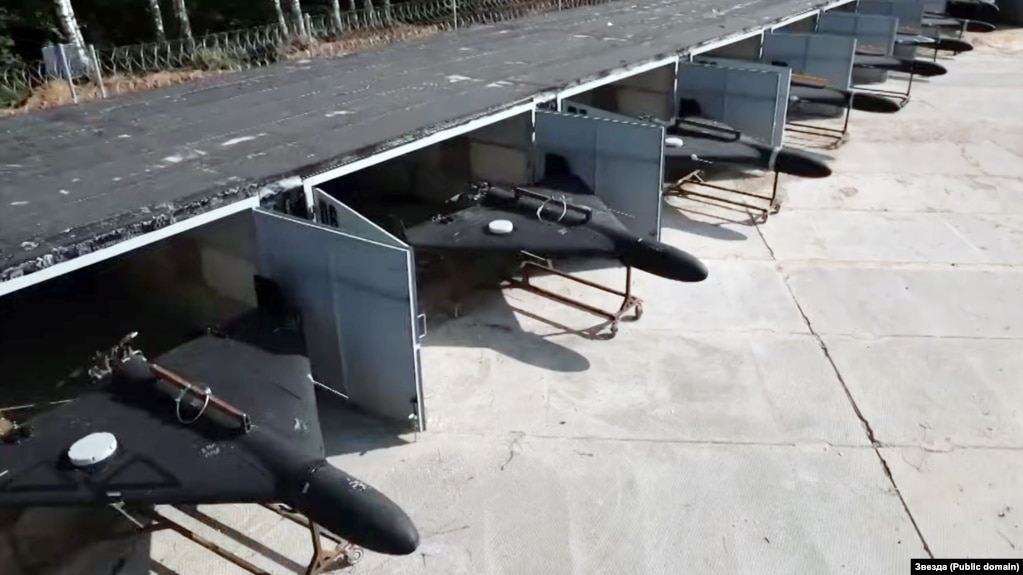 |
| The image shows Geran drones stored near Tsymbulova in Russia's Oryol region. |
Russia, predicted Beskrestnov, would go on producing gasoline-powered drones, with Jet-propelled models representing about 60 percent of output. Older types like the Shahed-136 and Geran-2 will make up the rest of the arsenal. But Russia is not the only protagonist in this conflict using powerful drones to their advantage; Ukraine has shown itself adept at producing its own weaponized drones to good effect within the Russian geography.
Aerial strikes used by each side penetrated deep into one another's territory, with the ground war stalled. Russian oil refineries continue to be hit by Ukraine. Ukraine has extended its campaign against major Russian online retailers, striking Ozon warehouses, quite apart from its hits on Russian oil refineries. An estimated six percent of the warehouse capacity of the online retailer was obliterated.
For their part, a mix of drones and ballistic missiles are fired by Russia, striking warehouses around Kyiv, and in so doing threatening food shortages, seen as some grocery stores now have empty shelves. Ukraine has improved its capacity significantly to shoot down drones, ramping up its own long-range drone production. Even so, the shortage of air defence missiles represents a persistent vulnerability, an advantage for Russia.
Ballistic missiles can inflict much more damage, penetrating heavily defended or underground sites, but they are infinitely more expensive to produce than drones. President Zelenskyy aspires to acquire additional interceptors, pressing President Trump and the U.S. Congress to make more supplies available to Ukraine. He estimates that Ukraine requires at least five percent of U.S. Patriot production in its defence against Russian onslaughts, not merely the one percent it now relies upon.
 |
| Russian air attack on Kiev, August 29, triggering major explosion and fire on warehouse. AP/Getty |
Labels: Advanced Drone Technology, Russian Invasion of Ukraine, Surface-to-Air Missiles, Ukrainian Self-Defence, United States Weapons
posted by Pieface @ Saturday, September 05, 2026


