Saturday, March 29, 2025

Beijing's Designs...

"China is always willing to work together with the Canadian side, by following the principle of mutual respect, seeking common ground while reserving differences."
"But China also opposes any country using China as a bargaining chip when it deals with other countries." 
"But of course, to reach such an agreement [free trade deal], both sides need to work in the same direction toward the same goal."
"When I was having conversations with Canadian friends from all walks of life, all sectors here in Canada, I heard a strong voice that China and Canada should strengthen co-operation."
"But unfortunately, at the same time, oftentimes we see some disrespect and smearing and attacking of China's core interests."
"China firmly supports Canada’s sovereignty and territorial integrity just as China supports that of all the other countries, but of course we hope this kind of respect is mutual."
China's Ambassador to Canada, Wang Di
https://smartcdn.gprod.postmedia.digital/nationalpost/wp-content/uploads/2025/03/Wang-Di.jpg?quality=90&strip=all&w=564&h=423&type=webp&sig=zltHmLCMdI8R9NtN5HzFGg
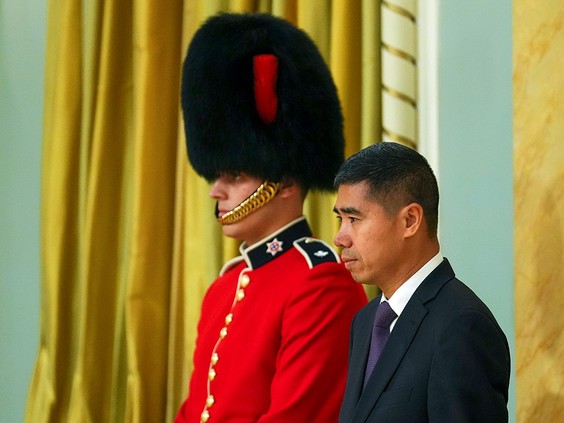
"I hope that companies between our two countries can enjoy a transparent, open and non-discriminatory business environment," says China's Ambassador to Canada Di Wang. Photo by Sean Kilpatrick/The Canadian Press/

China's core interests are wound up in its approach to world dominance in trade and achieving the status of a world power equal to that of the United States of America. Everything that Beijing does is calibrated to achieve those ends. And China is relentless in its self-actualizing mission of achieving its divinely inspired destiny as a super-hegemon. Its links throughout the world -- in North America, Europe, Australia, Africa, the Middle East are geared to creating a type of dependence beginning with trade and ending with dominating world markets in chemicals and organic matter critical to new-age technology.
 
Belt and Road Initiative - Wikipedia
China first ingratiates itself internationally, then demands respect and collaboration as it paternally guides countries which have been infiltrated by expatriate mainland Chinese through cultural indoctrination to instill admiration for the Peoples Republic of China. Its intelligence agents are everywhere, its social media sites dominate markets, its modern version of the Yellow Silk Road -- Belt and Road Initiative through investment and critical domestic infrastructure loans throughout the world have created dependencies inimical to the countries involved, becoming indebted beyond their ability to persevere.
 
And nothing seems to stop China's subterfuges and self-entitlements in maneuvering its operatives subtly into local culture and positions of social and academic, scientific and political advantage to Beijing, where infiltrated operatives deliver what they glean to their sponsors. Trade secrets, scientific advances, political positions, military situations, are all grist for the Beijing mill of conquest and control. As for respecting other countries' borders, Chinese interest in the Arctic to challenge Canada's North West Passage in the interests of vast mineral resources' acquisition is another story.
 
The government of Canada is warned by China's ambassador against using it as "bargaining chip" in its trade negotiations with the United States, even while holding out the carrot of pursuing a bilateral free trade agreement as long as Canada remove barriers to Chinese investment.Those barriers are there for a specific reason, that Canada has no interest in having its natural resources under the control of a foreign government which has on many occasions displayed its acquisition agenda to the detriment of Canada's national interests. 

Diplomatic relations between Ottawa and Beijing which is at present Canada's second-largest trading partner have cooled considerably beginning when Huawei Technologies Co. executive Meng Wanzhou had been detained in 2018 at the request of the U.S. through an extradition warrant at Vancouver's International Airport which led to China arresting two Canadian businessmen then in China, as retaliatory hostages in claims of espionage charged against the two. More recently four Canadians were sentenced to death on charges of drug smuggling in China. The dual-citizens were executed over their presumed 'drug crimes'.
 
In August, Canada announced its intention to match the U.S. higher tariffs on Chinese electric vehicles, aluminum and steel, prompting China to enact retaliatory measures against Canadian canola, pork and seafood, impacting Western Canada. Chinese investment in critical mineral projects have been curbed in Canada, Huawei has been banned from fifth-generation wireless networks, and TikTok's parent, ByteDance Ltd. was ordered to close its Canadian subsidiary.
 
China, however, is consumed with its energy needs to power its growing technology functionality and Canada is more than willing to sell energy to China in the form of oil exports and liquefied natural gas.  As for claims by security intelligence officials in Canada that China, along with countries that include India and Russia, may attempt interference in the federal election now  underway in Canada, Mr. Wang characterized them as "completely unjustified, groundless accusations", despite ample evidence in the not-so-distant past that Beijing has done just that.
"At the core of the Chinese strategy is asymmetric interdependence that allows for its weaponization of trading relations … on other countries that cannot easily pivot away from a reliance on Chinese sources."
"By pre-emptively diversifying exports of easily substitutable products that are vulnerable to asymmetrical transactions, we could reduce the leverage that adversaries might otherwise seek to exploit."
University of Toronto political scientist Lynette Ong
https://www.ctvnews.ca/resizer/v2/LWBAE2XNGIILUKKRCX7J6KYV4E.jpg?smart=true&auth=7c63a0b404f8ac3dfa535be554b7f0cd5fb2aba8ef1eb5bd5df613f14f065716&width=1600&height=899
China's Ambassador-designate to Canada Wang Di presents his credentials to Governor General Mary Simon during ceremony at Rideau Hall in Ottawa on Wednesday, June 26, 2024. THE CANADIAN PRESS/Sean Kilpatrick

Labels: , , , , ,

Sunday, June 06, 2021

Lod As Template? What Is It About Living in Israel, a Jewish State, That Its Arab Citizens Don't Understand?

"They say they wanted to come to a quiet place, not where there is this kind of background noise, and where they have to be afraid."
"Things here now are a mess, and they say they didn’t pick up and move to Lod to live in a mess. If you ask me, it is sad – sad that a Jewish family has to leave this city, eight minutes from the airport, because they are afraid."
"You never know, one day someone is your friend, you buy your groceries at his store, you have friendly relations, and today you just don’t know. My mechanic is connected to the family of the Arab who was killed on the first night of the rioting – Hasuna – I called him up to ask if we were still okay. He said to bring my jeep by."
"We live here together. Why are you going to boycott an Arab store? Then next month you will go back and buy there. So what have you accomplished – that will only widen the rift."
"If you ask me what needs to be done, I think the police have to take more initiative, provide people with a sense of security – Jews and Arabs. It can’t be that Arabs can build here illegally and nothing happens, or they fire off firecrackers whenever they want, testing the response, and nothing happens. That creates a perception that they are in charge."
"[The police do not enforce the law because they simply don’t want to ruffle feathers], they want quiet]."
"I asked people what happened, and they replied, ‘You touched al-Aqsa.’ The fanatics live in paranoia. They believe the Jews, the Garin Torani, are coming to kick them out, that they are from the Shabak [Shin Bet]. They are paranoid that we want to kick them out and destroy al-Aqsa. Go convince them otherwise. Most of the people don’t have a problem, but the fanatics and the religious incite things."
Assaf Weiss, young religious Jew who moved into Lod 15 years ago
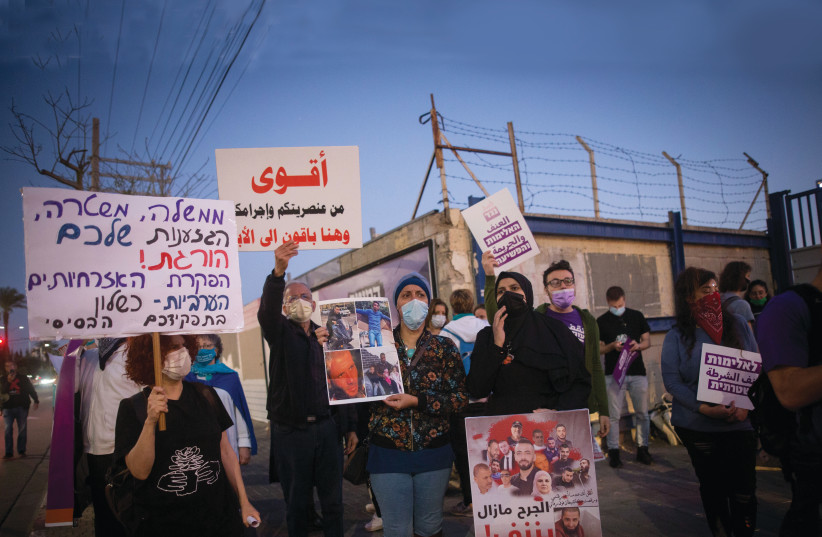
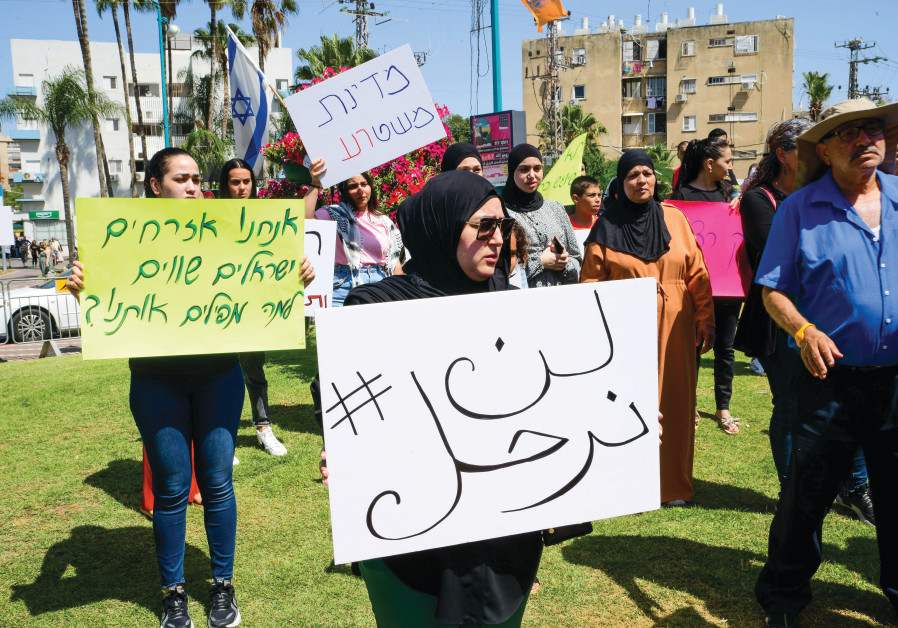
Coexistence crisis in Lod. (photo credit: MIRIAM ALSTER/FLASH90)
Coexistence crisis in Lod.   (photo credit: MIRIAM ALSTER/FLASH90)
"They [Jewish thugs from the far-right Lehava and La Familia] walked with sticks and looked for cars, Arab cars. Then they bashed the windows in."
"Jews live in my building, I have no problem with them. The problem is the settlers [catch-phrase used to refer to those associated with the pre-army academy, or the Garin Torani]."
"If you look deeply, the Jews cannot live here without the Arabs, and the Arabs cannot live here without the Jews. We need each other. I don’t want to live in an Arab state. I’m used to it here, used to the laws. In the Arabs states the law is not straight."
"[Lod Mayor Yair] Revivo says he also does for Arabs. But what does he do? Only demolish homes. He only gives to the Jewish neighborhoods."
"They want to bring in settlers, and the settlers are racists. And so are those they brought in two weeks ago who caused all the problems."
"They [Jews] could offer me five million shekels, and I wouldn’t sell [to a Jew]. Besides, where would I go?"
"I have three apartments. A settler will come here and say he wants to pay double. I’ll sell and he will live next to my parents – a settler who was raised on hating Arabs. They don’t study Torah, only hating Arabs."
"I have no problems with Jews, I am only talking about the settlers who were living in the West Bank and Gaza, and who are now looking for a place to live where Arabs live. I’m not talking about regular Jews. On our first floor there is a religious Jew. But not a settler."
Sheik Yusuf Adam Bassam, Arab Lod resident
ARAB RESIDENTS and activists protest the death of Musa Hasuna, killed during Jewish-Arab clashes, outside Lod District Court on May 28. (AVSHALOM SASSONI/FLASH90)
"We have a problem when a group of Jews is coming not only to live, but to Judaize the urban space, coming into Arab neighborhoods or close to Arab neighborhoods."
"If you come to an Arab neighborhood and you find a very old building nobody is using, and they are passing it on to NGOs – very Zionist radical NGOs – who convert it to a synagogue or a center for young Jews. Judaizing the urban space means instead of making it available to young Arabs, offering it instead to Jewish people."
"What is happening in Sheikh Jarrah is really connected. It is the same policy of the evacuation of Arabs and replacing them with specific Jews, with settlers. It is the same policy that is happening in the old city of Jaffa, for example, in the historical Palestinian cities. This is frustrating the Arabs in those cities. 
It is pent-up anger that was waiting for a specific moment to explode. And these kinds of policies bring it to an explosion."
Thabet Abu Rass, co-executive director, Lod-based Abraham Initiatives NGO 
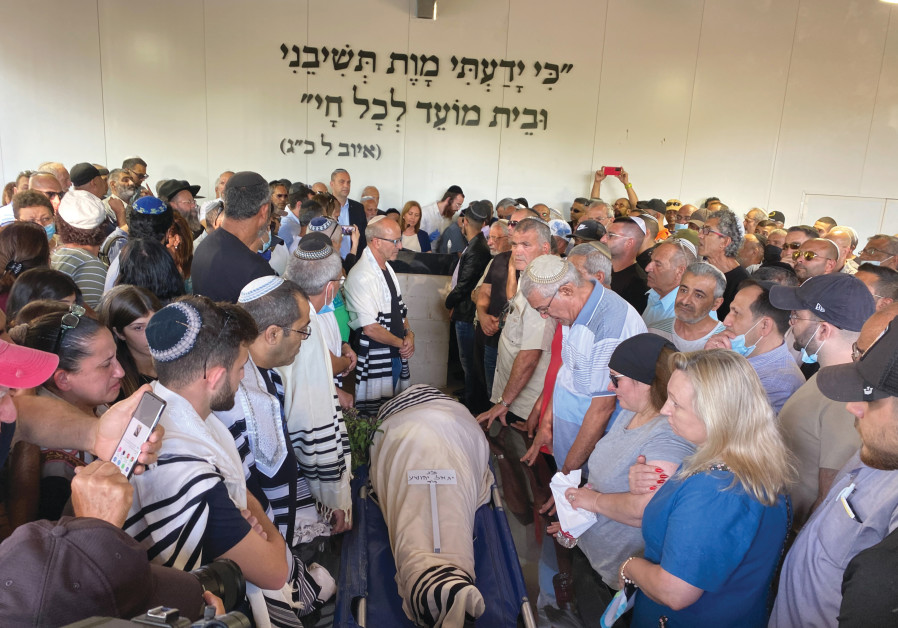
THE FUNERAL of Yigal Yehoshua, who succumbed to injuries sustained during rioting in Lod, on May 18. His family later donated one of his kidneys to a Palestinian woman. (AVSHALOM SASSONI/FLASH90)
 
"We decided to join the government in order to change the balance of political forces in the country."
"I say here clearly and frankly: when the very establishment of this government is based on our support ... we will be able to influence it and accomplish great things for our Arab society."
Mansour Abbas, leader, United Arab List party
In the frantic drive to oust Prime Minister Benjamin Natanyahu, a left-wing and a right-wing Jewish Israeli party linked in their hatred of the current prime minister, if not in their ideologies, invited an Islamist party head to join their coalition to achieve enough momentum through a slender majority of seats in the Knesset to drive the prime minister from power. The tiny Islamist action brings just enough lead for a paper-thin majority, making the United Arab List the first Arab party to join the governing executive of the country.

Mr. Abbas; MK Abbas, a Palestinian with Israeli citizenship, has deigned to ignore the differences he cannot but hold as vitally important against a leader representing a major Jewish settlement group, an advocate of annexing most of the West Bank for the larger purpose in his opinion of advancing the cause of the 21percent minority Arab citizens of Israel. His hope, said MK Abbas is to improve conditions for Arab Israeli citizens mired in complaints of discrimination and neglect by government.

There is more than a bit of dissonance in this association, since Mr. Abbas's party is the political wing of the southern branch of the Islamic Movement in Israel, established in 1971, its origins with the Muslim Brotherhood. As an Islamist party and as an arm of the Muslim Brotherhood the party, its members and its leader are fundamentally opposed to the State of Israel and diligently work toward its elimination. Their mandate is little different, in effect, from that of Hamas. 

The appeal for Mr. Abbas was the allocation of over 53 billion shekels to improve infrastructure and curb the violent crime that plagues Arab towns. In other words, a party dedicated to the violent overthrow of the Jewish state, seeks funding and dedication from that Jewish state to quell the violence and crime plaguing Israeli Arabs in their towns, brought to them courtesy of their Muslim Arab restive youth whom the Arab authorities in those towns appear incapable of controlling in their constant rampages.

Approval for his initiative in agreeing to join the coalition to oust the prime minister, came from the Islamic Movement's advisory Shura Council, a religious body from whom Mr. Abbas sought guidance, the very source of direction given to the party in past votes in the Knesset on LGBT rights and other like issues. There are Arab Israelis who are critical of Mr. Abbas's decision to join the coalition, querying his justification in being part of a government that imposes a 'military occupation' over West Bank and Gazan Palestinians including a Gaza blockade. 
 
Loyalty to Israel is not writ large on Palestinian sentiments.

"He should be commended for trying something new, but if there's another war with Gaza, and he's in government, there will be pressure on him to abandon ship", noted Moussa al-Zayadna, from the Bedouin town of Rahat in southern Israel. "He is a traitor. What will he do when they ask him to vote on launching a new war on Gaza? Will he accept it, being a part of the killing of Palestinians?", rhetorically queried Badri Karam in Gaza.

Joint List member Sami Abou Shehadeh, from whose party Mansour Abbas split to form his own party, claimed that the Islamist party led by Abbas "dramatically changed its historical political behaviour" joining with Bennett and other right-wing leaders, "a very big crime. Bennett was the head of the Yesha council (settler umbrella group). We're talking about dangerous people, and supporting them means that Mansour Abbas has chosen to stand with the extreme settler right against the interests of our people."

From left, Yair Lapid, Naftali Bennett and Mansour Abbas signing a coalition agreement.
Credit...United Arab List Raam, via Agence France-Presse — Getty Images


Labels: , , , , , , , , ,

Sunday, July 01, 2018

Is There Hope For Mexico?

"No one has been more active during these campaigns [than criminal groups]."
"You have to be a little crazy to run for [political] office here [in Mexico]."
Alejandro Martinez, top official, National Action Party, Guerrero State

"For the older [drug] cartels that were most about smuggling drugs in the U.S., they couldn't care less who was the mayor as long as the mayor did not get involved or try to impede the business."
"But in this new world of more local gangs, controlling local governments is a crucial asset."
Alejandro Hope, security analyst, Mexico City

"Half of my time goes to figuring out how to confront them [local criminal gangs], how to stop them." 
"[I am forced to [lean heavily] on federal security services for assistance] because the municipal police forces are of almost no help [in confronting gangs]."
Hector Astudillo, governor of Guerrero state
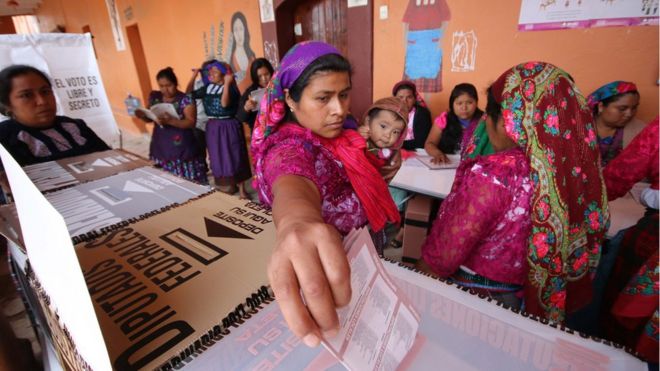
A woman holding a baby casts her ballot at a polling station during the presidential election in San Bartolome Quialana, in Oaxaca state, Mexico, July 1, 2018.
A woman casts her ballot at a polling station in Oaxaca state    AFP

The governor of the Pacific Coast state of Guerrero, one of the country's poorest and most violent states, is incapable of managing law and order in his state as a result of the growing influence of local criminal gangs in local politics. Sunday, July 1st, 2018 saw the end of the most extensive, largest national electoral process that Mexico has ever undergone. And during that time of political and electoral upheaval, Mexico has seen the madness of violence grow to intolerable proportions.

Mexico has become increasingly a country of runaway violence, mostly resulting from its robust and unstoppable drug industry with cartels battling one another for primacy and territory, and enlisting local politicians and police forces in their trajectory to achieving untouchable status while wreaking havoc throughout society.  In this election season now completed, over 3,400 local, state and federal posts were to be filled in the country's largest general election to ever be held.

In lock-step with campaign the killing of an estimated 136 politicians, took place: political operatives, candidates or potential candidates mostly running for local offices, along with party members and campaign workers, a shocking toll of deadly violence to plague any society. The death toll had the desired effect of persuading hundreds of candidates to abandon their electoral plans, fearing for their lives and leaving some parties unable to field nominees in certain posts altogether.
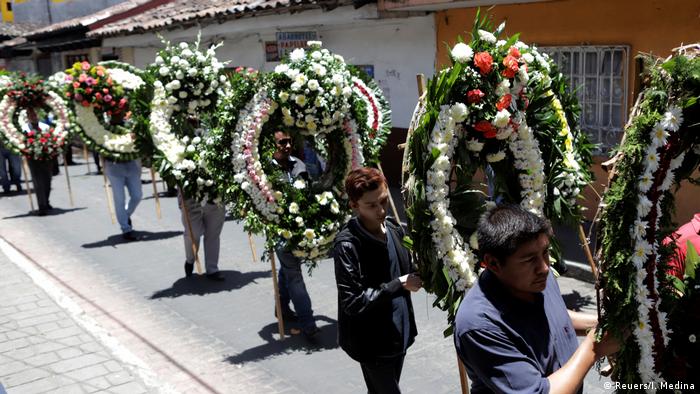
Mourners carry wreaths down a street (Reuers/I. Medina)
Mourners carry wreaths for two politicians, Juana Irais Maldonado and Erika Cazares, who were murdered

The past decade has seen criminal elements co-opting local politics through influencing the electoral process in a national atmosphere where collusion between politicians and criminal organizations has always prevailed to a degree. With the use of selective violence the criminals have been successful in handpicking their own slates of candidates in certain areas. The goal; to achieve elect cooperative officials in key local offices to aid in protecting and growing the criminals' illegal enterprises; exerting control over local police forces, along with securing lucrative government contracts.

Above and beyond the killing toll, over 400 additional instances of aggression have been reported which were inclusive of attempts at assassination, threats, intimidation and kidnappings. No fewer than 345 municipalities across the country reported such cases. Mexico's weak and corrupt law enforcement and ineffective judicial systems has resulted in record violence in the country; ironically enough a central focus in the presidential contest.

The violence has for the most part been occurring in more rural municipalities where the criminal element find it softer going to gain control over local politicians. "It is absurd that in many of these small communities, we have to ask for permission to run campaigns", stated Moises Antonio Gonzalez Cabanas, a professor, competing for a seat in Guerrero's state Congress, among the hardest-hit regions for violence, where at least 14 candidates and prospective candidates were assassinated since last fall.

One of whom was Abel Montufar of a family heavily involved in the politics of the region. He began receiving threats only hours after stating he was preparing his election campaign for state Congress. Abandon the race or you will die, went the threats. He response was "I am not afraid of you". Nine days after his campaign began he was shot six times, his body left slumped in his parked van. No mystery over who murdered him, according to his relatives: criminals in support of a rival candidate whom they could control.

Andrés Manuel López Obrador speaks at a campaign rally (Getty Images/AFP/P. Pardo)
Lopez Obrador has been leading the presidential polls in the run-up to the election

Labels: , , , ,

Follow @rheytah Tweet