MAID (Medical Assistance in Dying) is "Incredibly Rewarding" Work
 |
|
"It's about honouring people's wishes, empowering people to have control over their own lives. It's wonderful that I have the opportunity to do that."
"I come in and say, 'Are you sure this is what you want to do today'?"
"[Assisted dying is] the best work I've ever done."
"It's hard to even be in the same room as somebody who's suffering so severely. But then, of course, you know, I get to end that suffering, which is good."
"When everybody is ready, I say, 'OK, ready to go to sleep'?"
"But, generally, [death is] very calm and peaceful.
"...That is, of course, not the actual time of death because when people die, it's a slow process. Some cells die before others. So, the whole process for me, from the time I start injecting until I call that it's done, is about five minutes."
"I just get so many thank yous and hugs."
"[Complaints have] always resolved in my favour. But still, that's the kind of thing that the anti-MAID people have done to me, as opposed to threatening to shoot me [as an abortion-provider], which is nice."
"[I provide] what is right up to the edge of the law, and never beyond, of course. I'm working beyond where some providers would work ... it varies on how risk-averse people are."
"Some people are more conservative than I am. We all work within the law."
Dr. Ellen Wiebe, board member, research director, Canadian Association of MAID Assessors and Providers
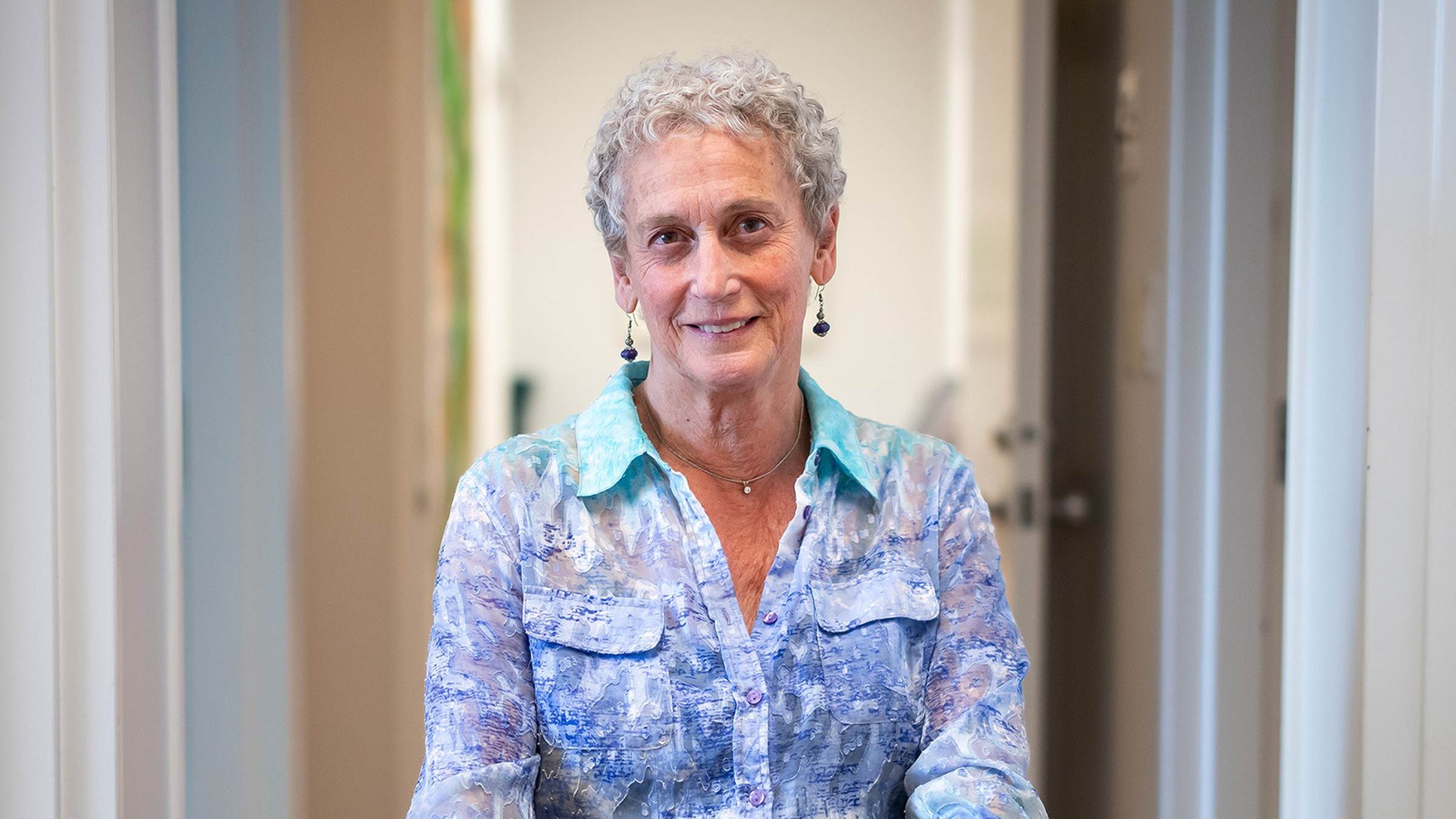 |
At 72, Dr. Ellen Wiebe devotes half her practice to medical aid in dying. It's the last work she's prepared to give up National Post
|
"In Canada we don't use the word euthanasia. That's what we use for our pets. Here, we call it assisted dying", Dr. Ellen Wiebe once corrected an interlocutor. This doctor has a reputation; some honour her, while an equal number tend to view her with dreaded disdain. She has personally assisted well over 400 people to meet death 'on their terms'. Dr. Wiebe operates a contraception and medical abortion clinic in Vancouver, aside from being one of the most dedicated "pro-choice doctor providing peaceful deaths" in Canada.
Outside of Quebec, Dr. Wiebe was the first medical practitioner to perform a court-approved patient-requested euthanasia. She was featured recently in the BBC documentary, Better off Dead? that took a close observation of the assisted suicide controversy by international disability rights activist Liz Carr, an actor and comedian, who considers assisted suicide unsafe for people like herself and others living as disabled people.
Interacting with Dutch colleagues, Dr. Wiebe learned from them the drugs to use and their correct order as well as how to avoid complications such as prolonged time to death and how best to choreograph the procedure. Dr. Wiebe has, to her credit, numerous papers in the field of assisted dying. She mentors other doctors as well as hosting MAID training webinars and has on the opposite side of the ledger been accused of bullying and sneaking into faith-based facilities.
Dr. Wiebe is herself disabled. Following her diagnosis with heart disease at 40 years of age, she has been unable to walk more than ten metres, using a wheelchair and electric scooter. Multiple complaints have been lodged against her to the College of Physicians and Surgeons of British Columbia sparking investigations that have all invariably found her to be in compliance with the rules of law surrounding Assisted Dying.
"When MAID was legalized, it was framed as a practice that was exceptionally required to ease the dying process or give some control at the end of life."
"We have veered very far from that and now uncritically accept the most aggressive provision of MAID and see growing attempts to describe this as the most meaningful form of medical practice."
Trudo Lemmens, professor of law and ethics, University of Toronto
"When someone says it's highly rewarding, those are exactly the words that people use when they're doing palliative care [or providing end-of-life care in the ICU]."
"It's absolutely not a celebration of the act of ending someone's life. It's a reflection of the intense emotional bond you form with families and patients."
"Nothing in the data lines up with the story that there are doctors pushing this."
"How many palliative care patients do palliative care clinicians have? How many times is palliative sedation [the use of drugs to render a dying patient unconscious] delivered?"
"If a smaller group of clinicians has opted to make this their full-time practice because of the need that they see, does that make it wrong? I don't think it does."
Ottawa palliative care and critical care specialist, Dr. James Downar
There is a difference between euthanasia, where the doctor pushes the syringe, to assisted suicide when the patient is provided with the means by which death can be met, in the presence of an advising physician. In Canada, the vast majority are assisted deaths, with euthanasia methodologically trailing far behind. In assisted suicide the person choosing to end life swallows a lethal amount of drugs the doctor prescribes.
MAID providers with between a dozen and 113 assisted deaths each described the delivery of a medical death as "heart-warming" in one study; "the most important medicine I do", an ultimate act of compassion, "liberating" and "almost an adrenaline rush: I was surprised at how good I felt." this type of sentiment concerns Trudo Lemmens from the all-important perspective of a professional of law and ethics for whom a "pseudo-spiritual language", equates medical therapy with "quasi-religious zeal".
Canada's assisted death rate in general is strikingly high at 4.1 percent of all deaths in 2022 while British Columbia leads the country, at 6.6 percent of deaths by assisted death. B.C.'s record outpaces assisted-suicide pioneer countries such as Belgium and the Netherlands. Reports have emerged from time to time of people driven to MAID as a result of poverty, debt, lack of housing, or food availability. The looseness of the acceptability criteria to be eligible for MAID and how assessors interpret the guidelines are of particular concern to some.
 |
Leader of the
Opposition Pierre Poilievre says he is ‘pleased to support’ Conservative
MP Ed Fast’s private member’s bill ‘that would ensure that medical
assistance in dying is not the solution to people suffering with their
mental health.’ CBC
|
"[Pleasure from euthanasia is deeply disquieting], because death is usually a deeply painful or difficult moment for the patients and their loved ones."
""[What draws some providers to MAID] and what happens to a person when killing someone becomes a daily or weekly event?"
"Some providers have counts in the hundreds -- This isn't normal, for any occupation."
"Even members of the military at war do not typically kill that frequently. I think that's a question that we've not really ever asked."
Christopher Lyon, Canadian social scientist, University of York, United Kingdom
"My patients were all people who were suffering unbearably and chose this."
"Remember that we work in tragedy all the time, right? My whole career has been being with tragedies. When somebody gets the diagnosis of cancer, when somebody gets the diagnosis of a chronic illness like multiple sclerosis -- I mean, it's just one tragedy after another."
"Why do we want to be doctors? Why do we want to care for people who are suffering tragedies? Because we can help. Because we feel like we can help. And that's why we get a good feeling about it."
Dr. Ellen Wiebe
 |
| Federal Justice Minister Arif Virani says the government is considering
whether to proceed as scheduled with an expansion of medical assistance
in dying to those who sole underlying condition is mental illness.
(Sean Kilpatrick/The Canadian Press) |
Labels: Assisted Suicide, Canada, Euthanasia, High Rates of Assisted Death, Medical Practitioners
Canada's MAID (Medical Assistance In Dying)
"The
implications of Canada's law [on euthanasia] is that a life with
disability is automatically less worth living and that in some cases,
death is preferable."
Theresia Degener, professor or law and disability studies, Protestant University for Applied Sciences, Germany
"[Canada's
euthanasia law is] probably the biggest existential threat to disabled
people since the Nazis' program in Germany in the 1930s."
Tim Stanton, director, Canadian Institute for Inclusion and Citizenship, University of British Columbia
"[Canadian politicians should listen to the concerns of those facing hardships who believe euthanasia is their only option'."
"In an era where we recognize the right to die with dignity, we must do more to guarantee the right to live with dignity."
Marie-Claude Landry, Ad. E., Chief Commissioner, Canadian Human Rights Commission
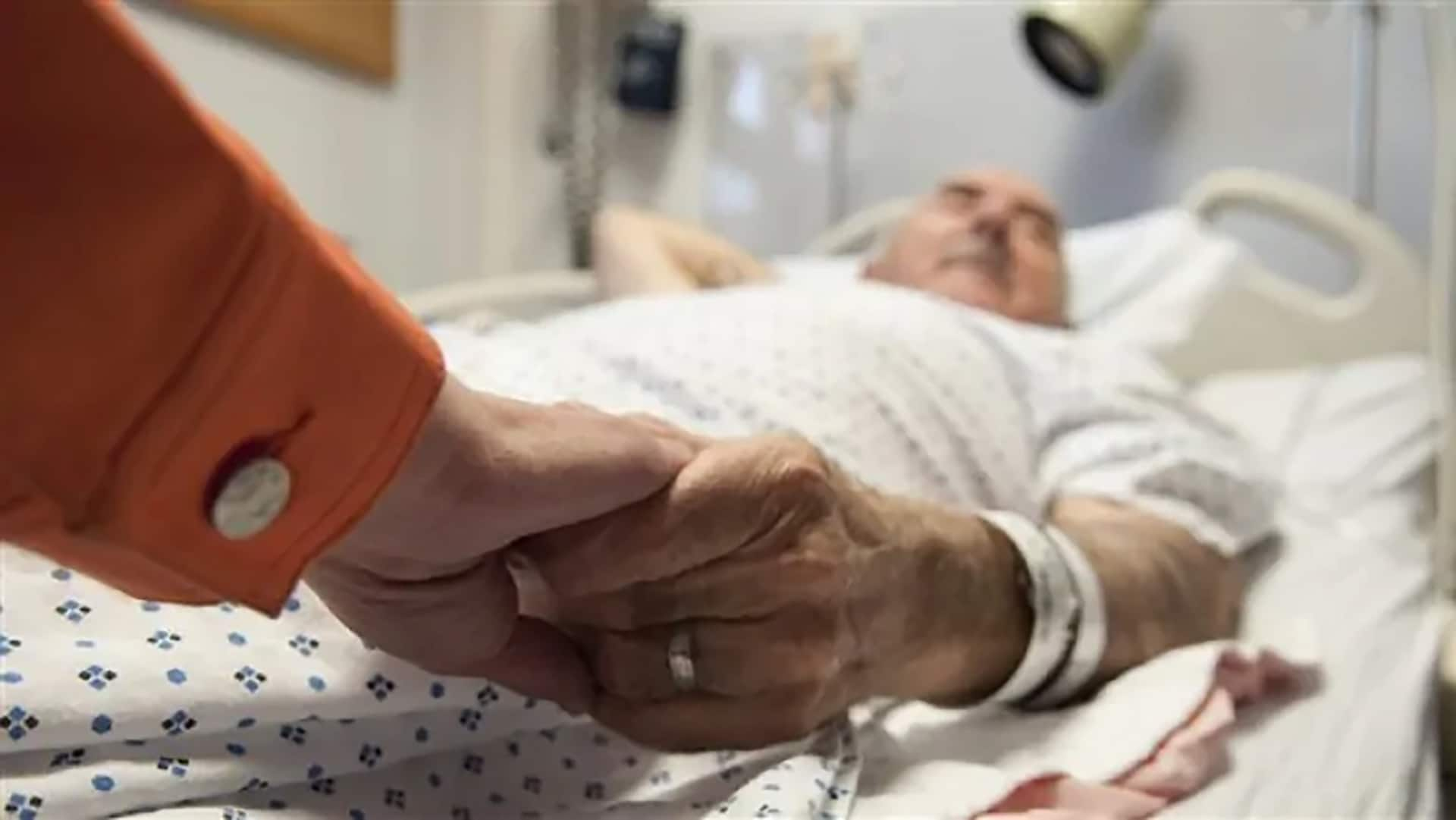 |
The Senate has
passed Bill C-7, which expands access to medical assistance in dying,
including, eventually, to people suffering solely from mental illnesses. CBC
|
Disability
experts have concluded that Canada has the world's most permissive
euthanasia regulations which permit people with serious disabilities to
decide to reach out for death, absent any other medical issues. A
majority of Canadians in general support the concept of euthanasia for
those for whom life is untenable for medical reasons. The advocacy group
Dying With Dignity hails the process as being "driven by compassion",
to end human suffering. Well and good.
Human
rights advocates on the other hand, feel the regulations are too loose,
lacking required safeguards. In the process lives of disabled people
are devalued, inciting doctors and health workers to recommend the
procedure to those of their patients who might not otherwise consider
ending their lives. According to advocates, troubling instances occur
where people seek assisted suicide in direct relation to inadequate
government support in living.
Euthanasia
access is to expand in 2023, against advocacy that insists the system
warrants scrutiny at the present time. The euthanasia law "recognizes the rights of all persons -- as well as the inherent and equal value of every life",
insists Canada's health minister. Euthanasia protocol sees doctors
administer drugs meant to take away life of patients -- meant to be a
compassionate response to people's end-of-life requests -- is legal in
Belgium, Canada, Colombia, Luxembourg, Netherlands, New Zealand and
Spain, along with several states in Australia.
Jurisdictions
in several American states permit assisted suicide, with patients
themselves under supervision taking the lethal drug that will end their
lives. Originally in 2016 when Canada introduced euthanasia legally, the
procedure was to be granted to people age 18 and over meeting several
criteria, including having a "grievous and irremediable" medical condition that caases unbearable suffering. Death was to be reasonably foreseeable, as a qualification.
Later
legislation removed the death-be-imminent restriction, an issue
removing a key safeguard, according to critics of the legislation. In
Belgium and the Netherlands, euthanasia has been legal for the past two
decades, where monthly commissions review potentially troubling cases.
Canada lacks this oversight. No restrictions apply to doctors suggesting
euthanasia to patients who have not themselves requested it; strictly
forbidden elsewhere as a practise.
There
is no requirement to have exhausted all treatment options for people
seeking euthanasia in Canada, unlike what pertains in Belgium and the
Netherlands. Under current Canadian euthanasia law, any adult with a
serious illness, disease or disability can apply for euthanasia. Critics
say that permitting euthanasia based solely on disability represents a
clear human rights violation.
Another
issue has arisen, whereby in some instances people finding themselves
with mounting medical bills due to their disabilities choose to be
euthanized. Canada is preparing to allow people to be euthanized from
next year for mental health reasons exclusively. Consideration of
extending euthanasia is being given to "mature" minors, children under
age 18 meeting the same criteria as adults.
The
most needily vulnerable people whose lives could be improved
sufficiently so as to make them worthwhile living with some thoughtful
medical and therapeutic assistance, along with government disability
financial assistance surely is far preferable in a compassionate society
than offering suffering humanity early death in lieu of life under
tolerable living conditions.
 |
| Kiefer Pix/Shutterstock |
"A few days ago, a 30-year-old patient with very treatable mental illness
asked me to end her life. Her distraught parents came to the
appointment with her because they were afraid that I might support her
request and that they would be helpless to do anything about it. It’s
horrific they have to worry that by going to a psychiatrist, their
daughter might be killed by that very psychiatrist."
Psychiatrist editor of the Journal of Ethics in Mental Health
Labels: Canada, Disabilities, Euthanasia, Intractable Suffering, MAID, Medical Assistance in Dying, Mental Health, Minors
Death At A Time of Despair
"Decades
of studies have confirmed two facts about end-of-life care in Canada.
It consumes a vast amount of resources; many people will consume more
'health care' in the last years before death than in the entireity of
their lives before that. And most Canadians do not want to spend large
parts of that last year in hospital."
"Palliative
care, hospice care and home care are what is needed and what is
desired. Yet these remain chronically underfunded and delayed while the
option for a quick and cheap death is full speed ahead."
Fa.Raymond De Souza, Columnist, National Post
"[Under
Bill C-7, a mental illness will] not be considered an illness, disease
or disability [for the purpose of the assisted-dying law]."
"A
provision that applies only to persons with mental illness, without
appropriate justification, in discriminatory in nature because it is
arbitrary."
"A
provision that applies to all persons with mental illness, without
appropriate justification, is unconstitutional because it is overbroad."
"Explicitly
stating that mental illness is not an illness, disease or disability is
inaccurate, stigmatizing, arbitrary and discriminatory."
Canadian Psychiatric Association brief

Up
to the present in the four years that medically assisted death has been
available in Canada, a small number of Canadians with severe
irremediable mental health disorders have asked for and received
assisted deaths, legally. With Bill C-7, some changes have been made
whereby the government now proposes to expressly exclude people
suffering from mental illness at the very time it is expanding the law
with amendments to make it easier for people with physical failings to
apply for assisted death.
Many
doctors are completely averse to the very idea of helping people to end
their lives, rather than offering compassionate end-of-life care
tailored to the individual. In the first four years of the program, the
core measure of suitability for assisted death was an immediately
foreseeable death occurring while the individual was suffering from an
incurable disease or illness. Now that provision is to be removed. The
number of witnesses has been reduced, a requirement that the individual
requesting assisted death repeat that request immediately prior to
lethal injection has also been erased.
It
is easier to die in Canada if you are chronically and irremediably in
pain, than if you are a mass murderer being punished for horrific
crimes. Canada is fastidious about the death penalty; it simply does not
exist in Canada as a civilized democracy; the state does not kill to
avenge killing. But it will and does aid people who are suffering from a
medical/health calamity to end their lives. This Liberal government led
by Prime Minister Trudeau has truly enriched the Canadian experience.
Under
this government of progressive democratic liberalism ground-breaking
legislation has been passed to enrich the lives of the nation; such as
the legalization of drugs, assisted death, and massive, colossal
government debt. The three D's that define the government of Justin
Trudeau. Included in that group should be gender dysphoria, where it is
illegal for parents, doctors, advisers to attempt to change a child's
mind when he/she expresses a wish to be regarded as a member of the
gender they were not born to.
 |
Shutterstock
|
Ironically when MAID (medical assistance in dying) was
introduced in 2016, the government was quick to assure Canadians that
legislation was geared to "safeguard" against abuse; no one would be
under pressure to request a lethal injection to end their lives, that
the existence of alternatives would be advised to a requester, and
offered instead of assisted death where appropriate. That reassurance
has degenerated to the point that it now will be possible for lethal
injection to be administered the very day it has been requested.
In
a country whose medical system is under such strain that it takes
months to see a medical specialist upon referral, and months to have
available some types of diagnostic imaging, months to a year to have
surgeries scheduled, but dying can be readily accomplished. This at a
time when surveys regularly show that most people would choose
palliative care for end-of-life situations, not peremptory death. But
palliative care is poorly funded and opportunities are rare.
And
now the issue of excluding psychiatric patients whose suffering is
intense and incurable is deemed a disservice to society, and an offence
against human dignity. But the near-death provision under the
legislation has been scrapped, widening the opportunity pool for
assisted death, while excluding those people with mental illness.
Psychiatrists are incensed at the exclusion of those whose weal they are
engaged in, considering the amendment a "flagrant violation of Section 15 of the charter"; discriminatory to a class of Canadians.
Canada's Minister of Justice, David Lametti, informed the House of Commons "that
the trajectory of mental illness is more difficult to predict than that
of most physical illnesses, that spontaneous improvement is possible
and that a desire to die and an impaired perception of one's
circumstances are symptoms, themselves, of some mental illnesses." At
opposite ends of the spectrum, there is push-back from health-impaired
Canadians and their physicians that the disabled would welcome death.
"All the doctor seemed to see, though, was a disabled woman alone, sick, tired and probably tired of living"
commented a woman who when she was in her twenties with pneumonia,
wheelchair-bound, her attending doctor suggested she might consider
euthanasia, rather than wait for recovery. She rejected his suggestion,
recovered, and is now an advocate for the disabled who fear euthanasia
being forced upon them.They call the program MAD.
 |
Pexels Photo
|
Labels: Canada, Euthanasia, Legislation


