Volunteering in Wartime Israel
"I refused to be 'rescued' from Israel. It was clear to me that the entire Jewish people were under attack, and leaving Israel at a time when the country was at its lowest point in my lifetime just felt wrong.""The protocol was to lie on the ground, cover your head, pray and wait.""It made it that much more real to experience how the local kibbutzim residents would have experienced living in that region.""[A previous attack had already created a nearby] massive crater"."Everyone knows someone who was either killed, kidnapped, displaced or serving in some capacity to fight this war. There is unity when everyone is going through the same horrifying experience."Brad Neufeld, Canadian volunteer in Israel
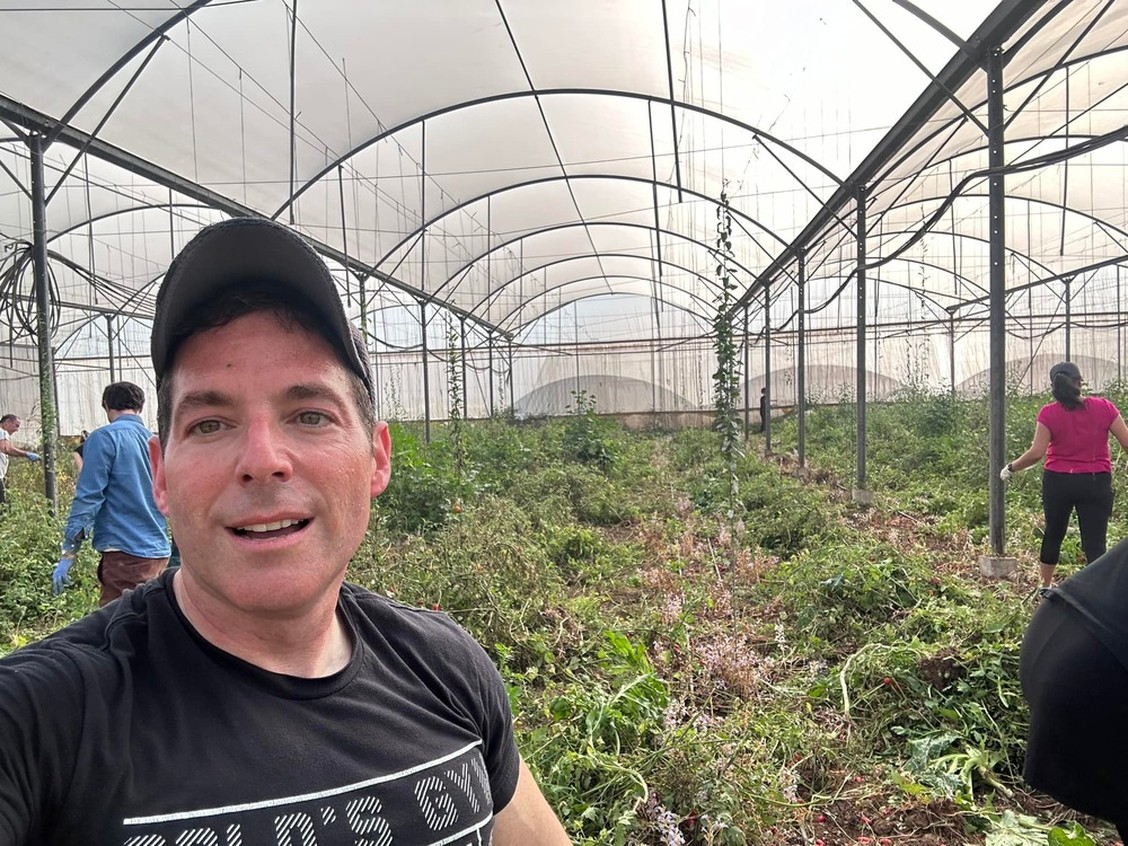 |
| In the shadow of war, Brad Neufeld found himself pulling tomato roots from Israeli soil, just kilometres from the Gaza border. Photo by Courtesy Brad Neufeld |
Neufeld, a 40-year-old lawyer from Toronto was visiting Israel on October 7, 2023. In the aftermath of the barbaric atrocities that took place in southern Israel he decided his place was to remain, as a Jew, to help out other Jews and the Jewish state recover from the murderous Palestinian Hamas terror assault. His interest, shared by many other Jews in the diaspora was to help the nation under siege through their solidarity and will to help rebuild important-to-the-nation farming communities destroyed in the savage attack on southern Israel.
Volunteers such as Neufeld have helped fill gaps left by workers who left the area, were killed, or who had joined the military on the battlefield forced upon the nation. "For individuals like me, that had not served in the IDF, I was beginning to feel useless to the country's war effort. There were calls for blood donations, something I had never done in my life previous to this war. But I jumped at the chance to do something, anything, to potentially be of value to the country. So many were prepared to make the ultimate sacrifice for the State of Israel. The least I could do would be to donate blood."
Tel Aviv, after October 7, emptied of its young men and women, answering the call of military defense. Those remaining put together distribution centres in parks and city squares to provide food and clothing to the displaced from the farming communities that had been attacked, forced to migrate for shelter to Tel Aviv. Work trips were arranged to farms in the south. "Farming and agriculture was always a strong foundational principle in the creation of the State of Israel, and especially at the kibbutzim in the Gaza envelope, and throughout the country."
"I figured that volunteering on a farm and working the land, would at least make me feel better about not being more useful in the war itself." And that marked his introduction to farm work. Where he worked at a farm where since October 7 tomatoes had not been picked, the crop just left to go wild, the fruit unpicked and rotted, with the farmer resigned to the fact that the crop was lost. The vines and roots of the plants had to be removed to make way for soil preparation for new tomato crops for the next season to be planted.
Farming areas around the Gaza border in Israel contribute a fifth of the country's fruit, three-quarters of Israel's vegetable crops and one out of every 16 jugs of milk. Organized missions and delegations interacting with online groups connect with those willing to fill the need at the agricultural communities. Israel Volunteer Opportunities, one Facebook group, has 41,000 members.
"There was a unity of mission and purpose that was palpable throughout the country. This war was an existential threat to the State of Israel and to the Jewish people.""Everyone knew this, so any differences that may have existed previously were put aside for the greater good of the country."Brad Neufeld
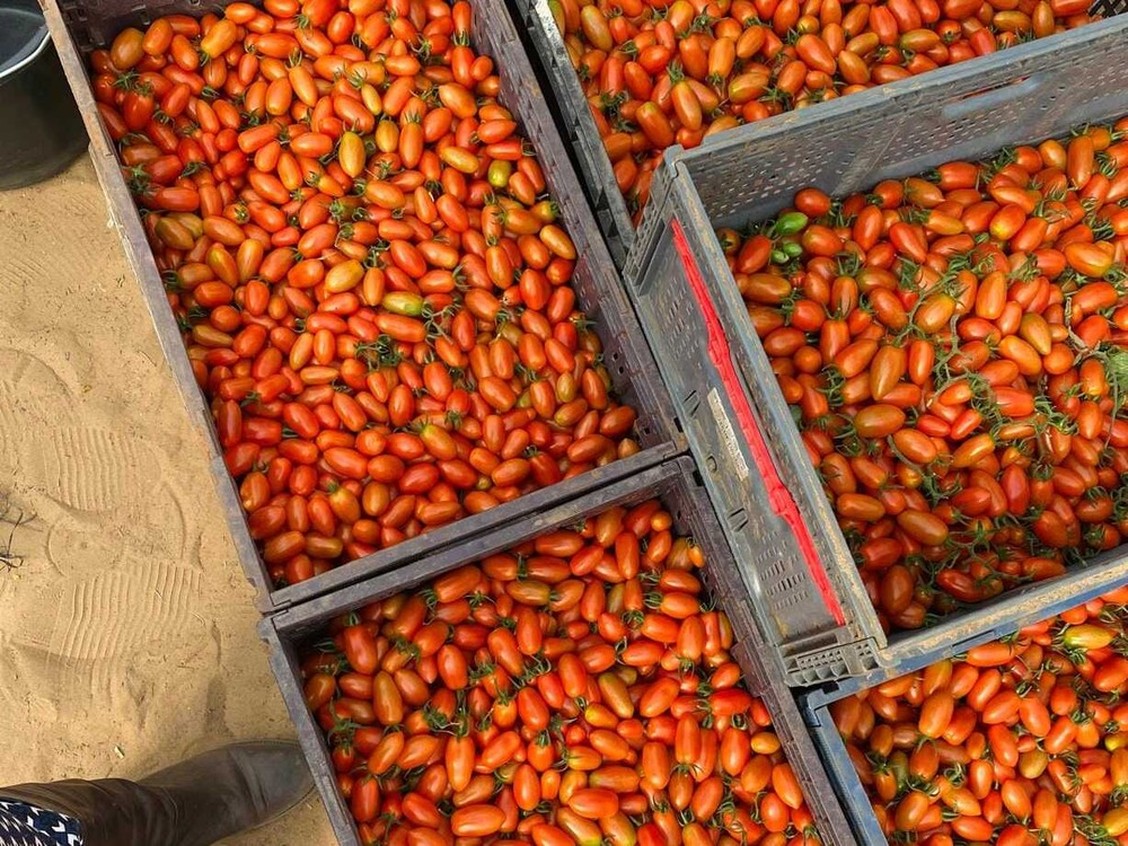 |
| A day’s haul at the tomato farm – Toronto native Brad Neufeld, who had arrived in Israel in 2023 for the Jewish high holy days, chose to stay on and volunteer after the October 7 Hamas attacks. Photo by Brad Neufeld |
"It blows me away to see how many people have done something outside their comfort zone in such a big way. People giving back at this time, people who have never done anything like this [farming, rebuilding the kibbutzes, visiting soldiers, visiting hostage families, attending shivas of fallen soldiers] before.""We have people come to Israel for the first time in their lives, alone, in the middle of a war.""I think volunteer tourism is a new movement. People want their kids to understand what it is to give back. People are coming back for their third trip."Yocheved Ruttenberg, operator of a volunteer committee
Labels: Diaspora Jewish Volunteers, Farming Communities, Hamas Atrocities in Israel, October 7/23
posted by Pieface @ Friday, January 24, 2025