Tuesday, September 01, 2026

Asymmetrical Warfare

"This is making the missile the preeminent weapon of the 21st century, with the potential to undermine deterrence and stability."
"[Warfare followed a simple physical law: The further you fired your projectile, the less accurate it became. Overcoming distance was a problem supplanted by the solution of] mass and energy."
"Now, wars are won by information."
"[These new technologies allow] the many and the small -- ] Iranians, Houthis, Hezbollah, Hamas -- ] to slip the heavy punches of their opponents, because they are well hidden and can strike back with accurate blows of their own." 
Professor emeritus of defense analysis U.S. Naval Postgraduate School 
https://www.rand.org/content/rand/pubs/commentary/2025/03/david-vs-goliath-cost-asymmetry-in-warfare/jcr:content/par/blogpost.crop.888x522.cm.webp/1741290839008.webp
David vs. Goliath: Cost Asymmetry in Warfare   Photo by parilov/Adobe Stock
  
Disparity in Power: At its core, asymmetric warfare hinges on a significant imbalance in military strength. The weaker side, lacking the resources and conventional military might of a state actor, must innovate and adapt unconventional strategies to level the playing field.
Unconventional Tactics: Guerrilla warfare, ambushes, sabotage, and terrorism are quintessential tactics of asymmetric warfare. These methods aim to maximize damage to the stronger force while minimizing losses for the weaker side, showcasing the ingenuity and resourcefulness of asymmetric actors.
Blurred Lines: Asymmetric warfare often blurs the distinction between combatants and civilians. Insurgents may operate within civilian populations, making it challenging for the stronger force to discern between military targets and innocent bystanders, complicating the ethical and strategic dimensions of conflict.
Terrorism: In the arsenal of weaker actors facing off against more potent adversaries, terrorism emerges as a potent tool for disrupting stability and exerting influence. Characterized by its asymmetrical nature, terrorism encompasses a spectrum of violent acts aimed at civilian populations or non-combatant targets, leveraging fear and intimidation to achieve political, ideological, or strategic objectives. Whether through bombings, shootings, or cyberattacks, terrorist groups exploit vulnerabilities in security systems to inflict disproportionate harm and sow chaos. Strategically employed, terrorism aims to erode the morale of the adversary, undermine confidence in government institutions, and provoke reactions that may inadvertently galvanize support for the terrorist cause. As such, terrorism remains a defining feature of asymmetric warfare, presenting complex challenges for security and counterterrorism efforts on a global scale.
Hamas and Hezbollah serve as prominent examples of non-state actors engaged in proxy warfare against Israel, receiving support from Iran. Employing rocket attacks and other unconventional tactics, these groups highlight the intricate interplay between asymmetric and proxy warfare in the region, further complicating conflict dynamics.  

https://www.ciris.info/wp-content/uploads/2024/05/frontpagelogo-300x93.png 
 
It was a strike of genius, a scheme whose planning was exquisite in nature, secretive and ultimately successful catching the enemy -- in this case Hezbollah -- off guard when on September 17 and 18 of 2024 pagers and other handheld electronic devices used by members of the terror group, their fighters, officers, medics and civilian supporters became victims when Israel detonated them in a surprise attack that did not require the presence of IDF soldiers. Dozens were killed by the surprise explosions and an estimated 3,000 wounded. Altogether some 1,500 Hezbollah fighters put out of business due to their injuries.
 
A fairly small quantity of explosives cunningly lay in wait for the unsuspecting users of those handheld electronic communication devices. They were remotely ignored on schedule. It took but a few hours for Israel's scheme to demoralize an implacable enemy when a significant number of Hezbollah fighters were killed and wounded. The scheme's success owed to vital information that afforded Israel that rare one-time opportunity. Knowledge of how, where and when to strike for the greatest impact. Low-tech allied with clever manipulation of physical resources and knowledge of the enemy. 
 
People gather as smoke rises from a mobile shop in Sidon
People gather as smoke rises from a mobile shop in Sidon, Lebanon September 18, 2024. REUTERS/Hassan Hankir
 
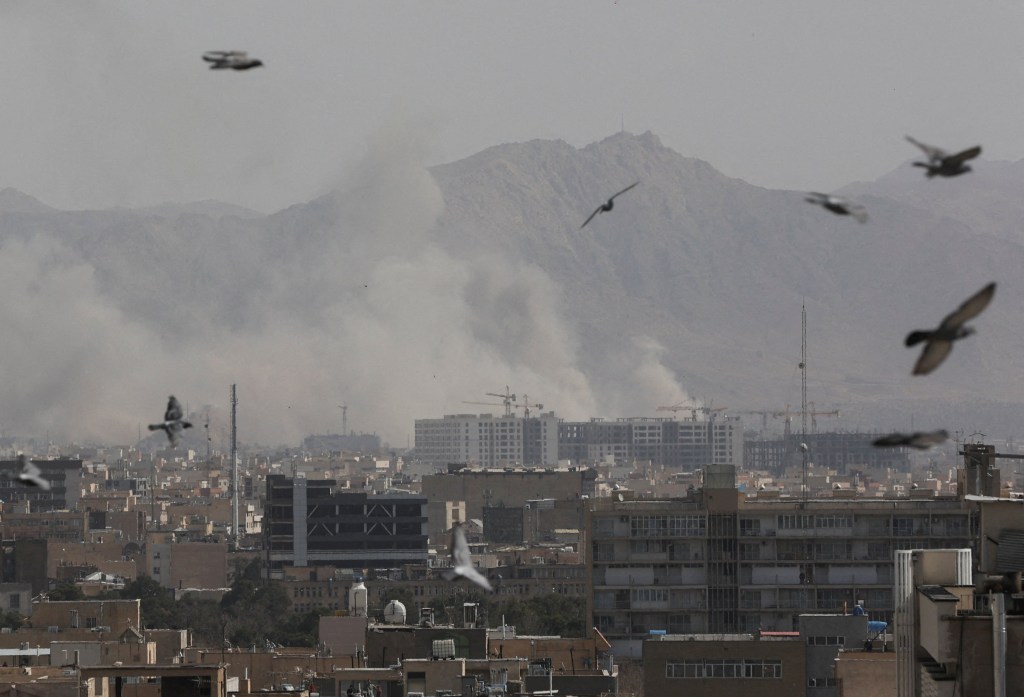
Israel,  however, is not the only entity that is making great use of the supreme utility of information/intelligence and low-cost technology in a combination that frustrates and demoralizes an enemy while allowing the users to make the gains of time and stalemate. This was not Israel's only venture into that low-key, big-impact type of warfare, confusing and confounding its enemies. In February, Israel acting with U.S. intelligence snuffed out over 40 senior Iranian leaders at a high-level meeting where they gathered in a single Tehran compound. Iran's national security elite wiped out with one accurately-aimed airstrike.
 
https://assets.cfr.org/images/t_cfrimg/f_auto/w_1024/v1772290651/globalconflicttracker/2026-02-28T103013Z_800024804_RC2XUJAU14VO_RTRMADP_3_IRAN-CRISIS-BLAST/2026-02-28T103013Z_800024804_RC2XUJAU14VO_RTRMADP_3_IRAN-CRISIS-BLAST.jpg
Smoke rises following an explosion, after Israel and the United States launched strikes on Tehran, Iran, on February 28, 2026. Majid Asgaripour/WANA (West Asia News Agency)/Reuters
 
This was followed by the Iranian regime's own cunning plan to undercut the American victory that had levelled its airports, destroyed its seaports, smashed its political/military infrastructure, left it leaderless, the elite commanders of the Islamic Revolutionary Guard Corps decimated, but not without canny intellectual resources that conspired to unsettle the globe when it closed off the Strait of Hormuz to shipping and relentlessly bombed surrounding Arab/Muslim countries that allowed their territory to house American military outposts. 
 
Long under economic sanctions Iran still was able to develop a massive arsenal of missiles and drones, with a little help from its friends in China and Russia to gain more sophisticated technology. Its fairly inexpensive missiles and drones saw it fighting back at Israel and the United States, while inflicting some considerable damage to U.S. assets in the region. The U.S. aircraft carrier Abraham Lincoln with its almost 5,700 personnel found itself under duress of restocking supplies when Iranian missiles and attack drones destroyed the Bahrain-based American supply base. 
 
That coup was followed up with an Iranian missile destroying a $500-million radar operating a Terminal High Altitude Area Defense (THAAD) missile defense system at a U.S. air base in Jordan signalling "a potentially transformative moment" in the "strategic contest" between Iran and the United States and Israel according to the Defence Security Asia journal. The IRGC sent their missile to strike the THAAD radar system maneuvering it in flight for a flanking attack on the radar striking it at a vulnerable angle, after having evaded detection and interception.
 
https://image.cnbcfm.com/api/v1/image/108356580-17881988002026-08-31t175100z_942363201_rc2i9nahptc6_rtrmadp_0_iran-crisis-oman-hormuz.jpeg?v=1788198838&w=1480&h=833&ffmt=webp&vtcrop=y
Vessels near the Strait of Hormuz, as seen from Musandam, Oman, Aug. 31, 2026.
Stringer | Reuters
 

Labels: , , , , , ,

Tuesday, July 01, 2025

Increasingly Threatening Drone Weaponization by Non-State Actors

"Drones serve multiple functions, including intelligence, surveillance, and reconnaissance, as well as command and control in clashes between cartels, against Mexican state forces, or even against self-defense groups."
"They have also been used for aerial bombings, direct attacks, and propaganda or psychological warfare operations."
Robert Bunker, co-founder, Small Wars Journal 
 
"Even before Russia’s February 2022 invasion of Ukraine, unmanned aerial systems [UASes] and other advanced technologies were being employed by criminals, terrorists, and other non-state actors in Latin America in increasingly innovative and problematic ways."
Evan Ellis, author, “Latin America’s Drone Problem”, professor, U.S. Army War College Strategic Studies Institute

"The adoption of drones by TCOs [transnational criminal organizations] is the latest example of how powerful criminal networks often borrow from military and insurgent tactics to challenge the state."
"Mexico, for instance, has seen the rise of so-called narcotanques, monstruos [monsters], or, more technically, Improvised Armored Fighting Vehicles—up-armored civilian trucks and cars sporting heavy weaponry and often used to spearhead cartel assaults."
"In the case of drones however, TCOs may find even more uses for cheap commercial UASes than the conventional soldiers on both sides of the war in Ukraine."
CSIS/Center for Strategic & International Studies 
https://i0.wp.com/insightcrime.org/wp-content/uploads/2025/02/Feature-image-Crime-Name-file.jpg?w=1336&quality=100&ssl=1
Drones Fuel Criminal Arms Race in Latin America   insightcrime.org
 
There has been a revolution on battlefields in the past several years, with drones increasingly being used as unmanned vehicles of attack and destruction, a much less expensive alternative to flying warplanes and risking the loss of pilots when they're struck. Remotely controlled drones have proven indispensable in combat zones for their versatility, nimbleness, cost expendibility and ease of use. Ukraine's manufacture of technologically advanced drones has proven to be a brilliant combat success able to penetrate deep into Russian territory, wreaking havoc and demoralizing the Russian population. 
 
The battlefields in Ukraine have proven to be a military test case for the use of drones, in the country's response to the unequal combat challenge it faces through the assault of a much larger force than its own. Ukraine has managed against considerable odds, to hold its own, even while Russian troops are slowly and incrementally making inroads in capturing and annexing more Ukrainian territory as time goes by. Drone technology has given Ukraine the advantage of greater flexibility and surprise, to set Moscow back on its invasion heels, through sheer plucky counteroffense strategies. 
 
As with any innovations in military technology, all the more so when the new designs and purposes of an unmanned vehicle that can be adapted for a variety of purposes, it could never be confined to military use. Low production cost and greater market visibility made drones appealing to entrepreneurs in a variety of uses, from commercial delivery vehicles to monitoring traffic, to aerial photographic purposes, as well as appealing to amateur flight enthusiasts viewing the technology as yet another entertaining hobby.
 
And then there is the criminal class of entrepreneurs which can always find such technologies useful for a variety of purposes; sneaking drugs or arms over prison walls at their prisoner recreation sites, delivering drugs from one area of a country to another by powerful drug cartels. And the use of militarized drones to target rival gangs, and perhaps most troubling of all, manipulating drones equipped with weaponry to target police drug squads or the military.
 
Latin America appears to have taken wholeheartedly to the use of unmanned aerial vehicles to make their activities even more effectively efficient; for guerrilla insurgencies and drug cartels alike. In this part of the world drone use has devolved in the past year for use in drug warfare; testing ground use has surged in frequency, lethality and sophistication, becoming a growing threat to public safety, sovereign nationality and stability of entire regions. 
 
A report authored by Professor Evan Ellis with the U.S. army War College titled "Latin America's Drone Problem" warns of the destabilization and danger presented by drone use.
 
https://csis-website-prod.s3.amazonaws.com/s3fs-public/styles/1400x600/s3/2025-06/GettyImages-2208756128_Crop1.jpg?VersionId=4KoTPi3WPtIaMrPgzxOTeRX5lJzAeBFS&h=266da715&itok=BWF6zZ4J
Photo: MARCOS PIN/AFP via Getty Images
 
The use of drones readily available commercially at preferential cost, have been used to spy on authorities on border crossings, for smuggling cellphones into prisons and to deliver crude explosives to high-value targets. Their use for drug trafficking, transporting narcotics from Mexico across to the United States is not particularly new. But what is different, according to the report, is the increase in weaponization of the technology. 
 
Several months ago, a Colombian soldier was targeted in Catatumbo by a drone launched by the ELN guerrilla group. This was in response to a military operation where 80 people were killed and at least 50,000 were displaced. In Mexico, about the same time, a drone just missed assassinating General Jorge Alejandro Gutierrez in Chihuahua, during an ambush. 
 
A drone loaded with 40 pounds of explosives in Ecuador slammed into the roof of the country's maximum-security prison, La Roca, where plans were afoot to damage the prison to enable a mass prisoner escape to take place. The U.S. Drug Enforcement Administration identified over 150 drones used in cross-border criminal activity between 2012 and 2014. Ten years on, the numbers have increased substantially. The situation has led some Latin American governments to invest in drone detection and counter-drone technologies.
 
Countering the threat remains fragmented and underfunded, however with procurement delays, weak co-ordination between agencies and above all, limited access to cutting-edge tools which have left many countries' authorities desperate to successfully counter increasingly tech-savvy criminal adversaries.  
 
https://images.firstpost.com/uploads/2025/03/MexicoArmyDroneAttacks1200AP-2025-03-ceedf00f31ae9c6481e2b8c038ccea57.jpg?im=FitAndFill=(596,336)
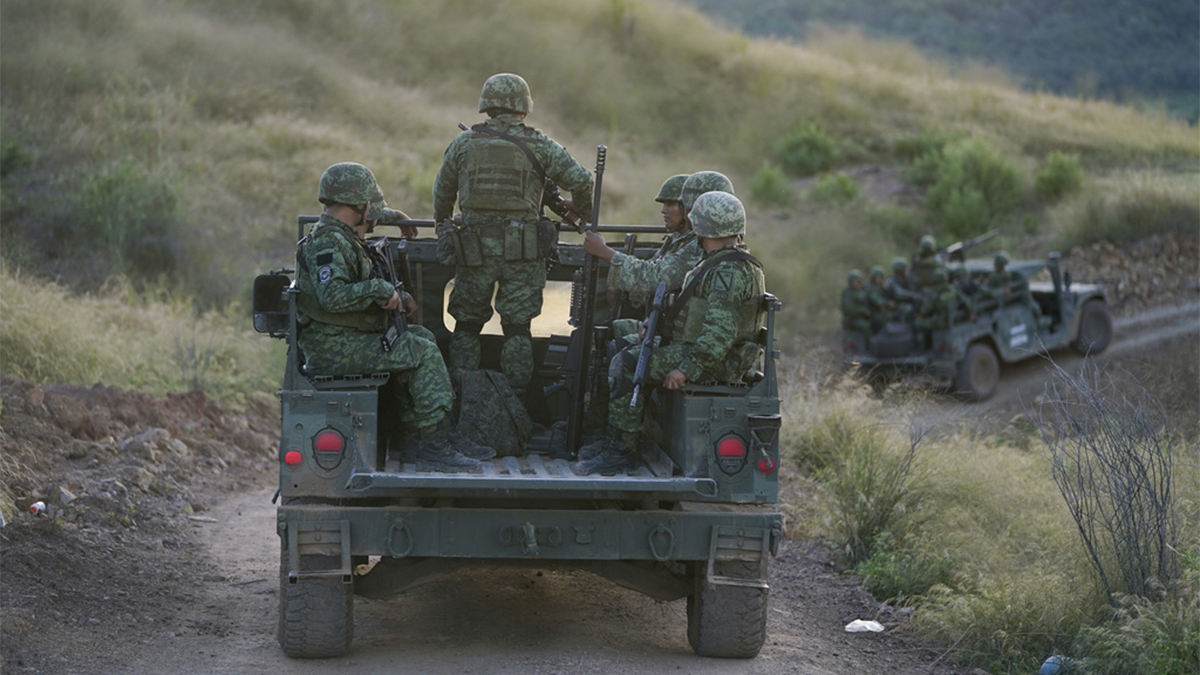
Soldiers patrol near the hamlet Plaza Vieja in the Michoacan state of Mexico. The Mexican army acknowledged for the first time on August 2, 2024, that some of its soldiers have been killed by drug cartel bomb-dropping drones in the western state of Michoacan, without providing fatality numbers. AP

Labels: , ,

Follow @rheytah Tweet