Wednesday, February 04, 2026

Recognizing Iran for Its Terrorist Credentials


"We need to name and shame the perpetrators."
"It stands out that the architect of all of this repression, Ayatollah Khamenei, is not on Canada's sanctions list."
Brandon Silver, director, policy and projects, Raoul Wallenberg Centre for Human Rights 
 
"It is very frustrating for Iranians to be walking the streets [of Canada] and [to] see our oppressors alongside with us and having no real tools to put them behind bars, even though we've reported many of them."
"We see them at our local gyms, we see their sons and daughters spending millions of dollars in expensive  houses, cars, living lavish life-styles, while our people back home can't afford even a loaf of bread."
Nazanin Afshin-Jam MacKay
 
"This is a moment, perhaps as significant as the Berlin Wall falling itself."
"Can you imagine for a moment what a world of peace might look like if we listen to the call of the Iranian people, of whom tens of thousands have now been brutally massacred?"
Conservative MP Shuvaloy Majumdar 
https://smartcdn.gprod.postmedia.digital/torontosun/wp-content/uploads/2026/02/ont-iran-protest-20260201.jpg?quality=90&strip=all&w=564&h=423&type=webp&sig=mP0ZjBNYjFn9wIwdyQlVgw
 
In 2012, the-then Conservative government of Prime Minister Stephen Harper took the step of responding to the Islamic Republic of Iran's interference in Canadian affairs, its operatives' presence in Canada and the harassment of Iranian-Canadians, by closing the Iranian Embassy in Ottawa and obliging Iranian diplomats to leave. Some Iranian government assets were frozen. And Iran took steps to counter the situation by expelling Canada's diplomatic staff and closing the Canadian mission in Tehran.
 
When Justin Trudeau took over the helm of Canada's government in 2015 he mused for a while about restoring diplomatic relations with Iran. It became impossible to overlook the Iranian government's support of terrorism, the implications of its interference in Canada, including money laundering, so the diplomatic fissure remained. Eventually Canada outlawed the Islamic Revolutionary Guard Corps, placing them alongside Hezbollah and Hamas, its proxies, on Canada's terror list.
 
That occurred in the wake of the 2020 targeting of Ukraine International Airlines Flight PS752 where 55 Canadian citizens were killed as the plane exploded in mid-air. The IRGC shot missiles at the airliner as it left the Iranian capital during a period of high tension, but Tehran denied the event until it no longer could, given the damning evidence. The al Quds branch of the IRGC has been involved in terrorist plots abroad targeting enemies of the regime, most notably from among the Jewish and Israeli eeecommunity.
 
https://justiceinconflict.org/wp-content/uploads/2026/01/iranprotests_db_01122026_a_a2147c_299112bbc83.jpg?w=1024
Demonstrators in Iran (MAHSA/Middle East Images/AFP/Getty Images)
 
The regime is known to have tasked Canadian expatriate Iranians to launch assassinations in the United States. Similarly assassination plots meant to take place in Canada were foiled by the RCMP; former federal Solicitor General Irwin Cotler was one of those on the Iranian assassination list, as a high-profile human rights campaigner. After the October 7 Iran-inspired-and-enabled Hamas atrocity in southern Israel, pro-Hamas protests on Canadian university campuses were promoted by Iran.
 
Iranian government agents as well as those belonging to the IRGC have notoriously moved about freely in Canada, both for personal relaxation in a country where their presence is not opposed by the government, and to pursue the Iranian objective of money laundering through Canadian real estate. Some 20 senior members of the regime have bypassed Canada's immigration system while others are under active investigation.  
 
Having done so, the government took no action on removing IRGC operatives from Canadian soil. Now, members of Parliament and human rights activists have joined in a move to press Canada's Liberal government to place pressure on Iran; the official sanctioning of its supreme leader and and focusing on an increased criminal investigation into regime perpetrators, would represent a good start for a government that has scarcely moved itself to mobilize condemnation against the regime that has been using military means to stifle a popular uprising demanding the end of the Iranian Republic dominating their lives.
 
Conservative MP Shuvaloy Majumdar, Liberal MP Miville-Dechene and Iranian Canadian human rights activist Nazanin Afshin-Jam MacKay joined other morally-principled activists in calling on Canada to make overtures to allies to list the Islamic Revolutionary Guard Corps as the terrorist entity it is. An energetic commitment to advance investigation  into human rights violations perpetrators and crimes committed in Iran in response to mass protests that struck against the regime across the country is called for.
 
Brandon Silver of the Raoul Wallenberg Centre urged that such an "structural investigation" is required, to have the RCMP launch a thorough investigation for the purpose of assembling evidence implicating Canadian residents who have been involved in war crimes and atrocities. "We must go beyond issuing statements, we must act. This means supporting independent international investigations and treating the Islamic Revolutionary Guard Corps as a terrorist organization in practice, not just in name", stated Afshin-Jam MacKay.
 
A timely call to action in the wake of thousands of Iranians killed by the Iranian regime's crackdown against widespread anti-government protests in January. While the European Union foreign ministers agreed to list the IRGC as a terrorist group last week, the United Kingdom has made no such commitment. 210 Iranian individuals and 254 Iranian entities have been sanctioned by Canada under the criminal code. Yet only one such IRGC designation has resulted in deportation. 
 
https://ichef.bbci.co.uk/news/1024/cpsprodpb/e6b7/live/13b0a610-2e75-11ef-ba8d-a9b9bfa74cb0.jpg.webp
The IRGC is a major military, political and economic force in Iran   EPA
 

Labels: , , , , , ,

Tuesday, February 03, 2026

"Choose Another Fighter"

"Obviously we're looking at the important questions around Canada's security and over sovereignty."
"We have to consider facts like interoperability, we have to consider facts like benefits, industrial benefits around the country, something that's being worked out."
"And, so what's happening now is no final decision has been made, and the review continues."
Defence Minister David McGuinty 
 
"Canada has been flying different aircraft from the USAF in NORAD for 40+ years and controls its jets through Winnipeg, and the F-35s stealth is irrelevant in NORAD because Russian bombers do not have air-to-air radar."
"[Hoekstra is] babbling nonsense." 
Bill Sweetman, U.S. aviation writer 
 
"The F-35 remains the most advanced fighter in the world, but too many of them are sitting idle."
"The readiness rates of our aircraft continue to fall short of Pentagon goals."
Republican Senator Roger Wicker
 
"[Estimates for maintenance were factored into future defence spending plans]."
"DMD remains committed to minimizing future cost growth for the F-35 and continues to work with partner Nations acquiring the planes under the F-35 program in implementing appropriate cost containment measure."
Department of National Defence spokeswoman Cheryl Forest 
https://www.aerotime.aero/images/USAF-Lockheed-F-35-Lightning-II-stealth-fighter-jet-in-formation-with-two-Czech-Saab-Gripen-jets-800x500.jpg
USAF-Lockheed F-35 Lightning Jet   Soos Jozsef / Shutterstock.com
 
U.S. Ambassador to Canada, Pete Hoekstra has on occasion relieved himself of frustration over Canada['s hesitation to fully commit to ordering 88 F-35 fighter jets, hovering between settling for a  quarter of that number and turning to Sweden's Gripens to make up the balance; a far less expensive cost with a reliability and performance record that now appears to match that of the F-35s, with far less maintenance and fewer breakdowns. 
 
The U.S., Mr. Hoekstra huffed recently didn't need anything from Canada. Followed by a warning that Canada could face dire consequences should the Canadian government fail to commit  unreservedly to the F-35s. Failure to commit would, he warned, alter the U.S.-Canada NORAD agreement given that the Gripens would not be as 'interchangeable, interoperable' with the F-35s. Moreover, he warned darkly, the US. may have to resort to flying its F-35s into Canadian airspace to meet any perceived threats.
 
A review of Canada's purchase of F-35 prospect had been ordered by the Liberal government following threats by US. President Donald Trump against Canadian sovereignty. Canada has committed to buying 16 of the jets, and whether to proceed with purchasing another 72 of the stealth fighters has yet to be decided. The Royal Canadian Air Force argues that the F-35 is superior to the Saab Gripen.
 
https://www.aerotime.aero/images/2025/12/Saab-Gripen-and-GlobalEye-1200x800.jpg
Saab
 
Previously it  was reported, but unconfirmed, that the purchase of 40 F-35s and up to 80 Gripens  was being considered by the Liberal government. The F-35s to be used in North America defence and the Gripens meant for use on other operations. According to those supporting the F-35s, the Gripens cannot be used in conjunction with the stealth fighter since they are not interoperable with the U.S. jets. 
 
Defence insiders reject that contention, marking it as a marketing ploy by manufacturer Lockheed Martin and the Trump administration.  Sweden, Hungary and the Czech Republic in fact use Gripens that have flown with the F-35s in NATO. There are complicating issues for Canada with the F-35 acquisition given the software updates to the F-35s for operational purposes. The concern is that a hostile government could decide to stop upgrades which would render the jets unusable.
 
https://images.ladbible.com/resize?type=webp&quality=70&width=640&fit=contain&gravity=auto&url=https://images.ladbiblegroup.com/v3/assets/blt949ea8e16e463049/blt7b96748ab5f8f8f2/69790e68f8ca3abfc8f4bb17/GettyImages-2242218873_(1).jpg
The Saab-made Swedish Gripen fighter jet has become a cornerstone of eastern Europe's defense (Jonathan Nackstrand / AFP)
 
Added to the fact that the U.S. continues to own all parts for F-35s purchased by Canada, even those siting within Canadian bases. The issue of spare parts has the potential to compromise Canadian national security or operational effectiveness. Rasmus Jarlov, head of the Danish parliament's defence committee is deeply concerned over his country deciding that the F-35 would remain its sole operational fighter jet in the wake of President Trump's threats over Greenland.
 
An academic paper by the Canadian Forces College noted that the F-35 jets require significant support equipment, and problems procuring spare parts for the planes along with other maintenance issues affect the level of readiness of the fleet. The F-35A, the variant considered purchasing by Canada, achieved a full mission-capable rate of a mere 36 percent in 2023. Unease over costs was augmented when the U.S. government's audit agency reported costs in sustaining the F-35 fleet kept rising, leaving the Pentagon planning to fly the aircraft less than estimated originally, resulting from ongoing reliability issues.
 
The U.S. Congressional Budget Office noted in 2025 that the U.S. had been flying the F-35 since 2011, with significant problems. Availability and use lower than those of other fighter aircraft of the same vintage. "For example, the average availability rate of a 7-year-old F-35A has been about the same as that of a 36-year-old F15C/D and a 17-year-old F-22", the Budget Office report stated.   
"Choose another fighter jet."
"They're in for repairs about half the time or even more."
"The Americans have all the power of actually destroying our air force just by shutting down [parts] supplies."
Rasmus Jarlov, head, Danish parliament defence committee 
https://i.cbc.ca/ais/ca07ed2b-36f9-4daa-a092-a09f211db61a,1769799323134/full/max/0/default.jpg?im=Crop%2Crect%3D%280%2C89%2C1024%2C576%29%3BResize%3D860
An F-35 is seen being assembled at the Lockheed Martin factory in Fort Worth, Texas. Canada's first F-35 is expected to be delivered this year. (Chris Hanoch/Lockheed Martin)
 

Labels: , , ,

Terra Nullius -- Svalbard: Cold Shore

"Norway now finds itself in the most serious security situation since 1945."
"[Svalbard has for too long been seen by nations as a place where] everyone who wants to can come up and do almost whatever they want."
"That's not the fact. This is Norwegian sovereign territory. So we're making that a bit clearer."
Eivind Vad Petersson State Secretary, Ministry of Foreign Affairs, Norway 
https://csis-website-prod.s3.amazonaws.com/s3fs-public/styles/1400x600/s3/2023-09/GettyImages-1240741560_Crop1.jpg?VersionId=mWKSkGPe0GKiiz9cG_mcY1Bo2xQci7Ps&h=266da715&itok=RNVD8uor
The Svalbard Archipelago   Photo: Jonathan Nackstrand/AFP via Getty Images
 
Following World War 1, Norway's claim to the Arctic archipelago and its islands was officially recognized. The Svalbard Treaty of 1920 banned the presence of activity linked to the military while granting all other nations choosing to sign on to the agreed-upon treaty access to hunting, fishing, mining and land ownership. Over the years, close to fifty countries added their names to the treaty which allowed them access.
 
Of late, studies of the geology of Svalbard and the ocean floor surrounding it have identified vast amounts of copper, zinc, cobalt, lithium and rare earth elements buried in the ocean floor. These are eagerly-sought-after minerals that power electric car battery technologies and wind turbines. It was  generally taken that the Svalbard Treaty granted signatories rights to its surrounding seas and seabed. Until January 2024 when Norway's governing party announced it would pursue deep-sea mineral exploration in an enormous sweep of its seabed.
 
The remote, frigid island, viewed as hostile to human life on a prolonged basis where minus 34 Celsius temperatures were not unknown, were initially home to Norwegian miners and Russian fur trappers. Longyearbyen, Svalbard's largest town, these days boasts candlelit restaurants, hotels, daily flights to the mainland, and is home to 2,500 people from 50 countries. According to the town's mayor, a surge in investment, official visits and strategic attention has recently focused on Svalbard.
 
https://csis-website-prod.s3.amazonaws.com/s3fs-public/styles/original_aspect_ratio_style/s3/2023-09/230913_ERE_Svalbard_Map.jpg?VersionId=6St.B4o5DWrkzOdGqX9xuMpPNfkmFdoO&itok=OWDx1xTK

 
Recently, the Energy Ministry of Norway publicly declared that Norway's goal in exploiting the natural geology of the area had a defined purpose; the goal of "profitable and sustainable" pursuit of seabed minerals, including the seabed around Svalbard. As Norway moves toward consolidating its sovereign rule over the island, its attitude toward foreigners and civil rights has hardened. Foreigners since 2021 were able to cast a vote in the political arena. 
 
That changed when authorities declared that voting in local elections would be off limits to foreigners living on Svalbard if they had not lived on Norway's mainland for the previous three years. "Should have been done a long time ago", said Mr. Petersson. The Svalbard Treaty guaranteed "equal access, not equal rights", he said, pointing out that in other countries foreigners are not given the right to vote. 
 
Svalbard is located about 800 kilometers from the North Pole, one of the only places on Earth where instant connection is possible with polar-orbiting satellites, leading to uninterrupted, clearer feeds and faster downloading speeds; more advantageous than anywhere else on the planet. In fact SvalSat, the world's largest satellite downloading station is based on Svalbard. 
 
https://csis-website-prod.s3.amazonaws.com/s3fs-public/styles/original_aspect_ratio_style/s3/2023-09/GettyImages-1240634673.jpg?VersionId=QZhSaW8ej6MSzDQa6fE02YGYNHnnPq6Z&itok=xu5dbLeF

Telecommunications domes of KSAT, Kongsberg Satellite Services, on a mountain near Longyearbyen. Photo: Jonathan Nackstrand/AFP via Getty Images 

Fur traders from the Pomor region in northwestern Russia arrived at Svalbard some 300 years ago. The Soviets established several coal mining towns in Svalbard a century ago and had signed the Treaty. Of the mining towns, only one, Barentsburg, remains and still operates minimally. Once there was a population of 1,000, now reduced to around 300. One Russian official claimed the archipelago should be renamed the "Pomor Islands".
 
A powerful radar system monitoring space weather and the atmosphere is at the service of Chinese scientists. Data gathered from this equipment have been shared with the China Research Institute of Radiowave Propagation, a Chinese defense organization. Members of the U.S. House Select Commission on the Chinese Communist Party are convinced China is performing military research on Svalbard in defiance of the Treaty proscription. 
 
Outside the Yellow River Station where the Chinese scientists live a pair of granite lions stands guard.  
Norway ordered the Chinese to remove the lions, each of which weighs 900 kilograms, installed 20 years ago when the Chinese government agents arrived on Svalbard. For the first time last summer, the archipelago's sole university,   the University Center, operated by the Norwegian government, barred entry to Chinese students, identified by Norwegian intelligence agencies as a potential security risk. 
 
Criticisms of China's activities represent "nothing but distortion of facts and groundless speculation", according to officials at the the Chinese Embassy in Norway. As for the lions standing guard, they continue to remain where they were placed two decades earlier. 
"While the Russian geopolitical threat remains paramount, Chinese encroachments facilitated by an isolated Russia may complicate the Arctic security landscape in the longer term. The coast guard agencies of Russia and China recently signed a cooperation agreement on strengthening maritime law enforcement to great fanfare in Murmansk, a city on Russia’s western flank close to Norway."
"Moreover, when all other Arctic coast guard agencies suspended their participation in the Arctic Coast Guard Forum, Russia invited China to join the forum—clear signs of China’s expanding presence in the High North."
"As Iris A. Ferguson, U.S. deputy assistant secretary of defense for arctic and global resilience, has put it, Chinese efforts aim “to normalize its presence and pursue a larger role in shaping Arctic regional governance and security affairs.”"
Center for Strategic and International Studies  
https://www.thearcticinstitute.org/wp-content/uploads/2019/12/Lenin-statue_Pyramiden-Svalbard.jpg
The world’s northernmost Lenin statue looks over the abandoned Russian city of Pyramiden on Svalbard, summer 2018. Photo: Alina Bykova
 

Labels: , , , , ,

Monday, February 02, 2026

Autocratic Regimes

"[Havana] aligns itself -- and provides support to numerous hostile countries, transnational terrorist groups and malign actors adverse to the United States [including Russia, China and Iran]."
"[The communist government provides] defense, intelligence and security assistance to adversaries in the Western Hemisphere [while violating the human rights of its citizens]."
"[Cuba] will be failing pretty soon. They got their oil from Venezuela. They're not getting that anymore."
"[I will impose tariffs on any country that] directly or indirectly provides oil to Cuba."  
U.S. President Donald J. Trump 
 
"We did not touch on the topic of Cuba [during their 40-minute telephone conversation], and in the evening then this [executive order] came out."
"The imposition of tariffs on countries that provide oil to Cuba could create a far-reaching humanitarian crisis [severely impacting the operations of hospitals, the electrical grid and the food supply]." 
"[Cuba is currently] going through a difficult moment [but Mexico cannot be put] at risk in terms of the tariffs."  
Mexican President Claudia Sheinbaum  
https://i.cbc.ca/ais/74cb9521-b1dd-4f6b-b086-64f47ac356a2,1769814708002/full/max/0/default.jpg?im=Crop%2Crect%3D%280%2C0%2C3339%2C2268%29%3BResize%3D796
A drone view shows the Pajaritos terminal of Mexico's state-owned oil company Pemex, in Coatzacoalcos, Veracruz state. (Angel Hernandez/Reuters)
 
An executive order was signed on Thursday by U.S. President Donald Trump when he declared Cuba represented an "unusual and extraordinary threat" to U.S. national security for which tariffs would be imposed on all U.S. imports from any country supplying Cuba with oil. In the wake of the lightning military raid on Caracas in mid-January that took Venezuela's President Nicolas Maduro into U.S. custody for trucking with drug cartels, Mr. Trump turned his attention directly on Cuba.
 
Subsequent to the raid, the Trump administration now controls Venezuela's oil exports and took the occasion to block deliveries of oil to Cuba, long reliant on its regional ally in Venezuela to supply it with petroleum. Mexico, under critical trade duress found it necessary to cancel its latest scheduled delivery for the month to Cuba, taking into account the looming renegotiation of Mexico's free-trade pact with the United States and Canada.
 
Under these constraining issues, the sobering 'sovereign decision' was made to temporarily halt Mexican oil shipments to Cuba. Earlier in the day following the Trump order appearing on the White House website, the Cuban government attempted to rally Latin American and Caribbean neighbours to its rescue. "The peace, security and stability of Our America are in danger", Cuban Foreign Minister Bruno Rodriguez stated in a social media post, denouncing the U.S. for imposing "peace through force".
 
In an appearance before the Senate Foreign Relations Committee the day before, Secretary of State Marco Rubio -- of Cuban descent -- was asked whether he would rule out forcing "regime change" in Cuba. "I think we would like to see that regime change", responded Mr. Rubio. "That doesn't mean that we're going to make a change, but we would love to see a change. There's no doubt about the fact that it would be of great benefit to the United States if Cuba was no longer governed by an autocratic regime"
 
Long dependent on Venezuelan supplies of oil which it trades for security and medical personnel with Venezuela under Maduro and previously Hugh Chavez, Cuba produces little oil of its own. Imports averaged 37,000 barrels daily, the bulk of which arrived from Venezuela in 2025. Cuba is now left with a mere 15 to 20 days of oil, according to the Financial Times. Island-wide blackouts are common and frequent, impacting basic human services like drinking water.
 
https://i.cbc.ca/ais/bea02522-c182-4e02-8a34-e15e9940e365,1769814792500/full/max/0/default.jpg?im=Crop%2Crect%3D%280%2C0%2C6049%2C4032%29%3BResize%3D796
Preparing dinner during a blackout in Havana on Wednesday, as Cubans from all walks of life hunker into survival mode, navigating seemingly interminable blackouts and soaring prices for food, fuel and transport as the U.S. increases pressure on the communist‑run nation. (Reuters)
 
Signing a new defence co-operation pact with Havana last fall, Moscow pledged $1 billion in investment over the next five years in efforts to retain a hemispheric foothold. Diplomatic support has emanated to Cuba by both China and Russia. The determination of the U.S. to direct oil supplies away from Cuba along with a fleet of navy and coast guard ships in the Caribbean for operations against Venezuela tasked to stop drug smuggling, the oil blockade of Cuba was next on the agenda.
 
Seven sanctioned oil tankers carrying Venezuelan crude have been seized by the U.S. to date -- blockading legitimate shipments to Cuba risks global criticism of violating international law, according to maritime experts. In response to questions in the immediate aftermath of the Caracas raid, the U.S. president responded that he felt no additional actions were required against Cuba, since lacking oil from Venezuela, "Cuba looks like it's ready to fall"


Labels: , , , , , ,

Sunday, February 01, 2026

In Hindsight : Losing Canada

"Unfortunately, literally everything I said would  happen in 2015 has now come to pass."
"Trudeau's deficits will not be small. Mr. Trudeau has made tens of billions of dollars of spending promises; he said the budget will balance itself, he has no idea what he is talking about when it comes to these things." 2015
"These guys [2015 leadership opponents] would have had, in the last two weeks, us throwing open our borders and literally hundreds of thousands of people coming in without any kind of security checks or documentation."
"That would have been an enormous mistake."
Former (2006-2015) Prime Minister Stephen Harper 
https://i.cbc.ca/ais/1.1792054,1464286365000/full/max/0/default.jpg?im=Crop%2Crect%3D%280%2C0%2C779%2C584%29%3BResize%3D805
Stephen Joseph Harper, who led the Conservatives for 13 years, saw his party win the first majority government in over a decade in the May 2, 2011, election, with 166 seats, representing an increase of 23 seats from the October 2008 election, in which Harper won a strong minority. (Geoff Robins/AFP/Getty)
 
He was one of the most effectively reliable prime ministers Canada has had; principled, intelligent, informed, a man of earnest integrity and love of country. Some of those who voted him into office -- one minority and two majority governments -- missed him from the moment the Conservative Party of Canada lost the 2015 election and the Liberal Party of Canada became the governing body under the most unsuitable, unprepared and unprincipled prime minister Canada has ever had; Justin Trudeau. 
 
Now, the current Liberal Prime Minister Mark Carney promises to be the second-most unsuitable, out-of-his-depth prime minister of Canada.
 
Former Prime Minister Stephen Harper was an economist before he became prime minister and his administration bears no resemblance whatever to the current office-holder, a central banker, whose grasp of economics seems fairly incompetent. Perhaps not so much as his predecessor, Justin Trudeau, who felt the economy would look after itself:  "The commitment needs to be a commitment to grow the economy, and the budget will balance itself".
 
To that end, after inheriting a balanced budget, the Liberals claimed they would run a $10B deficit for three years to 'build infrastructure' after which a balanced budget would be produced by 2019. The first three years of Liberal mismanagement of the economy saw the deficit come in at $19 billion for starters. By 2025, when Trudeau left the prime ministership the national debt was $1.2 trillion, somewhat higher than the $612 billion he had inherited a decade earlier.
 
While in office, when the opposition Liberals and NDP insisted the government bring Syrian refugees into Canada en masse, PM Harper responded: "We do not want to pick up our entire communities ... and move them out of the region where they have lived for as long as history has been written. They do not want that. They want us to help them. That is why we provide refugee placements, friends. That is why we provide humanitarian aid." 
 
https://i.cbc.ca/ais/1.3177233,1464286588000/full/max/0/default.jpg?im=Crop%2Crect%3D%28692%2C54%2C1767%2C1325%29%3BResize%3D805
August 2015 long weekend, Harper stood outside Rideau Hall — dressed in Conservative blue — after asking Gov. Gen. David Johnston to dissolve Parliament, launching his fifth federal election campaign as party leader. He appealed to Canadians to consider leadership (and his experience) as the central issue at play. (Blair Gable/Reuters)
 
Fast forward ten years and "hundreds of thousands of people" entered Canada with scant security checks as the Liberal government ignored entire categories of quotas and checks on temporary immigration  (many dating from the Harper government); in the process seeing an unprecedented surge of temporary migrants entering Canada The number of 'non-permanent' residents soared by 1.7 million in three years, overwhelming the capacity to screen them. Leading to a 'standard' of foreign nationals claiming refugee status through an ever-so-convenient app. 
 
The Harper-era government brought in a measure to prevent corruption in awarding of contracts by government, leading to the Public Prosecutions Act, designed to prevent political interference in criminal prosecutions. The law enacted by the Harper government placed the situation in control of a politically independent 'director of public prosecutions'. It was this act that succeeded in revealing the 2019 episode when Trudeau pressed his then-justice minister to forgo a bribery case against a Quebec engineering company with close ties to the Liberals.
 
During his administration, PM Harper removed home delivery at the request of Canada Post management, reflecting the downward spiral of mail volumes making it too costly for letter-carriers to continue door-to-door daily deliveries. At that juncture, the national mail corporation still turned a profit and closing down home delivery meant the spigot of losing money was turned off. The Liberals campaigned on a promise to restore home delivery. Almost immediately it was restored hundreds of billions annually began hemorrhaging for Canada Post, leading it to the door of bankruptcy. 
 
In 2010 the Harper government suspended Canada's contributions to the UNRWA agency, a central provider of aid ad-infinitum to Palestinians in Gaza and the West Bank. Accusations the agency was intermingled with Palestinian terror groups such as Hamas led to that cancellation. The Liberals restored funding to UNRWA in 2015. By 2023 following the October 7 terrorist attack on southern Israel, hard evidence emerged of UNRWA employing members of Hamas and Islamic Jihad; including a top Hamas commander.
 
When the Liberals took the reins of power in Canada they spoke of an intention to 'modernize' the criminal justice system with the introduction of 'restorative justice' to reduce the number of Indigenous offenders in prison. Bill C-75, a crime bill, was made law in 2018 to simplify bail for accused criminals and codifying treating offenders more leniently based on race. Stemming from a 'vulnerable population', criminals received bail faster and were released earlier from prison. 
 
Since then, Statistics Canada's crime severity stats reflect that when Mr. Harper left office, homicides and violent crime were at lows never before seen in the history of Canada. Since his departure from office as prime minister, however, crime began trending uphill steadily, sitting now at the point where  homicides have hit 30-year highs. This represents the Liberal version of progress.
 
https://i.cbc.ca/ais/1.2502700,1445318089000/full/max/0/default.jpg?im=Crop%2Crect%3D%28391%2C0%2C2840%2C2130%29%3BResize%3D805
Mr. Harper and his wife, Laureen, visit the Mount of Olives, in Jerusalem in 2014. The Mideast featured throughout Harper's tenure, including most recently the exodus of refugees from the war in Syria. Harper pointed to ISIS as the root cause of the refugee crisis in Europe and reiterated Canada's military commitment to combating the extremist group. (Sean Kilpatrick/Canadian Press)
 

Labels: , , , , ,

Saturday, January 31, 2026

Canada, Diminished and Faltering

"One could argue that we've lost that unifying sense of right and wrong."
"The very sense of [the] liberal, permissive, non-judgmentally embracing society that our countries were fundamentally founded on is now being openly exploited for the purpose  of reshifting the balance." 
Former Vice-Chief of the Canadian Defence Staff, Mark Norman
 
"Symbolic politics has never been sufficient, it is a sign of weak leadership. Condemnations without enforcement, statements without consequences and gestures without policy are not leadership."
"Canadians do not need additional legislation layered over existing statutes. We need the consistent application of the laws already in force.e"
"Canada is lost and no longer immune. A nation cannot remain open if it forgets how to be a nation. The choice is not between tolerance and cohesion. It is between a confident pluralism anchored in shared civic norms, and a politics of endless accommodation that dissolves the very framework that makes diversity possible."
Larry Maher, CEO, Exigent Foundation
https://smartcdn.gprod.postmedia.digital/nationalpost/wp-content/uploads/2024/12/protest-prayer-1.jpg?quality=90&strip=all&w=564&h=423&type=webp&sig=cR05VijxOvQxlyMLZ2mhaQ
 
It took no more than a  decade to fundamentally alter Canada, reverse many of its values, not the least the outstanding human right assurance of equality and rights under the Canadian Charter of Rights and Freedoms. With that assurance came the expected responsibility of each member of society to respect the social contract that ensured equal opportunities (if not equal outcomes) to succeed and prosper for Canadian citizens who obeyed Canadian laws and whose experience in the general education system helped them to understand their citizen obligations to the country. 
 
In an earlier era those rights and obligations were unevenly applied and issues of discrimination against minority groups reflected a European heritage of entitlement and belittlement of the exotic 'others' who had made their way into North America, many as refugees fleeing persecution and conflict. Under moderately good governance evinced by leaders who at best understood their own guiding obligations to the people they served, laws were passed that ushered Canada into an era of fair justice and social cohesion.
 
Migrants from abroad who entered Canada in the first half of the 20th century as immigrants from impoverished backgrounds to make a home for themselves in a new country where opportunities abounded worked hard, obeyed laws, and accommodated themselves to a new culture with values that suited their own notions of being and belonging. Canadian authorities refined immigration rules to eventually reflect Canada's needs in a point system that rewarded education, professional qualifications, age suitability and an assessed philosophical fit.
 
A succession of Liberal governments in more recent times gradually morphed toward the kind of liberal progressivism that loosened qualifications and requirements of suitability to join the Canadian population. Sympathy for people searching for haven from authoritarian governments, from endemic poverty, from societal crime rates, from conflict zones opened the gates of entry to Canada wide, including the refugee class and illegal migrants who bypassed normal entrance procedures to declare themselves refugees. 
 
https://smartcdn.gprod.postmedia.digital/nationalpost/wp-content/uploads/2026/01/CP175643100-1.jpg?quality=90&strip=all&w=564&h=423&type=webp&sig=6A6W4-uztecW2wA-YBVNKQ
 
The intake swelled, fulfilling what government and business leaders professed to be a need to replace an aging, low-child-bearing population with new recruits to build Canada's working population. Entry to the country no longer relied on screening for adaptability and suitability for integration into the prevailing culture, its values and its laws. To the point where landed immigrants and new citizens openly declared their defiance of those values and accompanying laws, bringing havoc and division and open discrimination to the very streets of the cities throughout the country where they settled in influential numbers.
 
Newcomers to the country felt no loyalty to the country that had adopted them and there were no expectations from government that they should integrate and accept the prevailing social order as it was. Instead religious and ideological divisions erupted and with no amending reaction from government and institutions at any level, those divisions deepened, becoming more publicly expressed, including through deliberate acts of law-breaking.   
 
Canadians of long standing were treated to displays of overt challenges to the  public order in universities and cultural institutions where mass protests took to the streets, bringing foreign campaigns, conflicts, ideological convictions averse to Canada's own, to the fore, with no government intervention at any level. All the while Canada congratulated itself as a bastion of liberal democracy. Politicians rather than applying themselves to Canada's and its populations' defense, eyeing the numbers of voluble protests and the votes they represented, chose appeasement of activist groups.
 
https://static01.nyt.com/images/2026/01/17/multimedia/17canadaletter-CX-mfgv/17canadaletter-CX-mfgv-superJumbo.jpg?quality=75&auto=webp
Canadian PM Mark Carney : China's President Xi Jinping AP
 
And from the outside world, lax attention to the actions of foreign powers that invaded Canada's sovereignty through the infiltration of foreign agents acting on their behalf on the social, academic and political levels exercised the 'soft power' of authoritarian regimes and of extremist movements, effectively interfering in Canada's politics as well as the social contract unique to Canada. Russia, China, Iran, 
Qatar, Turkey and the Muslim Brotherhood all have made an indelible impact within Canada with their malign presence. 
 
The moral, institutional foundations of Canada's principles of equality and human rights have been assailed by Islamist, Marxist, socialist and other radical engagements in destabilizing Canada, as well as other Western nations they have entered both legally and under the radar. What all these Western nations appear to have in common is an attitude of oblivious disinterest in the interference and subtle changes being wrought in normalizing abnormal social behaviour and its effect on their institutions.
 
The exploitation of liberal societies, priding themselves on their Democratic principles of inclusion appear willing to accept the slow erosion of their adherence to the public weal rather than risk being labelled racist, exclusionary or 'Islamophobic'. Identity politics, moral relativism, and DEI guide governments content to do nothing in response to the unravelling of their nations' stability and social coherence. If there is a solution to Western democracies' inaction in the face of this dilemma, it has not yet shown its face. 
 
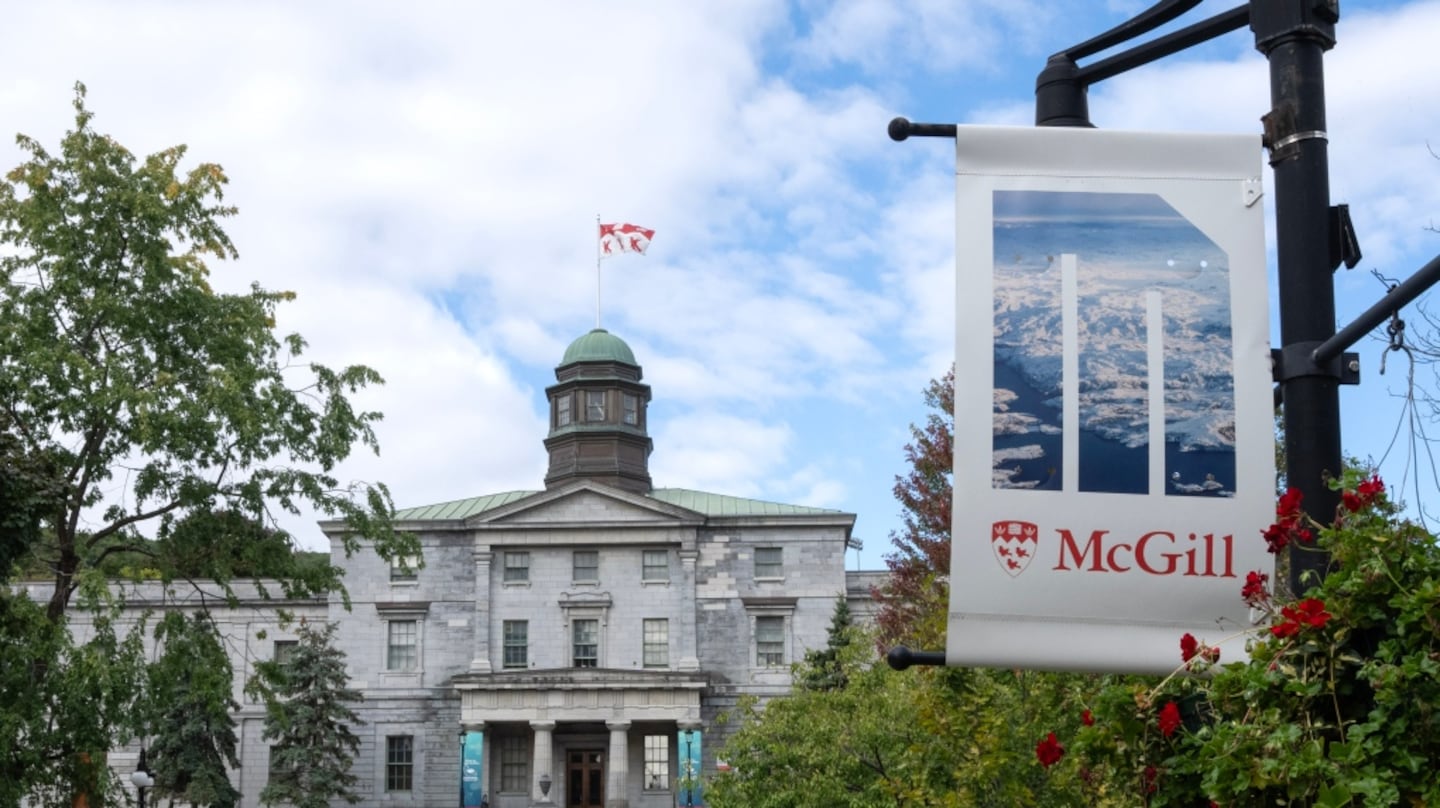
https://universityaffairs.ca/wp-content/uploads/2024/11/644x374-McGill-supporting3.jpg
Canadian universities have seen a surge of pro-Palestinian protests following similar demonstrations across North America.  University Affairs


Labels: , , , , , , , , ,

Friday, January 30, 2026

The Prospect of a U.S. Military Strike

The prospect of a US military strike against Iran over its violent crackdown on protests has laid bare a shift in Middle East geopolitics—one marked by the unexpected upending of long-standing rivalries between Iran and regional powers such as Saudi Arabia and Turkey.
When protests erupted in Iran on December 28, 2025, few anticipated that they would reveal deep-seated geopolitical anxieties in Riyadh and Ankara. As the demonstrations spread across the country and drew warnings from US President Donald Trump of possible military intervention in support of the protesters, Saudi Arabia and Turkey—along with Qatar and Oman—unexpectedly rallied behind the Iranian regime, primarily due to concerns about the potential consequences of a regime change in Iran.
To be fair, prior to the Iranian protests, relations between Tehran and its rivals Riyadh and Ankara were not tense; in fact, they were moving toward closer engagement, with Saudi Arabia following up on the Chinese-brokered agreement with Iran and Turkey even planning a presidential visit. The protests, by highlighting the fragility of Iran’s political order, triggered new threat perceptions in Saudi Arabia and Turkey, leading both countries to lobby the Trump administration to refrain from military action against Iran.
While Turkey and Saudi Arabia hold differing views on Iran, they share a rarely highlighted concern: Israel’s potential influence in a post-Islamic Republic Iran. Both initially assessed that the protests were unlikely to topple the regime, yet the emergence of Reza Pahlavi—and his January 8–11 calls that drew massive crowds to the streets—heightened their anxieties. Monarchist chants calling for the return of the Pahlavi dynasty dominated the protests.
Reza Pahlavi, who has built strong relations with Israel, is far from a unifying figure in Iran’s polarized political landscape. His rise has unsettled non-Persian communities and devout segments of the population. Yet, from the perspectives of Saudi Arabia and Turkey, the surge of pro-Pahlavi chants across Iran suggested that Israel and the United States could expand their influence if the regime were to collapse. Amid the protests in Iran, Turkish Foreign Minister Hakan Fidan went so far as to accuse Israel of orchestrating the unrest, highlighting Ankara’s deep concerns about instability in Tehran. Notwithstanding, Saudi Arabia and Turkey were almost certain that Iranian protests, if left to their own devices, would not succeed in toppling the Iranian regime. US threats of a potential military strike in support of the protesters, however, radically changed risk assessments in Riyadh and Ankara.
Depending on how the situation in Iran evolves, the alliance of the ‘elders’ may soon be challenged by an emerging bloc of younger Middle Eastern states—comprising the UAE, Israel, and the Republic of Azerbaijan—smaller states that share a convergence of strategic interests in Iran and beyond.
So far, the US president’s decision to dial down threats of military action against Iran has contributed to preserving the status quo in the Middle East, especially after the Islamic Republic violently quelled protests. However, a significant military strike against Iran could open the door to profound geopolitical shifts across the region.
Said Khanafira, (doctoral researcher, Simon Fraser University, Canada) Geopolitical Monitor 
https://www.geopoliticalmonitor.com/wp-content/uploads/2026/01/Reza_Pahlavi_22293313571.webp
Reza Pahlavi, Geopolitical Monitor
 
"Hopefully, Iran will quickly 'Come to the Table' and negotiate a fair and equitable deal -- NO NUCLEAR WEAPONS -- one that is good for all parties."
"Time is running out, it is truly of the essence!"
"The next attack will be far worse [than that of the summer of 2025]."
U.S. President Donald Trump 
 
"Iran stands ready for dialogue based on mutual respect and interests -- BUT IF PUSHED, IT WILL DEFEND ITSELF AND RESPOND LIKE NEVER BEFORE!"
Iranian Embassy in Washington
https://i.guim.co.uk/img/media/f07467fe6b0f6e1e455ede2e0c3c961d6facc53f/0_0_3021_2034/master/3021.jpg?width=1900&dpr=1&s=none&crop=none
A screen grab from a video taken between 9 and 11 January purportedly showing dozens of bodies outside a morgue in Kahrizak on the outskirts of Tehran, Iran's capital. Photograph: AP
 
Appealing to Muslim states in the Middle East, a desperate Iran has reached out in a manner totally unlike its usual cloistered relations with majority Sunni Arab states, as the sole non-Arab Muslim state in the region. The Damocles Sword of an imminent attack by the United States on the Persian Islamic Republic has generated panic among the mullahs of the regime. Attacked by their own persecuted population over economic hardships that ignited a protest against the sinking value of the rial and the rising cost of living, the bloody crackdown by the regime drew the ire of the Trump administration articulating a red line whose crossing would bring the regime's downfall.
 
The world has witnessed a number of widespread populist uprisings in the Islamic Republic of Iran. All of which were met with violence committed by the Basij and components of the Iranian Republican Guard Corps, ideologically-driven to stifle protest by all means that could be deployed through military-style intervention, while the Iranian Police, committed to the welfare of their country but informed through the metric of public order and security may have dealt less harshly with the protesting public. 
 
The deaths of thousands of protesting civilians in outbursts taking place throughout the country, in each of its cities where vulnerable courage has met implacable denial, first with conventional crowd-control measures and threats for people to return to their homes, then increasingly with deadly fire, has captured the notice of the world, with videos, photographs and personal accounts reaching the outside world until the regime closed down the internet and peoples' modes of communication were slammed shut.
 
Threats by President Donald Trump of wartime measures his country would take to defend the protest movement should the massive death count continue, and hanging of protesters proceed as threatened by Iran's judiciary, have had their impact. Fear of an invasion has shattered the level of bombast-confidence that usually issues from the regime's elite government circles. With an attack impending should Trump finally make that decision, Saudi Arabia and the UAE let it be known their air or ground or sea space would be off limits for any U.S. attack on Iran.
 
Iran Protests
Photo provided by the U.S. Navy shows a Boeing F/A-18E Super Hornet landing on the Nimitz-class aircraft carrier USS Abraham Lincoln in the Indian Ocean on Jan. 22, 2026. (Mass Communication Specialist Seaman Daniel Kimmelman/U.S. Navy via AP)
 
The USS Abraham Lincoln has been moved to the region along with a number of guided missile destroyers whose utility can be achieved though simply launching attacks from the sea. The American armada that has moved into position is prepared to achieve any goal commanded by the White House. With communications cut off, it is no longer possible to receive reliable information on killing of peaceful demonstrators and mass execution of detainees. 
 
Iranians have been ordered to remain in their homes. There have been reports of wounded being taken out of hospitals or shot in hospitals by the regime's enforcers. People have been forced to pay a ransom to receive the bodies of their loved ones, and not all have the wherewithal to retrieve the bodies for a funeral to take place leaving the families in the double grip of the desolate grief of deprivation. State media now refer to the protesters as 'terrorists', the preferred term of the regime. 
"I feel that my generation failed to give a better lesson to younger ones."
"The result of decades of teaching by my colleagues and me led to deaths of thousands, and maybe more injured and prisoners."
Mohammad Heidari, Tehran teacher  
https://ichef.bbci.co.uk/news/1024/cpsprodpb/9320/live/300ddc10-fb9c-11f0-b385-5f48925de19a.jpg.webp
Iranian authorities responded with lethal force as the protests in Tehran escalated on 8 January   Wana via Reuters


Labels: , , , ,

Brokering Democratic Freedom From Corruption

"I acknowledge that we are dealing with, I told you, with individuals that have been involved in things that in our system would not be acceptable."
"By no means is our policy to leave in place permanently something that [is] as corrupt as you've described."
U.S. Secretary of State Marco Rubio
a man speaking with his hands up
Marco Rubio, the US secretary of state, testifies before the Senate foreign relations committee on 28 January 2026. Photograph: Nathan Howard/Reuters
 
Standing before a hearing, Mr. Rubio was responding to a question from U.S. lawmakers wanting to know why it is that their Republican-led Trump government had decided to cooperate with and permit the ascension of Venezuela's vice-President to act as president in the absence of Nicolas Maduro, removed by U.S. Special Forces in early January through a lightning raid against the Venezuelan regime. He hastened to assure his interlocutors that it is not the Trump administration's intention to leave acting President Delcy Rodriguez permanently in place. 
 
Soon afterward at the Senate Foreign Relations Committee hearing on Venezuela in response to a query over how long Delcy Rodriguez would be left to retain power as a continuation of the Maduro regime, Mr. Rubio's response was "No one here is telling you that this is what we want to see in the long term". The Venezuela raid to remove Mr. Maduro and bring him to the United States to stand trial on drug and gun trafficking charges appeared to mask President Trump's eagerness to control Venezuela's oil deposits.
 
https://ichef.bbci.co.uk/news/1024/cpsprodpb/98db/live/7f838830-ea5d-11f0-b5f7-49f0357294ff.jpg.webp
Barely 48 hours after US forces took Nicolás Maduro and his wife from a compound in Caracas, the Venezuelan leader stood in a New York court and pleaded not guilty to conspiracy charges brought by the US government.  Reuters
 
Perhaps a more fitting question to be put to the Secretary of State might be the logic inherent in allowing the Maduro regime to carry on under its former vice-president, when the whole rationale of the invasion was to effect regime change. In which case it should have been the opposition, ready and willing to take charge of the Venezuelan government that should have been installed with U.S. cooperation. That might have happened, perhaps, if the Nobel Committee had decided to honour Mr. Trump with the Nobel Peace Prize, rather than their selection of Maria Corina Machado, the Venezuelan opposition leader in exile.
 
Ms. Machado's effort to 'make amends' in the hope of forestalling just such a snub by offering her Prize to Trump aside. Its soothing effect as a placating gift of appreciation from this courageous woman to honour a man that she recognized as having involved his country and his prestige to rescue Venezuela from the grip of its socialist corruption appears to have had a best-before date. Rather than leave the government rudderless and usher Ms. Machado into the governing post she deserved with the legitimacy of the last election having been won by her stand-in Edmundo Gonzalez in 2024, he waved her off.
 
 https://ichef.bbci.co.uk/news/1024/cpsprodpb/513e/live/07618b20-f2de-11f0-b5f7-49f0357294ff.png.webp
 
In her place, in his great wisdom, President Trump announced his intention to permit the handover of government to Delcy Rodriguez. Mr. Rubio testified that the Trump government's intention is to see Venezuela return in good time to a democratically elected government. The raid removing Maduro, he asserted was a "law enforcement" operation targeting an indicted drug trafficker, despite the complicating issue that targeting "the  de facto head of a regime is not as simple as going after some fugitive hiding in the closet"
 
Indicted in very point of fact, by the U.S. Justice Department for charges of narcoterrorism to which Mr. Maduro pleaded not guilty. Acting President Rodriguez, wrote Mr. Rubio, has committed to opening Venezuela's energy sector to American companies, with preferential access to oil production. Three U.S. oil companies that had invested in Venezuela, lost their investment with the nationalization of its oil industry by two of Mr. Maduro's predecessors, including Hugo Chavez, his mentor.
 
Now, given the current situation with the U.S. standing over Venezuela with the cudgel of guidance toward democracy and a turn away from the massive neglect and corruption that enriched the government cabal, leaving Venezuelans in a dictatorship of enforcement in a steadily declining freedom index and economic failure, the U.S. has extracted several conditions from the country. 
 
The provision of preferential access to oil production for U.S. companies. Profit from oil sales must be used to purchase goods from the United States. And a pledge agreed to evidently by the acting president to no longer support Cuba through oil exports. Perhaps the sole worthwhile goal for Venezuela and its population; a promise to pursue "national reconciliation with Venezuelans at home and abroad"
 

"I presented the president of the United States the medal of the Nobel Peace Prize [as] a recognition for his unique commitment with our freedom."
"[The -- 1825 gift of a likeness of George Washington given by the Marquis de Lafayette to Simon Bolivar, one of the founding fathers of modern Venezuela -- was] a sign of the brotherhood [between her country and the U.S.] in their fight for freedom against tyranny."
"And 200 years in history, the people of Bolivar are giving back to the heir of Washington a medal -- in this case a medal of the Nobel Peace Prize -- as a recognition for his unique commitment with our freedom."
Nobel Laureate Maria Corina Machado 


Labels: , , , , ,

Thursday, January 29, 2026

Canada, Straying Far From Its Rooted Values

"When the Qatari government [blessed by Washington] allowed the Taliban to open an office in Doha this week that had the Taliban flag flying outside and signs everywhere proclaiming the office to represent the Islamic Emirate of Afghanistan, President Hamid Karzai took the symbolism as an affront."
"For Karzai and his government, the announcement, the flags and the signs brought the enemy unwanted legitimacy. Instead of being treated as insurgents or terrorists, the Taliban got the symbols of statehood."
"Just a week earlier, Karzai had been in Doha speaking at the Brookings Institution’s annual U.S.-Islamic World Forum, clearly warning the Americans and the Qataris not to give the Taliban these symbolic victories."
Brookings Institute, June 20, 2013
Men in military uniform with stand behind a woman in a blue burqa on a street with mountains in the background.
Taliban security personnel stand guard as a burqa-clad woman passes by a market. AFP/Getty
 
"The terrorist [Hamas]organization’s leadership has been residing in Qatar for over a decade. It has enjoyed a life of luxury and privilege while there."
"Visiting Turkey, Lebanon, Iran, and other countries, those top Hamas officials have been able to fly around the Middle East. They felt safe and secure, even when they cheered the October 7 massacre on, watching Israelis being slaughtered."
"They watched as the Bibas family was carted off to Gaza; they celebrated as they viewed videos of the massacre of young people at the Nova music festival."
Seth J. Frantzman, Jerusalem Post  
Hamas official Khalil Al-Hayya sits at a mourning house for assassinated Hamas chief Ismail Haniyeh in Doha, Qatar, August 2, 2024.
Hamas official Khalil Al-Hayya sits at a mourning house for assassinated Hamas chief Ismail Haniyeh in Doha, Qatar, August 2, 2024. (photo credit: REUTERS/Ibraheem Abu Mustafa)
 
A Muslim country founded in 1971, Qatar is a monarchy ruled by Emir Sheikh Tamim bin Hamad Al Thani, who ascended to the throne in 2013 after his father abdicated his position. Qatar drew attention from around the world when it became an economic success through the discovery of natural gas fields. 
  • Qatar has a critical relationship with the United States
  • Qatar finances terrorism around the world
  • Qatar is also the deal broker in the Middle East
 Qatar maintains a relationship with terrorists, demonstrated by a permissive legal jurisdiction that allows terror financiers to operate in the state and the close connections Qatar has historically held with such illicit channeling of funds. Aside from financing Hamas, Qatar’s alleged support of regional terrorist networks, such as the Muslim Brotherhood, has long been problematic. In 2003, Congress was alerted to several charities in Qatar supporting al-Qaeda. Since then, Qatar has been accused of not only providing refuge to terrorism financiers but also of directly funding terrorist groups.
Mid East Journal  
 https://static.wixstatic.com/media/b302f8_dc873679c83f498dbc600b7e15f31b57~mv2.jpg/v1/fill/w_719,h_502,al_c,lg_1,q_85,enc_avif,quality_auto/b302f8_dc873679c83f498dbc600b7e15f31b57~mv2.jpg
 
Interesting, is it not? Qatar elevating the Taliban -- long before it helped engineer an escape route for the United States out of the quagmire of Afghanistan, enabling the Taliban to return as the repressive regime that tormented its people with its totalitarian Islamist rule in 2021 -- as a 'state-in-waiting'. Much as it and the United Nations and indeed the Western world has been fairly unanimous in elevating 'Palestine' to the status of a state-in-waiting with the recognition of its nascent status, despite the Palestinian leadership refusing to recognize the right of Israel's existence as a Jewish state.
 
Spain, Ireland, France, the United Kingdom and Canada, all anxious to demonstrate their progressive credentials, condemning Israel for its assaults on Hamas in Gaza where the full-scale conflict initiated by the Palestinian terrorist gangs of Hamas, Palestinian Islamic Jihad, Fatah, Popular Front for the Liberation of Palestine and ordinary Palestinian civilians flooding over the border from Gaza into southern Israel to launch a frenzy of mass rape, mutilation, murder and bloodshed on a genocidal scale, followed by abductions of children, families, women, foreign farm workers and IDF sentries into Gaza was answered as any country would, by a drive to destroy the terrorists' leadership, weapons caches and endless tunnels.
 
Qatar -- the backbone of the Muslim Brotherhood, financial saviour of Hamas, whose vast energy resources translate as wealth enabling it to buy an invested presence in the West, disarming suspicions of Islamists as threats to Western civilization -- has presented itself as a trusted interlocutor between democratic nations and the totalitarianism of Islamist jihad. It is as though an evil spell has been cast on those nations of the West whose leaders have allowed themselves to be mesmerized by wealth and assurances of innocently compatible relations.
 
https://ichef.bbci.co.uk/news/1024/cpsprodpb/6f4f/live/b1807ac0-a6a4-11f0-a409-e197032d359e.jpg.webp
Protesters marched over Westminster Bridge towards Whitehall   Getty Images
 
Canada's current Liberal prime minister, who has shunned and discarded Canada's traditional recognition of Israel as a democratic ally playing follow-the-leader with Britain, France and Australia, casts Israel and its Prime Minister as the villain in an existential battle against the forces of violent terrorism. To Mark Carney, as with Keir Starmer, Emmanuel Macron and Anthony Albanese, the Palestinians 'deserve' to have a state of their own, alongside that of Israel. Despite that the Palestinian leadership has continually refused all offers of negotiation between it and Israel to that end.
 
While a massive resurgence of antisemitism has wrought havoc throughout the West with the most recent infiltration of Muslim immigrants, refugees and migrants in organized marches seeking to delegitimize Israel, accusing it of genocide against the Palestinians, threatening the Jewish diaspora that has lived for a millennia throughout Europe, creating chaos in the countries that have amassed a sizeable Muslim presence, few governments have taken steps to protect their Jewish communities, much less put a stop to events of public displays of hatred and threats against their minority Jews.
 
Canada being a case in point, where for over two years, rampant antisemitism has been on display in all cities of the nation, with municipalities, provinces and the federal government sitting back unresponsive to their duty enshrined in the Canadian Charter of Rights and Freedoms guaranteeing respect, security and freedoms to all citizens without exception. The example led by the federal Liberal party has been echoed down the chain of public policy; denounce antisemitism, while linking it to the crime of Islamophobia.
 
Prime Minister Mark Carney meets with President of China Xi Jinping at the Great Hall of the People in Beijing, China on Friday, Jan. 16, 2026. THE CANADIAN PRESS/Sean Kilpatrick
 
In prime minister Carney's search to replace Canada's traditional trading partner under the stress of Donald Trump's egregious tariff wars imposed upon allies and enemies alike, he has taken himself to Beijing -- a repressive regime whose own global trade policies are rapacious and politically and socially abusive, to soften the enmity between Canada and China that has resulted when the Chinese Communist Party's penchant for bullying, stealth capture of government and private enterprise security and trade secrets have become too bitter to ignore -- to end up obsequiously grovelling to re-open favourable trade corridors for Canadian raw products.
 
Mr. Carney's zest for prostrating himself before human-rights-abusing states, those whose none-too-secretive advances meant to impede or outright destroy Western values, social cohesion, security and future prospects for peace and intellectual and economic advancement, has taken him further, to that most obvious of civilizational-destroying places, Qatar. Any self-respecting leader of any Western nation has but to look at their own nation's intelligence security reports' descriptions of Qatar to fully comprehend what it represents.
 
But that hasn't deterred Mr. Carney from making his mid-January trip to Doha, to appeal to its leader the emir, for a strong economic link, since they have so much to share: scientific advances, technology, agricultural best practises -- on Canada's part, investments in Canadian natural resources and production facilities presumably -- on Qatar's part. The property management colossus that Mr. Carney previously was associated with as its vice-chairman has inked a $20-billion AI investment scheme, paving the way for Canada's federal government to launch a bilateral agreement with Qatar.
 
https://smartcdn.gprod.postmedia.digital/nationalpost/wp-content/uploads/2026/01/CP175643100-1.jpg?quality=90&strip=all&w=564&h=423&type=webp&sig=6A6W4-uztecW2wA-YBVNKQ
 
This is Canada -- bereft of confidence in itself as a decent, human-rights-supporting, modern nation that takes pride in its traditional principles -- in allying itself with other states sharing the same values. Integrity of purpose, pride in heritage, history and culture and the decency of the social contract have gone by the wayside in favour of catering to the very countries whose aspirations are the destruction of Canada as a beacon of freedom and equality, upholding global peace and security, offering friendship to those who deserve it, and reserved distance from those who do not.
 

Labels: , , , , ,

Follow @rheytah Tweet