Wednesday, August 06, 2025

Youth Violence in French Banlieues

https://pbs.twimg.com/media/GxnecivawAEzqM5?format=jpg&name=small 

"[The curfew] allows us to take preventive action before damage is done." 
"They [arrested teenagers] weren't punished and came back and started vandalizing and stealing again."
Anthony Rouet, head, municipal police, Triel-sur-Seine, France 
 
"[The problem of] applying the law in certain poor neighbourhoods like Pissevin in Nîmes remains." 
"The level of delinquency and criminality, whether economically motivated or not, makes police action difficult." 
Thomas Sauvadet, sociologist, expert on youth delinquency, Paris Est Créteil University 
 
"[The curfew is of course] a communication strategy on the part of the public authorities."
"They need to show they are doing something."
"A curfew is not easy to enforce in neighbourhoods where the police only intervene in an offensive mode, and in urban configurations where their presence is quickly spotted by lookouts who alert the drug dealers."
"Let’s not forget that it’s easier for drug dealers to involve young people in their business because there are many teenagers in these poor neighbourhoods who left school early and have no qualifications."
"Their parents are part of the 40 percent of the French population who can’t afford to leave their homes to go on vacation, and they see this activity as ‘a way out’, or at least as a way to live a little better." 
"The level of impunity is truly worrying. It terrifies inhabitants – and rightly so. And the youths who possess firearms and use them are generally over 16 [an age group not included in the curfew]."  
Laurent Mucchielli, sociologist, research director, France's national research centre (CNRS) specializing in delinquency and security policy 

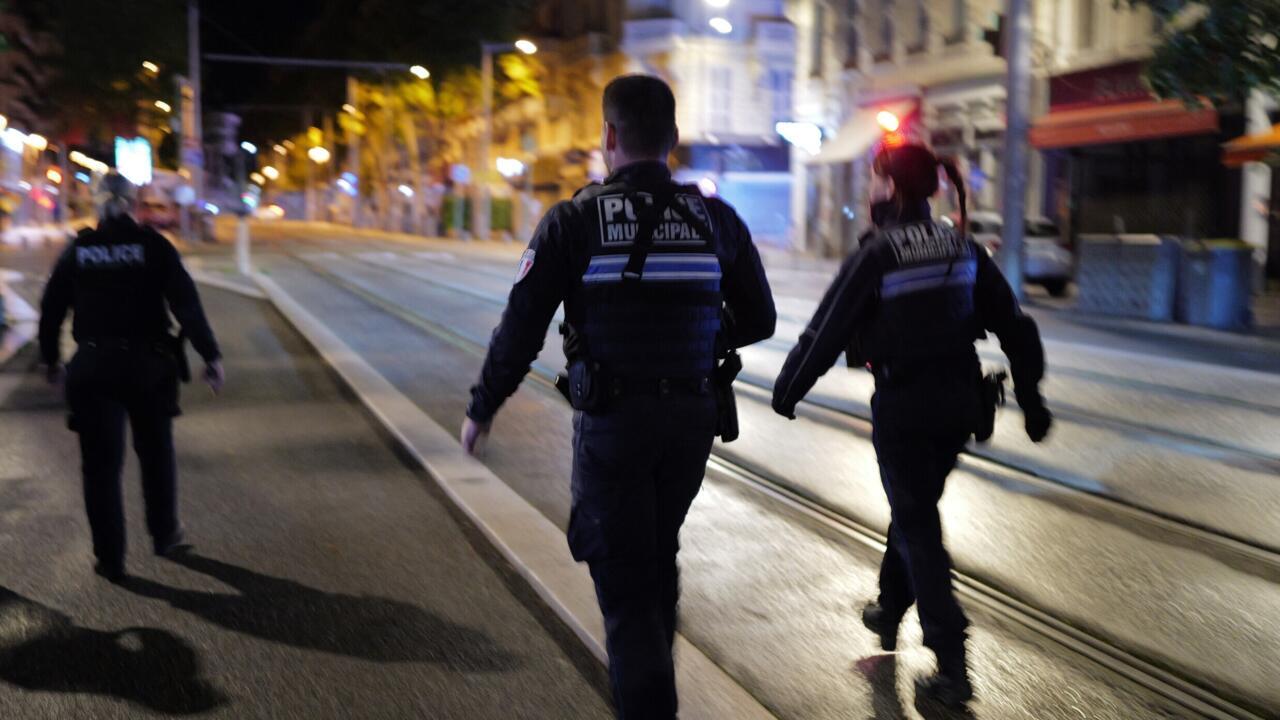
Municipal police forces patrol a street as a night-time curfew for children under 13 has been implemented by decree in the southern city of Nice on April 2, 2024

Municipal police patrol a street in the southern French city of Nice after a nighttime curfew for children under 13 was implemented by decree, April 2, 2024. Valery Hache, AFP
 

A curfew for teens has been imposed in a number of French cities this summer in the hopes this will help to curb youth violence. Some experts feel the minors curfew will do nothing to reduce crime, but there is at least one French mayor who thinks otherwise. Mayor Cedric Aoun of Tiel-sur-Seine, some 35 kilometres west of Paris, stated: "It's become very quiet", of the 11 p.m. to 5:00 a.m. curfew for under-18s. A series of incidents involving damage of public property and theft led to the imposition of the curfew.

As a result, according to Mayor Aoun, many families have been convinced they must begin taking parental responsibilities more seriously. "Parents are much more careful", he claims. Irrespective of the political perspective of their mayors, an increasing number of French towns are enforcing curfews for teenagers, in seeking a response to youth crime.

A temporary curfew was introduced in the southern city of Nimes, for children under 16 following a number of urban violence incidents linked to drug trafficking. In the southeastern suburbs of the French capital -- Beziers, Saint-Ouen-sur-Seine north of Paris and Villecresnes in the southeast have adopted similar bans on youth roaming about after dark.
 
Six percent of crimes last year were thought to have been carried out by teens aged between 13 and 17, according to the interior ministry, with over a third of violent robberies without weapons attributed to suspects in that age group. Still, there is difficulty in assessing effectiveness of the curfews for minors.  
 
https://www.barrons.com/asset/external-media/afp/AFP0753474216656743079988364192180013161245---1.jpg
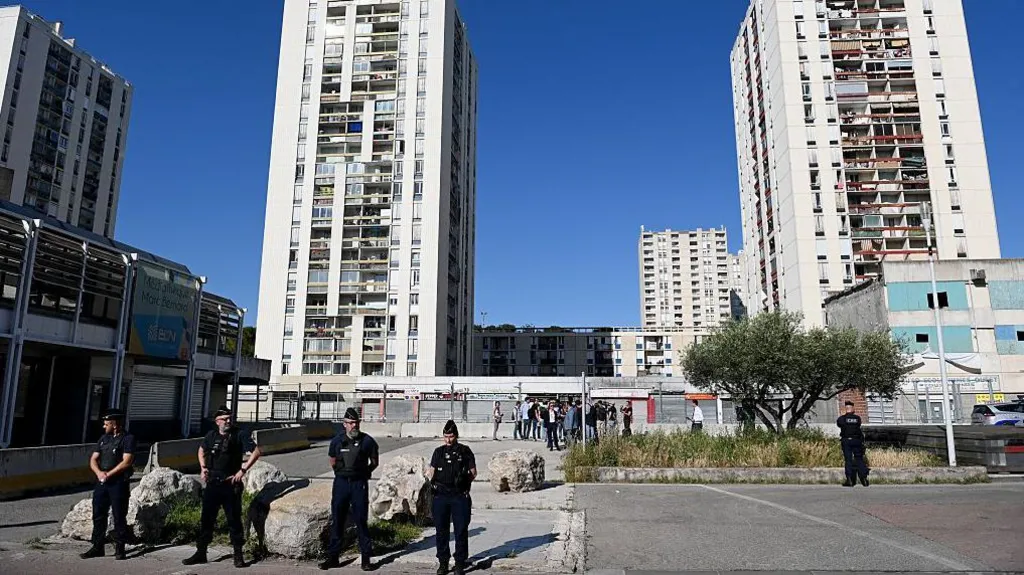
More towns in France are enforcing curfews for teenagers as authorities seek to respond to youth crime (Valery HACHE)

Officers stopped a group of minors during a recent nighttime patrol in Triel-sur-Seine who had huddled together in a square, 45 minutes after the start of the curfew, claiming they were unaware of the curfew. Anthony Rouet, head of Triel-sur-Seine's police reported his team had for the most part spoken with teens about the nighttime ban on being out in the streets, but hadn't yet had occasion to issue tickets, while acknowledging that when police did report some teens to the judiciary, this had not had the desired effect of deterring them from reoffending.

Rights campaigners on the other hand, argue for more community engagement in place of bans. The French Human Rights League has taken legal action against the ban in Triel-sur-Seine. "This is not an effective response" said Nathalie Tehio, head of the League, calling for development of "educational measures" instead of "repressive" bans.

https://ichef.bbci.co.uk/news/1024/cpsprodpb/b9ee/live/d8f5e230-66fc-11f0-9b2e-c75b85e592a2.jpg.webp
Authorities in Nîmes have said extra police officers will be called in   Getty Images


Labels: , , , , ,

Friday, June 30, 2023

"I Am Hurting For My France"


“On a general level, people tend to think there is no racism in France. And it’s one of the reasons people are so angry, because they feel and experience racism on a daily basis."
"Despite that, they still face institutions, public discourse and media which still say that there is no racism and that the race debate does not belong in France. And that’s the reason people are so angry and so outraged." 
Journalist and racial equality activist Rokhaya Diallo 
 
"We have to go beyond saying that things need to calm down."
"The issue here is how do we make it so that we have a police force that when they see Blacks and Arabs, don't tend to shout at them, use racist terms against them and in some cases, shoot them in the head."
Dominique Sopo, head, campaign group SOS Racisme
 
"The professionals of disorder must go home. [While there’s no need yet to declare a state of emergency — a measure taken to quell weeks of rioting in 2005] the state’s response will be extremely firm."
"[Officers made more than 180 arrests before Thursday and there would] doubtless [be more]."
"[Street violence injured scores of police and damaged nearly100 public buildings -- the number of officers in the streets will increase from 9,000 to 40,000. In the Paris region alone, the number of officers deployed will increase to 5,000]."
Interior Minister Gerald Darmanin
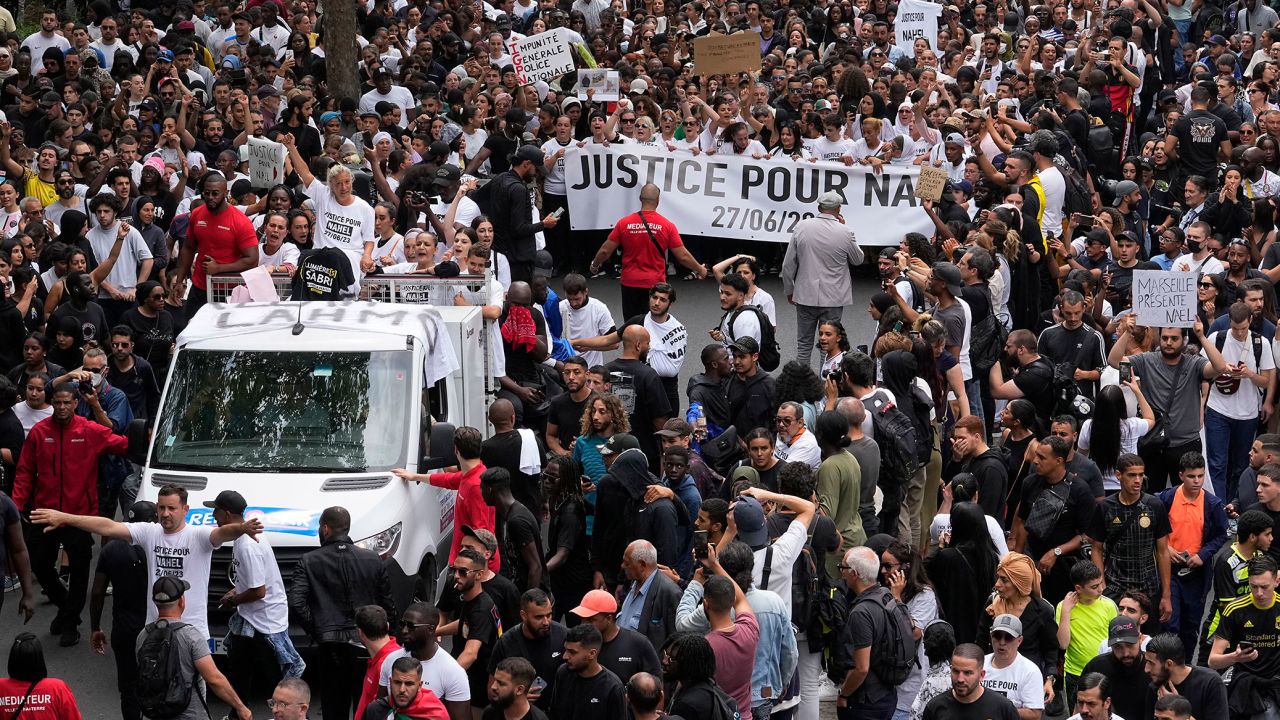
The mother of 17-year-old Nahel, seen at left on a truck, gestures during a march on Thursday.
The mother of 17-year-old Nahel, seen at left on a truck, gestures during a march on Thursday.  Michel Euler/AP
 
France is  burning, once again. From the banlieues where ghettoes of immigrants from the near east and the Maghreb tend to live in their converted versions of the places where they were born, poverty exists, joblessness, and hopelessness. Every now and again frustration and anger boils over and roving gangs set fire to vehicles until the anger subsides to more manageable levels. Crime festers in the banlieues, gangs proliferate wildly and even when firefighters respond to fires they would be attacked as 'foreigners' daring to enter Muslim enclaves.
 
The brutal and hostile alienation owed, France's critics said, to the racism, marginalization, lack of opportunity, poverty that France's Muslim population lived within. And so the government began investing huge sums into the areas of Muslim majorities, rebuilding infrastructure, including public transit systems to enable the slum dwellers to move about elsewhere, to feel free to travel, to reach destinations other than their crowded, choked enclaves. Young people were accepted into elite schools, encouraged to attend universities.
 
Not much, it seems, has changed. The banlieue-dwellers still feel victimized, still claim they feel the sting of racism, still run about in gangs dealing drugs, challenging one another, and quickly assemble in large protest mobs to loot and to charge the government with discrimination. Night after night of violent demonstrations against police in France, against authority in the country altogether. The outrage this time may be national in scope, however, in the aftermath of a shocking police shooting of a 17-year-old with no police record.
 
The motorcycle officer who shot the boy named as Nael, in Nanterre, has been arrested and charged. Casual video taken at the scene of a traffic stop belies the story given by the 38-year-old officer and a companion officer, that the vehicle the young man was driving erratically seemed to be deliberately heading straight for them, and they feared the safety of the public, while defending themselves. Footage, in fact, that contradicts their story has been widely seen, feeding the public outrage.

According to Pascal Prache, the Nanterre prosecutor, two officers attempted to stop Nael because he looked so young and was driving a sporty Mercedes that had Polish licence plates, in a bus lane. He ran a red light to avoid being stopped and became ensnared in traffic. Both officers involved said they drew their guns to prevent him from fleeing. But the story initially given by police sources that the teen drove at the two officers as they attempted to stop him, has been disproven.

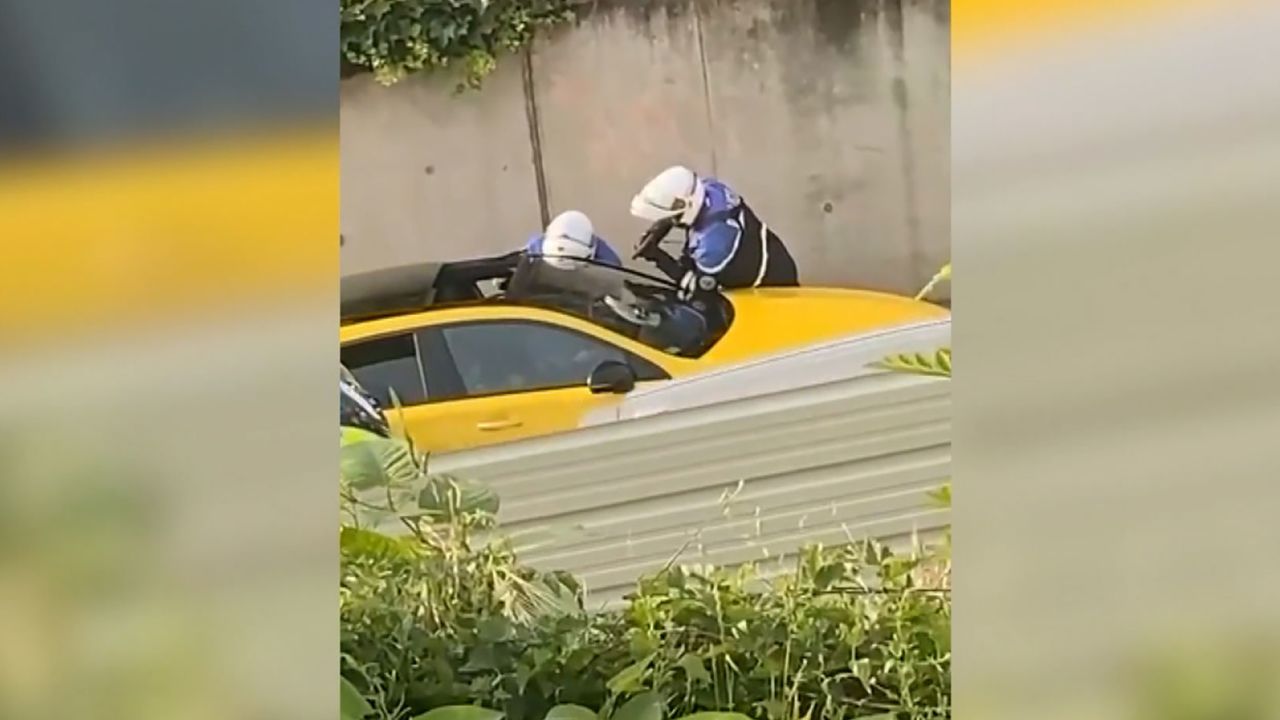
In the video published on Twitter, the officers are shown at the side of the yellow Mercedes AMG. The car had come to standstill in the press of traffic. One officer stood there, his gun pointed at the driver and as the vehicle moved off, the officer fired, shooting the driver in the heart. Control of the vehicle was lost and it crashed, the 17-year-old pronounced dead at the scene. A horror story. According to the victim's family lawyers, just prior to the gunshot the officer was heard to say (in the video) "I'm going to put a bullet in your head". The second officer is heard saying: "Shoot him".
This screengrab from video posted on Twitter shows the moment when police interacted with a 17-year-old teen during a traffic stop in a Paris suburb.
This screengrab from video posted on Twitter shows the moment when police interacted with a 17-year-old teen during a traffic stop in a Paris suburb.  From @Ohana_Fgn/Twitter

There were two passengers in the car with the driver. One of them ran off in a panic and has not been found. The other was arrested and then released without charge. The aftereffect of the  shooting and the public anger could be measured in the reaction that ensued, with youths burning garbage bins, smashing bus stops and attempting to set up roadblocks. Others planned to protest outside local police stations with officers responding by firing tear gas and rubber bullets.

Soon other suburbs of Paris were experiencing rioting. A council building was destroyed when a fire was set in Mantes-la-Jolie. And it was not just banlieue residents who were protesting; expressions of disgust and fury came as well from celebrities and politicians. "I hope that justice worthy of the name will honour the memory of this child", stated The Intouchables film actor Omsar Sy. Adding his voice to that of the captain of France's national football team and star player at Paris Saint-Germaine. "I am hurting for my France", said Kylian Mbappe.

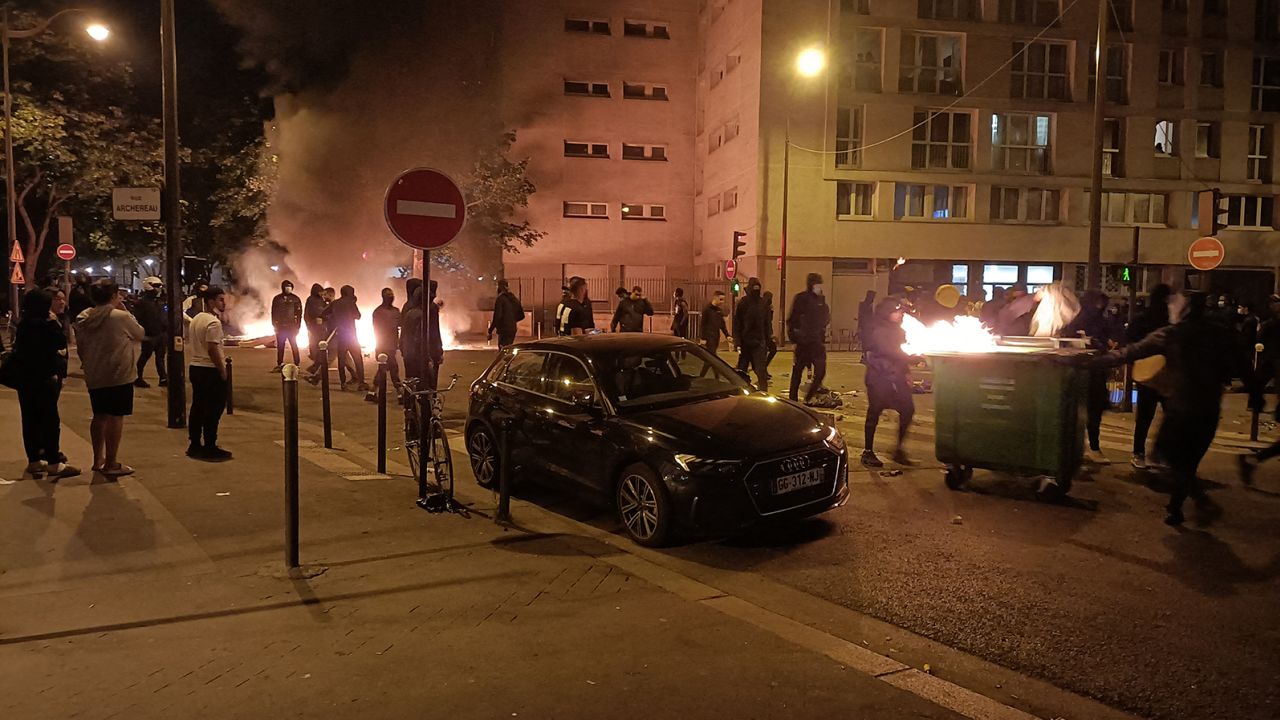
Protesters burn garbage bins and block a street during a protest in Paris on June 29.
Protesters burn garbage bins and block a street during a protest in Paris on June 29. Fiachra GIBBONS/AFP/Getty Images


Labels: , , , , ,

Saturday, March 24, 2018

Demented? Or Just Islamic? !God Is Great!

"We heard an explosion -- well, several explosions. So I went to see what was happening and I saw a man lying on the floor and another person, very agitated, who had a gun in one hand and a knife in the other."
"[The] very agitated man shouting several times 'Allahu Akbar'."
"At that moment he [the shooter] ran after me. Of course I left, I lost him and when I turned around he wasn't there anymore. I took an emergency door and saw the police arrive."
Christian Guibbert, supermarket shopper, Trebes, France

"[I] heard people shouting and a big boom. It was a gunshot. Then a second gunshot. After that, my colleagues came towards me saying: 'Come on Jacky, we need to leave, there's someone who's firing shots, he's shouting 'Allahu Akbar', and he's shot people and he's shooting at everything'."
"We have an emergency exit behind the butcher's stall and we ran away across the courtyard. We also helped people get out."
Jacky, supermarket employee
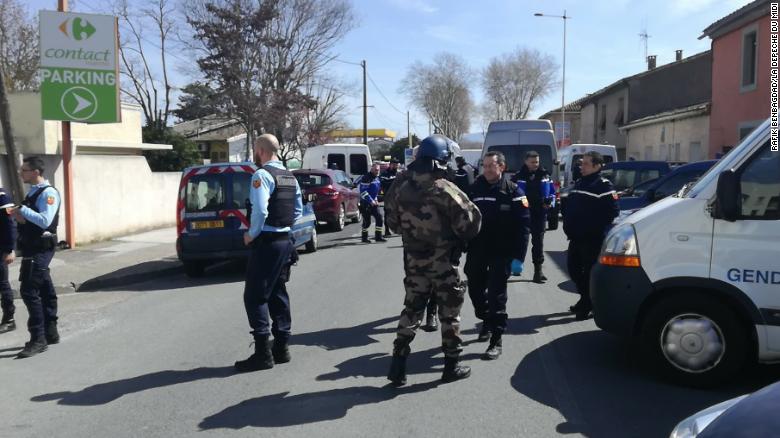
Police officer wounded in France attack dies
Still from video: CNN    Police respond to the hostage situation Friday in the southern French town of Trèbes.

France, with the largest contingent of Muslims in all of Europe -- an estimated six to eight million Muslims -- has experienced its share of Islamist terrorist attacks. Those viciously deadly attacks are the most volatile of the explosive events the international community becomes aware of through the prevalence of social media and newswires now swift to pick up and exploit shocking news coverage of Islamist religious dysfunction roiling Western societies.

From the establishment of those infamous ghettoes known as banlieues, "no-go" zones where non-Muslims are unwelcome and where disturbingly criminal behaviour and violence prevails to the extent that firemen, police and ambulances are attacked should they attempt to enter -- to the occasional very public 'protests' that take place from time to time with demands and assertions completely contrary to French values and virtues -- this is another European nation that is slowly being absorbed by Islam.

"Radical" Islam as some would prefer in an effort not to offend. Choosing to bypass what has become obvious to some, that what the infiltrated Muslim presence in every facet of life in Europe represents is a gradual jihad; the state of Islamic conquest that every faithful Muslim is required as a basic precept of their faith to engage in. Among those infiltrators is a significant percentage that views violent jihad as legitimate, and it is among the principal tenets of Islam. Another significant demographic within the Muslim community is willing and eager to conduct active, violent jihad.

In this latest drama that focused France on the looming malaise in their midst, a petty criminal known to police activated within himself the martyrdom-for-Islam complex in the service of Islamic State of Iraq and the Levant, to mount hours of carnage, killing three people and seriously wounding another 16. Among the wounded was a veteran police officer of immense courage who volunteered himself as a hostage in exchange for a woman being held by the terrorist.

Of Moroccan extraction, French citizen Redouane Lakdim set out to destroy the peacefulness of a southern France area yesterday. Hijacking a car, he killed one occupant, wounded the second and made his way from Carcassonne to nearby Trebers, to a supermarket, there shooting and killing a store employee and a customer. On his way to that destination he shot at four police officers who had been out jogging, hitting one in the shoulder. At the supermarket, this fervent follower of Islamic State took hostages when police arrived.

This was when Arnaud Beltrame, 46, a decorated military police officer who had previously served France in war zones with great distinction, offered to exchange himself for the sole woman the murderer was holding hostage. The standoff with police took place over a number of hours. At a juncture when police waiting for a break and listening to Lieutenant Colonel Beltrame's open cellphone for clues heard shots, they stormed the scene and a shoot-out occurred. Officer Beltrame was shot in the neck, the terrorist was shot to death.


Police later discovered two unexploded homemade bombs, a 7.65 mm pistol and a hunting knife possessed by the Islamist terrorist, while searching through the market after the attack. 
 
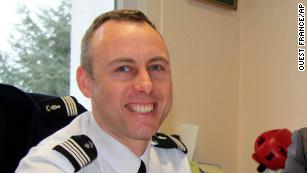
Lt. Col. Arnaud Beltrame, here in 2013, was hailed as a hero by authorities.
 
Authorities knew of Radouane Lakdim's links to radical Salafist networks. They considered him, doubtless, only a petty crook and drug pusher. Without an iota of doubt there are many such like him, in the banlieues; thugs, criminals, gang members, drug traffickers. These are all lifestyle  highlights that appear to disproportionately attract young Muslims wherever they settle. It should be considered by intelligence agents an easy transition from petty gangster to Islamist terrorist among Muslim youth on the basis of reality and experience.
But that kind of thought sequence, logical as it might seem has the odour of "profiling", once a respected and useful tool for those in the business of security of populations. No longer; aggressive, righteous Muslim groups employing the very sensibilities of trust, accountability and acceptance that allowed them to infiltrate the West and which they have exploited to its full potential while resisting the normalcy of integration and acceptance of Western values, have instilled a sense of guilt through charges of "Islamophobia", a most effective tool in the Muslim arsenal of disarming the non-Muslim community.
The values that have traditionally reflected the quality of French life, its history, society, politics, culture and justice system, is spurned by Islam which agitates forcefully for Islamic Shariah. And this is the kind of challenges that a man of the calibre of Lt.-Col.Arnaud Beltrame must interface with. He served in Iraq in 2005, and earned an award for bravery in 2007. He spent four years as a commander in the Republican Guard, providing security at the Élysée Palace for France's president. 
 
He was knighted in 2012, inducted into France's prestigious Legion of Honor. In 2017 he was appointed deputy commander of the anti-terror police in the Aude region.And he assiduously prepared for the role that would conclude in his surrendering his life in the defence of France's democratic values when he led a simulated terror attack in December on a supermarket -- presaging the one in which he Friday gave his life.

Labels: , , , , ,

Follow @rheytah Tweet