Getting Away With Murder
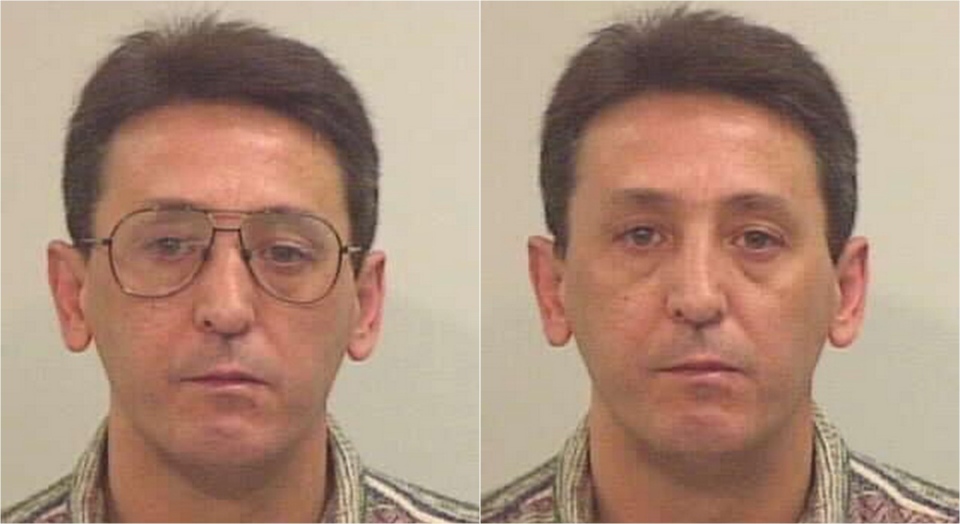
"The Othram genealogy team used the profile to develop investigative leads that were returned to LVMPD [Las Vegas Metropolitan Police Department].""This was a huge milestone.""When you can access information from such a small amount of DNA, it really opens up the opportunity to so many other cases that have been historically considered cold and unsolvable.""One of the advantages of having your own lab and doing everything in-house is that you can really refine the methods. I’m hoping that this case will inspire other agencies to dig through their backlogs and find cases that may look hopeless or unsolvable, but really are tractable with some of this new technology."David Mittelman, chief executive, Othram, genome-sequencing laboratory"I'm glad they found who murdered my daughter. I never believed the case would be solved.""It's good to have some closure, but there is no justice for Stephanie at all.""We will never have complete closure because nothing will ever bring my daughter back to us."Mother of Stephanie Isaacson"Othram scientists used Forensic-Grade Genome Sequencing® to build a genealogical profile from the remaining DNA evidence — only 120 picograms (or 0.12 nanograms) of DNA. This sets a new lower limit on the quantity of DNA required to build a genealogical profile for a suspect of a crime.""The Othram genealogy team used the profile to develop investigative leads that were returned to LVMPD. LVMPD detectives were able to confirm the identity of the suspect in Stephanie's sexual assault and murder as Darren Roy Marchand. The suspect died in 1995 by suicide but has been tied to other crimes."DNASolves.com
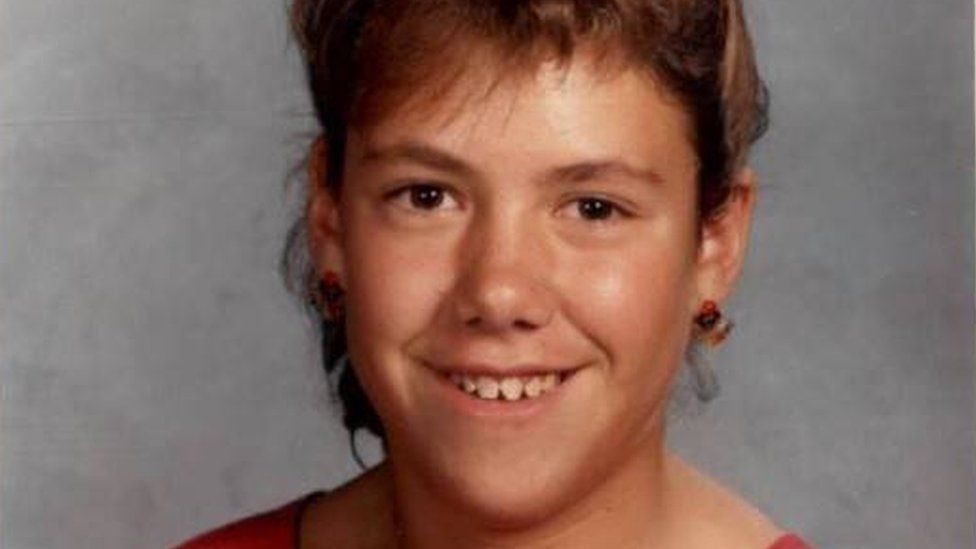 |
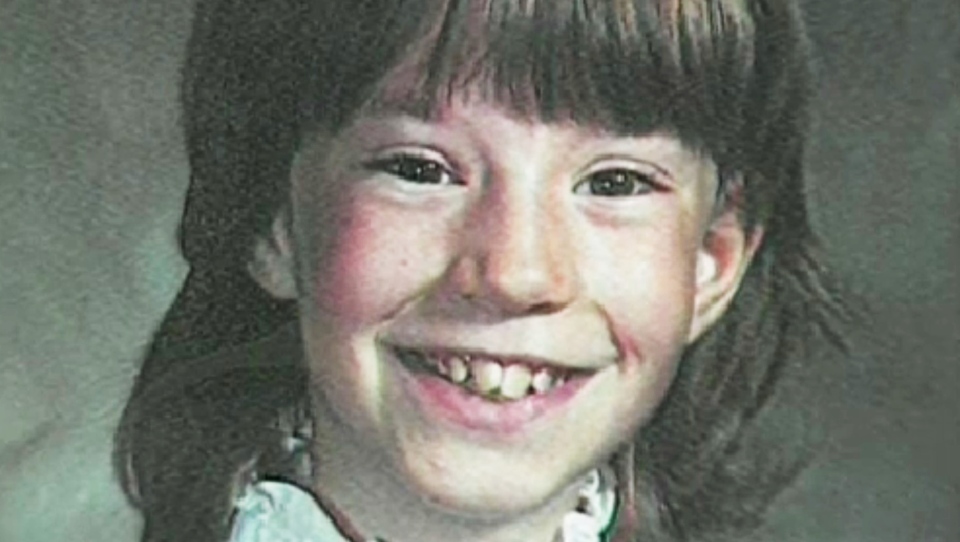
| Fourteen-year-old Stephanie Isaacson's case had been cold for 32 years Police handout |
It
was Stephanie Isaacson's daily routine, to walk to her Las Vegas high
school from her home, through an empty sandlot as a shortcut, setting
out at 6:30 a.m. On June 1, 1989 her father called the school, and then
some of her school friends, when his daughter failed to return home from
school as usual. No one had seen the 14-year-old that day; she hadn't
appeared at school, her friends hadn't seen her at all. Next call was to
the Las Vegas Police.
An
air and ground search by law enforcement agencies followed. The search
ended at 8:40 p.m. when investigators came across a few of the school
books belonging to the girl in a "desert area" close to her home. Which
then led to search parties scouring the area, eventually finding
Stephanie's body roughly 25 metres off the trail she took walking to
school on a daily basis.
She was found through the autopsy that followed to have had "significant blunt force trauma injuries and that she had been sexually assaulted".
And, according to the notes left by the Clark County Coroner's Office,
her death was caused by strangulation. Several suspects were identified
over the following years, leading investigators to travel to Washington
State, Ohio and Texas, following up on promising leads.
The
Coroner's Office forensic laboratory attempted to test evidence for DNA
with the use of technology that is now obsolete, back in 1998. Another
attempt was made in 2007, succeeding in obtaining a DNA profile from
semen found on the girl's shirt, according to Kim Murga, the director of
the lab. The DNA profile was subsequently uploaded to an FBI database,
but no match was ever received.
Everything
in the cold case changed when a genome-sequencing lab specializing in
assisting with cold cases contacted lab director Murga's forensic team
with an offer of services with the use of new technology. There would be
no cost associated, since an unnamed individual donated funding for the
lab to aid in the solving of a cold case with the LVMPD. The laboratory
worked for seven months to gather the data they required to build a
genetic profile with the minuscule amount of DNA they had to work with.
"Stephanie's case was chosen specifically because of the minimal amount of DNA evidence that was available.""It appears to [have been] a random attack while she was walking to school."LVMPD Lt. Ray Spencer
It
took thirty-two years for the cold case to be solved, when the Texas
laboratory -- Othram -- with the use of new technology, used the
equivalent of 15 human cells to find the link that had so long eluded
Las Vegas investigators, identifying the young girl's killer as Darren
Marchand. The man had a criminal history, explained Lt.Spencer, arrested
in 1985, age 20, charged with fatally strangling 24-year-old Nanette
Vanderburg in her home.
There
was no conviction for lack of evidence. At that time DNA testing was
not available but police were able to compare the DNA from her case with
the DNA found in the young girl's case which proved to be a match.
Frustratingly, Darren Marchand murdered two women and the legal system
still will not be able to extract some form of justice for his
unspeakable crimes. By his own action he removed himself from the reach
of the criminal justice system by committing suicide at age 29 in 1995.
 |
Labels: 32-Year-Old Murder Case, Cold Case, Las Angeles Police Department, Stephanie Isaacson
posted by Pieface @ Monday, July 26, 2021