"She ran to my house and said Gabriel was beating on her and she had to get away. She was afraid." "He had her on the ground, was strangling her ... He was beating on her." "On that incident, I called the RCMP and I told them what happened, and I said he has a bunch of illegal weapons, and I know because he showed them to me." "From what I got from the RCMP, because [the partner] would not put in a complaint, as she was scared to death, they basically said, 'There's not much we can do. We can monitor him but there's not much else we can do." Brenda Forbes, 62, Canadian Forces veteran
The faces of some of the victims killed by a gunman in Nova Scotia. (CBC)
Domestic violence is a scourge that occurs everywhere. Usually a violent, often jealous, and acutely controlling male who threatens verbally, then graduates to physical violence. Women are often fearful of asking for help, fearful of trying to get away from their domestic persecutor who has made it clear that should she try to escape he will inflict more pain that she cannot avoid. In the case of this now-notorious couple, the man in the common-law partnership threatened the life of her parents.
And usually when a life is at stake, as these matters evolve, a woman will be the victim of another instance of domestic violence, killed by whatever means the man had at hand or planned for, to assuage his rage. In this instance, in a small seaside town in Nova Scotia, Portapique was the venue, and the killer's name will go down in the annals of mass atrocities for having murdered 22 people. This, after beating his common-law wife and tying her up, then leaving the premises. She survived.
He struck out toward neighbours' homes where he shot people to death in a psychotic rage, then set their homes on fire. An emergency 911 call went out to local RCMP who arrived with plans to secure the area, but Gabriel Wortman eluded them and drove out of Portapique toward Truro, stopping now and again to kill strangers while dressed in an RCMP uniform and driving a look-alike police car, on April 18. He had shot 13 people to death in Portapique and went on to continue killing until 22 victims were dead at his hand.
And while the RCMP searched the area for the man, they failed to send out a red alert that would have informed people in the area that they should remain indoors in relation to a mass shooter on the loose. An alert that would have spared some of the people who died in that mad rampage of killing rage. Then it was revealed that a former neighbour of the man had reported him for domestic violence and ownership of a cache of firearms years ago. His erratic, threatening behaviour so disturbed this woman and her husband, both former members of the Armed Forces, they felt constrained to move.
In 2013, Brenda Forbes informed police of reports of her neighbour's vicious assaults against his common-law wife. Gabriel Wortman had moved to the town in the early2000s and acquired quite the reputation. Ms.Forbes had attempted to persuade her neighbour to look for help but potential repercussions kept the woman from acquiescing; sheer fear of consequences. When she approached the RCMP herself for assistance she was interviewed. She had tried to encourage another neighbour one of three men who had witnessed the savage beatings to come forward to the RCMP, but to no avail; he too was fearful.
Ms.Forbes's husband spoke of being shown the weapons cache that Wortman treasured: "He knew I had weapons, being in the military, so he was always one of those guys who had to show others that whatever they had, he had something better", explained George Forbes. "We reported that to the police also." According to police no license was possessed for those weapons the gunman used in his killing spree.
"He dragged her over to my house, pounded on the door. My husband answered the door and [Wortman] ... started screaming." "I came downstairs, and he was screaming at me." "And I said, 'If the shoe fits, wear it.; I said, 'I've seen countless women at your place'." "And he grabbed her, hauled her out the door, and he said, 'You're going to pay for this' to me." "Well, after that, she was no longer allowed to talk to me, come anywhere near me, nothing." "My
husband ended up going to Africa for the military, and I was basically
by myself. I would go to work and come back. And as soon as I got home,
he'd show up in his vehicle, park it right outside my house, get out,
stand and stare at the house for a good half-hour. And he did that for a
few days. And I went, this is crazy. I'm scared to death now." "I could no longer live like that. My husband came home from Africa and I let him know what had been going on." "[Wortman] showed up again, and [my husband] is like,"Yeah, we're moving." "So
we put the house up for sale and it took over a year to sell it. We
took a huge loss in it, because I just wanted to get out of there." "The
one thing that I have regret about was the people that bought the
house. I should have let them know what he was like, because they ended
up getting killed too."
Flowers pile up at a makeshift memorial in the small community of Portapique, N.S. (Jonathan Villeneuve/Radio-Canada)
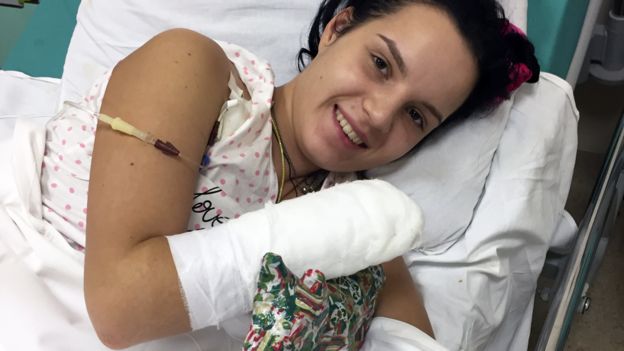
"How many cases have there been since mine, how many women have been killed? And the government just sits, frozen, unable to do anything." "The police in this country don't take us seriously." "If knowing my face means more awareness of women's suffering, then so be it." Margarita Gracheva, victim, spousal abuse, St.Petersburg, Russia
Margarita Gracheva in hospital
"[The notorious cases of familial/spousal abuse have] helped the government understand that we are not dealing with violence in the right way." "Hard work on the bill [a law combating violence against women] is happening right now, and we've seen some positive action from the government that points to the bill being submitted to parliament for a first reading this winter." Mari Davtyan, human rights lawyer, Russia
Russian lawyer Mari Davtyan
"Our church [Russian Orthodox Church] is influential because it is a department of the state." "And if there is political will to adopt the law, the church will not oppose it." Ekaterina Schulmann, political scientist
Margarita Gracheva, 27, named herself #TransformerMom in a hashtag, referring to her right hand. In December of 2017 her husband took her into a nearby forest and there he took up an axe and chopped off both her hands. Her left hand had fallen and was preserved in snow, and surgeons were able to reattach it. Her right hand stands out and will always reflect that this woman had been subjected to a truly savagely violent atrocity by her husband. Her bionic hand and her story have gained her attention, admiration and empathy in Russia as the quintessential abused woman.
She is a mother of two boys and at age 27 a veteran of marital abuse of a truly horrifying quality. She has also become a media sensation in her country with a book deal offered by a publisher close to the Kremlin. As a campaigner for government protection for abused women she has become a regular on state-run television for her many appearances and appeals for action to respond to all-too-frequent attacks of violence women suffer.
Her book, "Happy Without Hands" occasions many of her speaking engagements. She had gone to the police in her home town south of Moscow after her husband had threatened her with a knife. Police were disinterested. And the result was predictable; threats increased and her life was in danger, culminating in the ultimate attack, removing her hands to leave her helpless. She is anything but helpless. She has attracted notice and with it a growing determination in the public to effect a change in the culture of family violence.
For the first time a law against domestic violence is in the works for Russia, the only country in the 47-member Council of Europe without legislation specific to the protection of women from domestic violence. The media attention her husband's attack generated, along with her high visibility and her concerted efforts at highlighting the plight of women threatened by their intimate partners was responsible, in her opinion, for the 14-year prison sentence meted out by the court to her husband.
A palpable shift in the public mood with respect to domestic violence has led to street protests along with artistic and cultural activity focusing on the subject. In October Alfa Capital, one of Russia's largest banks, fired a top manager in the wake of his wife's accusation that he beat her. Three sisters after years of sexual and physical abuse killed their abusive father Mikhail Khachaturyan. Two of the sisters had been identified as "aware of their actions" and may face charges of premeditated murder. The third sister was not expected to face charges.
Angelina Khachaturyan attends a court
hearing in Moscow, Russia, June 26, 2019. She and her two sisters are
accused of murdering their father who, investigators confirmed, abused
them for years.
The most popular pro-Kremlin commentator Dmitry Kiselyov, a supporter of President Vladimir Putin, expressed his opinion on his weekly show: "It's pretty strange that we don't even have the term 'domestic violence' in Russian legislation", he averred in a segment on the issue. The head of the upper house of parliament, Valentina Matviyenko said when she was re-elected in September, that domestic violence would be a priority of the current session.
When deputy justice minister Mikhail Galperin said "It is logical to assume that male victims suffer more from discrimination in such cases", relatives of women who had been killed by their partners responded with the demand that he resign. And while the Russian Orthodox Church, whose influence has risen under Vladimir Putin has opposed domestic violence bills traditionally, Christian groups last month organized protests across the country with people holding signs reading "My house is my fortress" and an organizer claimed a domestic violence bill would"put men off marriage".
Domestic violence is a universal ill of immense proportions. It is an issue that evokes fear and horror in women everywhere where women are ill-treated, threatened and abused. In countries where women are meant to feel secure under the law, and where policing authorities take any claims of abuse seriously, are swift to act, the evil that it represents still raises alarm. Familial homicide mostly targeting women happens all too regularly. In Canada, its most populous city, Toronto, struggles to come to terms with one small portion of the city which saw 28 domestic homicides where protective laws are in effect.
"Mohammed struck Elana multiple times, causing her significant blunt force injuries all over her body, including a broken neck and broken ribs. He then choked her to death." "In the days after he killed her, Mohammed carried on with his daily routines, including performing surgeries the next day. He lied to just about everyone he came into contact with as to his missing wife's whereabouts." "[Their then-11-year-old daughter was] awakened from her sleep by the sounds of her parents arguing in the next room. She heard banging, her mom scream, then silence." "[She] went to her parents' room to investigate. She was ordered back to bed by her father." Crown attorney Henry Poon, Ontario Superior Court, Toronto
Dr. Mohammed Shamji and Dr. Elana Fric-Shamji are shown in this image from Fric-Shamji's facebook page.THE CANADIAN PRESS/HO-Facebook
Mohammed Shamji, a well-known, highly respected neurosurgeon, packed his wife's lifeless body into some kind of suitcase. He loaded it into a vehicle and drove a relatively short distance of 35 km. to the Humber River, and dumped the suitcase into the river. It was discovered a day later by the side of a road north of Toronto. Elana Fric-Shamji was a medical doctor like her husband. What a perfect pair. Both highly-regarded professionals, parents of three children. But an impaired relationship.
Elana's mother reported her daughter missing a day after her murder, on November 30, 2016.
As a neurosurgeon with Toronto Western Hospital, a faculty member of the University of Toronto, who might suspect that this man, now 43, would be a vicious murderer? It took no less than a full day before he was arrested by police on suspicion of murder, on December 2, 2016. His attempts to frame her murder on the man he knew had been his wife's lover failed. Their three children, two pre-adolescent girls, and an infant son went into the care of maternal family members.
Elana Fric-Shamji had finally decided to go through with a divorce she had thought about for years but never acted upon. Her husband had been been unfaithful in their marriage, an overbearing, demanding man who resisted all attempts by his wife to separate from him. Promising time and again that he would reform and things would improve between them. It never did; their children will live out their lives recalling the emotional, verbal and physical abuse their mother suffered.
The criminal trial is set to begin in Toronto, jury selection is about to commence. Ontario Superior Court Justice John McMahon will hear the case. Mohammed Shamji's defence lawyers and public prosecutors agreed that the neurosurgeon would be re-arraigned on a charge of second-degree murder, a charge he pleaded guilty to in a courtroom in Toronto. Had the man not agreed to plead guilty to second-degree murder his oldest daughter was slated to testify at trial as a key prosecution witness.
The older girl is 14, her sister 11, and their little brother now five years of age. The 14-year-old daughter and her sister appeared in court at the preliminary hearing in the company of their grandparents and a group of their mother's other relatives and friends, all wearing purple ribbons signifying awareness of domestic violence. This was the first time the young girls had seen their father since December 2 of 2016, the date of his arrest.
The couple originally lived in Ottawa and there Mohammed Shamji had faced charges of assaulting and threatening his wife. A year after they were married in 2004 he assaulted her. Charges were withdrawn a few months afterward, replaced with a peace bond, sparing the man a criminal record. His opportunity to attend Duke University which had accepted him into a biomedical engineering program would have been cancelled had he been convicted of assault.
According to Prosecutor Poon the marriage was "marred by reports of verbal, emotional and at times physical abuse". As though that wasn't sufficient grounds, the neurosurgeon's dalliances with other women spurred his wife to respond to the deterioration of their marriage by initiating divorce proceedings. When Shamji pleaded for "more time for him to better himself in the marriage she agreed and abandoned the divorce proceedings".
Dr.
Mohammed Shamji pleaded guilty to second-degree murder of his physician
wife, Dr. Elana Fric, in 2016. The guilty plea carries an automatic
life sentence with no parole eligibility for 10 years. (Pam Davies/CBC)
That was the spring of 2016. By the time summer came around "Elana decided to give up on the marriage for good", which was around the time she began an extramarital affair with another doctor. It wasn't until October that a formal divorce lawyer was retained. "He asks again for more time for the sake of the children and the upcoming holiday season. Again she relented. At around this time, Mohammed confirmed his wife's affair", Poon informed the court.
Mohammed Shamji "was formally served with divorce papers" two days before he killed his wife. After his arrest, former patients spoke to the press in praise of the gentle man they knew.
Judge McMahon spoke to Mohammed Shamji, asking: "Is that what happened?"
"Yes", replied the renowned neurosurgeon.
Dr.
Elana Fric was a well-respected family physician at Scarborough and
Rouge Hospital and a dedicated mother of three young children. (Twitter)
"If the father spanks his child for a good reason as a means of education, a traditional Russian one, he will be sentenced to two years in prison -- and if a neighbour does this, he will get away with a fine." Russian journalist at press conference, addressing Vladimir Putin
"It's better not to spank children and refer to some traditions." "We should not go overboard with it [punishment for battery]. It's not good; it harms families." Russian President Vladimir Putin
"[The penalty for battery should be lenient for violence] committed in an emotional conflict, without malice, without grave consequences." "Battery doesn't even involve grave bodily harm. We're only talking about bruises, scratches, which is bad, too, of course." Olga Batalina, Duma co-author of new bill, Moscow
Change.orgCanada
It's a brutal society, one invested in 'tradition', a culture that accepts the casual slamming about by a man of a woman in a domestic altercation. Considered normal and unavoidable, it is to be tolerated and women should continue to display that stiff upper lip; you know the one with a bruise to match that partially closed purple-fleshed eye...? Parliamentarian Oleg Nilov responded to colleague Olga Batalina's statement by retorting: "Has anyone tried going a round with a bruise for a week? Does anyone think it's OK?"
Well, obviously there are those who think it is quite all right. Not ideal, perhaps, but nothing to get all upset about. You take your knocks and you get on with life. If you're a Russian woman who knows her government is quite in accord with domestic violence as long as it doesn't descend to the kind of violence where matters really get out of hand and before the man knows it his passion has taken him so far that the woman he's busy teaching a lesson to, is suddenly dead. That will merit punishment, not the foreplay.
Though battery is currently a criminal offence in Russia, because close to 20 percent of Russians confidently give their opinion that sometimes, on some occasions, it is perfectly all right to hit out at a spouse, or punish a child with physical force, it is set to change. The opinion of that vocal 20 percent is evidently sufficient to have lawmakers in the lower house of parliament give their initial approval to a bill which would eliminate criminal liability for the kind of violence that stops before it ventures into serious bodily harm, or rape.
Family harmony wrapped in bruises.
Should it pass second reading in the Duma, as it appears it is heading toward, the third level of approval will follow readily upon which it will be sent to the upper house and from there on to the official desk of President Vladimir Putin. Yelena Mizulina, responsible for writing up Russia's "gay propaganda" ban, introduced the bill to decriminalize domestic violence. Set aside, it was resurrected when a journalist brought the subject up with President Putin at his annual news conference.
Interior Ministry statistics indicate that 40 percent of violent crimes in Russia are committed within family situations. Over 9,000 women were reported killed in incidents of domestic violence in 2013. Should the bill pass, as seems likely, battery on a family member would be punishable through a fine of under 30,000 rubles ($650), or a 15-day prison stay. Yet family violence is there, it is endemic, and it doesn't really need state approval, as an institutionalized cultural artefact to be shrugged off as inevitable and therefore acceptable.
The ANNA Centre foundation based in Moscow, Russia's only domestic violence hotline, catalogued over five thousand calls in the past year, with many more urgent calls missed, since the line is only in operation between 7:00 a.m. and 9:00 .p.m. Irina Matvienko, the operator of the hotline, has this to say: The Duma bill "is not going to improve the situation, to say the least. Domestic violence is a system which makes it difficult for a woman to seek help. It's not a traditional value. It's a crime."
"I think it's part of an overall ideology: aggression and violence are on the rise in society in general since war is everywhere and we're surrounded by enemies", explained activist Alyona Popova, who established an online petition against the bill, which has garnered over 180,000 signatures. As far as she is concerned, it represents a continuation of aggressive policies by the Kremlin in line with new, repressive laws targeting groups such as foreign-funded NGOs, and gays.
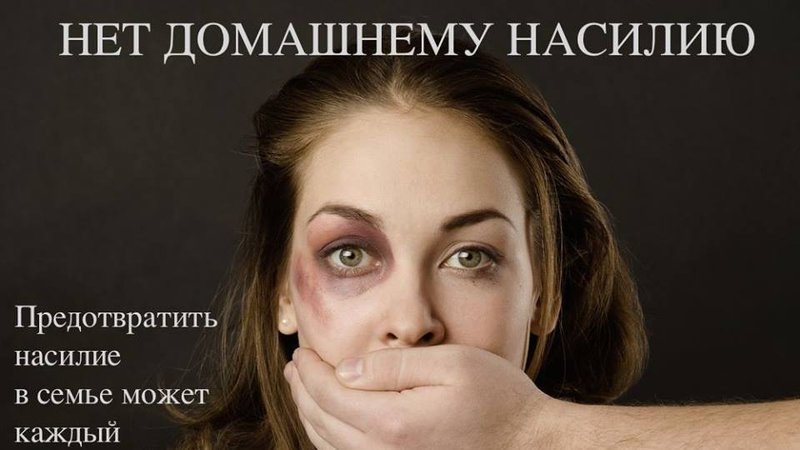
Domestic violence is a problem in every society, anywhere in the world. Usually it's male-on-female, though the opposite also occurs. But largely, it is men violating women's human right not to be bruised and battered by a physical presence to whom a woman is tied by familial obligations, and whom she is also often dependent on emotionally. Effectively legalizing domestic violence is a dramatic step backward.
Yet, it appears that many Russian women are not even aware that such violence is illegal. For the time being.
One in three Russian women experience domestic abuse, and 40 die a day at the hands of their spouse or partner Getty
This represents a general opinion site for its author. It also offers a space for the author to record her experiences and perceptions,both personal and public. This is rendered obvious by the content contained in the blog, but the space is here inviting me to write. And so I do.