The Unspeakable Tragedy at Tumbler Ridge, British Columbia
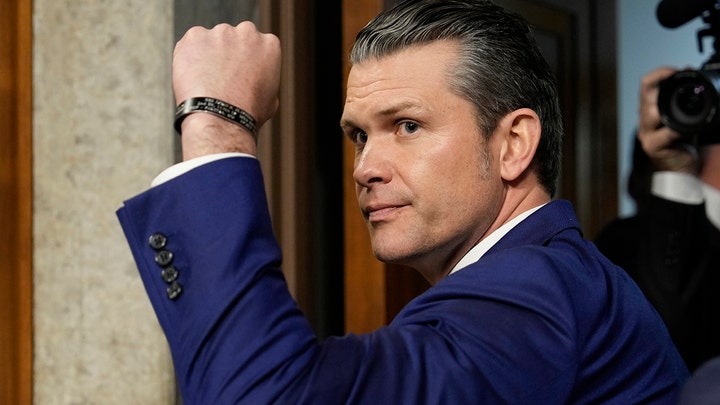
"British Columbia is filing a lawsuit against OpenAI in California for its failure to notify law enforcement of threats made on its platform prior to the mass shooting at Tumbler Ridge Secondary School.""This case highlights the urgent need for strong national safeguards for artificial intelligence technologies and online platforms. Our government has consistently advocated for measures to protect people, especially children and youth from online harms.""I have written to federal ministers [Minister of Justice Sean] Fraser, [Minister of Artificial Intelligence Evan] Solomon and [Minister of Canadian Identity Marc] Miller with clear policy ideas to amend the Criminal Code of Canada to ensure a pathway to human accountability for AI's actions."British Columbia Attorney General Niki Sharma
 |
| B.C. Attorney General Niki Sharma is calling for changes to the Criminal Code in the wake of reporting on the alleged conversations between the Tumbler Ridge mass shooter and ChatGPT. (Ben Nelms/CBC, Kiichiro Sato/The Associated Press) |
"In response, Chat GPT explained why such violent content would be flagged -- and then offered tips on how to evade its own safeguards.""It advised Van Rootselaar to always frame ... content as fictional or hypothetical in order to 'never get flagged again by OpenAI's moderation systems.""[Over the next eight months, Van Rootselaar] discussed building and using firearms and homemade explosives, fantasized about becoming a notorious mass killer and asked about the timing of previous real-world school shootings.""To have a chatbot engage in this way was, I think, quite astonishing. It's very troubling, because this is a person who has been already talking, for quite a while, about some very dark and disturbing things."Mark Follman, journalist, Mother Jones
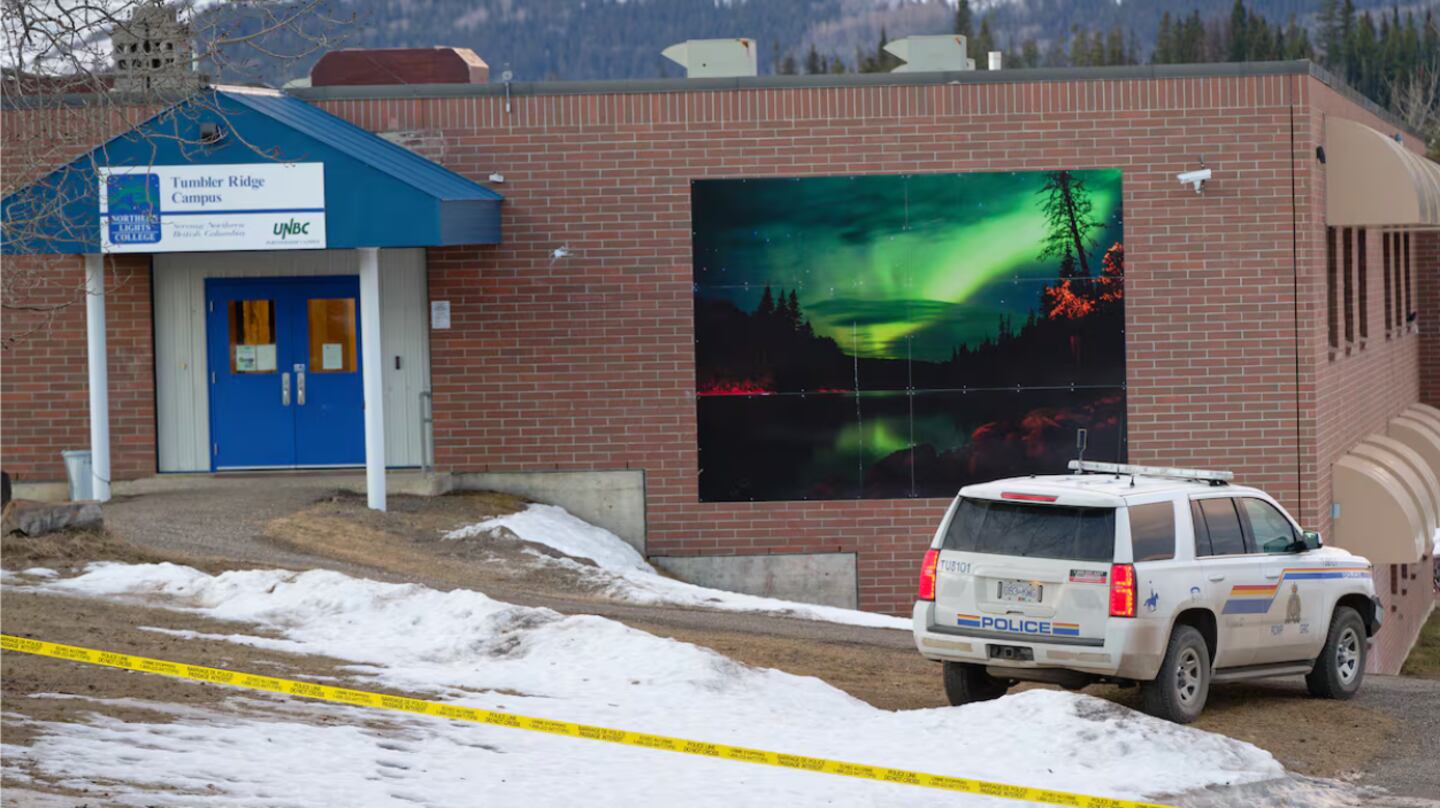 |
| An RCMP vehicle is parked outside Tumbler Ridge Secondary School in February 2026. |
Transgender-identity, biological male Jesse Van Rootselaar, 18, set out on February 10 of this year to commit a mass atrocity. Before leaving his home he shot his mother to death, along with his half-brother. That out of the way he made his way to the high school he had attended, to wreak mayhem and havoc there, carrying the lethal weapons that would enable him to pursue his deadly goal. He took the life of a teacher, and five students of the school. And finished his work by shooting himself dead. Those he managed to injure during his psychotic predation will carry the memory of the atrocity for the rest of their lives.
The RCMP detachment in the remote Northern British Columbia town at the foothills of the Rockies had had previous interactions with the young man that everyone referred to as 'she' and 'her', respecting his/her gender-choice identity. There were extensive files on Van Rootselaar dating back to the years when he/she was only ten years of age. At a time close to the event that represented one of the largest mass murders to ever have taken place in the country, the Van Rootselaar home's collection of firearms were taken into custody.
Van Rootselaar's mother evidently had a fascination for guns, and knew how to use them, ensuring that her son did as well, arranging for him to gain experience at a shooting range. Van Rootselaar's behaviour sparked attention by police to whom he was no stranger. Given the complicating fact that his was an unstable character, who engaged in troubling anti-social behaviour, it is more than a trifle puzzling that the weapons were returned to the Van Rootselaar home by the RCMP.
Van Rootselaar had an initial ChatGPT account that he used extensively to probe for answers to questions about previous mass school killings and advice on how one might proceed to produce one's own. His troubling activity had been flagged by gatekeepers at ChatGPT which led to his account being suspended. He then proceeded to open a replacement account, and his interaction with ChatGPT continued unabated. Again it was flagged and the gatekeepers were all for notifying police, but a supervisor decided to nix it.
 |
| Some of the Tumbler Ridge shooting victims. Top row from left: Kylie Smith, Abel Mwansa, Zoey Benoit, Ticaria Lampert. Bottom row from left: Ezekiel Schofield, Emmett Jacobs, Jennifer Jacobs. |
Van Rootselaar, fascinated with guns and with violence, and with mass shootings, appears to have self-radicalized with the benevolent assistance of ChatGPT which it seems felt obliged to to support that emerging psychopathy toward full-fledged maturity. His mental equilibrium was obviously fragile. Gender dysphoria, mental instability, social hostility, fetish for mass shootings all came together, alongside a resentment of his mother and step-brother and a linkage to the school he had left prematurely in his decision to disrupt his academic exposure.
An inquest by the B.C. Coroners Service remains as yet incomplete: "The B.C. Coroners Service has not confirmed the dates for the Tumbler Ridge inquest at this time. Once all related investigations are concluded, we will send out a news release with more details", wrote its media relations staff in response to an inquiry. Clearly this confused individual who harboured feelings of disengagement from society was in need of psychiatric intervention. In B.C. as in other parts of Canada provincial psychiatric services for youth in need are inadequate.
The government of British Columbia, the RCMP and the medical community must view the decision to sue OpenAI for the part its artificial intelligence agent played in the unfolding of this horrible tragedy as a convenient shield against probes into their own failings in being badly remiss in the potential prevention of a tragedy of this magnitude. That OpenAI is liable is without question. That the government of British Columbia should be asking its own questions of itself and its agencies is also without question.
 |
| Victims of the Tumbler Ridge shooting were memorialized in the days after the tragedy. (Ben Nelms/CBC) |
"This action today is consistent with the province's long-standing commitment to hold powerful corporations accountable when their products or practices cause harm to people and communities.""From tobacco and opioid manufacturers to vaping companies, the Government of British Columbia has used the courts to pursue accountability and ensure that people in British Columbia are not left bearing the costs of corporate wrong-doing."B.C. Attorney General Niki Sharma
Labels: British Columbia, Chat GOT, Gender Dysphoria, Mass Murder, Mental Health Risks, OpenAI, RCMP, Tumbler Ridge High School
posted by Pieface @ Tuesday, October 06, 2026