Monday, December 06, 2021

Transitioning? Not So Fast!

Transitioning? Not So Fast!
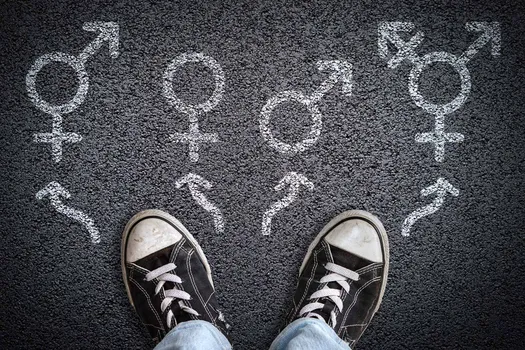
photo of transgender

"For years and years, people have been homophobic, transphobic."
"We're now trying to correct that, but by doing that we're putting others at risk. And those others we're putting at risk are children."
Mary, Toronto,  (last name withheld)

"No one makes these decisions lightly. They are made very slowly, very cautiously, after long discussions with these youth and their parents."
"It would be incredibly worrisome [to create additional delays in treatment]. It would harm so many kids. I would hate to think what would happen to them."
Dr.Margaret Lawson, medical director, gender-diversity clinic, Children's Hospital of Eastern Ontario

"In trans health care, patients diagnose themselves and prescribe their own treatment."
"Medical professionals are encouraged to accept a person's belief without question under the assumption that it will never change."
Michalle Zacchigna (first to be treated under the new transition model, and living with regrets)
Maciek Jasik
 
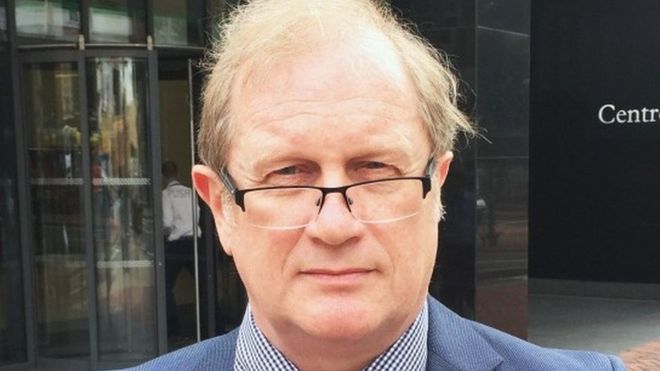
"Alarms are being sounded all over the world [against the trend to proceed in undue haste to effect transgender changes in young people]. And Canada seems completely deaf to it", stated Aaron Kimberley a transgender man living in British Columbia. He is also a registered nurse and is experiencing qualms over the current approach in Canada among medical professionals and parents to proceed with alacrity and insufficient caution to usher children into the process of gender transition; gender dysphoria is declared, minors are treated with hormones, and surgery follows soon afterward.

A government move is underway in the House of Commons, supported by all political parties, to make it illegal to subject children or adults to any form of conversion therapy. A practise that has been said to be discredited, with its goal of focusing on changing someone's sexual orientation or gender identity. The bill has passed in the House and is prepared to move to the Senate for assent before it becomes law. The bill is a reflection of the current zeitgeist, the sacred belief that children expressing discomfort in their birth gender assignment must be encouraged to transition to a more 'comfortable-fitting' gender.

Mary's daughter insisted she had to alter her sexual identity, suddenly announcing at age 16 that she was a transgender boy. The young girl had long suffered depression and uncertainty along with a deep sense of anxiety. A doctor wrote a prescription for testosterone following a few 15-minute appointments and within months the teen had a double mastectomy, to become a trans male. Her mother recalls that as her daughter was  being wheeled into the operating room for the mastectomy she expressed self-doubts about her decision.

She is now 21 and in the process of "detransitioning", a reversion to her original female identity. Her mother, Mary, has become a partner in a movement asking that the health care system now geared to affirmation of a young person's transgender feelings with drugs and surgery slow down, and seriously consider assessments of other psychological issues before declaring the young to be fully capable of making such a life-altering decision.

Outside of Canada which has embraced full transitioning for young people with scarcely enough medical and psychological examinations of their expressed feelings and emotions over the issue -- which has seen a tidal wave of children demanding they be assisted in their determination to leave the gender they were assigned at birth based on their physical characteristics, when they claim their minds and emotions are lodged in the other gender -- a reversal of social attitude is taking place.

Countries as diverse as Finland and Australia have taken steps to back up from the affirmative approach. At the same time, some leading figures in the transgender medical world have themselves begun to urge caution. A provincial bill in Ontario's legislature is set to speed up access to medical transition and to reduce the need for medical practitioners to make referrals for treatment. At both the provincial and federal level, the way is being paved for children to confuse their identities and face an uncertain future.

While there may well be a good number of legitimate instances of a psychological need to transition, the entire process has taken on a popular social-activist stance, with young children wanting to be part of the new trend. Parents and detransitioners indicate their support for improving access to medical transitions for those who really require it to be done, and feel transphobic bigotry has no place in society. While not opposing gender neutral bathrooms or public funding for transition treatment, they argue the pendulum has swung uncontrollably, and not to society's or the most vulnerables' advantage.

In some instances, gender treatment  occurs outside hospitals. The questioning newly arisen of the status quo has arrived in parallel with a boom in demand driven by patient demographics; both looking suspiciously like red flags that something is badly amiss. People presenting with gender dysphoria were predominately young boys or middle-aged men, traditionally. Now, gender-identity clinics are coming face-to-face with mostly teenagers born girls. 

Pediatric patients numbers at ten hospital clinics across Canada leaped from close to none in 2004 to over 1,000 by 2016. Some 80 percent represented natal girls, most under age 16, when first arriving at the clinics. In the U.S., a major college health study found the percentage of students identifying as transgender or gender non-conforming rose from .05 percent between 2008 and 2014 to three to four percent more recently. 
 
An American study of parents skeptical about gender treatment in 2018 hypothesized that there was a new "rapid-onset gender dysphoria" phenomenon among young girls sometimes convinced by online influencers and through social contagion. According to gender-medical professionals the explosion is a reflection of a growing acceptance of transgenderism following years of stigma and isolation, and the true number of youth in need may in fact be much higher.

The complaint from critics is that health care practitioners are too ready to place children on "puberty-blockers"; drugs to "pause" the development of puberty, and then cross-sex hormones, followed frequently by reassignment surgery. The emphasis, they feel, should lie in an exploration of the complex mental health issues of young people presenting as trans. "We feel the health-care system has been completely taken over by a political agenda at the expense of the actual evidence", said a representative of the group Gender Dysphoria Alliance.

Dr.Marci Bowers, a trans woman, a widely respected gender-reassignment surgeon herself, preparing to become president of the World Professional Association for Transgender Health (WPATH), is among top figures in the field who have expressed concerns. Concerns which led to change in recent months in some countries. Where Finland last year encouraged psychotherapy before transition treatment, and the Australia-New Zealand psychiatry regulator claimed it to be essential. In Sweden, clinics stopped prescribing puberty blocking drugs and cross-sex hormones to patients under 18 this year.

Dr.Bowers, the gender reassignment surgeon, suggested that children are sometimes placed on puberty blockers too soon, with complications arising in reassignment surgery which can deprive them potentially of sexual satisfaction for their lifetimes. Transgender women Erica Anderson and Laura Edwards-Leeper, senior officers with WPATH as psychologists, spoke of sloppy and dangerous assessment of young people presenting as transgender, the results of overly hasty prescribing of medical interventions.
W5 The Transition


Labels: , , , ,

Saturday, July 13, 2019

Human Dignity

"[Dismissed], not because of any realistic concerns over the rights and sensitivities of transgender individuals, but because of my refusal to make an abstract ideological pledge."
"If you believe in gender fluidity, gender is no more than one's own fantasy about oneself."
"As a Christian, there's a conflict between what society says is a human right and my inability to use pronouns in this way."
"The very fact a doctor can be pulled off the shop floor for an urgent interrogation about his beliefs on gender fluidity is both absurd and very sinister, even more so if it results in a dismissal."
"If something like that happened in a church setting -- people being pulled out of a pew, questioned, and then excommunicated -- that would be seen as an outrageous example of religious intolerance and bigotry."
"I am, of course, aware that there are men or women who believe they have been trapped in a wrong body and I do not question the sincerity of their convictions. A small number of such people have always existed."
"Up until recently, such a belief was considered by medics to be delusional and a symptom of a medical disorder."
"I appreciate that in the present political climate, some people, including some of those who believe they are transgender, may find my beliefs to be offensive. However, in a free society, this is not a good enough reason to censor my beliefs and coerce me to act contrary to my conscience."
"Moreover, as a doctor, my responsibility is always to act in good conscience in the best interest of the patients -- not to adopt various fancies, prejudices, or delusions, to avoid offence at all cost."
Dr. David Mackereth, 56, emergency doctor
David Mackereth
Dr David Mackereth said he wanted "the right to practise medicine as a Christian doctor" PA Media
"[You must follow the] process as discussed in your training."
"If however you do not want to do this, we will respect  your decision and  your right to leave your contract."
James Owen, supervisor, Department of Work and Pensions (DWP), Midlands, Great Britain
Dr. Mackereth, a Christian evangelist and also a medical doctor was called into the office of his supervisor at the Department of Work and Pensions where he worked as a disability benefits assessor. He was asked by Centre manager, James Owen how he would react in a hypothetical situation. That situation seemed quite implausible to Dr. Mackereth, informed both by his religious belief and his profession as a medical doctor.

How the question was framed was whether he would be agreeable, should a "six-foot-tall bearded man request of him to be addressed as "madam", or "Mrs.", to oblige accordingly. To most people such a request from such a source would represent a risible absurdity. Dr. Mackereth frankly responded that a request of this nature would be one he would be incapable of honouring. Who, quite honestly, would?

"If  you have a man, six foot tall with a beard, who says he wants to be addressed as 'she' and 'Mrs.' would you do that?" appears to be the verbatim quote in Dr. Mackereth's suit against the government agency at an employment tribunal alleging discrimination on the grounds of his religious belief. Dr. Mackereth made it clear to the Birmingham hearing that he believes transgenderism is a "delusional belief" representing an ideology "which I disbelieve and detest". Many would add 'amen' to that.

As a theologian with thirty years of medical experience, his position as a health and disability assessor began in May of 2018 at an assessment centre. An assignment that didn't last very long, given his suspension a month later when the "interrogation" by his supervisor resulting in his refusal to "call any six-foot-tall bearded man 'madam' on his whim", lost him that position. The tribunal was informed by Dr. Mackereth he was aware he would be "overwhelmingly likely" to lose his job without committing himself to the use of female pronouns in reference to an obvious physical male.

June 25, 2018 was his final day at work following an email exchange with Mr. Owen which instructed the doctor to follow the "process as discussed in your training". The consequence of not doing so was made abundantly clear when the following statement obliquely went on to spell out failure to comply would indicate Dr. Mackereth's "....right to leave your contract".

And while the doctor insists it was not his decision to resign his position, that he was victimized through direct discrimination and harassment, the Department of Work and Pension responds with the argument that Dr. Mackereth's views breach the 2010 Equality Act. The recruitment company which hired the doctor for the DWP stated the doctor's beliefs "are not compatible with human dignity".

Their views on human dignity and related lack of respect for Dr. Mackereth's have earned them a prominent place in the doctor's suit for religious discrimination. Dr. Mackereth's world and professional view remains that transgenderism represents a "rebellion against God, which is both pointless and sinful". Remove the reference to a spirit and replace it with Nature, and many would agree.

"If you have a man, six foot tall with a beard, who says he wants to be addressed as 'she' and 'Mrs.', would you do that?"    Getty Images

Labels: , ,

Monday, January 21, 2019

Male Mind, Female Body : Remedy?

Related image
Still from short film BOY
"I just want to do what's best for Max. And sometimes that's tough love."
"I have no animosity toward Sarah on this issue. I think we both believe we are doing the right thing. And I believe we both have Max's best interest in mind."
"I thought it was a long process and nothing drastic was going to really happen, at least without consent."
"You don't just jump them into things they can't change back. When she's 18 and she does it, I'll support her 100 percent."
"What if?"
Clark, father of daughter/son (identities withheld)

"I have a male brain that doesn't match up with the body I'm in. It's like being trapped in a cage."
"It just kind of clicked right away [after watching YouTube video "Boy" while in Grade 7]."
"Even if I'm open with who I am, I'm still insecure."
Max, 14, Grade 9, Surrey, British Columbia

"I didn't quite understand transgenderism myself, didn't know if I fully believed in it. But having gone through the experience, I've gone through with my son I fully believe that yes, it is very possible that transgenderism does exist and there are people wandering around feeling excruciatingly uncomfortable in their own skin."
"If this [testosterone injections] is what alleviates my child experiencing this dysphoria, I'd rather move forward. ... If it happens to have side effects down the road, we're OK to handle that -- at least our child would still be alive."
"I don't want it on my conscience knowing that if this is all it took to alleviate that dysphoria from my child then why didn't we follow through with it?
Sarah, Max's mother

"Max's health care team has concluded that he possesses sufficient maturity and intelligence to be capable of consenting to his own medical care, notwithstanding the fact that he is only 14 years old. Furthermore, the team agrees that the proposed course of treatment is in his best interests."
"Under these circumstances we are of the view that it is ultimately up to Max to give or withhold consent to is own medical care; neither you nor his mother can make this decision for him."
Letter to Clark, Max's father, from B.C. Children's Hospital

"I have seen in some circumstances  ,,, where young people have had health care delayed and denied because everybody wasn't on board. One parent is supportive, and one is not, and nothing happens. That can be a problem. If the clinicians, the psychologists, the endocrinologists, the family doctor, if all of them have done the assessment and have determined that this is medically necessary, then it's important to actually pay attention to the expertise."
Elizabeth Aaewye, professor, UBC school of nursing 
Related image

Some enterprising researcher who may have doubts about the new open and accepting attitude of medical professionals toward accepting a child's confident assertion that they are not in fact, a girl despite having been born female, or a boy, identified as such at birth -- but in reality a member of the opposite sex yearning to be recognized as such and anxious to be given medical treatment to make the physical transformation to match their psychological belief -- should begin interviewing women of all ages to ask whether such gender-identification confusion ever resonated with them.

It would, without doubt, be recognized that a good proportion of girls in their early years fantasized being a boy, imagining how much freedom it would confer upon them to do things that boys do so effortlessly and so physically well coordinated, in rebellion against the cultural confines they struggle against as girls. The same would be true for many boys who resent the expectation that they will do
manly things and behave in a manner that fails to suit their personalities, imagining that pressure would be relieved if they were girls instead.

Children are suggestible, hugely so, and their imaginations can run rampant into fanciful territory. We are a species never quite satisfied with who and what we are, seeking to portray ourselves differently to reflect what we would prefer, and at the same time we are attention-seekers, wanting to stand out in the crowd, generally to be admired, even if it takes a leap at non-conformity in rebellion to do so; we see ourselves as individualists so often, entitled to insist on having things our way. Who is it that can claim with complete confidence that children are not in fact gender-confused psychologically and briefly as part of maturation?

The general scientific, medical consensus seems now to have succumbed to the confidence in belief of a biological mismatch between ego/personality and birth presentation in gender. This is not now seen as a type of brief psychosis, but rather a biological error in need of intervention by medical science to remediate an error that nature produced. And if this doesn't represent a confusion of medical arrogance and layman effort to salve an emotional conundrum afflicting a steadily increasing group of people for whom transgenderism has become an escape from their reality in life, what else is it?

Max, all of 14, born a girl, feels she is a boy and insists she must live out her life as a male. Her/his mind is settled on self as male and all that is now wanting is to convince her father just as he was successful in convincing his mother, and undergoing treatment to transform his voice, his physique and confer upon him the male characteristics that she so fervently wishes to acquire. All the medical personnel consulted agree with that candidacy, as does mother Sarah, but father Clark is the holdout. The parents are separated, with joint custody and a provision in the custody agreement that both must agree on any issues of substance.

Clark and Sarah must jointly exercise "all parental responsibilities" inclusive of "giving, refusing or withdrawing consent to medical, dental and other health-related treatments for the child", reads their legal document. Despite which the B.C. Children's Hospital invokes the B.C. Infants Act to insist that as long as a health care provider is satisfied a child understands the nature, consequences, benefits and risks of the proposed treatment and concludes that the treatment is in the child's best interests the right to consent "belongs to the child alone".

Max was assessed a half dozen times over a period of several months starting in Grade 8, by a clinical psychologist. When those sessions ended, the psychologist considered Max a good candidate for testosterone therapy, for Max demonstrated to the psychologist a "long-lasting and intense pattern of gender non-conformity or gender dysphoria" among other issues related to the matter at hand. Sarah and Max went to the B.C. Children's Hospital's gender clinic, reputed to be one of the busiest in North America.

They met with a medical team that included a paediatric endocrinologist, a social worker and a nurse. All described the treatment that Max would undergo. On a three-page "informal consent form", the risks of testosterone therapy were laid out. The "treatment  in young adolescents is a newer development, the long-term effects of which are not fully known". Testosterone use would lead to permanent changes; a lower-pitched voice, facial hair and thicker hair on arms, legs and torso, that would prevail even should treatment be stopped.

Testosterone treatment could lead as well to an elevated risk of heart disease, stroke and diabetes. "It is not known", according to the consent form, what the effects of testosterone are on fertility. "You may or may not be able to get pregnant in the future". Max, said his mother, was definitely not undergoing some "phase". Staff at the hospital were prepared to initiate injections that very day, but Sarah felt it incumbent upon her to advise Max's father who was shocked at the swiftness of the conclusion.

He refused his assent on the basis of the information on the form. A court hearing has ensued. Clark's lawyer speaking for his client advised they take the position that Max not be rushed into treatment, that no injections should commence until such time as both parents agree to consent, or Max turns 18, or the court orders treatment to proceed. The judge, in hearing the details felt he had never encountered a case quite like this before in his career.

He was not aware whether provincial law recognizing Max's rights to give informed consent trumps family law and the parents' joint responsibilities in care of their child as per their separation agreement.

Related image
Still from short film BOY


Labels: , , , , , ,

Follow @rheytah Tweet