Canada's 'Ndrangheta
"The COVID-19 pandemic has made the need for co-operation in tackling this threat a greater priority, with the 'Ndrangheta modus operandi designed to thrive in today's financial landscape of recession, liquidity crunch and mobilization of public funds."
"The amount of cash capital available to the 'Ndrangheta means they are well placed to offer assistance to large, medium and small companies which may be struggling with payments."
"They can guarantee a payment or offer loans as part of their efforts to infiltrate the legitimate economy."
"Families under financial distress, seasonal or undeclared workers are also prime targets for loan sharking by mafia-type organizations."
Interpol International Criminal Police Organization
"COVID-19, which for the whole world represents the most tragic and sudden pandemic of the modern era, could become an extraordinary opportunity for 'Ndrangheta, and for organized crime in general, to conquer new markets and launder money."
"We need to act immediately to anticipate the threat and counter the Mafia's flexibility to rapidly adapt to changes and exploit new socio-economic frameworks."
Franco Gabrielli, chief, Polizia di Stato, Italy
"The RCMP is committed to working with its foreign partners in the I-CAN initiative to combat the global threat posed by the 'Ndrangheta criminal organization."
"Combating organized crime and transl=national organized crime is an existing priority for the Federal Policing program within the RCMP, and the 'Ndrangheta is a component of this. We will continue to focus on working with our partners to impact the threat these transnational networks pose."
RCMP Deputy Commissioner Mike Duheme
 |
| The 11 pilot countries in the I-CAN project funded by the Italian Department of Public Security, are: Australia (Australian Federal Police), Argentina (Argentinian Federal Police), Brazil (Brazilian Federal Police), Canada (Royal Canadian Mounted Police), Colombia (Colombian National Police), France (National Police and Gendarmerie), Germany (German Federal Criminal Police - BKA), Italy (Italian State Police, Carabinieri and Guardia di Finanza), Switzerland (Fedpol), United States (Drug Enforcement Administration and the Federal Bureau of Investigation) and Uruguay (Uruguayan National Police). |
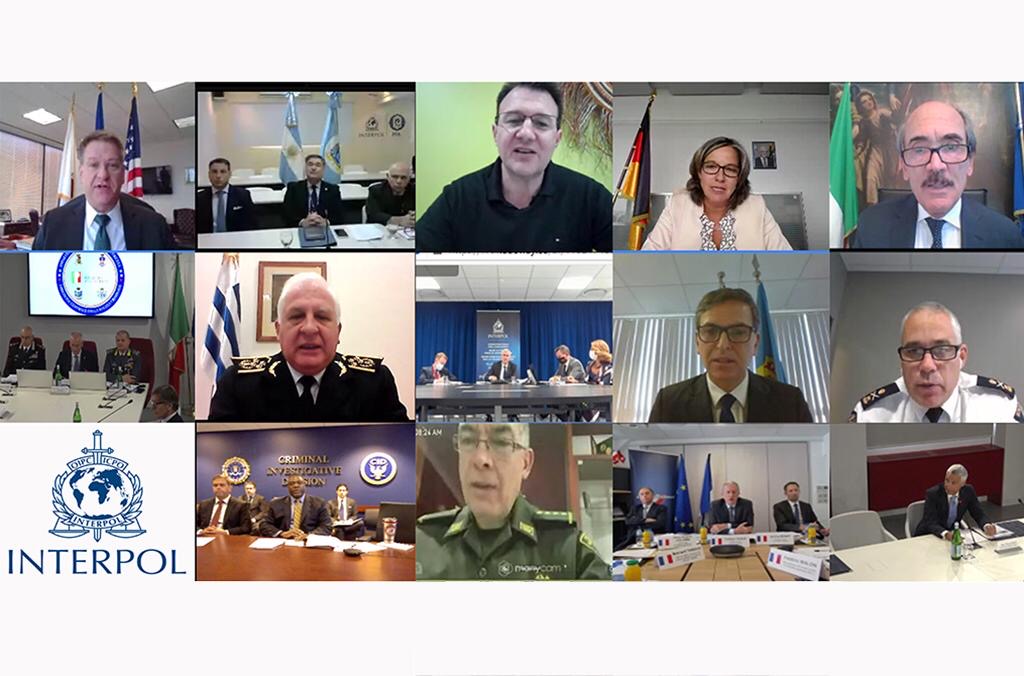
Italy's Department of Public Security funds the I-CAN (INTERPOL Cooperation Against ‘Ndrangheta) project where a virtual teleconference brought together at a distance officials from those countries that have been most affected by the presence of the 'Ndrangheta: Italy, Canada, Australia, Germany, the United States, Colombia, Brazil, Switzerland, France, Argentina and Uruguay.
The concern of police forces around the world is to cooperate in building a "global early warning system" in prevention of the Calabrian Mafia from exploiting the COVID-19 economic collapse, in plans to infiltrate national economic infrastructure. According to Interpol, the 'Ndrangheta represents "the most extensive and powerful criminal organization in the world".'
Italy's southern region of Calabria gave birth to the 'Ndrangheta, which then spread to over 30 countries, including Canada, where it has a long established and strong presence. Police officials from eleven countries most affected by the presence of the 'Ndrangheta, met for the first time as a group with a common purpose this week, but did so through a virtual teleconference.
Like any branch company, the foundational features of the 'Ndrangheta networks anywhere in the world feature similar setups and all value close ties wit their home towns in Calabria. The group's long-established presence in Canada is one of powerful influence despite its geographic distance from the origins of the criminal group. Its mobsters immigrated to Canada in the 1950s and have seldom looked back.
Their power and influence is the same whether they wield it from Italy or from Canada. The 'Ndrangheta clans living in Canada are unique in the underworld of Italian mafia outreach. In the Toronto area, the 'Ndrangheta board of control enjoys a recognized authority respected internationally; decisions made in Toronto for the global 'Ndrangheta display its strength and its recognized place in the panoply of 'Ndangheta authority.
The intention of Interpol's I-CAN project as an anti-'Ndrangheta project is to map the flow of mob fugitives cross country. And Canada has more than its share of the 'Ndrangheta mob. A group that is slated to be studied under the fine magnification of the national police force with a view to identifying, arresting and prosecuting people wanted for Mafia activism.
"It has repeatedly proven its skill in infiltrating political and economic environments, and a remarkable capacity for corruption."
"The 'Ndrangheta is an invisible threat and a dangerous criminal business partner. This is how their cycle feeds itself across more than 30 countries A cycle we must act to stop, now."
Jurgen Stock, secretary general, Interpol
 |
| York Regional Police and Canadian government officials at a news conference in July 2019 to talk about recent arrests of members of the ’Ndrangheta crime family which saw high end cars, homes, money, watches among other items seized. |
Labels: Canada, Interpol, Italian Mafia
posted by Pieface @ Saturday, June 27, 2020