"I believe this particular enforcement is going to put a dent in shootings and contribute significantly to the safety of our community."
"But is it a long-term solution? No, because there's underlying causal factors that have to be looked at in terms of security at the border and what's drawing the need for these firearms."
"We have some information but nothing we can reveal at this point."
"Officers that are on the street are stumbling across these guns. The number of firearms seized by virtue of traffic stops is an indication of how many firearms are on the streets."
Superintendent Marty Schulenberg, Hamilton Police Service
"One Order gang members are mostly involved in drug trafficking, firearms trafficking, extortion of community they control and other minor crimes, including different types of theft."
"[Some One Order gang members or factions] can relocate to other locations for specific duties."
Immigration and Refugee Board of Canada
"These [open air drug] markets have an impact on the surrounding community, fostering
feelings of insecurity, increasing the risk of crime and deterring
businesses and residents from fully engaging with the area."
"By addressing these issues, we aim to restore safety and rebuild trust in the affected neighbourhoods."
Hamilton Police Insp. Jim Callender
An image from Hamilton Police after busting an open-air drug market.
A research directorate released by the Immigration and Refugee Board of Canada in September of 2023 revealed that the Deep South is one of several factions of the One Order, a criminal gang operating mostly out of Nassau, Bahamas. The Bahamanian Minister of State for National Security labelled One Order the "most violent gang" in the Bahamas, credited with over 200 murders.
In Hamilton, Ontario, Project Churchill, representing a year long probe by Hamilton Police into the activities of the Hot Mali Squad, responsible for significant control over crime in Hamilton's city core accused of trafficking firearms, was busted by police. Hot Mali Squad was believed by police investigators to be peddling guns for the Deep South, an offshoot of the Bahamas-based street gang known familiarly as One Order. The HMS gang smuggled the weapons obtained in the United States into Canada.
Superintendent Schulenberg of the Hamilton Police when asked how the guns crossed the border, responded by explaining that the vast majority of crime-related guns seized in Hamilton by police -- 89 percent -- are smuggled into Canada through the United States. Not a new trend, yet based on the frequency of shootings, gun crimes and gun seizures in recent months, the alarm has been sounded relating to the increased number of firearms circulating on the streets of Hamilton.
One clear example of the firearms' proliferation reflects the number of shootings that have taken place so far this year in Hamilton; 60 in number, a record for the city. Police had seized 359 firearms by November 2024, a substantial increase over the 282 recovered throughout the entirety of 2023. As though the number of guns illegally in Canada weren't sufficiently concerning, alarm has been raised over the number of seized guns that are modified.
Some of these firearms have been equipped with auto sears; devices that convert semiautomatic guns to fully automatic, as well as extended magazines containing extra bullets. "While this project may be over, our service will not stop in our dedication to getting firearms and illegal guns off our streets", pledged Chief Bergen at a police board meeting.
BUSTED: Alleged gang members. HPS
Three of the 24 individuals facing charges connected with Project Churchill are members of Deep South wanted for crimes in the Bahamas, including attempted murder and possession of dangerous drugs. Police have yet to explain how members with the Deep South, wanted on other charges in their native country, entered Canada claiming refugee or asylum status.
A research directorate released by the Immigration and Refugee Board of Canada in September 2024 revealed that the Deep South is one of several factions of the One Order operating mostly out of Nassau, Bahama.
Police say they executed 17 search warrants in in Hamilton, Niagara Falls, St. Catharines and London on Nov. 13, 2024. (Bobby Hristova/CBC)
"Targeting this violent street gang was crucial in addressing the surge
in Hamilton shootings because this group acted at the epicentre of gun
violence, fuelling fear, instability, and harm in the community."
"[We are working] with authorities in the Bahamas to make sure they face the appropriate course of action in that country."
"We are also working with Immigration Canada with respect to their status in Canada."
"Last night [Dec. 12] the brutes of the Islamic Republic attacked #MajidrezaRahnavard’s
grandmother’s residence, arresting his uncle and brother for a few
hours. They took away all the banners and flowers for the ceremony and
then forcefully evicted the family from their own home."
"The Islamic Republic held #MajidReza’s
“trial” 13 days ago. 3 days after conviction and sentencing by the
“court” of first instance, he was executed for “Waging war against God.”
Please don’t be silent."
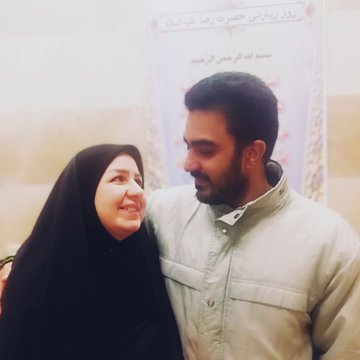
"They allowed #MajidRezaRahnavard’s mother to visit him, and didn’t speak of execution at all. She left smiling and hoping that her son would be released soon.
This morning she arrived when her son’s murderers were burying his dead body alone."
1500Ootasvir_en
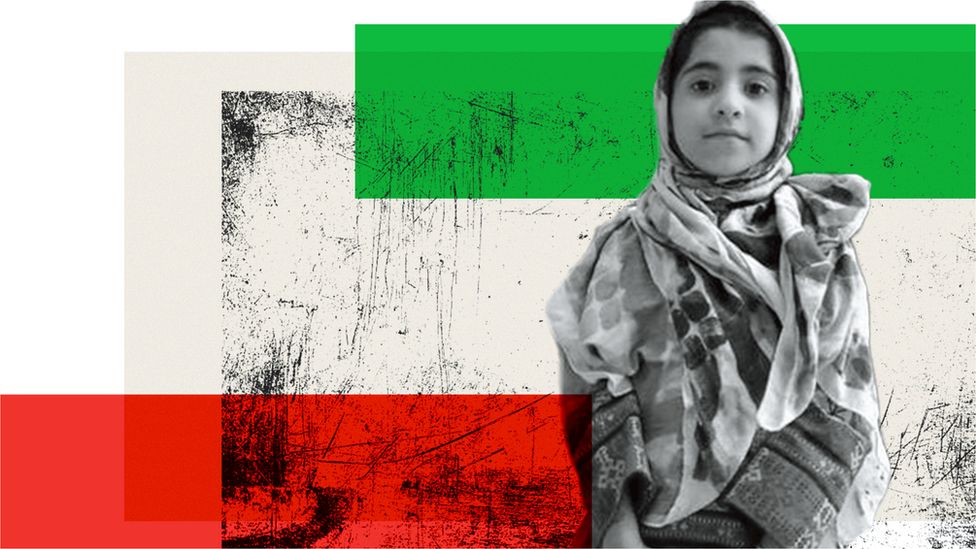
7-year-old
Hasti Narouei was also from the Baluch community. This picture shows
her wearing a traditional Baluchi dress. According to local activists,
Hasti was hit on her head by a tear gas canister. She suffocated. HAALVSH
The
public furor over the murder of a young Kurdish woman arrested by
Iran's Morality Police for what they construed as a moral offence when
she wore her hijab too loosely, revealing a few strands of hair, led to a
courageous uprising in Iran's Kurdish geography that rapidly spread in
moral indignation and numbers until every major city in the country
hosted its own protests against the human rights abuses that the
theocracy forced on its people in the name of the faith of Shi'ite
Islam.
In
efforts to speedily put down the growing insurrection where enraged
Iranians called for "Death to Khamenei" and the end of the Islamic
Republic, the Basij, an arm of the Islamic Revolutionary Guard Corps
was tasked to counter the protestors using any means useful to the
purpose. Predictably, this has led to unrestrained brutality on the part
of the Basij, motorcycle-driving 'police', not known for gentle
remonstration. Close to 500 people have been killed while protesting so
far, by the Iranian Security Police.
Two
days ago Iran executed a second prisoner who was convicted for crimes
they claim were committed during protests challenging the theocracy. He
was publicly hung from a construction crane. A grim medieval punishment
meant to give warning to all other protestors that this could be their
fate as well. Majidreza Rahnavard's execution followed a month after he
was charged of the fatal stabbing of two members of the Basij
paramilitary.
Speedy
'trials' followed by the death penalty obviously considered an
effective method of cooling the ardour of the public in its attempts to
unseat the ruling theocracy. According to Iranian activists, a dozen
people, perhaps more, have already been sentenced to death at
closed-door hearings. 488 people have been killed since the
demonstrations broke the complacency of the Ayatollahs in mid-September.
Authorioties have placed another 18,200 people in detention.
The
Mizan news agency under the country's judiciary influence, published
images of Rahnavard hanging from the crane, hands and feet bound, black
bag covering his head. In front of concrete and metal barriers to hold
back a gathered crowd, masked security force members stood guard early
Monday morning in the city of Mashhad, a Shi'ite holy city located east
of Tehran.
The
hanged protestor, according to the newspaper, had stabbed two security
force members to death in Mashhad, wounding four others. State
television aired footage of a man chasing another around a street corner
then standing over him and stbbing him after he fell agains a
motorbike. Another video showed the same man stabbing another in quick
succession with the assailant finally fleeing. State TV iterates the man
with the knife was Rahnavard.
The
dead men were identified in the Mizan report as "student" Basij, the
paramilitary volunteers deployed in major cities, attacking and
detaining protesters who have been resisting and fighting back. After
Majidreza Rahnavard's execution, state television showed him in the
courtroom where he declares his hatred for the Basijis following video
clips he had seen on social media of the forces beating and killing
protesters.
Activists
speak of Mashhad of hosting strikes, of shops closed and demonstrations
that began over the death in custody on September 15 of 22-year-old
Mahsa Amini. Rahnavard was convicted in Mashhad's Revolutionary Court,
tribunals that have been criticized internationally for disallowing
those on trial to have their own lawyers, much less see the evidence
against them. Rahnavard was convicted of 'moharebeh', meaning "waging war against God".
"[The public execution of a young man so soon after
his arrest indicated] a significant escalation of the level of violence
against protesters."
"Rahnavard
was sentenced to death based on coerced confessions, after a grossly
unfair process and a show trial.This crime must be met with serious consequences for
the Islamic republic."
"[There is] a serious risk of mass execution of protesters [as thousands were in custody]."
Mahmood Amiry-Moghaddam, director, Iran Human Rights, Oslo, Norway
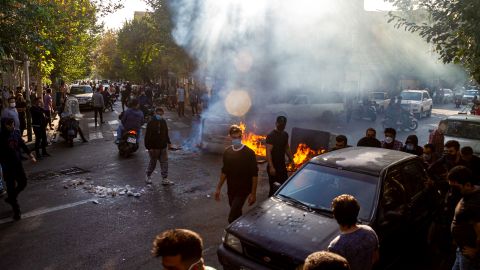
Iranians protest the death of Mahsa Amini after she was detained by the morality police last month, in Tehran, on October 27. Stringer/Middle East Images/File
"We've found weapons from a crossbow up to guns and munitions. That shows that this isn't harmless."
"[The plot, however, stood no chance of success though it was] dangerous [and] Now is the time to see just how far they got."
Holger Munch, head, federal crime agency, The Federal Criminal Police Office
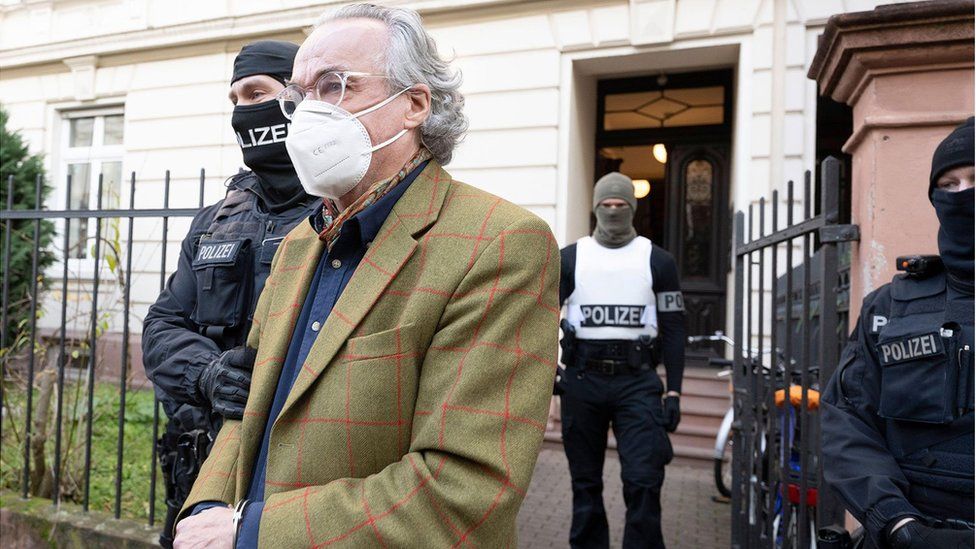
Among the 25 detained was a minor aristocrat called Heinrich XIII DPA Picture Alliance
German
prosecutors state that some among the arrested group of apprehended
coup-masters held "concrete plans" to storm the Reichstag, Germany's
government building, prepared to kill for their goal of installing a new
monarchical regime to revive a German Empire from centuries before. The
plan, described by an investigative detective to Die Welt newspaper was "a horror scenario that has never existed in this form in Germany".
Rather
dramatizing an event that had a minuscule operational base, given that
Germany in its entirety had once, mere generations earlier in the 20th
century embroiled the world community in a world war to reach its
domination aspirations when the real horror show was the industrialized
slaughter of millions of Jews, Homosexuals, Roma, Jehovah's Witnesses,
Mentally and Physically impaired people with the focus on genocide, to
wipe out an entire ethnic/religious community of Europeans.
Still,
the police in Germany were busy seizing crossbows, firearms and
night0-vision goggles, while conducting dozens of raids linked to the
far-right coup plot. Over 50 disparate addresses held weapons and
munitions. According to a report in Der Spiegel
magazine, the confiscated items were inclusive of pistols, swords, stun
guns, combat helmets, night-vision devices and service weapons of two
police officers.
Large
quantities of gold and silver were also said to have been found by
investigators after the arrests on Wednesday of 25 people, among whom
were mostly pensioners accused of forming a terror cell, the planners of
the bizarre coup. Among those arrested was a chef of some fame, based
in the luxury Austrian ski resort of Kitzbuhel. Chef Frank Heppner's
responsibility was to organize the menu in canteens of the group's
to-be-established kingdom and the organization of its troops' food.
The
plotters have been identified as members of the Citizens of the Reich
movement, an organization of about 20,000 who believe that Germany
should revert to the era of the German Kaiser. The existence of the
group was no secret, but well known and regarded as an assortment of
conspiracy theorists. Suddenly they've become Germany's existential
threat as a democratic nation.
To
fortify their arguments that the situation must be taken seriously,
prosecutors point to the fact that several German army officers,
retired and serving, were involved. Their purpose was to target military
men and police officers for recruitment to their ranks. A
proto-government had been set up where cabinet posts were apportioned,
along with a military wing of the operation. The coup attempt appears to
have been expected prior to Christmas.
Heinrich
XIII, Prince Reuss, great-grandson of the head of a minor royal
princedom in central Germany that ruled up to the dissolution of the
empire following the First World War, was the head of the conspiracy.
The arrests reflect radicalization among a quixotic mob of anti-vaxxers,
civil esoterica and Kaiser nostalgics who joined to demonstrate against
state pandemic measures.
A
75-year-old woman had been arrested in October, held to be the
ringleader of a clandestine plan to kidnap Karl Lauterbach, Germany's
minister of health.
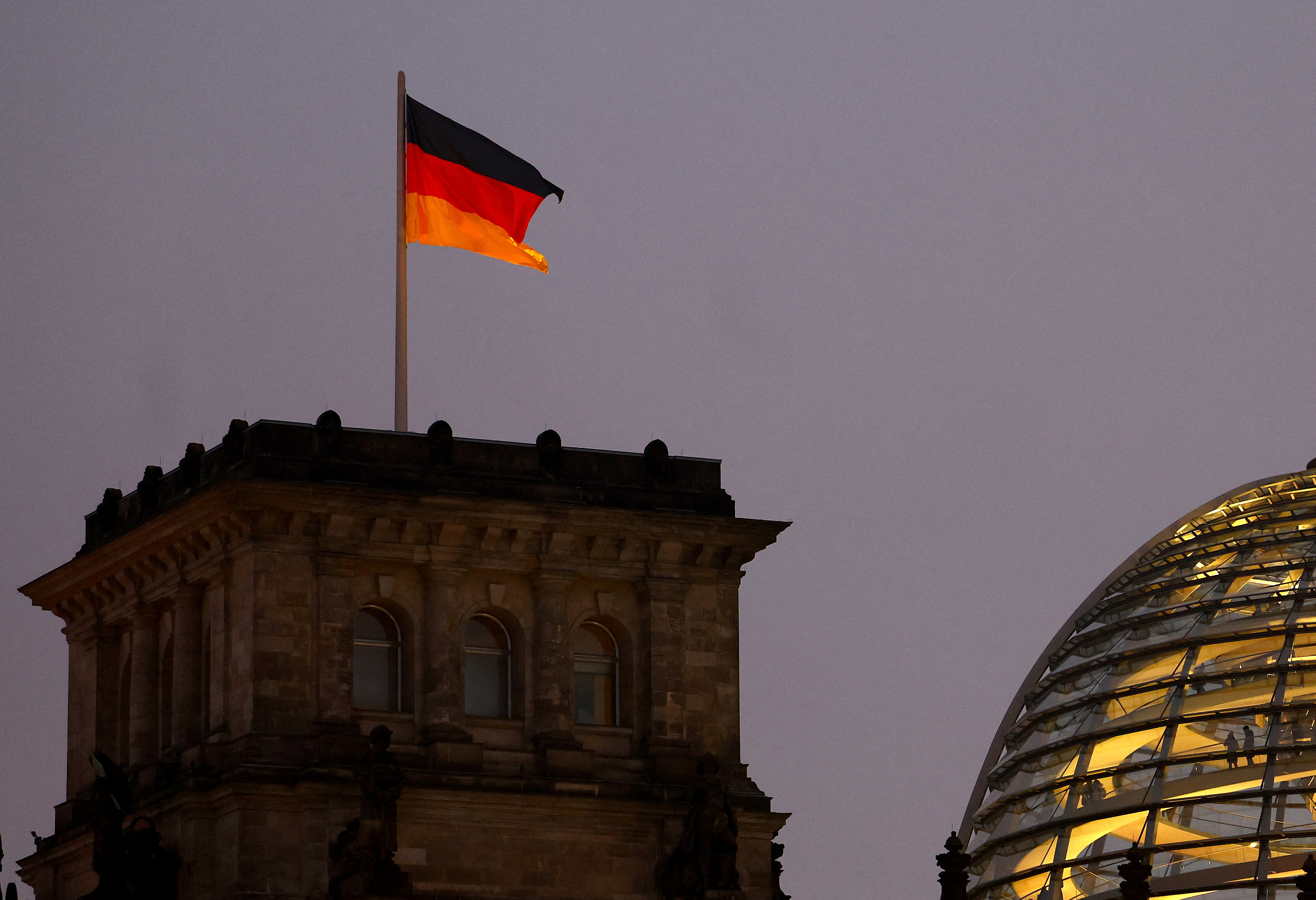
German national flag flies atop the illuminated Reichstag building, the
seat of Germany's lower house of parliament Bundestag, in Berlin,
Germany December 9, 2022. REUTERS/Lisi Niesner
"The government authorities are very shy in addressing this situation." "They do not admit this problem because of the social traditions. Even the media is not discussing it." Abbas Maher alSardi, mayor, Zubair, Iraq
In this Dec. 5, 2017, photo, blindfolded suspected drug dealers are
displayed with their goods and weapons in a detention facility in Basra.
(AP)
And quite the situation it is. Good Iraqi Muslims becoming drug addicts. There is social shame associated with that, but perhaps what is materially more critical is that poverty results from drug abuse. In traditional Muslim families where the male of the family is the wage earner, that earning potential is disrupted to addiction and prison. Once imprisoned for the offence of being a drug abuser, there is a criminal record, and with that record no respectable business will hire such an offender. Poverty.
There are now thousands of meth addicts in Iraq where drug problems have always been rare. "If crystal is in front of you, you have to take it", states Hussein Karim, 32, reduced now to living in a windowless room with his wife, their three children and his disabled brother. It has been two years since he has taken drugs and he goes out of his way to avoid seeing anyone who might deal drugs. His employment possibilities as a heavy equipment operator in construction, then as a fighter for the Popular Mobilization Units is all in the past. No one will now look to hire him for a salaried job.
Basra province, the southernmost governorate in Iraq, is where the most serious of drug problems has arisen, with 1,400 people, mostly men, convicted of drug possession or sale, and mostly crystal meth. Over 6,800 people have been imprisoned nationwide according to Iraq's Supreme Judiciary Council. It's a start; the numbers involved nothing alarming for a country of 39 million people, and where mostly Basra and Baghdad, the capital have been struck.
Unemployed Iraqis confront riot police during a protest to demand jobs
in Basra, where anti-narcotic officers say that the use of crystal meth
is doubling year on year.
Photograph: Nabil al-Jurani/AP
Placing people in prison appears to be the only solution to the problem that community leaders and government officials can think of to deal with the growing problem. The shame associated with having a family member drug-dependent extends not only to the family but to society at large. Zubair is a city of 740,000 just north of Basra where drug use is particularly high among youth, many of them unemployed.
The government responds by dispatching dozens of police teams nightly to fan out across Basra province, to target users and dealers in an effort to expunge outward signs of the problem afflicting society. This drug imbroglio is only the latest phase of a long slide into criminality in the region. Beginning with the absence of Saddam Hussein, whose reins on 'law and order' ensured that few would risk stepping out of line. His criminality was the only kind permitted.
The drug situation was seen to emerge about seven years ago when gangs moved into the drug trade, handling large quantities of crystal meth available from neighbouring Iran where production labs had sprung up, according to the head of research for the UN drug agency. Iran has made an effort to close down those labs, seeing production moved to other countries. According to Judge Riyadh Abid al-Abass of the Bastra Criminal Court, drugs also filter in to Iraq from Saudi Arabia and Kuwait.
There are hints that Iraq's militias which came into being to fight the invasion of the Islamic State, known as the Popular Mobilization Units, have involved themselves in the drug trade. Prisoners claim some units work with the traffickers and have allies in the government. Those traffickers are somehow capable of eluding detection. Those that are caught have been able to escape from prison soon after capture and speculation over the role of the militias is rife.
Men arrested for drug crimes were crammed inside cells in the city of Zubair in Basra province.Credit Ivor Prickett for The New York Times
Hundreds of prisoners are crammed into holding rooms in police stations. The pungent odour of sweat, excrement and urine can be over-powering. The average duration of a prison term for first time offenders is typically 15 months. For the government of Iraq to claim that drug abuse is a new phenomenon, attributable to the downfall of Saddam Hussein removing his iron fist of control, and introducing criminal behaviour in the population is either naive or defensively evasive.
Fundamentalist Islamists like the Taliban control the cultivation of poppies and the production of opium in Afghanistan to fund their terrorist war in the country. Hezbollah in Lebanon, the crony militia founded and funded by the Islamic Republic of Iran, along with the terrorist group Hamas in Gaza all have octopus arms involved in the drug trade for fun and profit in the Americas. While these groups portray themselves as Muslim scholars whose lives are dedicated to Islam which forbids the use of drugs and alcohol, they traffic in it with verve and vigour.
Members of the Iraqi Kurdish security forces pour gasoline over a seized
drug haul before they burn it in the northern city of Arbil in 2013.
Photo: Safin Hamed / AFP
"Before even being tried by legal authorities, [women] are taken to a
place called ‘Gasht-e Ershad’ [Guidance Patrol], where they can be
harshly beaten up." "Whether a case is opened for them or not
is not important. The illegal punishment they have had to bear has
always been much more than what is foreseen in the law." Nasrin Sotudeh, Lawyer and human rights activist, Islamic Republic of Iran
Girl of Enghelab Street
"He was neither an outlaw, nor dangerous, nor rebellious, he didn't deserve this. I have no doubt." "This kid was neither political nor a protester, nor a rebel, nor an outlaw, he had simple but big wishes for himself, like making his mother happy!" "Why should he be killed?" Bahare Rahnama, Iranian actress, Twitter
Vida Movahed, known a the "girl of Enghelab Street", arrested for removing
her headscarf and triumphantly waving it about became an international symbol, an icon of the protests that swept Iran. She swirled her hijab in the air signifying freedom, protesting Iran's compulsory hijab law. She has been arrested for the second time. The first time was when the regime had made an announcement that it was prepared to relax the punishment women in Iran could expect for failing to adhere to strict Islamic dress code, on December 27.
According to police, women who wear cosmetics and loosen their headscarfs will be taken into custody where they will be retrained as it were, exposed to "Islamic values" classes in a kindly, paternalistic gesture, to re-orient them in what Islamic values and the culture of obedience really mean. She was considered to have been taken into custody; perhaps abducted officially is just as reliable a descriptive, but no one has any idea where she is, there is no information available and her whereabouts represent a mystery.
Vida Movahed, 31, is the mother of an infant; her current whereabouts unknown.
There is no mystery about what has happened to other young Iranian 'deviants' whose defiance has angered the theocratic regime, fuming in rage over the impudence of the thousands of Iranians who, day after day, risked their safety to confront the Ayatollahs with their anger over the scarcity of basic foods and consumer goods during a time of enforced consumer restraint that coincides with ample funding for terrorist groups and Islamist Shiite thuggery in Syria and Yemen.
The protest marches brought out thousands of enraged Iranians who see little value in their government and its strictures upon the population, much less its focus on funding terrorism. They chanted the downfall of the government in a stinging condemnation of the Supreme Ayatollah Ali Khamenei and the country's 'moderate' President Hassan Rouhani. After weeks of spontaneous protests and marches throughout the nation's towns and cities, the Presidential Republican Guard corps was called out to replace security police in quelling the protests which at times turned into riots.
Students protest at the University of Tehran on December 30.
An estimated 4,000 Iranians were detained and arrested while 25 people died during the protests, and there were several deaths among those who were incarcerated; sometimes torture does lead to death, a well known reality in Iran. The official line is that three young men among the over two dozens simply died while in prison; of unknown causes, presumably. A young woman who was tortured and died was returned to her family for burial with a denial of any responsibility for her death. Iranians are now insisting on investigations taking place into prison deaths. "This news of so-called suicides is making people angry; they demand answers", Farshad Ghorbanpour, an analyst with ties to the government declared. Top Iranian judicial authorities seem uncertain how to address the demands of the mainstream public in Iranian society repudiating the government narrative. In this nation of 80 million souls, retribution can be the reward for such behavior. Hundreds of the detained have now been released, but the public insists on knowing the truth of the prison 'suicides'.
Those who died in detention, according to national prosecutor Gholant Hossein Mohseni-Ejei, had "committed suicide". It should be taken on trust in his honour that "none of the bullets" found in those who were killed matched the kind in use by police officers and the military in Iran. Friday Prayer leader Kazen Sadighi, rebuked the protests, naming protesters as "garbage". Authorities lifted their ban on the app Telegram used by half the population for phone messaging on January 13 after Iran's National Security Council suppressed its use in an effort to put a halt to news about the protests.
As soon as the app was once again available it became the conduit for accounts of the prison deaths and skepticism became rampant in the population. In Arak in central Iran, Vahid Heidari, a street peddler was arrested for possession of drugs, the charge judicial authorities brought to bear against him. Abbas Qassei, city prosecutor claimed that video footage showed the man stabbing himself with a knife. The video was not released, and no explanation ensued as to how Mr. Heidari obtained a knife in his prison cell.
In dreaded Evin Prison, Sina Ghanbari, a 23-year-old student, hanged himself in a bathroom on January 6, according to judicial authorities. Another man, Saru Ghahremani, an Iranian Kurd of 24, was arrested at the protest. Mohammad Ebrahim Zarei, governor of Sanandaj identified Ghahremani as an associate of a "terror group" who was, unfortunately, killed in a clash with law enforcement agents, according to the official Islamic Republic News Agency.
It was that explanation that brought Iranian actress Bahare Rahnama to tweet her disbelief. The governor's office then asked her "not to spread false rumours", and she deleted her tweets taking exception to the prosecutor's explanation of the "terrorist" Saru Ghahremani's unfortunate death.
This represents a general opinion site for its author. It also offers a space for the author to record her experiences and perceptions,both personal and public. This is rendered obvious by the content contained in the blog, but the space is here inviting me to write. And so I do.