Tuesday, September 13, 2022

The Success of China's "Zero-COVID" Policy

"We've been locked up in our home for more than 40 days. We are short of everything, especially food."
"There are so many difficulties, I feel like crying just by mentioning them."
"We only eat naan and congee [flatbread and porridge]. There is no milk or vegetables."
Gulnazar, resident of Ili, Xinjiang region, China

"All supermarkets and small stores where you can buy groceries are closed."
"The online shopping platforms designated by the government are also having shortages and you cannot buy stuff or receive deliveries."
Guiyang resident posted on Weibo
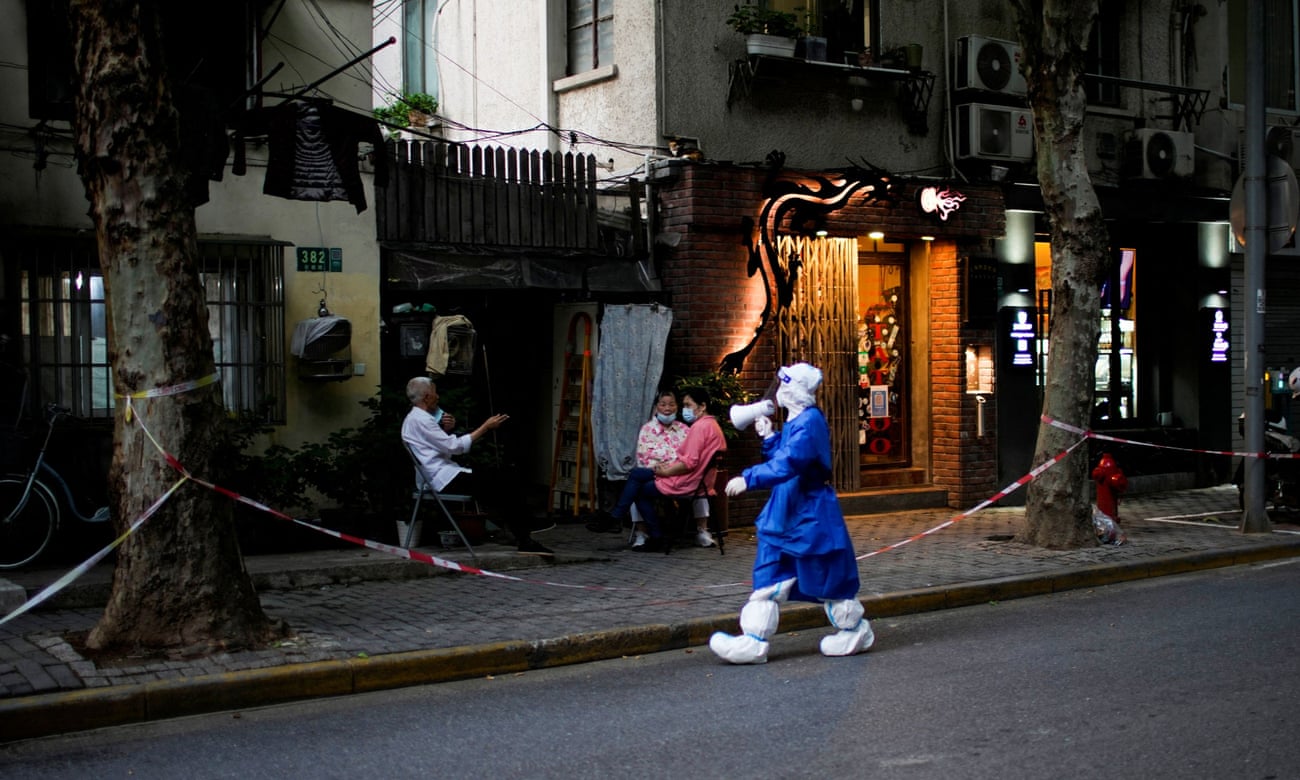
health worker in protective gear speaks to people through a megaphone
Millions of migrant workers in Shanghai were unable to earn any income during the months-lockdown as China pursued a zero-Covid policy. Photograph: Aly Song/Reuters
 
China, the very place where the pandemic raised its head, remains fixated on a "zero COVID" policy, no exceptions and no complaints permitted. But there have been and continue to be plaintive messages posted on social media from people desperate for food and medical care. Tens of millions of people are once again under weeks-long coronavirus lockdowns. And they're there, locked into a now-too-familiar scenario of SARS-CoV-2 punishment they can do nothing about, while a meeting of the Communist party is set to begin. 

There will be no relief for these people hit with this misfortune until that key meeting has been concluded -- if then. By orders of Communist Party leader and President of the country, Xi Jinping; "zero COVID" must be maintained and protocols upholding that goal are not to be questioned. Localized outbreaks are kept from spreading through these lockdowns at a tremendous economic and psychological toll on a long-suffering population.

This is a momentous occasion for President XI as he prepares to launch a third five-year term in office in October, irrespective of the precedent of stepping down following two terms in executive office. So at least through that meeting, the 20th National Chinese Communist Party Congress is over, lockdowns are to continue. Some faint hope is offered that post-meeting some of the sweeping COVID controls may be rescinded.

Ili prefecture in northwestern Xinjiang region is where some of the most serious reports are emanating from. One woman who gives only one name, explains that local authorities locked their apartment door from the outside, opening it only when medical workers appear to perform coronavirus tests. Neighbourhood committees in some cities deliver free groceries to those in lockdown. But this woman says the neighbourhood committee where she is locked down offers only to sell food at higher-than-normal prices and even that not frequently enough.
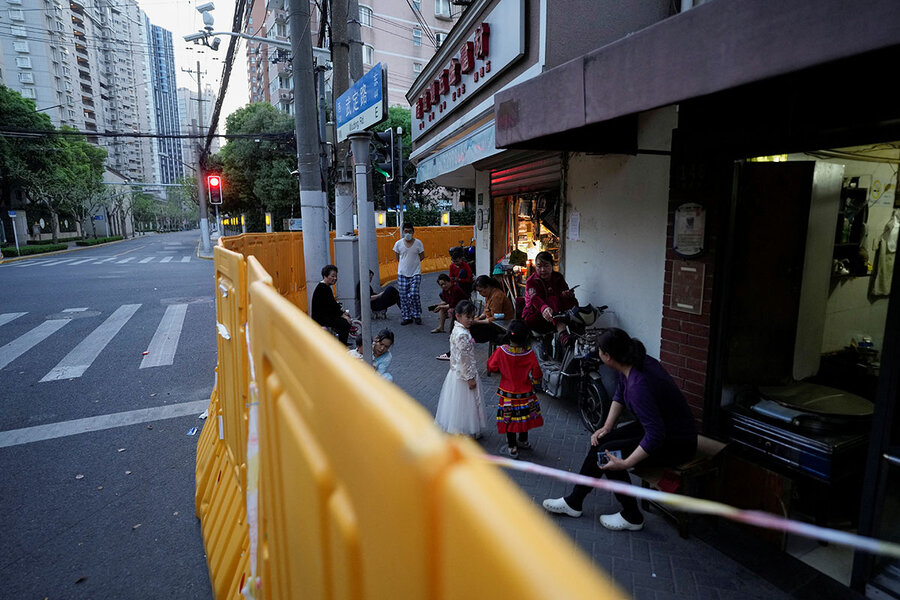
 
Residents stand behind barricades in a sealed-off portion of Shanghai   Aly Song/Reuters
 
Online postings in Ili speak of an inability to take their sick children to hospital. Some post of the death of elderly family members during lockdown. Widely reported on Chinese social media leading the Ili government to apologize for problems in the lockdown response while also rejecting reports as mere rumours. Four people were punished with five to ten days' detention each for "spreading rumours" about the lockdown. Residents are warned to watch their words.

The official case count in the entire population would cause joy in any other country, but not China. A mere 949 locally transmitted cases were reported nationwide on Sunday, within an immense population of 1.4 billion people. Residents in lockdown are unable to work to sustain themselves through a regular income, ending up surviving on fast-disappearing savings. President Xi projects an image of himself as a populist leader who has declared elimination of poverty central to his administration.

In Guiyang where a lockdown in parts of the city commenced on September 5, a wildlife park published a public plea for food to keep its tigers, pandas and other wild animals from starvation. In Lhasa, the capital of occupied Tibet, parts of the city began locking down a month ago.  Shanghai's earlier months-long lockdown echoes what is occurring once again in parts of China. In Shanghai, supply chains were disrupted in the wealthy city, leaving residents begging for food, pleading for ill family members to be permitted to go to hospital.

Beijing maintains China is unable to halt lockdowns since a substantial number of the population, in particular the elderly who were not given priority status, remain unvaccinated. The country's refusal to import the most effective foreign vaccines against coronavirus, relying totally on domestic vaccines that provide much less immunity explains in part its predicament. Censorship and detentions aid the government in suppressing domestic criticism of its "zero COVID" policy.
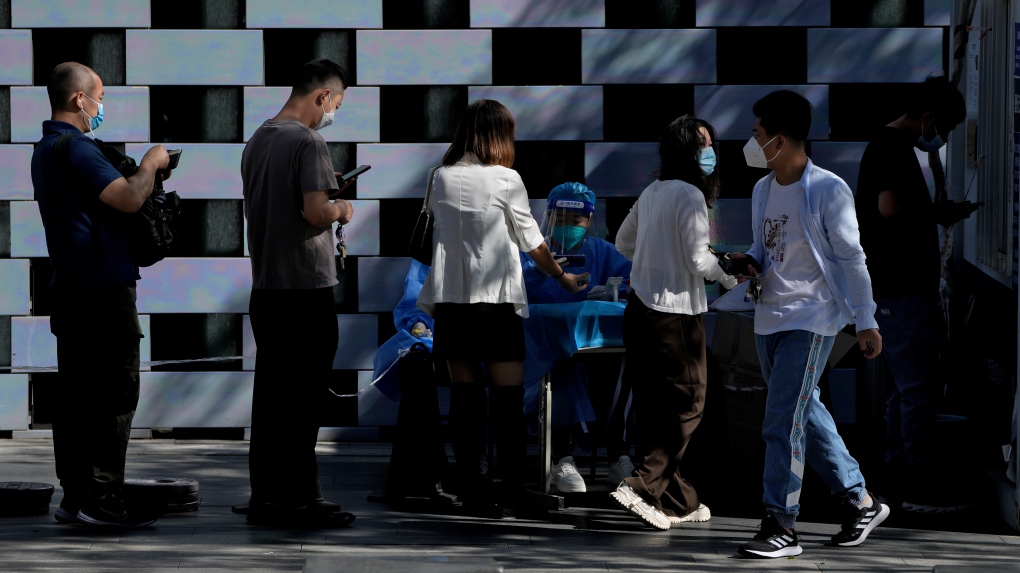
Residents line up to register to get their routine COVID-19 throat swabs at a coronavirus testing site in Beijing, Monday, Sept. 5, 2022. (AP Photo/Andy Wong)


Labels: , , ,

Thursday, August 18, 2022

Chinese Kept On Their Racing Toes

"The scenes of panic at Ikea follow videos last week showing people in another part of Shanghai running out of a building over rumours of an abnormal Covid test result."  
"Shanghai's citywide lockdown earlier this year saw widespread reports of food shortages and poor living conditions in quarantine centres,"  
"Frustrated residents were filmed engaging in heated arguments with pandemic staff and screaming from windows in protest against the restrictions during this time."
BBC News
News of the flash shutdown sent shoppers fleeing and screaming in an effort to get out of the building before the doors were locked, videos on social media showed.
Panic quickly set in as shoppers at an Ikea store in Shanghai desperately tried to exit the building as security guards grimly tried to stop them and to lock down the store with all shoppers securely imprisoned within. The store was placed on a sudden COVID lockdown because news circulated that a shopper had recently been in the presence of someone with an active case of COVID.

Customers at the Ikea rushed for the exit in Shanghai Saturday when it became known that one among them might conceivably be carrying the contagious and feared virus. Social media videos circulated footage showing security guards attempting to hold a pair of doors shut while crowds shoved through and managed to escape their imminent confinement.

Needless to say, the bulk of the shoppers were unable to escape. What they all were so anxious to evade was interminable confinement within the store for hours. Until such time as they would inevitably be transferred to quarantine hotels. This episode of China's ongoing aggressive battle with the SARS-CoV-2 virus causing COVID, is unique to China.

Chinese view these scenarios with dread, and will do whatever they can to evade the consequences of government decrees leading to endless lockdowns. Beijing has enacted a series of flash lockdowns in China's zero-tolerance COVID policy. People living in various provinces have suddenly, with no warning, discovered themselves held for prolonged periods of time just wherever they happened to be -- at beach resorts, gyms, restaurants -- and then forced to isolate in approved COVID recovery spots.

People have attempted escape scaling fences, sprinting along beaches, pouring out of office buildings in desperate attempts to escape being caught in a COVID net. Sometime they succeed, more often they fail to, and the penalty is enforced isolation. The sudden shutdown of the Shanghai Ikea store happened when one of the shoppers was found to have been in close contact with a 6-year-old child who returned from a Tibet trip, testing positive for COVID.
 
China takes this disease that surfaced in Wuhan, China, then rapidly spread worldwide, more seriously than anywhere else in the world.


Labels: , ,

Saturday, September 05, 2020

Awaiting the Double Whammy -- Flu Plus COVID

Awaiting the Double Whammy, Flu-plus-COVID

"It [intervening early and more aggressively in those whose COVID-19 condition is heading toward a bad outcome] also gives us an opportunity to have really frank and honest conversations with substitute decision makers and loved ones."  Dr.Douglas Fraser ICU physician, lead researcher, Lawson Health Research Institute

"They're testing really aggressively in Australia and they're just not finding cases. As far as we know people don't transmit influenza virus unless they have symptoms. It would be almost societally unacceptable right now to be walking around with those kinds of symptoms. And that's when you're transmissible for flu. We would expect there to be much more prompt isolation of cases of infectious influenza [than usual]."                                                                                                    Dr.David Buckeridge, professor, School of Population and Global Health, McGill University

"[The southern hemisphere's experience is, in some ways] a good reflection that all of the good public health measures that people are continuing to practise, the hand-washing, the physical distancing as much as possible, the use of non-medical masks and so on, that help prevent or limit the transmission of COVID-19, would also work equally well for other respiratory infections, including influenza."  Dr.Howard Njoo, deputy chief public health officer, Canada

medical supplies
Getty Images

"Why are critically sick COVID-19 patients clotting"?, posed one of the more puzzling questions doctors grappled with. And now, thanks to the research of a team of scientists in London, Ontario, led by Dr.Douglas Fraser, the answer has arrived. The body's immune system, responding to an invasion of the novel coronavirus, churns out enzymes shearing off minuscule sugar-coated hairs leaving blood vessels to become inflamed and exposed, causing platelets to grab, causing tiny clots in the lungs and in the body. 

Apart from which the identification of six molecules that seem to predict who is at the highest risk of death with severe COVID-19  to alert doctors when to intervene might result in a scenario guiding doctors to intervene at an earlier date in the disease's progression and more aggressively in recognition of those people destined to have a very serious outcome, with increased risk of death. And those breakthroughs were attributable to the research work of Dr.Fraser and his colleagues who identified the critical six molecules predicting who is at the highest risk of death.

Should similar research with corroborative results support the claims for these two research projects, the results of the two studies may lead to improved treatment for a new disease on the cusp of converging with an old familiar one. The collision of COVID and flu is on everyone's mind with the approach of winter and traditional flu season. Some, like Dr.Howard Njoo, take comfort in the fact that Australia is experiencing a relatively mild flu season, hoping that this will become the norm everywhere, this year of SARS-CoV-2.

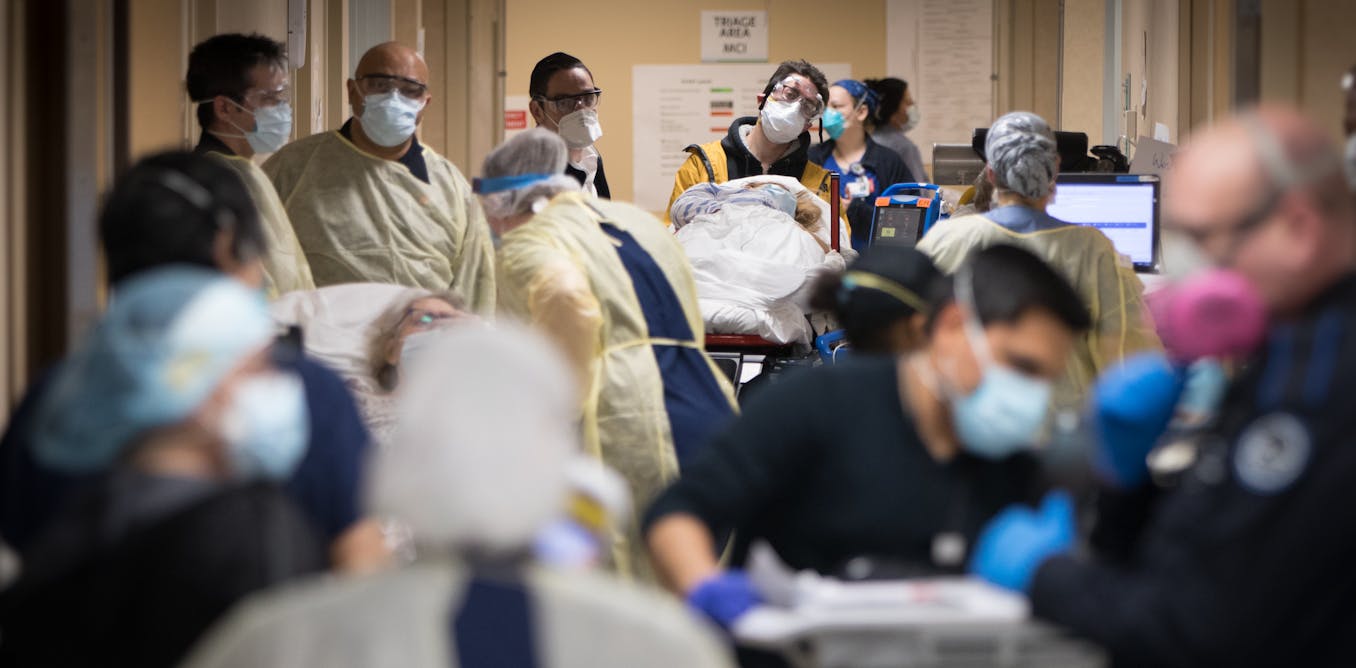
https://images.theconversation.com/files/352844/original/file-20200814-22-n5loes.jpg?ixlib=rb-1.1.0&rect=71%2C0%2C3650%2C1825&q=45&auto=format&w=1356&h=668&fit=crop

"Influenza is predictably unpredictable", Dr. Mark Loeb, professor of pathology and molecular medicine at McMaster University observed. "Almost nothing is known" about co-infection with flu and COVID-19, wrote U.S. epidemiologists Michael Osterholm and Edward Belongia reporting in Science. They note that most people are vulnerable to the pandemic virus and should a surge in COVID-19 occur in the fall, overlapping with a surge in flu, the resulting stress on hospitals could become catastrophic. The hope would be that the number of those infected with each virus will tend to peak at different times, not simultaneously, reducing the strain on the medical system.

The potential of a "twindemic" looms as a possibility, creating unique challenges in having the vaccine administered in a timely manner to an awaiting population. In May, a Pollara survey of 1,912 Canadians saw 57 percent claiming they would "definitely" or "probably" get a flu shot, an increase from 45 percent over last year. With many buildings remaining shuttered, fewer office flu clinics will be available. The question of sufficient PPE for vaccinators in pharmacies and other places also presents as a dilemma.

The Public Health Agency of Canada is urging provinces and territories to think outside the box to arrive at working strategies, including multiple, smaller  clinics; administering inoculations outdoors in parking lots or drive-thru clinics; mobile clinics in vans or buses, fly-in teams in remote and isolated communities; all measures that could presage the day if and when COVID-19 vaccines become available. This year's flu vaccine has been tweaked from last year's but sufficient information has not yet emerged to determine which circulating strain will be dominant this fall and winter.

The risk of a dual or co-infection of flu along with COVID-19 is there, it is a risk, particularly to those with underlying illnesses. Early testing will be critical to enable doctors to know what they're dealing with; whether flu or COVID. Symptoms overlap, while treatments differ; a matter of testing early,   diagnosing, for identifying which is which "will be an essential component for public health surveillances".

Australia saw record levels of flu vaccinations this year

Dr. Loeb points out how critical it is that people continue to practise social distancing. "On the other hand there's a lot of return-to-normal activities such as school" which could make it increasingly difficult to contain both the flu and COVID.  "We're seeing a spike in infections just as schools are opening up. Schools will send children home if the school is unable to determine whether a child has COVID-19 versus a cold or flu. For many families that means parents will have to try to work from home", observed Dr.Steven Taylor, professor and clinical psychologist at the University of British Columbia.

Labels: , , , ,

Friday, June 05, 2020

World Health Agency Like None Other

"The World Health Organization effectively co-ordinated so many different NGOs in a very complicated area."
"While, yes, it took a long time to get the outbreak [West Africa Ebola epidemic] under control, they were able to basically be the point people."
Dr.Srinivas Murthy, intensive-care specialist, University of British Columbia

"I have donated years of my time to organizations like and including the World Health Organization for absolutely no pay -- set up and worked in Ebola treatment and Central Africa with the WHO."
"Because no one else was there."
Dr.Rob Fowler, critical-care medicine specialist, Toronto
A health worker in Democratic Republic of Congo registers temperatures of people in July 2019, during an Ebola outbreak. The World Health Organization played an important role in handling the outbreak. Pamela Tulizo/AFP via Getty Images
According to Dr. Murthy, the disarray in the Democratic Republic of Congo in an effort to control the 2018-19 outbreak of Ebola would have had far worse outcomes even as health workers desperately attempted to save lives within an active and ongoing civil war theatre, had the World Health Organization not stepped in to marshal various medical aid groups while they were under violent attack.

When diphtheria swept through Rohingya refugee camps stationed in Bangladesh after the Muslim minority flooded out of Myanmar where they had been targeted by the military, the WHO played a similar role. Work of that kind on a global scale has convinced medical experts that the world health body will be in critical shape should American funding be withdrawn and the world, particularly the developing world, will be that much worse for its collapse.

The World Health Organization has come under fire repeatedly for the failings attributed to it in its leadership's decision-making most recently with the global pandemic, catering to China rather than objectively making its own informed decisions in alerting the world at large of the contagion of a new virus wreaking havoc wherever it inveigled its presence -- and that turned out to be everywhere, with disastrous consequences. Consequences that would have been less acute had Beijing been more forthcoming and the WHO more critical and assertive.

Much of the world body's work takes place in poorer countries of the world such as in aiding the fight against diseases like HIV, tuberculosis and malaria, where countries lack their own public-health infrastructure. The World Health Organization is highly dependent on the willingness of wealthy countries of the world funding its activities, and the U.S. portion of that funding is considerable, corresponding to 15 percent of its total budget.

"The WHO really will be financially in big trouble", director of the Center for Global Health Studies, Yanzhong Huang at New Jersey's Seton Hall University stated, unless another country takes steps to fill the hole the withdrawal of U.S. funding will create. Beijing, in fact, a wealthy nation that has been sprinkling its wealth around the world in its famous 'belt and road' initiative, could fill that role. It is, after all, the Trump administration's feeling that the WHO is in China's hands in any event.

"In spite of the rhetoric, the biggest beneficiary of the president's move will almost surely be China", pointed out Dr.Ashish Jha, director of the Harvard Global Health Institute, an occasional critic of the World Health Organization. Funded by assessing what countries can afford, based on their GDP, accounts for about 20 percent of the WHO budget, over and above voluntary contributions many of which are from non-governmental organizations such as the Gates Foundation, the second largest overall contributor after the US., followed by Rotary International.

China, in point of fact, contributing $85 million to the WHO, was 46th in line as a contributor, lagging even Canada at 14th with contributions of $100 million, as opposed to the 2018-19 funding cycle where the U.S. assessment was $893 million. And then came news, after U.S.President Donald Trump expressed his displeasure with the WHO for aiding China in downplaying the COVID-19 outbreak that has devastated the U.S., that WHO officials themselves became frustrated behind the scenes with China.

Beijing's delays in releasing data on the new coronavirus didn't earn it any praise from WHO officials, beyond its leadership elite. In its eagerness to accept China's initial claim that COVID was not transmitted person to person, arguing against travel restrictions to slow the spread of the virus, WHO officials became increasingly frustrated. The WHO's handling of the 2009 H1N1 flu pandemic was considered alarmist; conversely its reaction to the 2013-14 Ebola outbreak, ineffective.

Dr.Huang of the Center for Global Health Studies questions spending priorities at the WHO where Polio eradication absorbed 27 percent of the 2018-19 program budget; close to $1 billion, even as the number of cases narrowed to a few hundred. What redeems the WHO in the opinion of doctors, academics and global health experts is the work done in co-ordinating COVID vaccine development efforts and organizing clinical trials of potential treatments.

WHO Director-General Tedros Adhanom Ghebreyesus delivering a speech via video link at the opening of the World Health Assembly virtual meeting from the WHO headquarters in Geneva, amid the COVID-19 pandemic. World Health Organization / AFP


Labels: , , ,

Monday, June 01, 2020

COVID Stress, as Universal as the Pandemic

"[It's vital to identify environmental threats from a] fitness survival perspective."
"We only became predators much later in evolutionary history [leading us to over-interpret risks to survival because the human mind is poor at probability-estimating; a heritage of our hunter-gatherer brains]."
"[With COVID-19, there is uncertainty] because the medical news changes every day."
"...Generation Z and millennials were already very vulnerable, they were already prone to anxiety and depression and for many of them, I fear the confinement has made it much worse."
"We're still not sure what happened, where the virus came from and COVID conspiracy theories are spreading."
"Just the simple act of being able to share food and stories with your friends has become very special."
"The constant state of anxiety and uncertainty, the isolation, the lack of meaning and purpose, these are all things that are accompanied with negative affect, which make us more prone to being victims of our own emotions."
"We're constantly missing out in these tiny little micro actions, but these micro actions eventually amount to us becoming better persons for the sake of others. Doing things that people had lost track of because of the rat race of our daily lives."
Samuel Veissiere, anthropologist, assistant professor of psychiatry, McGill University
https://images.theconversation.com/files/336864/original/file-20200521-102682-1mmgo9e.jpg?ixlib=rb-1.1.0&rect=21%2C451%2C4533%2C2266&q=45&auto=format&w=1356&h=668&fit=crop
"We don't really know, especially because we don't have that comparator to say, this is how many would be experiencing lifetime anxiety prior to the pandemic."
"But it's important for people to understand that if you are experiencing those symptoms, you're not alone. This is an unprecedented time."
Tara Elton-Marshall, scientist, Centre for Addiction and Mental Health
"These are stressful times and there are things to be concerned about. But a healthy level of anxiety gives people agency."
"It's when the feelings start to impair functioning in your ability to work, to parent, to be present in a healthy way in your relationships, that a  health professional needs to be involved."
Dr.Valerie Taylor, chief, department of psychiatry, University of Calgary
Experts in the field of mental health swiftly became concerned about the impact of fear, isolation and pandemic policies on the human psyche when the global pandemic was declared, the series of shut-downs in various countries in response to the invasion of the SARS-Cov-2 virus which began to spread COVID-19 in populations, altering peoples' lives in ways never before encountered, taking an unheard-of toll on society in general, on the business world, on governments and the international community.
Worry, Gratitude & Boredom: As COVID-19 affects mental, financial health, who fares better; who is worse?
Our vulnerabilities, once the scaffolding of civilizational norms and our habitual place in the order of things were suddenly reversed and social-isolation mandated, struck people with a sense of total helplessness and uncertainty how to respond, in a growing sense of psychic dislocation. "It's sad, but not surprising", to see that outcome, commented Dr.Veissiere, co-director of the Culture, Mind and Brain Program at McGill, of the fact that a new national survey indicates a sizeable number of people have been severely affected psychologically.
One quarter of Canadians, according to the survey results, experienced moderate to severe levels of anxiety, another quarter experiences occasional or frequent loneliness, and 20 percent reported depression. Close to a quarter of the 1,005 survey participants reported at least once-weekly binge-drinking. Women, parents with young children, 18- to 39-year-olds appear to be faring worse than others, and notable numbers report being nervous and edgy, unable to relax.
People are irritable, readily annoyed, with a problematical number of days spent concerned that "something awful might happen", over the coronavirus hanging over society, like a Damaclean Sword. This survey represents the first in a planned series by the Centre for Addiction and Mental Health, collaborating with Delvinia, a research tech and data collection company, offering access to the survey data "to help mental health professionals get ahead of what's coming".
covid19 mental health
Angus Reid
Within any population there are people whose minds are geared to accept or struggle against situations, so that "if you're a 'no-big-deal' kind of person, you'll find the information confirms that bias", while catastrophizers who believe something is far worse than it actually is, react otherwise. When the World Health Organization first declared the death rate of COVID-19 at 3.4 percent, that data caused a frisson of fear. 
The U.S. Centres for Disease Control and Prevention this week released their 'best estimate', placing the overall death rate at 0.4 percent, a more reasonable, less fear-inducing figure for those who show symptoms, at the same time estimating 35 percent of infected people will never develop symptoms. Because of the shut-down conditions Canada imposed in an effort to 'flatten the curve', two million jobs were forfeited in April.
Resulting in a large segment of the population left to struggle with feelings of boredom, frustration and fear. Younger adults appear to be the most anxious, with people 60 and older less so, even as it is the older population that is more susceptible to the more serious effects of COVID than the younger demographic in one of those peculiar twists of irony in human nature. Experts hazard the opinion that people given to anxiety under normal circumstances now stressed under COVID have simply become more anxious.
According to the survey, it is women more than men who have ended up struggling more over the conditions they now find themselves in. More likely to have lost employment, to be shouldering child and elder care, and for many women home isn't quite the haven it should be. "We're seeing an increase in domestic abuse", notes Dr.Valerie Taylor. A 50 percent increase in texts and calls has been reported by Kids Help Phone, a national support service for youth.
covid19 mental health
Angus Reid
Anxiety represents uncertainty about what might happen. The more one thinks about possibilities and dwells on worst-case scenarios, the likelier they are to have heightened anxiety and depression. The very fact that SARS-CoV-2 remains a universal planetary threat speaks to our susceptibility and uncertainty. And when people feel helpless to avoid disaster fear and panic can set in, and spread. The antidote to that is to find comfort, reassurance, to restore feelings of safety.
And those can be found in re-establishing contact with those who have a meaningful impact on our lives, in a relaxation of the shutdown, and opening up of opportunities to once again be together with people we know and care about. To share experiences, meals, the meaning of life as social creatures dependent for our happiness and satisfaction on our contact with others, deriving pleasure from ordinary things that under normal circumstances are taken for granted.
anxiety
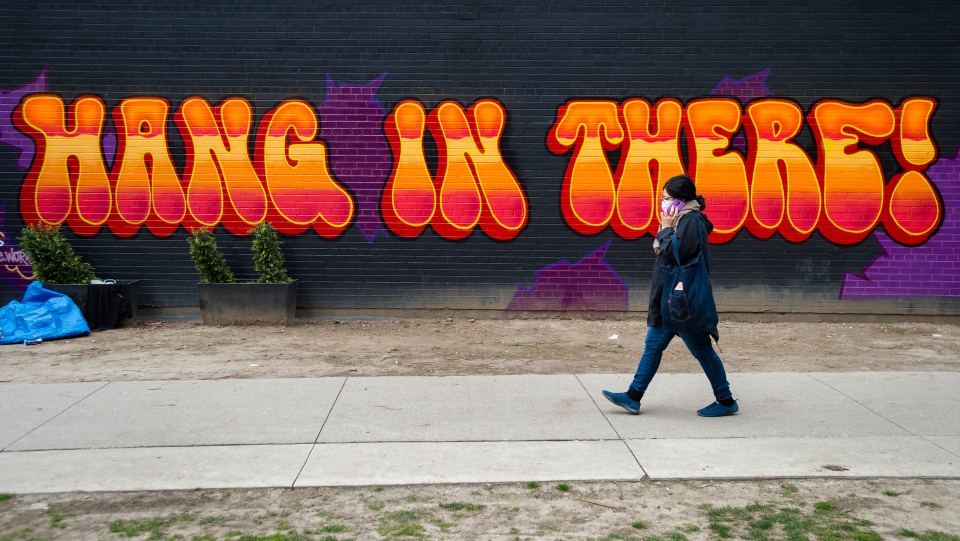
A woman wearing a mask talks on her phone during the COVID-19 pandemic in Toronto on Tuesday, April 28, 2020. THE CANADIAN PRESS/Nathan Denette

Labels: , , , ,

Follow @rheytah Tweet