Tuesday, January 14, 2025

Russian Sabotage Against NATO Nations


"...We knew what they were doing."
"Some of it was espionage, where they are charting a lot things. Some of it, I think, was positioning in case of a war or a deep crisis."
Stale Ulriksen, researcher, Royal Norwegian Naval Academy
https://i.dailymail.co.uk/1s/2025/01/09/18/93755049-14267883-The_Estlink_2_power_cable_in_the_Gulf_of_Finland_was_ruptured_in-a-44_1736446971211.jpg
The Estlink 2 power cable in the Gulf of Finland was ruptured in suspected Russian interference
 
Drones began appearing over oil rigs and wind farms off Norway's coast some three years ago, and the puzzle to officials was where they came from although they were suspected of having been launched from ships in the North Sea by Russia. Ships close by underwater energy pipelines. But action could not be taken, since they were flying over international waters. Drones were seen as well over military bases in Britain and Germany over areas where U.S. forces are stationed.

According to military analysts, the drones may have been on a surveillance mission sponsored by a state; their presence a hybrid (gray zone) attack. This represents a new range of tactics -- military, cuber, economic, psychological -- utilized in covertly attacking or destabilizing an enemy. Hybrid attacks on Western countries are being increasingly brazen as hostile states such as Russia, Iran and others plan these dangerously unsettling attacks. The challenge for the West is how to react without setting off an infinitely more dangerous response?
 
https://i.dailymail.co.uk/1s/2025/01/09/18/93909081-14267883-Finnish_authorities_announced_on_January_8_2025_that_they_had_ba-a-45_1736446973896.jpg
Finnish authorities announced on January 8, 2025 that they had banned the oil tanker Eagle S, suspected of belonging to the Russian 'ghost fleet' and of having caused damage to five submarine cables, from sailing due to 'serious faults'
 
This past July three packages exploded in Europe, postmarked from Lithuania, parcels containing electric massage machines containing highly flammable magnesium-based substances, an event that was potentially deadly as a hybrid attack. Two such packages exploded in DHL cargo facilities in Britain and Germany, a third in a Polish courier firm. Investigators felt the packages represented a test by Russian military intelligence in planting explosives on cargo planes bound for the United States and Canada.

Hybrid attacks have been deployed, it is believed, by Russia through covert sabotage against NATO allies dating from the Kremlin's 2022 invasion of Ukraine. American and NATO intelligence agencies discovered a Russian plot to murder the chief executive of Rheinmetall, a German weapons giant, which manufactures arms and ammunition for Ukraine.

Drones appeared in Germany over Ramstein Air Base, one of the largest U.S. military posts in Europe; others seen near facilities owned by Rheinmetall. All of which Russia has time and again denied any involvement in. "Failing to act (by NATO members by imposing a unified range of measures) will mean the Kremlin retains the strategic advantage", warned former British intelligence strategist Charlie Edwards.

In the Baltic Sea, the crew of the Estonian mine hunter EML Sakala kept a careful watch on vessels slowing down or suddenly changing course suspiciously, just west of Russia. With the use of binoculars and long zoom lens cameras, they log names of ships, searching them out for missing anchors or trailing cables About 200 vessels were so scoured in a week at sea by the Estonian crew.
 
https://i.dailymail.co.uk/1s/2025/01/09/18/93909079-14267883-Finnish_authorities_said_on_December_26_that_they_were_investiga-a-43_1736446969062.jpg
Finnish authorities said on December 26 that they were investigating a Russian oil tanker, named Eagle S, that sailed from a Russian port over suspected 'sabotage'
 
One of three Estonian navy ships, in marine patrols by NATO countries in the wake of the Estlink-2 power cable and communication links between Finland and Estonia damaged on December 25. Two other undersea data cables were also damaged a month before and suspicion fell on Russia, although nothing has been proven and once again the Kremlin denied involvement. The infrastructure provides power and communication for thousands of Europeans.

In the wake of the December 25 incident, the Eagle S, an oil tanker had left a Russian port, when Finnish police and border guards seized the tanker as it fell under suspicion of cutting the Estlink 2 power and four telecommunications cables by dragging its anchor. Carrying 35,000 tons of oil, investigators charged the ship left a drag trail with its anchor for close to 100 kilometres on the sea bed before it was apprehended and escorted to a Finnish port.

At a depth of 90 metres at its deepest point, the cable is some 145 kilometres in length, stretching across one of the busiest shipping lanes in Europe. Ten Baltic Sea cables have suffered damage since 2023. Undersea cables and pipelines criss-crossing the sea, link Nordic, Baltic and central European countries. They promote trade, energy security and serve to reduce dependence on energy resources from Russia.

https://media.assettype.com/bairdmaritime%2F2025-01-14%2Fgjyc76c3%2FGgs480HWYAAO1Ve.jpg?w=1024&auto=format%2Ccompress&fit=max
The patrol ship Turva located an anchor that is suspected to be related to the cable damage that occurred on December 25.    Finnish Police

Labels: , , , , ,

Saturday, March 11, 2023

Russian Barbarism


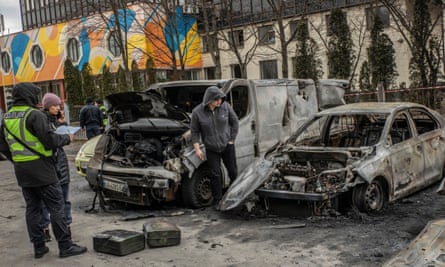
"We went into the yard. People were injured."
"Then the cars caught fire. We tried to extinguish them with car fire extinguishers."
"And I got a little burned."
Viktor Bukhta, resident, Sviatoshynski district, Kyiv, Ukraine

"[I was] astonished by the complacency] of members of the organization [he leads, the International Atomic Energy Agency, relating to the dangers faced by the Zaporizhzhia nuclear plant]."
"What are we doing to prevent this happening? We are the IAEA, we are meant to care about nuclear safety."
"Each time we are rolling a dice. And if we allow this to continue time after time, then one day our luck will run out."
 "Today's loss of all external power once again demonstrated how fragile and dangerous the situation is for the Zaporizhzhya Nuclear Power Plant."
IAEA Director-General Rafael Mariano Grossi
https://media.guim.co.uk/d41073ca7e7dab1d0f4415be0ccff2b40d0d7045/0_105_4773_2685/1000.jpg
UN nuclear chief sounds alarm as Zaporizhzhia plant reconnected – video

“The occupiers can only terrorize civilians. That’s all they can do."
"But it won’t help them. They won’t avoid responsibility for everything they have done."
Ukrainian President Volodymyr Zelenskyy
A massive missile and drone barrage was unleashed on Thursday by the Russian military, smashing into residential buildings and critical infrastructure across Ukraine. The large, wide-ranging attack placed the largest nuclear plant in Europe at risk, knocking off the power grid used by such plants for the constant power required to operate their cooling systems in avoidance of a meltdown. This represents the latest threat to the Zaporizhzhia Nuclear Power Plant, raising the spectre of a catastrophic nuclear event.
 
All throughout Thursday night, air raid sirens blared, while the attacks were geared to target a wide swath of the vast country. Western Ukraine, far from the front lines, was not immune to this attack. The assault, according to President Volodymyr Zelenskyy, arrived while people slept; an attempt by Moscow "to intimidate Ukrainians again"
 
The strikes, according to the Russian Defence Ministry, were justifiable as retaliation for the recent incursion into the Bryansk region of western Russia by Ukrainian 'saboteurs'. The Russian accusation was denied by Ukraine, warning that these allegations would be used by Moscow to justify an increase in its assaults against Ukraine. That the incursion over the border was carried out by Ukrainian servicemen to show Russians that they aren't immune to the same kind of treatment their country is imposing on Ukraine, is another matter altogether.
 
The battlefield has been quiescent over the winter months despite that Kremlin forces mounted a strategy to target the Ukrainian power supply in late fall; a strategy to demoralize and strike apprehension into the Ukrainian population, facing the winter without heating, water and any comfort from the cold. The plan went awry when the Ukrainian population remained defiant and trusted their government to employ all means to repeatedly restore energy.
 
When the attacks became sporadic and less frequent, it led to speculation by military analysts that Russia might be running low on ammunition. Mid-February saw the last major bombardment. But on Thursday, Russia launched 81 missiles and eight exploding Iranian-manufactured Shahed drones, according to Valerii Zaluzhnyl, Ukraine's chief commander of the armed forces. Of the total strikes, 34  missiles were intercepted, along with four drones.

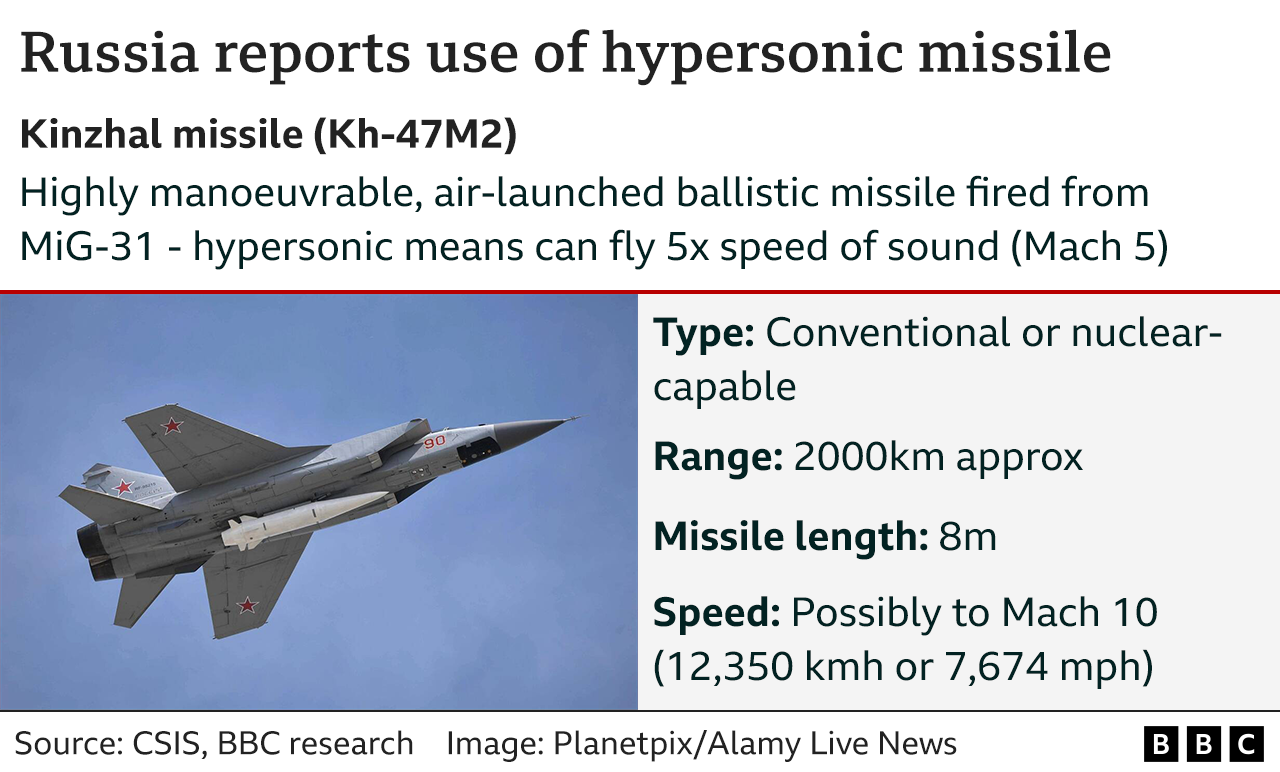
Air defences found it difficult to cope with the onslaught, given the mixture of munitions. Six hypersonic Kinzhal cruise missiles were among the weapons striking Ukraine. These missiles represent the most sophisticated weapons in the Russian arsenal; Ukraine has no air defences capable of intercepting them. The Russian Defence Ministry boasted that the barrage hit military and industrial targets "as well as the energy facilities that supply them".

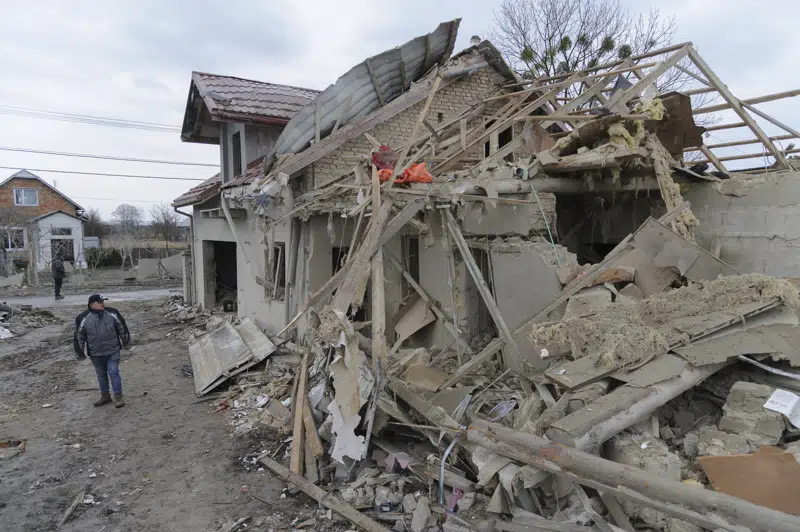
A villager passes by debris of private houses ruined in Russia's night rocket attack in a village, in Zolochevsky district in the Lviv region, Ukraine, Thursday, March 9, 2023. (AP Photo/Mykola Tys)

The truth is, Russia doesn't really care what it hits; targeting civilian infrastructure along with military emplacements. And once again, as has happened repeatedly, with disastrous results, civilian areas were struck, homes and apartment blocks hit with predictable results, the buildings destroyed. Fortunately, loss of life was minimal, but then those that die had no intention of abandoning life. There was no damage to the army's combat capability as a result of the missile strikes, 

It is, however, an assured tactic that in sending the barrage right across the country far from the front lines, it is the population that is being targeted with intimidating tactics; kept on edge, never knowing where the next missile will strike, and whether they will be deprived of home, and possibly their very lives and those of their loved ones. Escape to bomb shelters in the middle of the night is not a particularly comforting prospect; it saves lives, but cannot preserve a sense of equanimity.

Forensic police survey the fragments of missiles that fell near a residential building in Kyiv’s Sviatoshynskyi district.
Forensic police survey the fragments of missiles that fell near a residential building in Kyiv’s Sviatoshynskyi district. Photograph: Alessio Mamo/The Guardian

An estimated fifty percent of households in the capital, Kyiv, were without heat. The same situation prevailed in Ukraine's second largest city, Kharkiv, where water was also cut. The temperature hovers around the freezing mark, deprivation of heat and of water is a miserable experience. And this is precisely what Moscow envisions in store for the population of Ukraine, to apply pressure to its government to agree to a cessation of hostilities, completely on Moscow's terms. Primarily for Kyiv to accept the loss of a third of its territory -- for starters.

In the northwestern Zhytomyr region, hundreds of thousands of households were without power. In Odessa, emergency blackouts resulted from damaged power lines. The IAEA has teams of experts at all four of Ukraine's nuclear power plants, with the intention of reducing the risk of severe accidents. 

"No military objective, just Russian barbarism", tweeted Ukrainian Foreign Minister Dmytro Kuleba, scathingly. According to Kyiv's city administration, the capital was attacked both with missiles and exploding drones, many of which were intercepted, despite which the city's energy infrastructure was hit and damaged.
Graphic detailing Kinzhal missile


Labels: , , , , ,

Tuesday, December 13, 2022

Worrying Alliances

John Kirby speaks at a press briefing at the White House in Washington

"[Russia is offering Iran] an unprecedented level of military and technical support that is transforming their relationship into a full-fledged defence partnership."
"These fighter planes [Sukhoi Su-35 fighter jets] will significantly strengthen Iran's air force relative to its regional neighbours."
White House National Security Council spokesman John Kirby

"Iran is now one of Russia's top military backers."
"Their sordid deals have seen the Iranian regime send hundreds of drones to Moscow which have been used to attack Ukraine's critical infrastructure and kill civilians."
"In return, Russia is offering military and technical support to the Iranian regime, which will increase the risk it poses in our partners in the Middle East and to international security."
U.K. Foreign Secretary James Cleverly
"What we are seeing is – frustrated on the battlefield, Russia has resorted to destroying Ukraine's critical and energy infrastructure from afar, causing immense suffering to civilians as we heard just three days ago, and defying the international community's call to end its aggression."
"It is Russia that has cynically called for this meeting, alleging an illicit conspiracy of weapons transfers from Ukraine. When in fact, as others around this table have noted, it is Russia that is complicit in Iran's illegal transfer of unmanned aerial vehicles to Russia."
Richard Mills, U.S. deputy ambassador to the U.N.
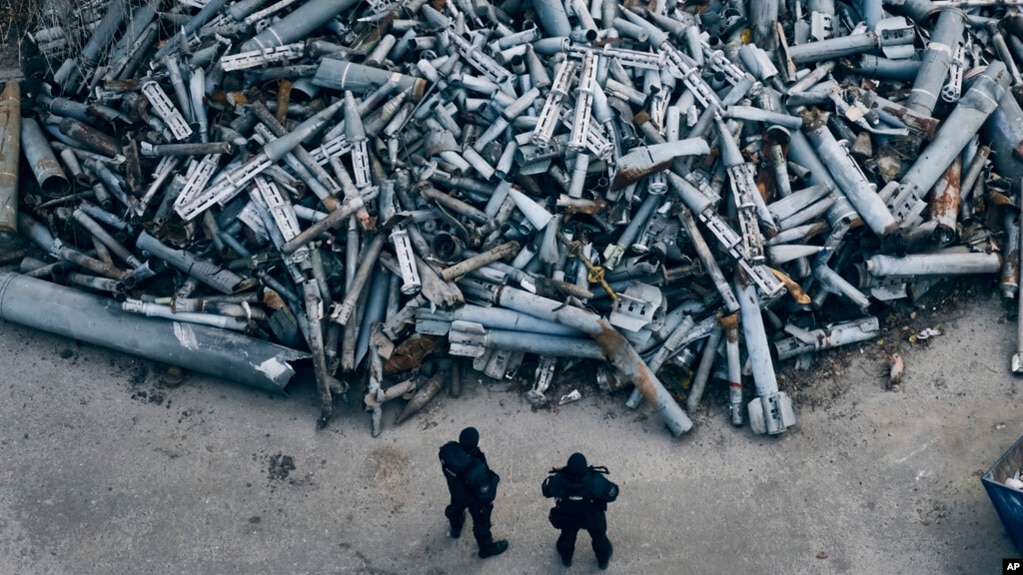
Police officers look at collected fragments of the Russian rockets that hit Kharkiv, in Kharkiv, Ukraine, Dec. 3, 2022.  AP

Russia is in the crosshairs of the Biden administration, accused of making alliances to provide advanced military assistance to Iran. Air defence systems, helicopters and fighter jets to be made available to the Islamic Republic of Iran constituting in part deepening cooperation between the two at a time when Tehran has been providing drones in support of Russia's violent conflict imposed on Ukraine. 

These declarations by the U.S. constitute part of an effort to continue to deepen Russia's global isolation in the wake of intelligence reporting that Russia and Iran were consulting on installing a drone assembly line in Russia to accommodate the Ukraine conflict's needs of Russian attacks more efficiently. In addition to which Russia was training Iranian pilots on the Bukhoi Su-35 fighter.

This dismaying but inevitable collaboration between Russia and Iran offers the U.S. an opportunity to impress on Saudi Arabia the threat contained to its own well-being after the U.S. accused Saudi Arabia of siding with Russia by moving toward production cuts by the OPEC+ cartel to benefit Russia by increasing the price of oil, thus further funding Moscow's war in Ukraine. A tangled web that also benefits Iran, Saudi Arabia's nemesis, funding the Houthis in Yemen.

Another message is getting through to U.S. Intelligence that Iran has supplied hundreds of attack drones over the summer, and is now considering the sale of hundreds of ballistic missiles to Russia as well, effectively re-supplying Moscow's exhausted missile store capacity. North Korea has also become a potential source for Russia of artillery. 

There have been repeated accusations by the Kremlin that NATO allies have themselves become a party to the conflict through their provision to Ukraine of weaponry, troop training and providing military intelligence to the Ukrainian military enabling them to attack Russian forces. "Speaking about a disarming strike, [the U.S. concept of a 'preemptive' strike], maybe it's worth thinking about adopting the ideas developed by our U.S. counterparts, their ideas of ensuring their security", offered Russian President Vladimir Putin 
 
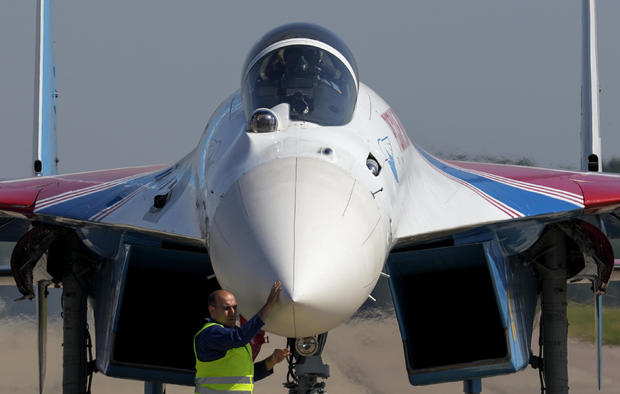
Sukhoi Su-35 military fighter jet
A Sukhoi Su-35 military fighter jet at the International Military-Technical Forum at Kubinka military training ground in Moscow, Russia, on Aug. 18, 2022. Pavel Pavlov/Anadolu Agency/Getty Images
"If things go wrong, they can go horribly wrong. It is a terrible war in Ukraine. It is also a war that can become a full-fledged war that spreads into a major war between NATO and Russia."
"We are working on that every day to avoid that."
"There is no doubt that a full-fledged war is a possibility.  [It is important to avoid a conflict] that involves more countries in Europe and becomes a full-fledged war in Europe."
NATO Secretary-General Jens Stoltenberg


Labels: , , , , ,

Friday, July 12, 2019

Robot-Directed Warfare

"How would you design a robot to know the difference between what is legal and what is right?"
"And how would you even begin to write down those rules ahead of time?"
"What if you didn't have a human there, to interpret these to bring that whole set of human values to those decisions?"
Paul Shcarre, American Army Rangers

"They [unarmed Perdix drones] are a collective organism, sharing one distributed brain for decision-making and adapting to each other like swarms in nature."
William Roper, American Defense Department statement

"Machines with the power and discretion to take lives without human involvement are politically unacceptable, morally repugnant and should be prohibited by international law."
Secretary General Antonio Guterres, United Nations 
Another Russian weapons manufacturer, Degtyarev, has developed an autonomous ‘suicide machine’ called the Nerekhta. This drone is built to stealthily traverse close to a target, and then explode with the force to destroy fortifications or enemy tanks. Towards Data Science

Mr. Scharre tells the story of leading a Rangers group along the Pakistan border in Afghanistan when a goatherd was sighted with a radio and the assumption made, radioing their position to the Taliban. Rules of war permit soldiers to shoot anyone informing enemy forces of their location. The goatherd was a young girl and they made no move to de-activate her. This narrative fits into the concerns over autonomous weapons whom no human agency can direct.

It is a concern that this former U.S. military man expressed in his book, "Army of None: Autonomous Weapons and the Future of War". For the time being, these concerns do not yet face a reality; these weapons are still in the planning stages though the technology is moving quickly and as two senior U.S. defense officials state, the U.S. is "not even close" to bringing a completely autonomous weapon into the field.

Triton drones developed by U.S. defense contractor Northrop Grumman.   © Reuters

A drone held to have been produced in Israel was used by Azerbaijani forces three years ago to blow up Armenian soldiers travelling in a bus. According to the manufacturer's specifications such a drone can fly on automation to a specified site, fix on its target, dive toward it and detonate. It has been designed for human controllers to program and manipulate.

The U.S. Defense Department tested 103 unarmed Perdix drones, able to swarm a target. A Tracked Hybrid Modular Infantry System resembling a mini-tank with the capability of tracking down and firing on a target has been produced by Estonia. Human controlled, its manufacturer describes it as "autonomous and self-driving with growing A.I. assistance".

As technical advances create increasingly autonomous systems, experts studying the potential dangers inherent in such weapons -- including the United Nations' Group of Governmental Experts -- anticipate military planners tempted to bypass human controls completely. To this end, a treaty is being proposed prohibiting self-directed lethal weapons, winning but limited support.

A Chinese military vehicle carries a Pterodactyl I aerial drone at a parade in Beijing. Parents' reluctance to send their only children into combat has the military searching for less dangerous options.   © Reuters
The challenge is the growing acceptance of this type of military technology; thirty countries now have automated air and missile defense systems capable of identifying approaching threats and attacking them autonomously -- unless there is intervention by a human controller to halt the response.

An Israeli armed robotic vehicle named the Guardium has reportedly been used on the Gaza border. An aircraft able to autonomously take off and land on an aircraft carrier, refuelling in midair has been tested by the United States Navy. Britain, France, Russia, China and Israel all are assumed to be developing experimental autonomous stealth combat drones.

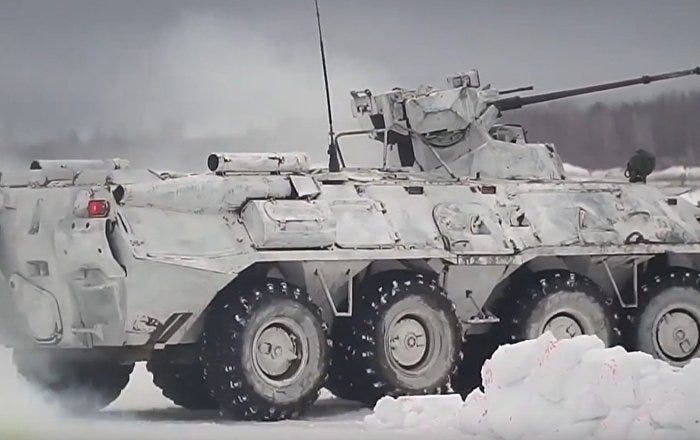
A Russian Uran-9 remote-controlled tank. Moscow has joined the rush for autonomous weapons systems.   © Reuters

The technology is advancing at an accelerated rate, raising fears of an arms race of autonomous weapons with China and Russia, leading to a sense of urgency for nations to work together -- the aim being to establish controls to ensure that humans never surrender such life and death choices in combat to the mechanical discretion of machines.

According to the two senior American defense officials, its military can be relied upon to act responsibly as they explore the use of artificial intelligence enabling weapons to attack swiftly and accurately while providing information on chaotic battlefields, giving early warning of attacks bypassing the risk of civilian casualties to reduce deaths by overcoming human error.

The call for a treaty banning such weapons, which an international coalition of over 100 non-governmental organizations have worked on since 2012 has been supported by only 28 countries.

Image depicts activists from the “Campaign to Stop Killer Robots” group, protesting outside the United Nations in Geneva

Labels: , , , ,

Follow @rheytah Tweet