"The one-million prize is available to those who can capture them dead or alive." "But maybe dead would be a better option. I will pay you smiling." Philippines President Rodrigo Duterte "'Dead or alive' should not be taken literally." "Law enforcers are supposed to effect peaceful arrests, but they may use reasonable force if the subject of the arrest violently resists." "We want to make sure that those remaining are actually people
that need to be arrested." "We find it prudent to pause for a while, tally the count and make sure those who surrendered are those on the list." Philippines Justice Secretary Menardo Guevarra
Duterte had offered prize money for each felon released by the government in a botched programme [File: Damir Sagolj/Reuters]
The Philippines has some of the world's most crowded jails. To address that problem the administration in power prior to that of Mr. Duterte passed a 'good conduct' law in an effort to reduce the jail population in the country. The good-behaviour reward program recently resulted in the release of a staggering number of prisoners in Philippine prisons. Over 1,700 criminals were mistakenly released alongside thousands of other prisoners, but the 1,700 represented those found guilty of seriously violent offences.
When the error was discovered, the crime-busting President Duterte offered a million pesos ($25,000) prize for tracking down each of those violent convicts remaining at large. Initially just under 700 of the erroneously-released prisoners had responded to the president's call to surrender. As a former mayor and prosecutor who once boasted of a plan to kill up to 100,000 criminals once he became president, Duterte is livid with rage over the release of rapists, drug pushers, killers.
As president he has attained notoriety for allowing police full rein to do as they wish when encountering what they claim to be drug traffickers. His "war on drugs" has caused police to kill thousands of urban poor dealers and users, killings considered executions according to rights activists. His inciting of vigilantism has drawn many criticisms, but he shrugs them all off, claiming tough talk like his is popular with millions of Filipinos.
And he is president, duly elected by Filipinos who expressly wanted an end to the rampant crime fuelled by drugs, so perhaps the manner in which he gauges his reputation with the ordinary person on the street is fairly accurate. Over 21,000 prison inmates had been released, with over two thousand of that number sentenced for crimes of rape, drugs, murder, bribery, plunder, kidnapping and arson making them obviously ineligible for release.
Two of Duterte's own appointees of the prison sentence were responsible through the corrections bureau, loyalists both, for the freeing of the 1,700 who failed to qualify for release.
When Duterte first ordered the released inmates through GCTA law to
surrender, he warned they should turn themselves in or they would be
treated as criminals. “Well, you know, things can go wrong,” he said on
September 4.
"Most of our crimes start with drinking in public places." "They have a drink, they hold people up, shoot each other, cause mischief." Inspector Adonis Sugui, chief investigator, Tondo police station, Manila
"It [martial law] ended with the arrest, torture, detention and disappearance of so many young people who were branded as enemies of the state." "I think you can expect more repression, more confusion, more contradictory statements from the president [Rodrigo Duterte]." "To the point that even his own people will not be sure what they should be doing." Jose Manuel Diokno, dean, De La Salle University College of Law, Manila
Homeless people detained by police in Manila Photo AFP Noel Cens
In the slums of Manila, 45-year-old Edwin Panis acted as a neighbourhood security officer. It was his duty to ensure local law and order in a nation that under its hardline enforcer president has slammed anyone suspected of pushing or even using drugs into bullet-ridden eternity. Mr. Panis, a law-and-order fan, voted to put Mr. Duterte into office, trusting him to clean up the crime-ridden streets and drugs-and-guns problems haunting the Philippines, as he had done as mayor of Davao City.
The law-abiding people of the Philippines were tired of struggling, of being harassed by the presence of criminal gangs, of fearing for their lives, and they welcomed Rodrigo Duterte's brash personality, his coarse persona, his promise that criminals would run at his presence, and he wasn't averse himself to dealing personally with criminals. He had killed, and he said, he would do so again.
Mr. Panis, on a hot night, stepped outside his cramped living quarters to have a smoke and share a beer with friends and neighbours. "The war on drugs has become a war on drunks", he observed following his surprise arrest at the rough hands of six plainclothes policemen with their holstered guns who had swept purposefully through the winding alleys of the slum where they had come across the informal gathering.
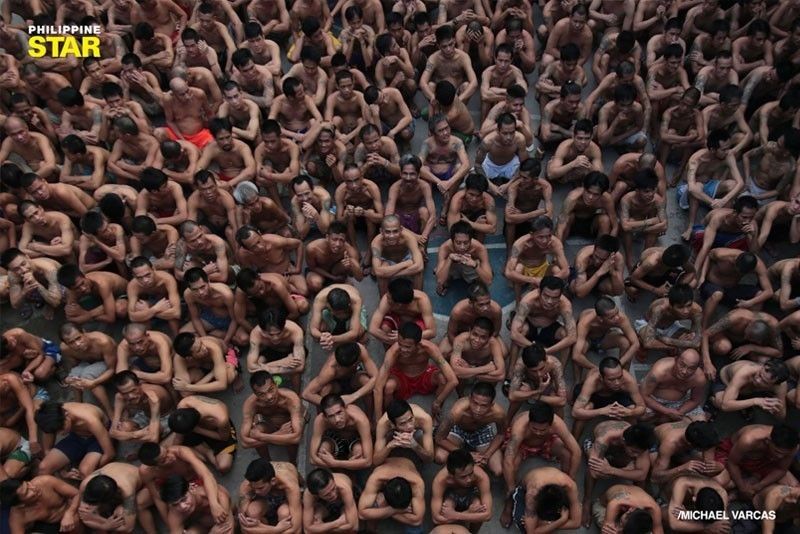
Drinking beer in public is now a criminal offence in a nation suffused with violent crime. From an unseemly social misstep to a criminal offence in one fell swoop under the rubric of 'cleaning up the streets'. A new initiative which Mr. Duterte had authorized, for the police to begin arresting people for infractions such as public urination, men outdoors with bare chests, smoking and drinking in the streets; representing public order violations. Violations in fact that men like Mr. Panis were authorized to deal with.
Over 50,000 people have been summarily taken into custody for offences such as these; Manila's slums are on notice. "There's no way not to be scared", Amy Jane Pablo, 37, noted, a neighbour of Mr. Panis. In the wake of two high-profile murders, "radical changes in the days to come" was promised by Mr. Duterte; that people idling in the streets represented "potential trouble for the public". No idling, no public drinking, no going out shirtless, no kidding.
It took no more than a week after the announcement for police to arrest 7,000 for loitering, public drinking and additional violations of neighbourhood ordinances. The public's mind has shifted to memories of martial law imposed in the Philippines under the military rule of Ferdinand Marcos in the suspension of normal law replaced by the imposition of military rule. From 1972 to 1981 martial law ruled in the Philippines to ensure that "ridiculous rules" were not flouted.
A backlash ensued when a man arrested for going out in public shirtless somehow died while in custody. The official story was he was having"difficulty breathing". Arresting loiterers was "foolish", denounced the president, not at all in line with what he had ordered. He had informed police to break up gatherings, not authorized them to harass people; they had obviously misinterpreted his intention.
This was not, after all, the war on drugs with its bloody, lethal consequences. Merely people being people.
Contradictory messages and sloppy communications echoing the persona of Donald J. Trump, an admirer of Mr. Duterte, who for all anyone knows returns the compliment.
This represents a general opinion site for its author. It also offers a space for the author to record her experiences and perceptions,both personal and public. This is rendered obvious by the content contained in the blog, but the space is here inviting me to write. And so I do.
![Duterte had offered prize money for each felon released by the government in a botched programme [File: Damir Sagolj/Reuters]](https://www.aljazeera.com/mritems/imagecache/mbdxxlarge/mritems/Images/2019/9/20/6137c5653ef04434ac1f63a20a8cb063_18.jpg "Philippines police told to stop manhunt after Duterte reward")