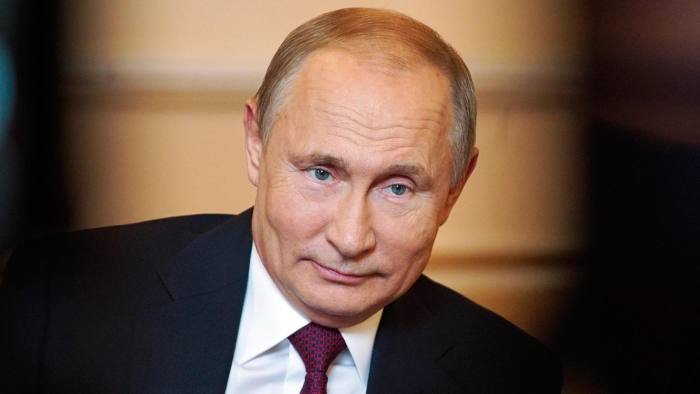
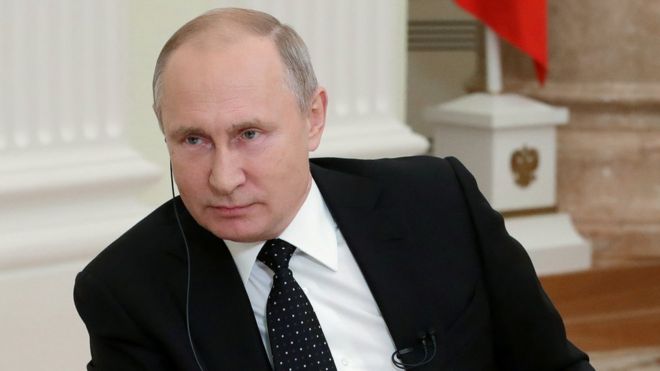
"The liberal idea presupposes that nothing needs to be done. The migrants can kill, plunder and rape with impunity because their rights as migrants must be protected. What rights are these? "Every crime must have its punishment." "So, the liberal idea has become obsolete. It has come into conflict with the interests of the overwhelming majority of the population." Russian President Vladimir Putin
This is a man who speaks freely, confident of his views and disinterested in how they will be received. He has no need for rose-coloured glasses; he sees the world as it is and as he would have it. He is canny, he is autocratic and he is aggressive, but he is not stupid, nor is he anything but frank. Liberalism like all ideologies has become unbalanced; it has lost its way, forgotten that to be useful it must also be reasonably balanced.
Liberalism has become progressively liberated, more conscientiously socialized in its intemperate acceptance of all values being of equal worth than is tolerable for reasonable people to accept. In many ways the lengths to which liberalism has genuflected toward regarding all ways of life and values in life as worthy of respect reflecting social constructs and cultures infusing them all with equal human rights entitlements must be both a puzzle and a source of amusement to a traditionalist like Vladimir Putin.
He is a conservative socialist, a not-quite-rigid communitarian, a practical-minded man for whom 'rules of engagement' are flexible. German Chancellor Angela Merkel has always had time for her Russian counterpart. She seems to regard him as a basically reasonable individual whom cogent arguments could sway. In turn he had the patience to listen to her, but he has never felt obliged to agree with any course of action unattractive to his sense of preservation of Russia, its priorities and his place within its future.
While he sees Russia as a competitor to the United States in forging alliances useful to his nation, establishing and re-establishing footholds in the near-abroad and further afield, he feels entitled to regard former USSR satellites as being obligated to Russia and is comfortable playing the heavy there irrespective of international rules of territorial integrity. In the Middle East, he has ingratiated himself with Syria, seeing no problem in aiding Bashar al-Assad in further subjugating and tormenting his Sunni population.
Would he permit intruding migrants from the Middle East, with their everlasting propensity to tribal violence, sectarian hostility and threats to stability and law and order wherever they congregate further complicate Russia's already fraught relations with its Muslim neighbours? The upsurge in violence and the diminishing of European culture and values through a vast influx of migrants from the Middle East and North Africa through the assent of the European Union's liberalism is a lesson Mr. Putin takes seriously.
His friend Angela Merkel's decisive acceptance of a million 'refugees' and asylum seekers to augment the millions Germany had already absorbed has changed that country just as it has Sweden, Denmark, Norway, the Netherlands and other hapless European nations, wreaking havoc in their social welfare in their public arena, in their cultures and in law and order. And he will have none of it. Attributing it to the weak-minded effect of liberalism.
And he's perfectly right.
Vladimir Putin says liberal ideals conflict with the interests of most people Reuters
"Most of our crimes start with drinking in public places." "They have a drink, they hold people up, shoot each other, cause mischief." Inspector Adonis Sugui, chief investigator, Tondo police station, Manila
"It [martial law] ended with the arrest, torture, detention and disappearance of so many young people who were branded as enemies of the state." "I think you can expect more repression, more confusion, more contradictory statements from the president [Rodrigo Duterte]." "To the point that even his own people will not be sure what they should be doing." Jose Manuel Diokno, dean, De La Salle University College of Law, Manila
Homeless people detained by police in Manila Photo AFP Noel Cens
In the slums of Manila, 45-year-old Edwin Panis acted as a neighbourhood security officer. It was his duty to ensure local law and order in a nation that under its hardline enforcer president has slammed anyone suspected of pushing or even using drugs into bullet-ridden eternity. Mr. Panis, a law-and-order fan, voted to put Mr. Duterte into office, trusting him to clean up the crime-ridden streets and drugs-and-guns problems haunting the Philippines, as he had done as mayor of Davao City.
The law-abiding people of the Philippines were tired of struggling, of being harassed by the presence of criminal gangs, of fearing for their lives, and they welcomed Rodrigo Duterte's brash personality, his coarse persona, his promise that criminals would run at his presence, and he wasn't averse himself to dealing personally with criminals. He had killed, and he said, he would do so again.
Mr. Panis, on a hot night, stepped outside his cramped living quarters to have a smoke and share a beer with friends and neighbours. "The war on drugs has become a war on drunks", he observed following his surprise arrest at the rough hands of six plainclothes policemen with their holstered guns who had swept purposefully through the winding alleys of the slum where they had come across the informal gathering.
Drinking beer in public is now a criminal offence in a nation suffused with violent crime. From an unseemly social misstep to a criminal offence in one fell swoop under the rubric of 'cleaning up the streets'. A new initiative which Mr. Duterte had authorized, for the police to begin arresting people for infractions such as public urination, men outdoors with bare chests, smoking and drinking in the streets; representing public order violations. Violations in fact that men like Mr. Panis were authorized to deal with.
Over 50,000 people have been summarily taken into custody for offences such as these; Manila's slums are on notice. "There's no way not to be scared", Amy Jane Pablo, 37, noted, a neighbour of Mr. Panis. In the wake of two high-profile murders, "radical changes in the days to come" was promised by Mr. Duterte; that people idling in the streets represented "potential trouble for the public". No idling, no public drinking, no going out shirtless, no kidding.
It took no more than a week after the announcement for police to arrest 7,000 for loitering, public drinking and additional violations of neighbourhood ordinances. The public's mind has shifted to memories of martial law imposed in the Philippines under the military rule of Ferdinand Marcos in the suspension of normal law replaced by the imposition of military rule. From 1972 to 1981 martial law ruled in the Philippines to ensure that "ridiculous rules" were not flouted.
A backlash ensued when a man arrested for going out in public shirtless somehow died while in custody. The official story was he was having"difficulty breathing". Arresting loiterers was "foolish", denounced the president, not at all in line with what he had ordered. He had informed police to break up gatherings, not authorized them to harass people; they had obviously misinterpreted his intention.
This was not, after all, the war on drugs with its bloody, lethal consequences. Merely people being people.
Contradictory messages and sloppy communications echoing the persona of Donald J. Trump, an admirer of Mr. Duterte, who for all anyone knows returns the compliment.
This represents a general opinion site for its author. It also offers a space for the author to record her experiences and perceptions,both personal and public. This is rendered obvious by the content contained in the blog, but the space is here inviting me to write. And so I do.