Justin Trudeau's Acrid Hypocrisy
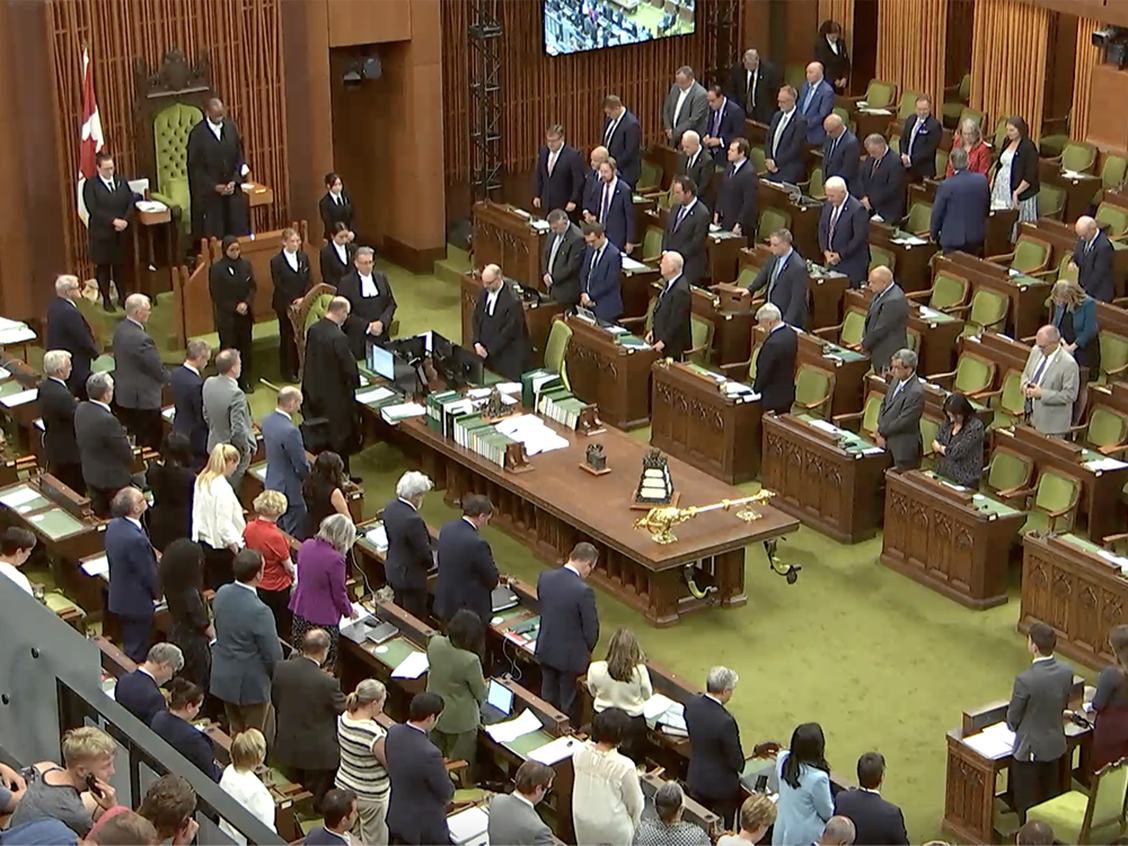
"[A moment of silence was agreed upon by] all parties in the House [before inviting MPs to rise] in memory of Hardeep Singh Nijjar, assassinated in Surrey, British Columbia, one year ago today."Speaker of the House, Greg Fergus"[The gesture's purpose was to recognize] the murder of a Canadian in Canada ... and that that is entirely unacceptable.""I think all of us should feel safer and more secure knowing that [Trudeau] will stand for Canadians and against the killers of Canadians."Deputy Prime Minister Chrystia Freeland"Canadian security agencies have been actively pursuing credible allegations of a potential link between agents of the government of India and the killing of a Canadian citizen, Hardeep Singh Nijjar."Prime Minister Justin Trudeau
 |
The separatist Khalistan movement in India itself is quiescent. Sikhs living in India appear to have adjusted their expectations from loudly and often violently advocating for a separate Sikh homeland in the Punjab, to the present time when the Indian Sikh community seems to have no interest in re-awakening a conflict that saw their Golden Temple at Amritsar used by militant Sikhs to launch a violent insurrection against India, leading to Indian troops invading the temple to rout the militants.
Indian Prime Minister Indira Gandhi trusted Sikhs to the extent that they formed her personal bodyguard. Yet it was from among that personal bodyguard that her assassination following the raid on the Golden Temple was carried out. The hostilities between Hindu India and Sikhs in India cost many lives during a period of distrust, rage and violence. That was then, this is now, when all live peacefully, the issue of a Khalistan sovereign state shelved.
It has been kept alive, however, not by Sikhs in India, but by the great numbers of diaspora Sikhs living in Great Britain and in Canada. A minority of Canadian Sikhs subscribe to violence in the name of a Khalistani state. They have perpetrated vicious crimes against other Canadian Sikhs who condemn their violence in the name of their Khalistan dream. And a cabal of Sikh terrorists were responsible for the single most deadly act of terrorism perpetrated from Canada.
A plan to strike a blow for Khalistani independence was hatched in British Columbia within its large Sikh community by a handful of violence-addicted Sikhs. Air India Flight 182 became a target in 1985 when a bomb was placed aboard the passenger jet causing it to disintegrate over the Atlantic causing the immediate deaths of all 329 people aboard, 268 of whom were Canadian citizens. Those responsible were known, charged and tried for the crime. However, only one man pleaded guilty, the bombmaker. The other two who masterminded the plot went on trial decades after the event, and found not guilty.
To this day, celebrations of Sikh terrorist leaders are paraded in Canada, and the campaign for a Khalistani homeland continues One of those who was involved in a leadership role was assassinated in Surrey, British Columbia, a suburb of Vancouver, shot to death as a separatist figure. Hardeep Singh Nijjar was listed in India as a terrorist suspect involved in a 2007 bombing in a Punjab cinema. Indian intelligence identified him as the operator of a terrorist training camp in Mission, B.C.
A list of nine Indian terror operatives that included Nijjar was given to Prime Minister Justin Trudeau on his 2018 visit to India. At the time of his death Nijjar's name appeared on a no-fly list, his bank accounts had been frozen by Canadian authorities. A breakdown in India-Canada relations occurred when Justin Trudeau accused the government of India of having staged Nijjar's assassination. The friendship and mutual support between India and Canada evaporated with that charge, to which no evidence was attached.
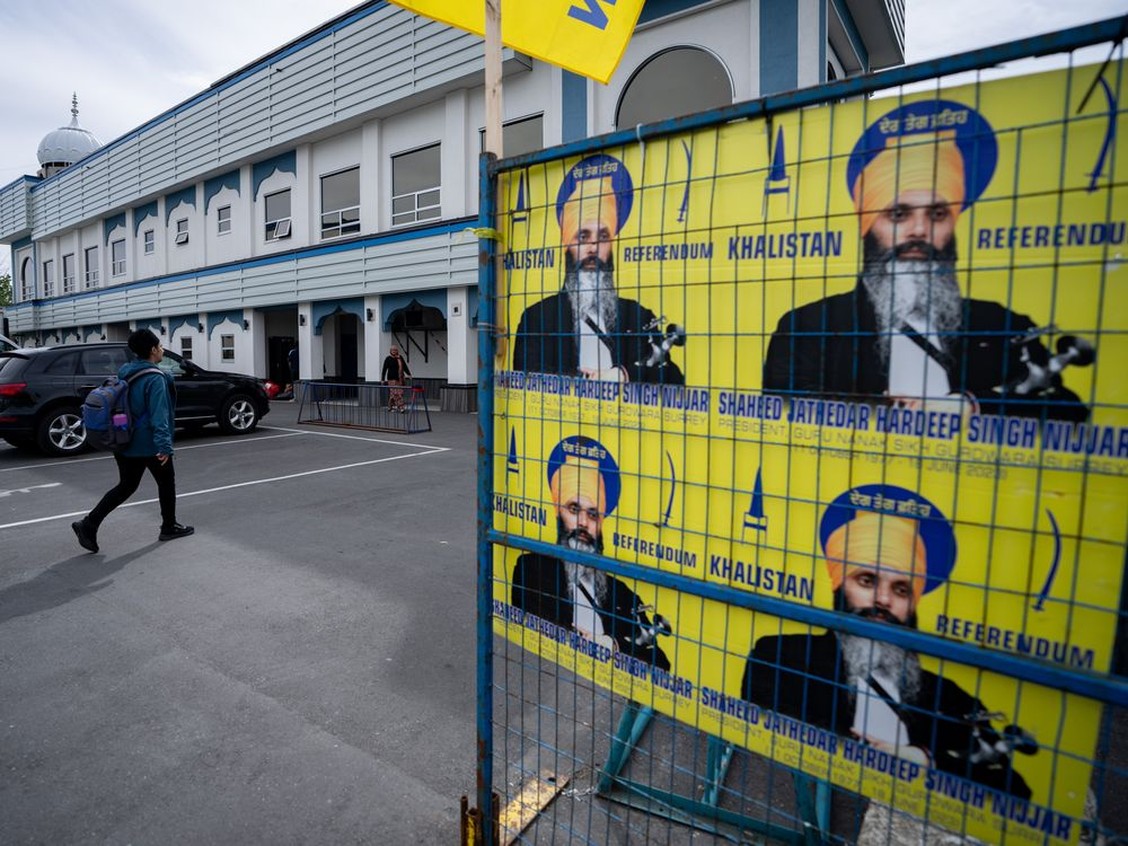 |
| A person walks past signs showing Hardeep Singh Nijjar at the Guru Nanak Sikh Gurdwara in Surrey, B.C., on Friday, May 3, 2024. Photo by ETHAN CAIRNS /THE CANADIAN PRESS |
A week ago on the one-year anniversary of Nijjar's death, supporters of Khalistan massed outside the Indian consulate in Vancouver, with Khalistani flags, where they staged a mock trial and execution of Indian Prime Minister Narendra Modi. A distinct resemblance to the pro-Hamas crowds in Canada post-October 7's massacre of Israelis, where an effigy of Israeli Prime Minister Benjamin Netanyahu was hanged several weeks ago.
A mere five days before the anniversary of the 1985 Air India bombing, the Parliamentary moment of silence was staged. The Air India anniversary, on the other hand, was not an occasion for a moment of silence in the House of commons. And then Parliament adjourned for its summer break. Before it did, Member of Parliament Chandra Arya warned that Canada failed to contain "the dark forces" that caused that terrorist attack. "Unfortunately, many Canadians are not aware that even today the ideology responsible for this terrorist attack is still alive among a few people in Canada."
Labels: Canadian House of Commons, Government of India, Khalistanis, Liberal Government, PM Justin Trudeau, Sikh Separatists
posted by Pieface @ Wednesday, June 26, 2024


